
Nuwara Eliya & the Hill Country: Tea, Trains & Colonial Charm
Ride the world's most scenic train, wander through emerald tea plantations, and explore Nuwara Eliya's colonial charm in Sri Lanka's stunning Hill Country.

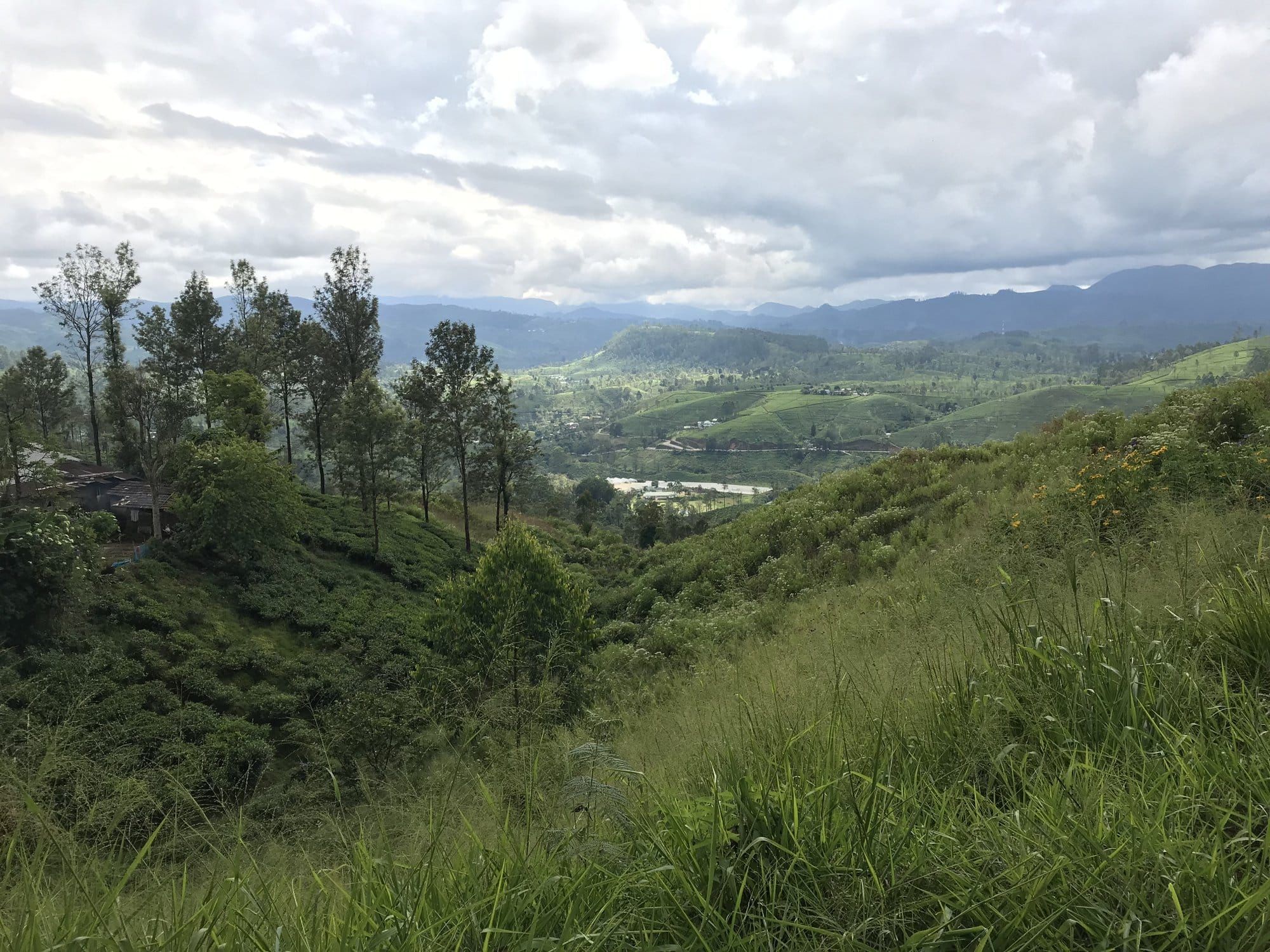
At 2,000 meters above sea level, Nuwara Eliya feels like stepping into another world entirely. The air cools, the clouds roll thick and soft through verdant valleys, and for a moment you forget you're in the tropics. This is Sri Lanka's Hill Country—a landscape of terraced tea plantations, colonial architecture, and some of Asia's most breathtaking train journeys. It's where old-world charm meets mountain splendor, and honestly, it's well worth the winding drive from the lowlands.
When traveling with children aged 5 and 9, spending two glorious days exploring this region in late December becomes one of your family's favorite discoveries. The Hill Country rewards both rushed day-trippers and leisurely wanderers—you can pack the highlights into 48 hours or settle in for a week of tea estates and misty morning walks.
Bookings: Some of the links in this article are affiliate links. We may earn a small commission if you book through them, at no extra cost to you. This helps us keep MapTrotting running.
Ride the World's Most Scenic Train Through the Highlands
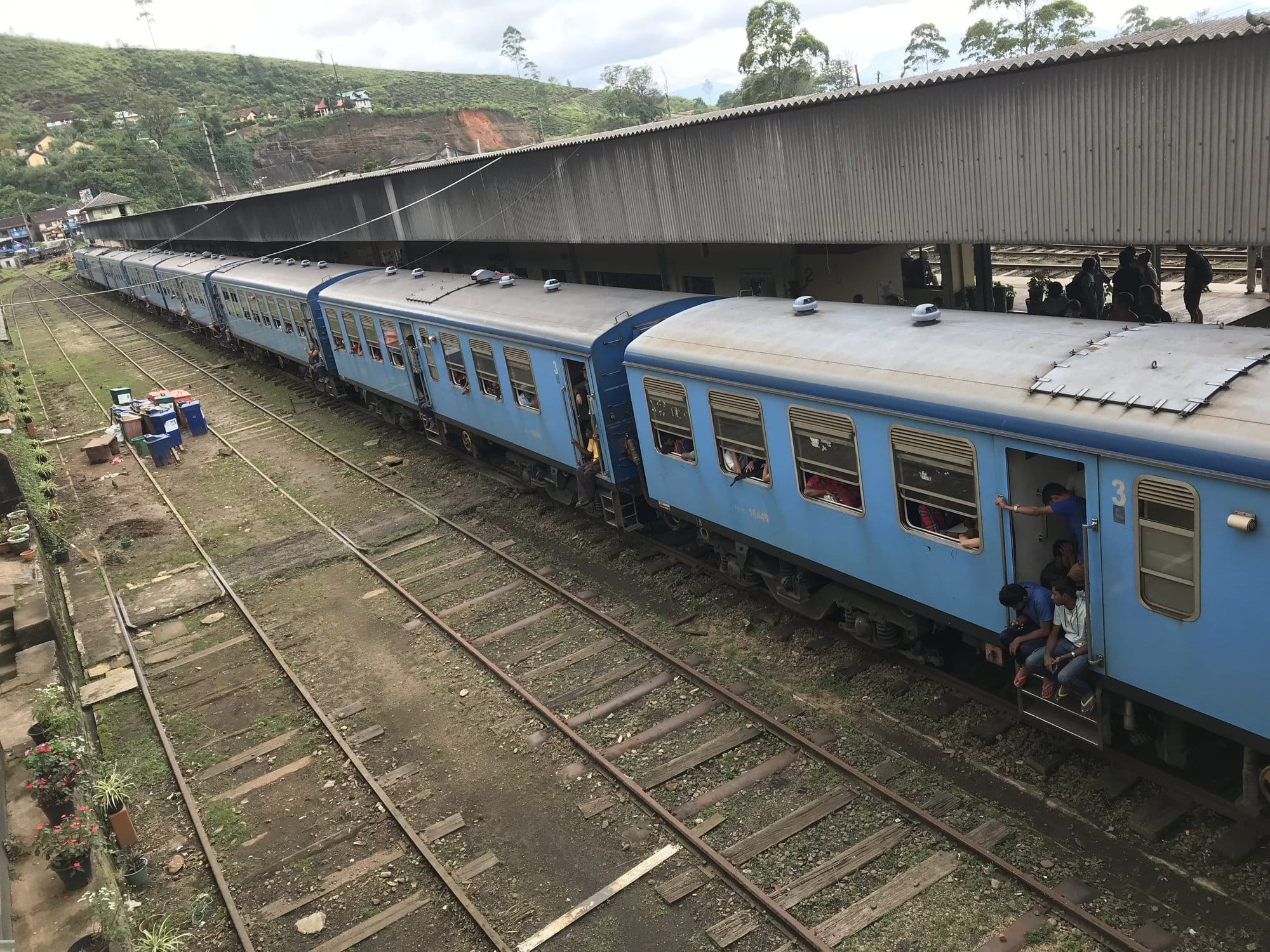
The Kandy-to-Ella railway is renowned for good reason. Chugging through emerald hills, past waterfalls and through tunnels carved into granite, this isn't just transport—it's a journey. The blue and white passenger cars are iconic, and the route climbs steadily toward Ella, passing through several small stations tucked into the landscape.
We caught our train at Radella, a sleepy halt in the heart of the tea country. Platform benches, a handful of staff, and the stunning vista of undulating green hills stretching to every horizon. When the train arrived, we watched it approach through slopes planted with tea bushes, the locomotive announcing itself with a long, mournful whistle.
The interior of our carriage was simple—wooden seats, open windows—but those windows framed pure cinema. We rolled past settlements clinging to hillsides, their corrugated metal roofs catching the light, through curves so tight you could see both the engine and the tail cars. Kids pressed their faces to the windows (and occasionally hung out them—carefully supervised). At one point a tea plucker waved from the slopes, and our daughter waved back for minutes.
Book your train tickets in advance. Seats fill quickly on the scenic sections, particularly the Kandy-Ella segment. You can reserve through Sri Lankan Railways or major travel platforms. Many hotels will assist with bookings.
Book your train tickets in advance. Seats fill quickly on the scenic sections, particularly the Kandy-Ella segment. You can reserve through Sri Lankan Railways or major travel platforms. Many hotels will assist with bookings.
Suggested tours: First-class scenic train ticket Kandy to Ella
Wander Through Tea Country & Red Earth Fields
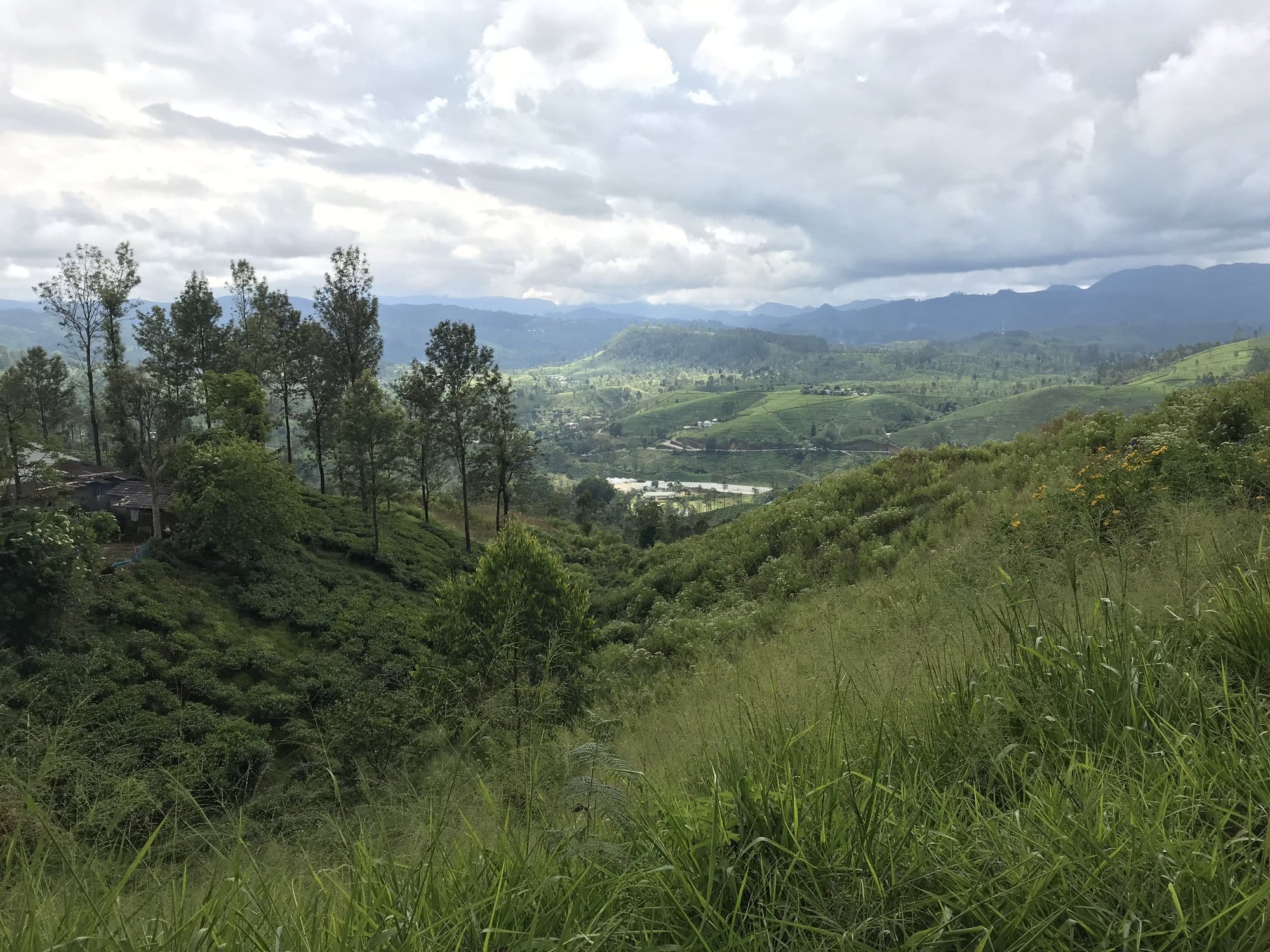
The real charm of the Hill Country isn't concentrated in one spot—it's in the landscape itself. Red-clay fields, freshly plowed and waiting for replanting, glow like rust against the green backdrop. Tea plantations blanket the hillsides, their low bushes pruned into an almost manicured appearance. Workers in bright fabrics move through the rows, their baskets filling with the tender top leaves that will become Ceylon tea.
We drove through several sections of tea country, stopping wherever the road offered a view. One particular valley—verdant, undulating, with scattered colonial-era buildings and modern settlements interspersed—captured our imagination entirely. It's the kind of place that photographs don't quite do justice to; you need the scale, the silence broken only by bird calls and distant voices, the smell of eucalyptus and wet earth.
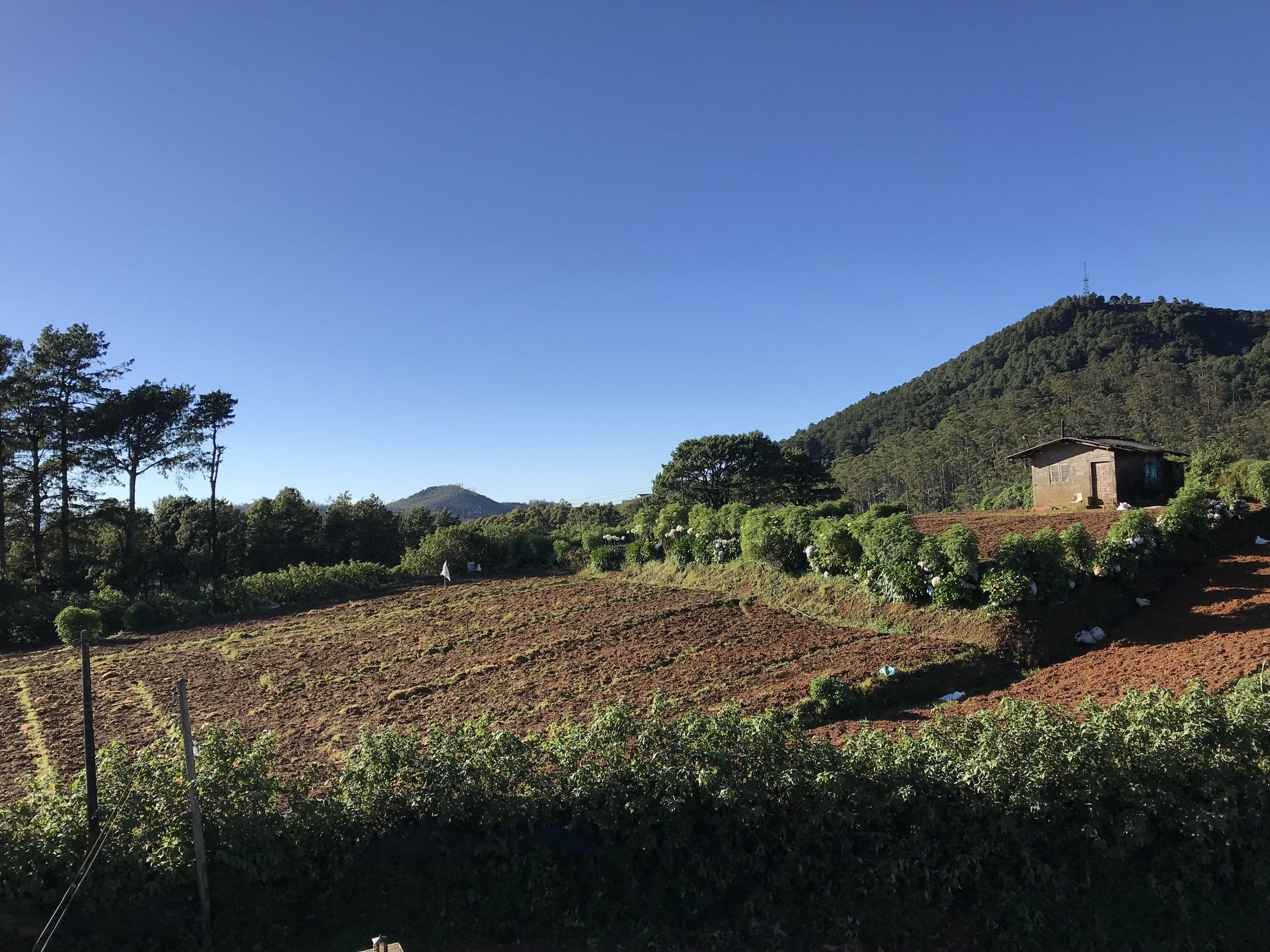
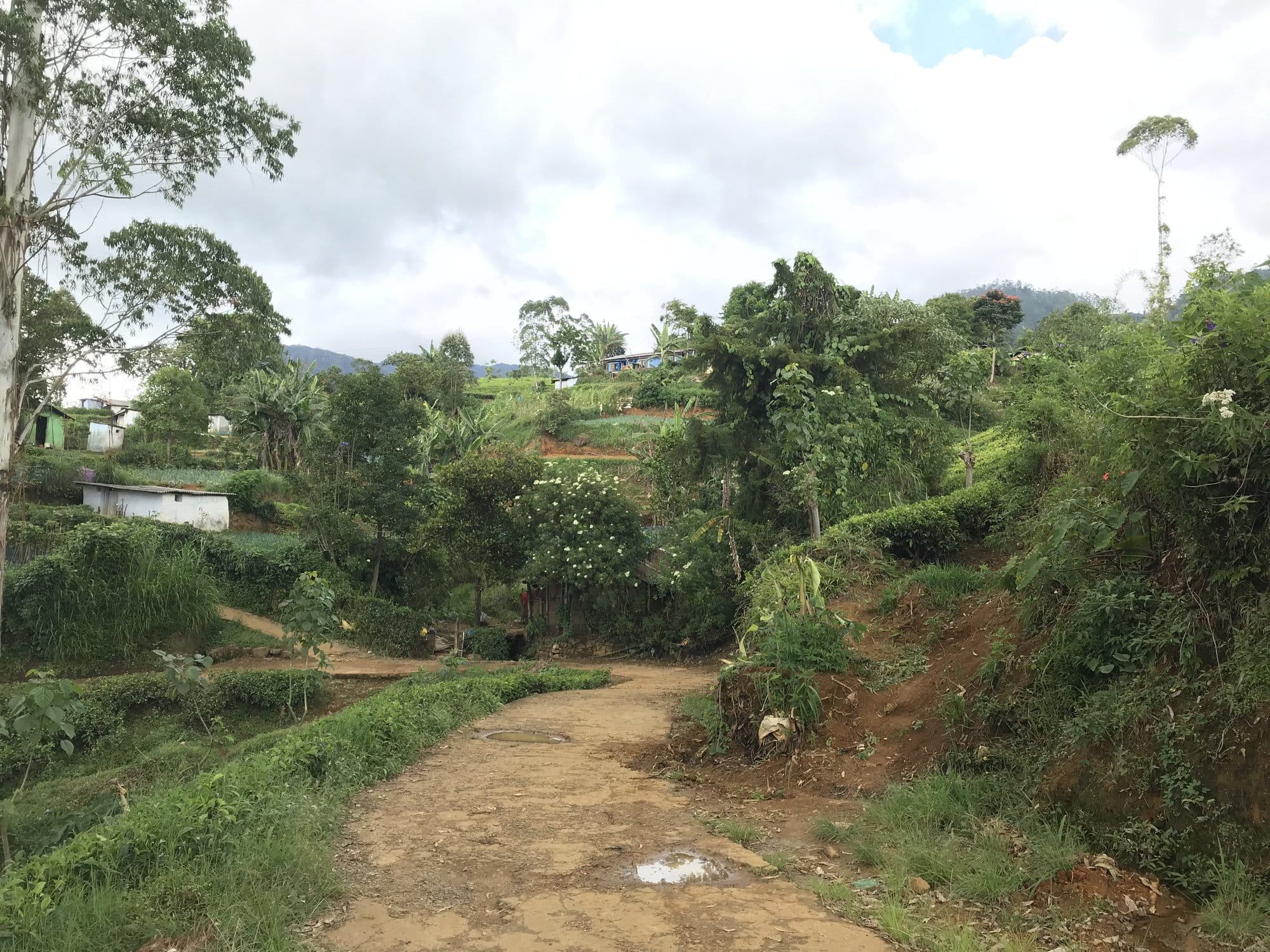
If you're interested in the mechanics of tea production, most estates welcome visitors. A tour of a tea factory shows the withering, rolling, fermenting, and drying processes that transform fresh leaves into the black tea exported worldwide. You'll also understand why this region became the heart of Sri Lanka's tea industry under British colonial rule.
The Hill Country tea harvest typically peaks in January and February, when the weather is clearest. If you visit in December like we did, expect afternoon showers and morning mist—which can actually add to the atmosphere.
Suggested tours: Ella tea making experience with tasting
Step Back in Time at Nuwara Eliya
Nuwara Eliya town itself is a time capsule. Built by British colonizers in the 1800s as a hill station—a cool retreat from tropical heat—it retains an almost surreal "Little England" character. Colonial buildings with stone facades and ivy-covered walls line the main streets. Gardens that once impressed Victorian planters still offer retreat and reflection. The architecture feels out of place in Sri Lanka, which is precisely why it captivates visitors.
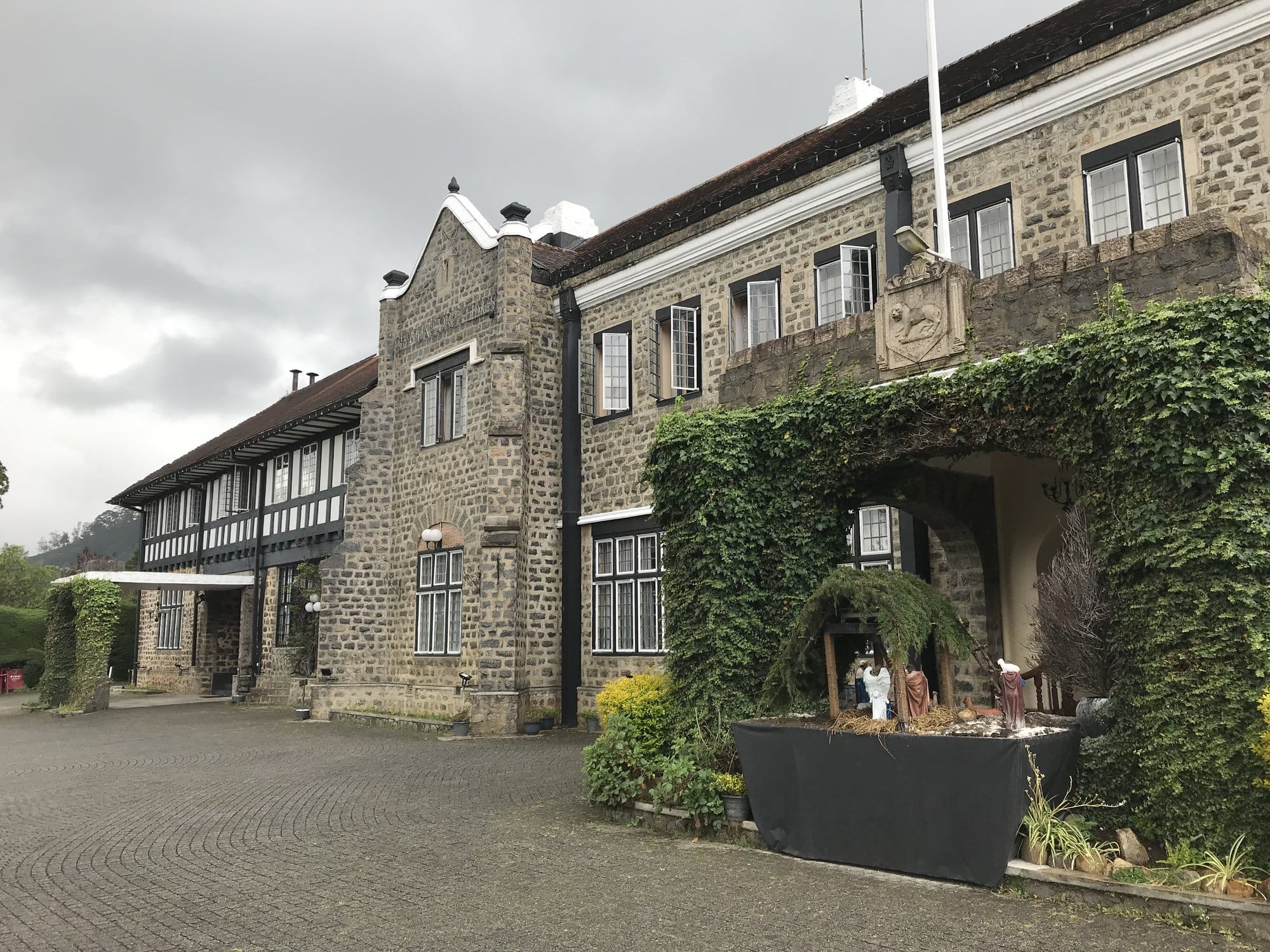
Victoria Park is the town's green heart, ringed by colonial buildings and offering wide lawns where locals jog and families picnic. A walk through the town center reveals heritage hotels (some still operating in their original capacity), old post offices, and shops with faded signage. We stumbled into a small museum housed in a colonial residence, its rooms filled with period furniture, equestrian prints, and antique gramophone—artifacts of the planters' leisure time.
The Nuwara Eliya Grand Hotel and other heritage properties offer a glimpse into how colonizers lived. Even if you don't stay overnight, a coffee or meal in their dining rooms gives you a sense of that bygone era. It's fascinating and slightly melancholic—the grandeur of empire in a building that's now serving tea to backpackers.
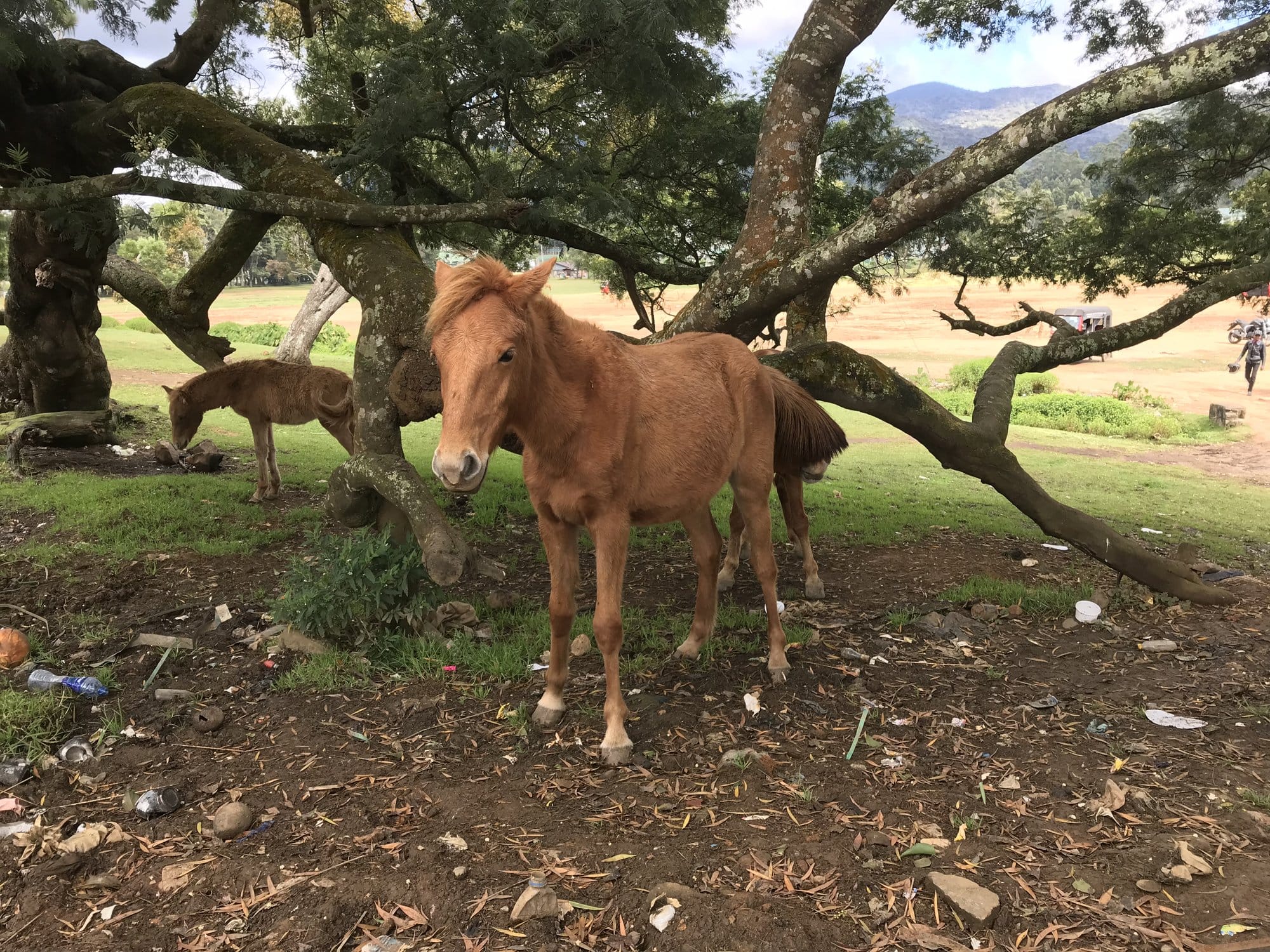
One memorable afternoon, we rented horses and rode through pastoral meadows on the town's outskirts. Our children (nervous at first) gained confidence quickly, and we found ourselves alone in a green valley under spreading trees, the colonial town just visible through the haze. It's a simple activity but felt like pure escape.
Getting there
Nuwara Eliya sits in the Sri Lankan hill country, 5 hours by car or train from Colombo Bandaranaike (CMB) — Sri Lanka's only major international airport. We always fly into CMB on Qatar via Doha, spend a night in Negombo, then take the morning train via Kandy up into the tea estates.
Practical Information
Getting to Nuwara Eliya
From Kandy, the drive takes 4–5 hours via the A5 highway, climbing steadily as you gain altitude. Roads are good but winding; allow extra time if you're not comfortable with mountain driving. Public buses operate this route frequently and are inexpensive, though slower and crowded. Consider booking a day tour from Kandy that combines the Cultural Triangle with the Hill Country for a comprehensive experience.
From Colombo, the journey is 6+ hours. Many travelers combine Nuwara Eliya with visits to Kandy (home to the Temple of the Tooth) or the cultural triangle (Sigiriya, Polonnaruwa) nearby.
The nearest airport is Bandaranaike International (Colombo), about 150km away. Arrange transport through your hotel or a ride-share service.
Best Time to Visit
December through February brings clearer skies and cooler temperatures—ideal for hiking and train rides. However, the mist and clouds of other seasons lend an almost mystical quality. Avoid the monsoon seasons (May–June and September–October) if possible, as roads become treacherous and visibility drops sharply.
We visited late December and enjoyed both sunny afternoons and dramatic cloud-filled mornings. Pack layers; it's genuinely cool at altitude.
Where to Stay
Nuwara Eliya has accommodation for all budgets, from backpacker hostels to colonial heritage hotels.
Heritage Hotels: The Grand Hotel and similar period properties offer old-world charm and excellent restaurants, though at premium prices. These are worth a splurge for one night to experience the colonial atmosphere fully.
Mid-range: Numerous family-run guesthouses offer comfort without the tourist-trap feel. Many are tucked into quieter neighborhoods and offer stunning views.
Budget: Hostels and basic guesthouses cluster near the town center and are perfectly adequate for a night or two.
We stayed in a comfortable mid-range property with an excellent restaurant and helpful staff who arranged our horse ride and train tickets. Book ahead during peak season (December–February).
Find and compare hotels on [Trip.com](https://www.trip.com/hotels/?Allianceid=7725271&SID=290061381&trip_sub1=maptrotting){rel="sponsored nofollow"}
Find the Best Place to Stay
Making Connections
The Hill Country serves as a natural hub between major destinations: — Sri Lanka's stunning south coast — Sri Lanka's ancient Cultural Triangle
- Coming from: The Sri Lanka family itinerary hub covers how to structure a multi-week trip. - Kandy connection: About 4 hours north, home to the Temple of the Tooth and a scenic lake. - Cultural Triangle: Sigiriya rock fortress and Polonnaruwa's ancient capitals are 2–3 hours by road. - Ella & beyond: The train continues to Ella, Nine Arch Bridge & World's End, another stunning hill-country destination 3 hours south. - Mountain scenery comparison: If you're familiar with the French Alps family road trip, you'll appreciate how the Hill Country offers similar—albeit tropical—alpine experiences. - Hiking parallels: Like hiking the French Alps with kids, the Hill Country trails suit families comfortable with moderate elevation and variable weather. - Winter escapes: Similar to Chamonix and Mont-Blanc for families, Nuwara Eliya offers elevation and cool air as a refuge from lowland heat.
Explore Nuwara Eliya with GPSmyCity
This article is also featured on GPSmyCity. To download this article for offline reading or create a self-guided walking tour to visit the attractions highlighted in this article, go to Walking Tours and Articles in Nuwara Eliya.
Final Thoughts
The Hill Country rewards slow travel. A day in Nuwara Eliya and the tea plantations is better than none, but two days—one for trains and landscapes, one for the town itself and a local hike—allows you to really absorb the place. The colonial architecture, the misty mornings, the steep green hills, and the rhythm of a small hill-station town all work together to create something uniquely memorable.
When we left, our children asked if we could come back. That, honestly, is the truest measure of a destination's worth.
Also, if you're interested in further exploration, you can book a sunrise hike to Ella Rock for your next adventure in the highlands.
Disclosure: This article contains affiliate links to booking platforms. Using our links supports MapTrotting at no extra cost to you, and helps us continue sharing family travel stories and practical guides.