
Mountains & Heritage: Bahlā', Jebel Akhdar, Nizwá & Oman's Grand Mosque
Ancient mud-brick forts, palm-filled oasis villages at the foot of cliffs, canyon viewpoints at 2,000 metres, and one of the most beautiful mosques on Earth.

The interior of Oman looks nothing like the Dubai-adjacent Gulf you might be imagining. An hour's drive from Muscat, the land rises sharply into the Al Hajar mountain range — jagged peaks, deep canyons, and scattered villages that have been surviving on ancient irrigation systems for over a thousand years. This is where Oman's soul lives, and where we started our two-week family road trip.
We spent the first three days of our trip exploring the mountains around Bahlā', Nizwá, and the Jebel Akhdar plateau, then returned to the coast at the very end for the Grand Mosque — the trip's architectural crescendo. Together, these bookend the journey with Oman's deep cultural heritage.
Bookings: Some of the links in this article are affiliate links. This means that if you choose to make a booking, we will receive a small commission at no extra cost to you. Thank You!
Misfat al Abriyyin
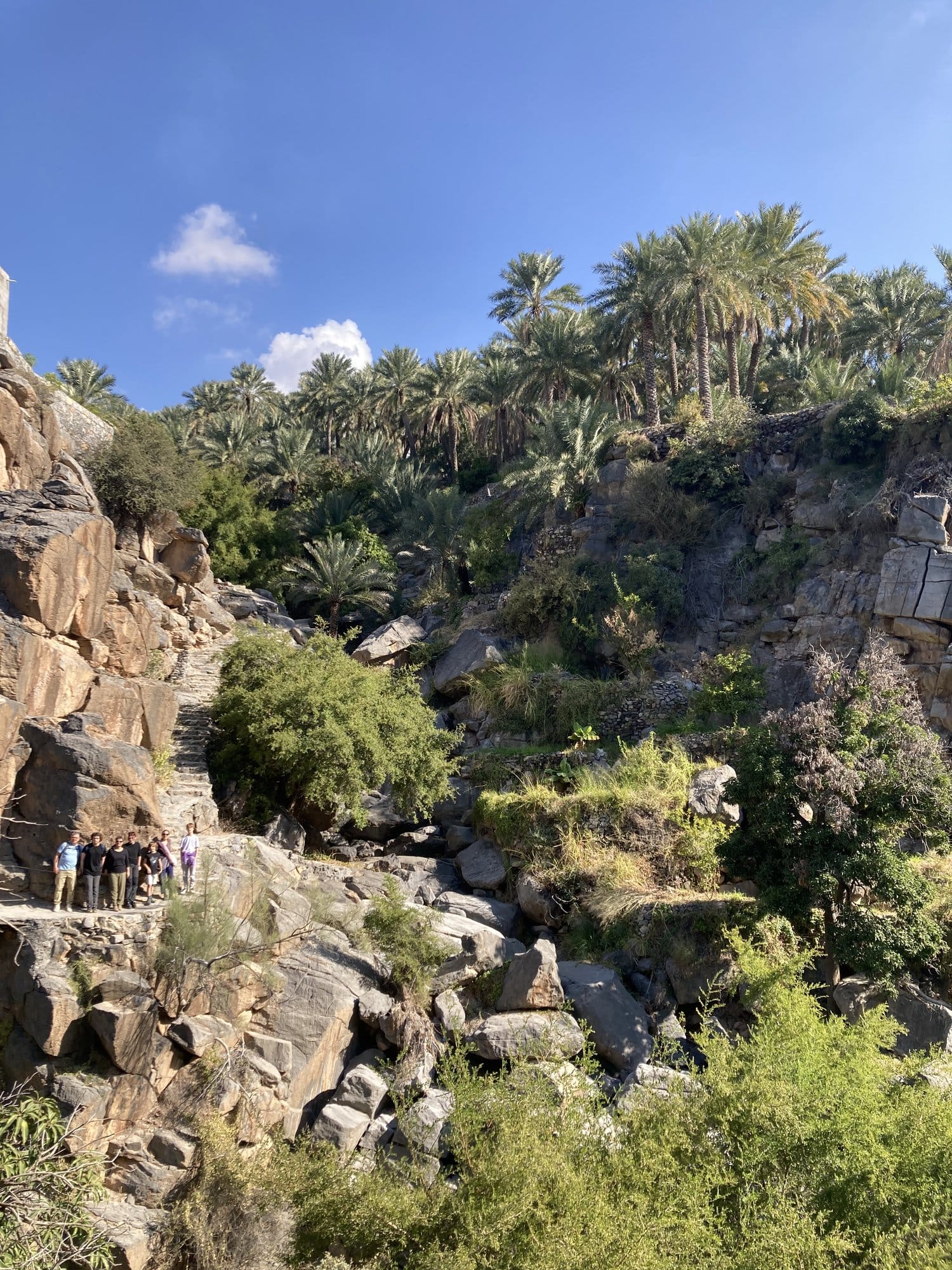
Our first stop set the tone for the entire trip. Misfat al Abriyyin is a tiny village clinging to a cliff face above a dense palm grove, reached via a narrow road that branches off the highway near Bahlā'. You park at the top and walk down — stone stairs worn smooth by centuries of use, a falaj (irrigation channel) gurgling alongside, date palms pressing in from both sides.
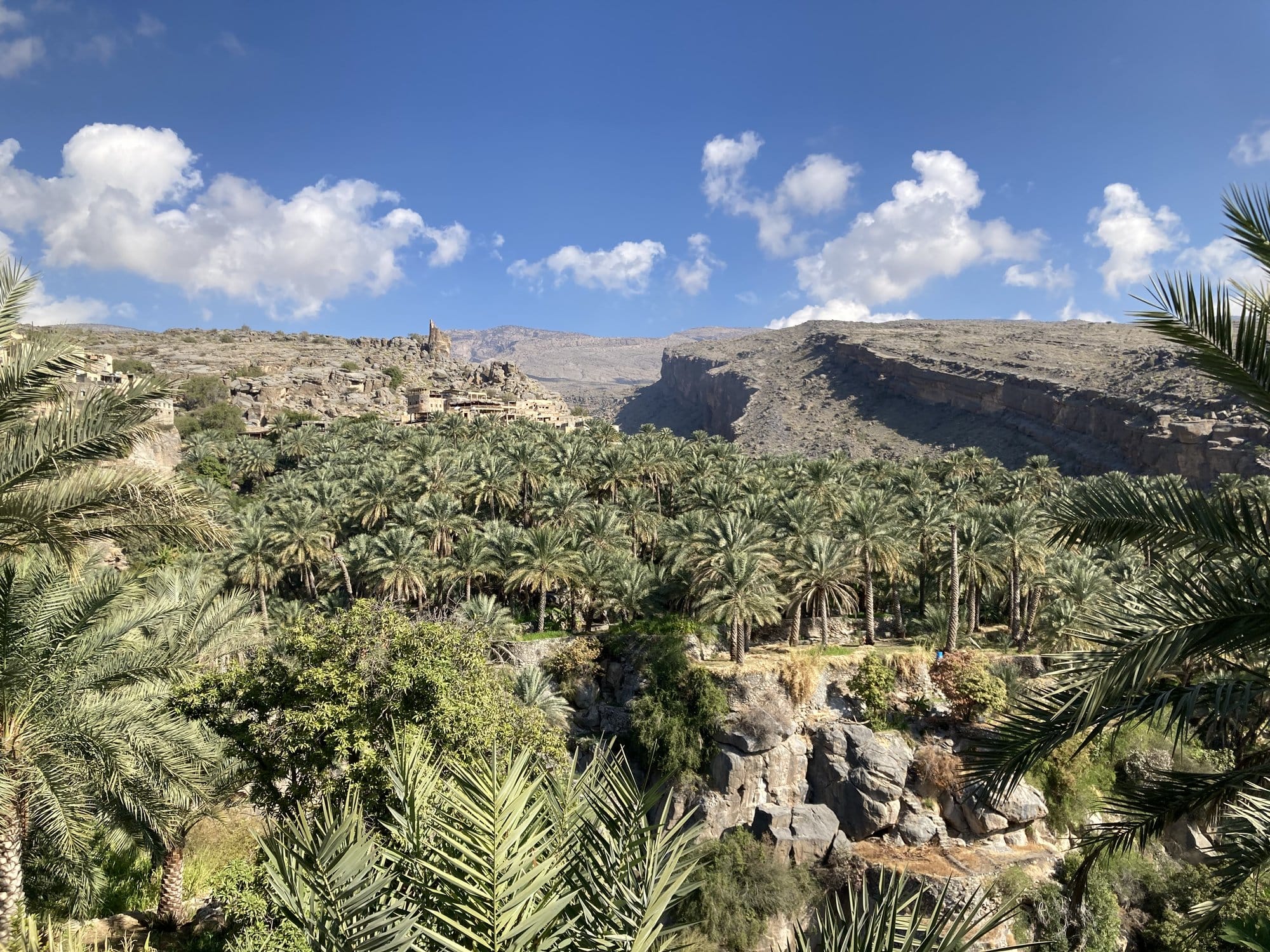
The village itself is a stack of honey-coloured stone houses, some restored, some crumbling, with narrow alleys that thread between them. We walked for about an hour, the kids running ahead on the paths while we stopped to photograph every angle of this place that felt like stepping back 500 years.
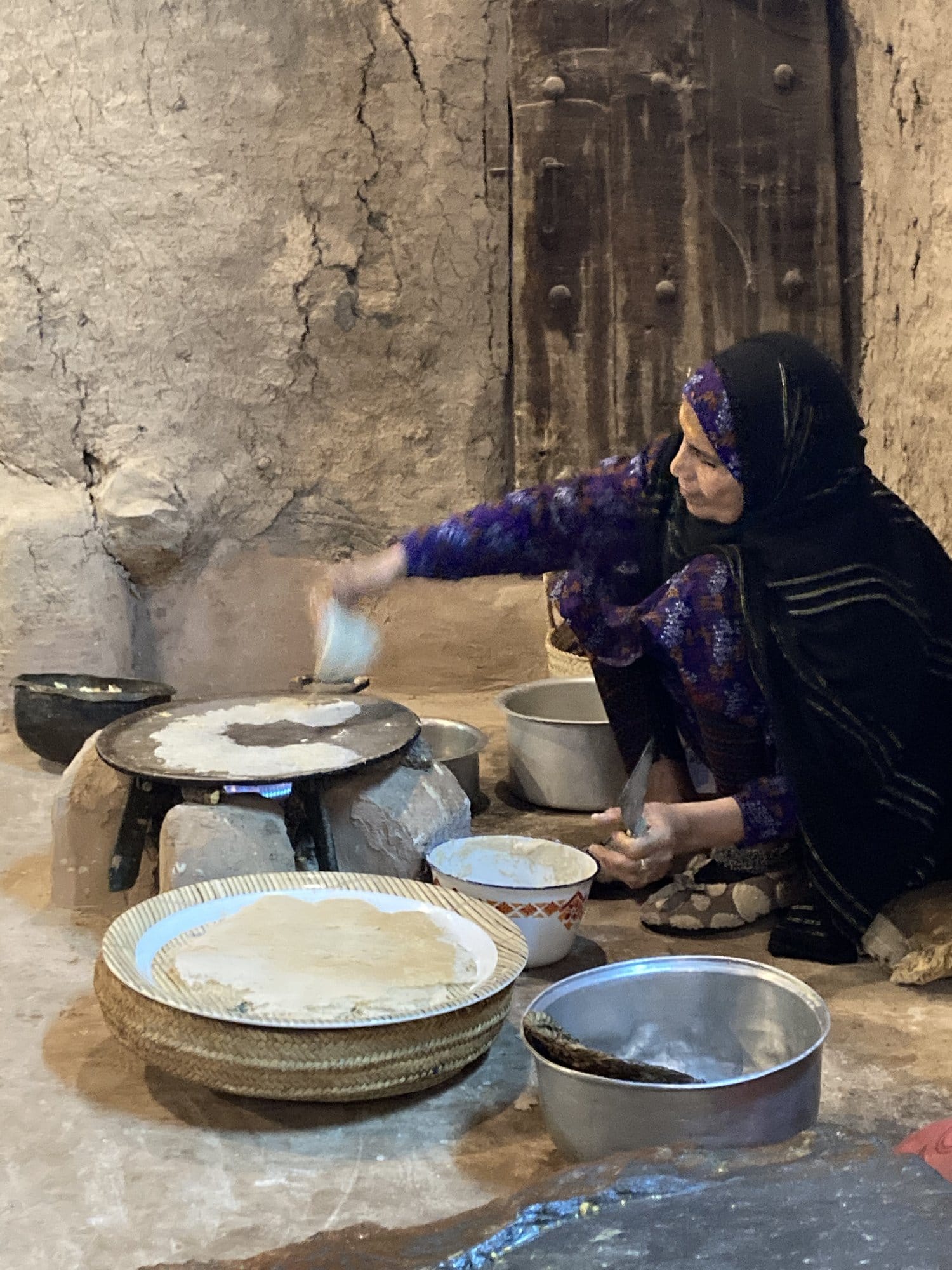
At a house deeper in the village, we watched a woman making traditional Omani bread — khubz rakhal — on a stone oven, working the dough with practiced ease while the fire crackled beneath. It was one of those unplanned encounters that turn a sightseeing trip into a genuine cultural exchange.
Misfat is best visited in the morning, before the heat builds. There's a small café at the top where you can grab a coffee before or after the walk. Allow about 90 minutes for a relaxed visit.
Bahla Fort
From Misfat, it's a short drive to Bahla Fort — a UNESCO World Heritage site and one of the largest forts in Oman. Built from mud-brick over several centuries, the fort sprawls across a hilltop like a small city, with towers, courtyards, and passages that seem to go on forever.
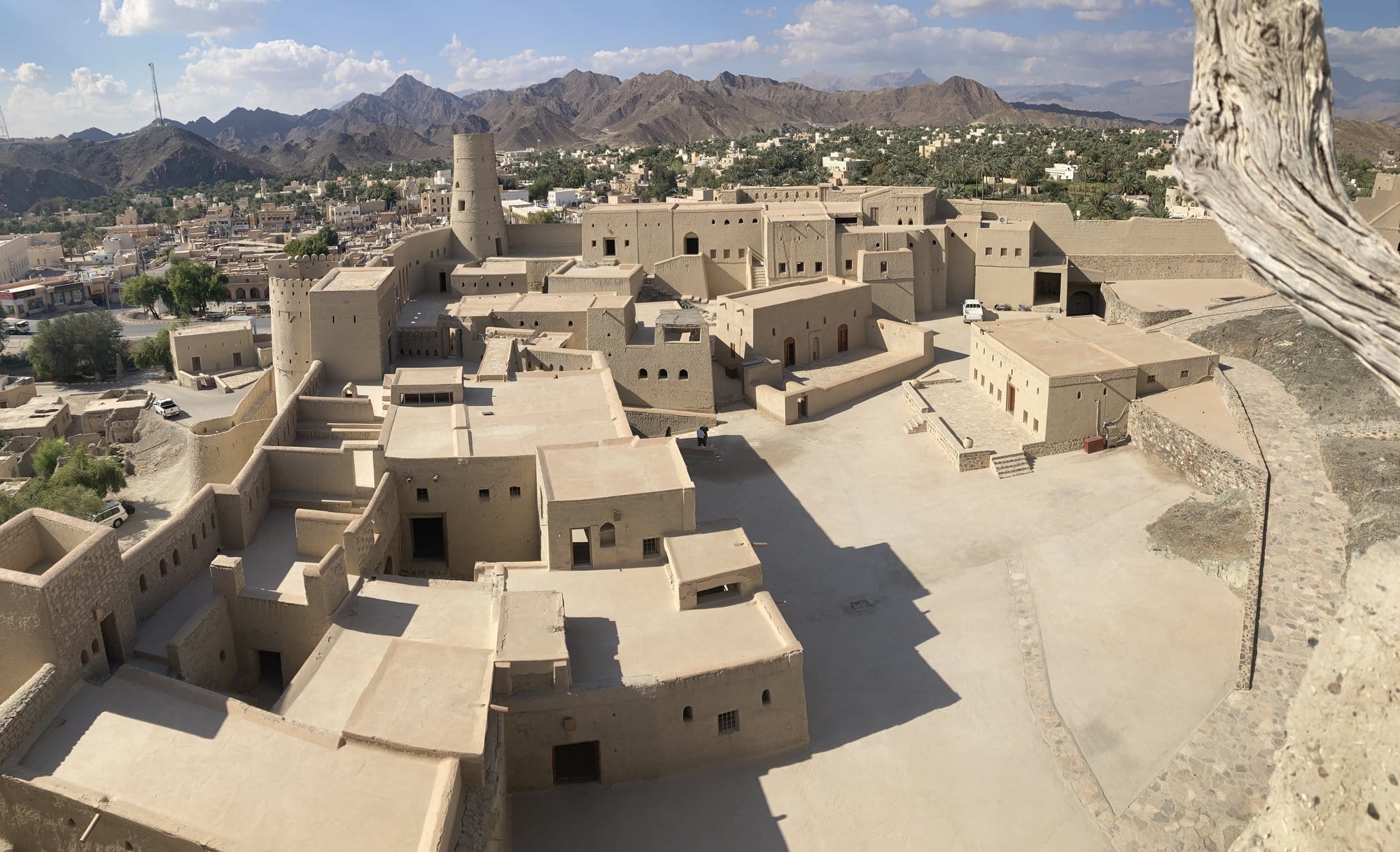
We climbed to the top of the main tower, where the views over the town of Bahla and the surrounding mountains are remarkable. The fort has been extensively restored — some purists might object, but the scale of the place is impressive regardless, and the kids enjoyed exploring the labyrinth of rooms and stairways.
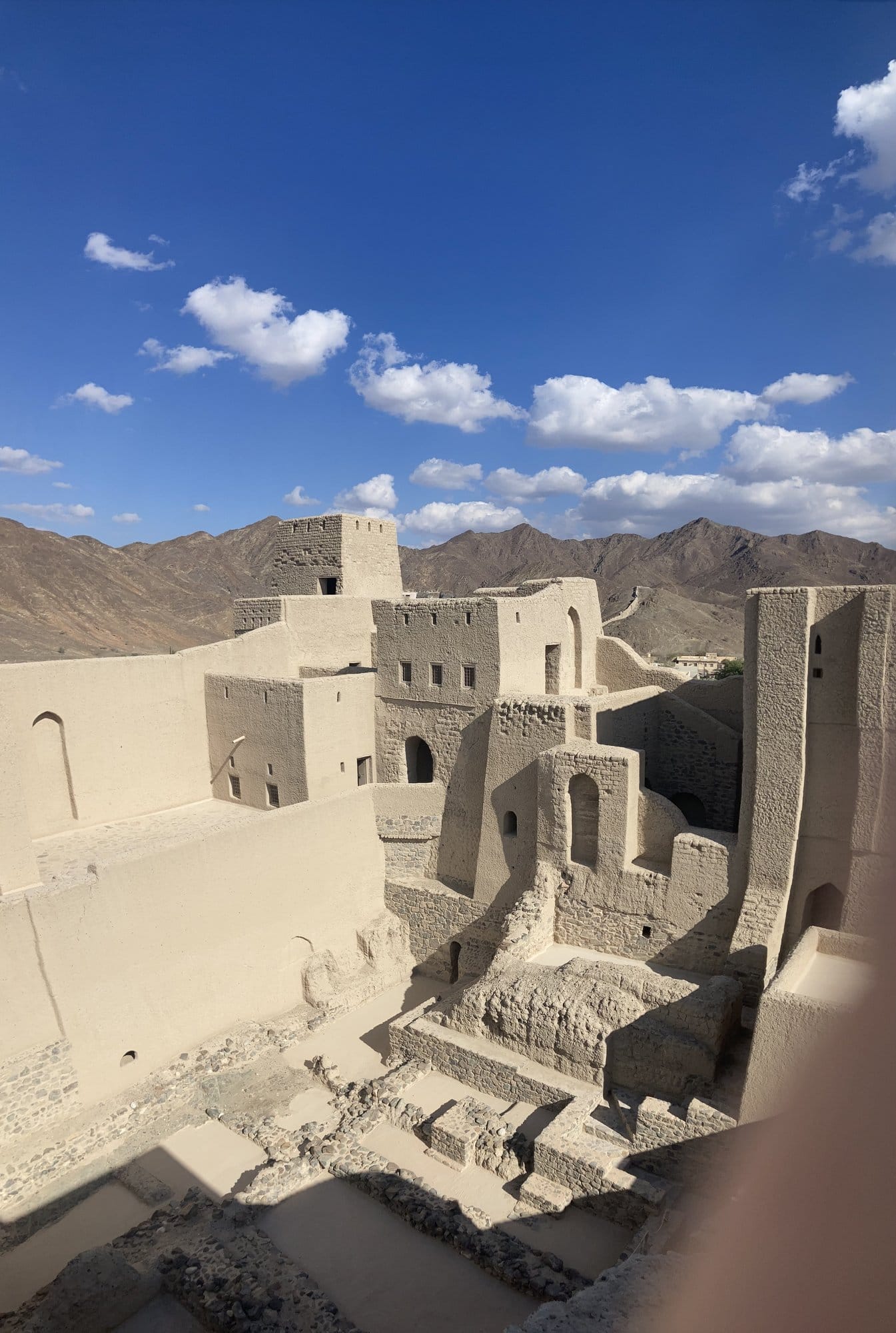
The adjacent souk is worth a quick wander. It's been rebuilt but maintains a traditional layout, and you can pick up Bahla's famous pottery — the town has been a pottery-making centre for centuries.
Entry fee is modest (a few rials). Allow about an hour for the fort, more if your kids are the exploratory type.
Jebel Akhdar — The Green Mountain
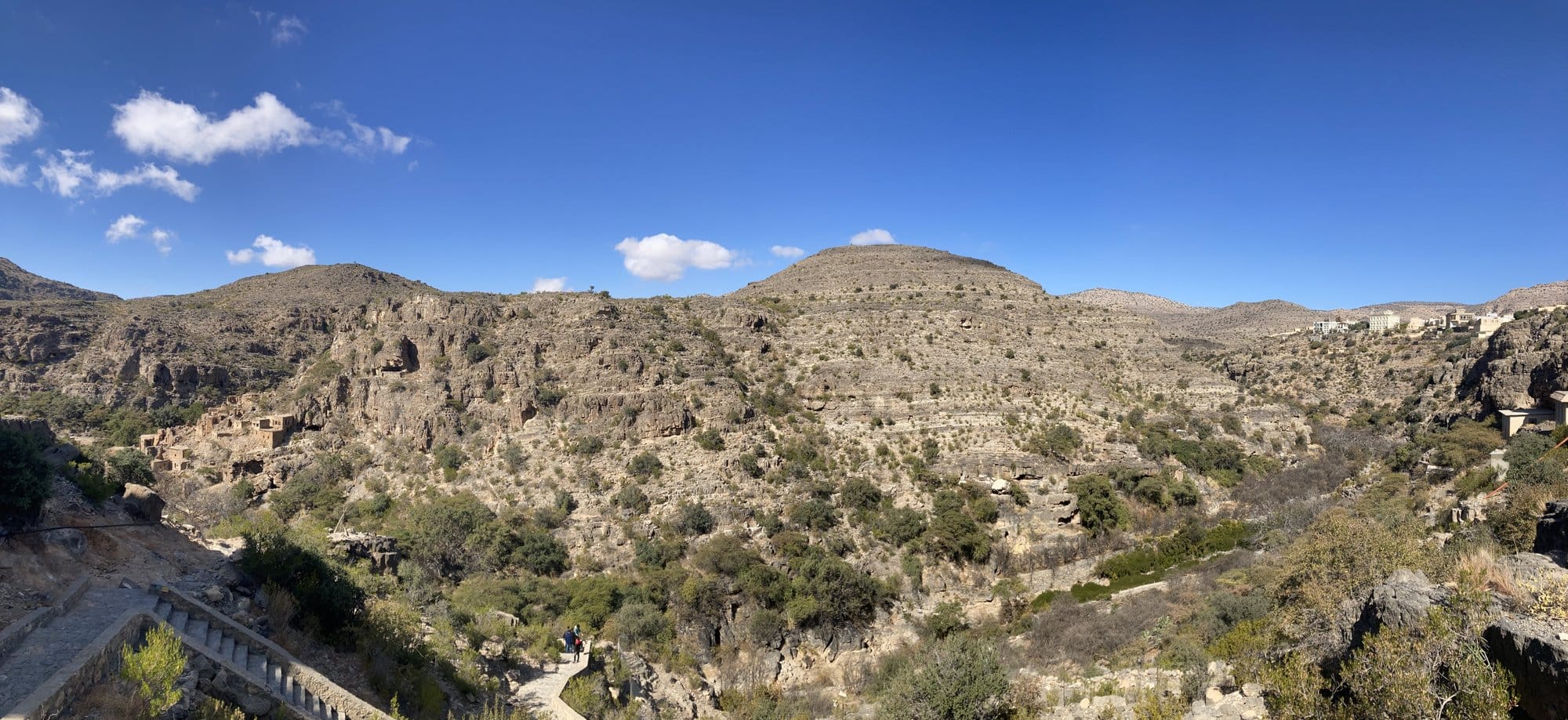
From the lowlands around Bahlā' and Nizwá, a road climbs steeply into the Jebel Akhdar massif — the highest section of the Al Hajar range, reaching over 3,000 metres at its peak. The road to the plateau is fully paved but steep and winding, and the scenery shifts dramatically as you gain altitude. The air cools, the vegetation changes, and suddenly you're at 2,000 metres with canyon views that stop you in your tracks.
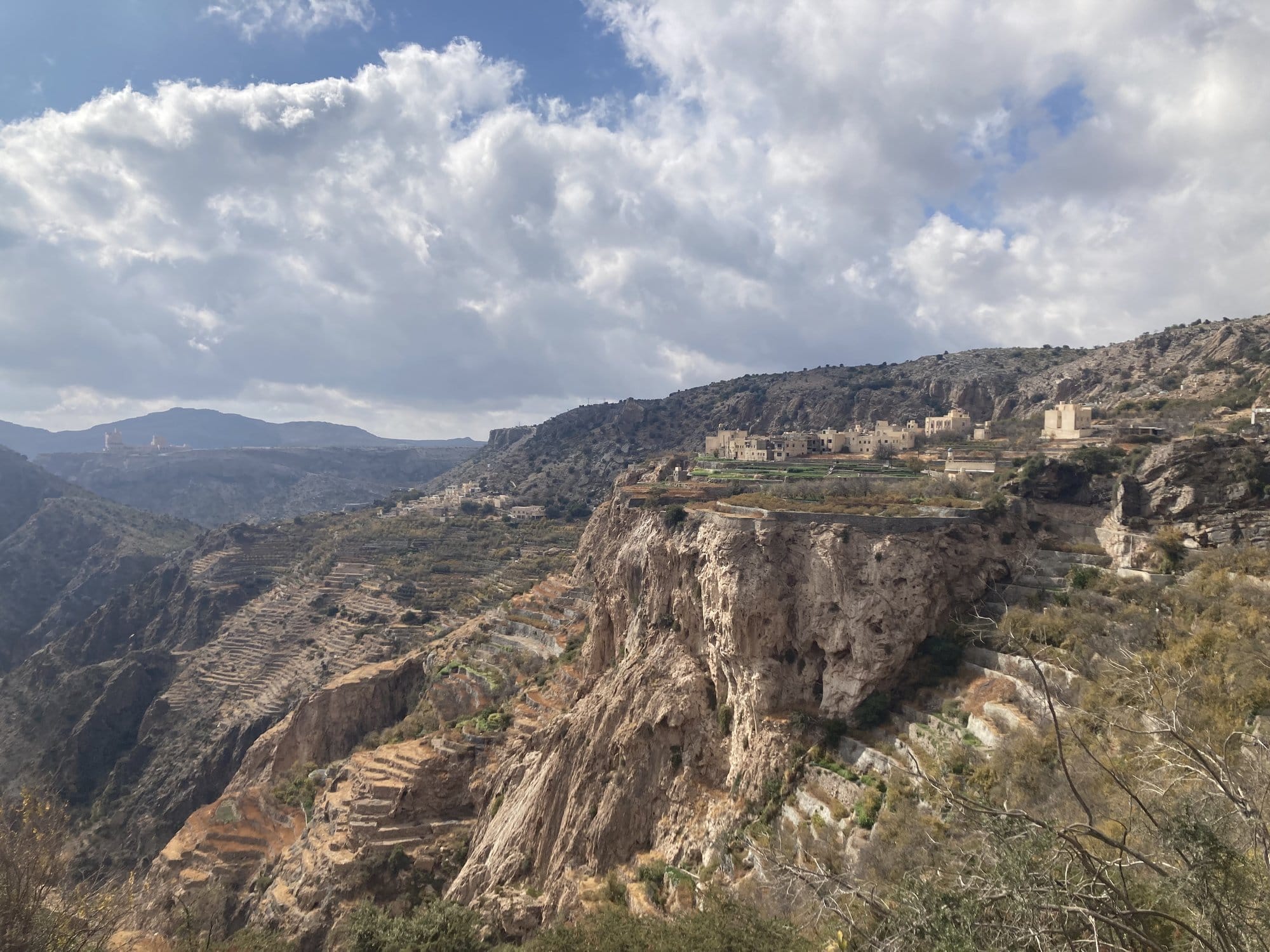
We spent a day driving and walking along the plateau, stopping at viewpoints where deep canyons dropped away beneath us. At one spot, we sat on the edge of a cliff with our legs dangling — or rather, I did while my wife sensibly stayed a metre back — and looked down into a valley so deep and narrow that the bottom was in shadow even at midday. Guided activities and tours of Jebel Akhdar are also available if you prefer to explore with a local expert.
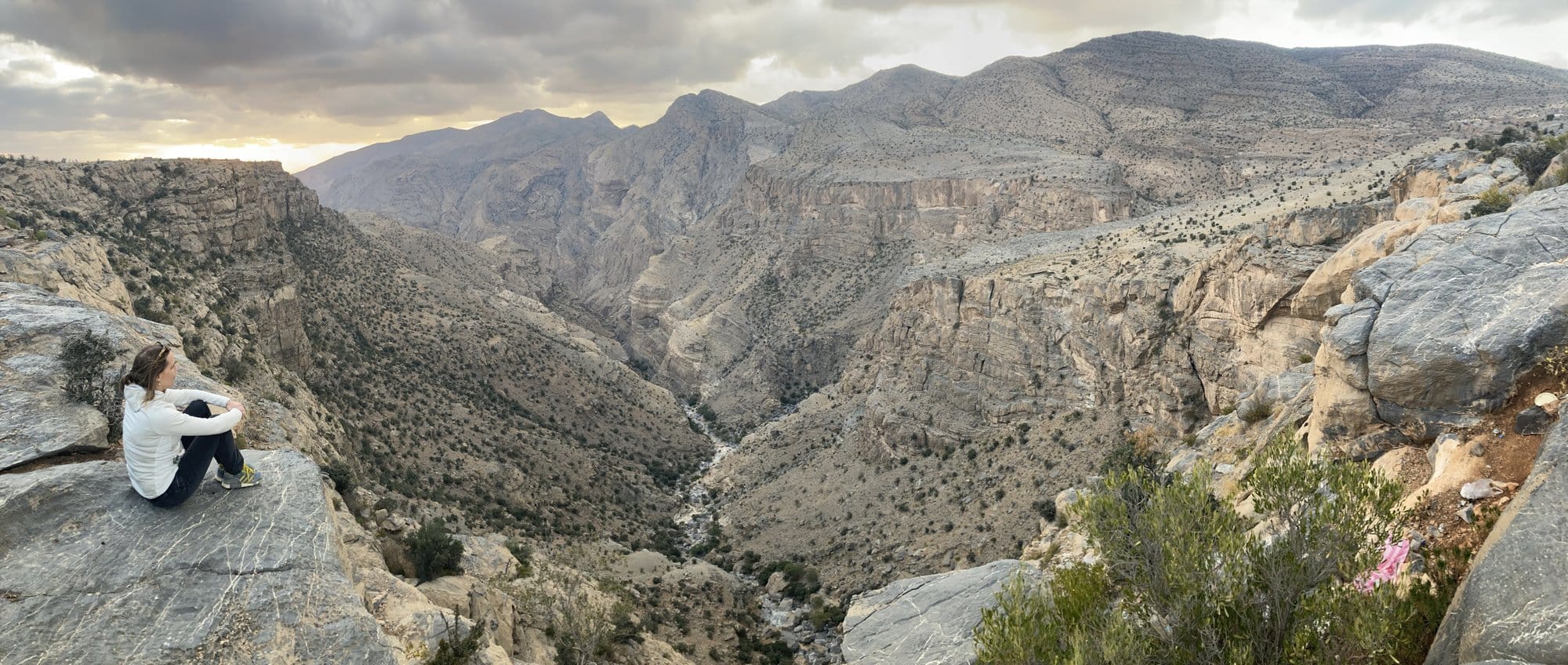
The plateau is known for its rose gardens and fruit orchards — pomegranates, walnuts, and apricots grow in terraced gardens that date back centuries. If you visit in March or April, the damask rose harvest fills the air with fragrance. We were there in December, so the terraces were dormant but still beautiful in their geometric precision against the raw rock.
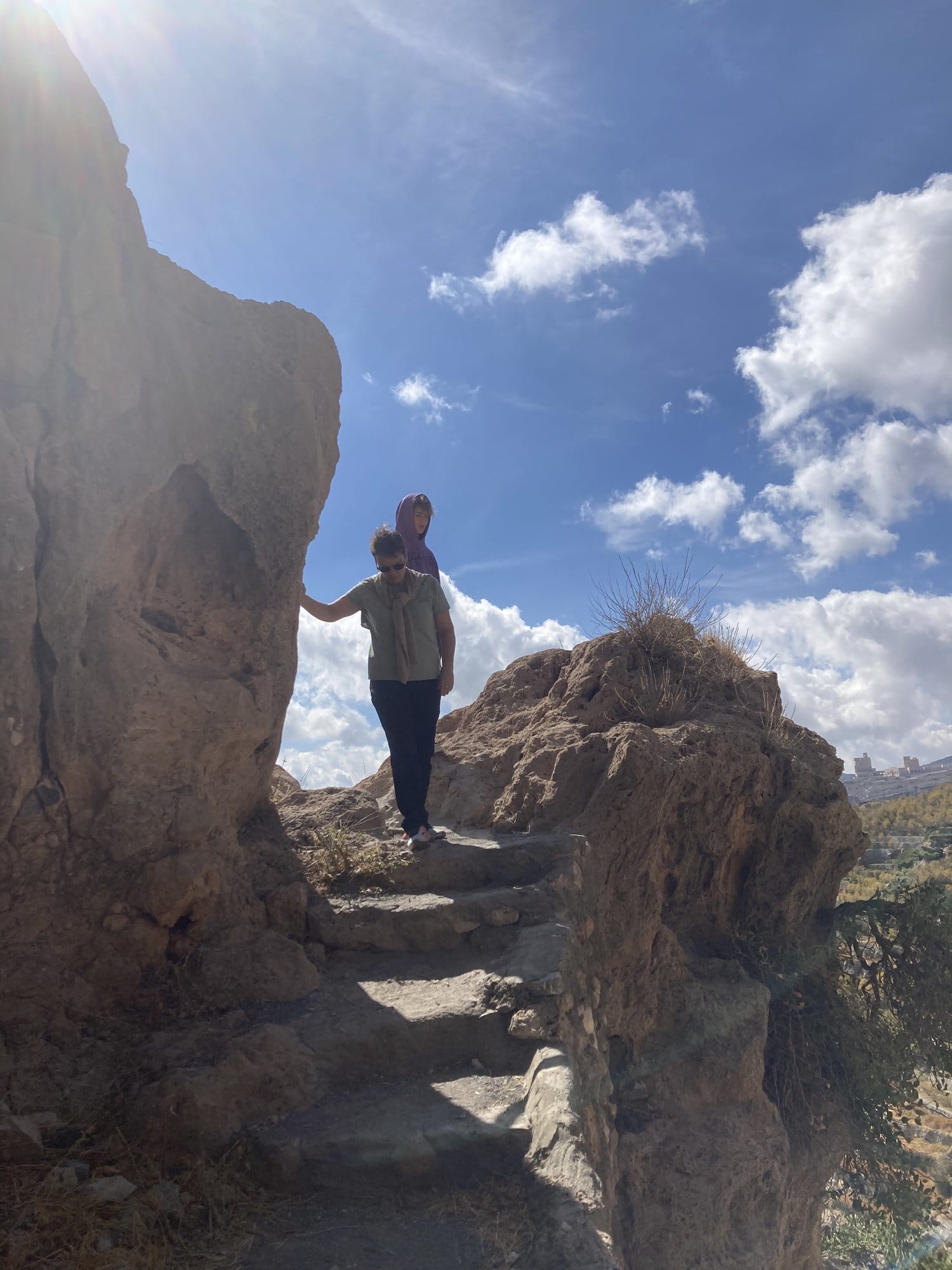
A practical note: the road up to Jebel Akhdar is restricted and technically requires a 4WD vehicle. There's a police checkpoint at the base. In practice, any car with decent clearance can make it — we were in a Suzuki Vitara and had no issues. The road is fully paved; the restriction is about the gradient, not the surface.
Nizwá
Nizwá was Oman's capital for centuries and remains the cultural heart of the interior. The town's round tower fort is the most recognisable in the country — a massive drum of mudbrick that you can climb for 360-degree views over the palm groves and mountains.
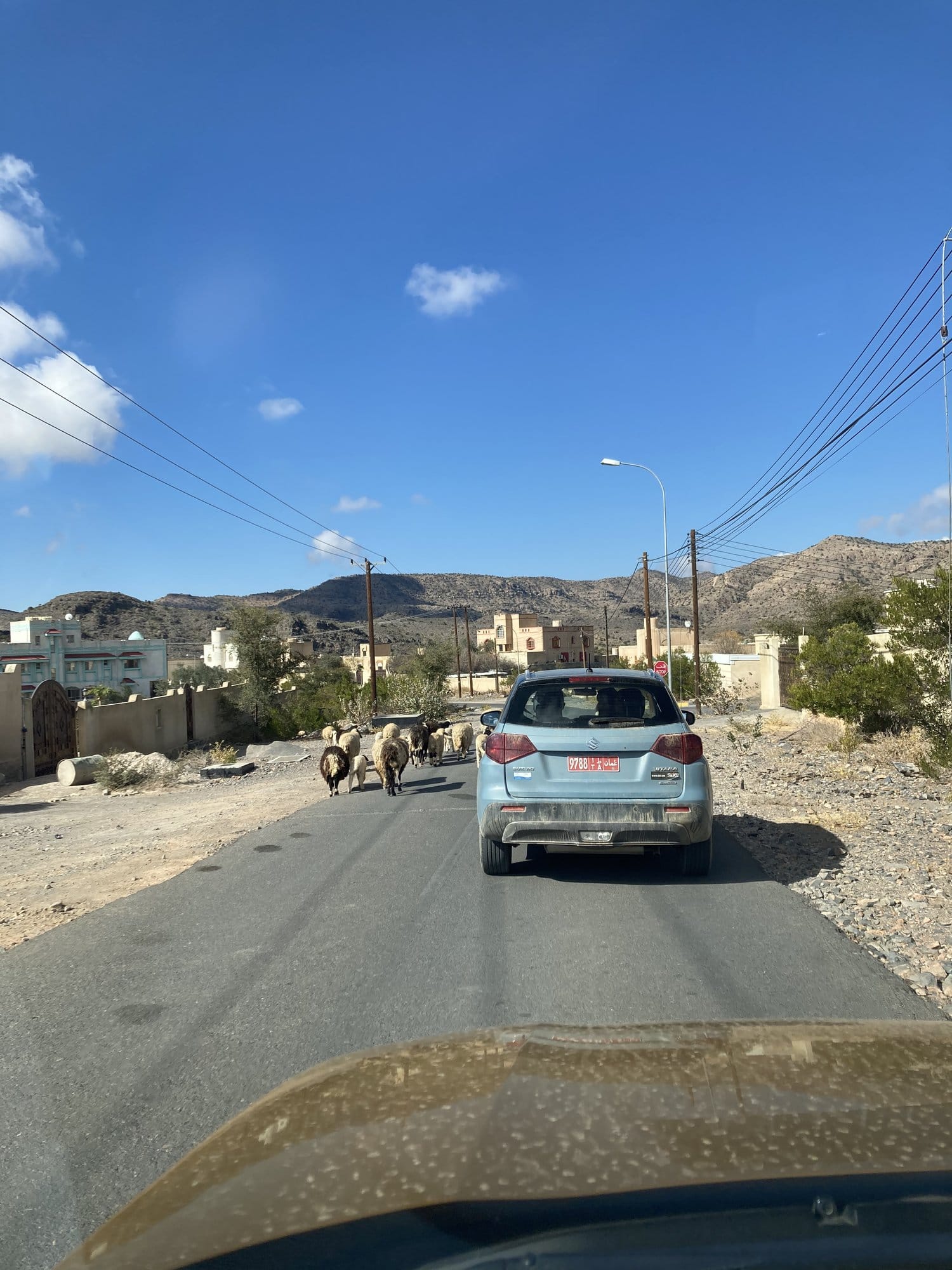
The real draw for us was the souk, which sprawls around the base of the fort. Narrow alleys branch off in every direction, selling everything from dates and honey to khanjar daggers and frankincense. The atmosphere is lively without being overwhelming, and the vendors are friendly rather than pushy.
If you can time your visit for a Friday morning, the livestock market is legendary — a chaotic, noisy, utterly absorbing spectacle of goat and cattle trading that hasn't fundamentally changed in generations. We missed it by a day and still regret it.
Nizwá makes an excellent base for the mountain region. Hotels here range from budget to comfortable mid-range, and the town has the best restaurant selection outside Muscat. You can also explore guesthouses and lodging options on Stay22's map for the Nizwa area. We spent two nights here and it was enough to cover the main sights without rushing.
The Grand Mosque of Sultan Qaboos
We saved the Grand Mosque for our very last day — January 1st — and it was the perfect way to close the trip. Located in Bawshar, on the outskirts of Muscat, the Sultan Qaboos Grand Mosque is one of the largest and most beautiful mosques in the world, and it's open to non-Muslim visitors every morning except Fridays.
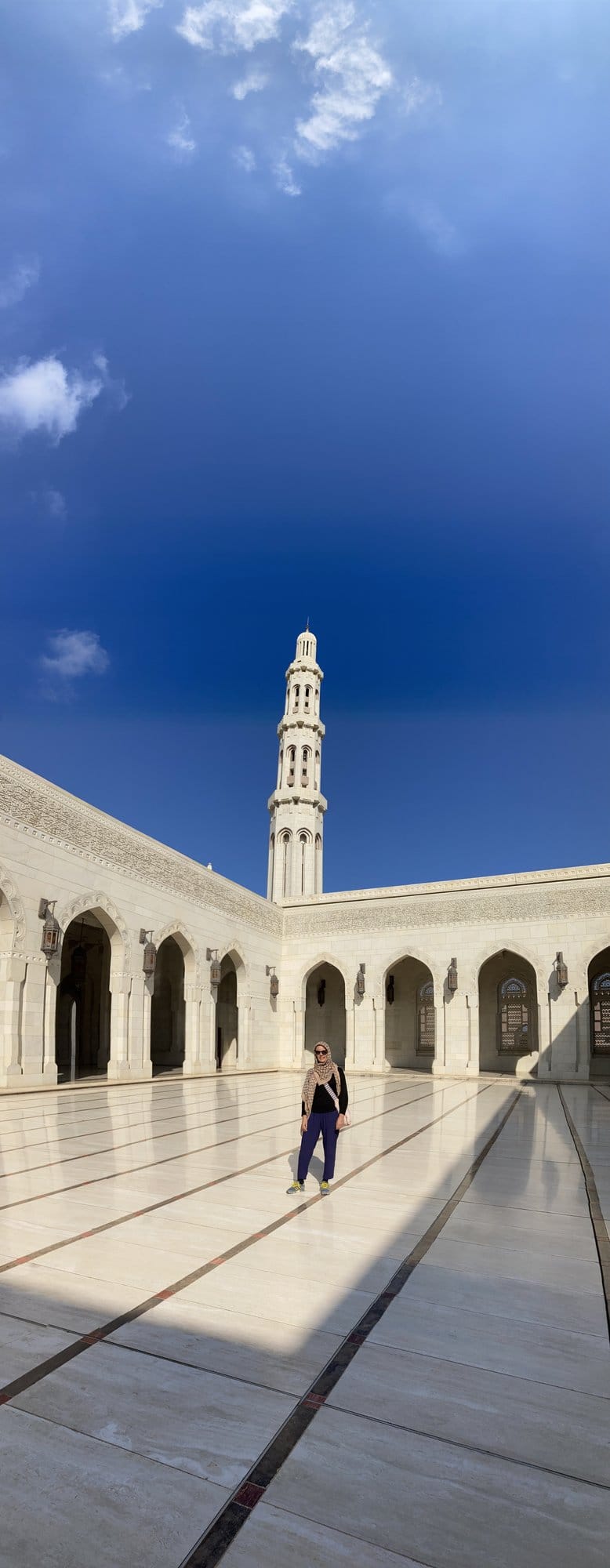
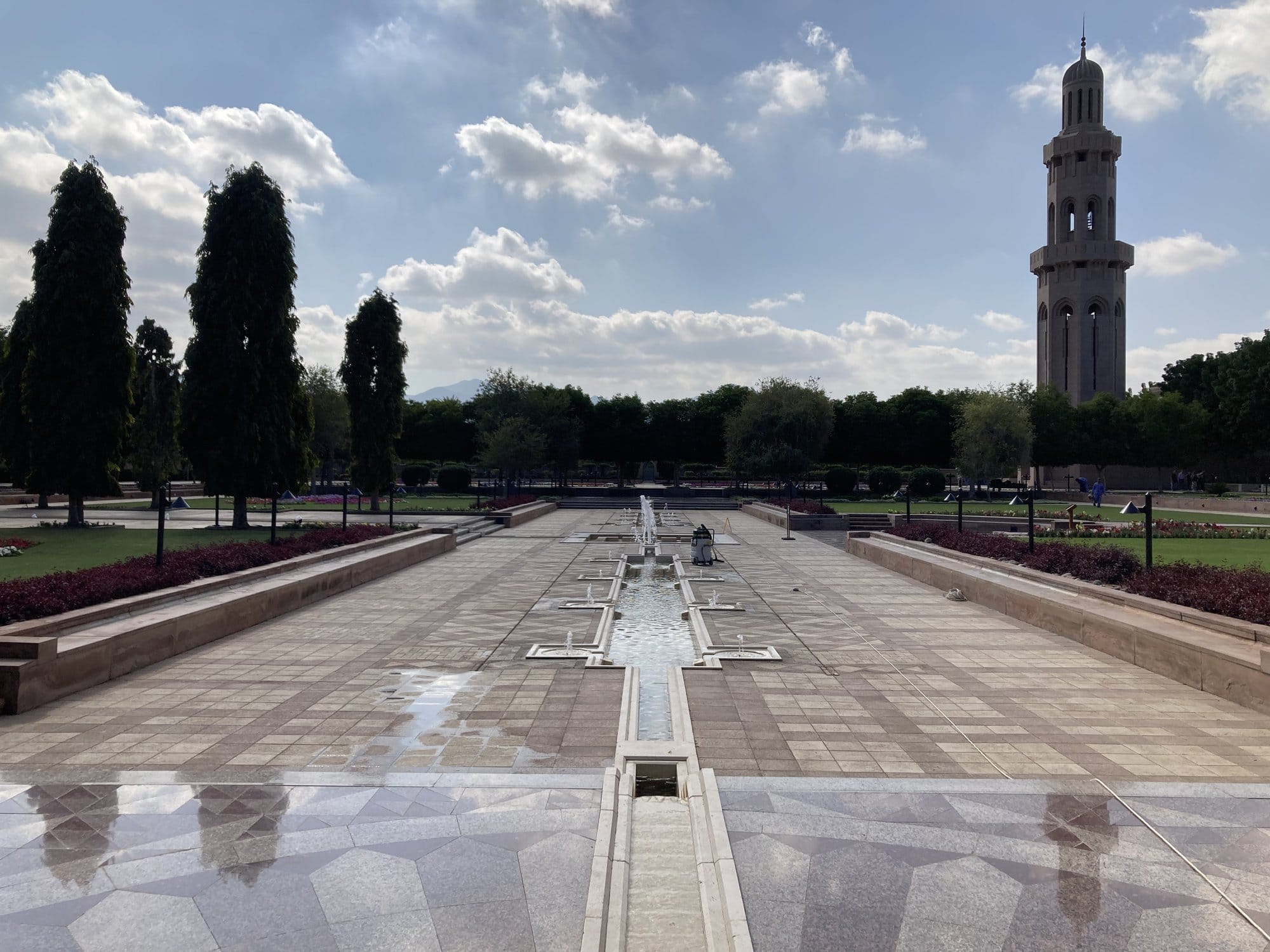
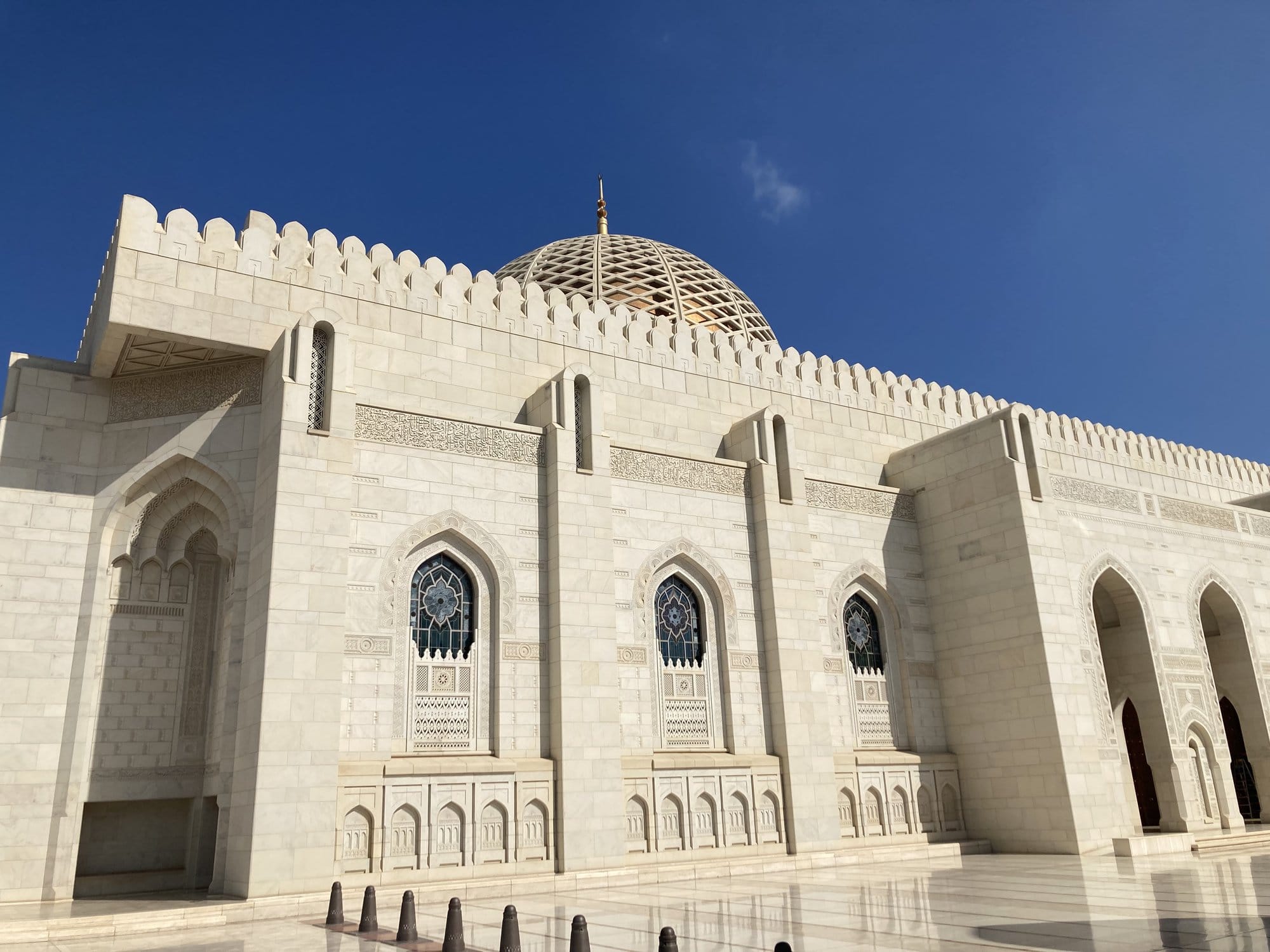
The scale of the place is breathtaking. You approach through landscaped gardens with a fountain-lined central walkway, the golden dome and minaret growing larger with each step. The exterior is all white marble — Indian sandstone and Italian marble — with geometric patterns inlaid in coloured stone.
But it's the interior that truly takes your breath away. The main prayer hall is an enormous space — 74 metres square under a 50-metre-high dome — illuminated by a Swarovski crystal chandelier that weighs eight tonnes. The carpet beneath your feet is a single piece, hand-woven by 600 Iranian women over four years, covering 4,343 square metres. It held the record for the world's largest handmade carpet for several years.
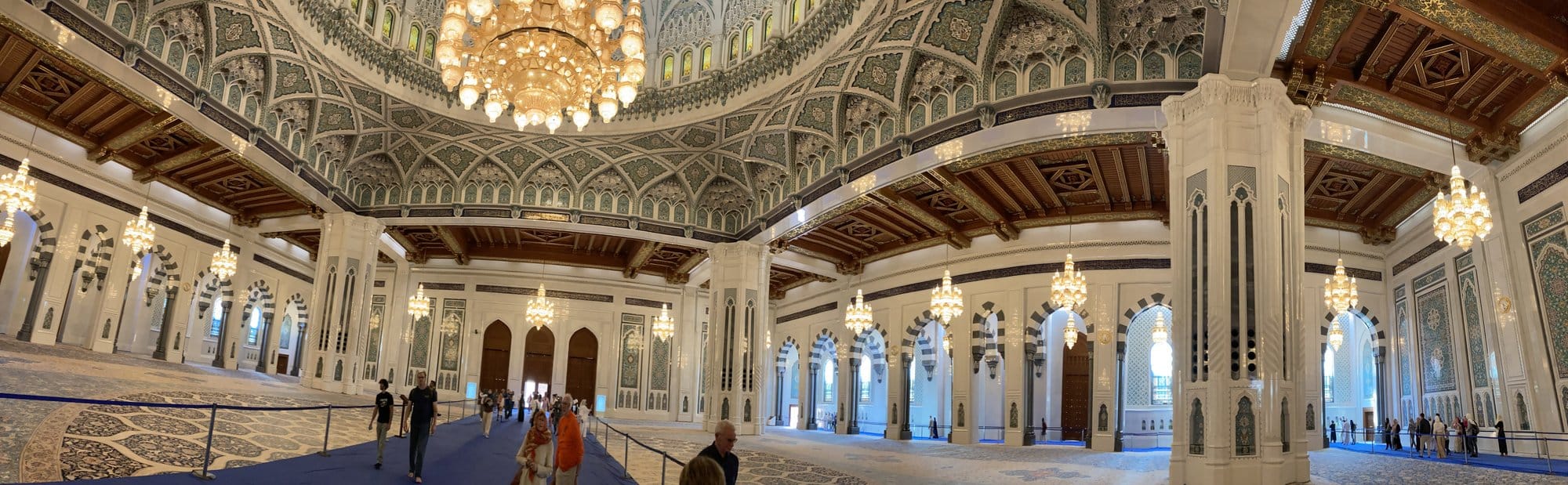
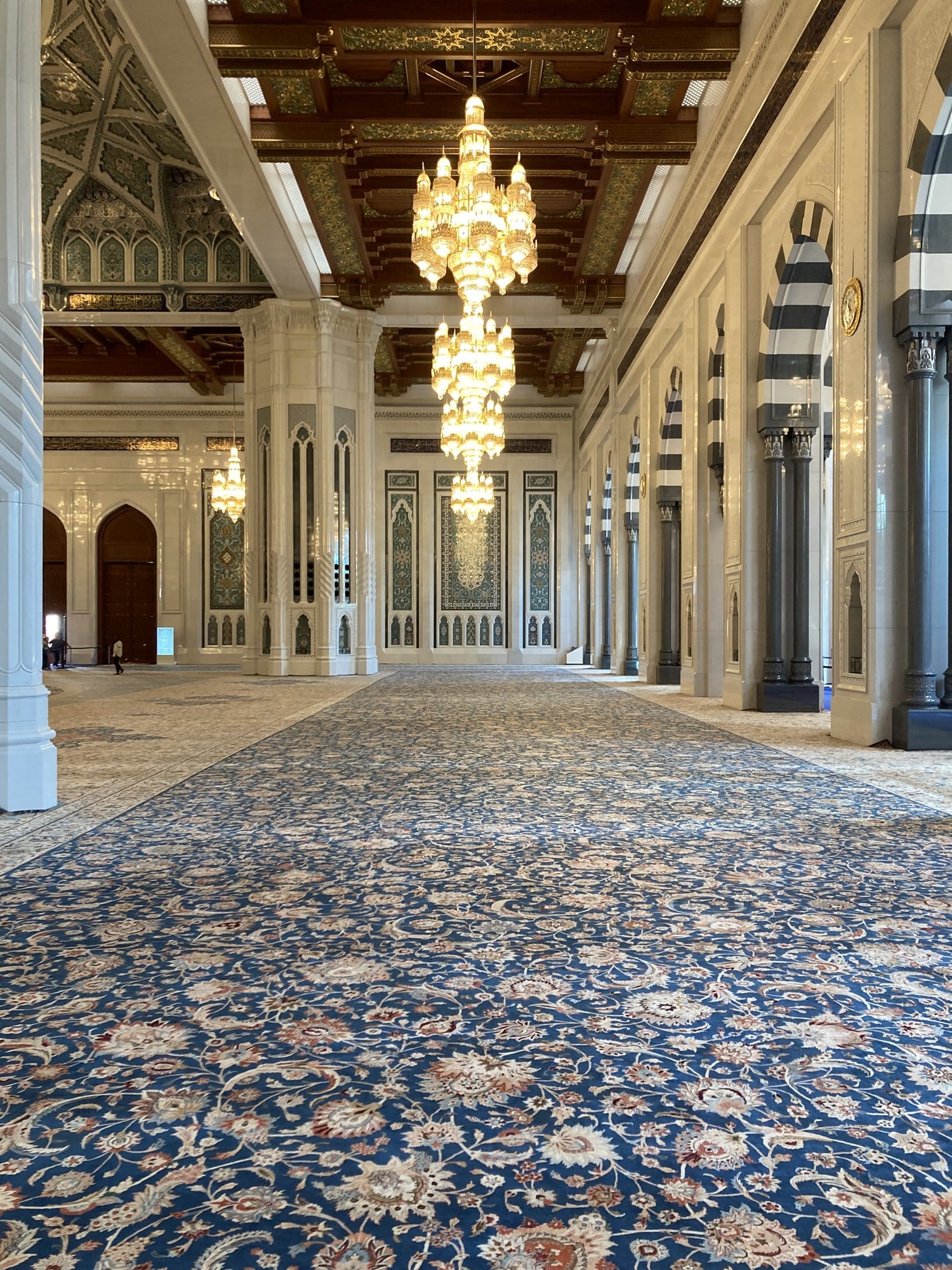
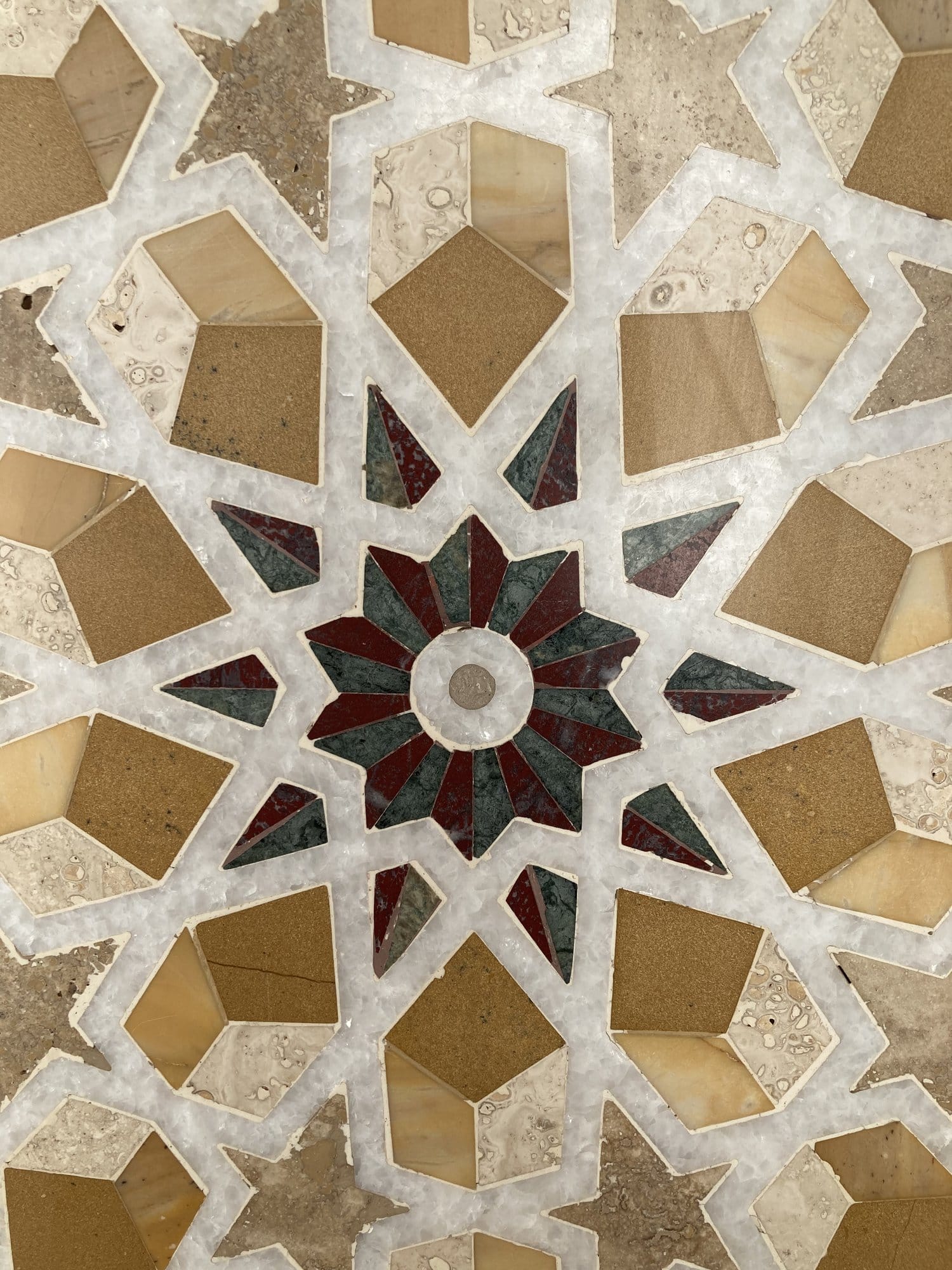
The attention to detail is extraordinary at every scale. We spent several minutes studying the marble inlay work on the floor — Islamic geometric patterns executed in green, red, and ochre stone with a precision that borders on obsessive.
The exterior is equally impressive in its monumental serenity. The golden dome catches the light differently throughout the morning, and the proportions of the façade — arches, windows, battlements — are perfectly balanced.
Practical info: Free entry. Open Saturday to Thursday, 8:00–11:00 for non-Muslim visitors. Dress code is strict — long sleeves, long trousers/skirts, and headscarves for women (available to borrow). Photography is allowed. Allow at least an hour, ideally more. You can also explore guided tours of the Grand Mosque and other Muscat attractions if you prefer structured visits.
Getting There and Where to Stay
The mountain region is about two hours' drive from Muscat via a fast highway. Nizwá is the obvious base — it has the widest selection of accommodation and restaurants, and everything in this article is within an hour's drive. You can arrange a car rental through Trip.com to explore at your own pace.
For the Grand Mosque, you can visit on your way to or from the airport if your flight timing works — it's about 30 minutes from the terminal.
If you're combining this with the rest of an Oman road trip (desert + wadis), the mountains work best as either the start or end of the loop. We started here, which gave us a cultural foundation before heading into the wilder landscapes of the desert and coast.