
Oman's Wadis: Tiwi, Shab & Bani Khalid — A Family Swimming & Hiking Guide
Turquoise pools, hidden waterfalls, chain-assisted scrambles through narrow canyons — exploring Oman's wadis with the family was the photographic highlight of our road trip.

If there's one thing that sells Oman to people who've never considered visiting, it's the wadis. Show someone a photo of Wadi Shab or Wadi Tiwi — turquoise water between towering rock walls, palm trees clinging to impossible ledges — and they always ask the same thing: "Where on earth is THAT?"
Oman's wadis are river canyons that cut through the Al Hajar mountain range, many of them holding permanent pools of crystal-clear water even when the rest of the country bakes. They're free to visit, they require nothing more than swimwear and hiking shoes, and they delivered the best four days of our entire two-week road trip.
We explored three wadis during our time along the east coast: Wadi Bani Khalid, Wadi Tiwi, and Wadi Shab, plus a lesser-known wadi inland from Sur. Here's what we found.
Bookings: Some of the links in this article are affiliate links. This means that if you choose to make a booking, we will receive a small commission at no extra cost to you. Thank You!
Wadi Bani Khalid — The Easy Introduction
We hit Wadi Bani Khalid on Christmas Day afternoon, driving east from the Wahiba Sands desert camp. After a morning in the sand dunes, plunging into cold turquoise water felt like a hallucination.
Wadi Bani Khalid is the most accessible of the major wadis — a paved road brings you close to the main pools, and you can be swimming within ten minutes of parking. The pools are deep, clear, and surrounded by smooth boulders polished by millennia of seasonal floods. A rope hangs over one of the main pools, and it took our son roughly 30 seconds to find it.
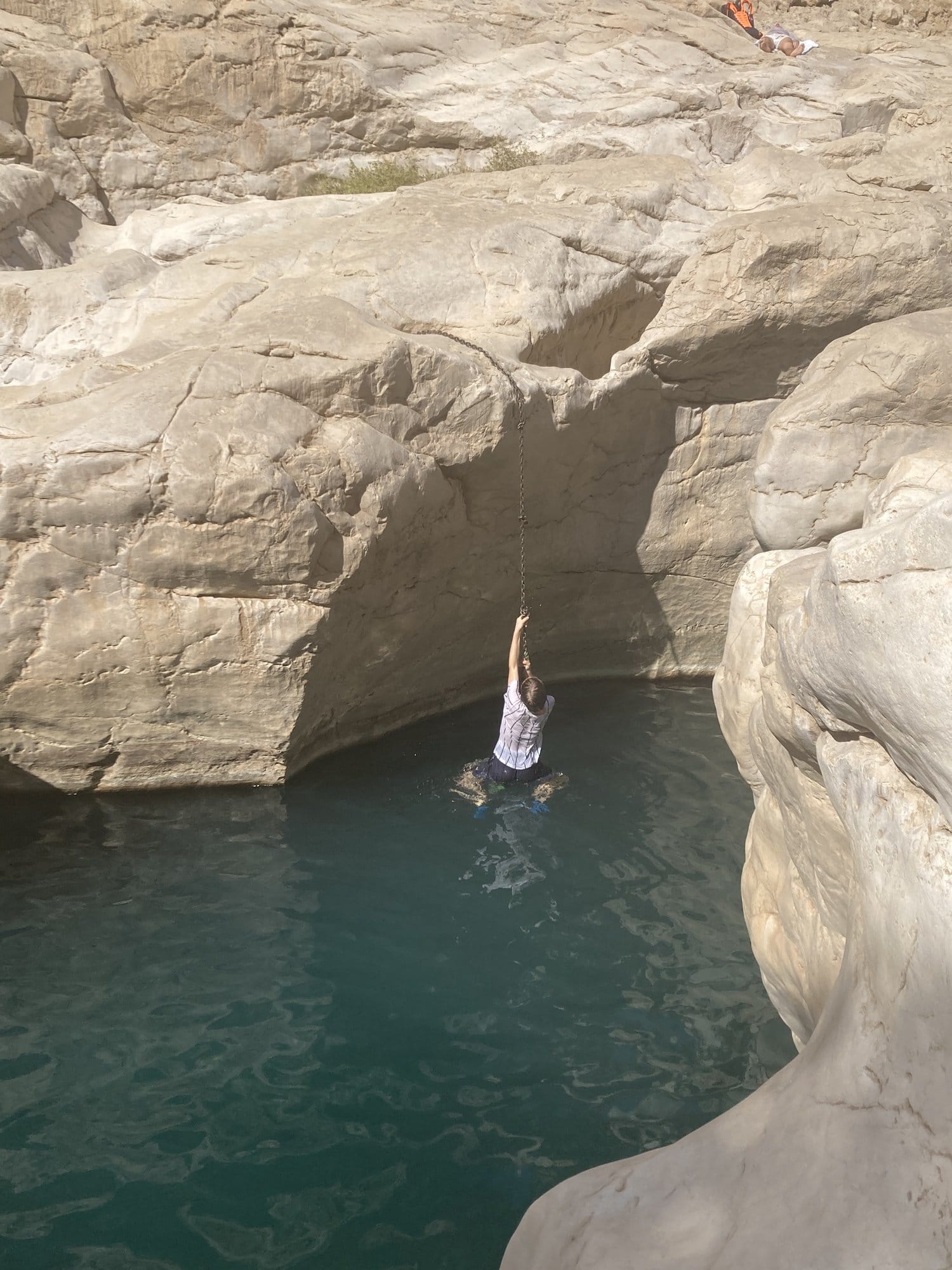
Further in, the canyon narrows between enormous boulders, and the water channels into passages just wide enough to swim through. The light filtering between the rocks creates an almost cathedral atmosphere.
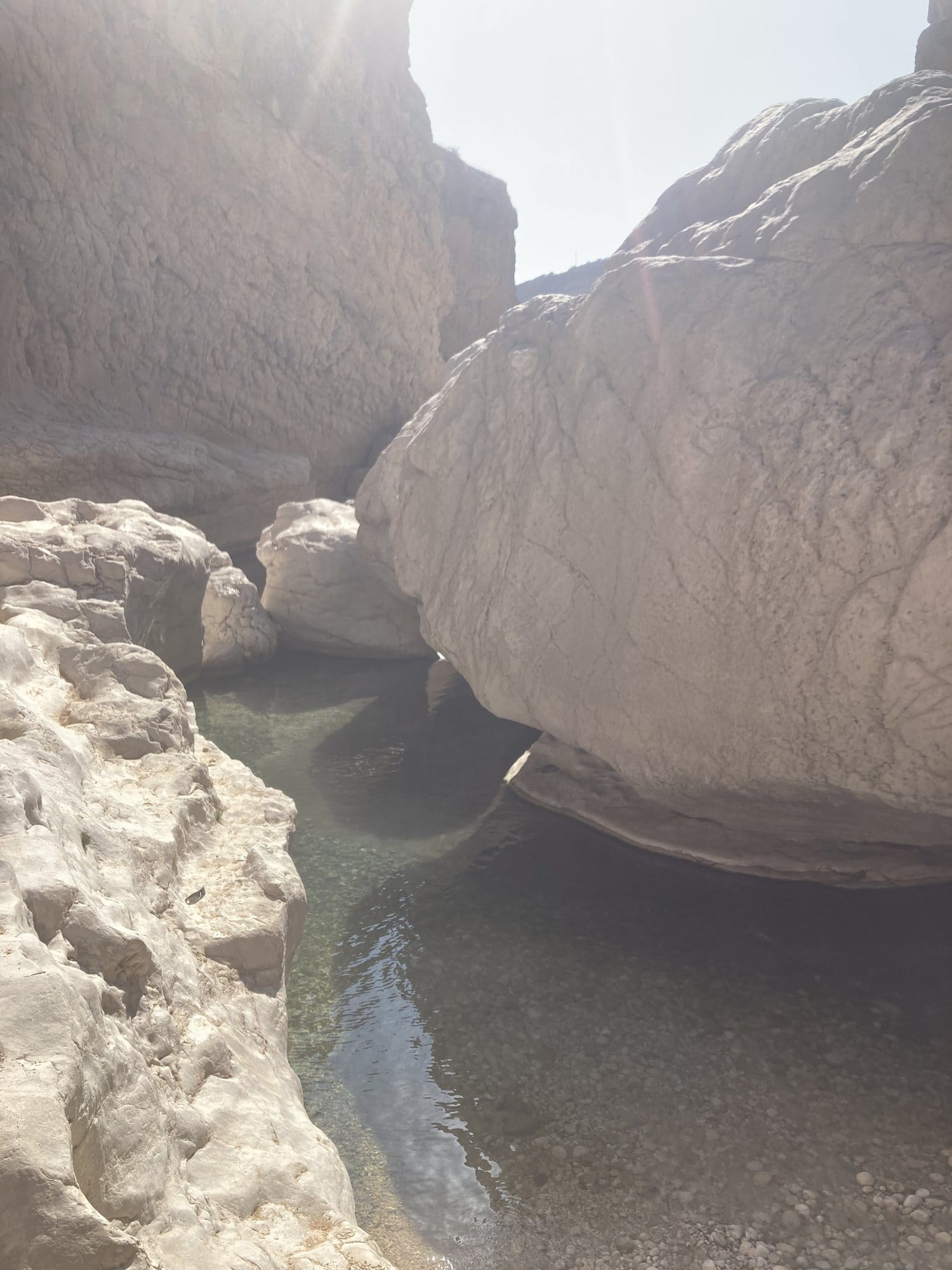
We spent about two hours here, which was plenty. The main pool area can get busy by late morning, but we arrived after 1 PM and had it largely to ourselves. The kids were thrilled — this was their first wadi, and the combination of swimming, rock-scrambling, and rope-swinging hit every button. If you're planning to visit multiple wadis, guided wadi tours are available through GetYourGuide.
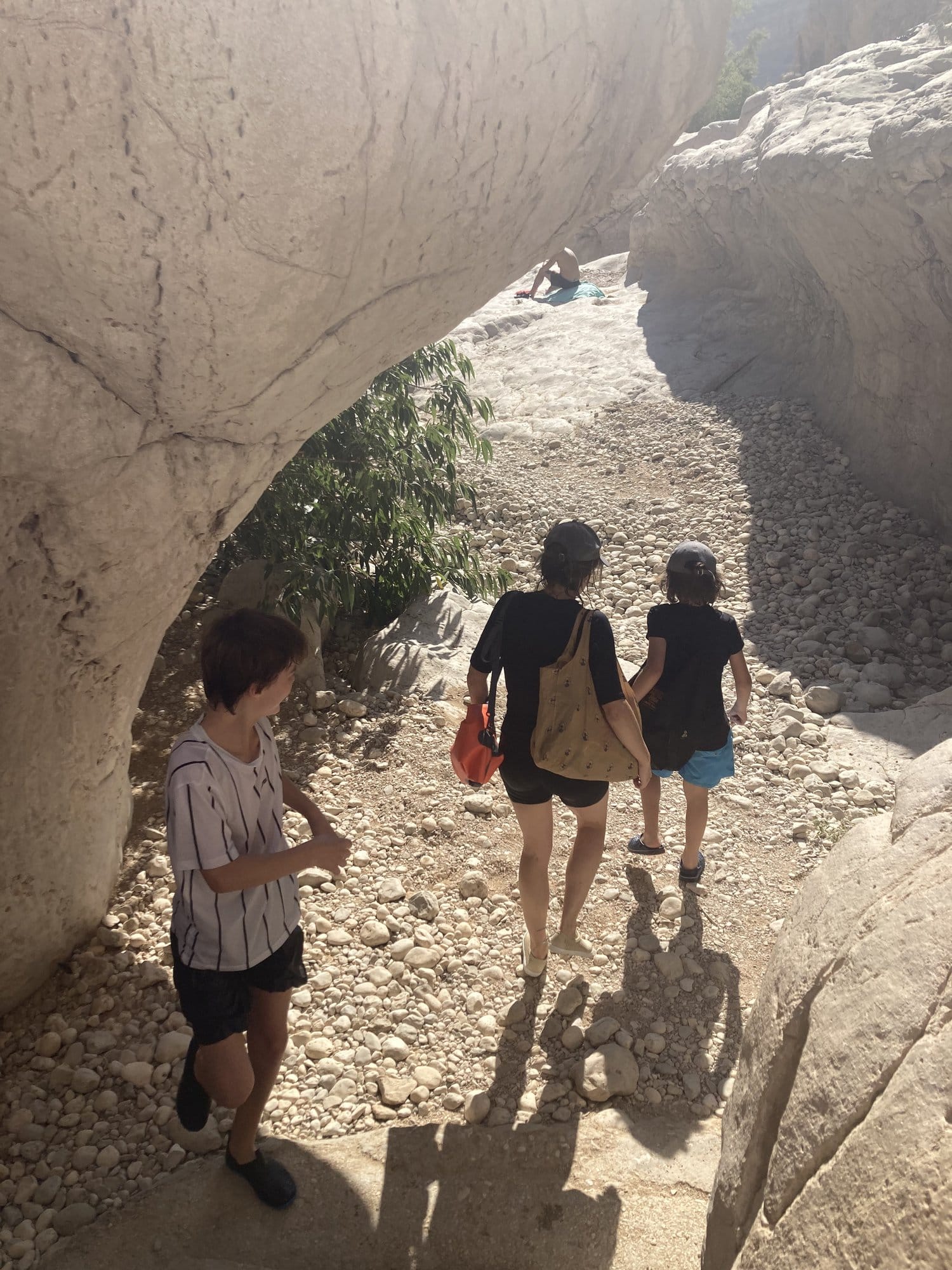
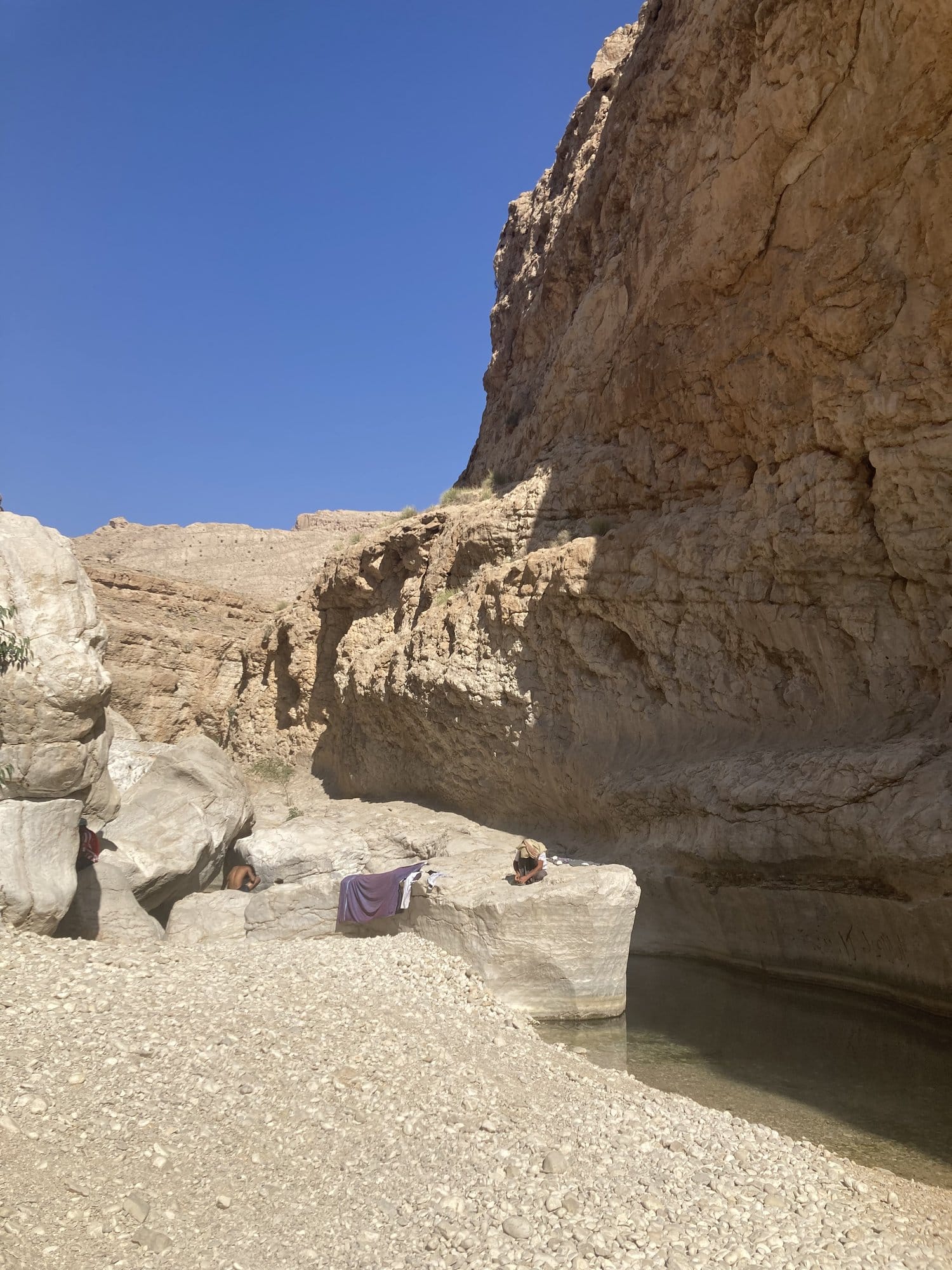
Practical info: Free entry. Parking is a short walk from the pools. There are basic changing facilities and a small café near the car park. Best visited in the afternoon to avoid tour groups that arrive in the morning. Suitable for all ages — no difficult scrambles to reach the main pools.
Wadi Tiwi — The Unforgettable One
If you only have time for one wadi in Oman, make it Wadi Tiwi. This is where our family's all-time travel highlight happened — a day of scrambling, swimming, and discovery through a canyon that kept getting more beautiful the deeper we went.
The approach is spectacular in itself. A narrow road winds down from the highway into a steep-sided valley where a small village sits among palm groves and banana plantations, mountain walls rising hundreds of metres on either side.
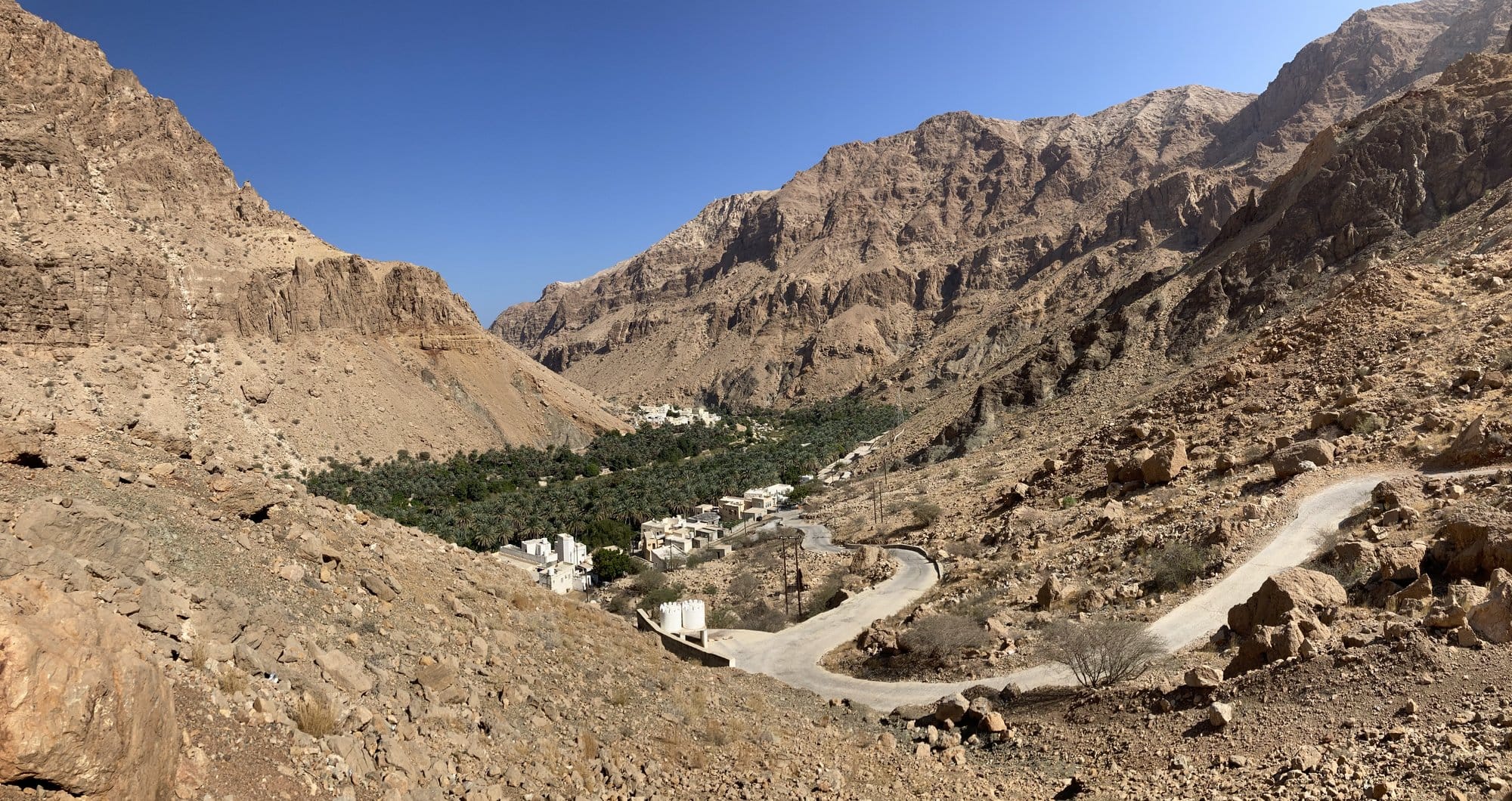
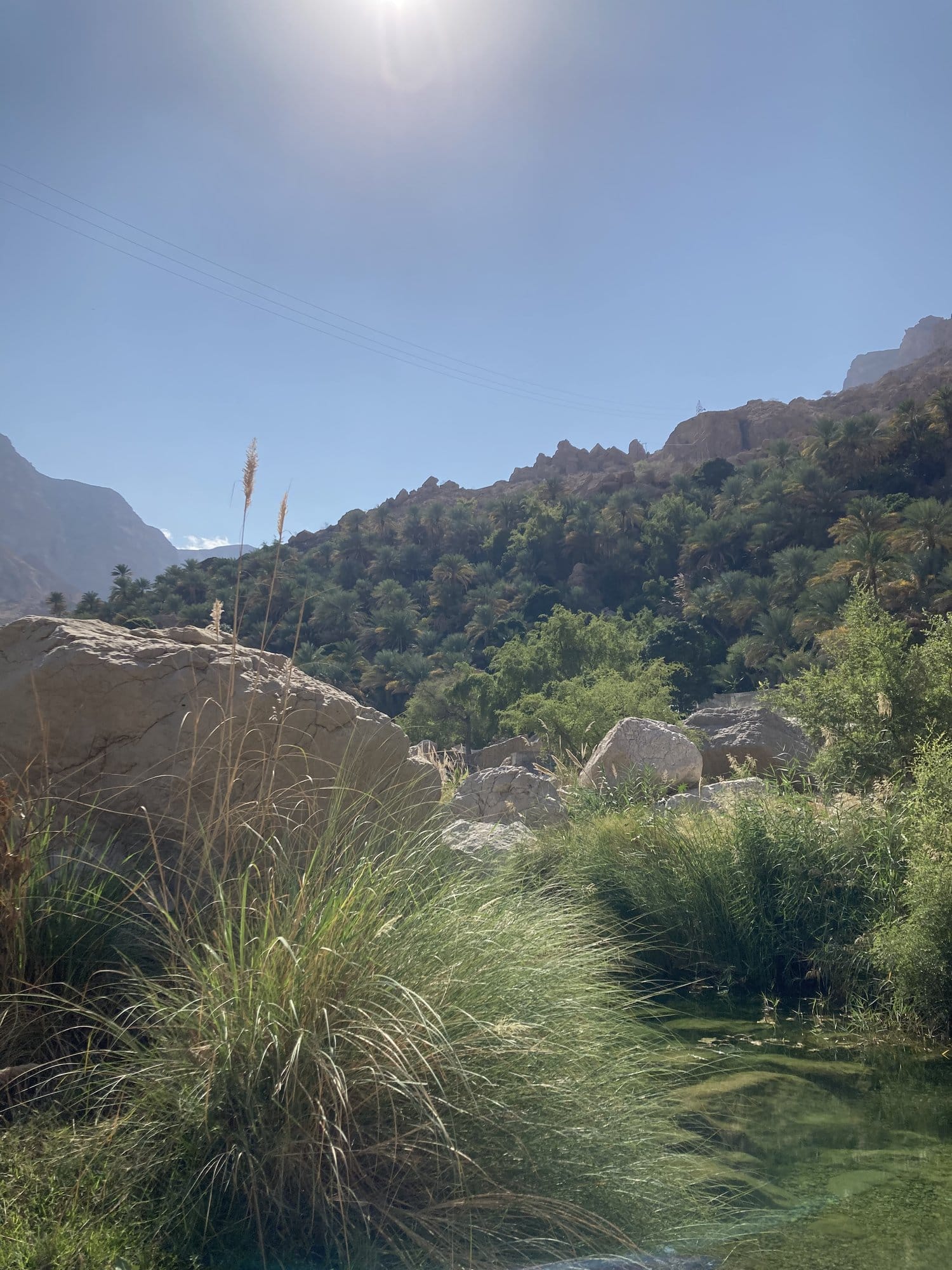
From the village, a walking trail continues deeper into the canyon. The vegetation here is thick and almost tropical — palm trees, banana plants, oleander, and reeds growing along the water channel.
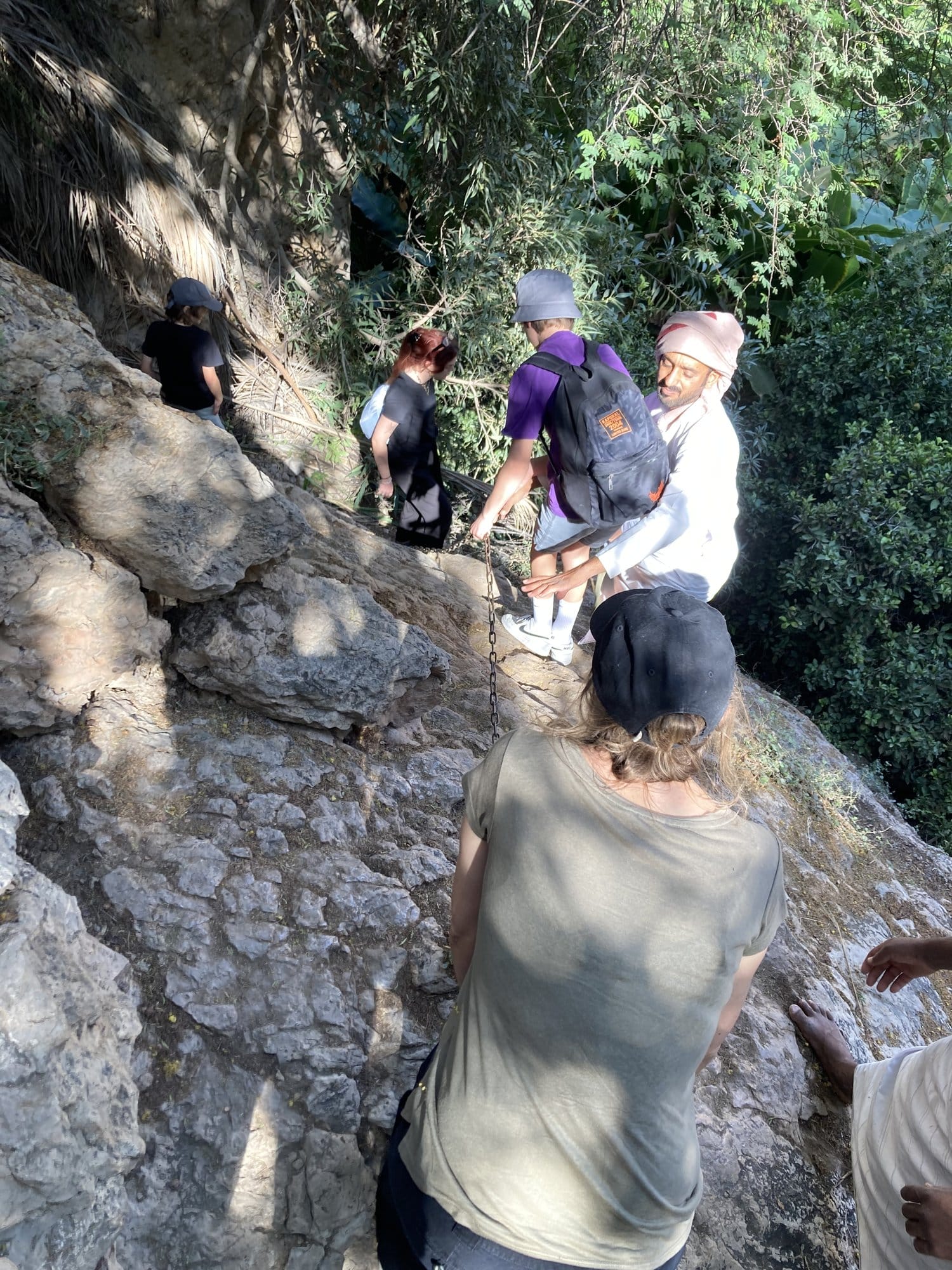
And then things get interesting. To reach the deeper pools, you need to climb down rock faces using chains bolted into the stone. Not dangerous, but definitely hands-on — the kind of thing that makes kids' eyes go wide.
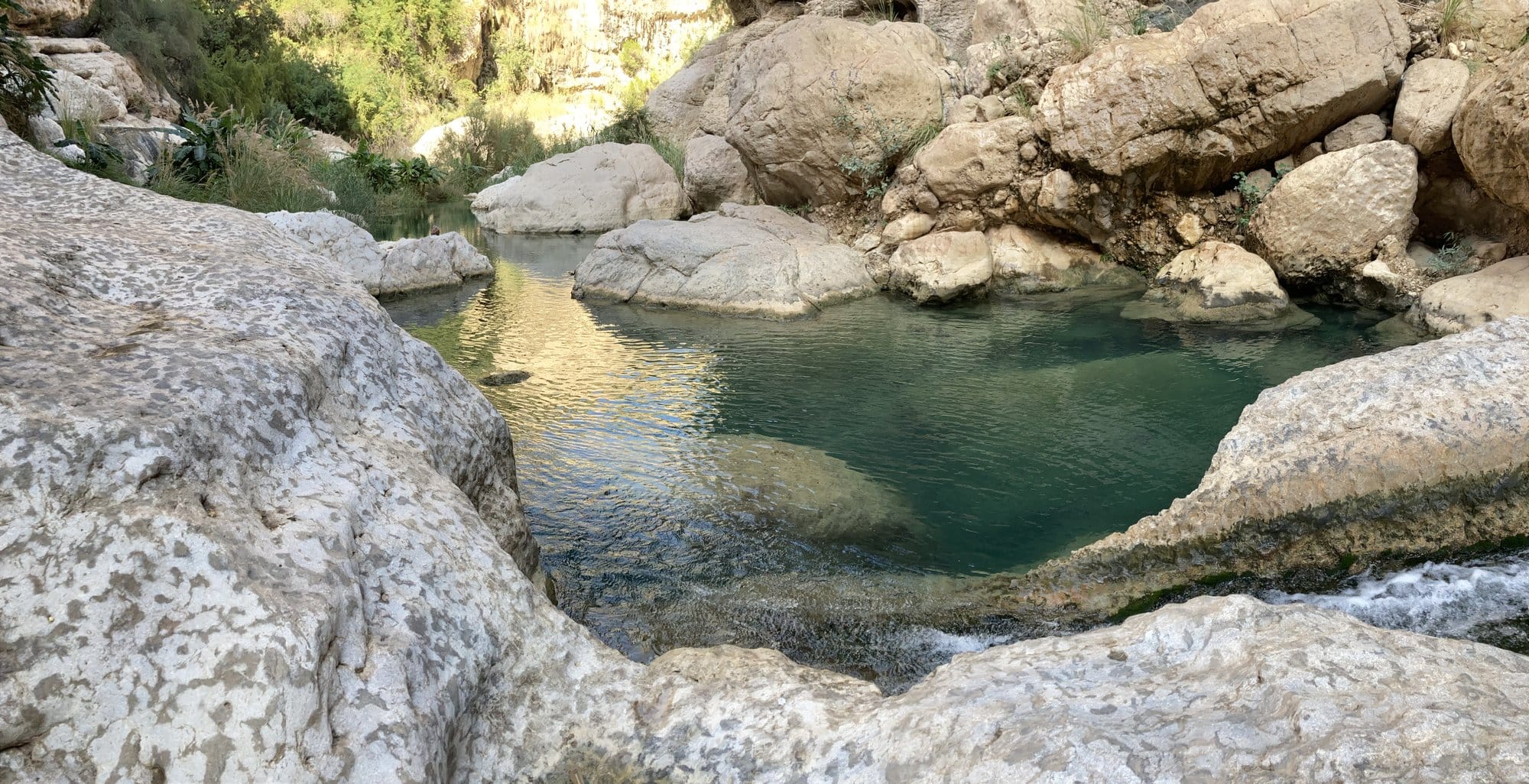
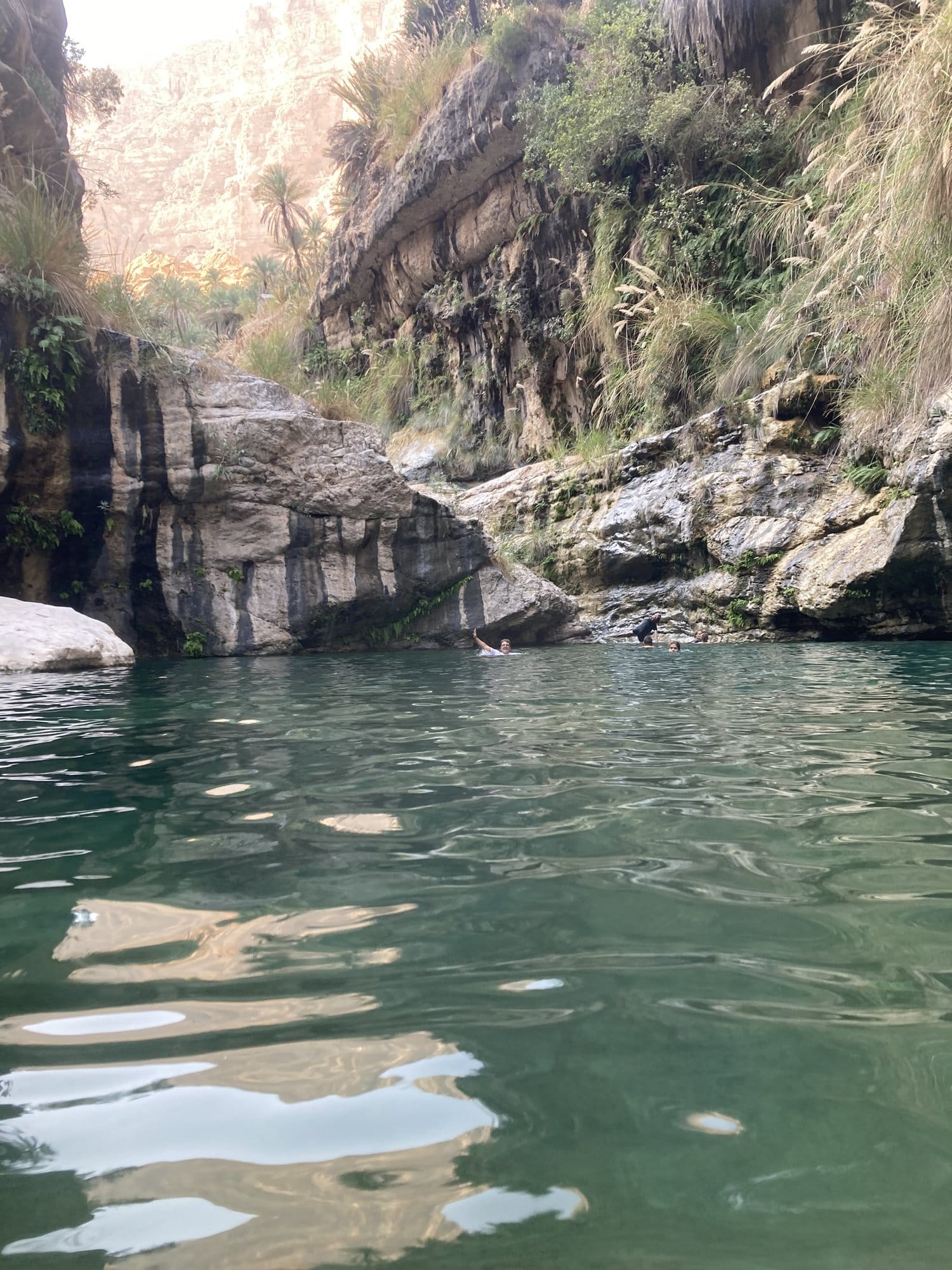
Once past the chain section, the canyon opens into a succession of deep pools — turquoise, emerald, and sometimes almost black depending on the depth and the angle of the light. You swim from one to the next, hauling yourself over rocks between pools, the canyon walls rising higher with every section.
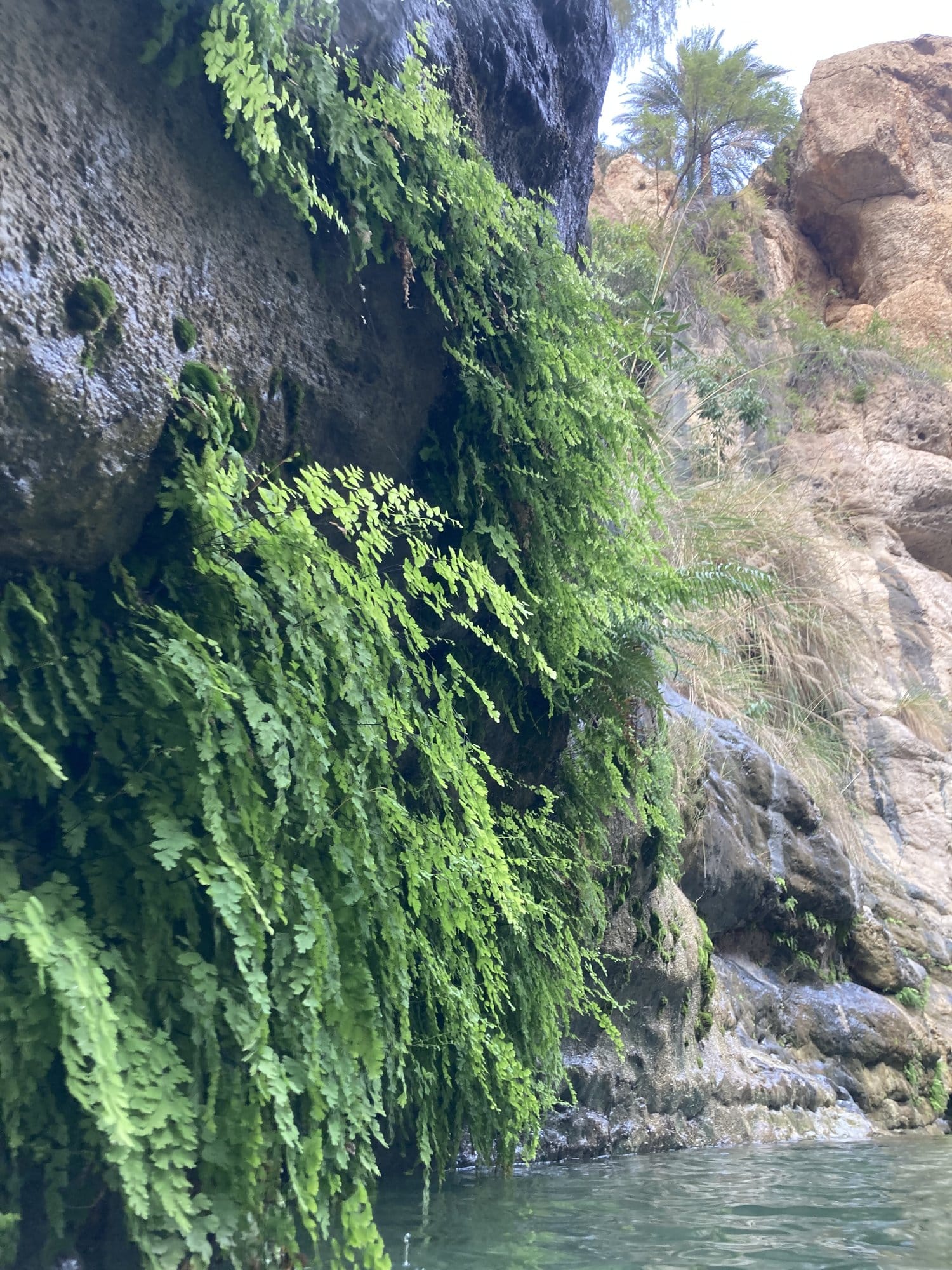
The vegetation on the canyon walls is remarkable — curtains of maidenhair ferns hang from overhangs where water seeps from the rock, creating a green cascade against the pale limestone.
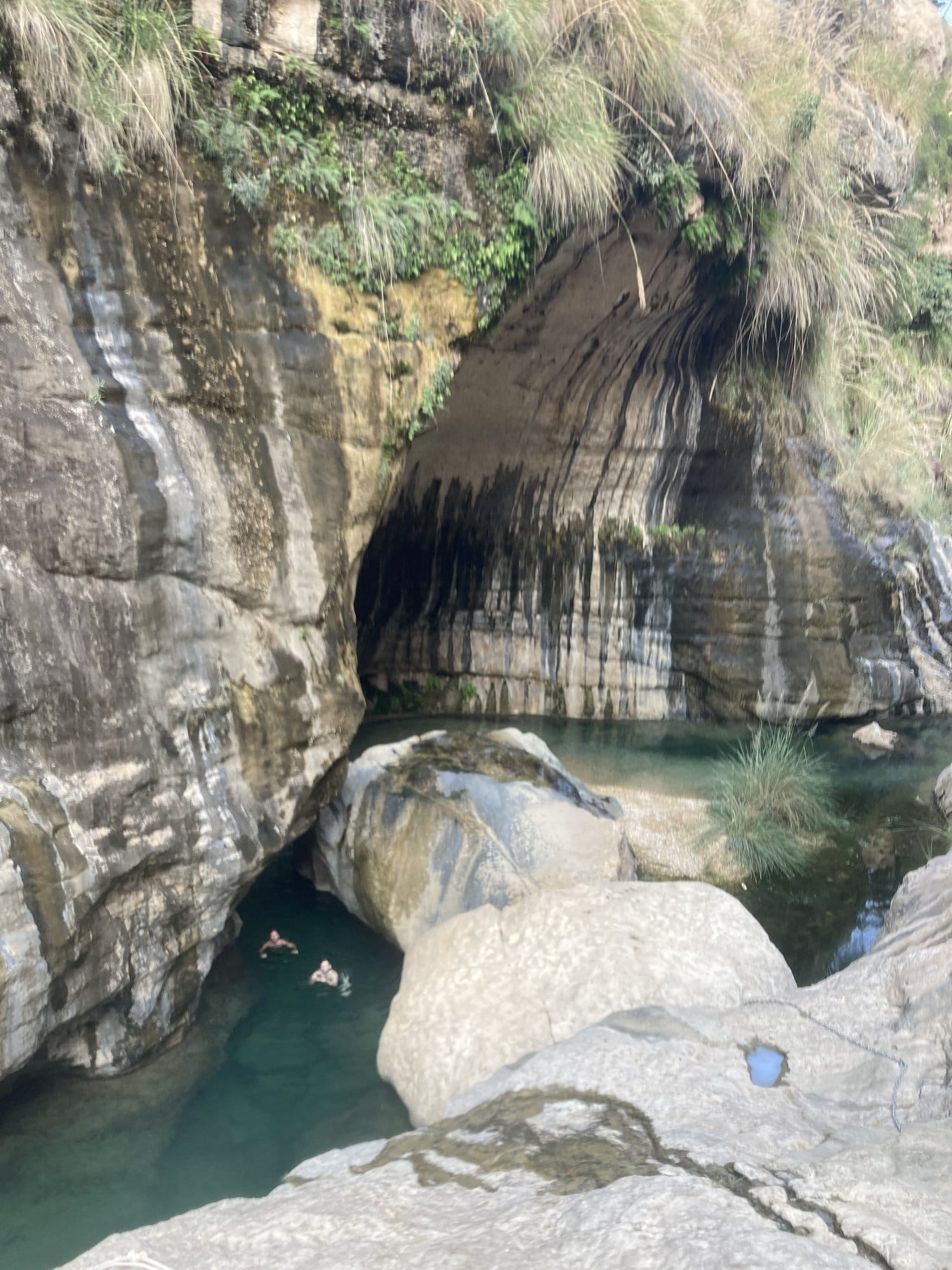
Deeper still, we reached a section where a waterfall drops over a rock face, and beyond it, a cave with stalactite formations that look like they belong in a geology museum. Swimmers floated in the pool beneath the cave, tiny against the scale of the rock.
The final stretch involved scrambling up rocks alongside a cascade, with the sound of falling water echoing off the canyon walls. The waterfall at the end was the reward — a strong flow dropping into a deep pool surrounded by palms.
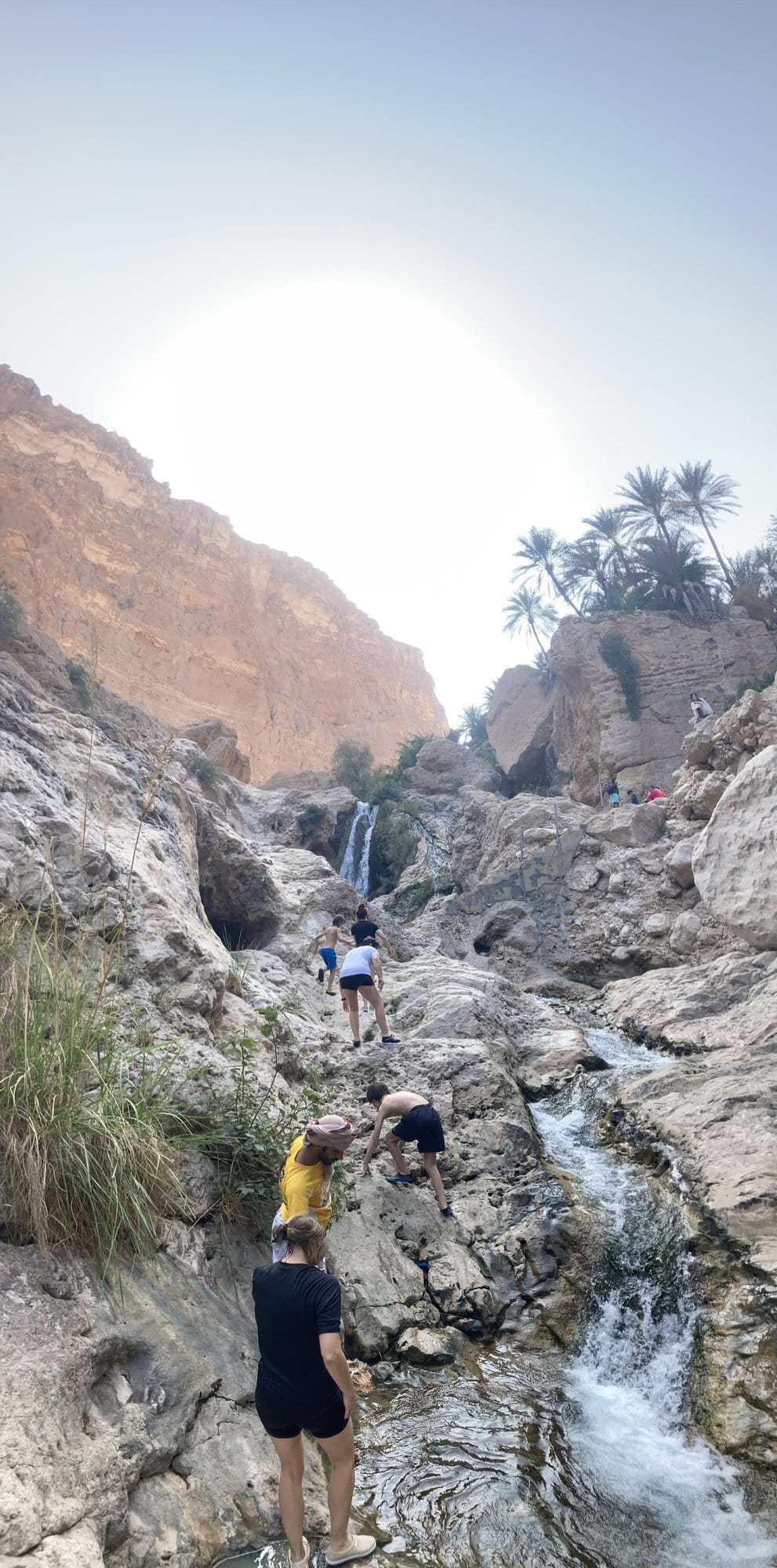
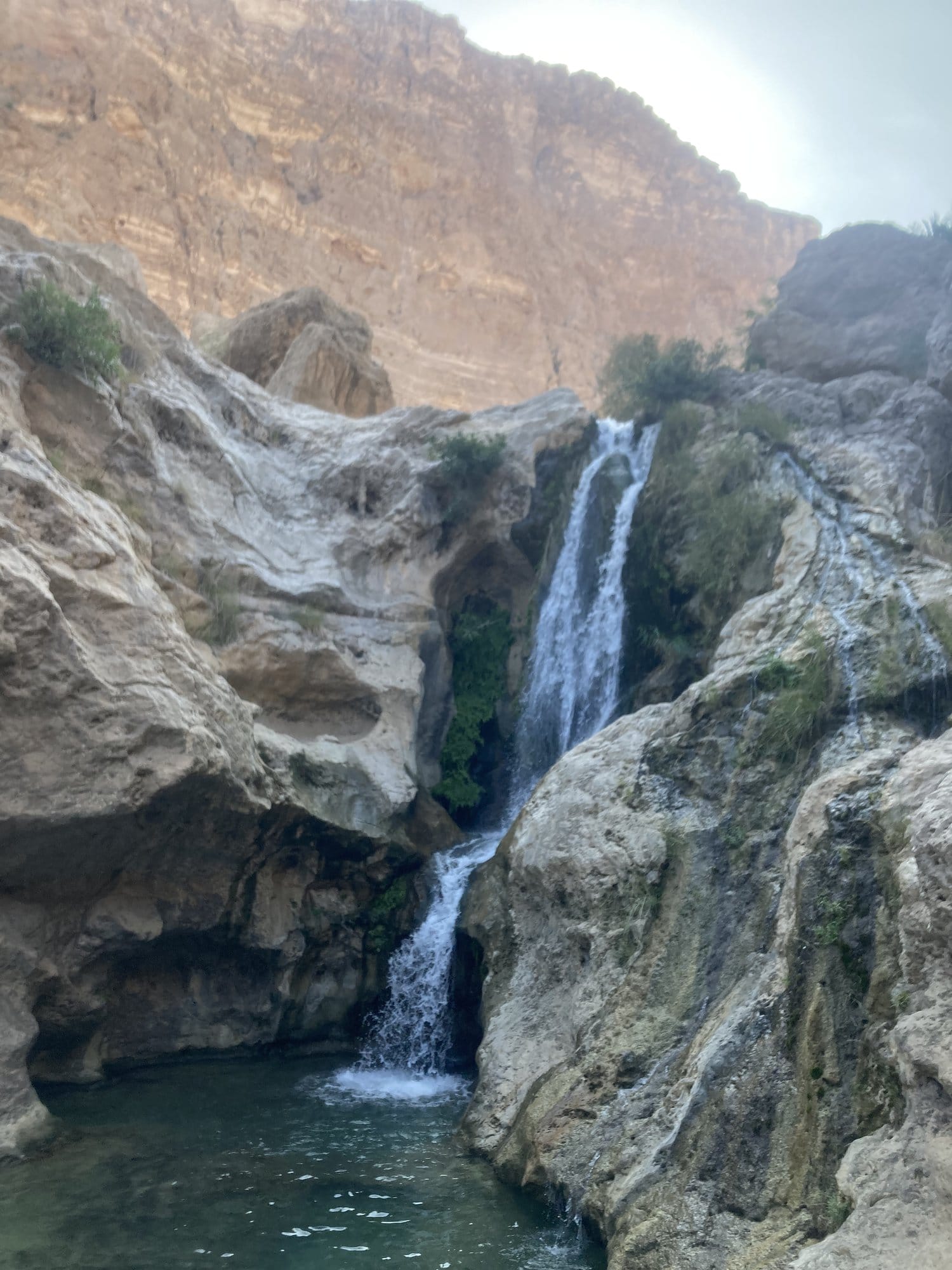
This was the day the family talked about for weeks. The combination of physical challenge (the chain descents, the swimming between pools), the visual spectacle (turquoise water, stalactite caves, waterfalls), and the sense of genuine exploration made it unforgettable.
Practical info: Free entry. Park at the village and walk in. Allow 4–5 hours for the full out-and-back. Bring water shoes or sandals with grip — the rocks are slippery. You will get wet, so either wear swimwear or bring a change of clothes. Not suitable for very young children (the chain sections require arm strength and confidence), but our 9- and 13-year-olds managed fine. Bring a dry bag for your phone and camera.
Wadi Shab — The Postcard Canyon
Wadi Shab is Oman's most famous wadi, and for good reason. It's the most photogenic, probably the most beautiful for pure scenery, and the approach hike under palm trees is a pleasure in itself.
The entry point is marked by a car park and a small boat crossing — a couple of minutes in a rowboat to reach the trailhead on the other side of the wadi mouth. From there, a well-trodden path follows the canyon upstream.
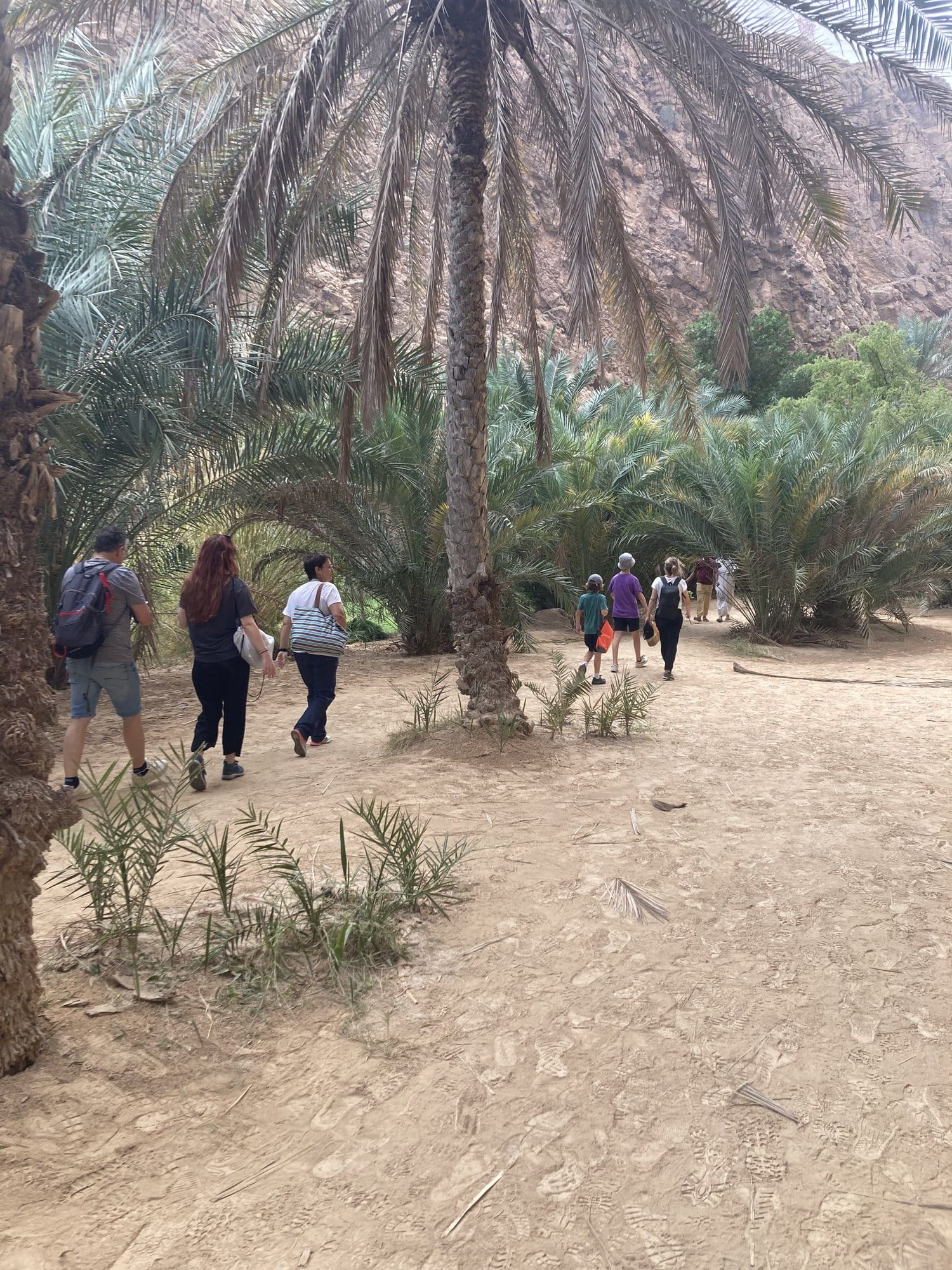
The walk in is about 45 minutes and gradually introduces you to the scale of the canyon. Palm trees and tropical vegetation line the path, and the mountain walls grow steadily higher.
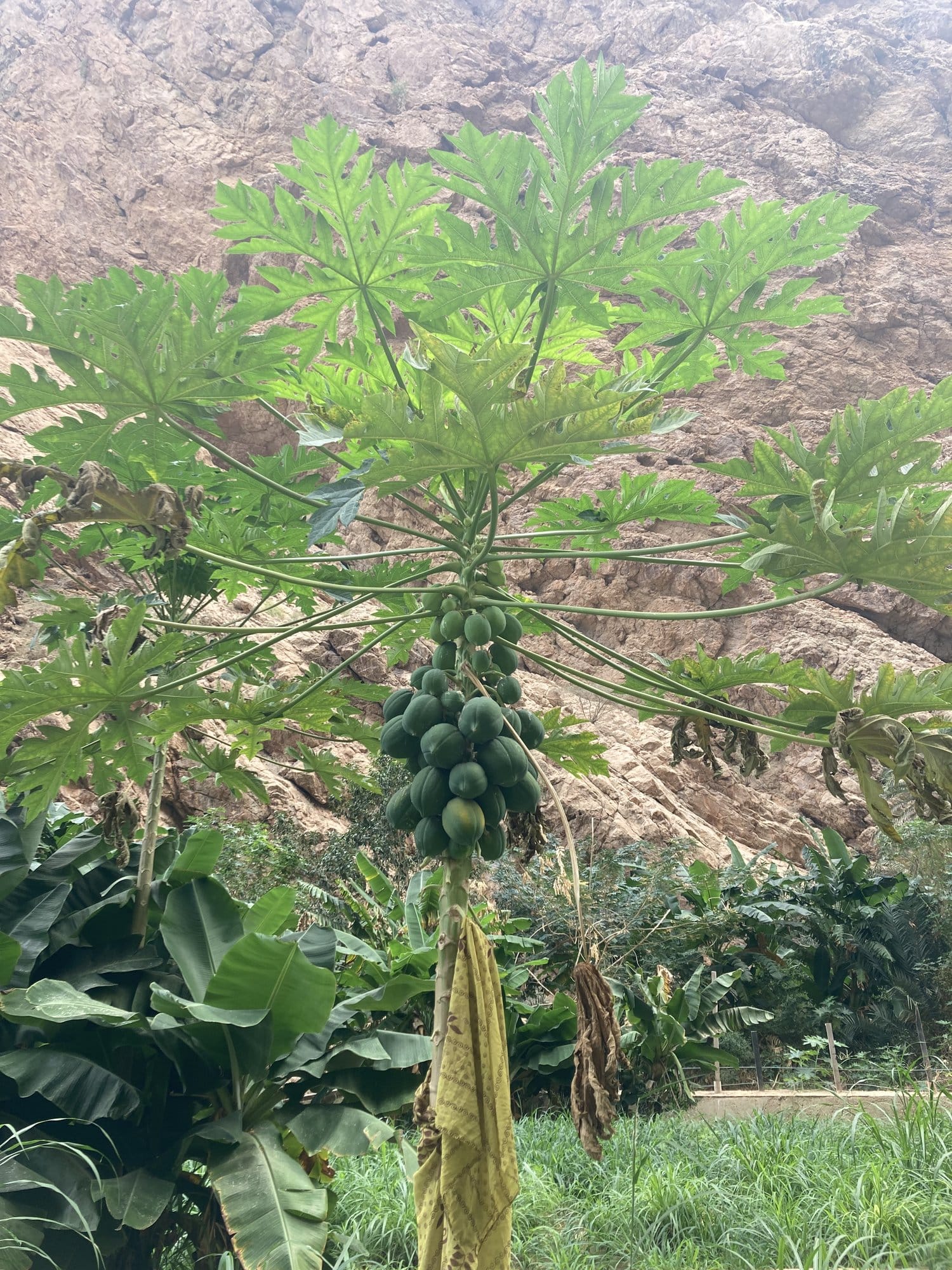
When the canyon proper begins, the scale becomes immense. Walls of limestone rise vertically on both sides, and the pools between them are a deep emerald green. You can see the bottom in the shallows, where the water looks like liquid glass, and the depths are a dark, inviting blue.
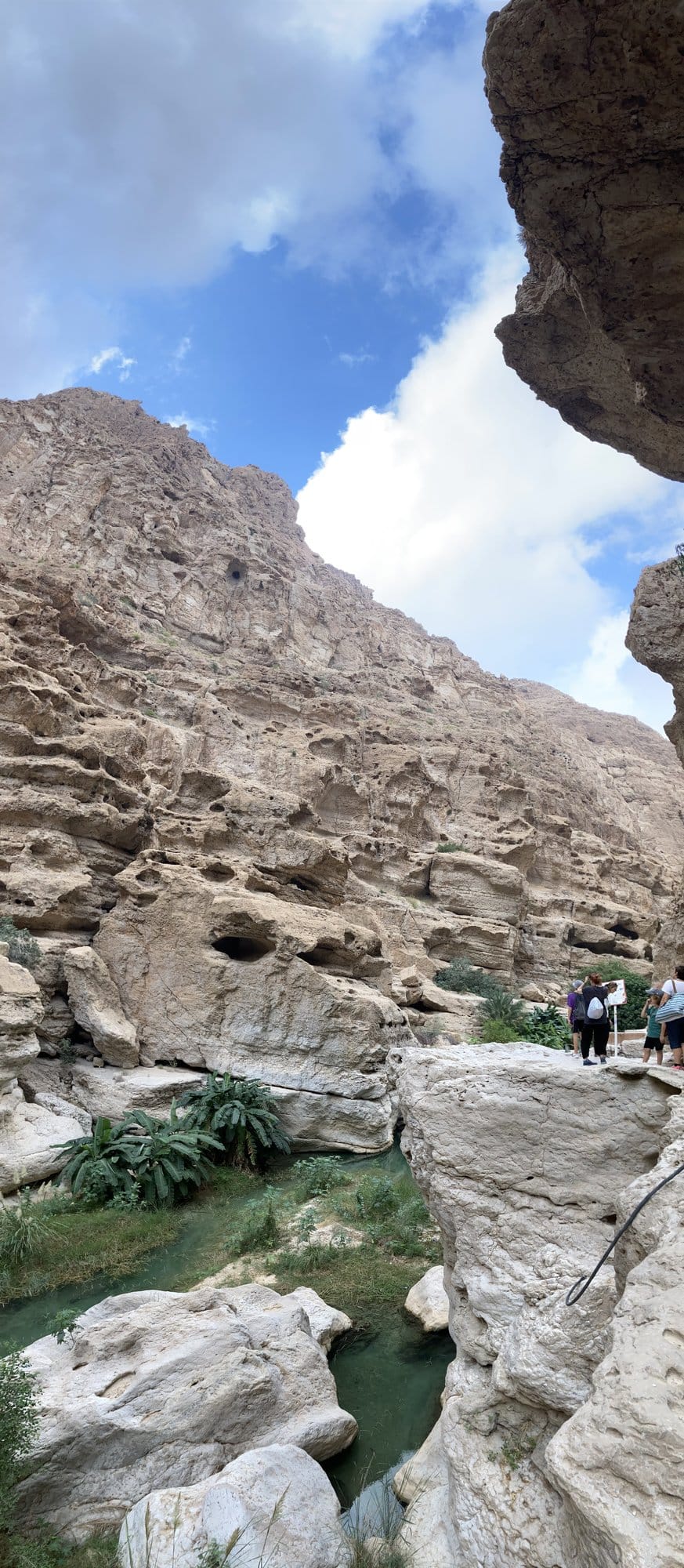
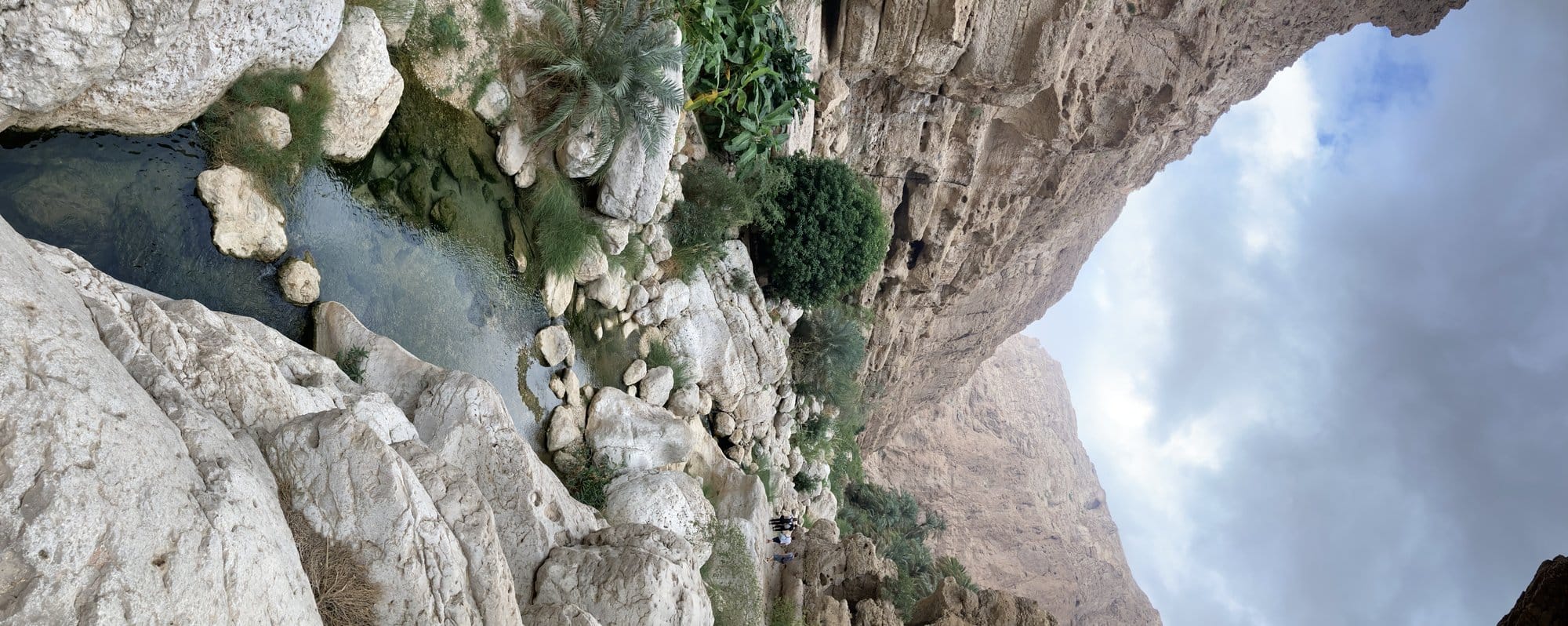
The deeper you go, the narrower it gets. The final section requires swimming — you leave your bag on a rock and swim through a succession of pools, each one slightly more enclosed than the last. The end point, for most visitors, is a narrow pool with a small waterfall visible at the far end.
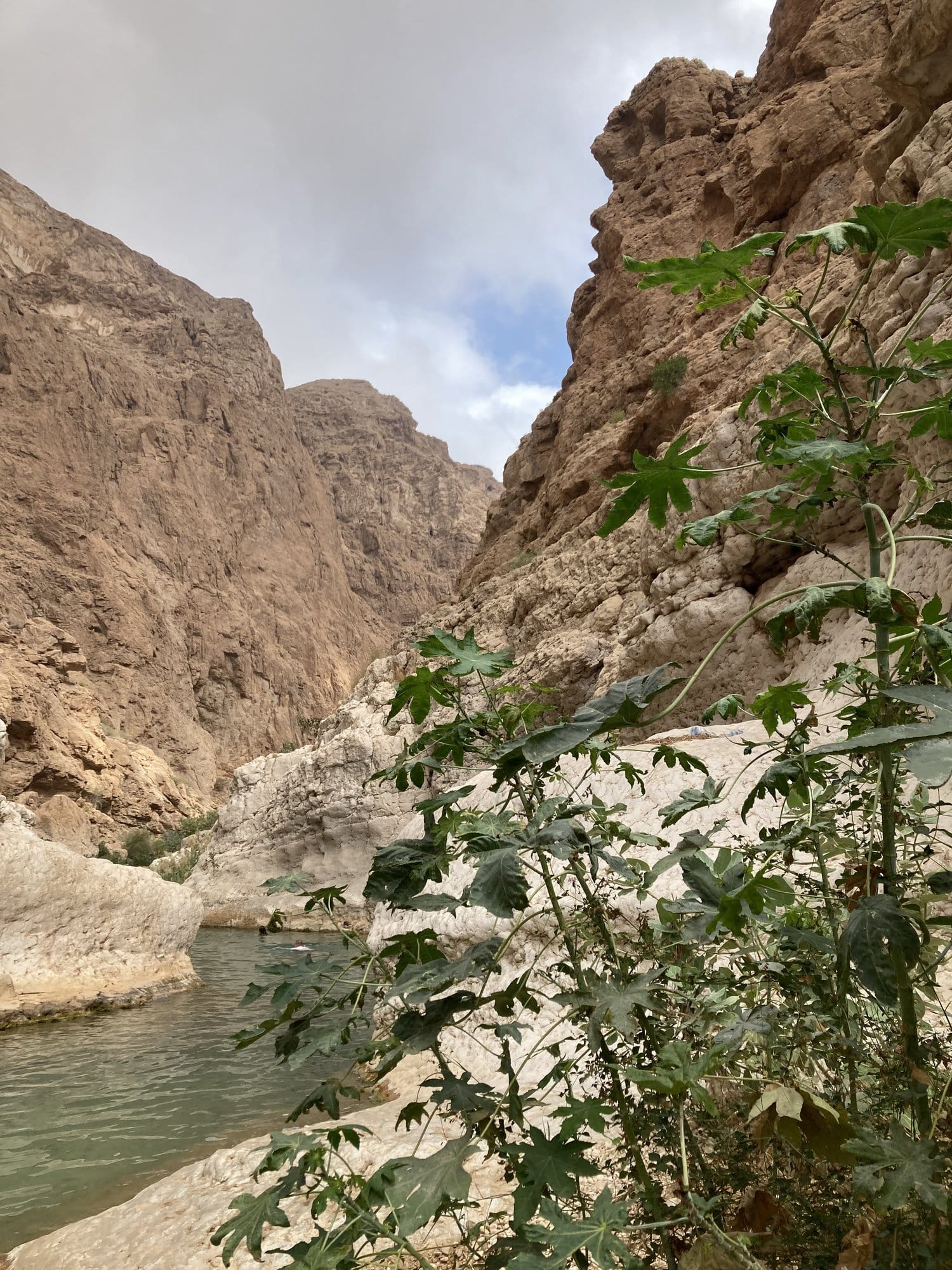
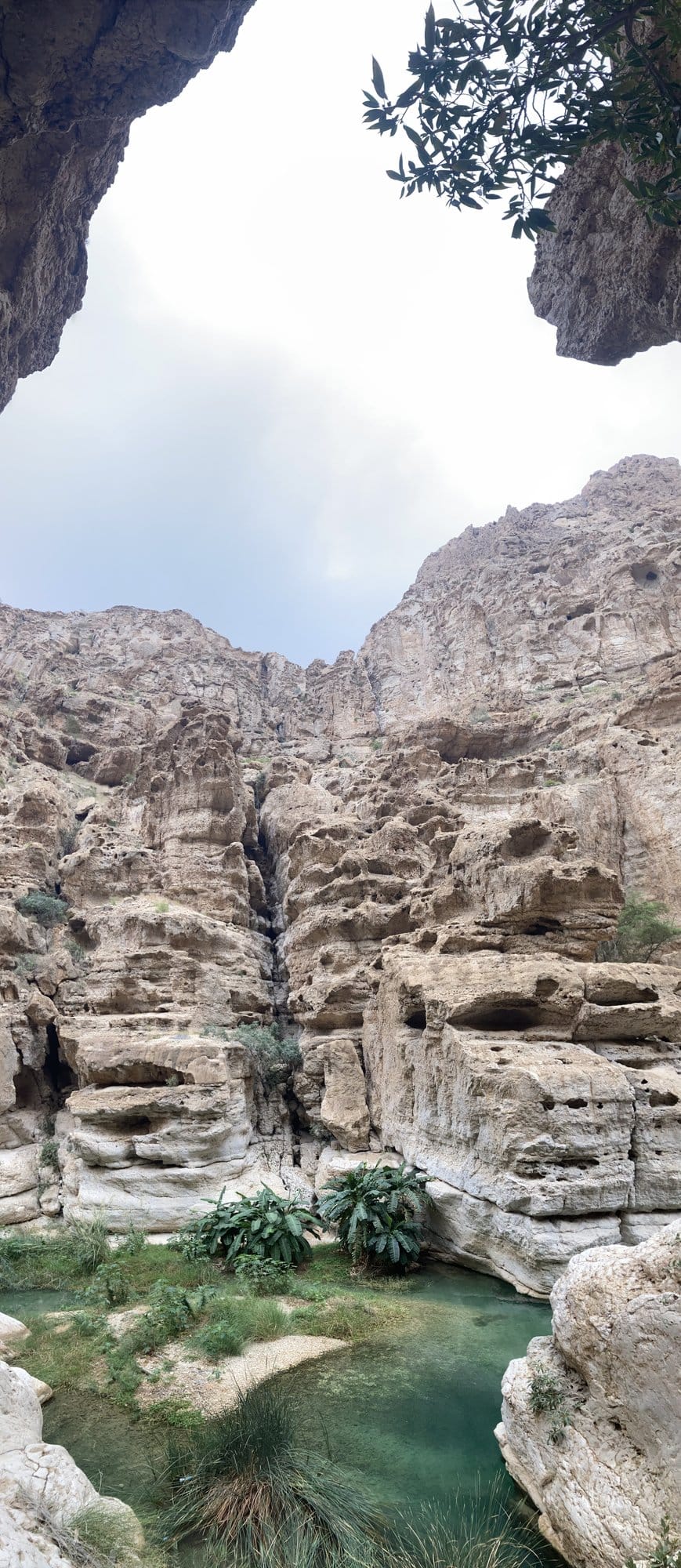
Wadi Shab is busier than Wadi Tiwi — it's better known and easier to access — but even so, we never felt crowded. We arrived at around 10 AM and were back at the car by 1:30 PM, with time for a swim at the hotel beach afterwards.
Practical info: Free entry. Small boat crossing fee (1 rial per person). Allow 3–4 hours. The path is well-maintained and the early sections are suitable for all fitness levels. The swimming section at the end is optional — you can enjoy the canyon without getting in the water. If you do swim, bring a dry bag.
The Quiet Wadi Nobody Knows
On our last full day on the coast, we drove inland from Sur to a wadi that doesn't appear in most guidebooks. I won't name it specifically — part of the appeal was having it to ourselves — but the area around Al Qābil, about 40 minutes from Sur, has several wadis that see almost no tourist traffic.
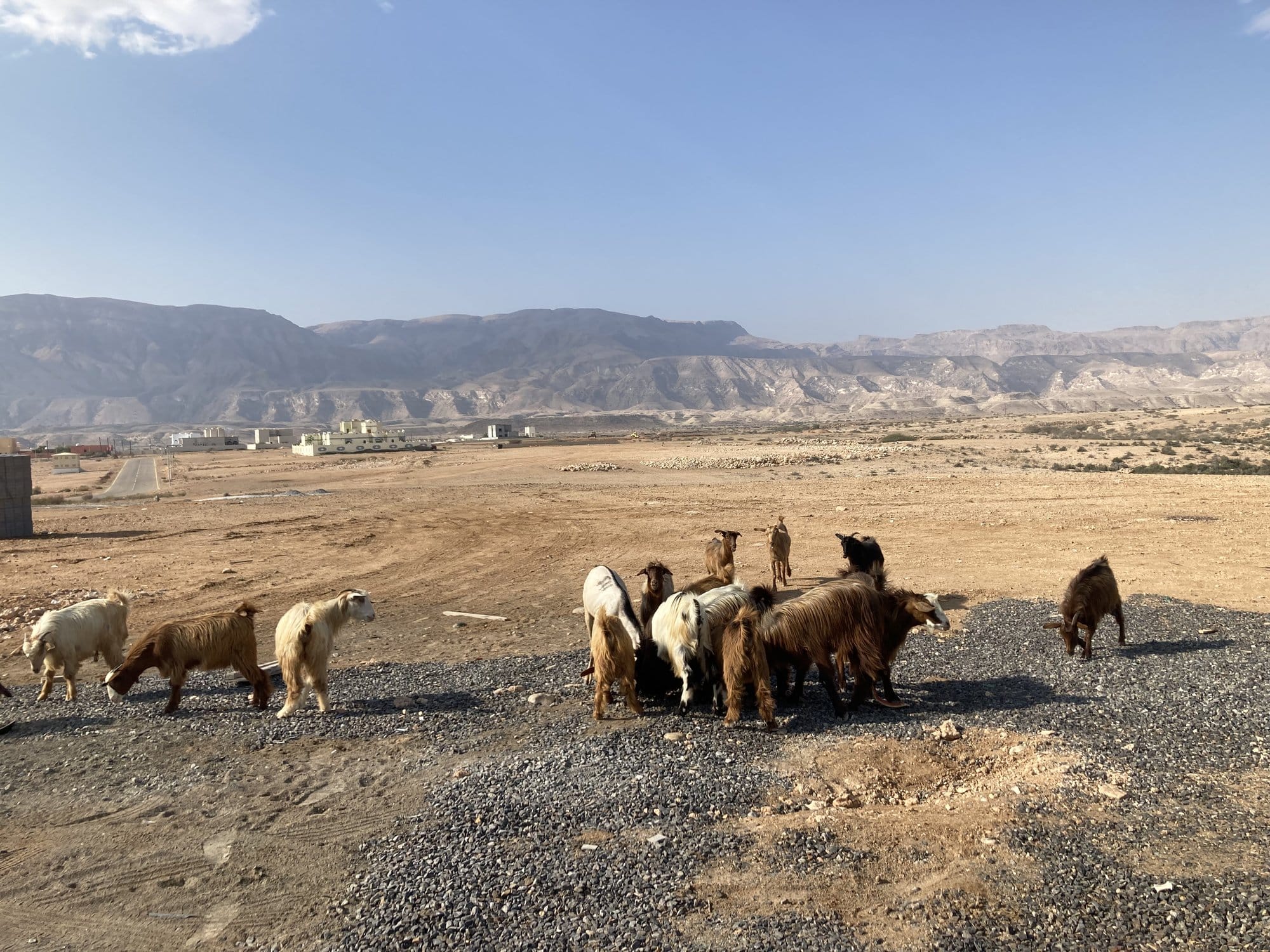
The drive there passed through classic Omani interior landscape — arid plains, distant mountains, and the occasional herd of goats ignoring traffic with supreme confidence. We'd arranged our car rental through Trip.com, which made exploring these remote routes straightforward.
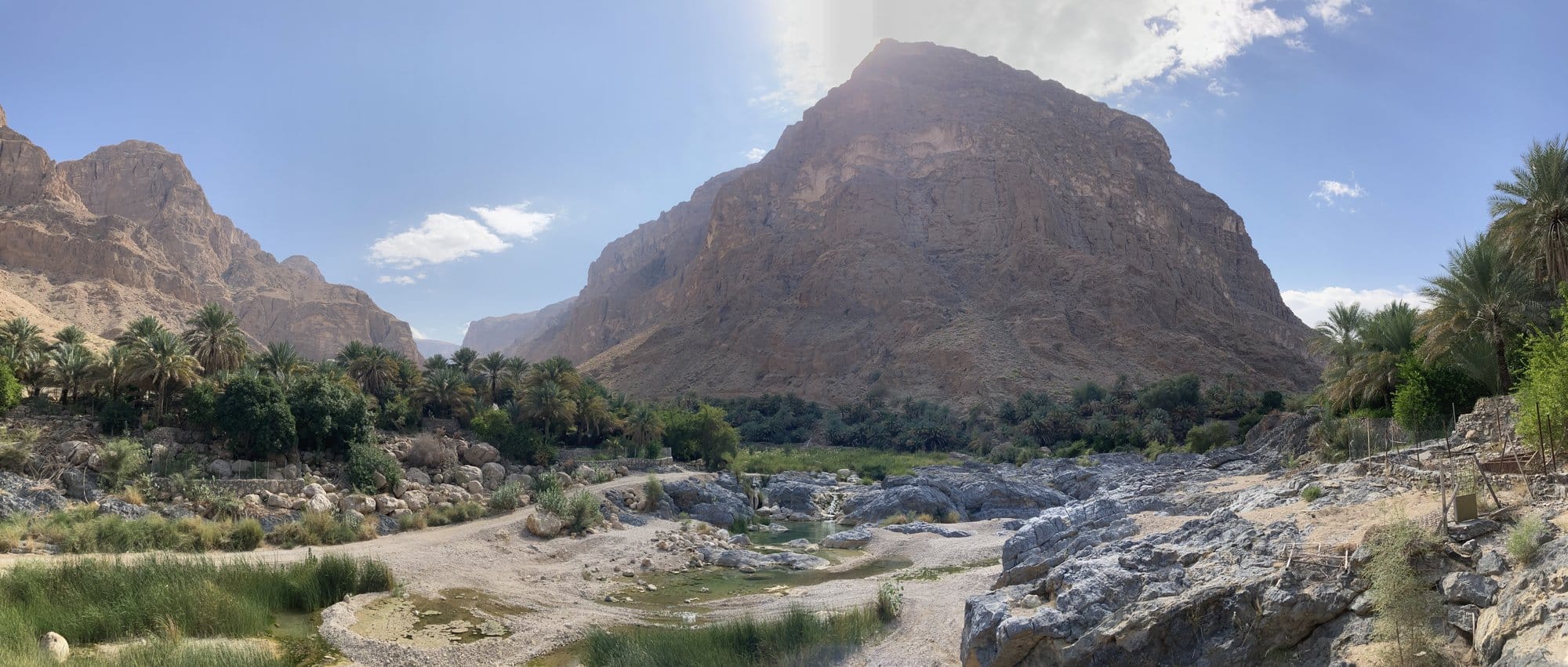
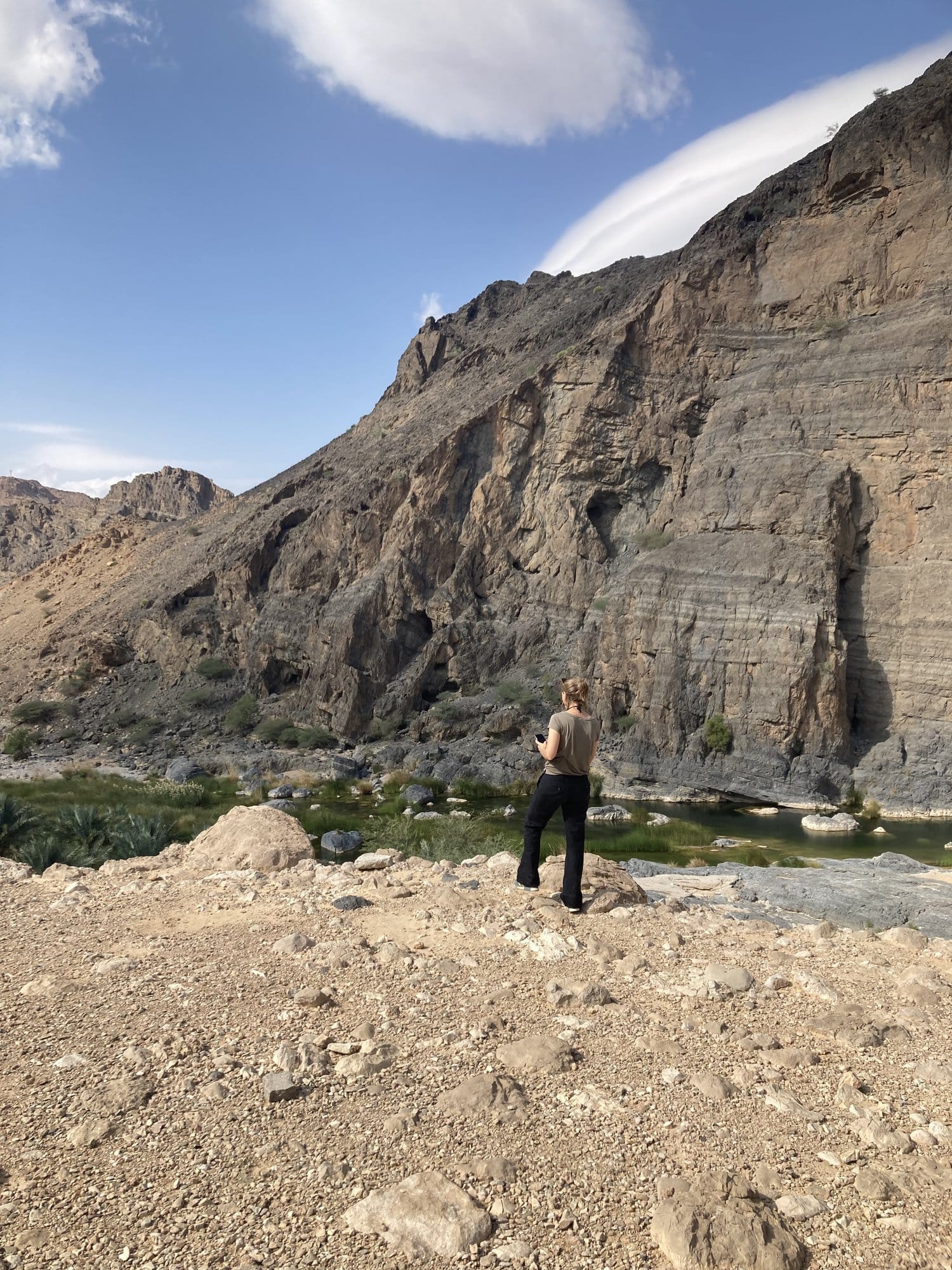
The wadi itself was a revelation. A wide valley led to towering cliff faces — some of the most dramatic geological formations we'd seen in the entire trip, with visible stratification layers in the rock that looked like pages of a giant book.
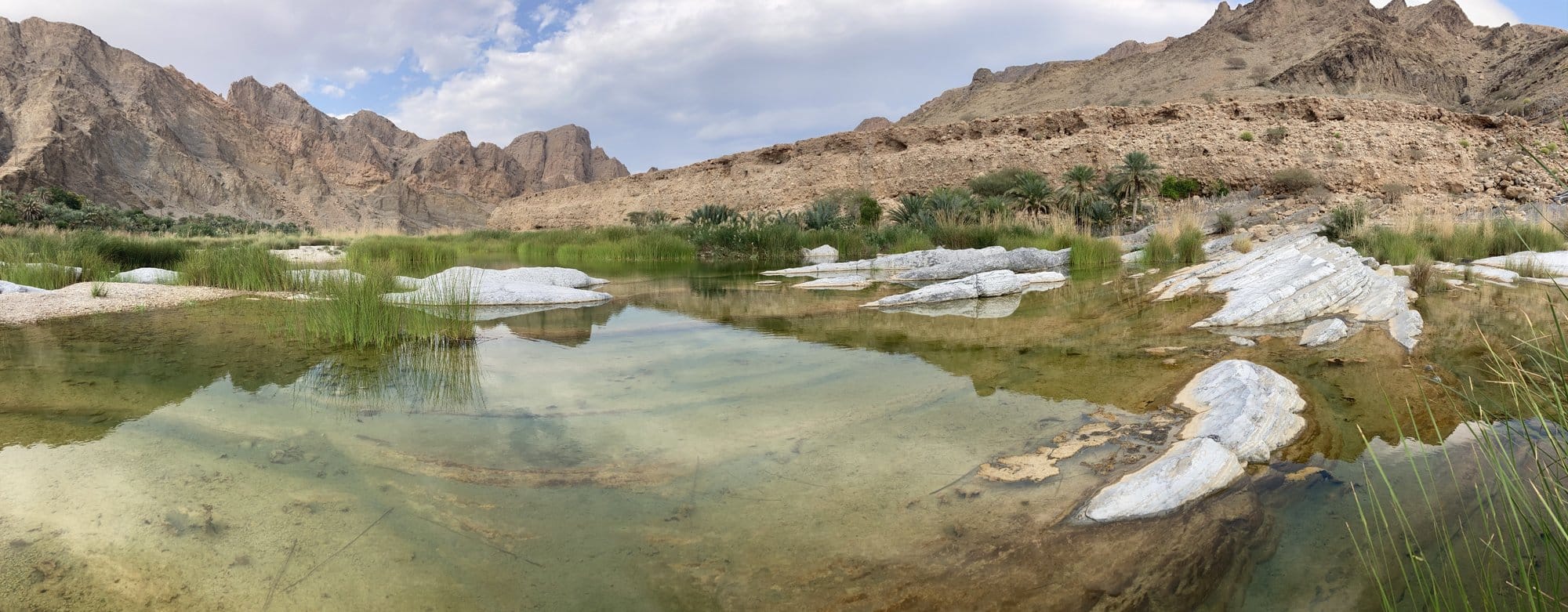
Further up, the valley opened into a series of pools between white limestone formations, with reeds and palm trees reflected in perfectly still water. We were the only people there for the entire afternoon.
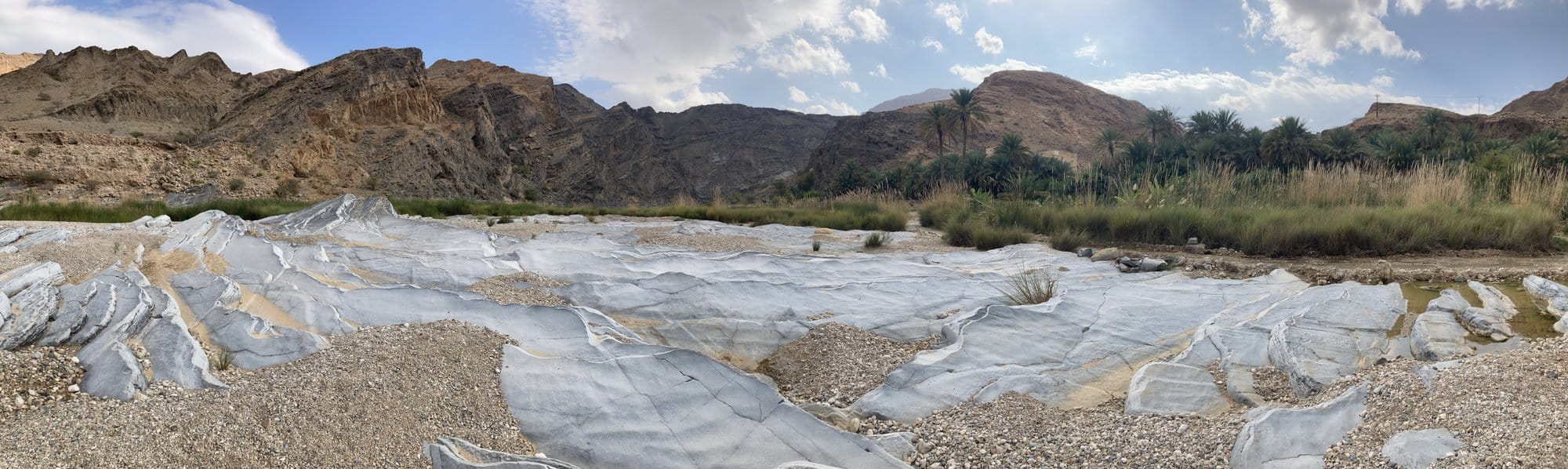
This is what Oman does so well — even the famous attractions are manageable, but if you're willing to explore a little off the beaten path, you'll find places that feel genuinely undiscovered. A rental car and a willingness to follow a dirt road for 20 minutes can deliver experiences that no tour bus will ever reach.
The Beach in Between
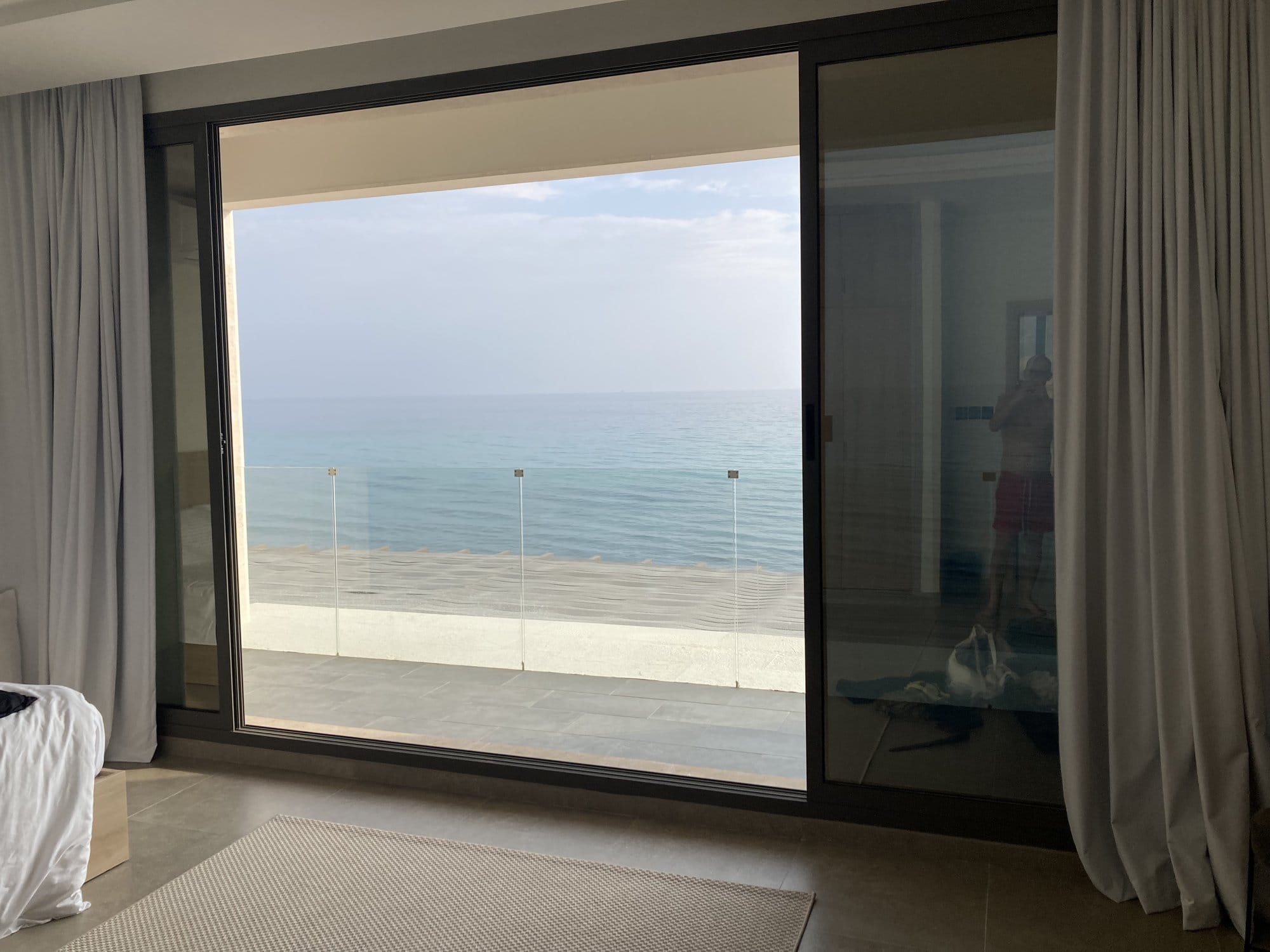
Our base for the wadi days was a resort hotel in Sur, right on the coast. After the desert camp, waking up to a sea view through floor-to-ceiling windows felt almost decadent. If you're looking for accommodation in Sur, you can search hotels in Sur on Trip.com or use Stay22 to map hotels in the area.
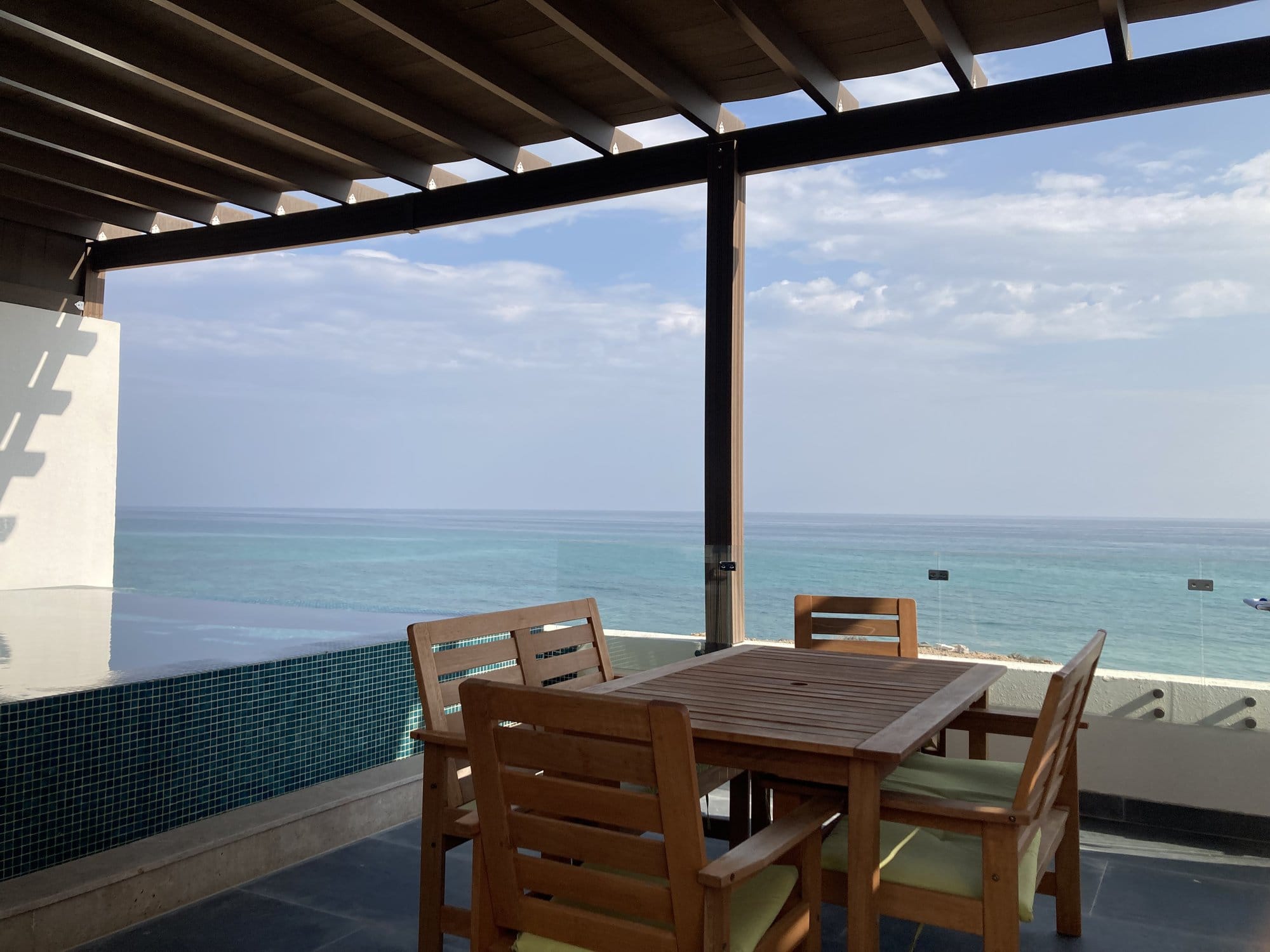
The beach was a long stretch of pebbles and sand with clear turquoise water — not a sunlounger-and-cocktails resort beach, but a real Omani coast where the kids could run and the water was warm enough for long swims.
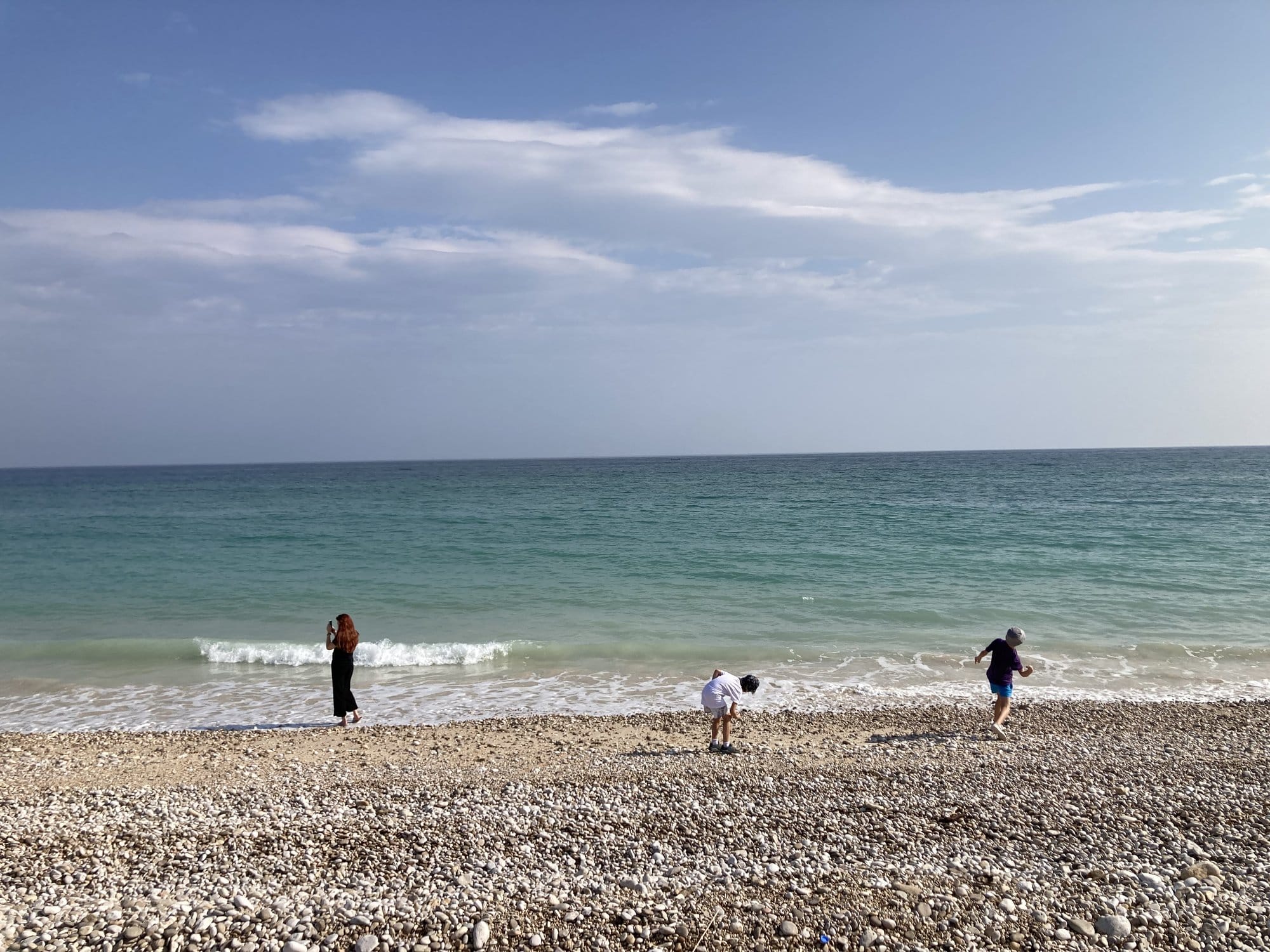
Having this coastal base between wadi expeditions was the right call. The physical effort of scrambling through canyons all morning is balanced by lazy beach afternoons, and the kids had the energy for a new adventure each day.
Which Wadi When?
If you're planning an Oman trip and need to prioritise:
One wadi only? Wadi Tiwi. More challenging than Shab, but the stalactite cave, the chain descents, and the sense of genuine adventure make it the standout. Great for families with older kids.
Two wadis? Add Wadi Shab. Easier, more photogenic in some ways, and the swimming section at the end is a different kind of experience. Good for all ages.
Three wadis? Add Wadi Bani Khalid as your warm-up, ideally on the way from the desert. It's the easiest, the most family-friendly, and a perfect first taste of wadi magic.
A full week? Explore the unnamed wadis around Al Qābil and the Sur coast. This is where the real discoveries happen.
Practical Tips for Wadi Hiking in Oman
Footwear: This is the single most important thing. Wadi rocks are slippery, especially where algae grows. Water shoes with good grip are ideal. We used trail sandals (Keen-style) and they worked well. Flip-flops are dangerous.
Water: Bring at least 2 litres per person. The wadis themselves are not drinking water. You'll be more dehydrated than you think after swimming and scrambling in the heat.
Sun protection: Canyon walls provide some shade, but the approaches are exposed. Sunscreen, hat, and sunglasses are essential.
Dry bags: Your phone, wallet, and camera need waterproof protection. The swimming sections are unavoidable if you want to see the best parts. We used a cheap 10-litre dry bag and it was indispensable.
Timing: Arrive early (before 10 AM) to avoid both the heat and the tour groups. We started most wadi days around 9:30 and had the best conditions.
Kids: Most wadis are suitable for children over 6 or so, depending on confidence in water. The chain sections at Wadi Tiwi require arm strength — our 9-year-old managed with encouragement, but it's a judgment call. Wadi Shab and Wadi Bani Khalid are easier for younger kids.
Flash floods: Wadis can flood quickly after rain, even if the rain is falling far upstream in the mountains. Check weather forecasts before entering any wadi, and if you see rising water levels, leave immediately. During our December visit there was zero rain, but this is a real risk during the October–March shoulder seasons.