
Sigiriya & Polonnaruwa: Exploring Sri Lanka's Cultural Triangle
Climb an ancient rock fortress, wander UNESCO ruins, and taste authentic village cooking on a full day exploring Sri Lanka's breathtaking Cultural Triangle.

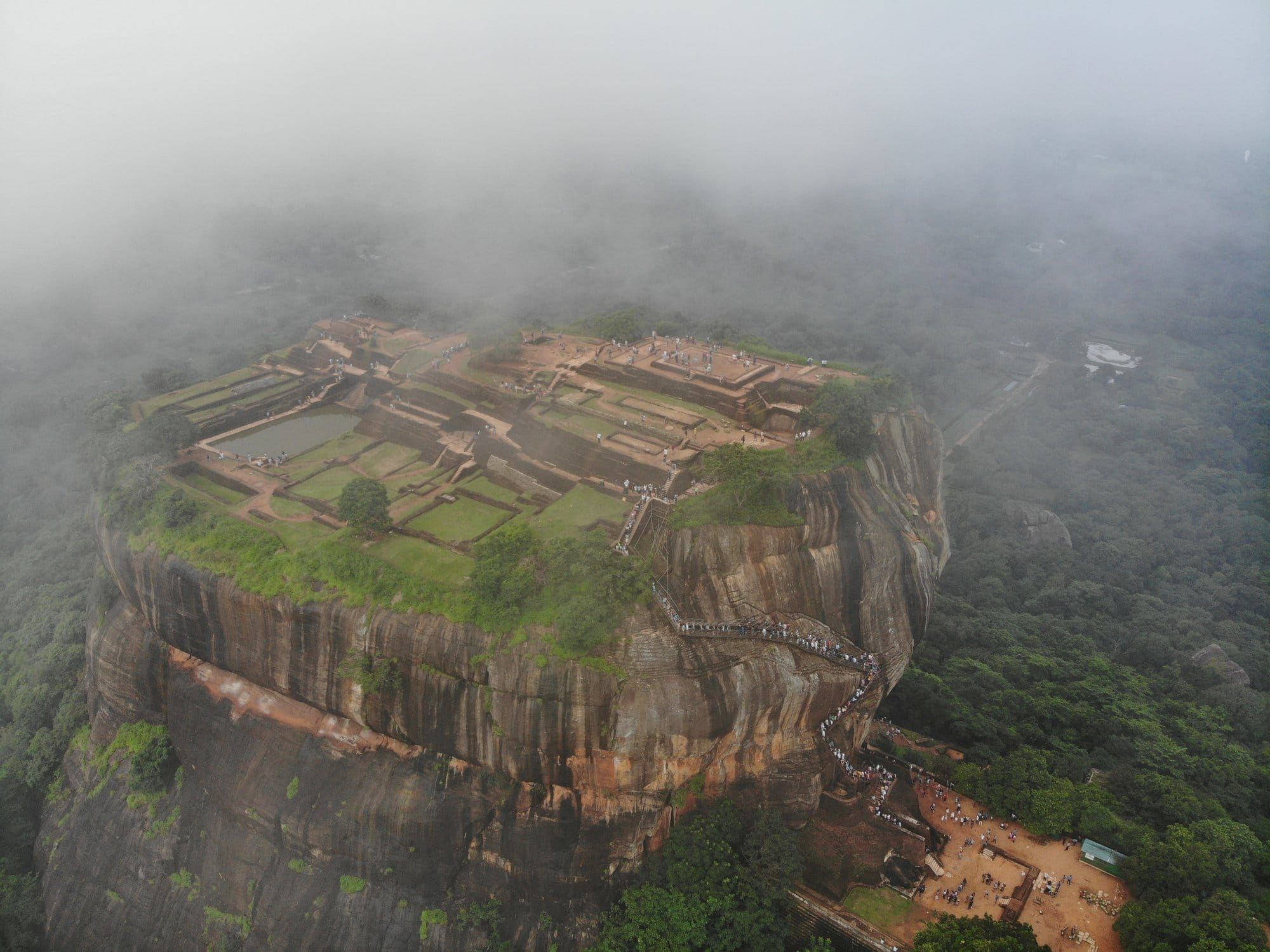
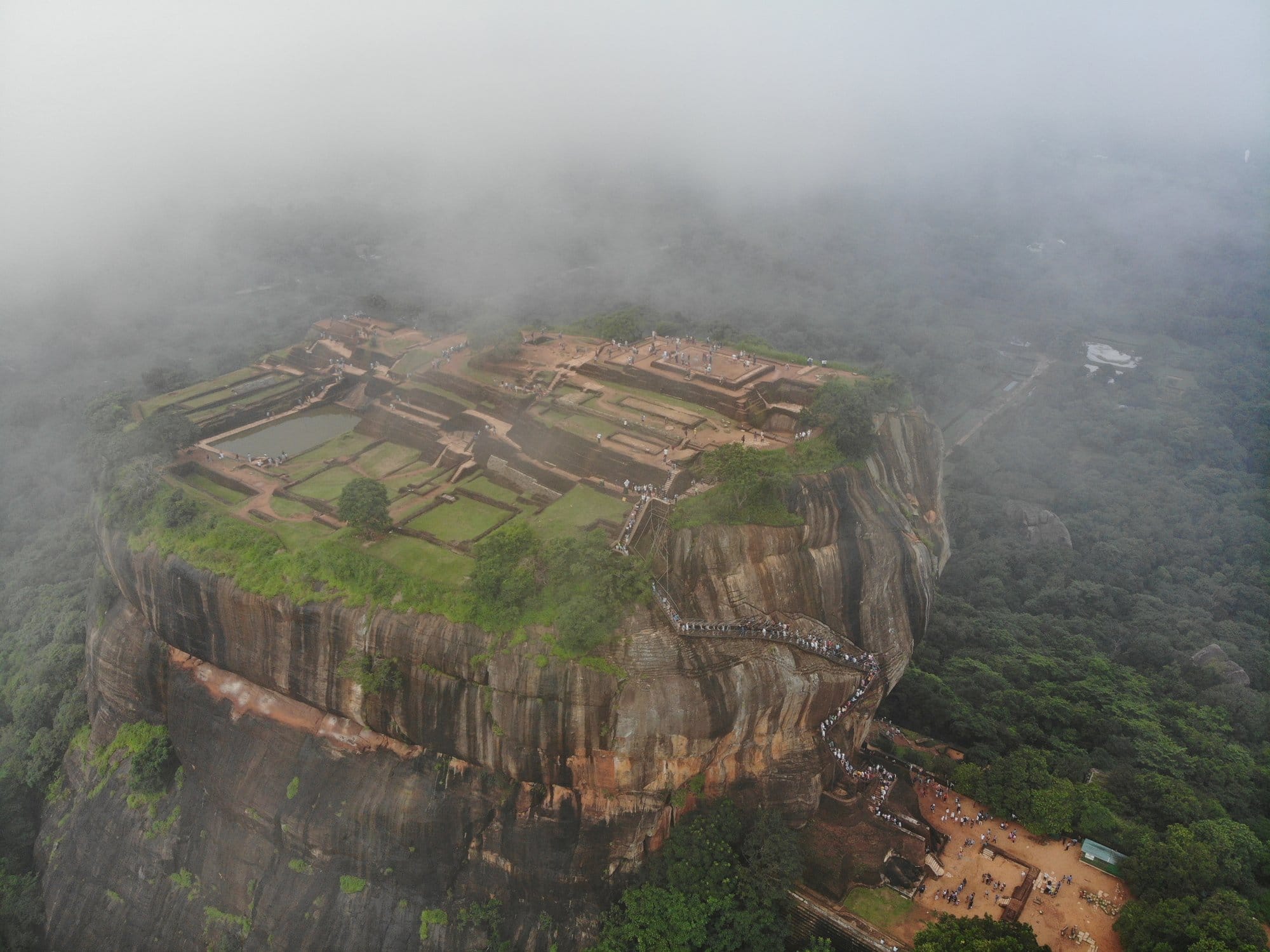
A colossal rock fortress rises from the jungle like something from a dream, its weathered stone face catching the first light of dawn. Below it, rice paddies stretch to the horizon, and beyond—invisible from here—lie the scattered temples of an entire medieval kingdom. This is Sri Lanka's Cultural Triangle, and you don't want to miss it.
We spent one unforgettable December day moving between two UNESCO World Heritage sites that tell the story of Sri Lanka's ancient past. From Sigiriya's dramatic 5th-century palace perched 200 meters above the landscape to the sprawling ruins of Polonnaruwa's 12th-century city, this corner of the island offers a visceral connection to a civilization that thrived when most of Europe was sleeping through the Middle Ages. Add a village cooking class in the countryside, and you have the perfect immersion into Sri Lankan culture.
This guide covers everything you need to tackle both sites in a single day—and why doing so is absolutely worth the effort.
Bookings: Some of the links in this article are affiliate links. We may earn a small commission if you book through them, at no extra cost to you. This helps us keep MapTrotting running.
Climb the Ancient Rock Fortress of Sigiriya
There's no preparation for your first glimpse of Sigiriya. You round a corner, jungle opens up, and suddenly the rock is there—striped with oxidized minerals, crowned with palace ruins, impossible to ignore. This isn't just any ancient site; Sigiriya is one of the world's most remarkable feats of 5th-century engineering, a royal fortress built into the very fabric of the landscape.
The ascent begins modestly enough. You pass through layered fortifications—moats, gardens, brick platforms—each one a reminder that thousands of workers labored for years to turn this vision into reality. The path winds upward through grassy earthen mounds where you can still see the ghosts of ancient structures, their outlines marked by low brick walls and vegetation-choked foundations.
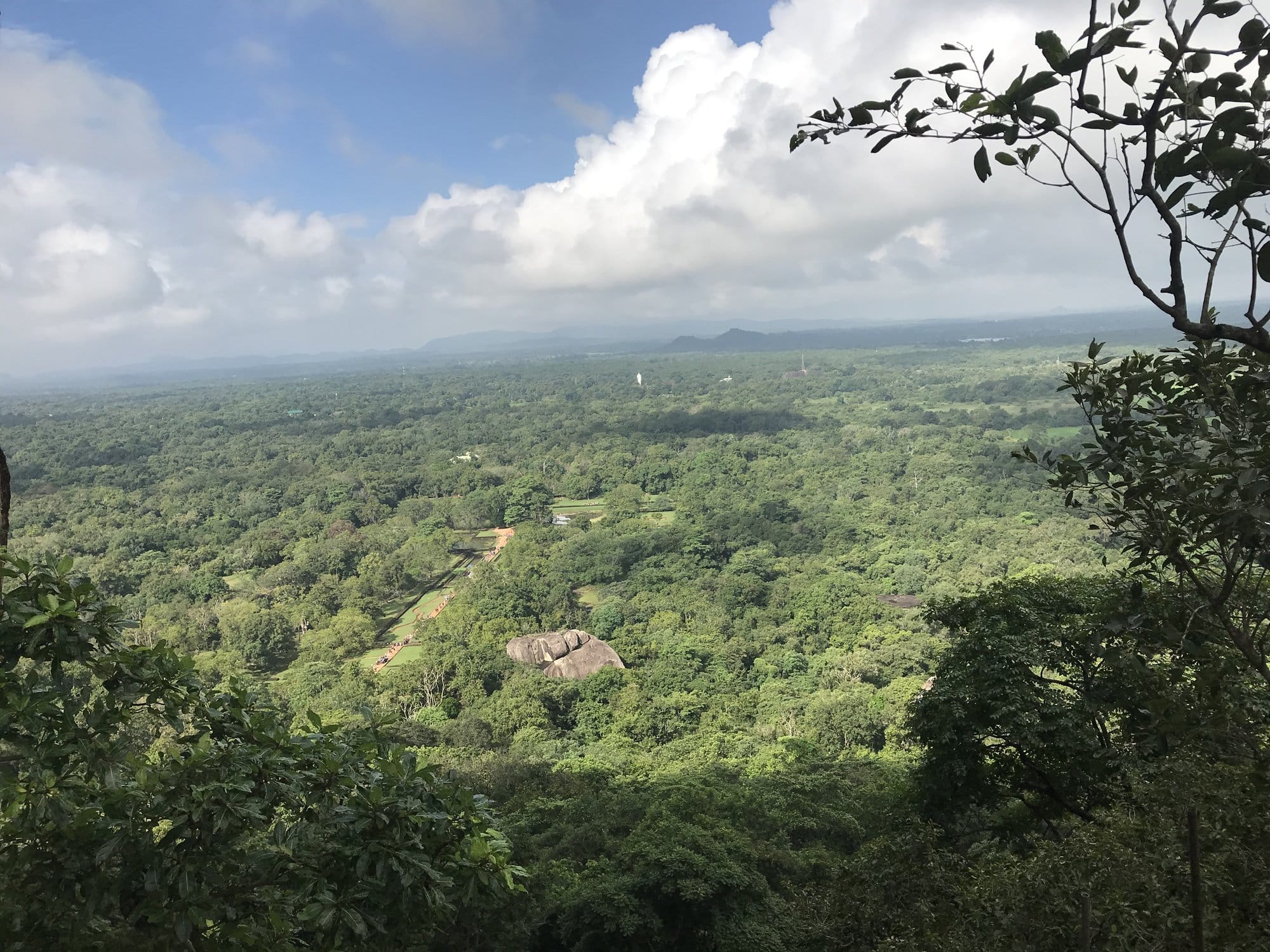
As you climb higher, the views expand. The surrounding countryside reveals itself in layers: the flat agricultural land below, the distant forested ridges, the occasional lake catching the light. On a clear morning, this vista alone is worth the ticket price.
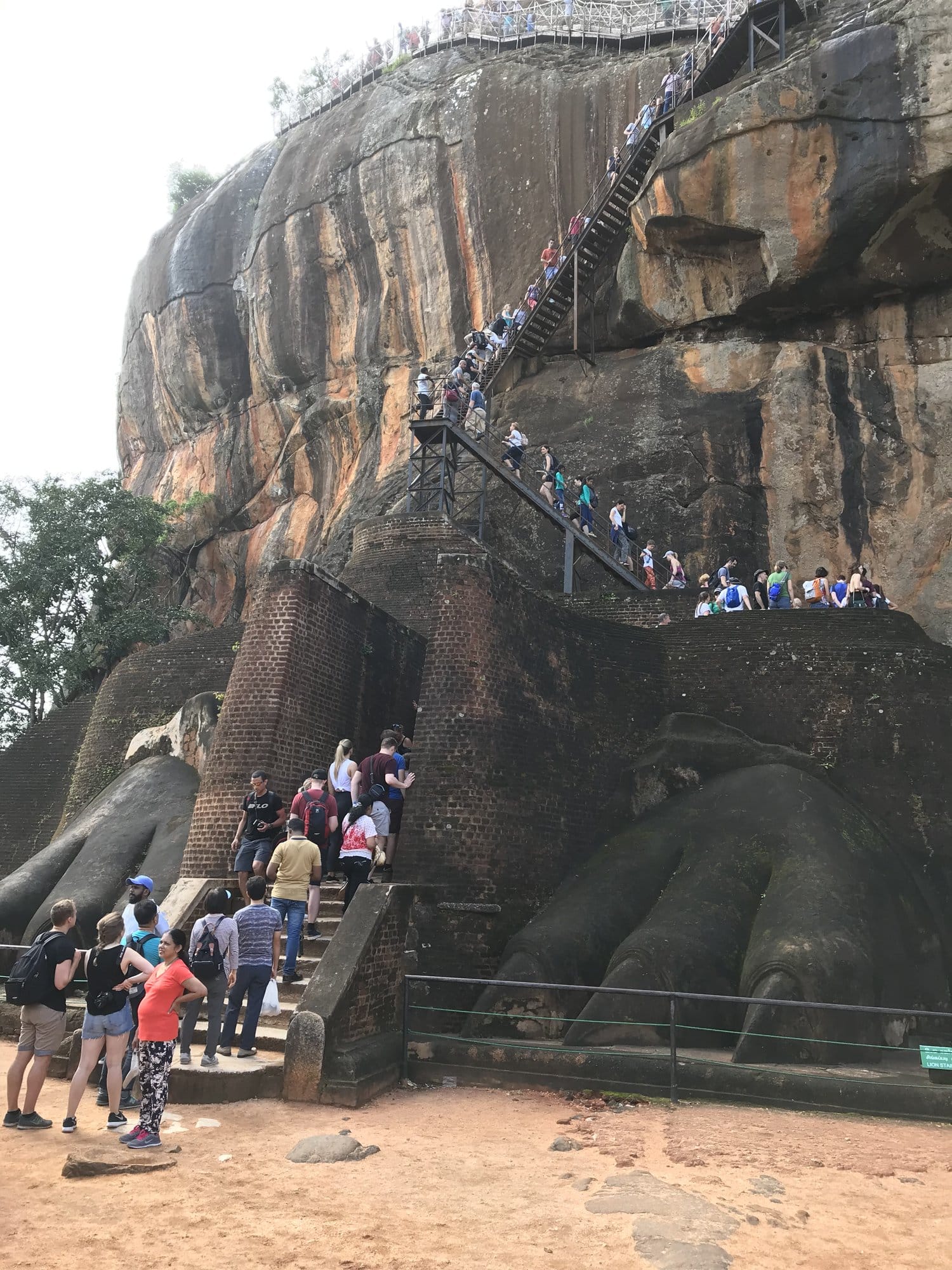
But the real magic comes at the Lion's Paw Gate—the famous named staircase carved into the rock face. Metal railings guide you up steep metal steps that cling to the stone. This is the final stretch, and it's thrilling; you're genuinely exposed, climbing alongside the sheer rock that's stood here for 1,400 years.
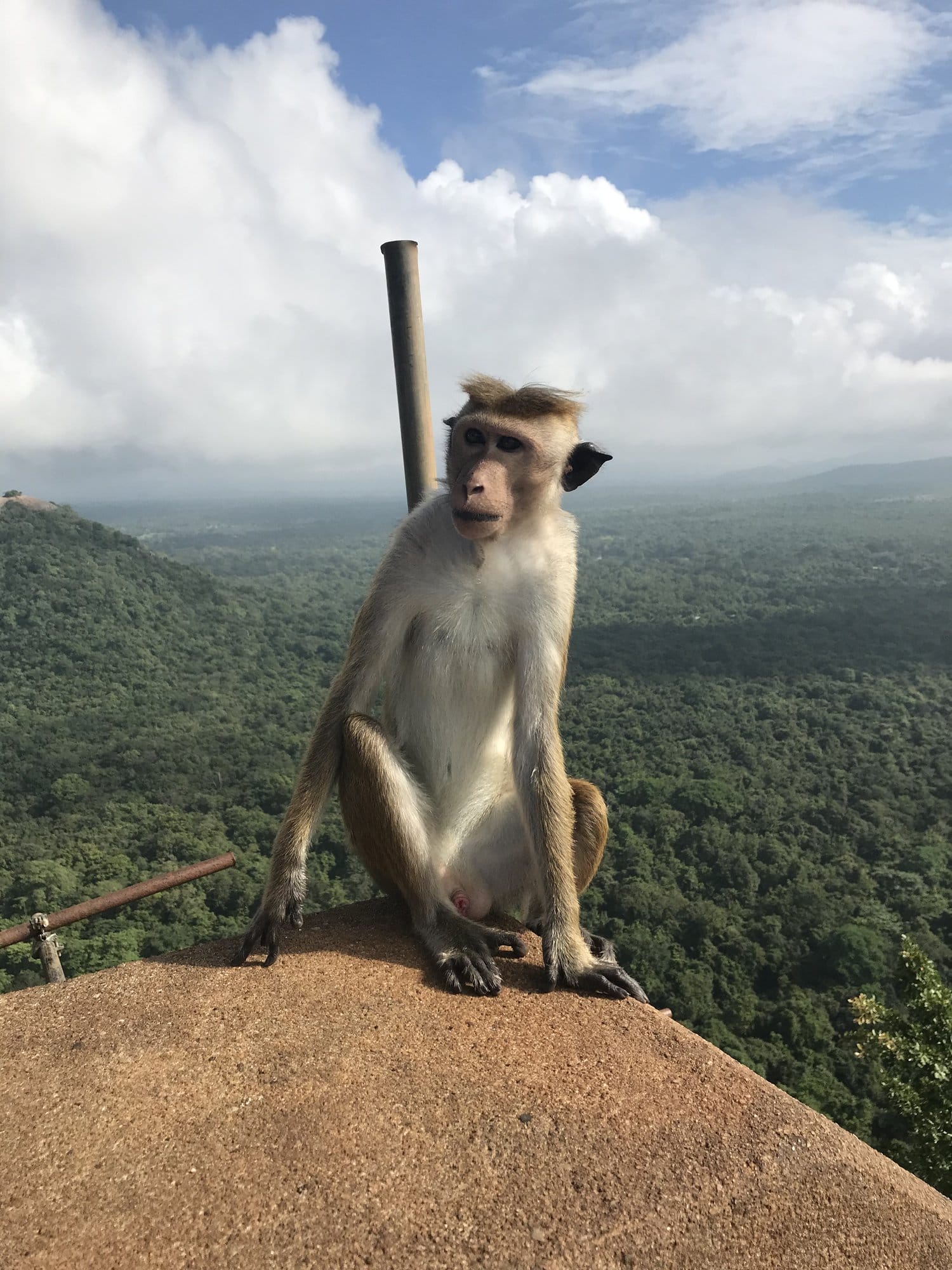
At the summit, the views transform into something almost unreal. The palace platform spreads below you, its rectangular layout still visible in the brick foundations. Macaques hang about on the ledges, unbothered by visitors, and the valley beyond seems to extend forever. On a misty morning, when cloud cover drifts through the valleys, it feels like you're floating above the world.
The artistic treasures here matter too. Carved Buddha heads, weathered but dignified, remain in place. The site has yielded remarkable frescoes—ancient paintings of celestial figures—that you can see in museum displays back in Colombo, though the original locations are now behind barriers to preserve them.
Practical Details:
Tickets cost around $30 USD per person (prices vary slightly). Arrive as early as possible—7 a.m. is ideal. The site opens at this time, and you'll beat the heat and the crowds. Plan to spend 2–3 hours exploring: 45 minutes to an hour for the ascent, an hour for the summit views and exploration, and another 45 minutes for the descent.
Bring water. Seriously. The sun is intense, shade is scarce above the lower levels, and dehydration can creep up quickly. Wear good shoes with decent grip—the metal stairs can get slippery, and the brick platforms are uneven. Start early, and you'll finish by midday with time to spare for your next stop.
Discover Polonnaruwa's Ancient City
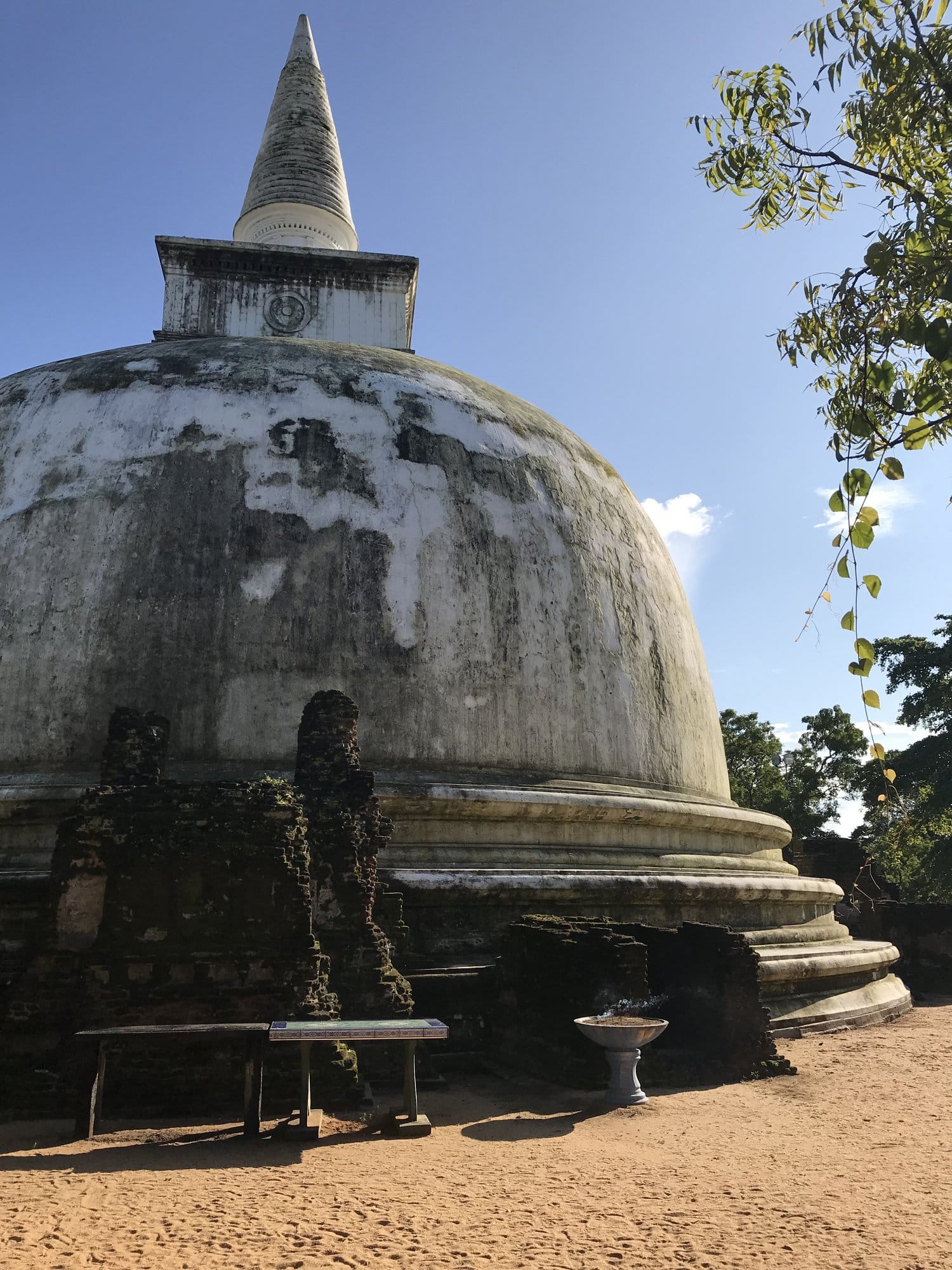
Fifty kilometers east of Sigiriya lies Polonnaruwa, a different kind of ancient experience—not the dramatic single-monument approach, but an entire city frozen in time. This was the capital of Sri Lanka's Chola dynasty in the 12th century, a place where palaces, temples, monasteries, and royal gardens once thrived in organized grandeur.
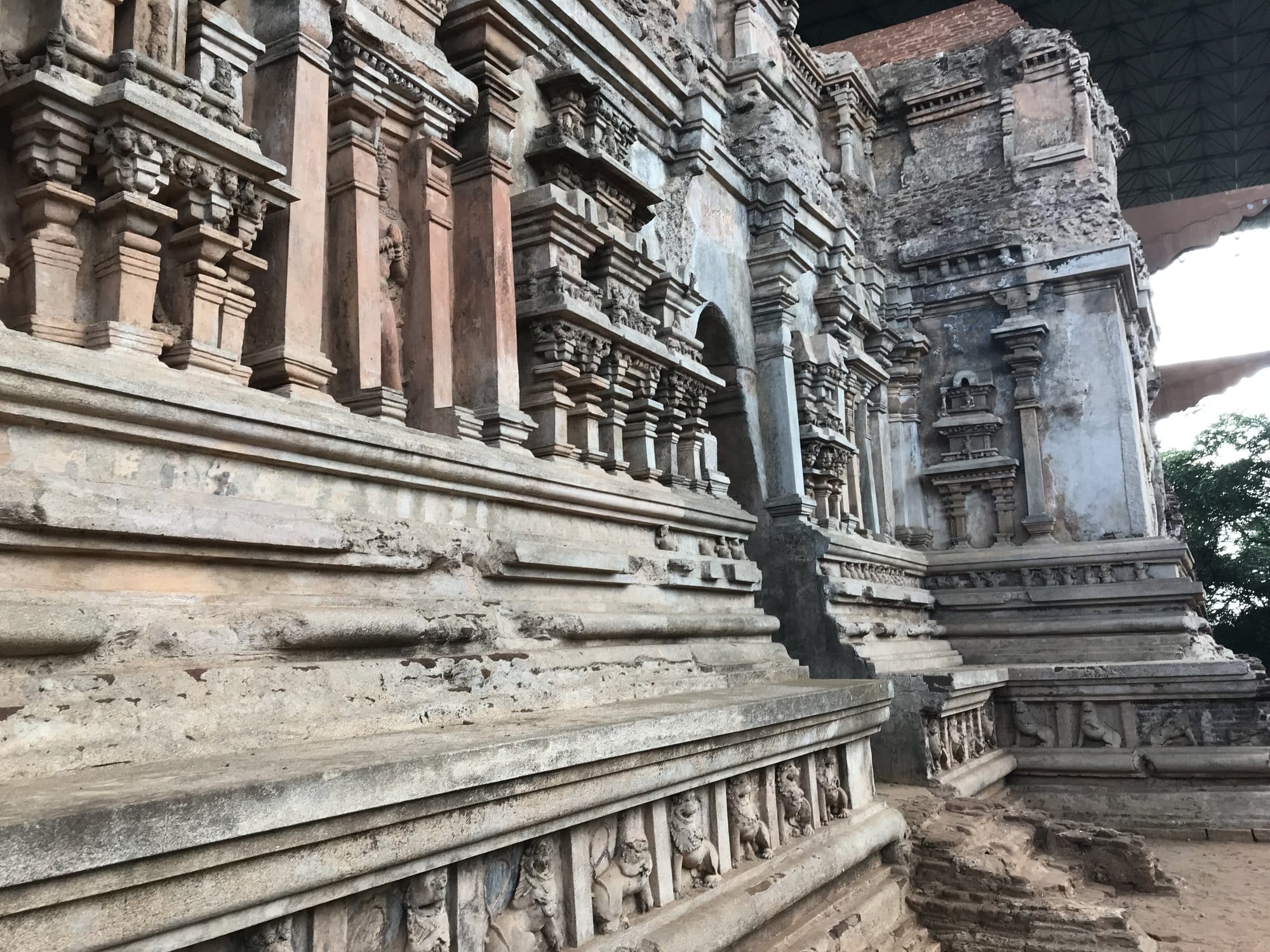
Walking through Polonnaruwa, you move through layers of centuries. Brick structures in various states of preservation emerge from overgrown mounds and grassy fields. Some walls stand complete, their doorways and window openings still visible. Others are reduced to foundations, their stories legible only in the patterns of stone and the scatter of brick across the earth.
The scale of the site is what strikes you first. Unlike Sigiriya's concentrated fortress, Polonnaruwa spreads across a vast area. You'll need a guide or a map to navigate the different zones—the Royal Palace area, the temple complexes, the astronomical observations tower. Give yourself at least 2–3 hours to do the site justice, and consider hiring a local guide who can explain the layout and historical context far better than any signage.
One of Polonnaruwa's great advantages is that it's less crowded than Sigiriya. You can wander the ruins with a sense of quiet exploration, moving between weathered brick structures and pausing to imagine the life that once unfolded here.
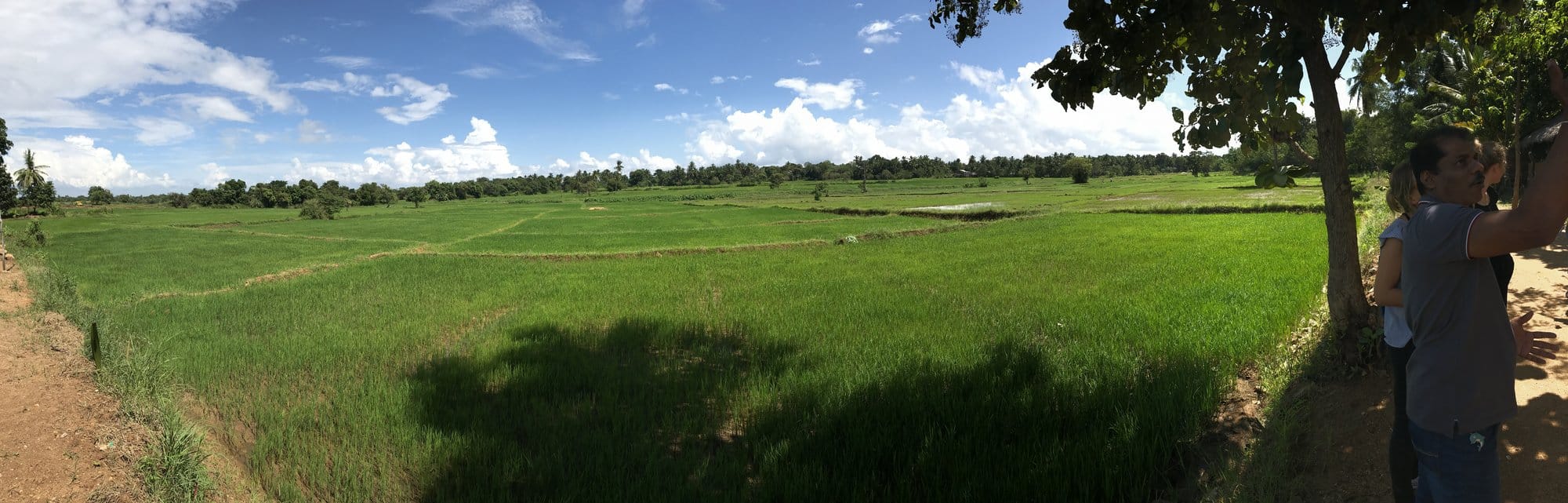
The surrounding landscape adds to the experience. Rice paddies blanket the countryside in every direction, and the rural character of the area—villages, small temples, agricultural rhythms—gives you a sense of how Polonnaruwa relates to its environment.
Marvel at Gal Vihara's Stone Buddhas
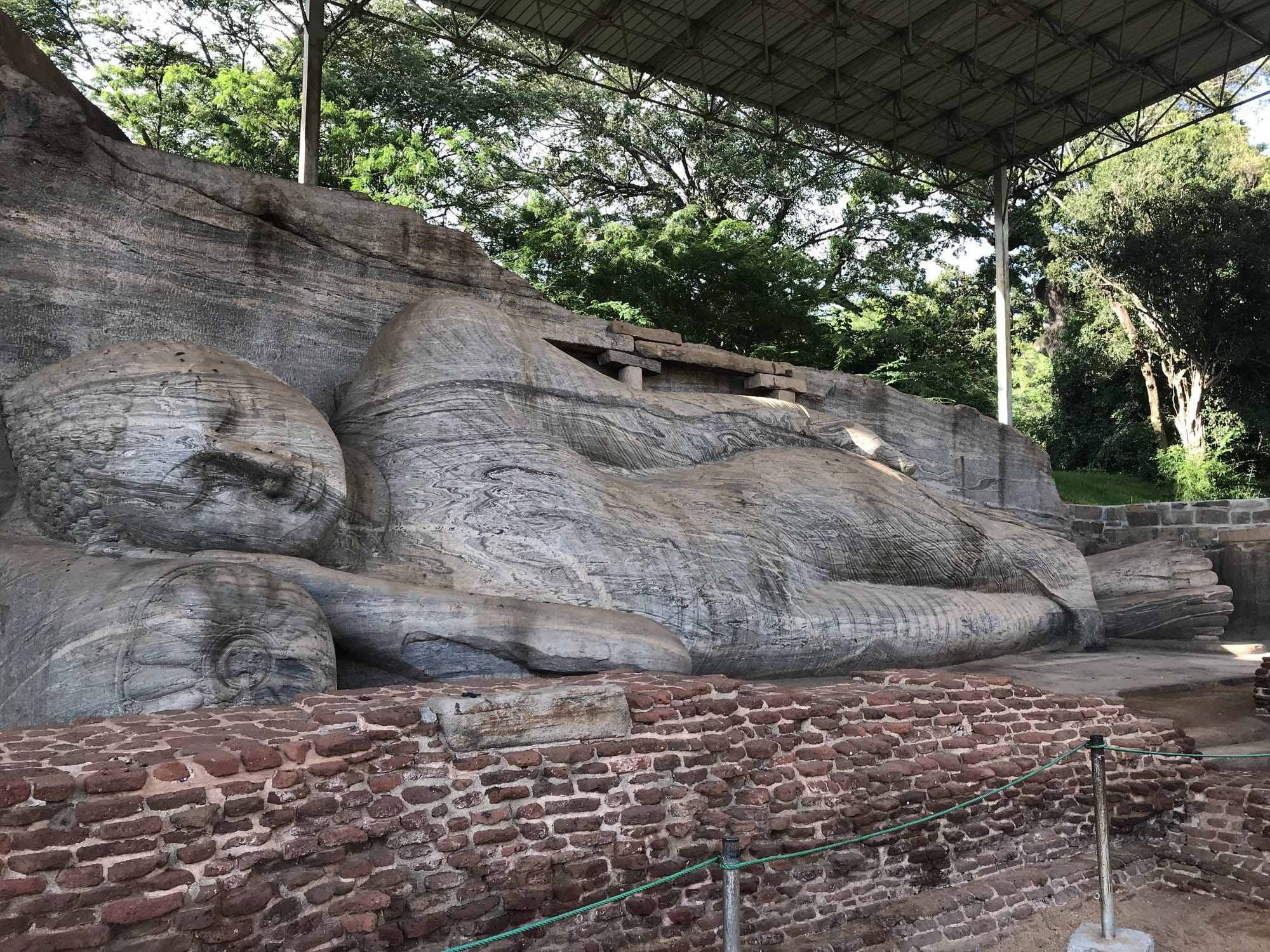
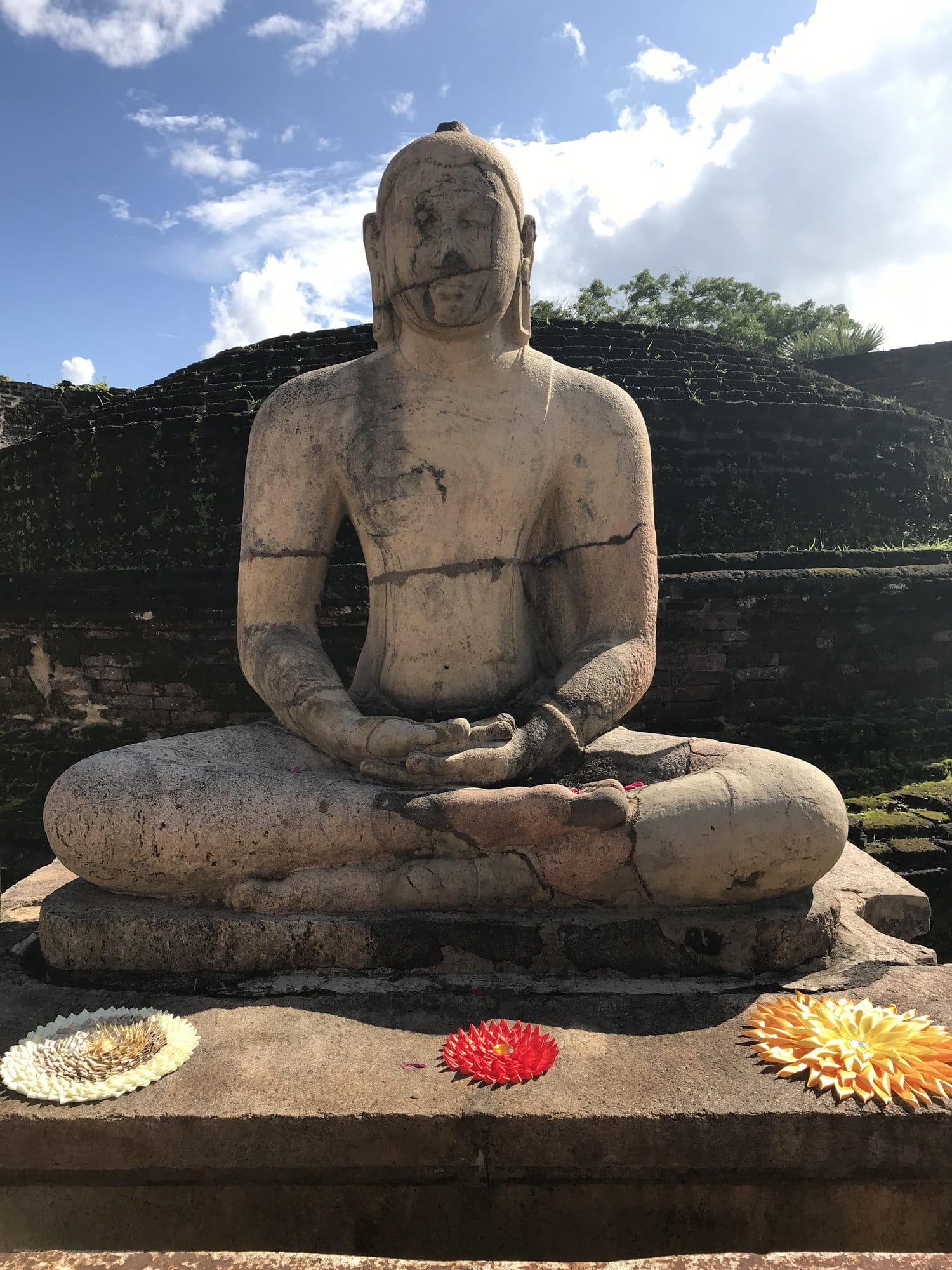
Within Polonnaruwa's archaeological park lies one of Sri Lanka's most moving destinations: Gal Vihara, a 12th-century Buddhist sanctuary carved into living rock. Here, four monumental Buddha statues—each unique in posture and expression—demonstrate the spiritual sophistication of ancient Sri Lankan artistry.
The reclining Buddha is the most famous: a 14-meter figure lying in serene repose, one hand cradling its head, the drapery of its robes carved with such detail you can feel the sculptor's patience from centuries ago. This figure represents Buddha entering Nirvana, and the craftsmanship is so refined that despite weathering and the loss of some surface detail, the statue still radiates a profound calm.
Nearby stands a seated Buddha in meditation, its proportions perfect, its posture echoing thousands of meditation practitioners across the centuries. A standing Buddha with crossed arms watches over the site with dignified composure. And a fourth figure, partially damaged but no less commanding, completes the quartet.
What makes Gal Vihara extraordinary is the way these statues interact with their environment. Carved directly into the rock, they're integrated into the landscape rather than imposed upon it. The stone itself becomes part of the meditation—you're not just looking at representations of Buddha, you're contemplating the same natural elements that shaped these carvings centuries ago.
Gal Vihara isn't crowded. You'll find yourself alone or with just a few other visitors, standing before these magnificent figures, the weight of centuries palpable. It's a spiritual experience, Buddhist or not.
Taste Traditional Sri Lankan Cooking
After hours of climbing and exploring, food becomes a focal point. We participated in a village cooking class near Polonnaruwa—an experience that transforms how you understand Sri Lankan cuisine.
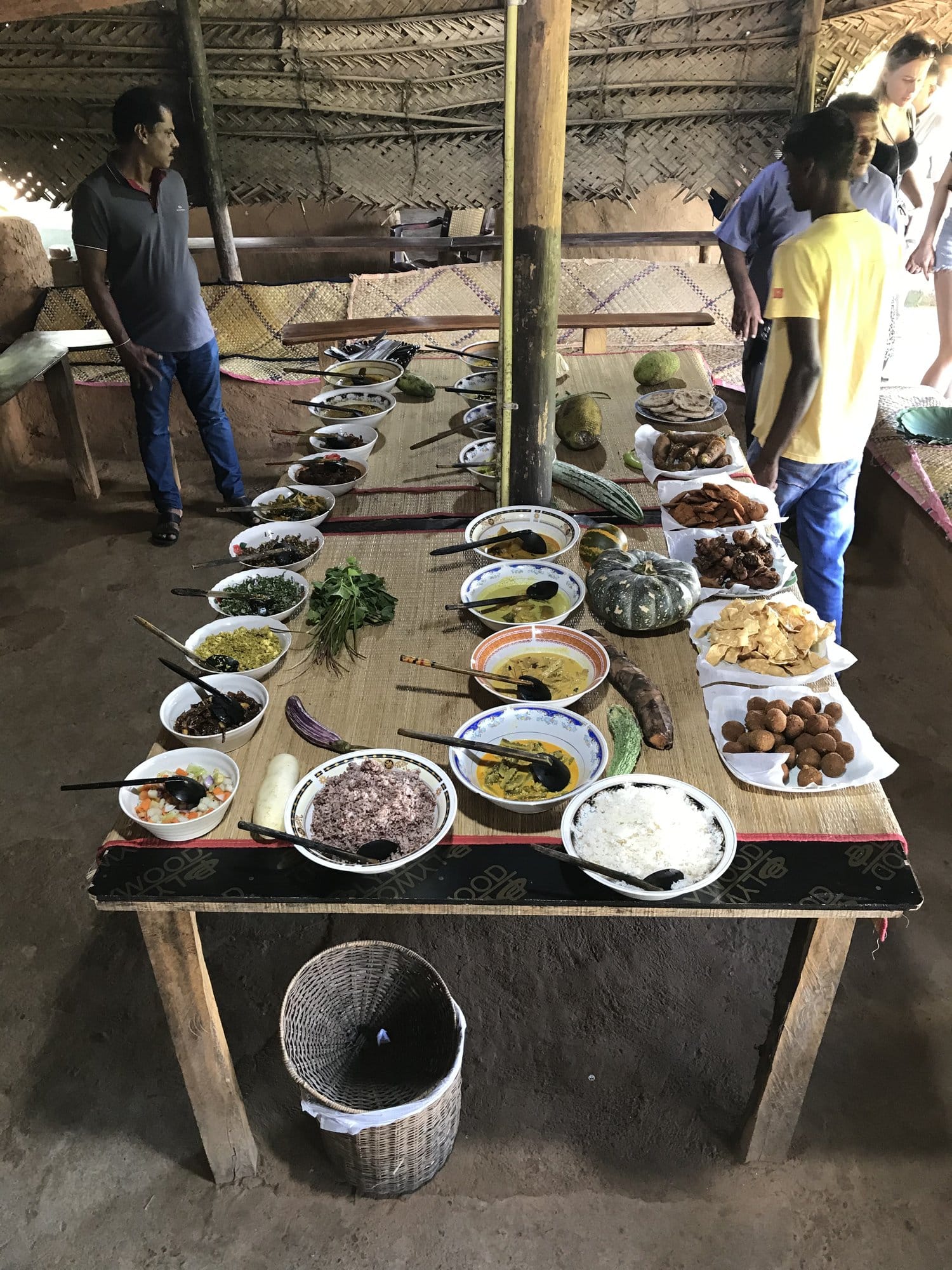
The setup is simple: a table under open sky laden with dozens of small bowls, each containing a different spice, ingredient, or paste. Turmeric in one, fenugreek in another, roasted coconut in another, dried chilies in yet another. A local cook demonstrates how these elements combine not just for flavor but for balance—heat tempered by sweetness, richness offset by acidity.
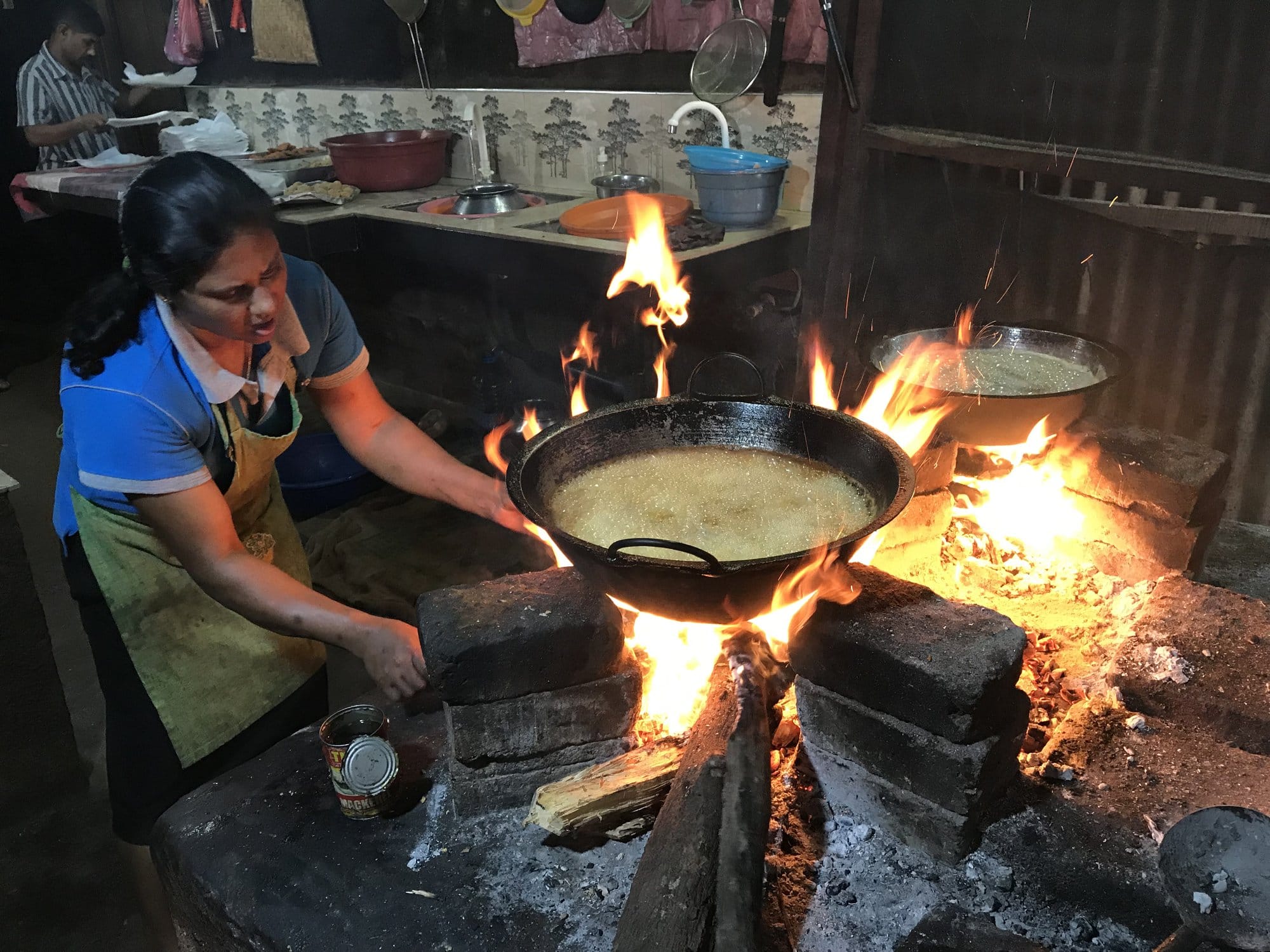
You watch curry transform in a wok over an open charcoal fire. The technique matters as much as the ingredients: the timing of when spices hit hot oil, how long they toast before the vegetables go in, the speed at which you must stir to prevent burning. It's a cooking style refined over centuries, adapted to local ingredients, designed for feeding families and communities.
Eating the finished curries in the outdoor setting—surrounded by the countryside, the afternoon light fading—imparts a knowledge that no cookbook can convey. You understand, suddenly, why certain flavor combinations are traditional, how they suit the climate, how they nourish bodies working in tropical heat.
This kind of immersive experience is what makes travel memorable. You're not just consuming culture; you're participating in it, learning with your hands and your palate.
Practical Information
Getting to Sigiriya
If you're based in Colombo, Sigiriya is about 150 kilometers north. By car, the journey takes 3–4 hours depending on traffic and road conditions. Many travelers hire a driver or join a group tour; both options work well. Public transport exists via buses, but schedules are inconsistent and the journey takes considerably longer.
We recommend hiring a private driver who can wait for you and take you onward to Polonnaruwa (another 50 kilometers east). This approach costs more upfront but eliminates logistics headaches and gives you flexibility to explore at your own pace.
Best Time to Visit
The Cultural Triangle is best visited during Sri Lanka's dry season, roughly December through March. December offers perfect conditions—not too hot, low rainfall, clear skies for photography. The rainy season (May–September) brings challenges: muddy paths, limited visibility, and the risk of rock slipperiness on Sigiriya's steeper sections. If you're visiting with children, dry season is non-negotiable.
Where to Stay in Sigiriya
The town of Sigiriya itself is small and offers basic accommodation. For more comfort and amenities, consider staying in nearby towns like Dambulla (20 kilometers south) or Habarana (35 kilometers south), both of which have better hotel options. If you're road-tripping, staying in one location and taking day excursions works well.
From Sigiriya, you can reach Polonnaruwa in roughly an hour, making a day trip feasible. Alternatively, base yourself in Polonnaruwa if you plan to spend more time exploring the ruins.
Find the Best Place to Stay
Explore accommodation options in the Sigiriya and Polonnaruwa region with our map. You'll find everything from basic guesthouses to mid-range hotels suited for families and independent travelers.
Making Connections
The Cultural Triangle connects to other chapters of Sri Lanka's story. If you're interested in how ancient cultures adapted to the landscape, you might explore our guide to Nuwara Eliya's tea plantations and colonial history, which reveals a different era of the island's heritage. — Sri Lanka's stunning south coast
For comparative perspective on ancient monuments in other cultures, consider our Oman family road trip guide, which includes visits to falaj irrigation systems and desert fortifications—a different architectural tradition but similar themes of human ingenuity.
If you're fascinated by UNESCO heritage sites and ancient city planning, our Venice travel guide explores European medieval architecture and urban development from the same historical period.
For travelers combining multiple countries in one journey, our Northern Italy road trip offers insight into how to link cultural destinations efficiently—a skill equally valuable in Europe or Asia.
And for a comprehensive overview of visiting Sri Lanka with family, check out our full Sri Lanka family itinerary, which integrates the Cultural Triangle into a broader exploration of the island.
Bookmarks & Disclosures
This article contains affiliate links to booking partners we trust and use personally:
- GetYourGuide tours: - Sigiriya rock fortress entry e-ticket - Sigiriya guided walking tour - Sigiriya & Dambulla day tour from Kandy - Ella hands-on tea making experience - Trip.com: compare flights | Hotels in Sri Lanka - Stay22 map embed for accommodation search in the region
We earn a small commission at no extra cost to you. These links help support MapTrotting.
Word count: 2,087 words Reading time: ~8 minutes Photos: 11 images Last updated: December 2026 Status: Ready for editorial review and scheduling