
Where to Stay in Oman: Nizwá, the Desert, Sur and Muscat
Oman is a road trip, so the question is not where to stay but in what order — mountains, desert, coast, capital.

Oman is not a place you base yourself in. It is a loop, and the accommodation question is really a sequencing question: how many nights in the mountains before the desert stops feeling like a novelty, and whether you finish on the coast or in the capital. We drove it with two kids over eight nights in December and used four distinct bases, each one a different kind of building.
The Short Answer
Two nights near Nizwá for the mountains, one night at a desert camp in Wahiba Sands, two nights on the coast at Sur, three nights in Muscat to close. Start inland and finish by the sea — arriving in the mountains straight off the plane gives the trip a cultural foundation, and waking up to a turquoise bay after days of rock and sand is a better ending than the reverse.
Mountains — A Guesthouse Near Nizwá, Two Nights
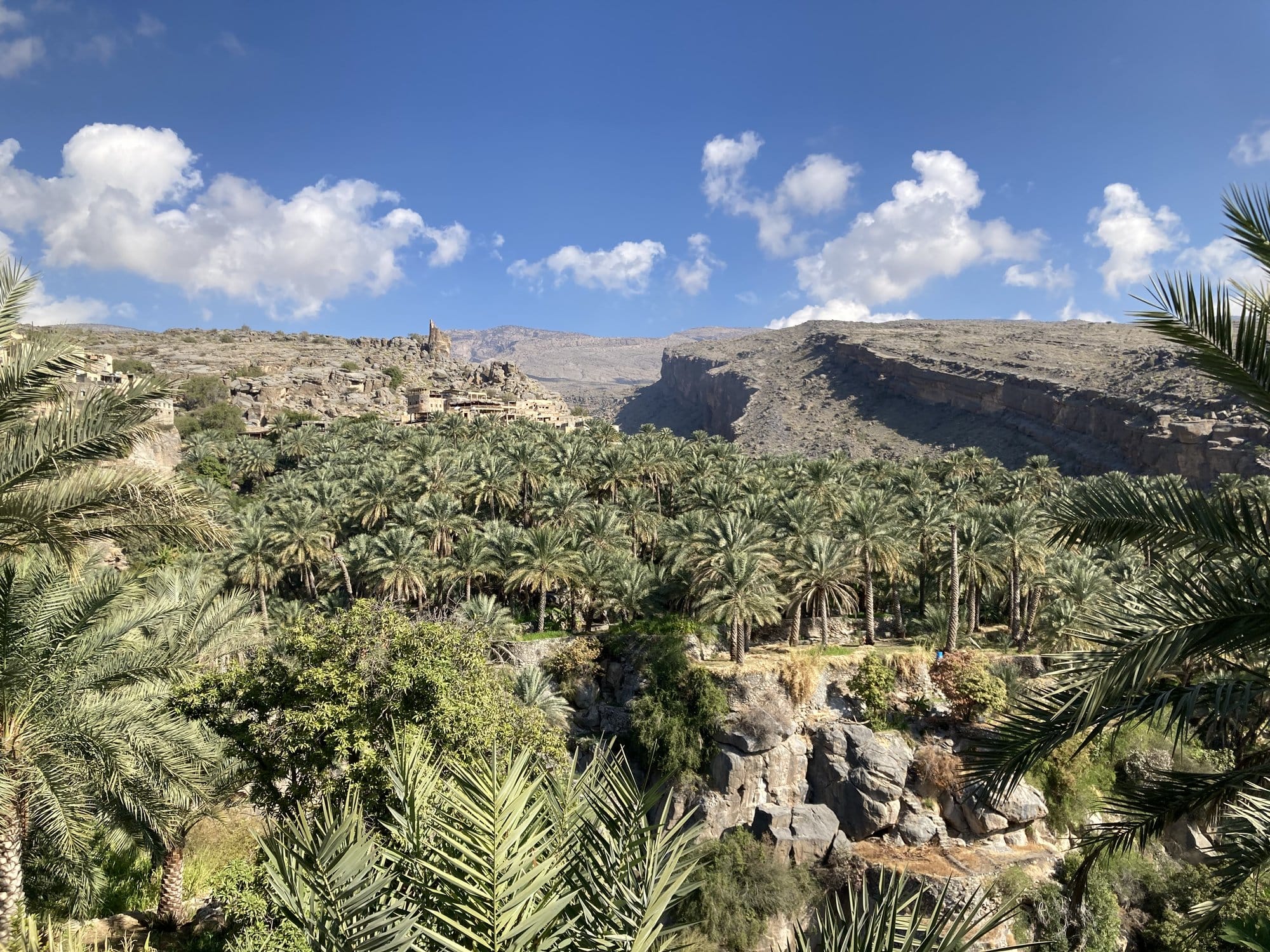
Nizwá is the obvious mountain base: the widest choice of accommodation and restaurants in the interior, and everything worth seeing within an hour's drive. From a guesthouse near the town you reach Misfat al Abriyyin, Bahla Fort and Jebel Akhdar easily, and the region sits about two hours from Muscat on a fast highway.
The choice here is between mid-range hotels and traditional-style guesthouses. The guesthouses are the ones worth the detour — restored mud-brick and stone houses in the old villages, which is the architecture you came to see rather than a view of it from a lobby. Note that Jebel Akhdar's mountain road requires a 4×4; that is a rental decision, but it shapes which properties up there are reachable at all.
Desert — One Night at a Camp in Wahiba Sands
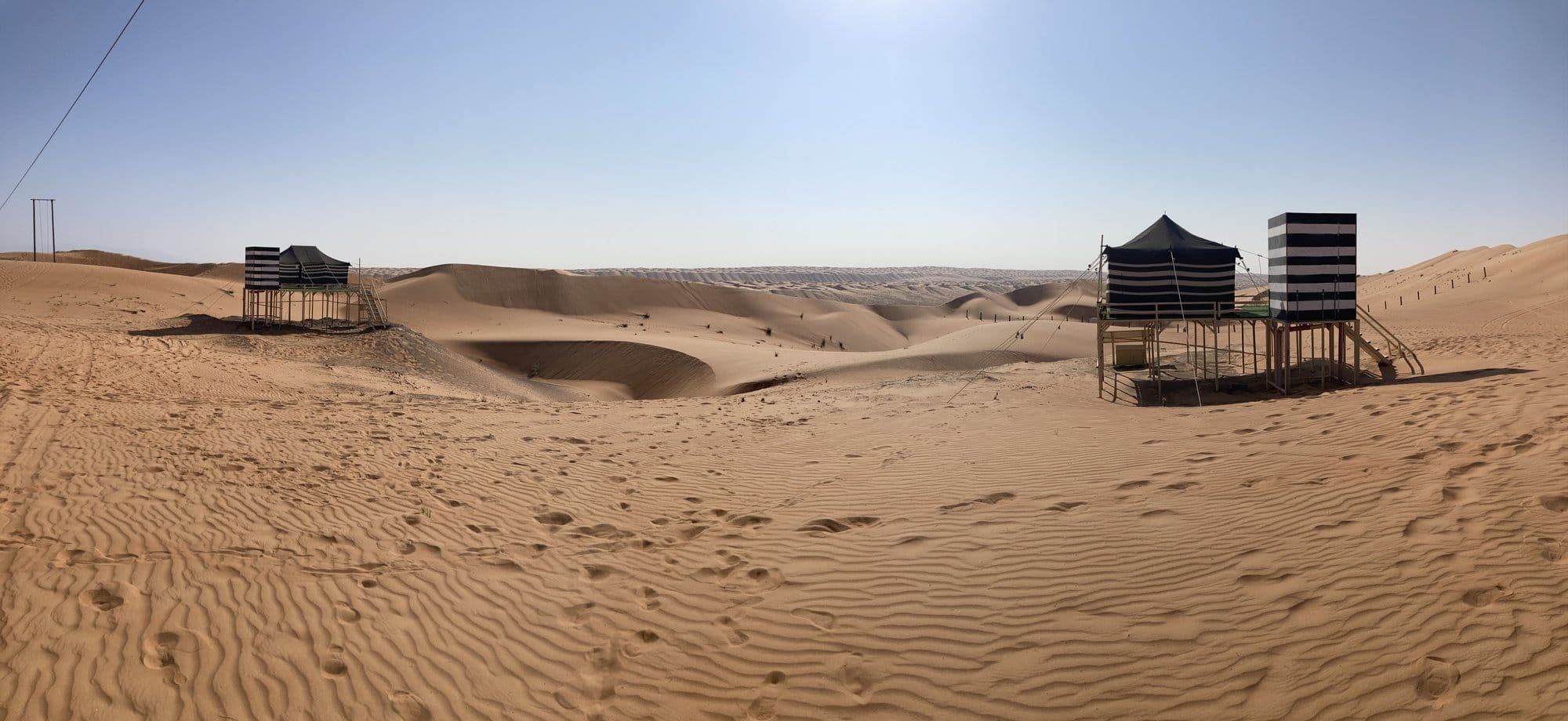
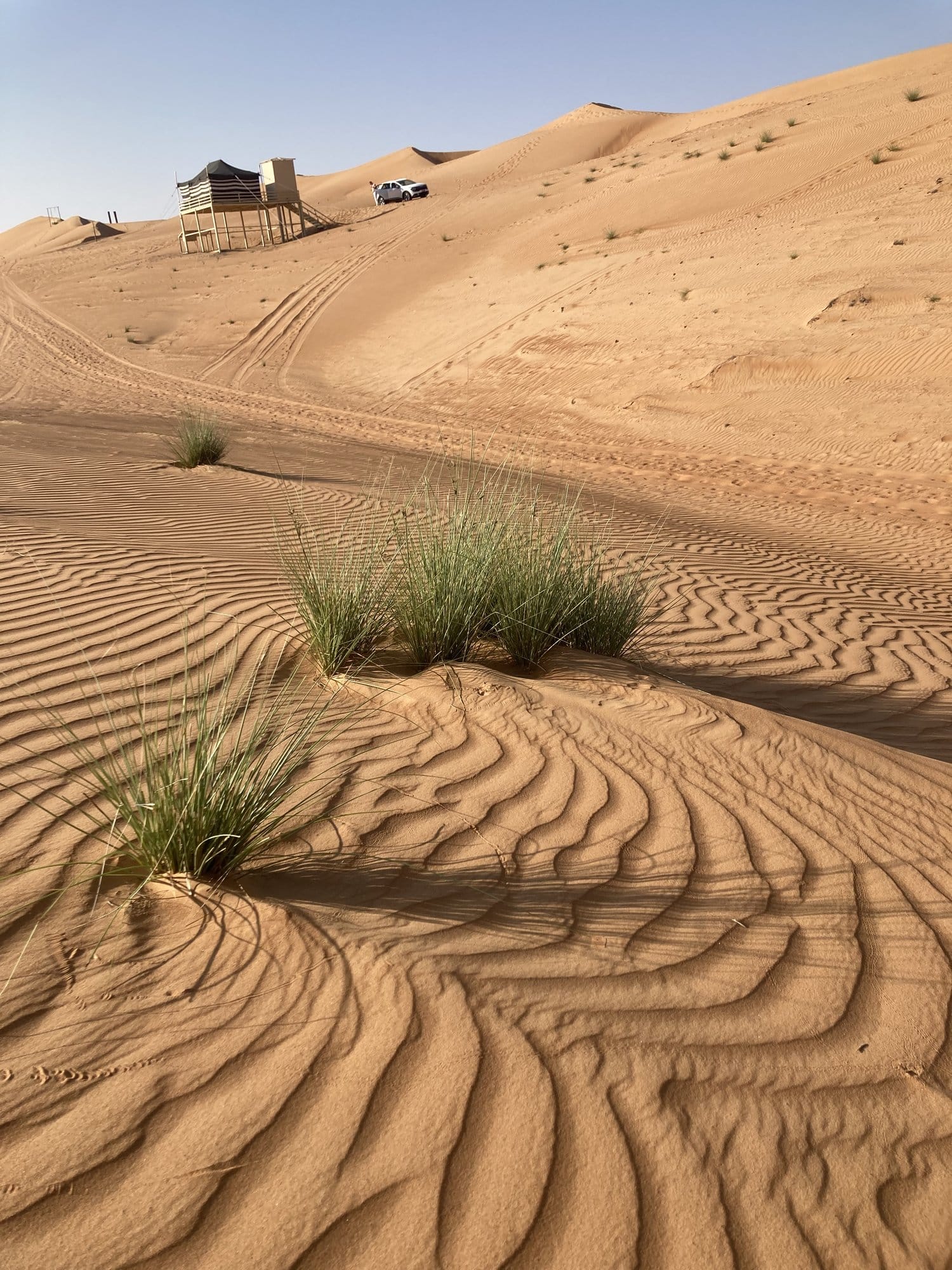
One night is the right dose. Desert camps in Wahiba range from basic — shared bathrooms, simple tents — to genuine glamping. Ours was mid-range: private tents with en-suite bathrooms, a communal dining area of cushions and rugs, and dune access straight from the camp.
The practical detail that matters when you book: the camp arranges the sand-road transfer. You do not drive yourself in over the dunes, and you should not plan to. Confirm the transfer when you reserve rather than on arrival.
Coast — Two Nights at Sur
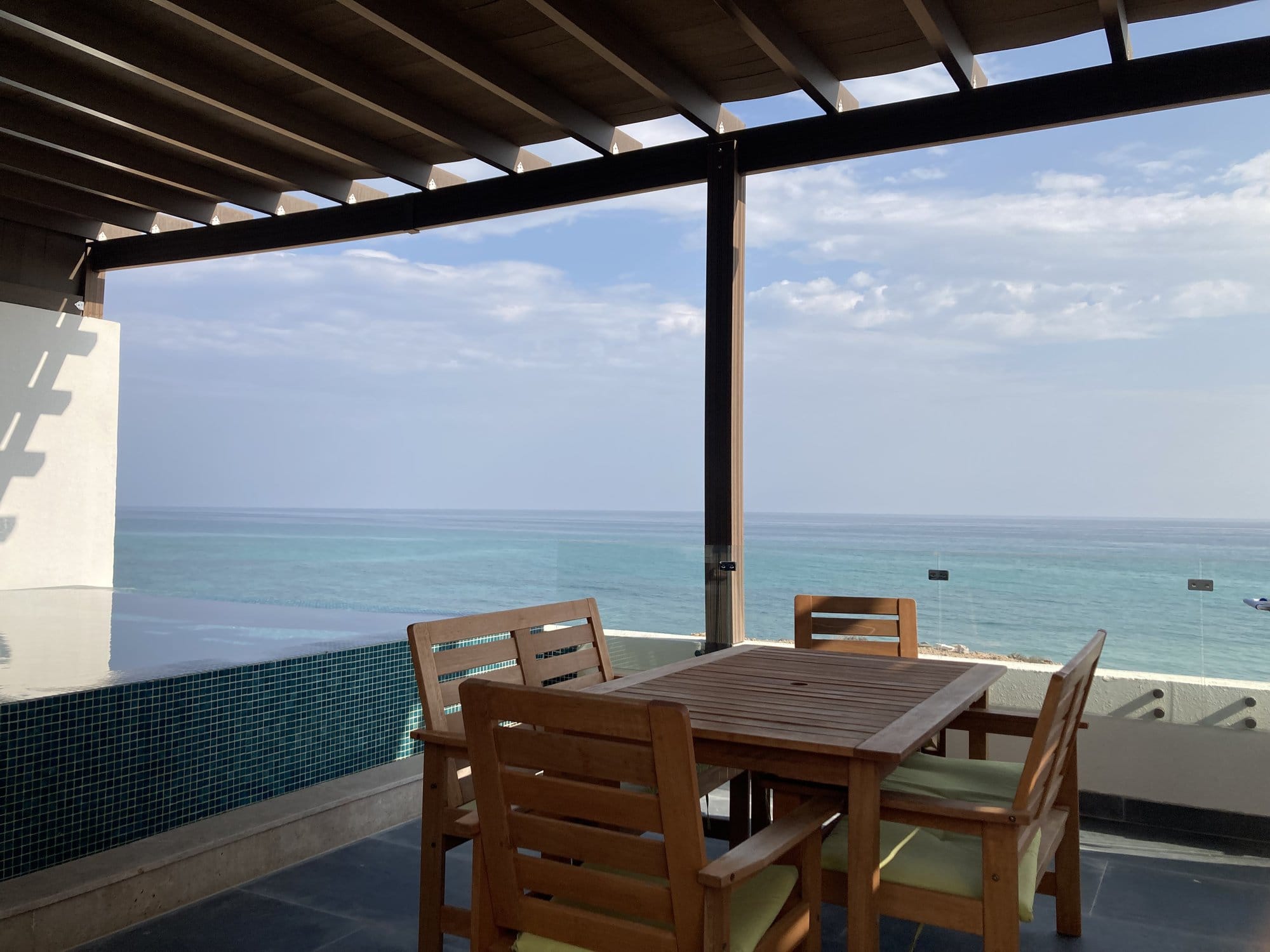
Sur works as the wadi base. Two nights on the beach there put Wadi Tiwi, Wadi Shab and the inland wadis within reach, and the accommodation range runs from budget guesthouses to beachfront resorts. We took a resort hotel directly on the beach, and after the mountains and the desert, waking up to a turquoise sea was a genuine treat rather than a marketing line.
Muscat — Three Nights to Close
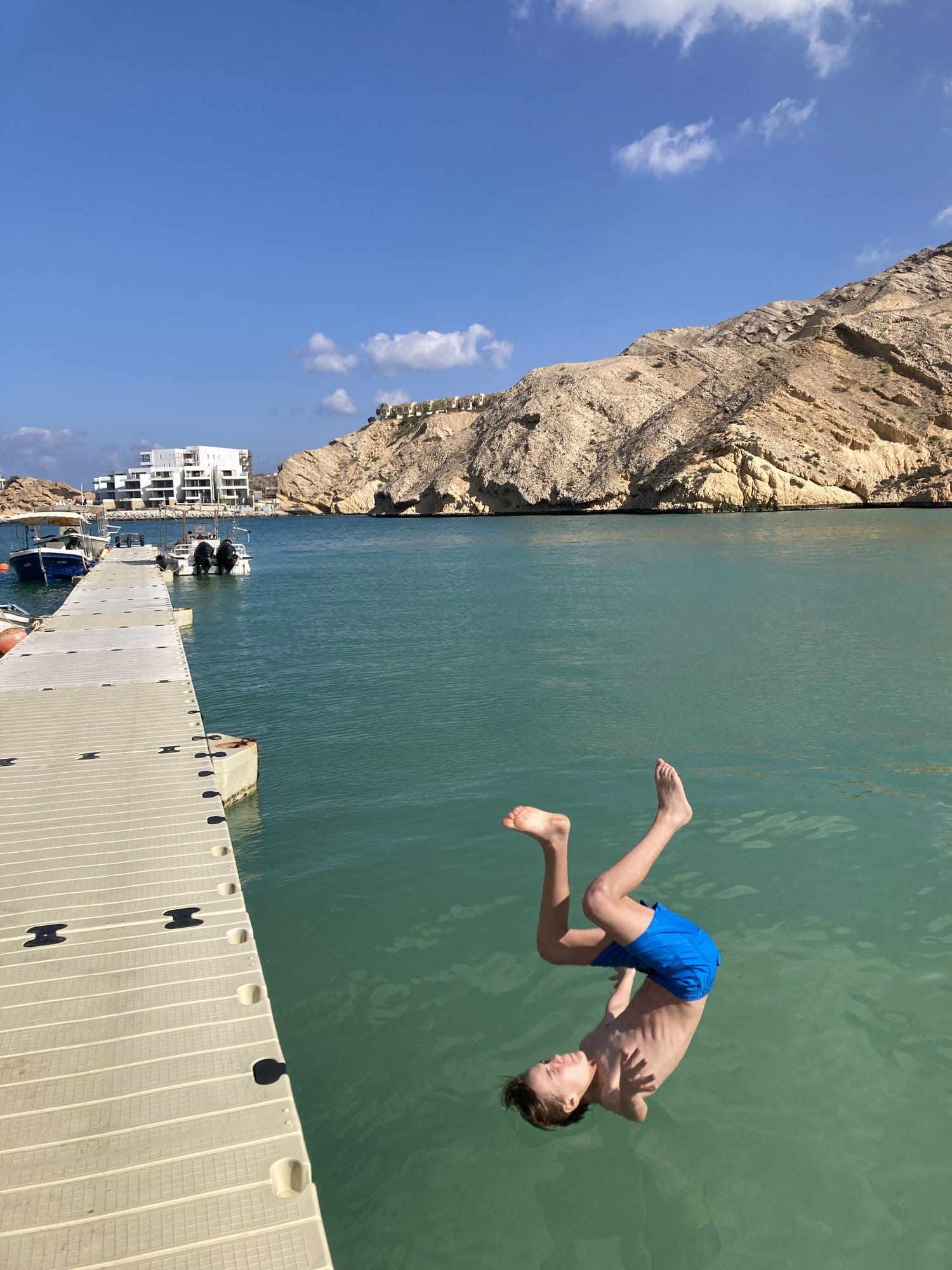
For the capital we chose a resort along the coast east of the city, in the Qantab and Bandar Jissah area: rocky coves, a private beach, and easy access to both the old town and the Grand Mosque. That stretch is the compromise worth knowing about — it keeps you out of the city without putting the sights out of reach. If your flight times are awkward, the Grand Mosque is about thirty minutes from the terminal and fits either side of a transfer.
How the Four Bases Fit Together
Eight nights split two, one, two and three is the version we would repeat. If you only have five, cut Sur and keep the wadis as a day trip from Muscat; if you have ten, add a second desert night rather than a third in the capital.
The mountains work best at the start or the end of the loop. We started there, which gave the trip a cultural foundation before the wilder landscapes, and meant the two heavy driving days came while everyone was still fresh.
Where This Fits in the Trip
This page is the accommodation half of a longer itinerary. For the drive itself — the route, the timings and what each region is actually for — see our Oman family road trip guide. For the interior in detail, from Bahla Fort to Jebel Akhdar, see our Oman mountains and heritage guide.
FAQ
How many nights do you need in Oman? Eight is comfortable for the full loop: two in the mountains, one in the desert, two at Sur and three in Muscat. Five works if you cut Sur and do the wadis as a day trip from the capital.
Is one night enough in a desert camp? Yes. One night gives you the sunset, the night sky and the sunrise, which is the whole of it. A second night in Wahiba adds heat and sand rather than experience, unless you are there specifically for the dunes.
Do you need a 4×4 in Oman? For the mountain road up to Jebel Akhdar, yes — it is mandatory. The rest of the loop is fine in a normal car, but the 4×4 decision affects which mountain properties you can reach at all.
Should you start or finish in Muscat? Finish. Starting inland gives you the forts and villages while you are still fresh, and ending on the coast near the capital means the last days are restful and the airport is close.