
Algarve Road Trip: 5-Day Coastal Guide
The Algarve coast delivers dramatic limestone cliffs and hidden beaches.

When you arrive in the Algarve with a rental car and five days ahead of you, you're standing at the edge of Portugal's most dramatic secret. Yes, the Algarve has beaches — some of Europe's best. But what catches most travelers off guard is the sheer vertical drama of the place: a coastline slashed by ochre cliffs that drop 80 meters to hidden coves, trails that wind through impossible arches carved by centuries of Atlantic swells, and lighthouses perched on the southwestern tip of Europe like sentries guarding the edge of the known world.
This is what a proper Algarve road trip feels like — not a beach-resort checklist, but a genuine journey through one of Portugal's most sculptured landscapes.
Bookings: Some of the links in this article are affiliate links. This means that if you choose to make a booking, we will receive a small commission at no extra cost to you. Thank You!
Day 1: Carvoeiro — Start with Sunset Drama
Your first evening in the Algarve isn't about unpacking properly or finding a decent café. It's about watching the sun drop behind an ocean-facing cliff face, with golden light hitting the water at an angle that makes you understand why people come here at all.
Carvoeiro itself is a working fishing village that learned to love tourists without losing its edges. The old town clusters around a small sandy beach backed by whitewashed buildings and fishy-smelling restaurants that actually are good.
Explore the cliffs around the village. A simple path follows the coast from Carvoeiro's main beach, and the real reward is in the rocky viewpoints above town. Time your arrival for the last two hours of daylight. The cliffs turn deep amber in the golden hour, and the rock formations develop a sculptural quality that flat photography can't quite capture.
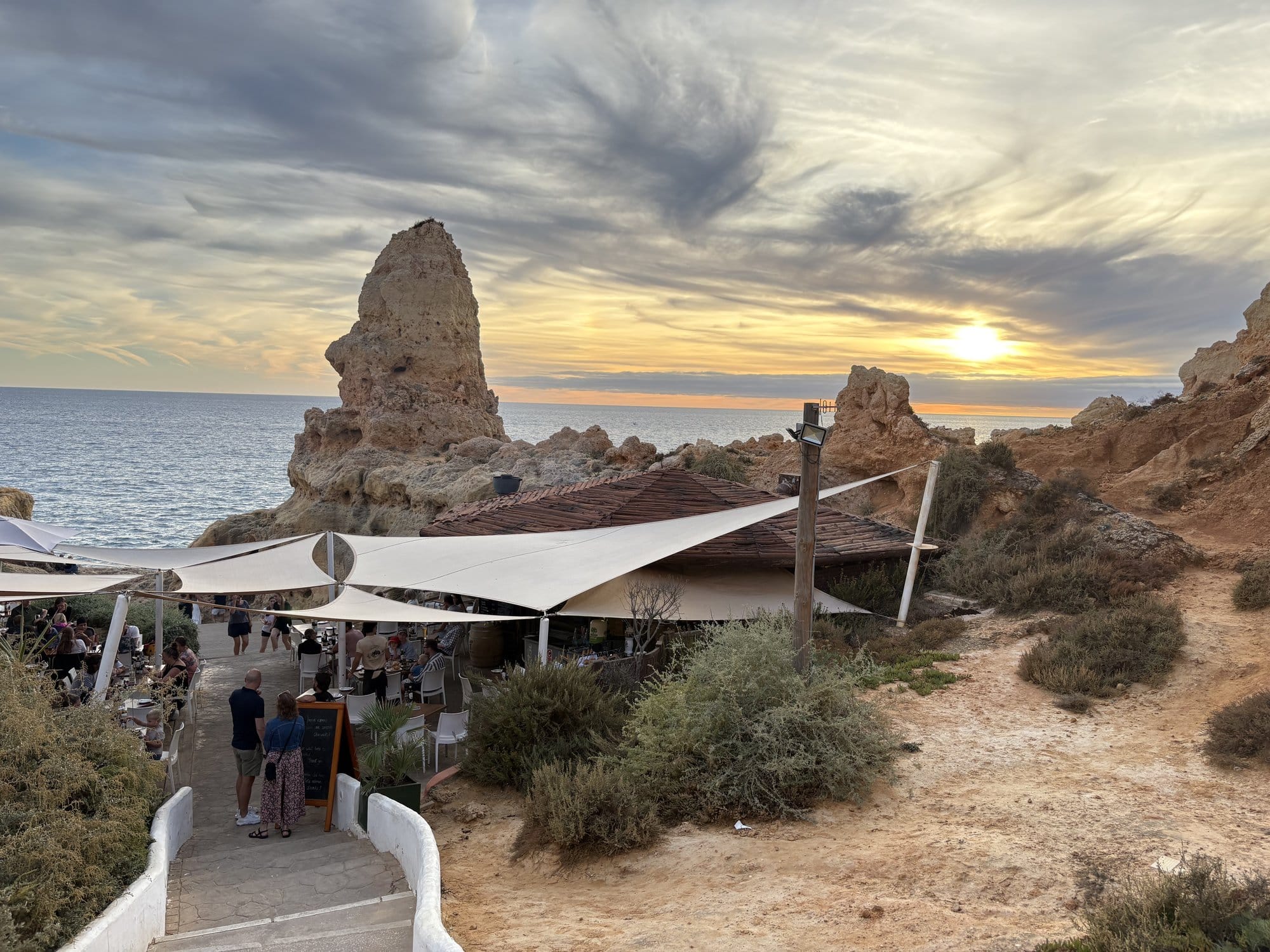
Stay for dinner in town. The seafood is straightforward and honest — grilled fish, prawns, nothing overly complicated. If you're traveling with kids, the village atmosphere is laid-back and welcoming.
Day 2: Seven Hanging Valleys Trail — Hike the Icon
If Day 1 was about gentle cliffside strolling, Day 2 is the serious hiking day. The Seven Hanging Valleys Trail (Percurso dos Sete Vales Suspensos) is often called the Algarve's most iconic walk, and the reputation is earned. You can also explore the area with a guided hike of the Seven Hanging Valleys if you prefer expert-led experiences.
The trail starts near Carvoeiro and runs east toward Porches, hugging the coast for roughly eight kilometers. "Hanging valleys" refers to the valleys that drop into the ocean — carved by ancient streams and left suspended when sea levels shifted thousands of years ago. What you'll actually experience is a constantly shifting panorama of cliffs, hidden beaches, rock formations, and the occasional narrow path that feels genuinely exposed.
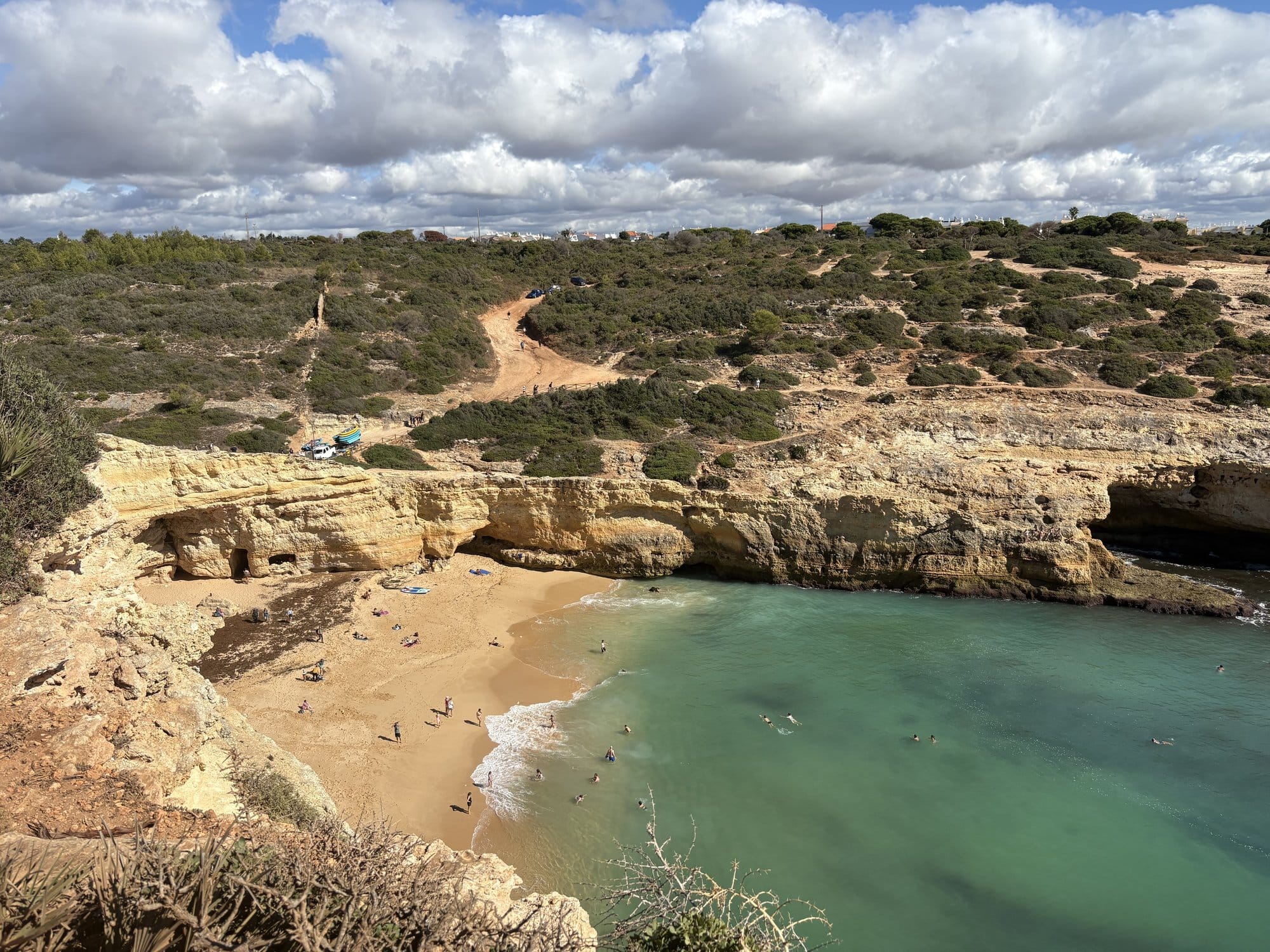
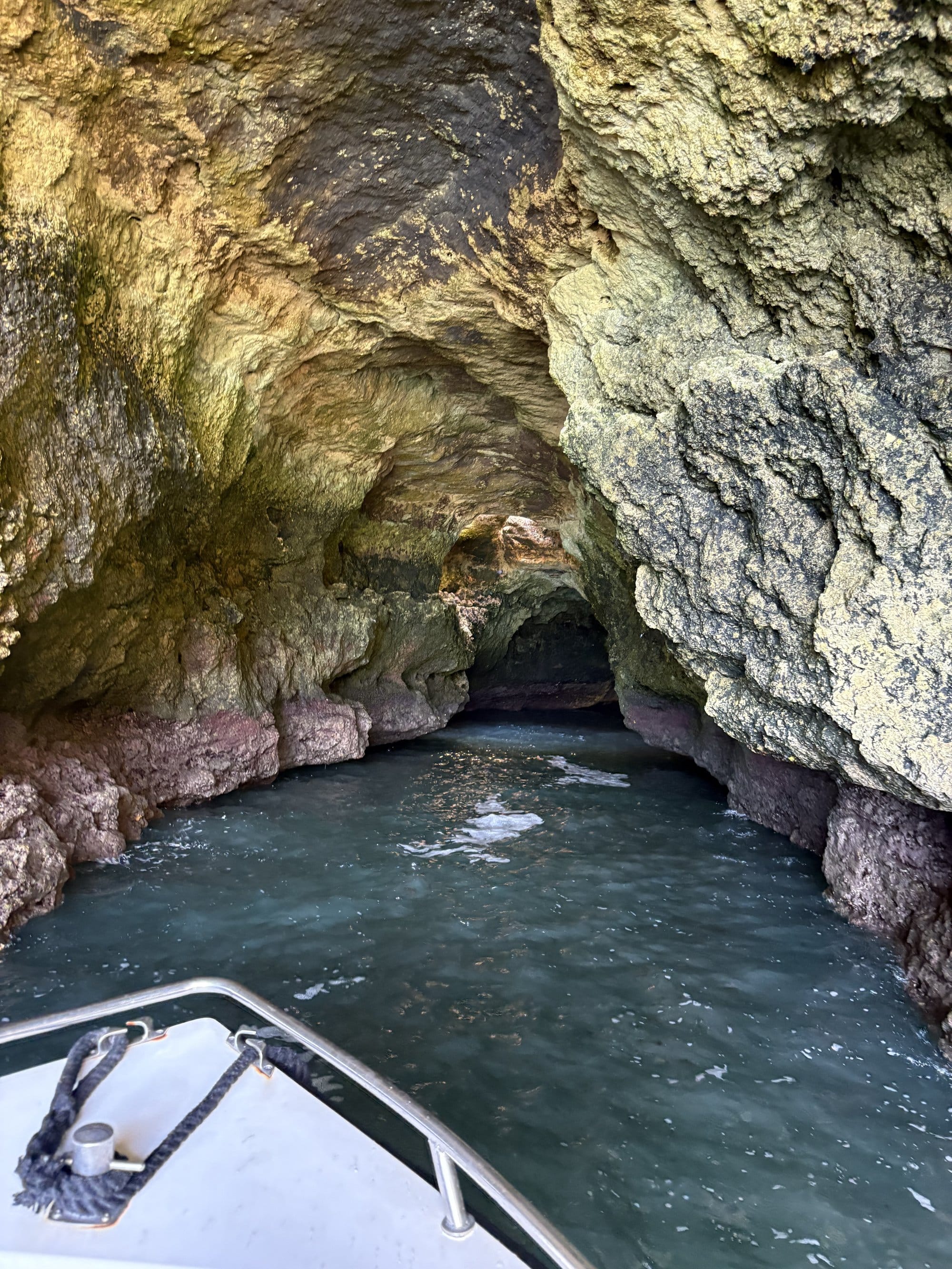
The trail's signature moment comes at Praia da Marinha, where a natural limestone arch frames the beach below. This is the spot where you understand why Instagram convinced you to fly here. The arch is visible from multiple angles along the trail, and each perspective reveals something different about the rock's geometry. If you prefer a more adventurous approach to the caves, consider a kayak tour or a boat cruise of Ponta da Piedade sea caves from nearby Lagos for a different angle on Portugal's coastal wonders.
Practical details: Start early (before 9 AM) to avoid the worst crowds. The full trail takes about 3–4 hours at a moderate pace. Wear sturdy shoes with good grip — some sections are genuinely steep. Bring water and sun protection. There's no shade for most of the walk. If you're hiking with children aged 10 and up, the trail is manageable with careful supervision.
Day 3: The Eastern Algarve — Fish, Bridges, and Anchor Cemeteries
Day 3 is a 90-minute drive east along the N125, and the landscape begins to change. The drama of the central Algarve's cliffs gives way to a flatter, more working-class stretch of coast.
Olhão is your first stop — a fishing port that makes zero concessions to tourism aesthetics. The waterfront streets are lined with traditional Algarvian buildings, their facades telling centuries of stories. Find a seafood restaurant and eat what they caught that morning — this is where lunch becomes the main event.
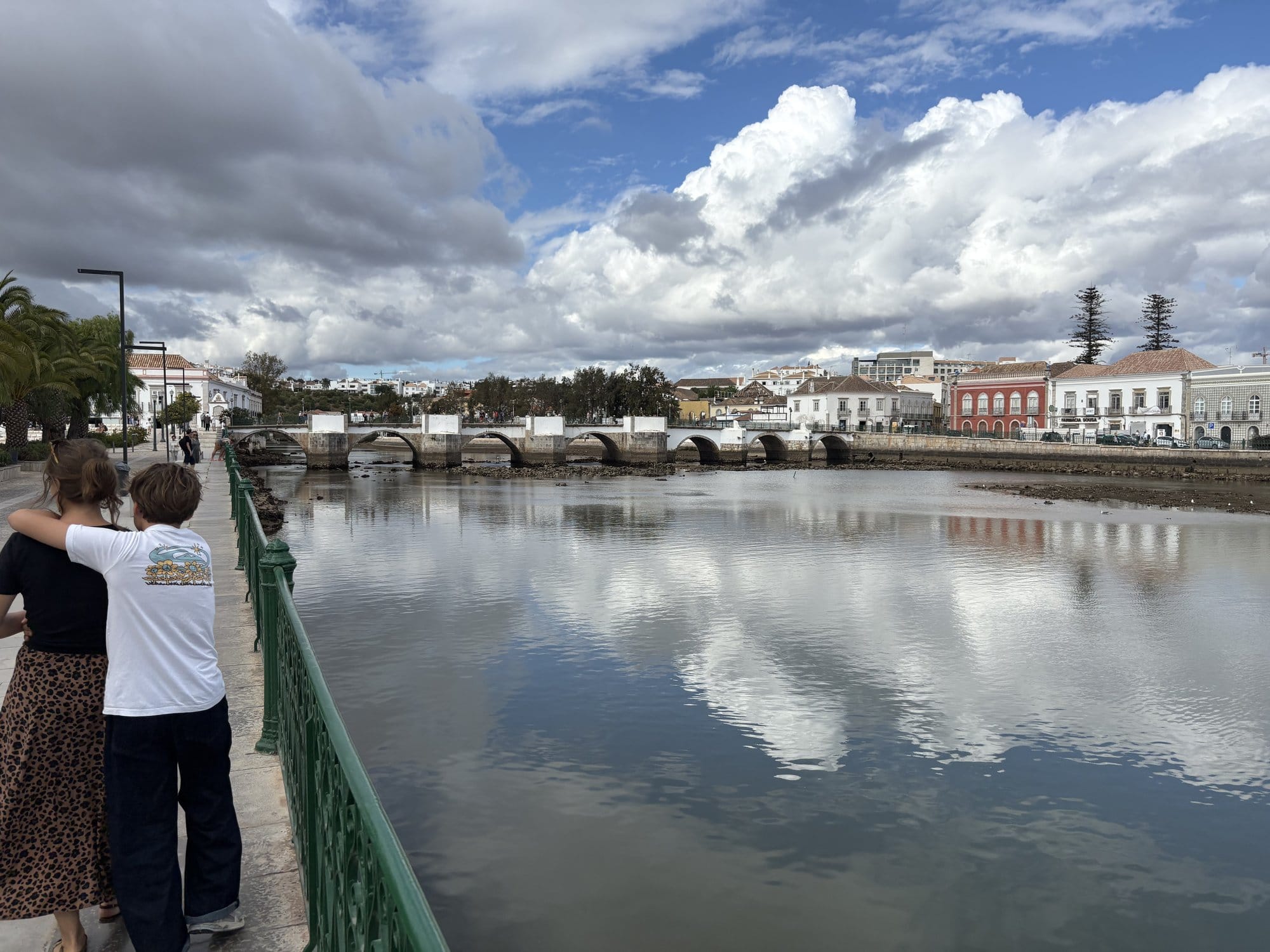
After lunch, drive to Tavira. The Tavira Roman Bridge is a modest but genuinely ancient structure — two arches spanning a tidal creek, built during the Roman occupation. Cross it on foot, understand that people have been using this route for two thousand years, and continue.
Praia do Barril is next — unusual because of the cemitério das âncoras, a collection of salvaged anchors from shipwrecks arranged on the sand as a maritime memorial. It's both poignant and slightly surreal.
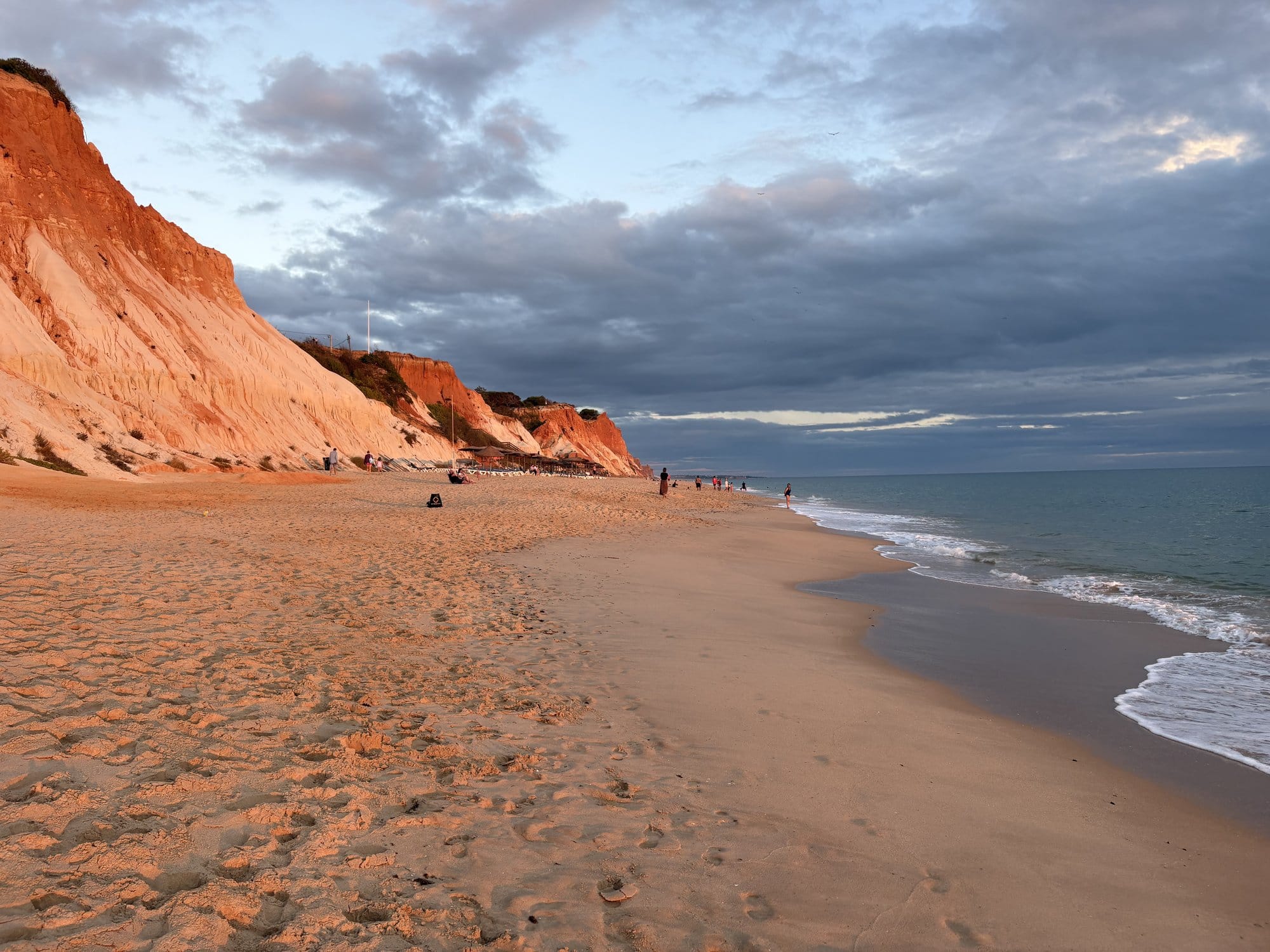
End the day at Praia da Falésia (Cliff Beach) for sunset. The red-earth cliffs here photograph beautifully in late afternoon light.
Day 4: Sagres and Cabo de São Vicente — The End of the Earth
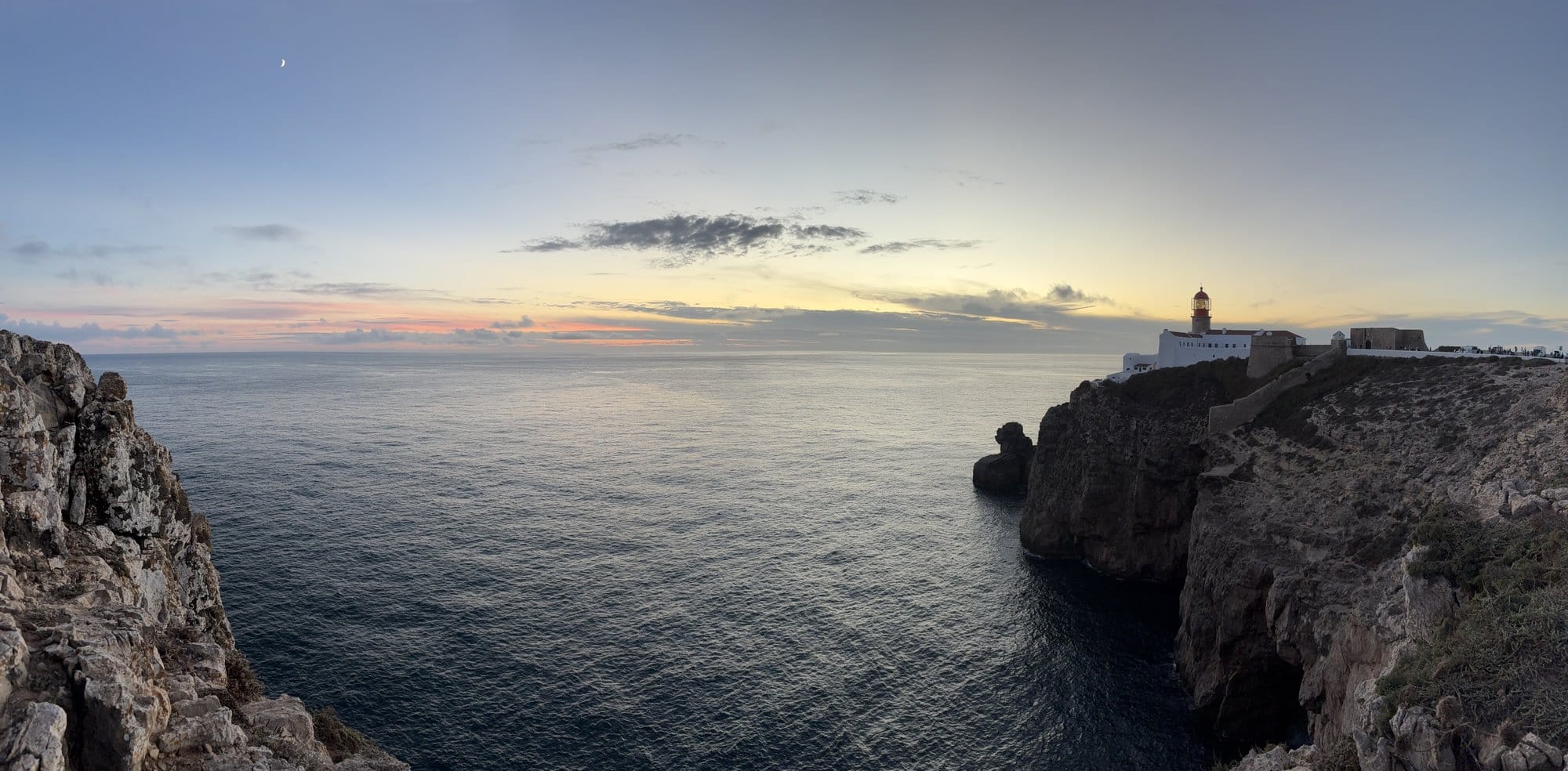
Day 4 is a pilgrimage day. You're heading to Sagres, the historic town at the southwestern tip of Portugal, and to Cabo de São Vicente — the lighthouse at the actual southwestern point of mainland Europe.
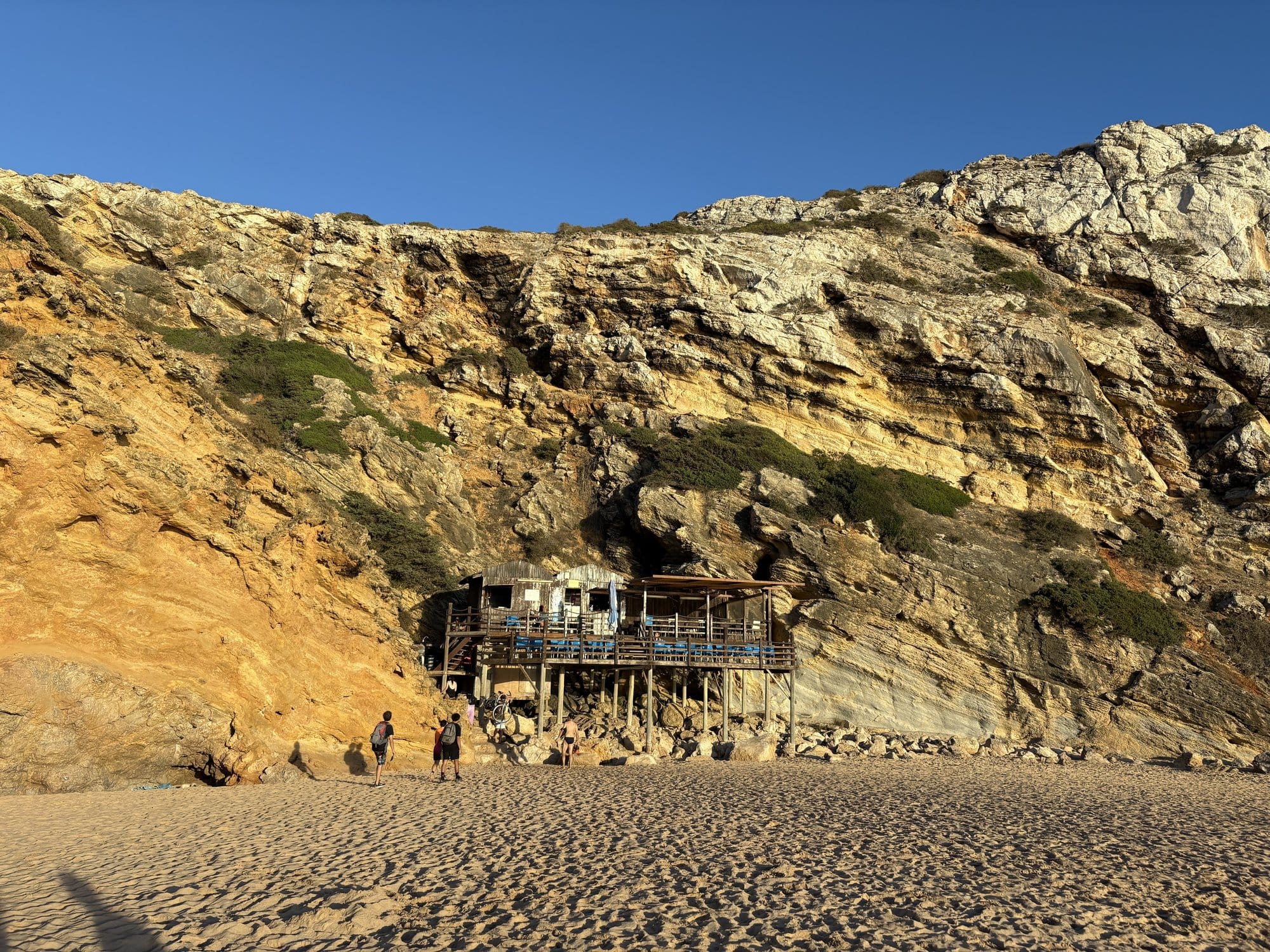
Praia do Tonel sits directly below Sagres town, a favorite with local surfers because of the exposure to Atlantic swells. It's also genuinely beautiful — a dark sand beach backed by cliffs and often uncrowded even in peak season.
Before heading to Cabo de São Vicente, you might want to experience the caves from the water with a Benagil caves speed boat tour, which offers spectacular sunset views. Then spend the late afternoon at Cabo de São Vicente lighthouse. You're standing at the southwestern corner of mainland Europe, on a rocky headland where the light is somehow cleaner and sharper than it is just twenty kilometers away. Time your arrival for the last hour before sunset. Bring layers because the wind here is real.
Day 5: Silves — The Moorish Capital
On your final day, stop in Silves to explore one of the Algarve's most significant historical sites: a 12th-century Moorish castle that anchors the entire cultural identity of this region.
Silves is inland, which makes it feel like you've finally left the tourist-machine coast. The Moorish castle sits on a rise above the town center, its distinctive red sandstone walls visible from the roads leading in. The fortification dates back to the Islamic period, and the views from the ramparts look out across the town and surrounding agricultural landscape.
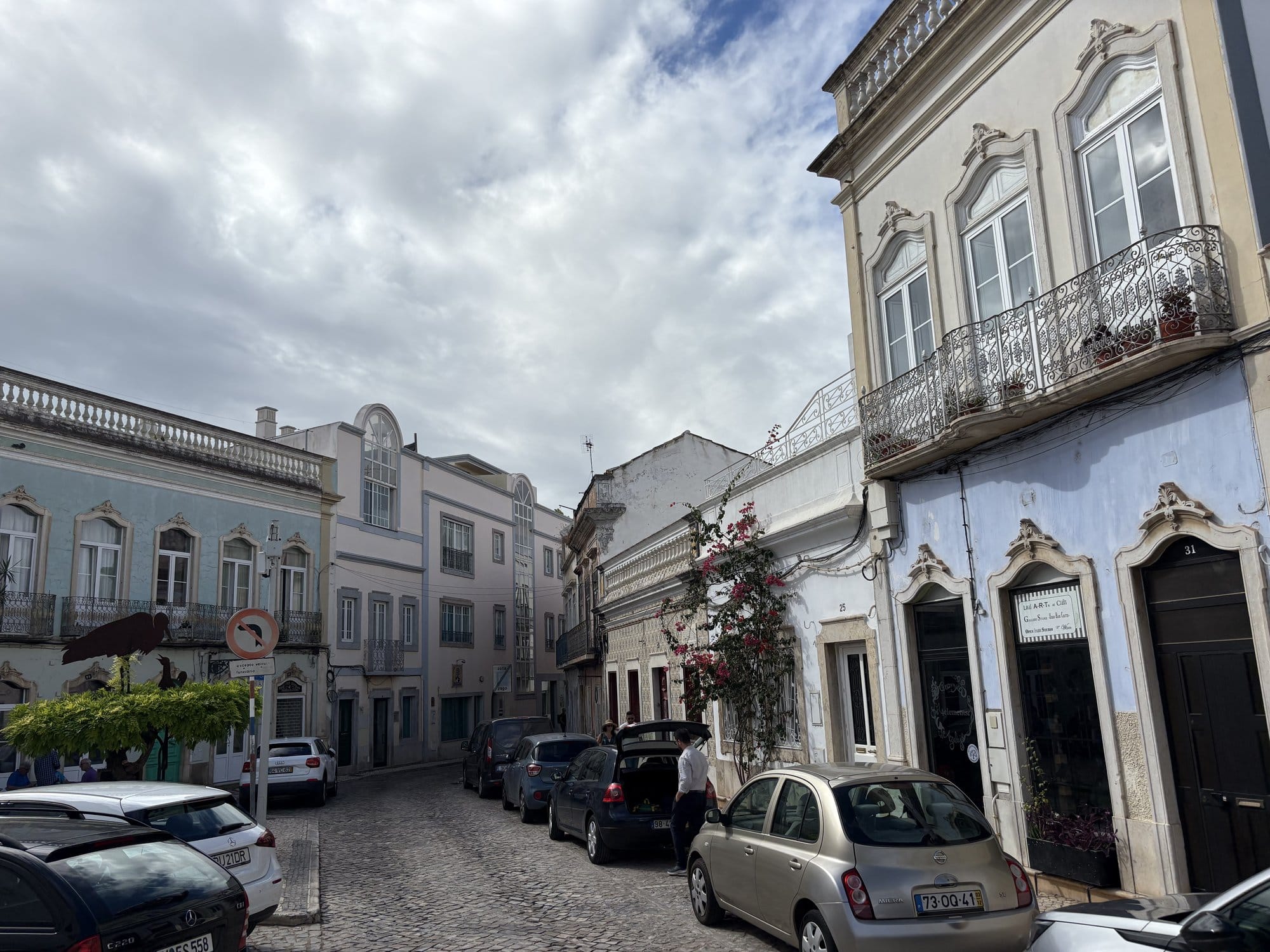
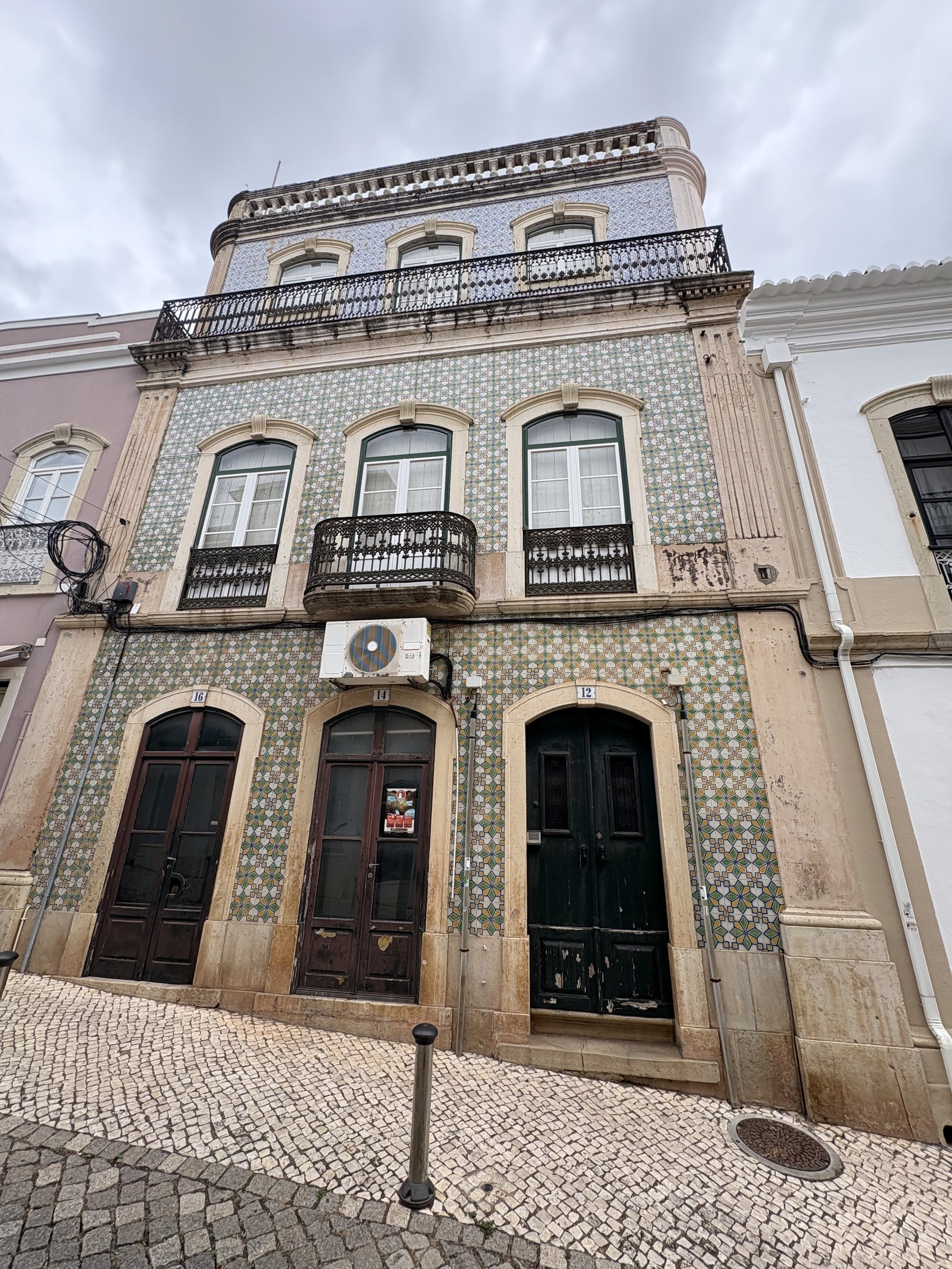
But it's the old town below the castle that captures your attention. The streets are lined with buildings that wear their age with dignity — faded pink facades, ornate tilework, wrought-iron balconies that belong to a Portugal you don't find on the coast.
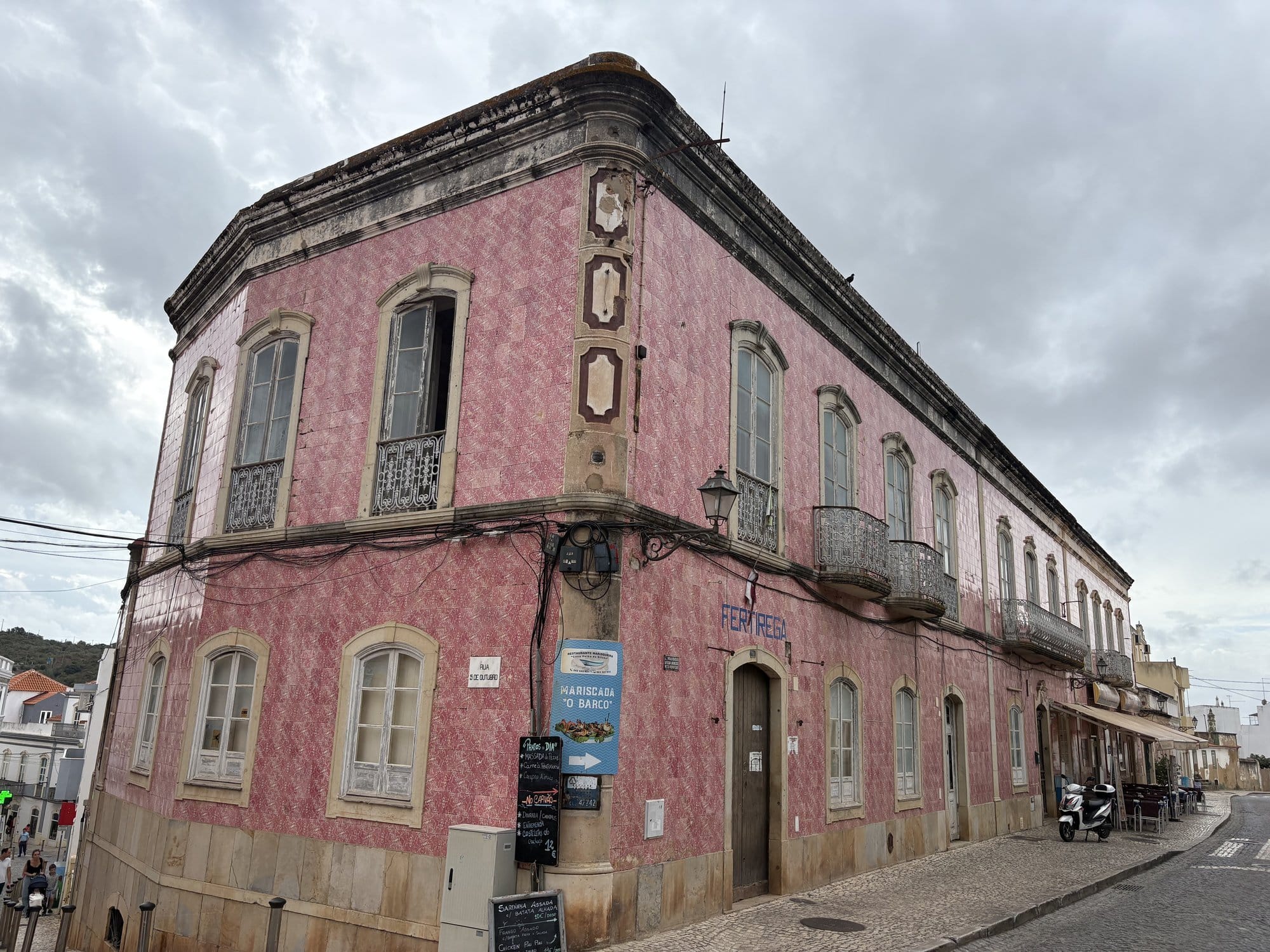
Walking through the cobbled center, you'll find the kind of architecture that reminds you the Algarve's identity extends far beyond its beaches. Traditional azulejo tiles, crumbling grandeur, and the quiet confidence of a town that was once the capital of the entire region.
From Silves, it's a 90-minute drive to Faro airport, where you'll return the rental car and process the fact that five days in the Algarve has somehow felt both rushed and complete.
Planning Your Algarve Road Trip
When to go: October and late April offer the best balance of warm weather and smaller crowds. August is brutally hot and crowded. Winter has its charm for hikers but expect rain.
Getting there: Fly into Faro (FAO). Budget airlines like Ryanair serve it from most European cities.
Getting around: Pick up a rental car from Faro for this itinerary. You'll need it for the 250km of coastal and inland drives.
Where to stay: Base yourself in Carvoeiro for Days 1–2 at the Tivoli Carvoeiro Resort with family-friendly options. Move east for Day 3 (Olhão area). Sagres or nearby for Day 4.
Family considerations: The Seven Hanging Valleys Trail is manageable for ages 10 and up. All beaches and visits are family-friendly. No single drive exceeds 2 hours.
More European Coastal Adventures
If the Algarve's dramatic cliffs and coastal trails have captured your heart, these other Mediterranean and Atlantic destinations offer equally stunning seaside landscapes:
FAQ
Q: How many days do you need in the Algarve? A: Five days gives you a comprehensive road trip covering east and west. Three days works if you focus on either the central/western coast or the eastern stretch.
Q: Is the Algarve good for families? A: Absolutely. The beaches are safe, the pace is relaxed, and the driving distances between stops are manageable.
Q: What's the best base in the Algarve? A: Carvoeiro and Lagos offer the best balance of charm and access to the western cliffs. Tavira is ideal for the quieter eastern coast.