
Two Perfect Days in Porto: Historic Grandeur, Modern Art & Riverside Romance
Porto enchants visitors with centuries of history layered beneath modern vitality. In two days, you'll walk across iconic bridges, explore Arab-influenced palaces, and find yourself mesmerized by contemporary art.

Porto doesn't whisper — it declares itself. You'll feel it the moment you arrive: the vertigo of steep hills plunging toward the Douro River, the weathered facades of centuries-old merchants' houses climbing impossibly upward, the faint aroma of francesinha wafting from tucked-away tascas. This is a city that refuses the Instagram-friendly neatness of Lisbon, insisting instead on authenticity, texture, and the kind of beauty that rewards wanderers.
Two days is the minimum that makes sense — long enough to walk the major sights, catch both daylight and nocturnal versions of the city, and understand why merchants once chose this river valley as their command center. We spent two days walking everywhere — roughly 15 kilometers of urban exploration — and discovered that Porto's real magic lives in the details.
Bookings: Some of the links in this article are affiliate links. This means that if you choose to make a booking, we will receive a small commission at no extra cost to you. Thank You!
Day 1: Where History Meets the River
Palácio da Bolsa and the Arab Room
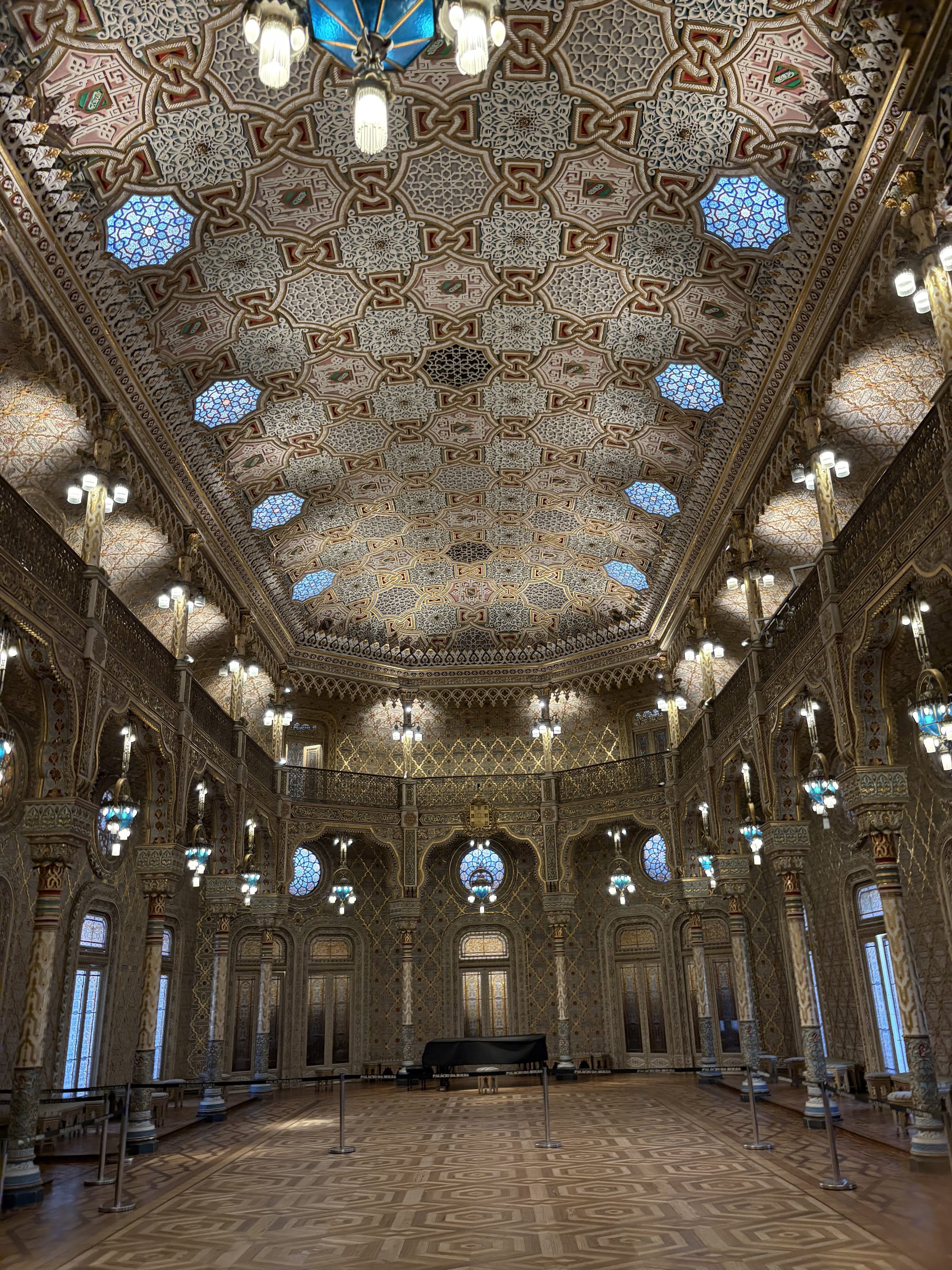
Start your morning at the Palácio da Bolsa (Stock Exchange Palace), perched just above the Ribeira district. Built in the 19th century when Porto's merchant class was rewriting global trade, the palace is a temple to capitalist ambition — crystal chandeliers, hand-painted ceilings, and that extraordinary Arab Room (Salão Árabe) that stops you mid-breath. For food lovers, this area pairs beautifully with a Porto food and wine walking tour that combines local cuisine with wine knowledge.
The Arab Room is where Porto reveals its deeper DNA. Those Moorish tilework patterns, the intricate wooden ceilings, the geometric arabesques covering every surface — they're 19th-century European fantasy of Islamic aesthetics, created by craftspeople who understood the emotional resonance of those patterns. It's simultaneously authentic and invented, earnest and ironic. Quintessentially Porto.
Ribeira and the Miradouro da Vitória
Emerge onto the cobblestones and drift toward the Praça do Infante, the square where Prince Henry the Navigator once stood plotting maritime conquest. Today it's where locals debate football and the smell of grilled sardines drifts from restaurant doorways.
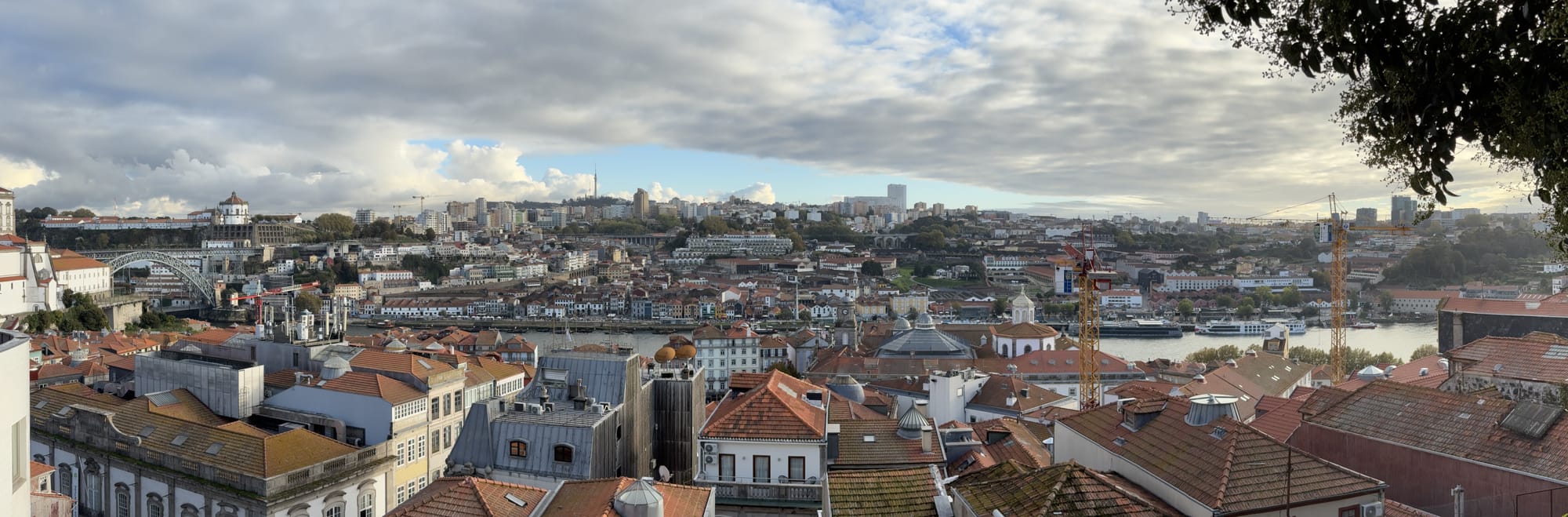
Walk northwest toward the Miradouro da Vitória, a viewpoint that delivers exactly what its name promises — a triumphant view. From this elevated platform, Porto unfolds in geological layers: the river far below reflecting the sky's moods, the port wine lodges of Vila Nova de Gaia across the water, the bridges spanning like confident pronouncements.
Vila Nova de Gaia and Sunset
Cross into Vila Nova de Gaia, Porto's wine district. The quais — the waterfront promenades — have been renovated into something simultaneously modern and faithful to their history. Rabelo boats (traditional flat-bottomed vessels once used to transport port wine) still bob at their moorings, photogenic as paintings.
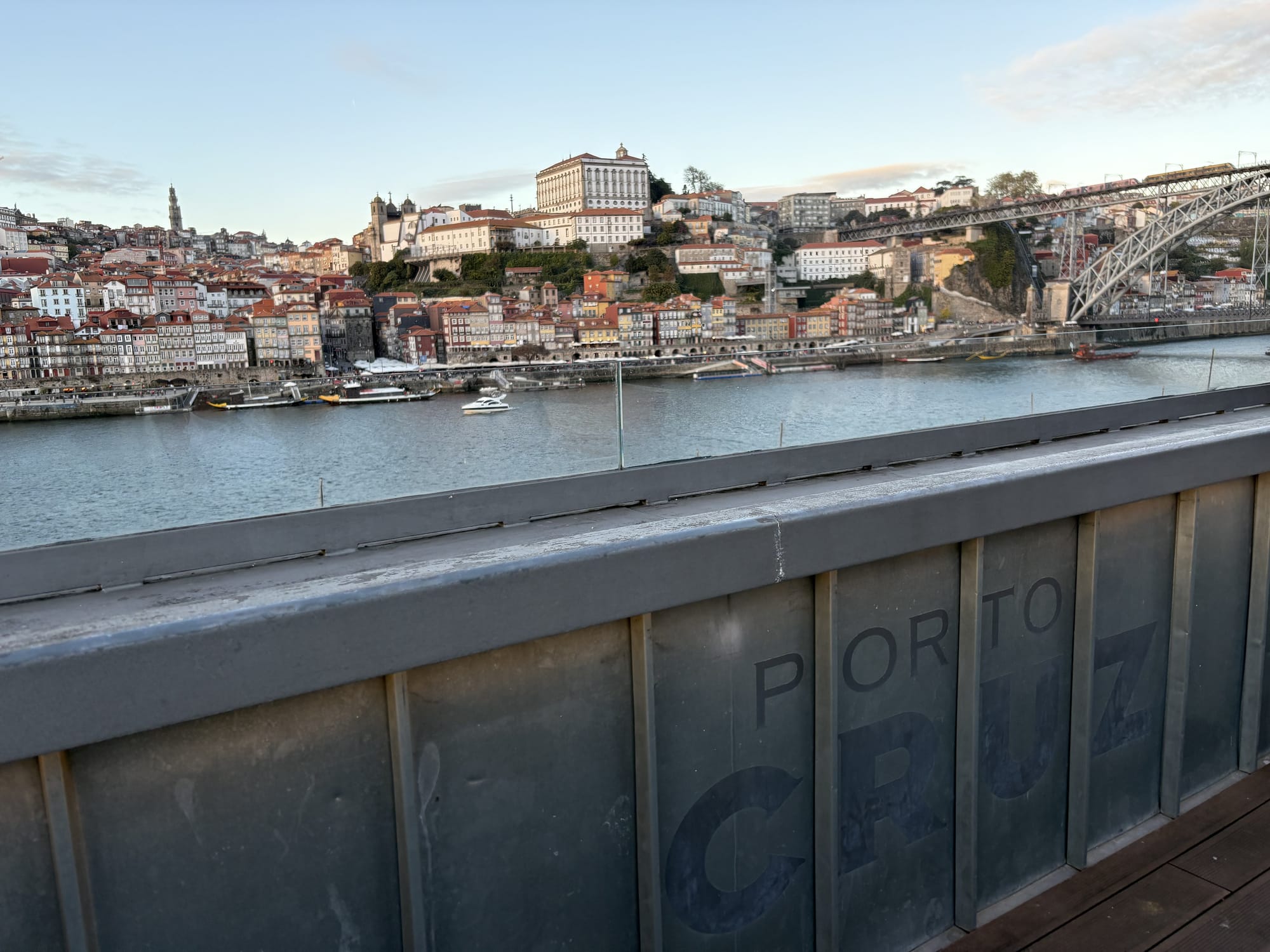
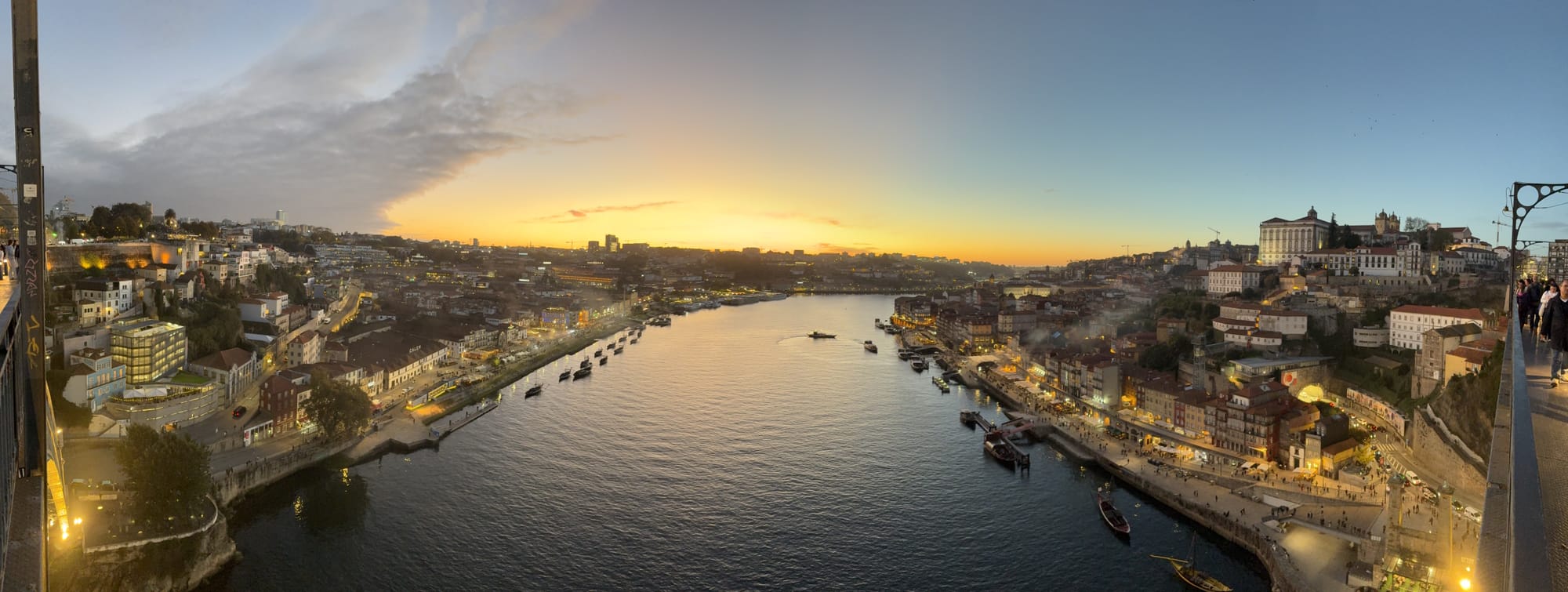
Walk the length of the quais. Browse the wine lodges — visit Taylor's Port Cellars tasting or take a Graham's Port Lodge tour, both highly accessible experiences. As evening approaches, position yourself for the sunset ritual. The Dom Luís I Bridge catches fire in the golden hour — that rust-red iron transforms into something Romantic and melancholic. The cable car swings overhead like a mechanical bird.
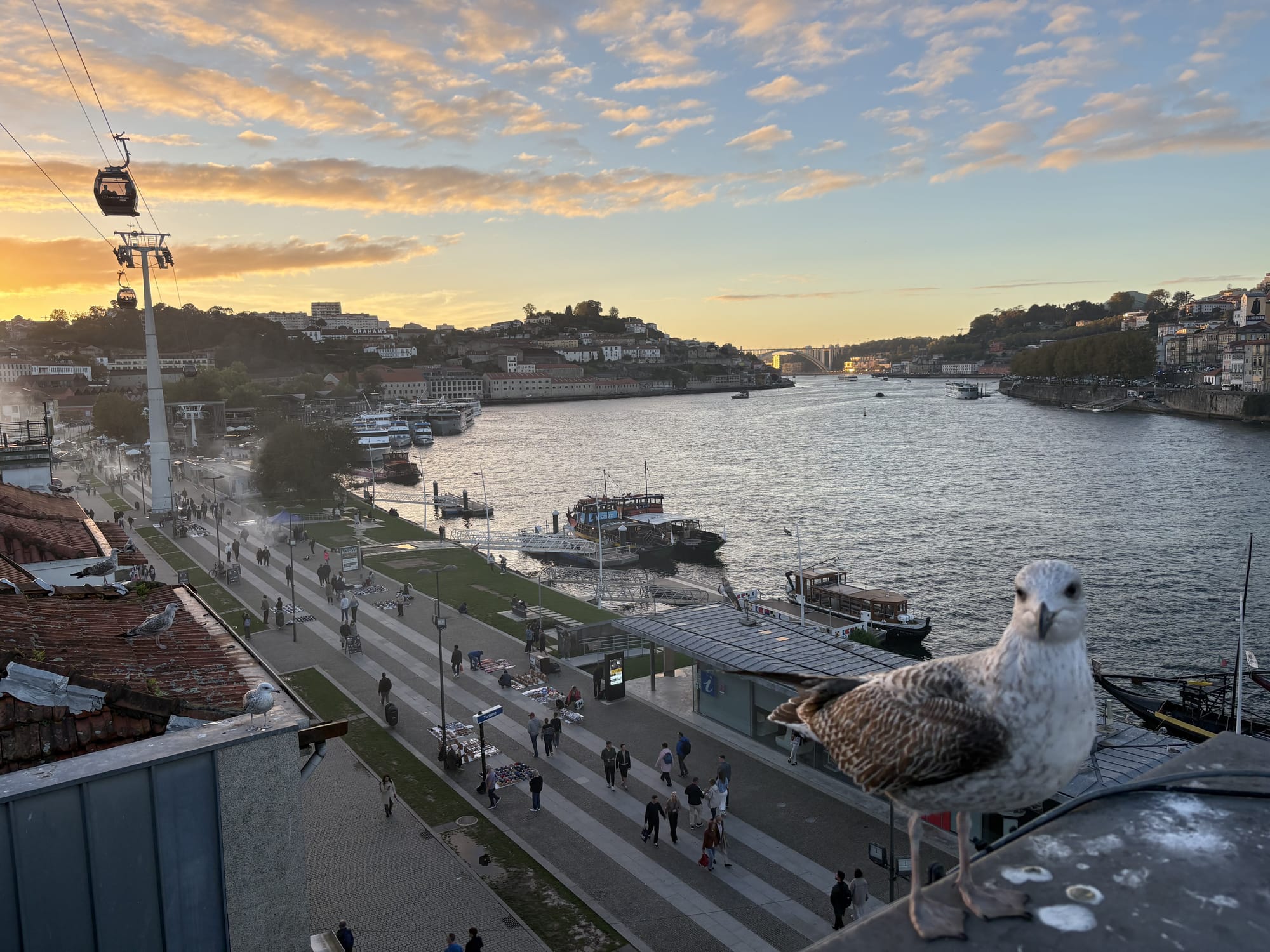
The highlight: Dom Luís I Bridge at sunset from the upper deck. The sun descends behind the western hills. The sky undergoes four transformations: orange, then pink, then purple, then the specific shade of blue that only exists in those ten minutes after sunset. This moment alone justifies all the walking.
Day 2: Contemporary Art & The Nocturnal City
Museu de Serralves
Start your second day with strong coffee and head to the Museu de Serralves, arguably Portugal's most important contemporary art museum and genuinely one of the best contemporary art institutions in Europe. It's located several kilometers northwest of the historic center.
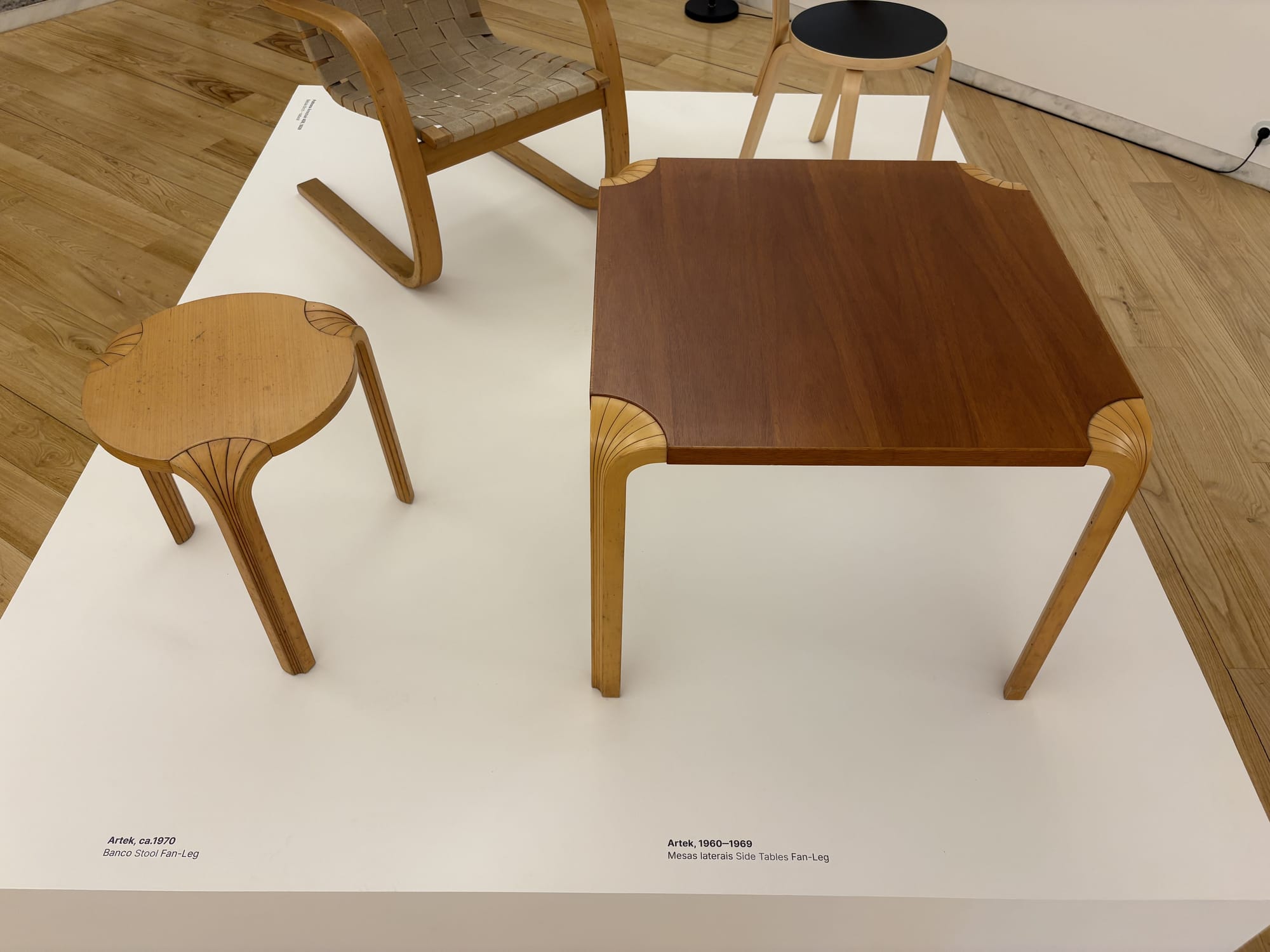
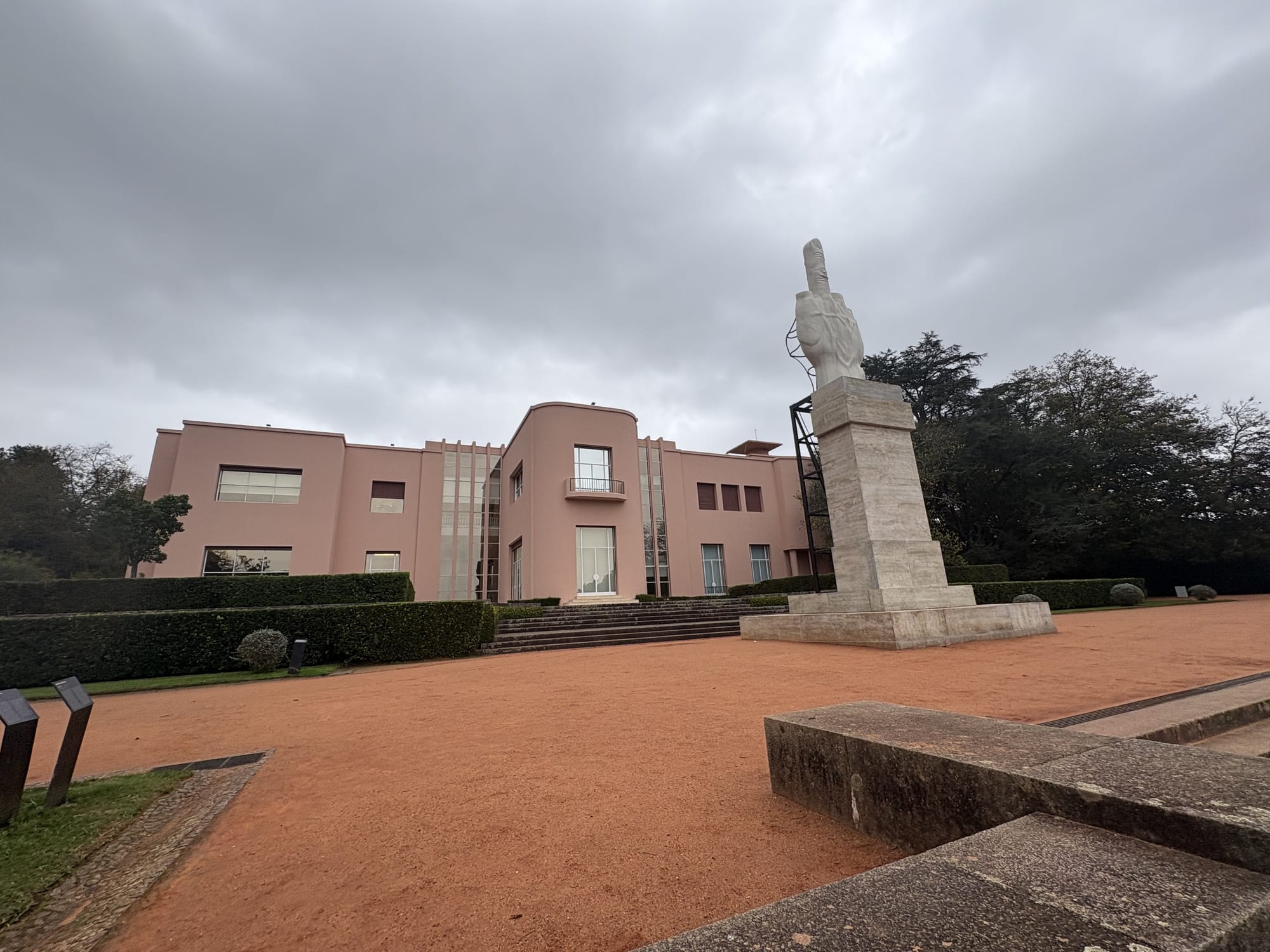
Serralves is housed in a striking white modernist building. When we visited, the museum was hosting a design exhibition that made you reconsider the definition of "design" — from 1970s furniture to contemporary digital art. Spend at least two hours here. Wander without a map.
The Casa de Serralves, the art deco mansion on the grounds, offers a private counterpoint to the modern building — intimate where the museum is vast, ornamental where the museum is austere.
Torre dos Clérigos and Porto by Night
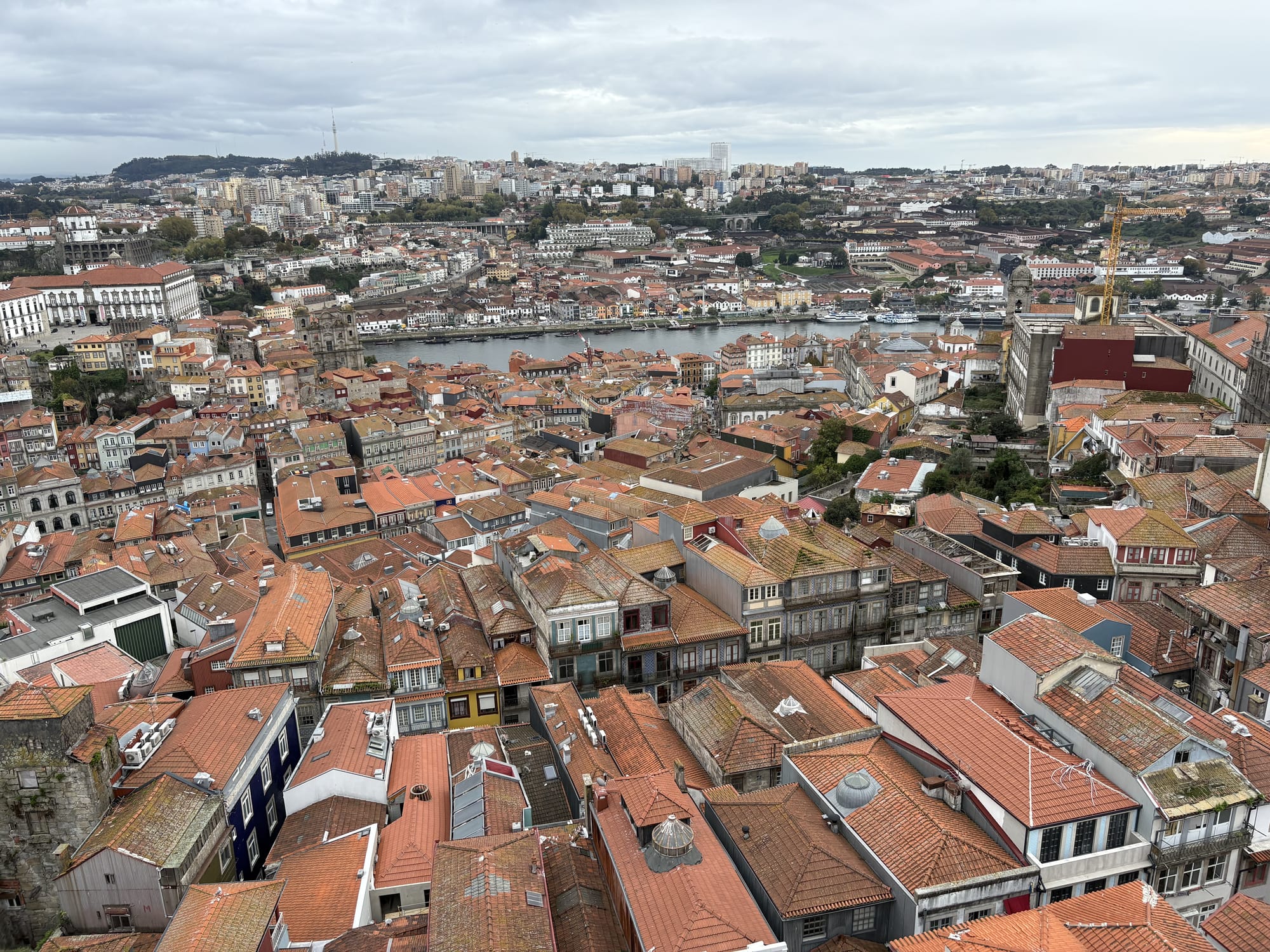
Return to the center and climb the Torre dos Clérigos — all 240 steps. The reward: a panorama of Porto that fundamentally rewires your understanding of the city's scale. Red tile roofs cascade downward in waves, rivers and hills negotiate their eternal argument.
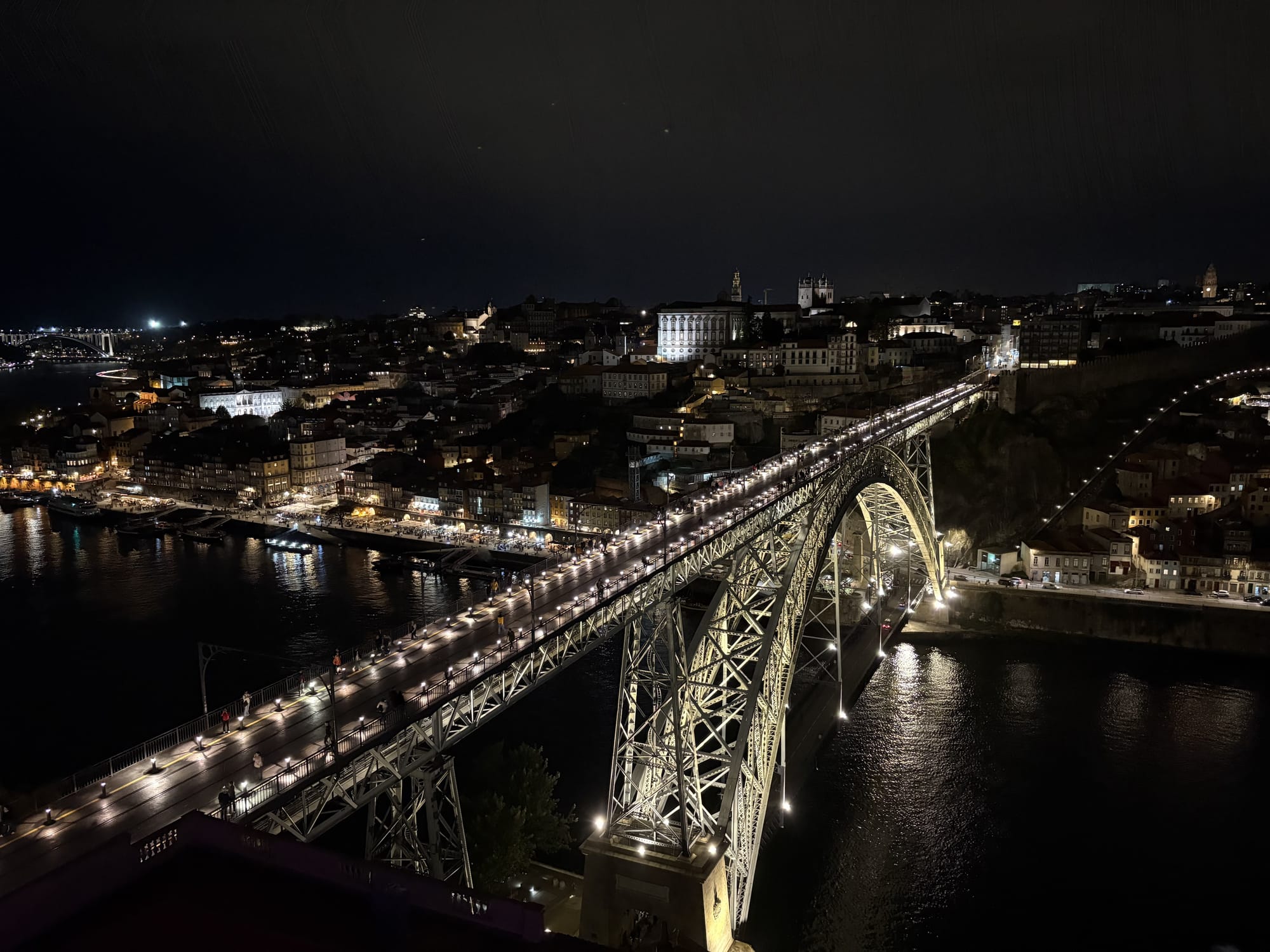
As evening falls, return to the Dom Luís I Bridge. You saw it at sunset yesterday; now see it at night. The bridge is lit with precision that makes its iron geometry glow against the black sky — genuinely beautiful in a way that doesn't require a sunrise or sunset, just darkness and electricity and engineering that's become poetry through age.
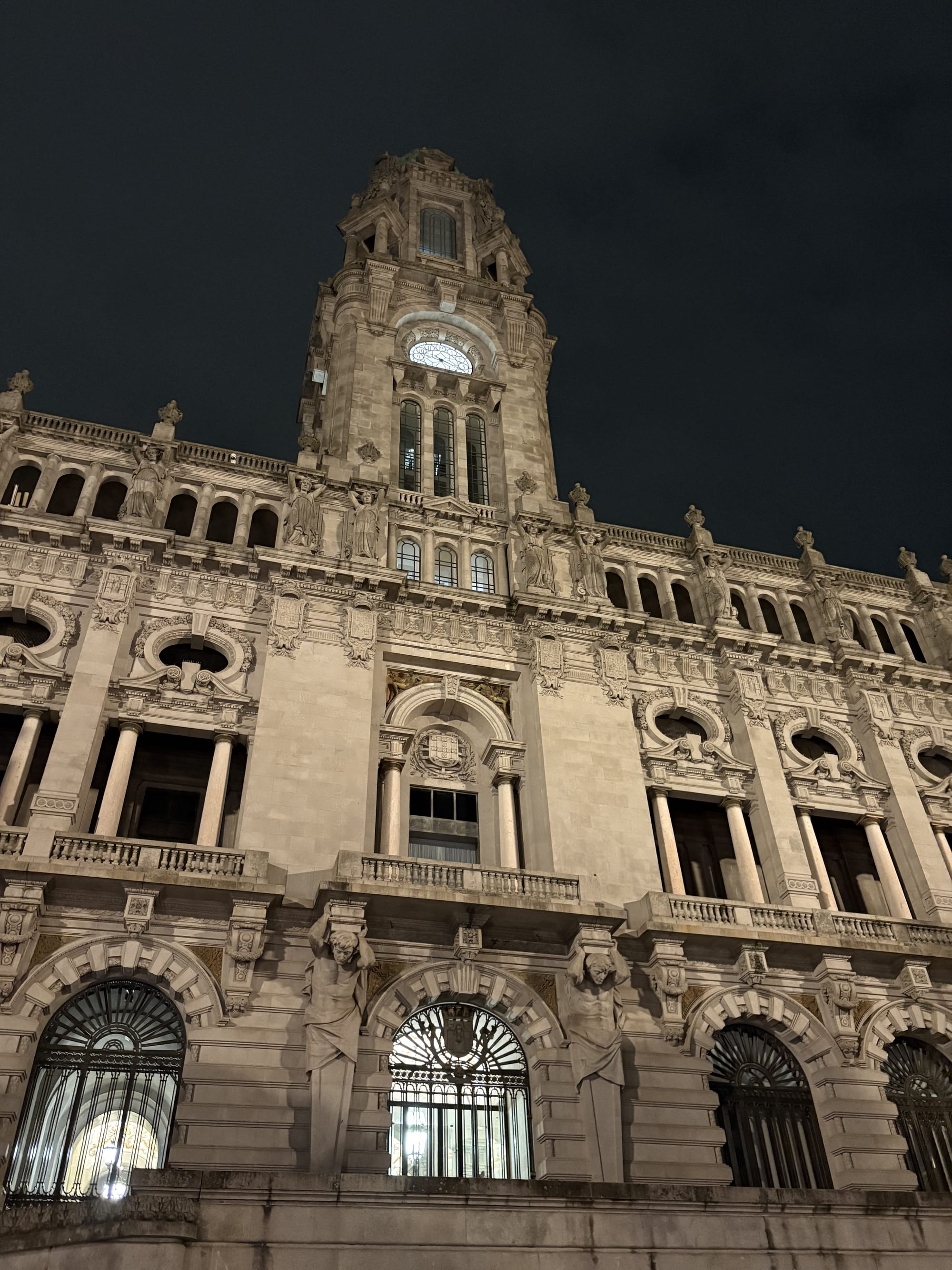
Close your two days with a stroll down Avenida dos Aliados, Porto's formal civic spine. The Câmara Municipal (city hall) anchors the avenue with neoclassical authority, illuminated against the night sky.
Planning Your Visit
Getting around: Porto's walkability is one of its superlative features. Almost everything is reachable on foot. Yes, the hills are steep. Your legs will remind you on Day 2. Every ache is justified.
Where to stay: The Ribeira is the default choice for atmosphere. We recommend the Hotel Carris Porto Ribeira for its unbeatable location. The Baixa and Cedofeita neighborhoods offer more local feel at better prices.
Weather: October can be wet — we encountered both sun and rain. Pack layers and waterproof shoes. Rain actually makes Porto more photogenic.
Getting there: Porto airport (OPO) is well-connected to European cities via budget airlines. The metro connects the airport to the center in 30 minutes.
Family tips: Porto is walkable with kids who can handle hills. Most restaurants are welcoming. The Serralves gardens are a great spot for children to explore between museum visits.
Making Connections
If Porto's blend of historic grandeur and modern vitality has captivated you, these other European cities offer similarly layered experiences where past and present coexist in unexpected ways:
FAQ
Q: Is 2 days enough for Porto? A: Yes — two days covers the essential experiences. Three days allows deeper exploration of neighborhoods like Foz do Douro and Matosinhos.
Q: What food should I try in Porto? A: Francesinha (Porto's iconic meat sandwich in beer sauce), pastéis de nata, grilled sardines, and of course, port wine tastings in Gaia.
Q: Is Porto walkable? A: Very much so, though the hills are serious. Comfortable shoes are essential. The metro and trams help for longer distances.