
Hiking Kawah Ijen with Children: What I'd Do Differently (Sulphur, Toxic Fumes, and Why We'd Think Twice)
Climbing Kawah Ijen with kids was the hardest moment of our Indonesia trip. Here's what happened, why we'd think twice, and how to do it safer.

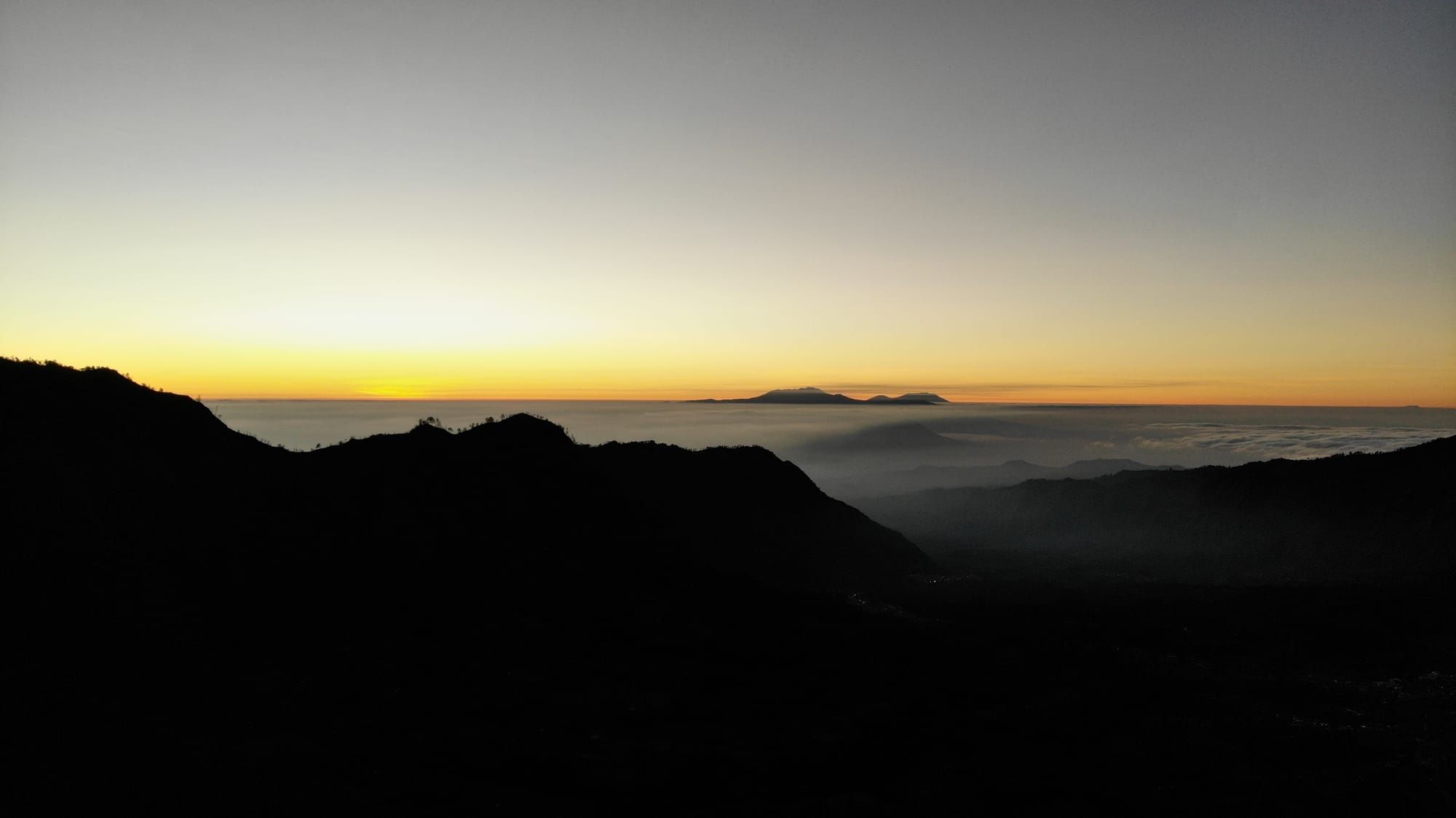
A volcano that breathes electric-blue fire at night sounds like a bucket-list dream. With two kids in tow and a lungful of sulphur dioxide in the dark, it felt much closer to a mistake.
This is the honest write-up of a family hike our crew did in August 2019 on Kawah Ijen, in East Java. We were a family of four travelling with two other families from my old engineering school days — seven adults, a handful of children of various ages, and a shared assumption that if we all went together, the kids would be fine. The youngest in our group, who was six at the time, was not fine. The hike up and back is the centrepiece of this piece, and the reason I'm writing it: so other parents can calibrate properly before they sign their family up to climb a sulphur volcano in the dark.
> Bookings: Some of the links in this article are affiliate links. This means that if you choose to make a booking, we will receive a small commission at no extra cost to you. Thank you!
Top-rated tours: Ijen
- Ijen Volcano Sunrise Tour with Pickup & Professional Guide
★ 5.0 (2,026 reviews) · 6 - 20 hours - Kawah Ijen Volcano Midnight Trek & Sunrise Experience
★ 4.9 (618 reviews) · 9 hours - Surabaya or Malang: Tumpak Sewu Bromo & Ijen 3-Day Trip
★ 4.8 (1,265 reviews) · 3 days
Affiliate links: if you book through them, we earn a small commission at no extra cost to you.
What Kawah Ijen Actually Is
Kawah Ijen sits at the eastern tip of Java, inside a wider volcanic complex about an hour's drive inland from Banyuwangi. The summit is 2,799 metres and the path up is a steady, exposed dirt-and-gravel switchback. None of that is the dangerous part.
The dangerous part is what waits at the top. Inside the crater there's a turquoise acid lake — one of the most acidic bodies of water on Earth, with a pH that hovers close to zero — and active sulphur vents that release continuous plumes of sulphur dioxide and hydrogen sulphide. At night, when those gases ignite as they hit oxygen, you get the famous "blue flames" everyone comes for. The flames are real. So are the fumes producing them.
Local miners chip the cooled yellow sulphur out of the vents and carry it back up over the rim and down the mountain in wicker baskets. We'll come back to them, because the more time I spent at the rim, the more uncomfortable I got with the spectator side of the experience.
Where We Slept Near the Trailhead
We had booked a small guesthouse called Mi Casa for the night before the hike, on the assumption that a real bed three hours from the trailhead was the responsible choice. The booking was cancelled on us at the last minute — the kind of curveball that hits differently when you're travelling with kids and tomorrow's plan starts at 1 AM.
We found a backup homestay outside Banyuwangi within an hour of phone calls. It turned out to be one of those happy accidents: a family-run place with a tropical garden you walked into through an archway dripping in yellow flowers, and a thatched bamboo pavilion built out over a lily pond that the kids immediately claimed as a base. The host fed us a simple nasi goreng dinner, let us nap in our clothes, and woke us at 2:30 AM without complaint.
Where to sleep before an Ijen attempt: Banyuwangi homestays cluster either in town (warmer, more restaurants, 90 min from the Paltuding trailhead) or up on the slopes near Licin and Sempol (cooler, half the driving on a 1 AM start). Map covers both — if you have flexibility, the Sempol/Licin side wins on sleep.


The lesson from this part is small but real: when your sleep window is four hours and your hike is at altitude, the room matters less than the people running it. If you can find a homestay where someone will physically wake you up and put coffee in your hand, take that over a fancier hotel further away.
The 3 AM Start: Campfire and Cold
Most Kawah Ijen trips begin at the Paltuding ranger post somewhere between 1 and 2 in the morning. You park, register, pick up a guide if you didn't bring one, and start climbing in the dark. The idea is to be at the rim before sunrise, ideally before 4:30 AM, so you can see the blue flames before they fade into the dawn light.
What surprised me — and what I'd genuinely flag to any family thinking of doing this — was how cold it gets. We're talking single-digit Celsius at the trailhead in August, with a steady wind. Our kids were in beanies and fleece layers and they were still shivering. There's a small fire pit near the ranger post and a vendor selling instant coffee in styrofoam cups. We huddled around it for twenty minutes before setting off, which is the moment in the photo below.

If you do this hike with children, plan that warm-up stop in. Bring real layers, not just the fleece you packed for "tropical Indonesia". And bring a head torch per person — phone torches are not enough on a path with loose gravel and a three-hour queue of other hikers behind you.
The Climb Up — and Why We Turned Around Early
The climb itself is around 3 kilometres to the rim, with roughly 500 metres of elevation gain. On paper, that's manageable for a fit child. In practice, it's steeper than the numbers suggest and the surface is unforgiving on small legs. Our kids did the up-leg without too much complaint — slow but solid.
The problem started at the rim.
We had read the warnings about sulphur fumes. We knew the wind direction could shift. We also knew that everyone with a guide gets a gas mask handed out — which sounds reassuring until you actually clip one on a six-year-old. The masks are sized for adult faces. They do not seal properly on a small face. The filter cartridges are also of variable freshness, and ours had clearly been around the mountain a few times.
We made it to the rim. The youngest started coughing about ten minutes after we got there. Not a polite throat-clear cough — a deep, rasping, can't-catch-your-breath cough. He was crying through it. His mask wasn't sealing and a gust of wind had pushed a fume plume right across our section of the rim. The guides told us, very calmly, that this happens and that we needed to move.
I carried him on my back from the rim, away from the crater edge, and we started the slow walk back down the mountain. He coughed the entire way. We kept stopping so he could breathe in cleaner air on the lee side of boulders. By the time we hit the trailhead about an hour later, the cough had eased to something more normal, but he was wiped out and a little frightened. We never made it down to the lake. We never properly saw the blue flames.
I want to be straight here: the youngest was fine within a few hours and had no lasting effects that we could detect afterwards. We were lucky. The guides at Ijen have seen worse, and people have died on this mountain from gas exposure when the wind has done something unexpected. Children's lungs are smaller, their breathing rate is higher, and a mask that doesn't seal is not actually a mask. That combination is the whole problem.
The Sulphur Miners
The hardest part of the day, emotionally, came after we'd turned around. As I was carrying our youngest back up the inside of the crater toward the rim, we passed a miner heading the other way with two full baskets of sulphur on a shoulder pole. He nodded at us. He had no mask on, just a cloth wrapped around his face. His baskets — the bright yellow blocks I'd later see in tourist photos — looked to weigh around 70 kilograms together, which is roughly what he was paid maybe five euros to carry up and out.

The miners here do this two or three times a day. Studies on their lung function are bleak: a large share develop chronic respiratory disease before they're forty, and life expectancy among long-term miners is significantly below the Indonesian average. Some of them now also pose for photos with tourists for a small tip, which is its own complicated layer.
I don't have a clean conclusion about this, except to say that any honest write-up of Kawah Ijen has to mention them, and that the romance of the blue flames is built on top of something quite ugly.
The Ferry to Bali
We came down the mountain, collected ourselves over a long breakfast at the homestay, and drove south to the ferry port at Ketapang for the crossing to Gilimanuk. The ferry from Java to Bali is short — under an hour — cheap, and unpretentious. Trucks and cars and motorbikes and families with all their luggage piled on the open deck.

We drove on to Amed on the east coast of Bali for the night. Salt water, fish curry, early bed. Everyone slept like rocks.
Honest Advice If You're Considering This With Kids
I've thought about this hike a lot in the years since, and here's where I've landed.
Gas masks are essential, not optional. And the rental masks at the trailhead are not enough for children. If you genuinely intend to take a child up to the rim of Kawah Ijen, you need to bring your own properly-fitted respirator with fresh cartridges sized for a smaller face. If you can't do that, don't go to the rim.
Skip the descent into the crater entirely. The path down to the lake and the flame vents passes through the densest fume zone. Even with a good mask, this is not where you want a child. Stay at the upper rim, downwind of the plume, and turn around well before the descent path.
Mind the wind. The blue flames are best seen on still nights, but still nights are also when sulphur dioxide pools in the bowl. A breezy night with a steady wind blowing the plume away from your viewing spot is actually safer than a calm one.
Minimum age, honestly. I would not do this hike again with a child under ten, and I'd want a fit, briefed, mask-tested teenager before I'd be relaxed about it. Our six-year-old should not have been at that rim and that's on me as a parent, not on the mountain.
A reasonable alternative. If you want the volcano landscape without the gas exposure, a number of operators run sunrise hikes that stop short of the crater rim and combine Ijen with a Mount Bromo trip — a guided sunrise tour from Banyuwangi can be a sensible way to see the area without committing your family to the rim itself.
If you do go ahead with Ijen, doing it as a guided tour is genuinely safer than DIYing — the operators have the proper Drager-style masks the trailhead rentals don't, plus they know which side of the rim to stand on when the wind shifts. The Banyuwangi midnight Blue Fire guided tour is the version closest to what we'd do today — small-group, gas-mask included, and they no longer descend into the crater (post-July-2024 ruling) which removes the worst of the fume exposure. From Bali side, the Ijen Blue Fire group tour with Bali drop-off spares you the Mi-Casa-style homestay scramble entirely.
More from Southeast Asia
If you're shaping a wider Southeast Asia loop and Indonesia is only part of it, these guides are the ones I'd reach for next — practical, family-tested, and honest about what's worth the effort.
FAQ
Is hiking Kawah Ijen safe with children? It can be, but only with proper preparation: a properly-fitted respirator per child, a guide who knows the wind, a turnaround plan, and the discipline to skip the crater descent. Without those, no — the risk of sulphur exposure on small lungs is real and not theoretical.
What's the minimum age you'd recommend for the Ijen hike? Based on our experience, I would not bring a child under ten to the rim, and I'd want them fit, briefed and mask-tested first. If your child is younger, consider a daytime visit that stops short of the crater rim, or skip Ijen and do Mount Bromo instead.
Do you really need a gas mask on Kawah Ijen? Yes. The rental masks at the trailhead are usable for healthy adults in good wind conditions, but they don't seal properly on children's faces and the filters are often well-used. If a mask is part of your safety plan, it has to fit and seal — otherwise it's just a prop.
Is it worth doing Kawah Ijen at all, then? If you're a fit adult with proper gear and a good guide, yes — it's a remarkable landscape and the miners' world is worth seeing with your own eyes. As a family hike with young children, it's far harder to justify, and our honest answer is that we'd think twice.
If you're still planning to do this with your kids, plan it carefully — choose your guide on safety record rather than price, bring your own masks, watch the wind, and accept upfront that you may need to turn around. Kawah Ijen is genuinely beautiful. It's also a sulphur volcano in the dark, and it deserves to be treated like one.