
Meteora Complete Guide — Monasteries, Viewpoints, Where to Stay

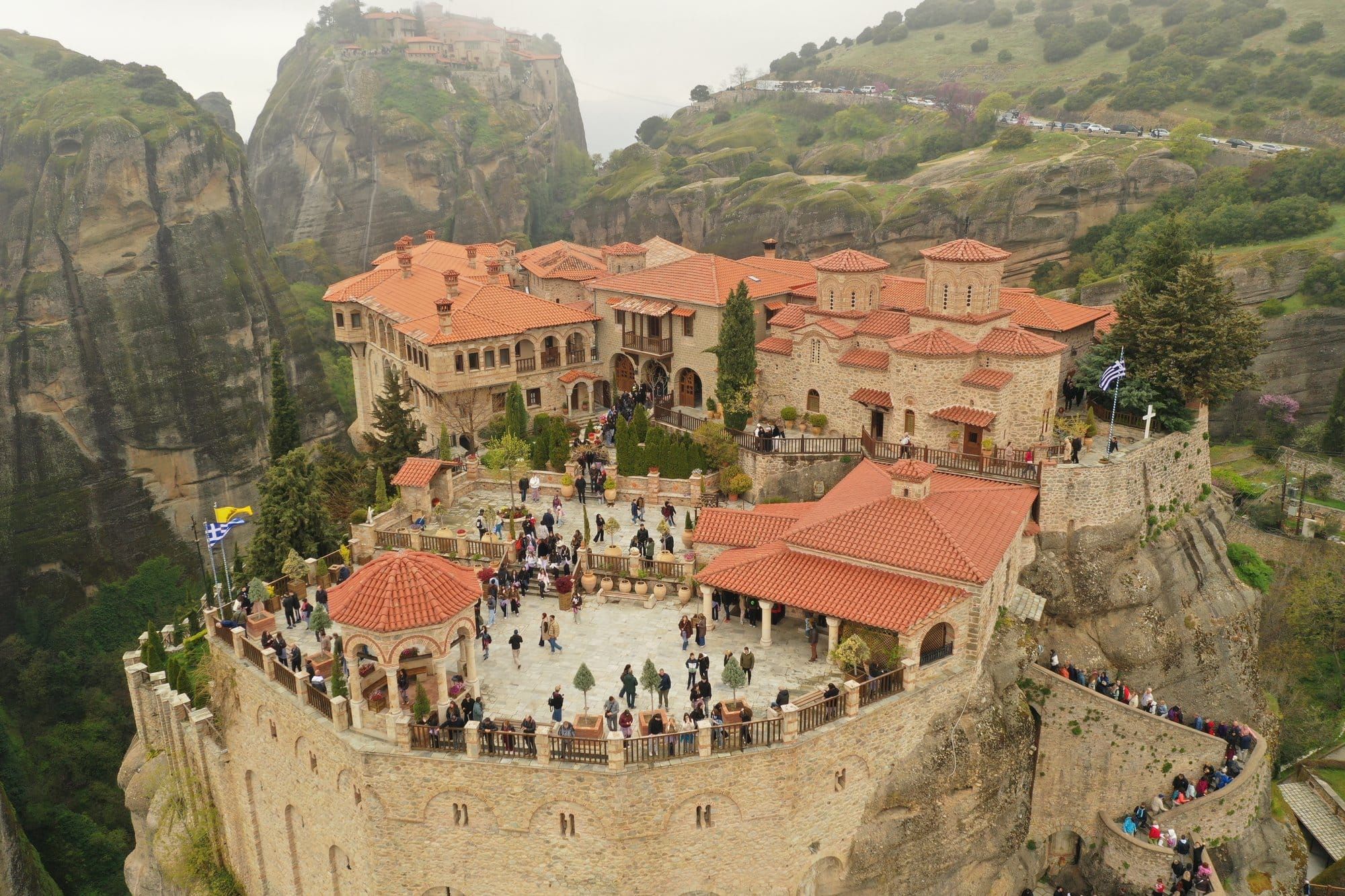
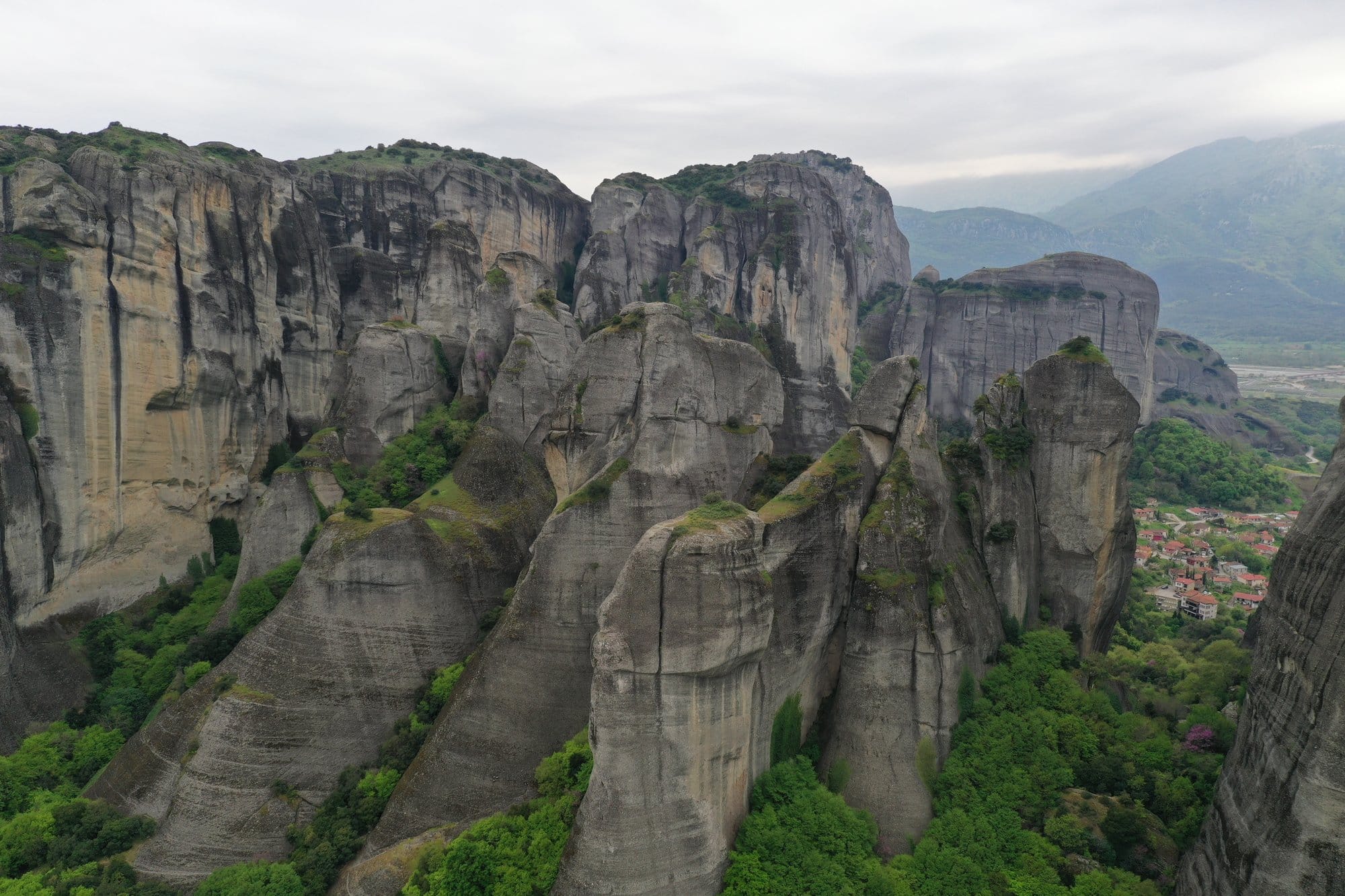
Meteora is the kind of place where photos undersell the reality. The vertical rock towers are bigger than any image lets on, the monasteries really do cling on top of them, and at sunset the whole massif turns into a wall of warm sandstone above the plain of Thessaly. We spent two full days there in mid-April with a family group of nine — one grown-up on a bad knee, two kids, and a drone — and came away with a very specific view of which monasteries to prioritise, which viewpoints to skip, and whether you should sleep in Kalambaka or Kastraki.
This is the version we would write to our past selves.
Bookings: Some of the links in this article are affiliate links. If you choose to book through them, we will receive a small commission at no extra cost to you. Thank You!
Top-rated tours: Meteora
- Meteora: Guided Sunset Tour with Monasteries & Caves Visit
★ 4.7 (587 reviews) · 4 hours - Thessaloniki: Full-Day Bus Trip to Meteora
★ 4.8 (4,341 reviews) · 11 hours - Athens: Meteora Monasteries Tour, Live Guide, Caves & Lunch
★ 4.8 (2,546 reviews) · 14 hours
Affiliate links: if you book through them, we earn a small commission at no extra cost to you.
The Six Monasteries, Ranked for a First Visit
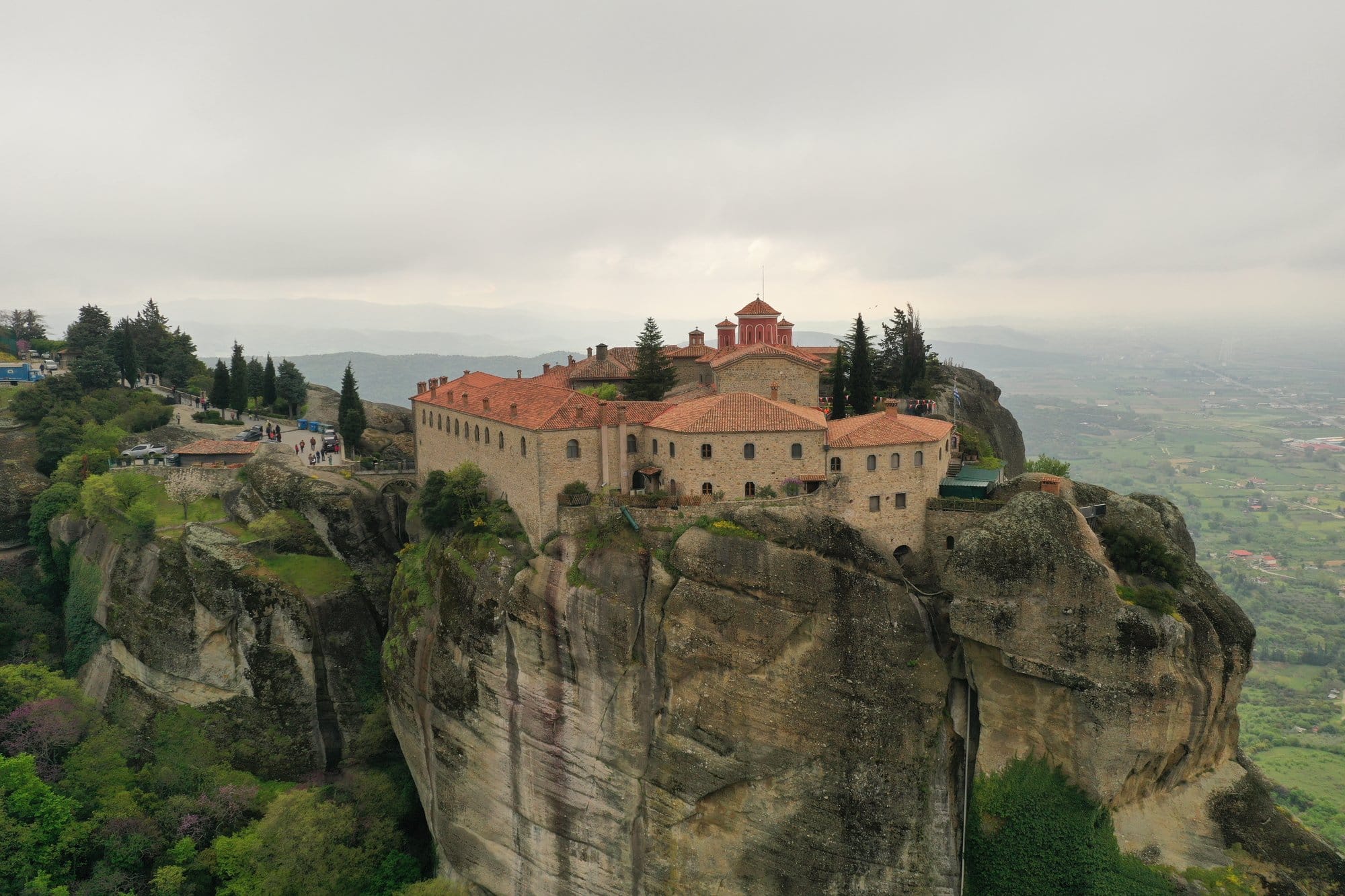
There are twenty-four Byzantine monasteries scattered across the Meteora rocks, but only six are still active and open to visitors. If you have two days like we did, you do not need to visit all six. We visited two and it was the right number — the monasteries start to blur after the second, and what makes the place unforgettable is the landscape, not the sequence of frescoes inside.
For a first visit, here is how we would rank them for a two-day trip:
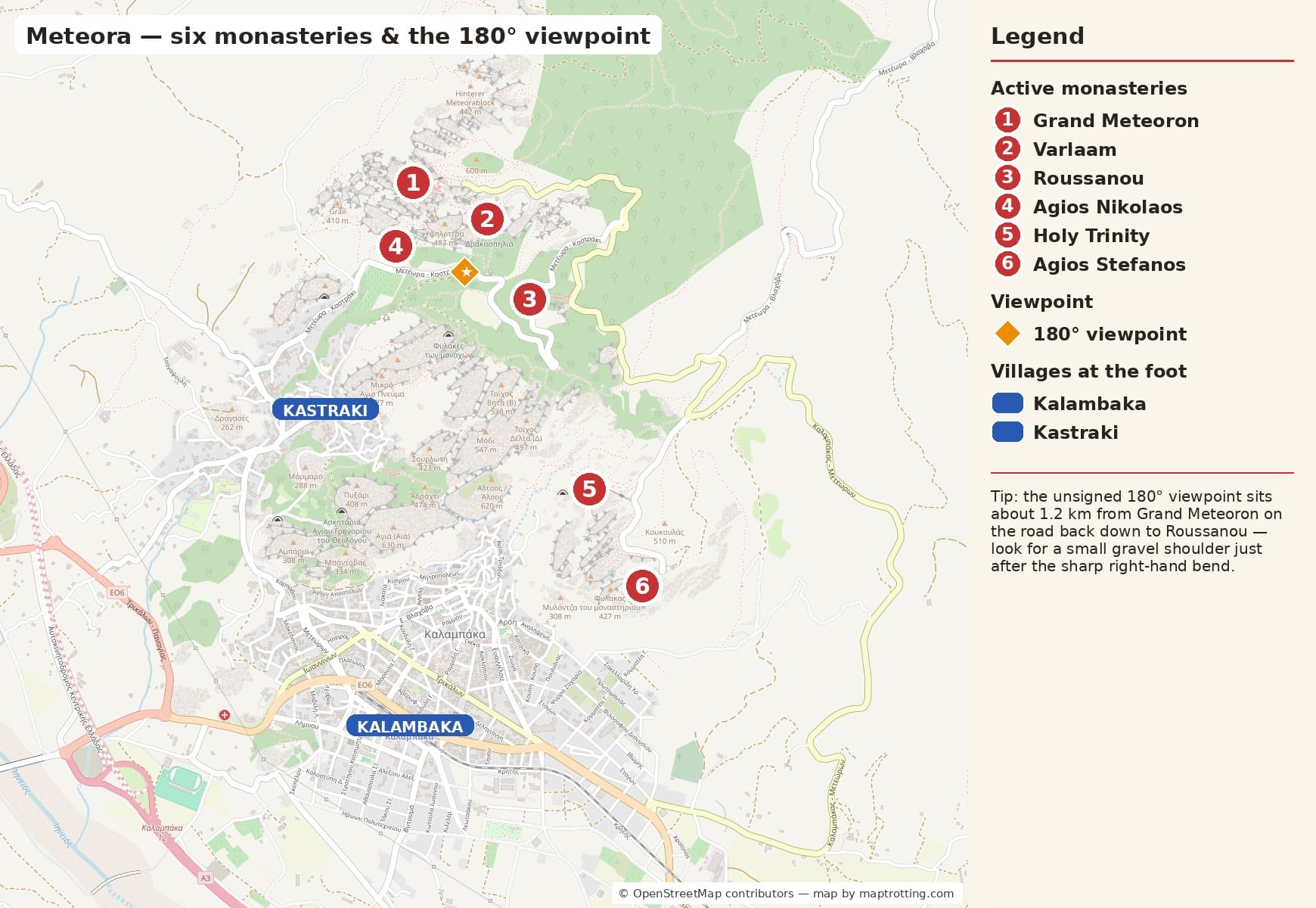
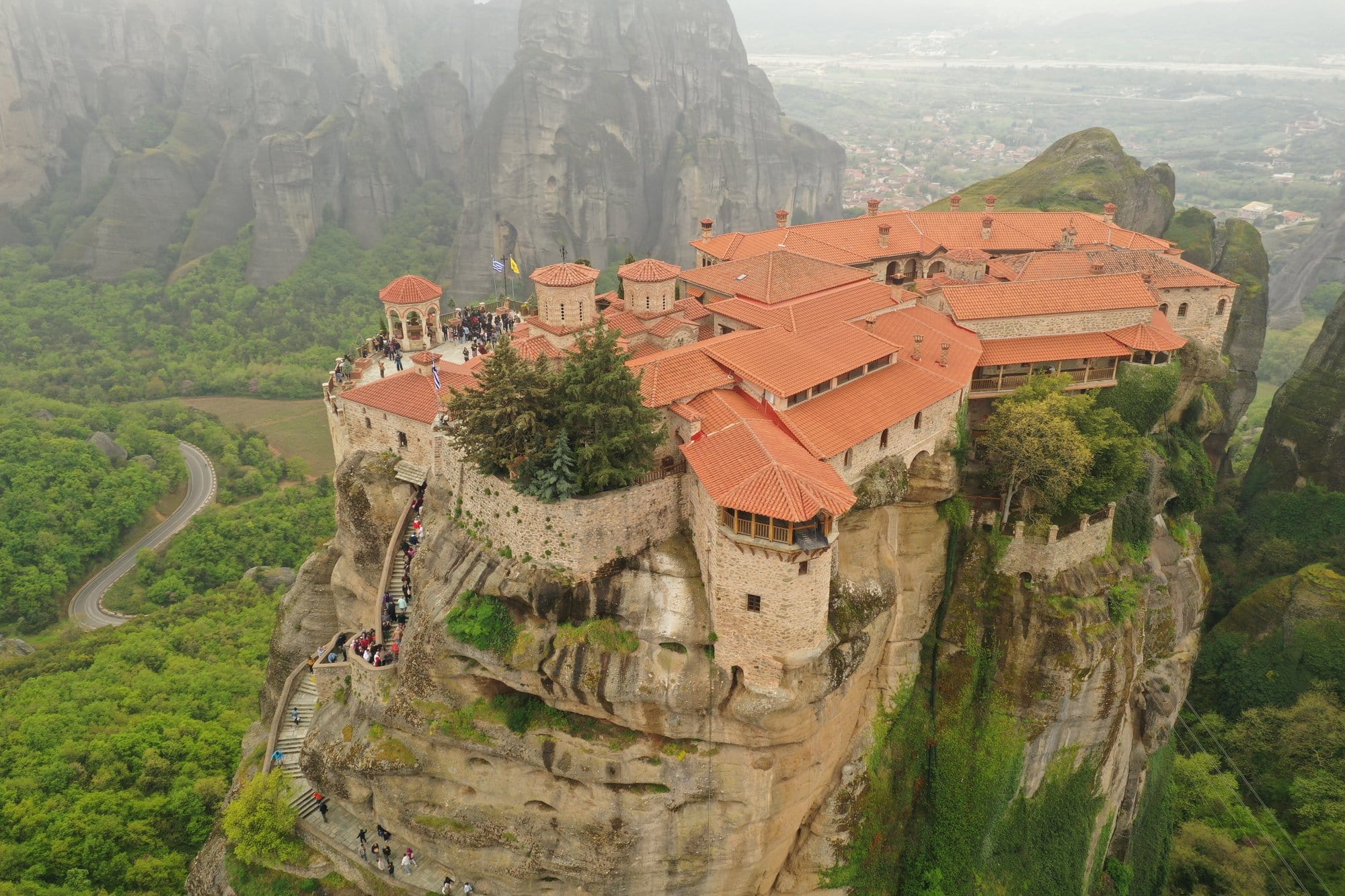
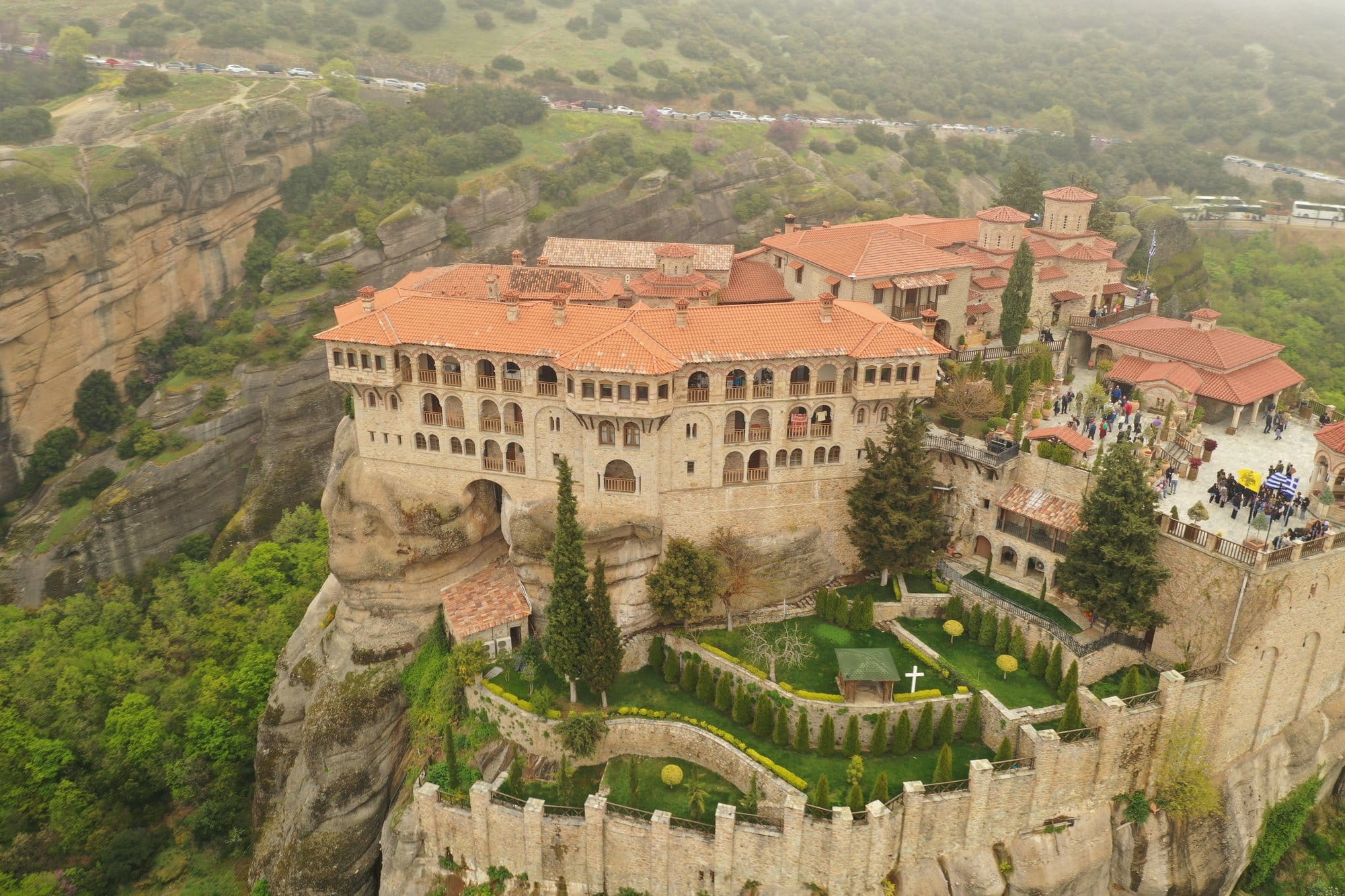
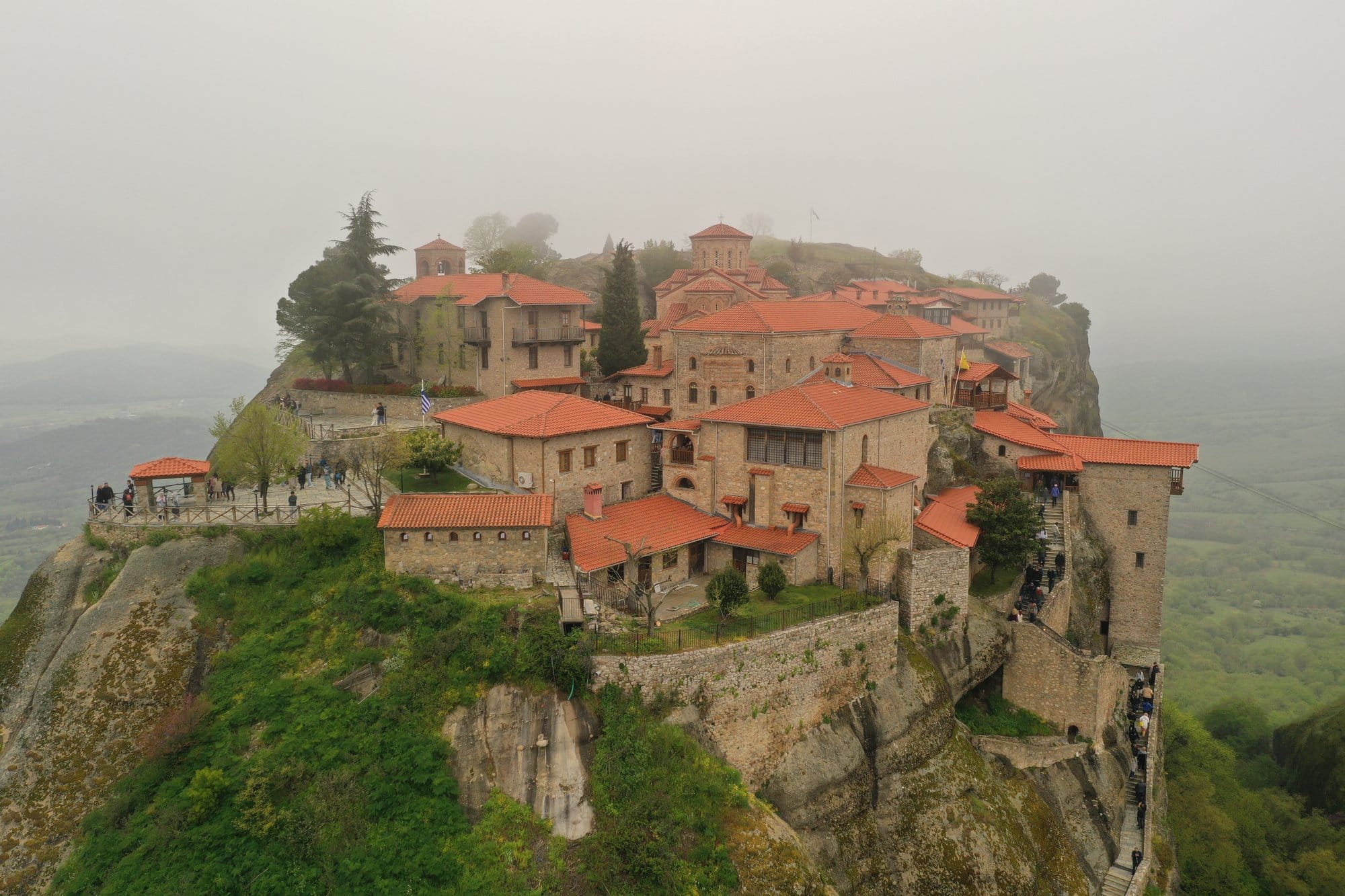
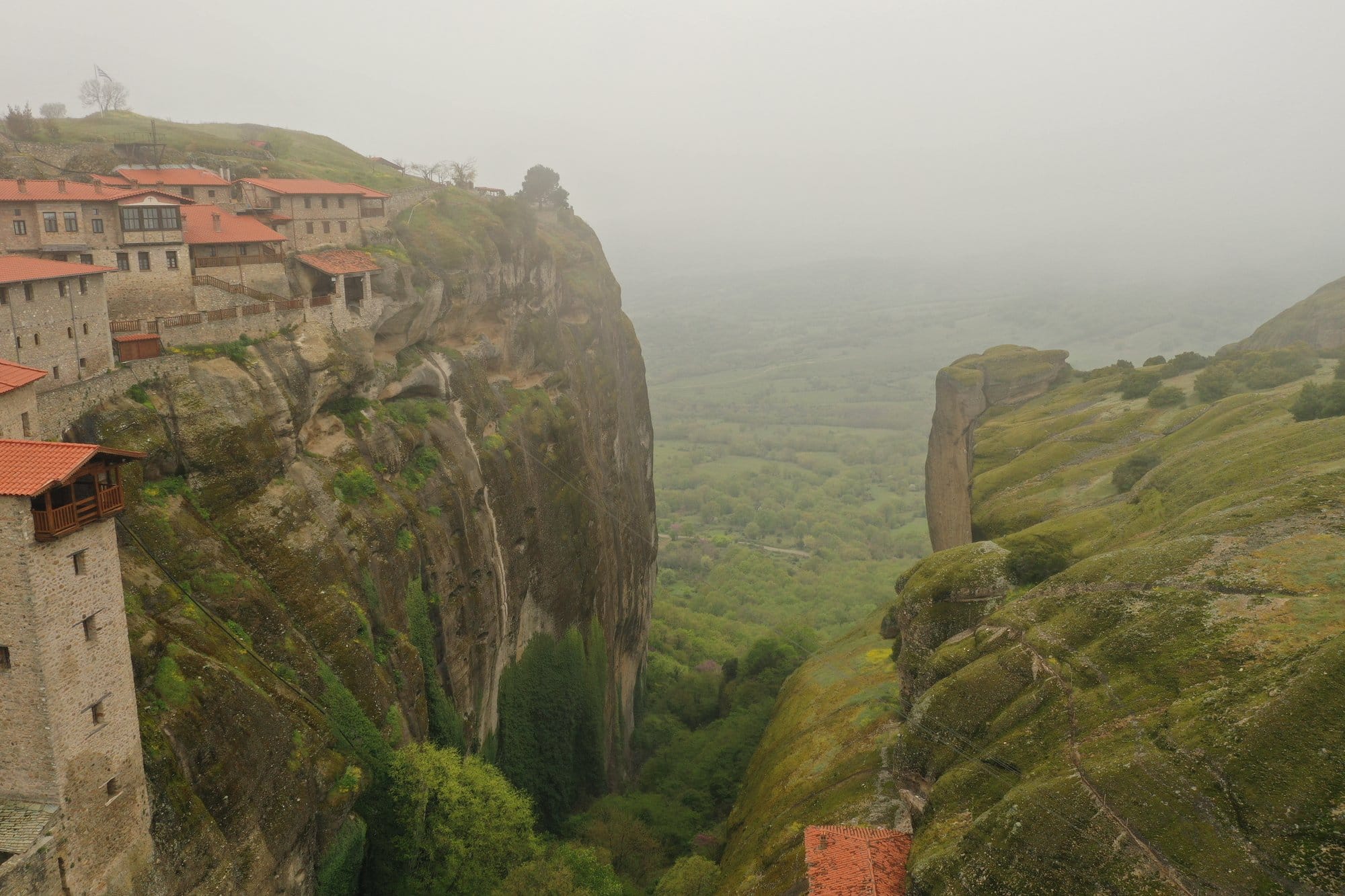
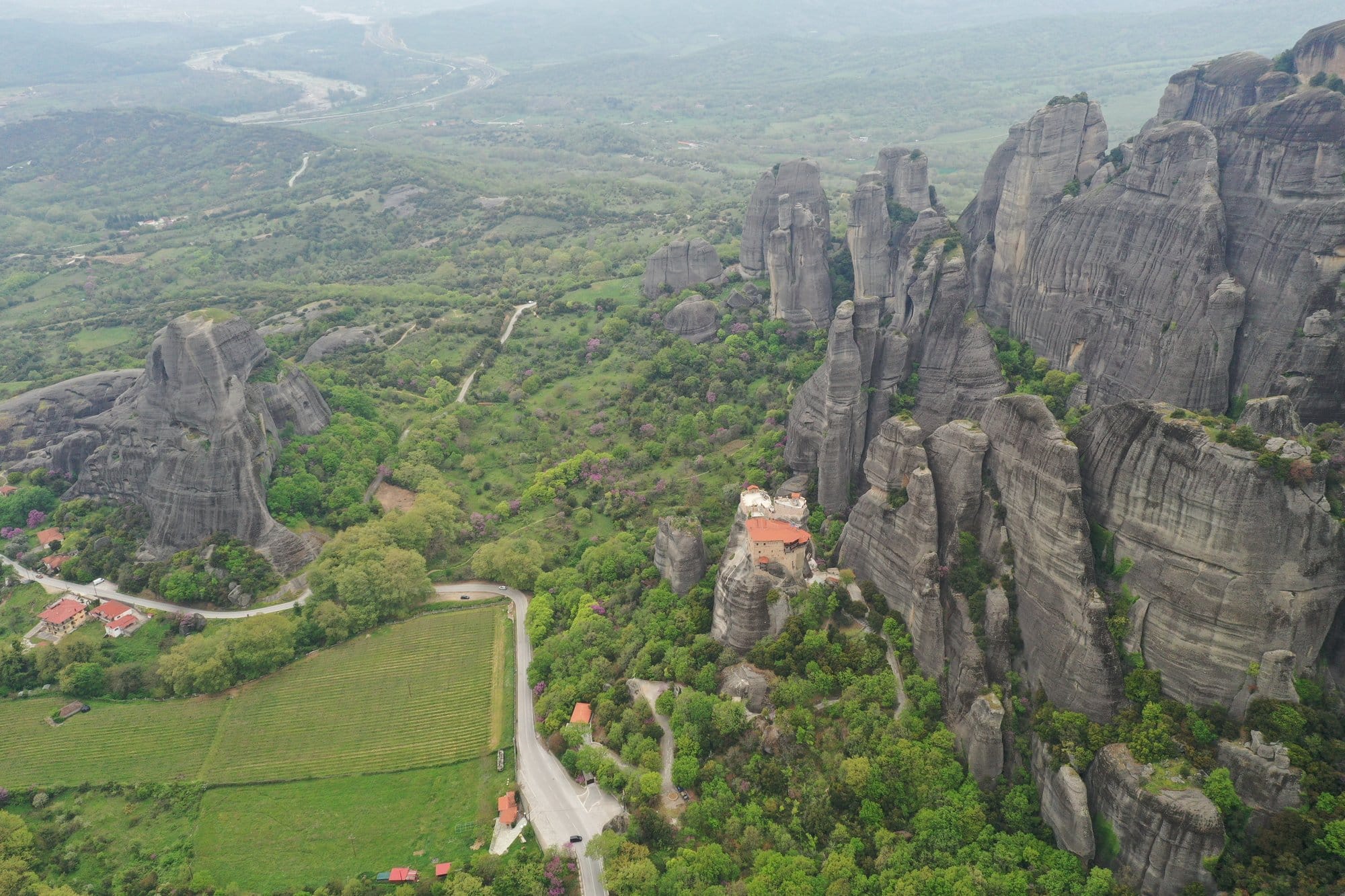
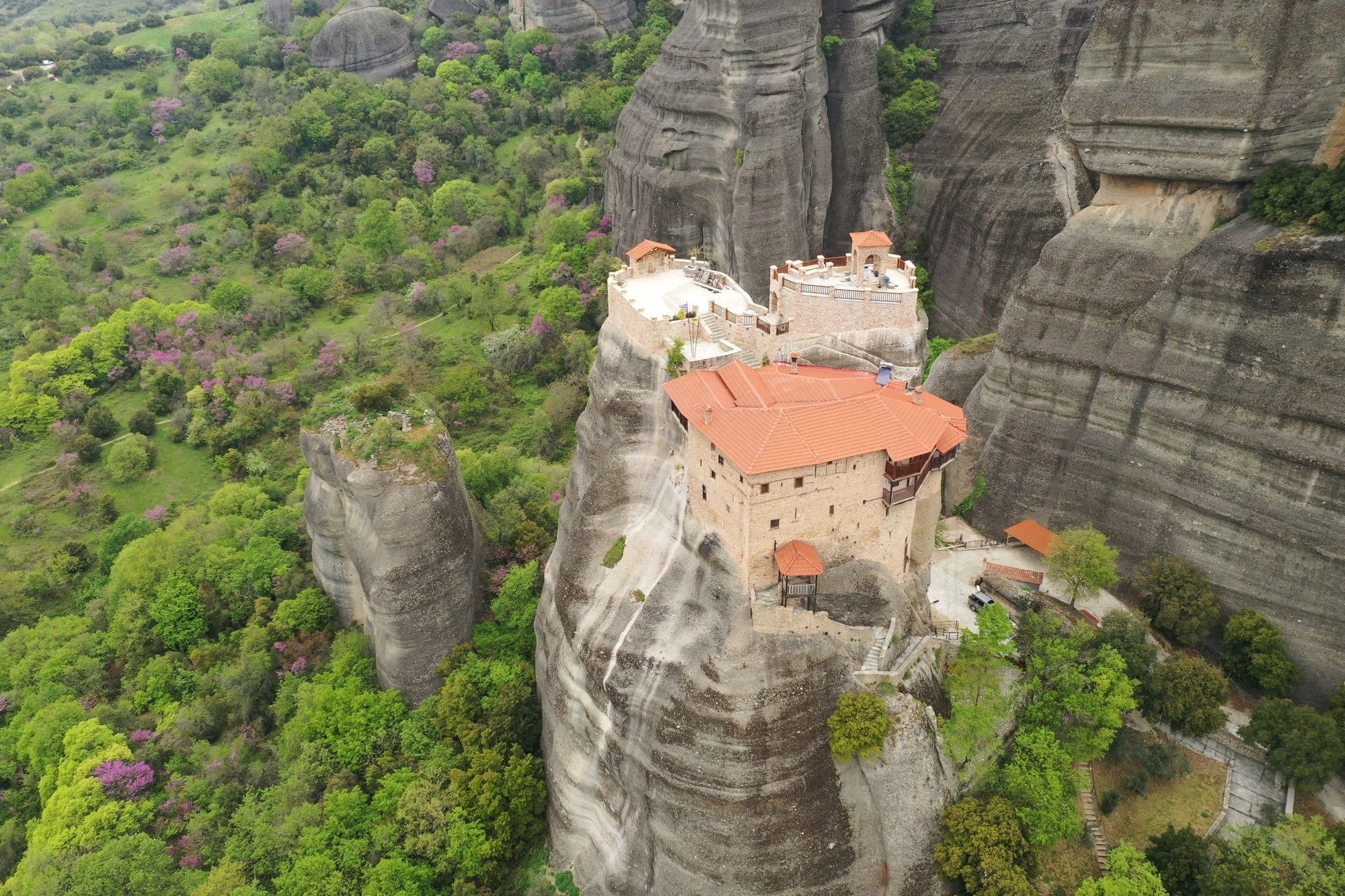
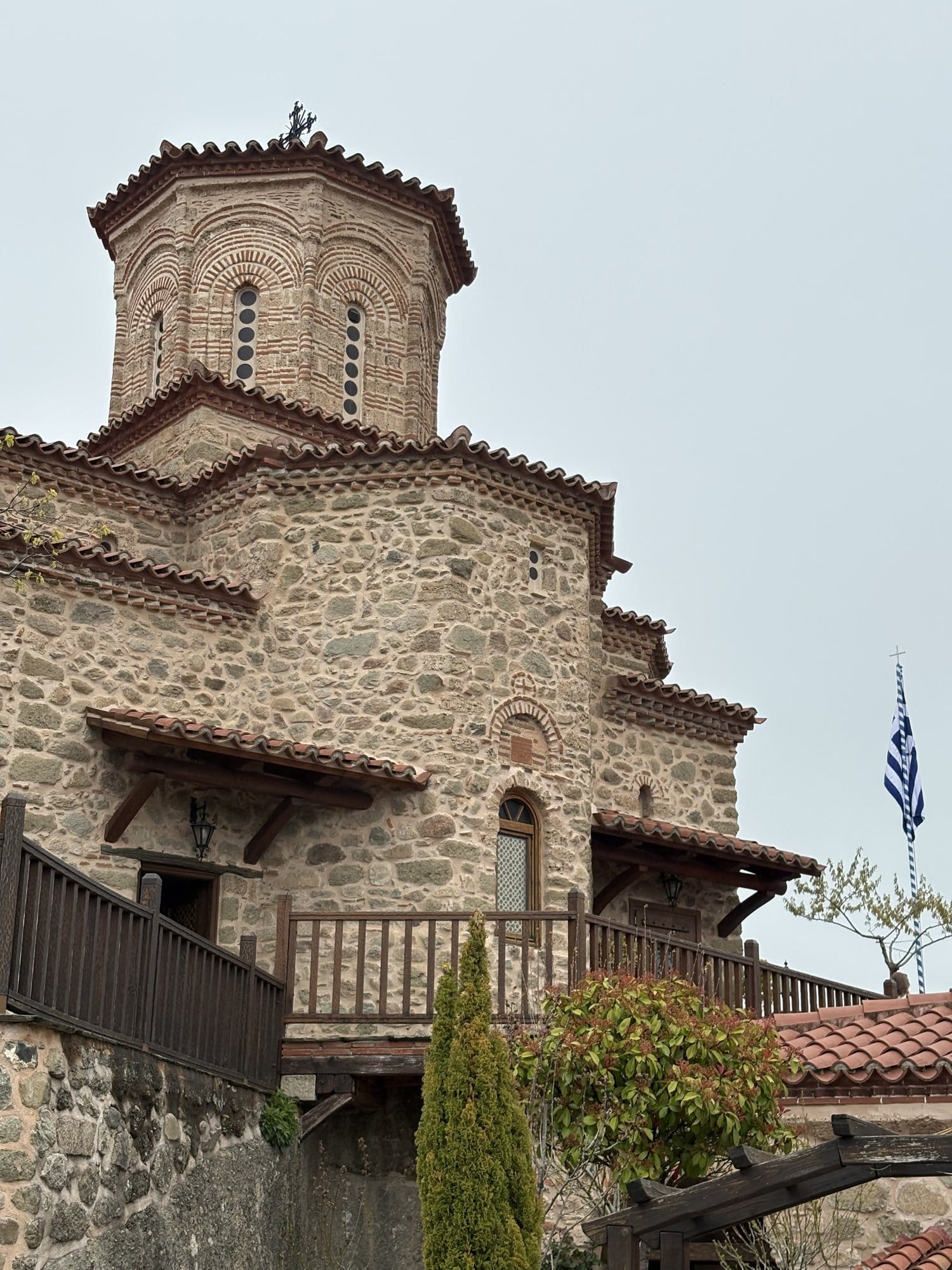
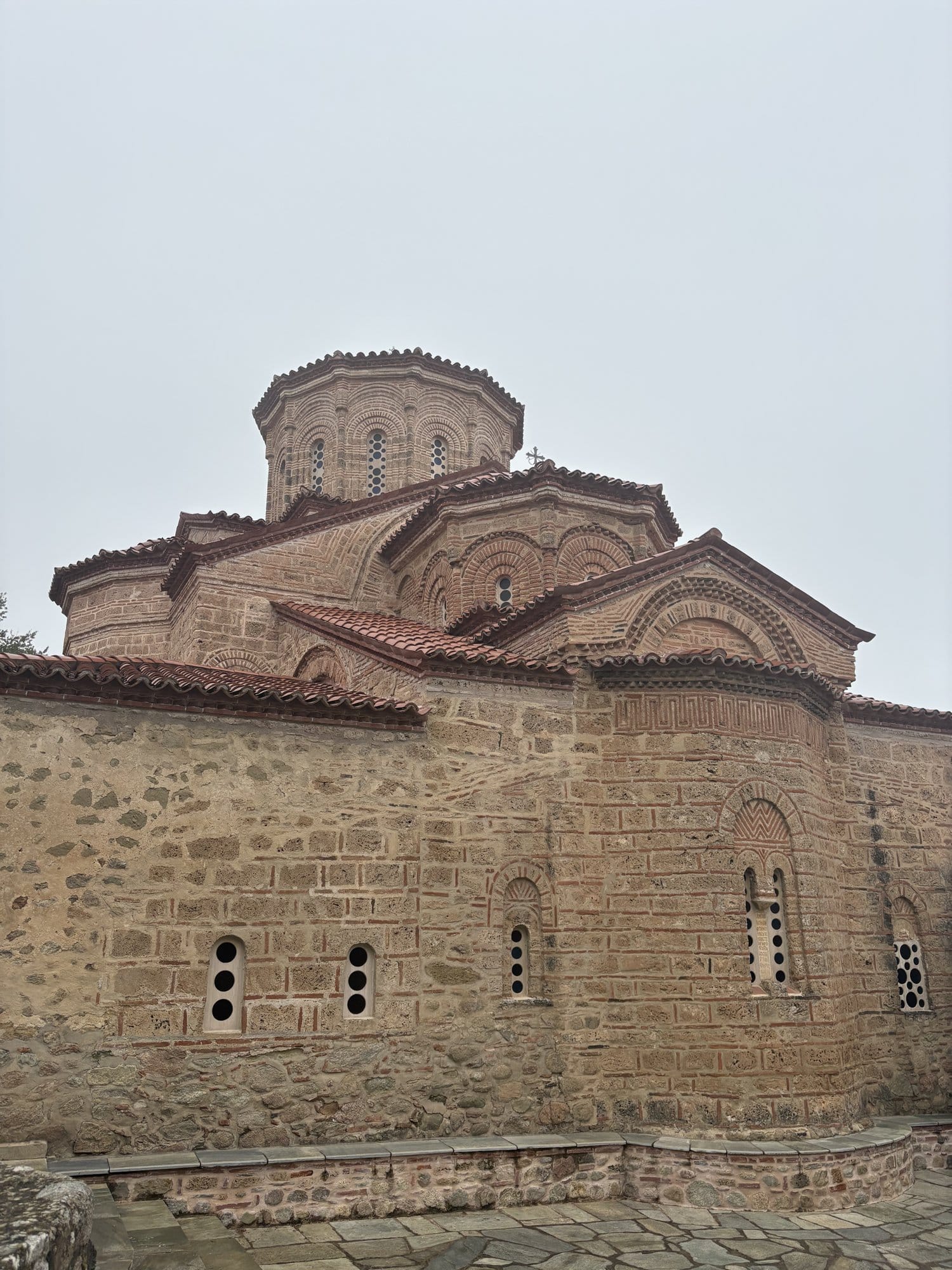
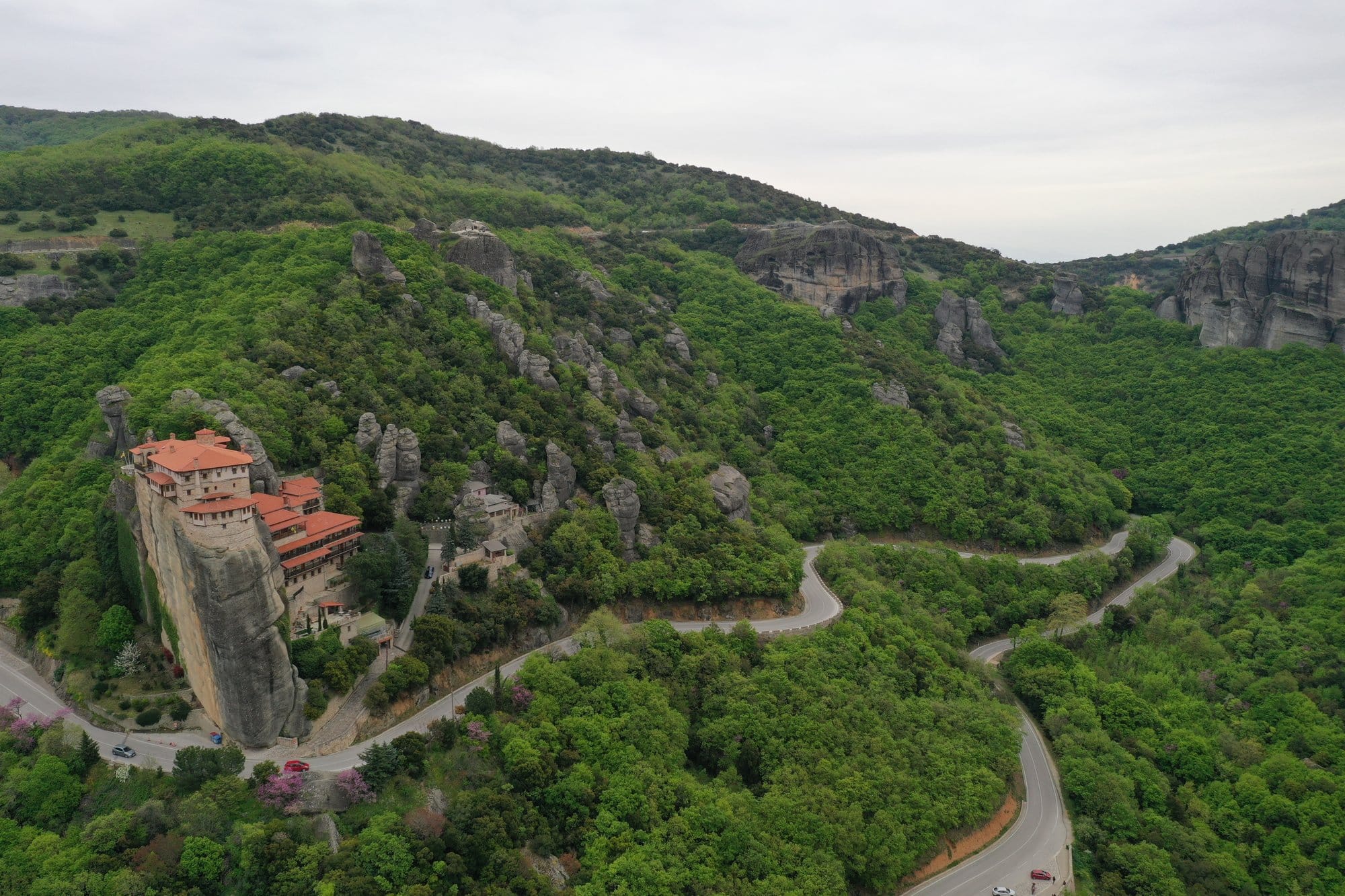
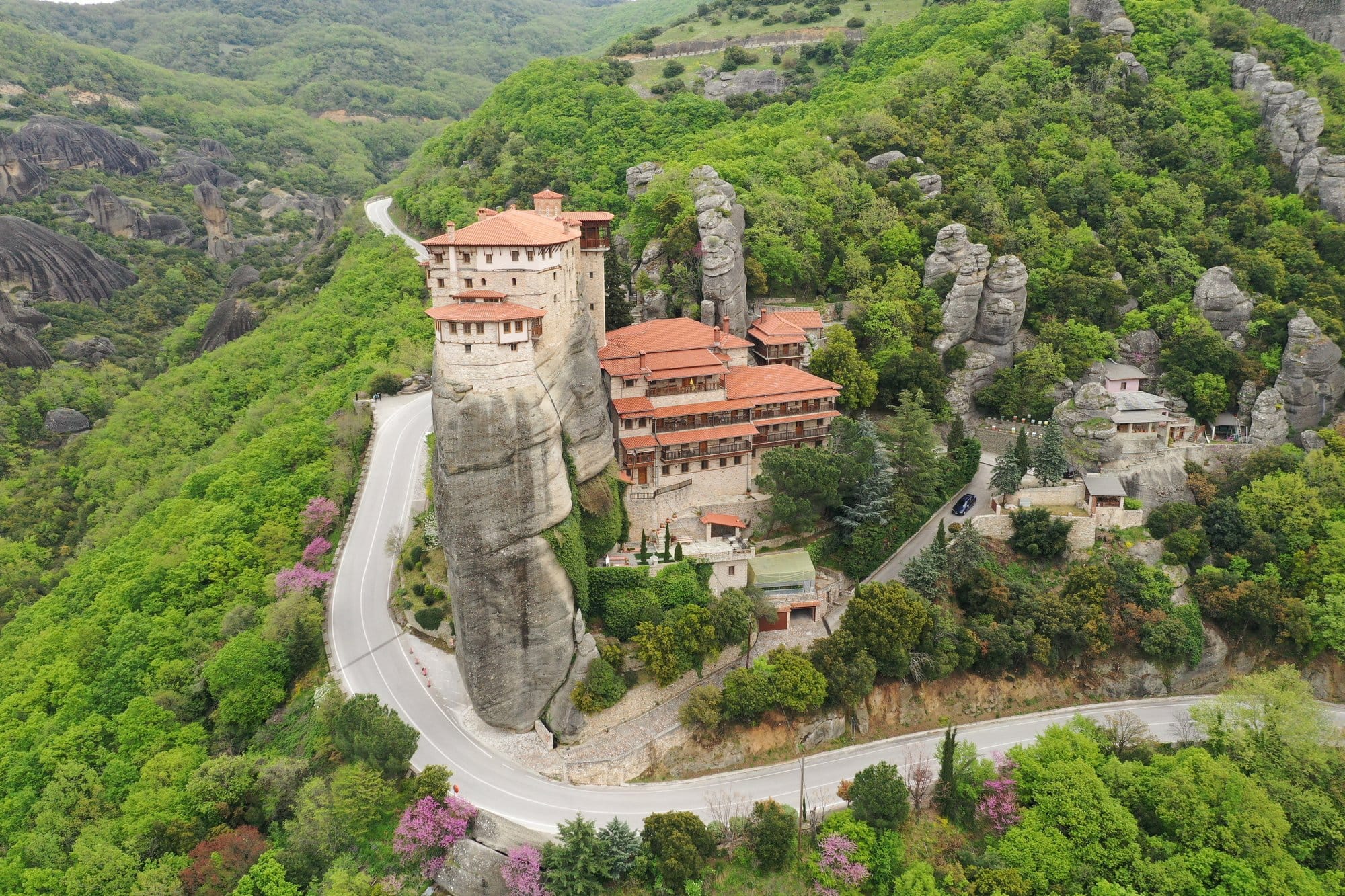
1. Grand Meteoron (Megalo Meteoro) — the biggest and most impressive of the six. Spacious courtyard, a real museum, an old wine cellar, a small ossuary. Entry 5€, roughly 300 stone steps but with rest platforms along the way. 2. Varlaam — a 15-minute walk from the Grand Meteoron car park, perched on a narrower pillar. Smaller than Grand Meteoron but with beautiful frescoes and a better balcony view. Entry 3€. 3. Roussanou — the most photogenic from outside because the rock is perfectly vertical. Small inside, walkable via a bridge, entry 3€. Mostly run by nuns. 4. Agios Nikolaos Anapafsas — the first one you see driving up from Kastraki, closest to the village. Small but charming frescoes. 3€. 5. Holy Trinity (Agia Triada) — iconic view, remote, steep climb. The monastery from the James Bond film For Your Eyes Only. 6. Agios Stefanos — accessed easily (no stairs, a bridge). Best for older travellers but less atmospheric.
If you have only one half-day, do Grand Meteoron and stop. If you have a full day, add Varlaam. If you have two days, add Roussanou on day 2 and spend the afternoon on viewpoints rather than cramming more monasteries.
Opening Hours and Closure Days (Very Important)
Each monastery has its own weekly closure day. Missing this detail is the single most common way to show up and find a locked door.
As a rough guide for April: all monasteries are open 09:00 to 15:00 or 16:00 depending on the day; Grand Meteoron closes on Tuesday, Varlaam on Friday, Roussanou on Wednesday, Holy Trinity on Thursday, Agios Nikolaos on Friday, Agios Stefanos on Monday. In summer hours extend by about an hour. Always verify on the notice boards at each entrance before you plan your second day — the orthodox calendar also closes them for certain feast days.
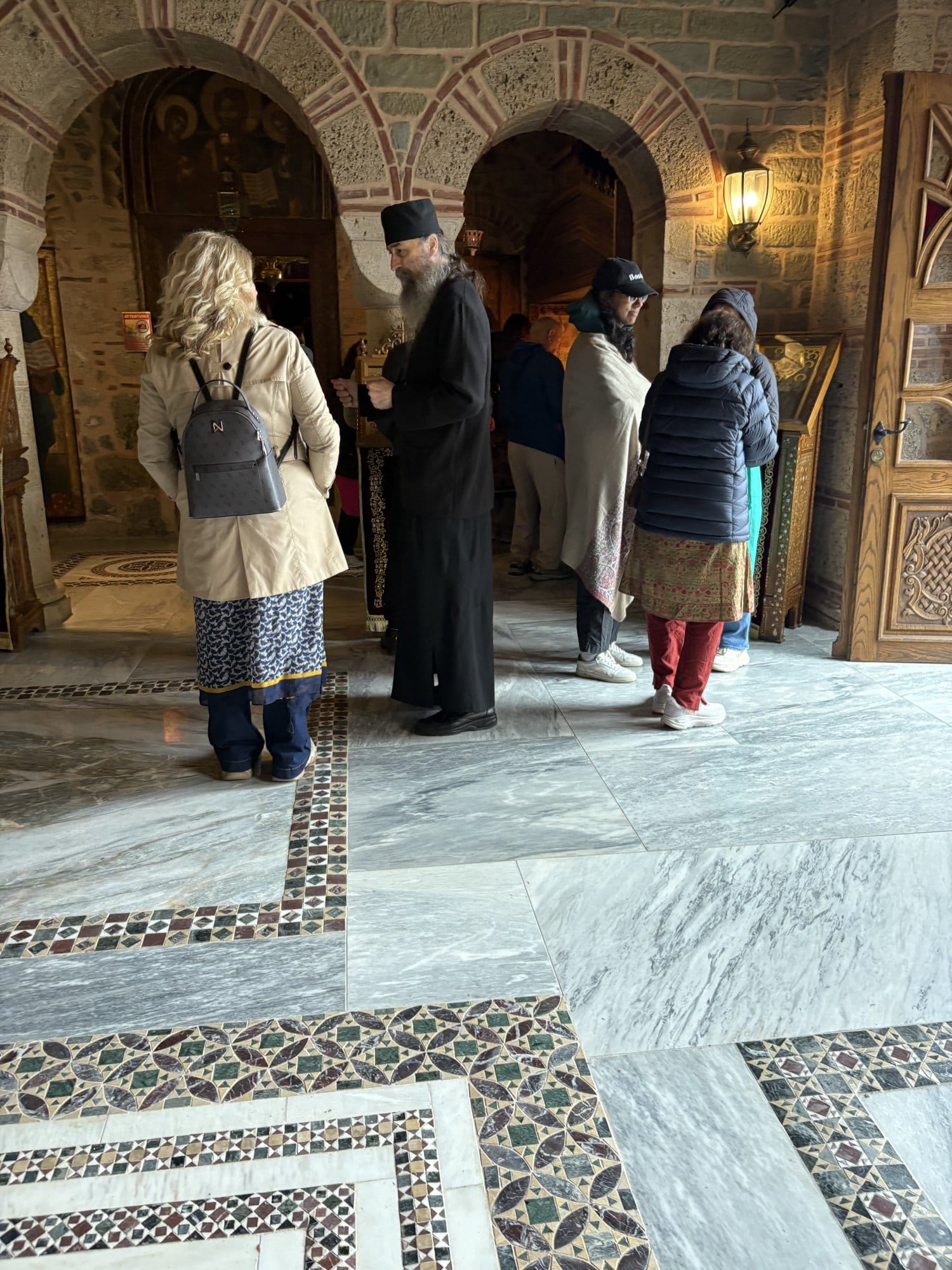
Dress code is enforced. Men in shorts are not allowed inside; women wear a long skirt (if you arrive in trousers, you are given a wrap-around skirt at the door). Photography is not allowed inside the churches themselves, only in courtyards.
The Easter Monday Crowd Lesson
We arrived on Easter Monday — a Greek public holiday. The Grand Meteoron car park was full around midday. By mid-afternoon cars were lining both sides of the road leading up from the valley and a slow-moving queue was forming at the entrance. If you can, shift that day: either come early (before 11:00) or push the visit to a Tuesday or Wednesday.
The lesson applies to weekends in general, even in shoulder season. Meteora is by now very well-established on the Athens-Santorini bus-tour circuit, and coaches start rolling in around 10:30. Arriving at opening time (09:00) gave us the courtyards almost to ourselves for the first 45 minutes.
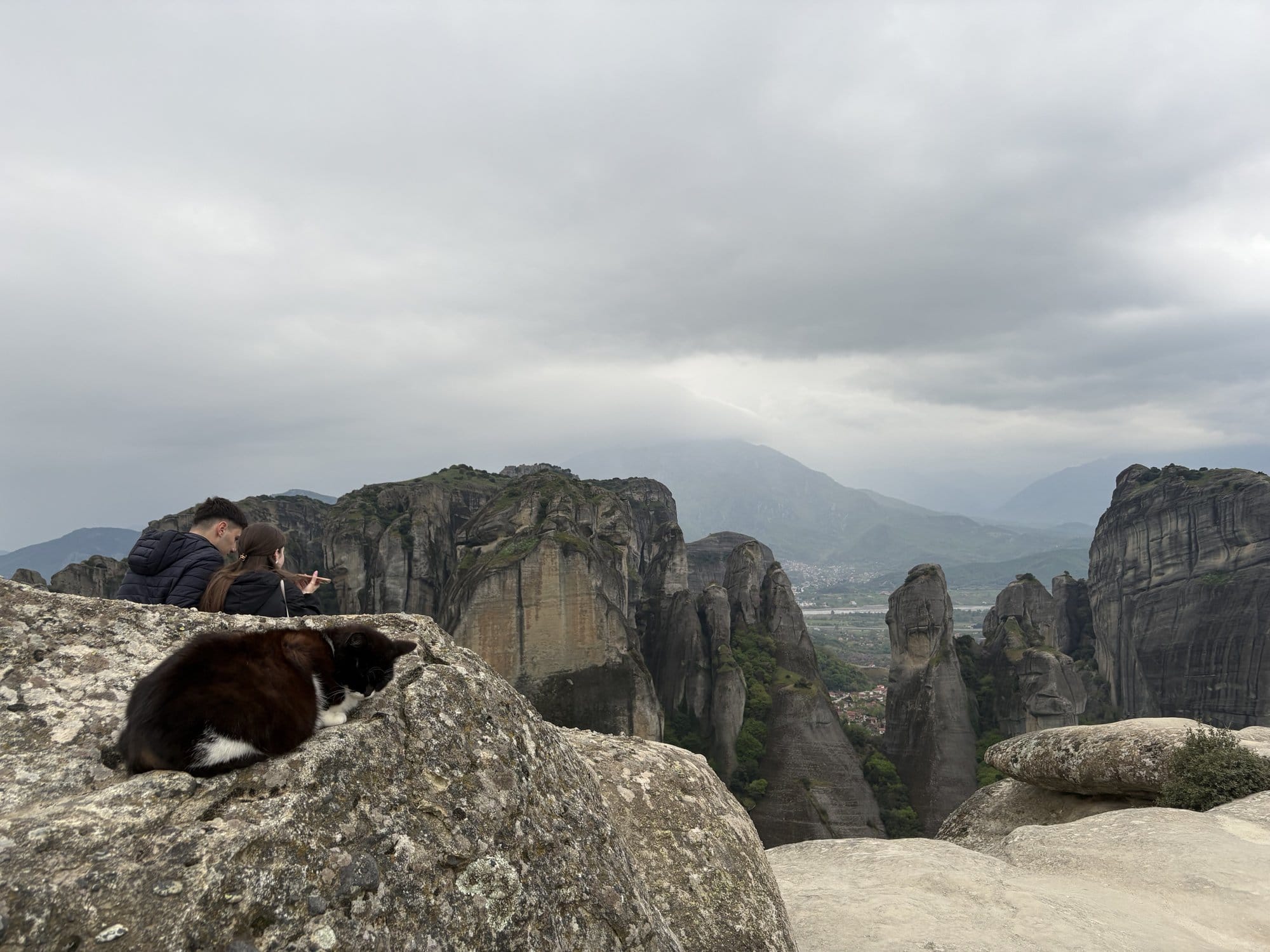
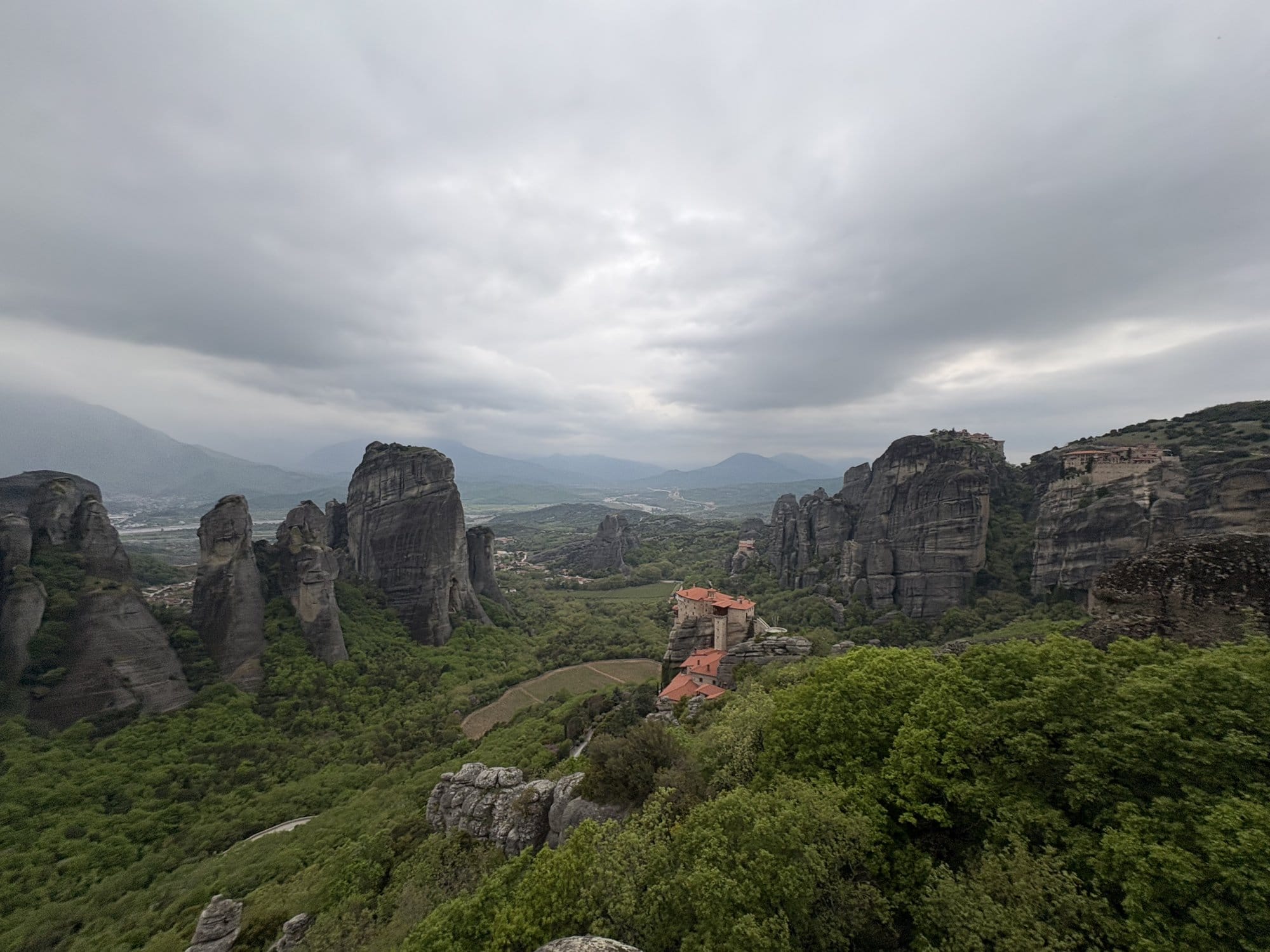
The 180° Viewpoint Where You See Five Monasteries at Once
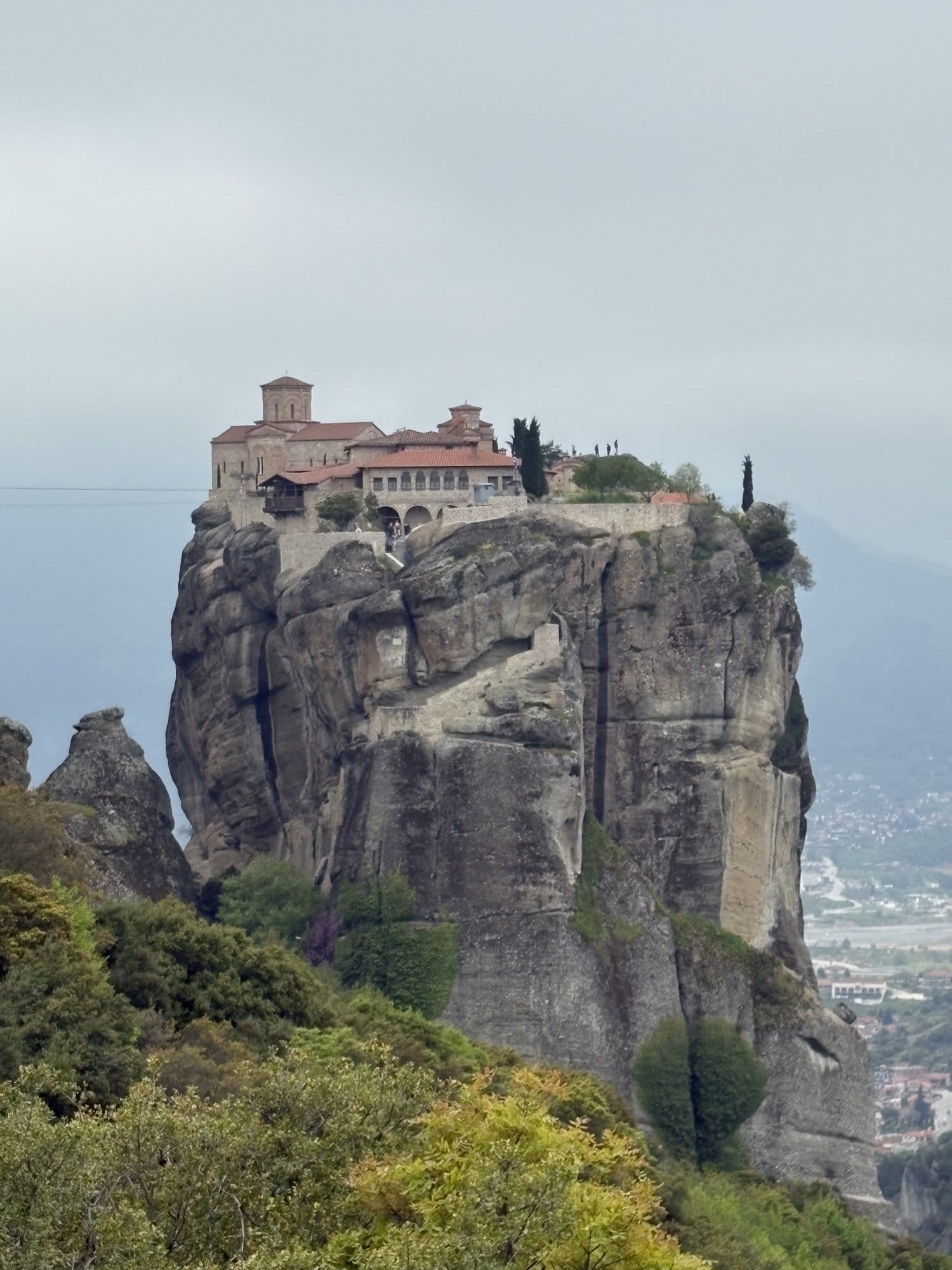
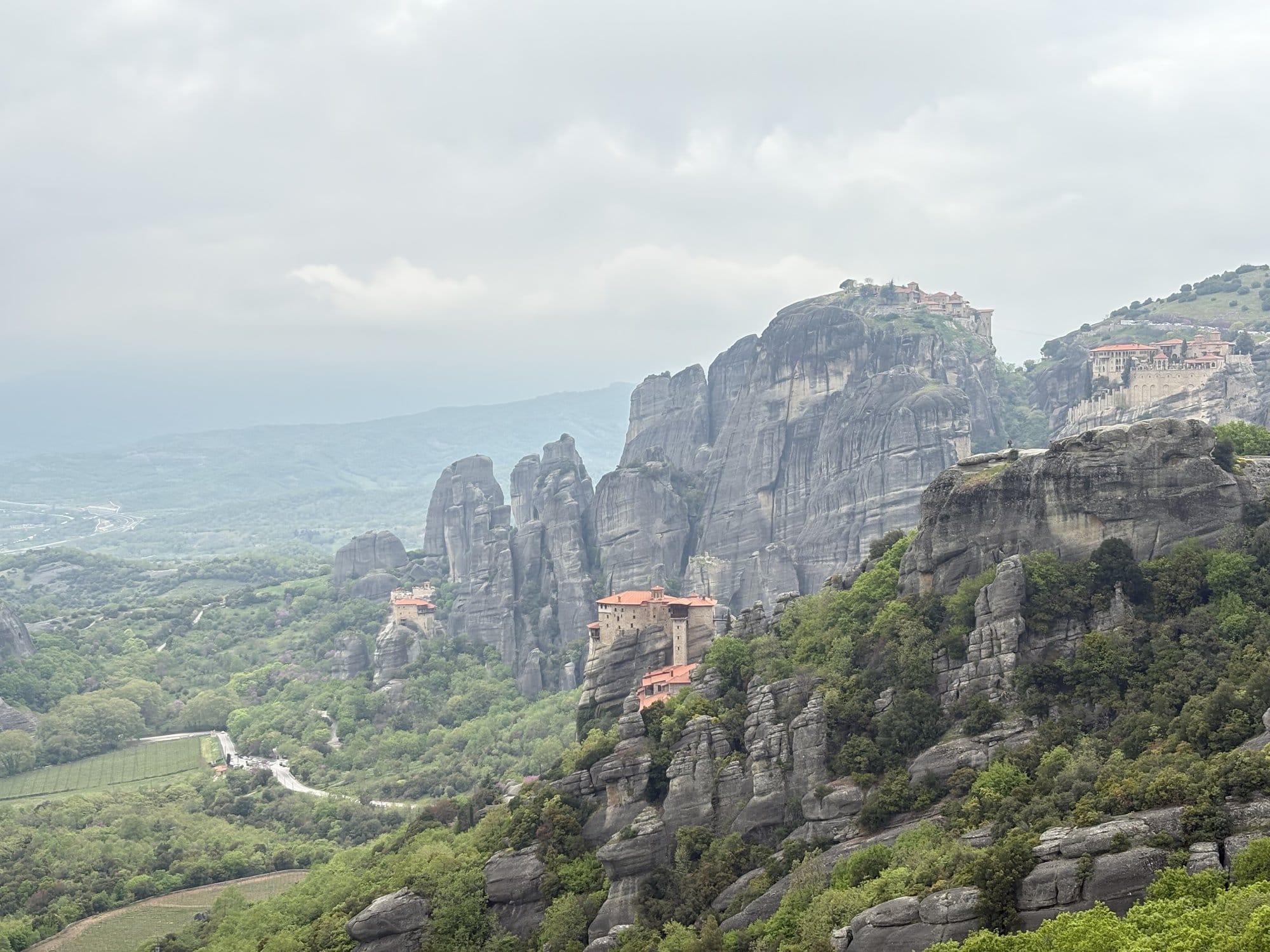
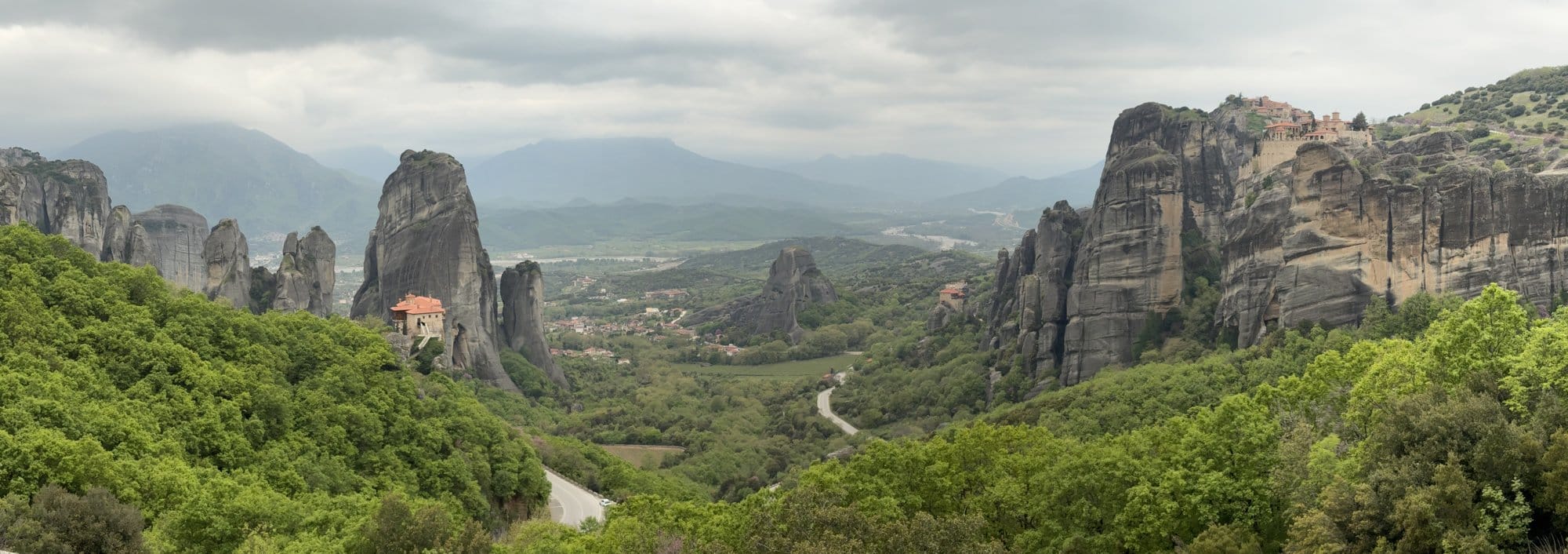
The most underrated thing about Meteora is that the viewpoints between the monasteries are, on their own, better than three of the six monasteries. There is a stretch of road between Grand Meteoron and Roussanou that passes through a natural saddle in the rocks — on a clear afternoon you can stand in one spot and count five of the six monasteries at once.
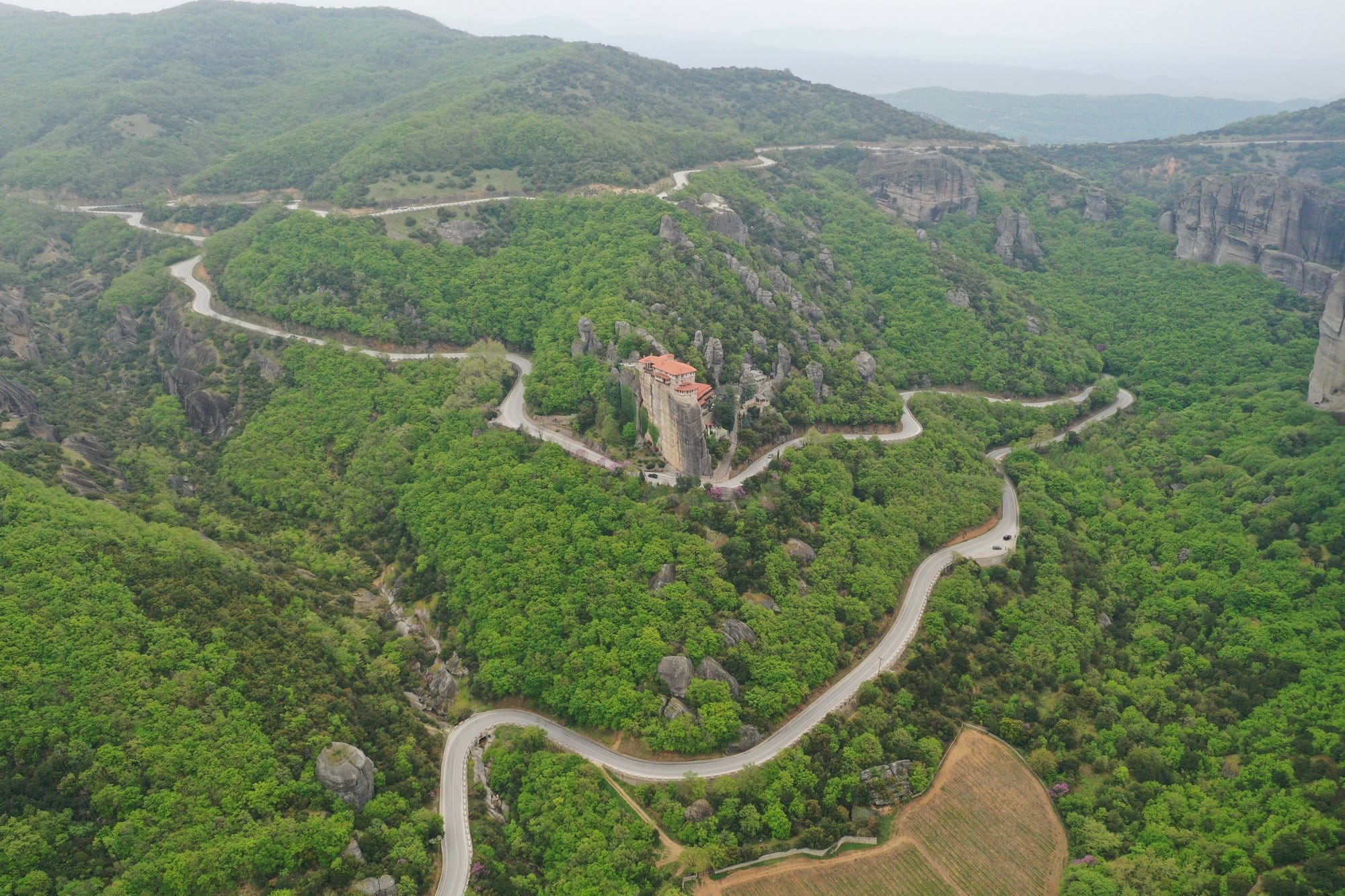
It is not signed. To find it, from the Grand Meteoron car park, drive back down towards Roussanou for about 1.2 km and pull over at the small gravel shoulder on your right just after the sharp right-hand bend. There is no car park, just three or four parking spots on the dirt. A short set of steps leads up to a low railing. From there, facing south-west, you have Grand Meteoron and Varlaam on your right, Roussanou and Agios Nikolaos below in front, and Holy Trinity on your left.
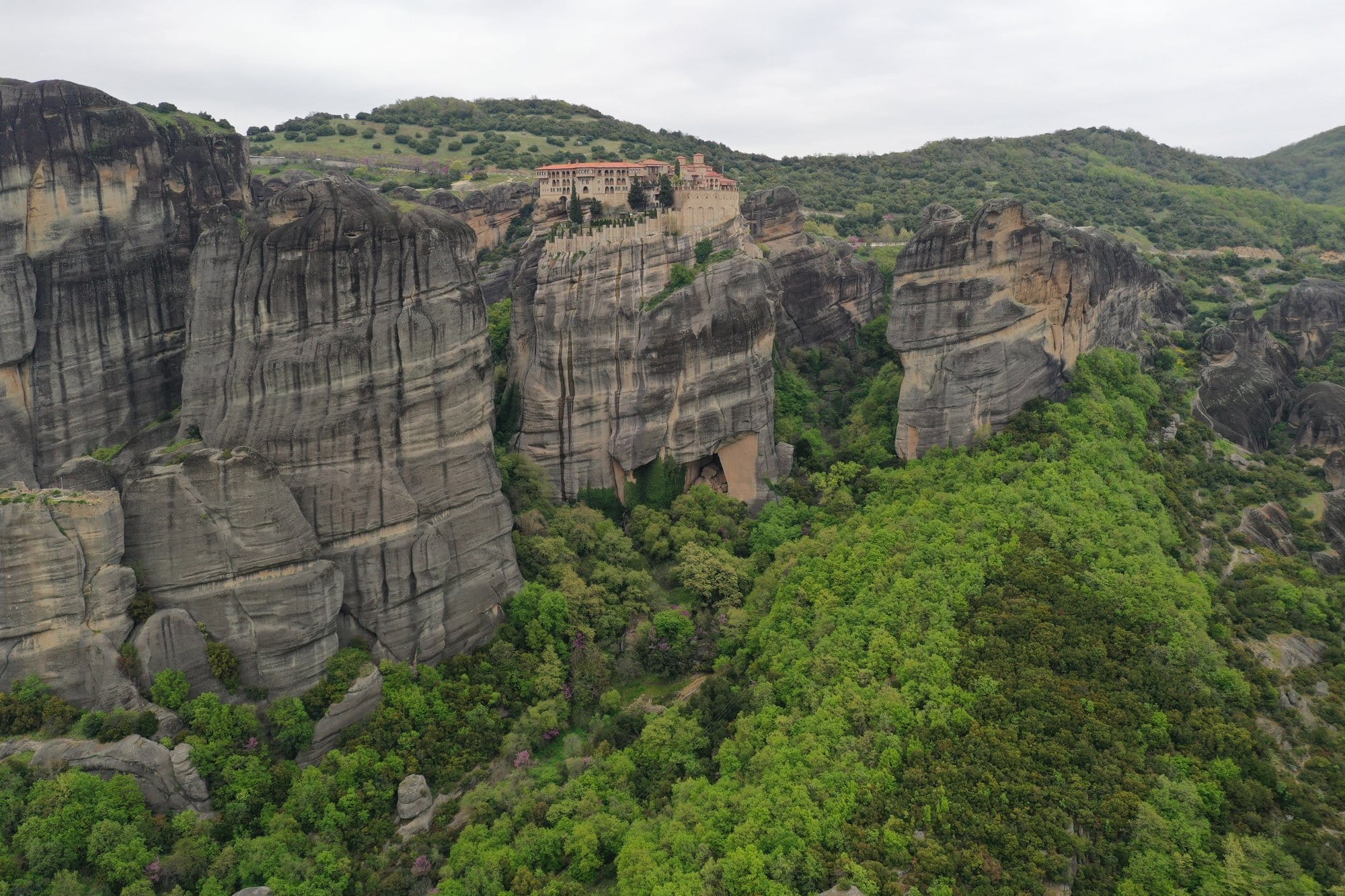
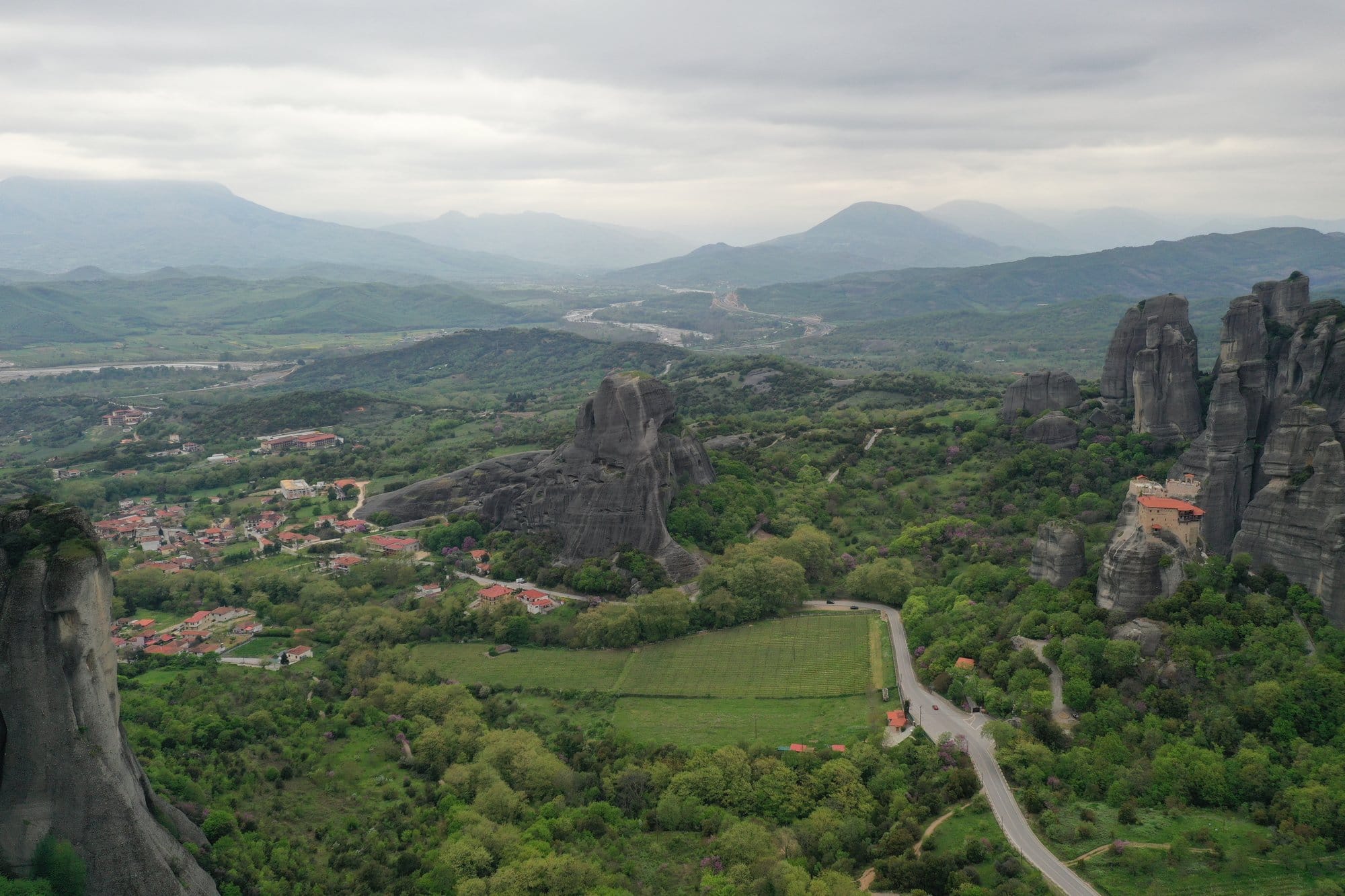
This is where most Meteora drone photography is taken, and for a reason. We stopped here on both days, at different times of day — mid-afternoon for the light on the cliffs, and again toward the late afternoon for the golden hour on the village of Kastraki below.
Book a Meteora sunset tour with monastery & caves visit
Staying in Kalambaka vs Staying in Kastraki
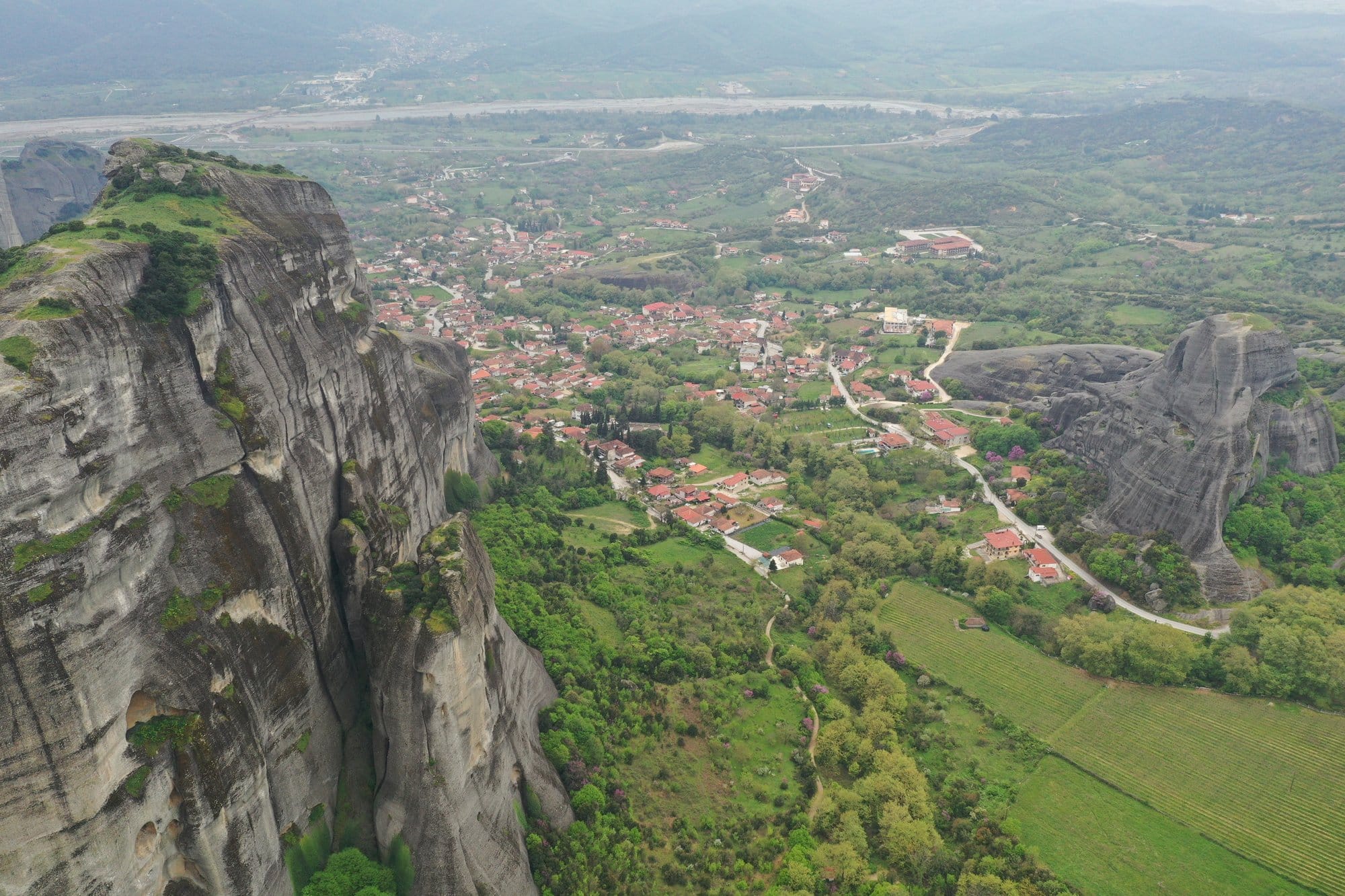
Meteora has two villages at its foot: Kalambaka (the larger town) and Kastraki (the smaller, prettier village closer to the rocks). A lot of guides tell you to stay in Kalambaka because there is more choice — we would disagree.
Kastraki puts you five minutes by car, or 20 minutes on foot up a small path, from the Agios Nikolaos monastery. From Kastraki village square you can already see four of the six monasteries silhouetted above you. It is quieter at night, has a handful of tavernas, and feels like a village rather than a town. The downside is that there are maybe twenty small hotels and apartments total, so in peak weekends things fill up fast.
Kalambaka has more hotel inventory, more restaurants, a small rail station (for those arriving by train from Thessaloniki or Athens), and a slightly flatter walk if you are travelling with older family members. It is also closer to the motorway for the onward drive to Zagori.
Our pick: Kalambaka if you are arriving with a big group (more options) or staying only one night; Kastraki if you are staying two nights and have your own car. We stayed in Kalambaka for two nights in a 143 m² three-bedroom apartment called "Meteora La Grande Vue" — 594€ total for two nights for six people, with a balcony that pointed straight at the rocks. The views alone were worth the choice.
Compare hotels in Kalambaka and Kastraki
We compare the two villages in detail — drive times, inventory and what we paid — in our where to stay in Meteora guide.
April, the Sweet Spot
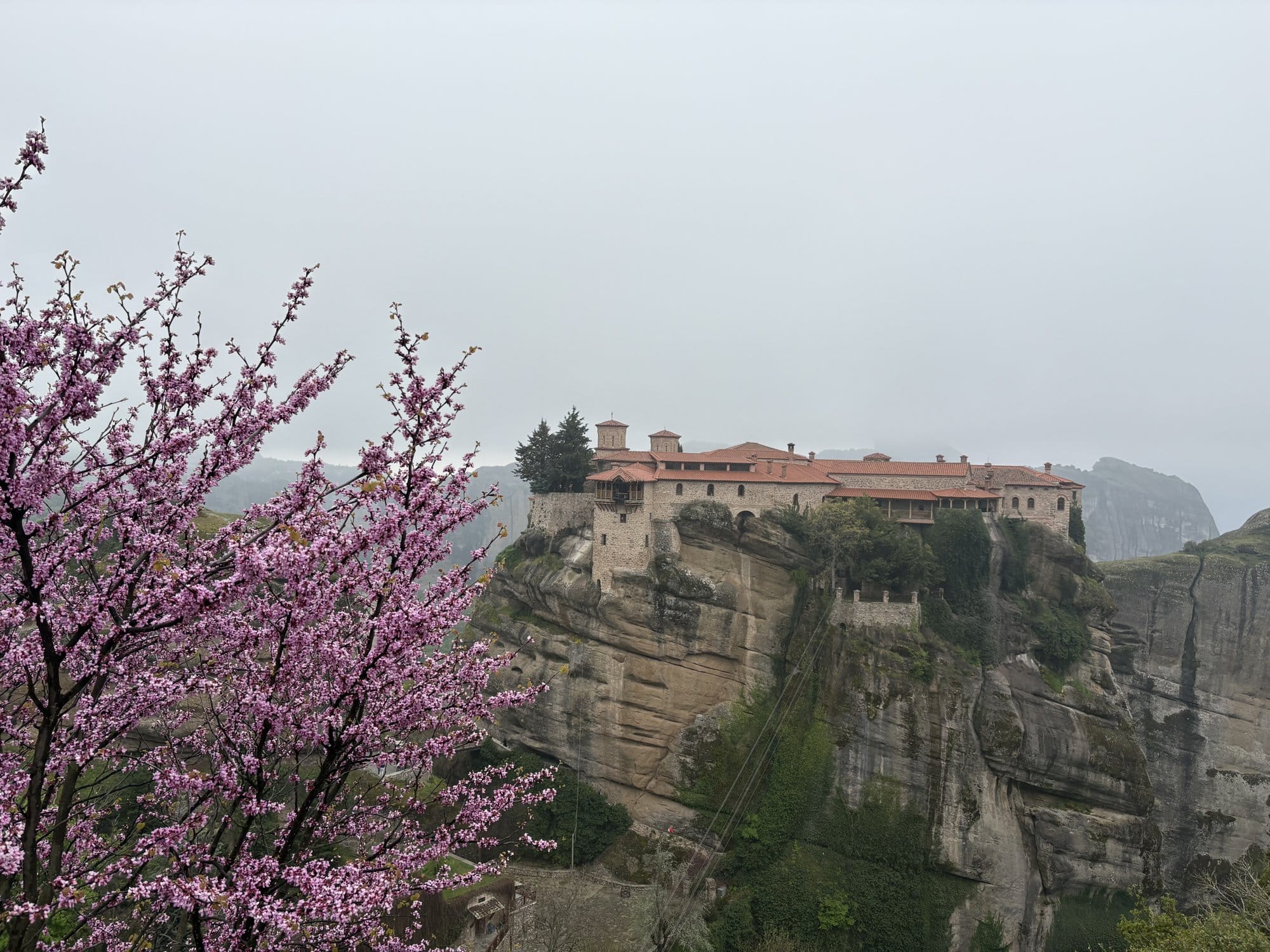
We have been asked more than once "why April?". The honest answer is that April at Meteora is the best month of the year, and it is not even close.
The rocks are set in a green plain of olive trees and wild wheat that is still vivid in April — by July the same plain is baked yellow. Temperatures are a comfortable 15-20°C during the day, there are no mosquitoes yet, and the Pindus mountains behind Meteora still have snow on the peaks, which gives the horizon a depth summer photos do not have.
The one caveat is that April can be rainy. We had two days of perfect weather and one early morning of low cloud that swallowed the rocks entirely for 40 minutes. Build a half-day buffer into your plan if the forecast is uncertain, and keep a dry list of indoor options (the museum inside Grand Meteoron is a good rainy-hour fallback).
A Drone Story at Ypapanti
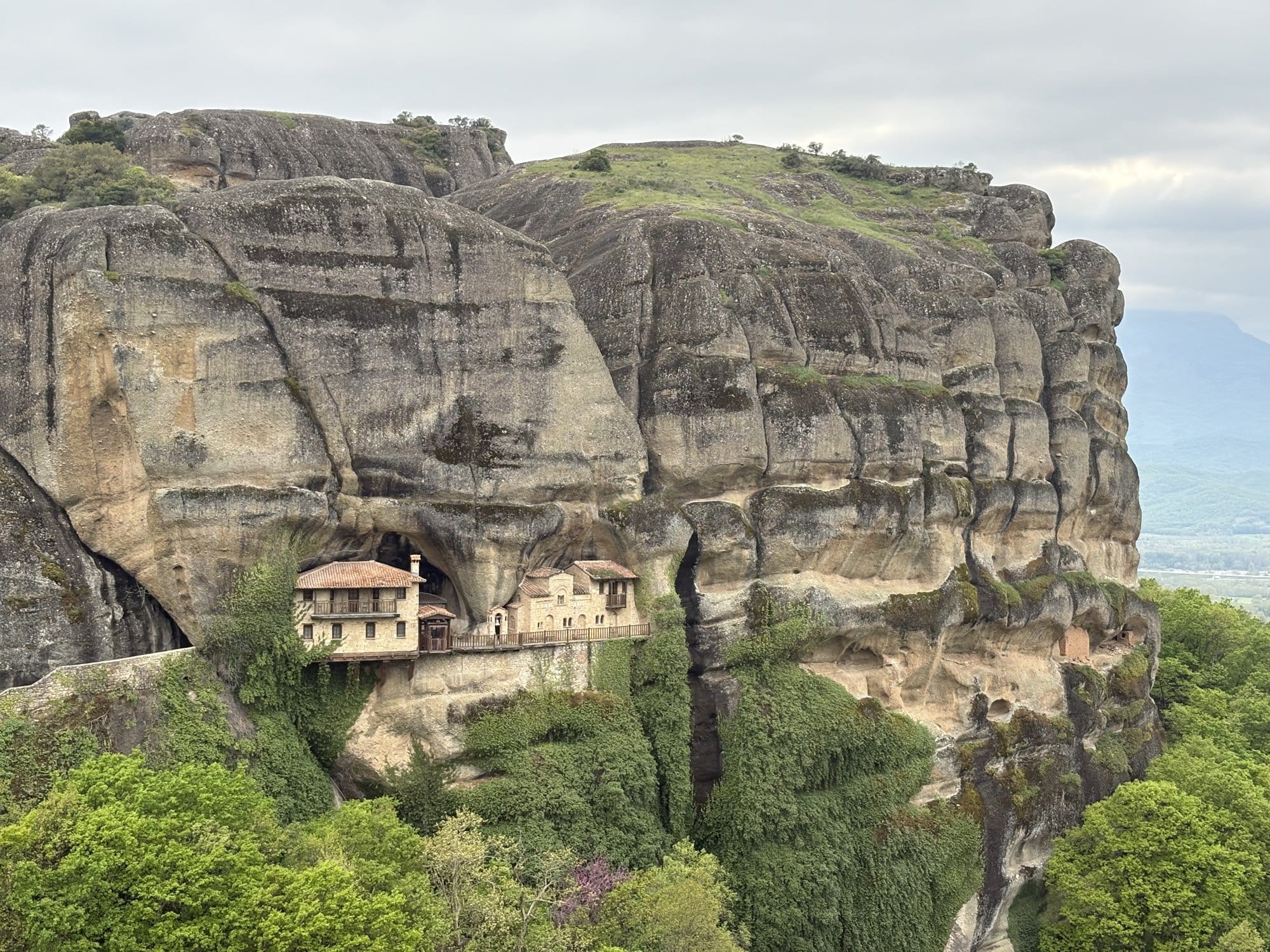
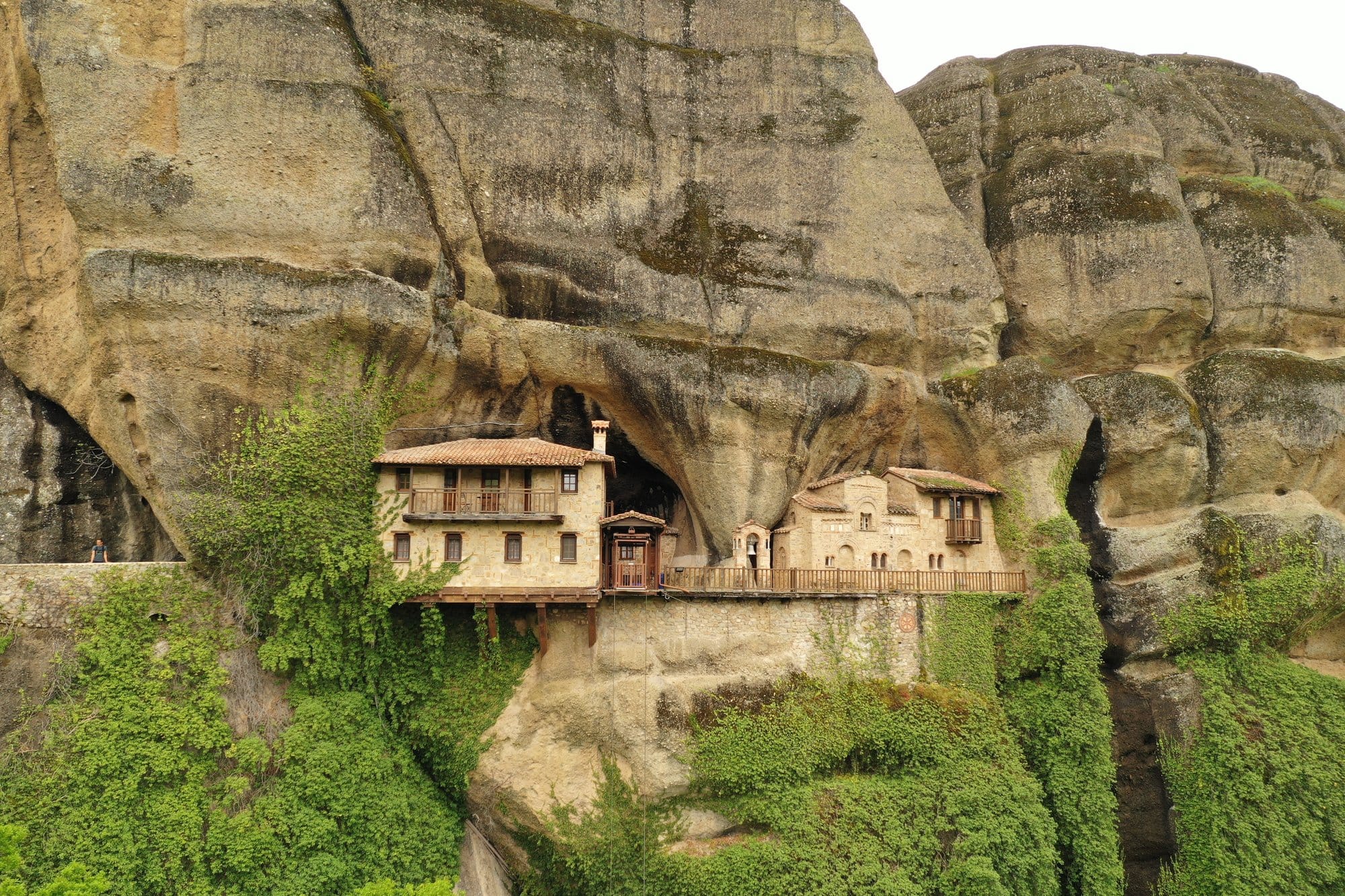
The north-western face of the Meteora massif has a small, near-abandoned monastery called Ypapanti, set into a cave halfway up a cliff. You cannot visit it; you can only see it from the road. It is the most dramatic light of the entire area at sunset.
I was flying the DJI Mavic 2 Pro from the road above Ypapanti on day 3 — the battery was at 32% and the red return-to-home warning was already on. The light was so good that I kept pushing one more photo, one more photo, one more. By the time I hit "return", the drone was hovering 200 metres out and 50 metres up, with a headwind. It made it back to the treeline and then, at about five metres off the ground, quietly landed itself in the top of a tree.
It took fifteen minutes of shaking a neighbouring tree with a long branch to dislodge it. Nothing was broken — just my pride. Since then, I keep a hard rule: 30% battery minimum for return, regardless of how good the light looks. I pass it on.
A Practical Two-Day Plan
Day 1 (afternoon arrival)
- 14:00 arrive in Kalambaka or Kastraki, check in, lunch. - 16:00 drive up to the 180° viewpoint for a first orientation. - 17:30 dinner in Kastraki square. - 18:30 walk up to Agios Nikolaos monastery (closed for visits at that hour, but the exterior view from below, in the late light, is beautiful).
Day 2 (the monastery day)
- 09:00 open the Grand Meteoron (first ones in, courtyard to yourselves). - 10:30 walk over to Varlaam, visit. - 12:00 picnic between Varlaam and Roussanou at a small roadside pull-in. - 13:30 Roussanou. - 15:00 nap or break in Kalambaka/Kastraki. - 18:00 return to the 180° viewpoint for golden hour — ideally with a thermos.
Day 3 (optional — viewpoints + drive out)
- 08:00 early breakfast, drive up to the Holy Trinity access road, walk over for the classic photo. - 10:00 leave Meteora for Zagori.
Organised Tours vs Driving Yourself
If you do not have a car, Meteora is one of the few places in Northern Greece where a guided day tour genuinely makes sense — the monasteries are spread across a one-way system that is hard to navigate on foot. We saw several well-run small-group tours operating out of both Kalambaka and Kastraki.
Compare Meteora day tours on GetYourGuide
That said, if you have a car, driving yourself gives you access to the viewpoints at sunset, which tours do not. Most tours finish around 14:00 or 15:00, which is exactly the wrong time for the best light.
Book the Kalambaka/Kastraki midday Meteora tour (3 monasteries)
Book the half-day Meteora hiking tour from Kalabaka
Getting There and Getting Away
The easiest gateway is Thessaloniki: 220 km on the E65 motorway, 2h30 driving. Athens is 360 km, about 4h. A train runs from Athens to Kalambaka (a little over 5 hours) and from Thessaloniki to Kalambaka with a change at Paleofarsalos (about 3h30).
Onward from Meteora, most visitors either loop north-west into Zagori (our route — 180 km, 2h30 in the mountains) or continue south towards Delphi. Zagori is closer, wilder and far less visited; Delphi is the more classical itinerary.
Meteora is most easily reached from Thessaloniki (SKG) — 2.5 hours by car or 3 hours by direct train to Kalambaka. SKG has more European connections than Athens for non-Mediterranean travellers, and seasonal Ryanair routes regularly come in under €60.
Making Connections
Planning another cliff-and-monastery adventure? Our guides to the Dolomites and to the hilltop villages of Sicily cover two different versions of the same brief: dramatic rock, long lunches, and religion built into the scenery.
FAQ — Short Answers
How many days for Meteora? Two full days is the sweet spot. One is enough if you are short on time and only want two monasteries. Three is generous and only worth it if you plan a long hike or a full photography workshop.
Can you hike between monasteries? Yes. There is a network of old monk paths that predates the road. The most popular is the loop from Kastraki up to Agios Nikolaos, over to Grand Meteoron, and back down — about 3 to 4 hours, moderate effort.
Is Meteora kid-friendly? Yes, within reason. The 300 steps at Grand Meteoron are fine for most children over 6. Inside the monasteries, kids need to stay quiet and dressed appropriately. The viewpoints and the picnics between monasteries are the parts kids tend to remember.
Can you fly a drone? Not near the monasteries. The airspace around the rocks is regulated and at least two of the monasteries have signs explicitly forbidding drones. Check the current rules, and the signs on site, before you take off.
Is there a good single photo spot for sunset? Yes — the 180° viewpoint described above, facing south-west, about 1.2 km from the Grand Meteoron car park on the road back towards Roussanou. Arrive 30 minutes before sunset.