
Mount Bromo Sunrise with Kids: An Honest Family Guide (No Sugar-Coating)
We climbed Mount Bromo with kids in August 2019. Here's the unvarnished truth — jeep timings, dust, horses, and whether it's actually family-worthy.

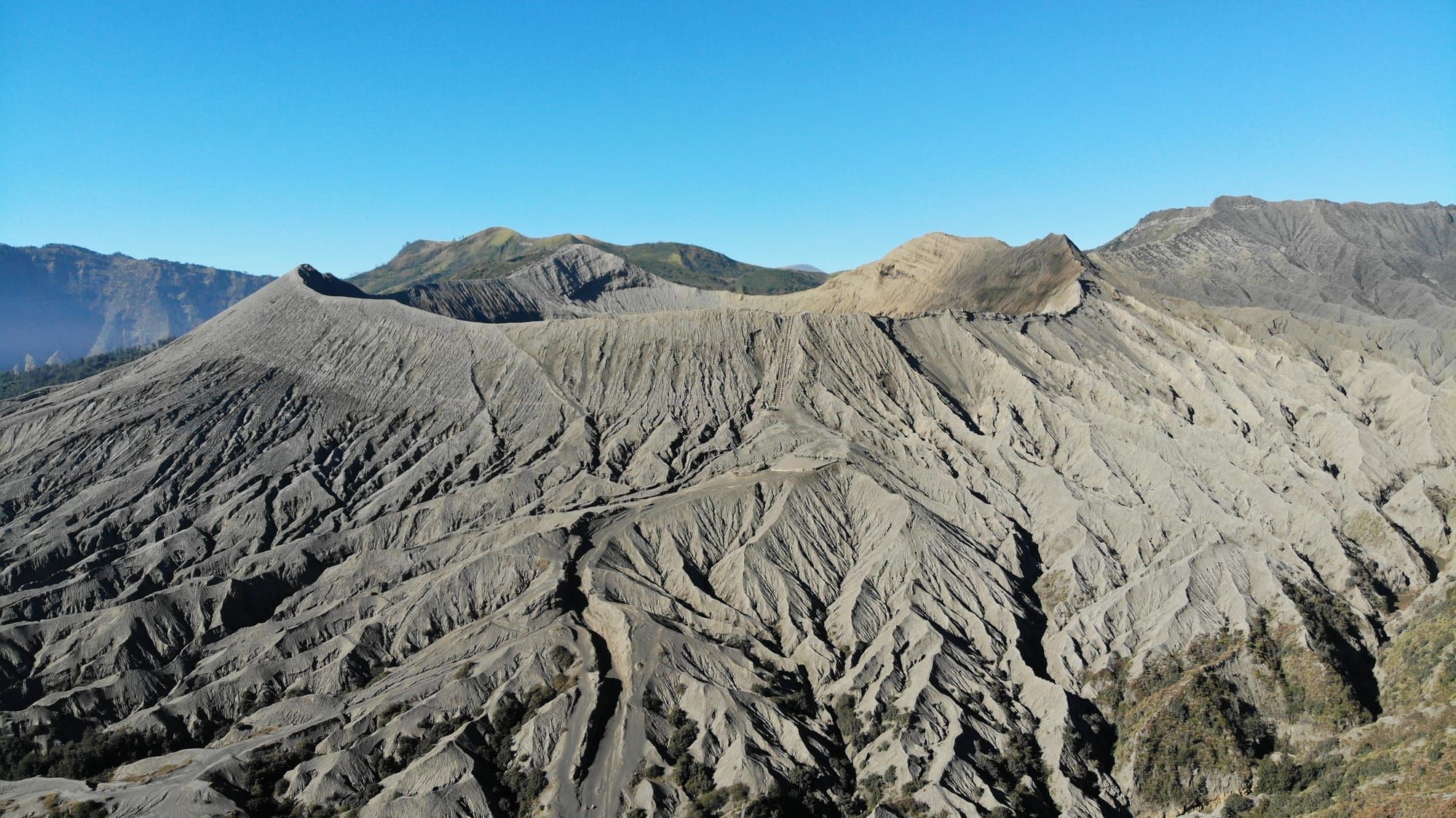
Adorned with a smoking cone, an ocean of grey sand, and a sunrise that looks borrowed from another planet, Mount Bromo will make you forget — for about ten minutes — that you dragged your children out of bed at 3 AM. Then the cold and the dust will remind you, and you'll laugh about it later anyway.
We visited Bromo in August 2019 as a family of four, travelling alongside two other families — old engineering-school friends with kids of similar ages. The youngest in our group was six, the eldest around ten. This is our honest take on doing the Bromo sunrise with children: what worked, what didn't, what we'd pack differently, and whether it's actually worth the early alarm. Spoiler — it is. But there's a version of this trip that's much easier than the one we did, and a version that's a little harder than people on Instagram make it look.
> Bookings: Some of the links in this article are affiliate links. This means that if you choose to make a booking, we will receive a small commission at no extra cost to you. Thank you!
Where Bromo Sits — And Why You Bother
Mount Bromo is in the Bromo Tengger Semeru National Park, in East Java, roughly four to five hours by road from either Surabaya (to the north) or Malang (to the southwest). It's not the tallest volcano in the park — that honour goes to Semeru, which puffs away in the background of every photo you'll take — but Bromo is the showstopper. A perfect grey cone, ringed by a flat caldera of volcanic sand called the Sea of Sand (Laut Pasir), and surrounded by a horseshoe of cliffs that make for one of the most famous sunrises in Southeast Asia.
The reason people get out of bed at three in the morning is simple: at dawn, the sun rises behind the cones, the caldera fills with mist, and for about twenty minutes you stand above a sea of cloud watching volcanoes float. It's stunning, and you don't want to miss it. If you only do one volcano in Java, this is the one.
Getting to Cemoro Lawang from Malang
We came up from Malang. The night we arrived, the city was decked out in dozens of vertical floral display boards — papan bunga — lit up along the main streets, each one offering "Happy Wedding" or "Selamat" greetings to a couple we'd never meet. It was nearly midnight, the kids' faces were pressed against the van windows, and we drove past these glowing flower walls one after another like a strange, friendly welcome.

We slept one night at INNI Homestay in Malang to break the journey and let the kids decompress, then hired a private chauffeur the next afternoon for the run up to Cemoro Lawang. The road climbs steadily out of the lowlands, past terraced fields and small Probolinggo-side villages, and the light goes golden in that late-afternoon way that makes everyone in the car stop bickering for a few minutes.
Where to sleep in Cemoro Lawang: Gubuk Ndeso Bromo and the other guesthouses along the caldera-edge lane are the closest you'll get to the 3 AM jeep meeting point (a five-minute walk vs a 90-minute drive up from Probolinggo). Map shows live availability for both villages — pick Cemoro Lawang for sunrise, Probolinggo for warmth.


The great news is that with three families and luggage to coordinate, going the private-driver route was both cheaper per head and a lot saner than trying to wrangle public minibuses with six children. If you're a couple or solo, the shared minibus from Malang or Probolinggo will do the job for a fraction of the price.
For the Surabaya → Cemoro Lawang leg we ended up paying our homestay's contact driver about €25-35 one-way. If you'd rather lock the price in before you fly — and avoid the airport-arrivals haggle — comparing on Discover Cars Surabaya (SUB) is the cleanest way to get a fixed-fee transfer with a child seat option, which most local quotes won't include in the headline price.
Where to Sleep — Cemoro Lawang vs Probolinggo
You have two real options. Sleep in Probolinggo (warmer, lower, more restaurants) and do a longer pre-dawn drive, or sleep in Cemoro Lawang — the village perched right on the caldera rim — and roll out of bed almost directly into your jeep. With kids, we picked the second option and we'd do it again.
We stayed one night at Gubuk Ndeso Bromo, a small guesthouse a short walk from the caldera edge. Wooden walls, thick blankets, and a thermos of hot water waiting on arrival — the owners already know exactly what the morning is going to feel like. It is cold up there at 2,200 metres — even in August — and the rooms have no heating, so the blankets do the work. The kids loved it. We slept in our base layers.
The 3 AM Wake-Up: What Sunrise Actually Looks Like
The alarm goes off at 3 AM. Someone is already brewing coffee in the guesthouse kitchen. You pull every layer you own over your pyjamas (yes, the pyjamas — there is no time and no point), strap headlamps on the kids, and stumble outside into the cold. A line of Toyota Land Cruisers is idling in the lane, headlights catching steam from people's breath. Six children, six parents, three jeeps, one driver each. We piled in.
The drivers know the choreography. They convoy up the back of the caldera rim on a road that climbs sharply through the dark, headlights bouncing off pine trees, until they deposit you at the King Kong Hill / Mount Penanjakan viewpoints. Then comes the bit nobody warns you about: the last hundred metres to the ridge are on foot, uphill, in the dark, surrounded by hundreds of other people doing the exact same thing. The kids gripped our hands. One small red jacket disappeared and reappeared in the crowd.

And then the sky starts. First a thin orange strip behind the cones, then a band of pink, then — suddenly — light pouring sideways over the caldera and turning the cloud-sea below into something that does not look real.


The kids went quiet, which on a family trip is the highest possible compliment. Around 6 AM, once the colour show fades, the crowd starts thinning and the jeeps roll back down toward the caldera floor.
Crossing the Sea of Sand on Horseback
Down at the base of Bromo, the Tenggerese guides wait with their horses on the edge of the Sea of Sand. The flat, grey, ash-covered plain stretches across the caldera toward the cone, and from the jeep drop-off it's about a 30-minute walk to the stairs that climb to the crater rim — or 15 minutes on horseback. With six-year-old legs and ten-year-old legs in the mix, we paid for horses.
Here's how it works: each child sits on a horse, the Indonesian guide walks alongside holding the lead rope, and the parents walk behind. It's not a "ride" in the cowboy sense — the guides are in control the whole time, the pace is slow, and the horses know the route in their sleep. The kids loved it. We walked, mostly, and took photos.

At the foot of Bromo, you dismount and climb the (numerous, steep) stairs to the crater rim. The view from up there is genuinely something else — a smoking, hissing crater on one side and the whole caldera spread out below on the other.


Is It Worth It With Children?
Yes. With caveats. Here's our take after doing it with two of our own kids and four others in tow.
What works with children: the choreography is short. You're up at 3 AM, but by 9 AM you're back at the guesthouse eating breakfast with the whole thing behind you. The horses are a hit. The crater rim feels like an adventure but doesn't require any real climbing skill — just patience on the stairs. The whole experience is well within reach of a six-year-old who has had a decent night's sleep the day before.
What to flag honestly: it is cold before dawn. We're talking single-digits Celsius with wind, well below freezing-cold to a small child who lives in the tropics. The dust on the Sea of Sand is real — fine, grey, kicked up by every horse and jeep — and our kids' eyes and throats were definitely irritated by the end of the morning. (Foreshadowing: this is why we'd recommend a buff or face covering long before you'd think you need one. We learned that lesson properly at our next stop, Ijen, where the dust and sulphur situation got out of hand.) And finally, the crater rim has no real railing on the inside — you're a few metres from a long drop into a steaming hole. Hands held, no exceptions.
Practical Tips
A few things we'd tell our 2019 selves:
If you'd rather not arrange a jeep, driver and Cemoro Lawang night separately, a guided Bromo sunrise tour from Malang packages the whole thing into one booking — useful when you're coordinating two or three families.
If you'd rather not stitch the jeep, the Cemoro Lawang night and the park permit together yourself, the shared Bromo sunrise tour out of Surabaya covers the midnight pickup, the 4WD slot and the entrance ticket in one booking — useful when you're juggling tired kids on the back-half of a long Indonesia trip. From Malang side, the private jeep tour with entrance fee included is the option we'd pick now over arranging through a homestay — same cost, but the jeep is reserved in your name (no last-minute swap to a fuller car).
- Pack warm layers — more than you think. Beanie, gloves, thick socks, fleece, windbreaker. For the kids especially. Bromo is at altitude and pre-dawn is genuinely cold. - Bring a headlamp per person. The walk from the jeep up to the viewpoint ridge is in the dark, on a rough path, in a crowd. Headlamps are non-negotiable with children. - Bring a buff, bandana or dust mask. For the horseback section across the Sea of Sand. We didn't, and we regretted it. - Book the jeep through your guesthouse. This is the easiest path. Cemoro Lawang guesthouses all coordinate with the jeep co-operative; you just tell them the night before. Expect to pay per jeep (not per person), which makes it economical for families and a group of three families splitting jeeps three ways. - Plan two nights minimum. One in Malang or Probolinggo to break the road journey, one in Cemoro Lawang for the sunrise itself. Three nights is more relaxed. - Ages. From around six upward, with engaged parents, our experience was that it works. Below that, the cold and the early start become hard to justify.
More to Explore in Southeast Asia
If Bromo is part of a bigger Southeast Asia loop — which it usually is — here are a few of our other family guides that pair well with a Java leg. Pick the ones that fit your route and bookmark the rest for later.
FAQ
How old should kids be for the Bromo sunrise? From around six upward, in our experience, with the right layers and a parent committed to the cold. Below that, the 3 AM wake-up, the altitude and the temperature start to outweigh the reward.
Do we need a guide? Not really. The jeep driver is your guide, in practice. Book the jeep through your guesthouse the night before and they handle the convoy, the viewpoint stop and the drop at the Sea of Sand. The horseback section is also fully guided by the Tenggerese horse owners.
How long do we need at Bromo? A minimum of one night in Cemoro Lawang, which gets you the sunrise the next morning and the horseback crossing. Add a buffer night in Malang or Probolinggo on either side so the road days don't crush you.
Is it safe with the crater being active? Bromo is monitored constantly and access is closed during eruption phases. When the crater rim is open, it's safe — but watch the kids near the unfenced inner edge, and check current status before you commit to dates.
If you're planning a similar route — Malang to Bromo to Ijen, or weaving Java into a bigger Southeast Asia trip — we'd be glad to swap notes. Drop a comment, send a message, and we'll tell you everything we figured out the long way around.