
Teide National Park: Complete Guide to Tenerife's Volcano
From the lava trails of Samara to the cable car that lifts you to 3,555m and the rock pillars of Roques de García, Teide National Park is Tenerife's most extraordinary landscape — and one of the most rewarding volcanoes to explore in the world.

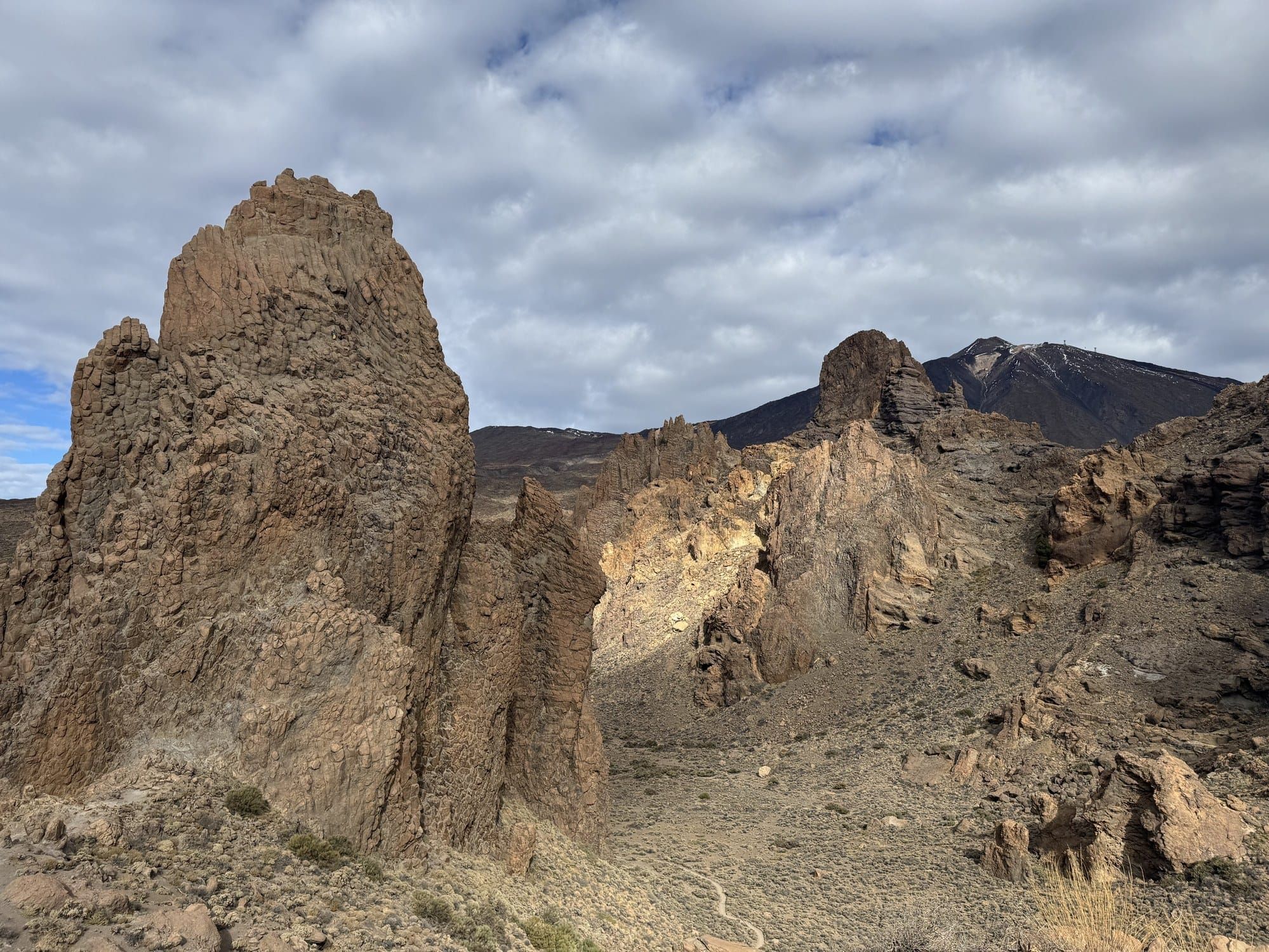
Rising 3,715 metres out of the Atlantic, Teide is not only Spain's highest peak — it is the third-largest volcano on Earth when measured from its ocean base, and the undisputed heart of Tenerife. Stand anywhere on the island and, sooner or later, your eyes will climb to its snow-dusted summit. Step inside the caldera, and the landscape stops feeling Spanish altogether: it's pure Mars, with a side of pine forest.
We spent two full days inside Teide National Park during a winter family road trip across Tenerife, and it quickly became the part of the island everyone kept talking about. From the lava trails of the Samara hike to the cable car that whisks you above the clouds, here's our complete guide to making the most of the park — with or without kids.
Bookings: Some of the links in this article are affiliate links. This means that if you choose to make a booking, we will receive a small commission at no extra cost to you. Thank You!
Hike the Lava Fields of Montaña Samara
Before heading anywhere near the summit, give yourself a soft introduction to the park with the Samara circular trail. Starting just off the TF-38 at around 2,000 metres, this two-to-three-hour loop wraps around Montaña Samara and Montaña La Botija — two young volcanic cones that last erupted in the geologically recent past.
The trail is almost entirely unpaved, with deep beds of black lapilli underfoot, crossed by pine-fringed craters and scattered lava blocks. You won't climb the main cone, but you skirt it closely enough to feel its weight, and the views back toward a snow-capped Teide and Pico Viejo are some of the best in the park.
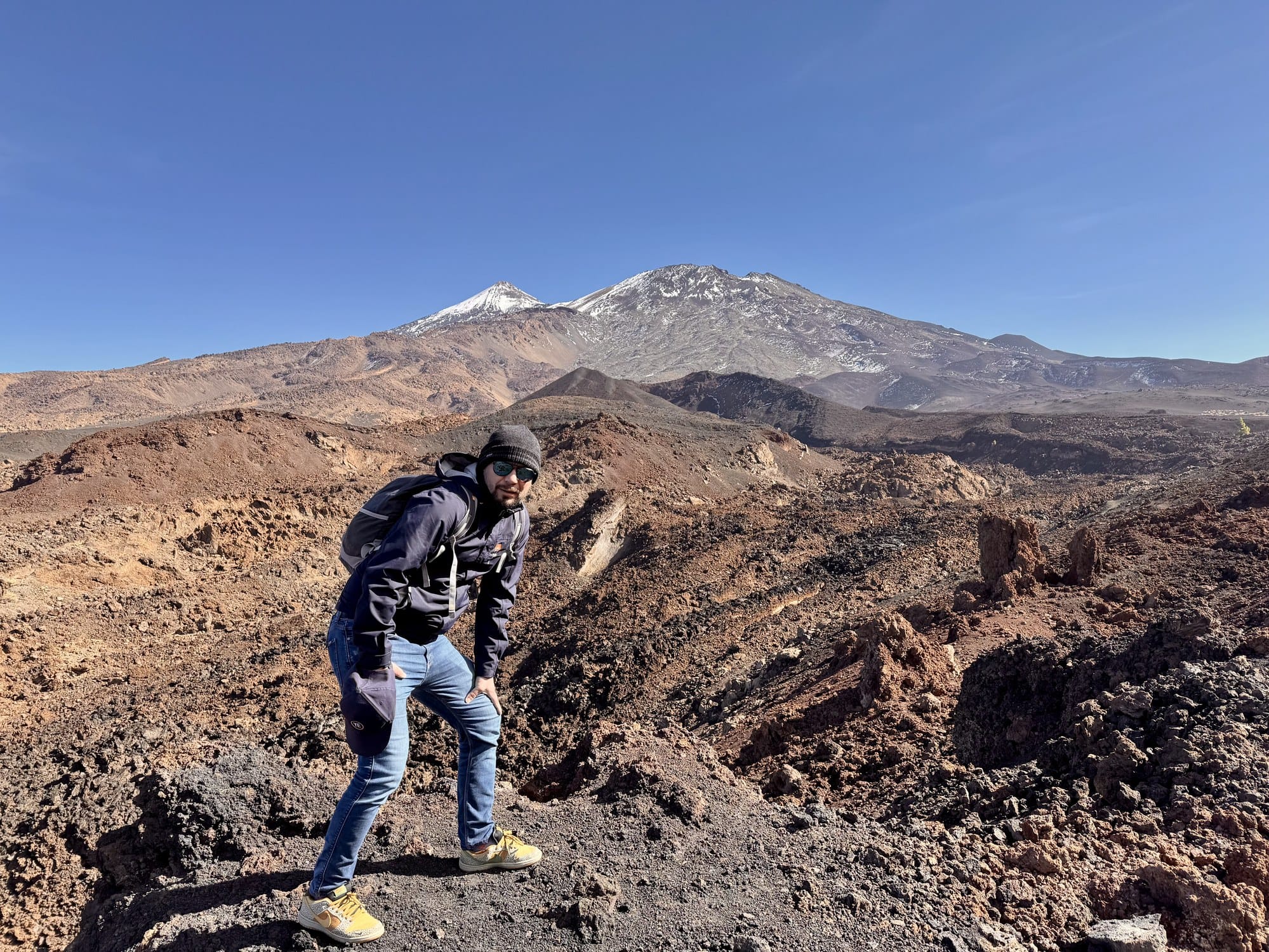
This was the loop we picked for the whole extended family on our first day inside the park, and it worked well across three generations. The gradient stays gentle, there are plenty of places to stop for a snack, and the scenery keeps changing — one minute you're walking through silvery Canary pines, the next you're standing on a bed of red cinder that looks like it hardened yesterday.

Step Inside the Samara Crater
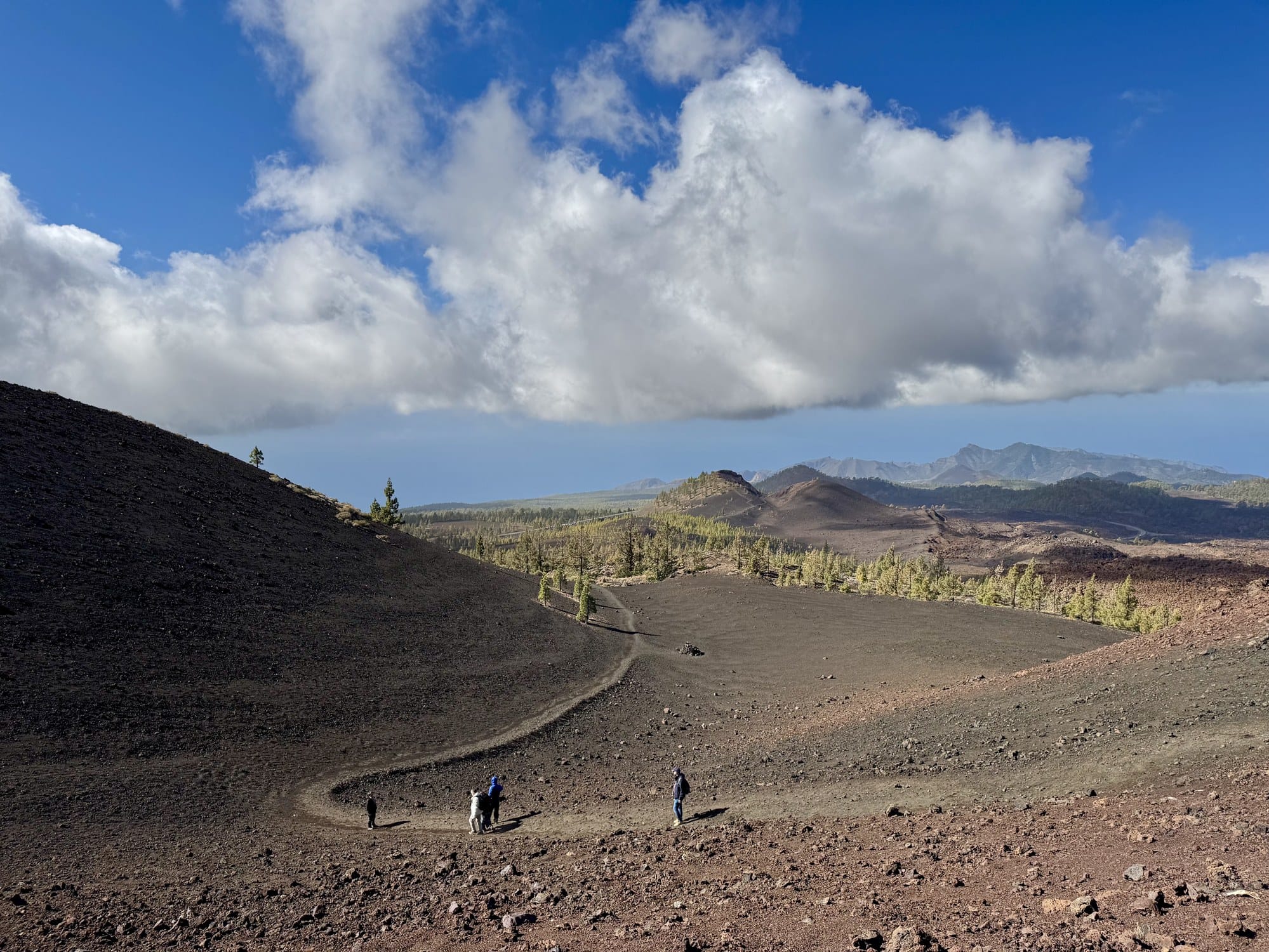
The best moment of the loop is when the path dips briefly into the shallow bowl of the Samara crater itself. The floor is covered in loose black ash, dotted with hardy Canary pines that somehow find a way to grow out of the rock, and the silence — especially in winter, outside the summer crowds — is almost total.
Walk Around the Chinyero Viewpoint
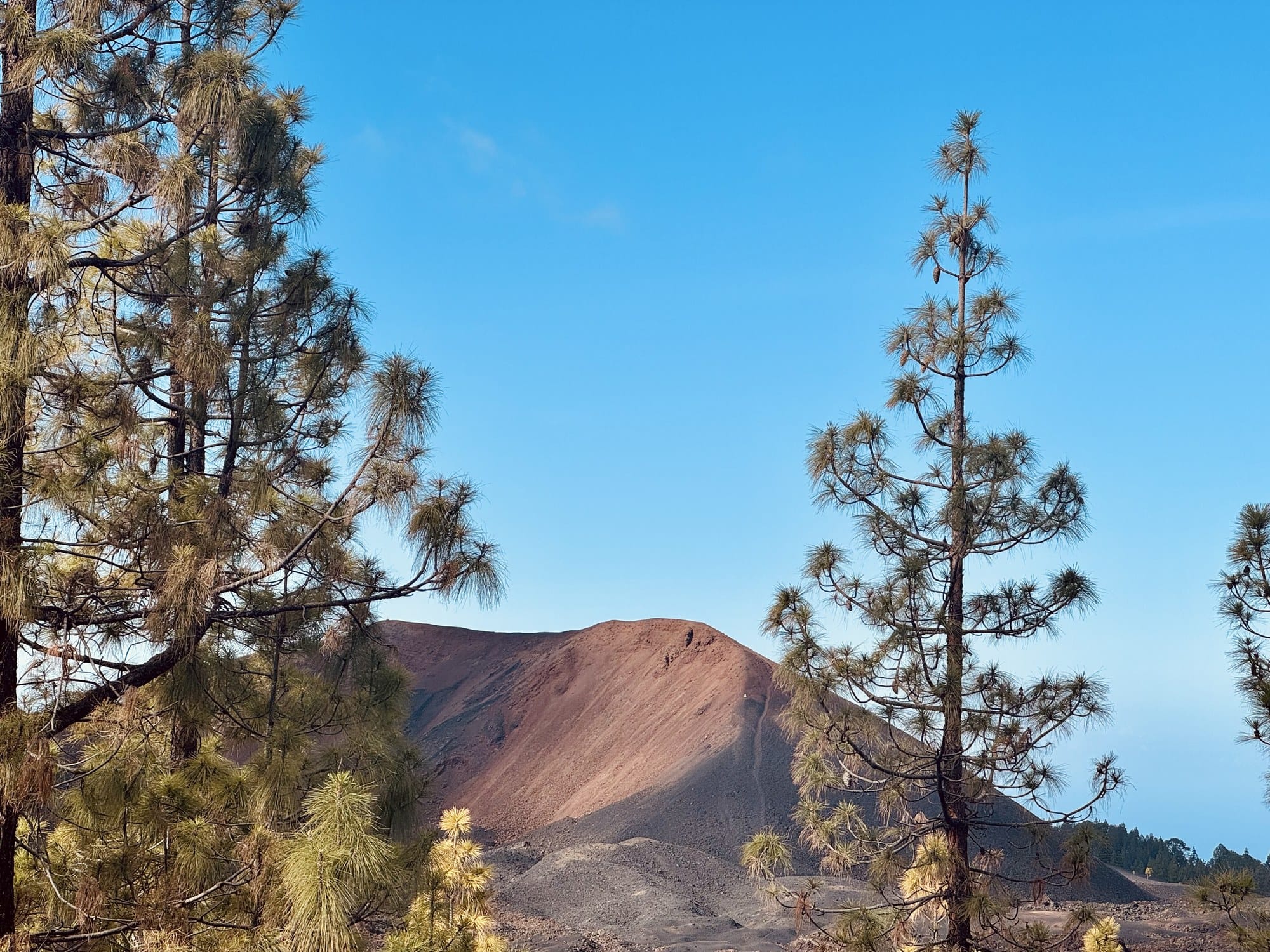
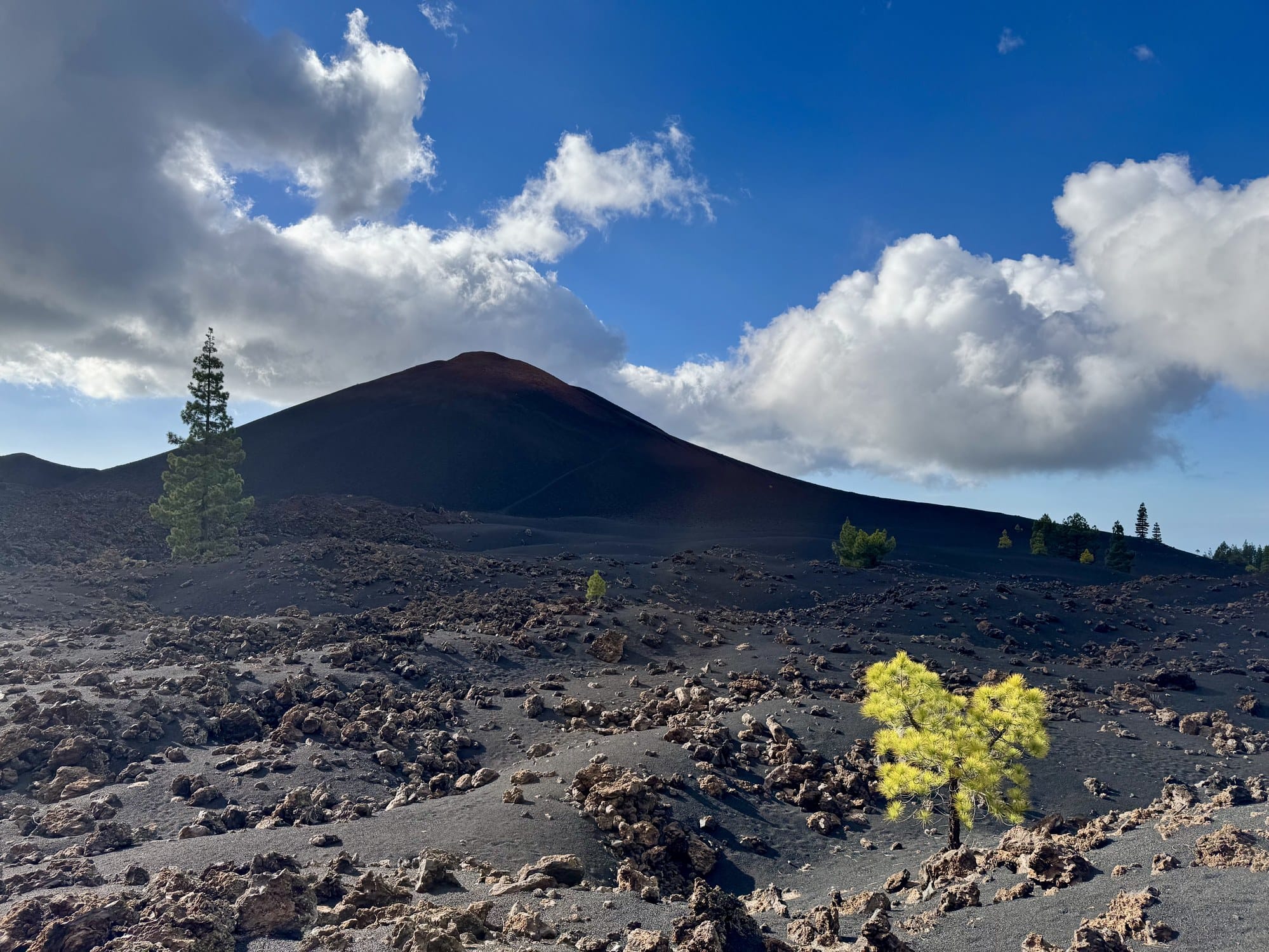
A short drive west of Samara, the Chinyero viewpoint offers the best free seat to Tenerife's most recent eruption. Chinyero last blew in 1909 — a brief, non-deadly event that still gets an annual pilgrimage from the town of Santiago del Teide — and the black lava field that surrounds it is eerily well-preserved.
From the parking, a short trail leads through twisted Canary pines to an open vantage point on the red cone itself. There's no ticket, no gate, no queue — just a volcano that last spoke 115 years ago.
Walk the Roques de García Circuit
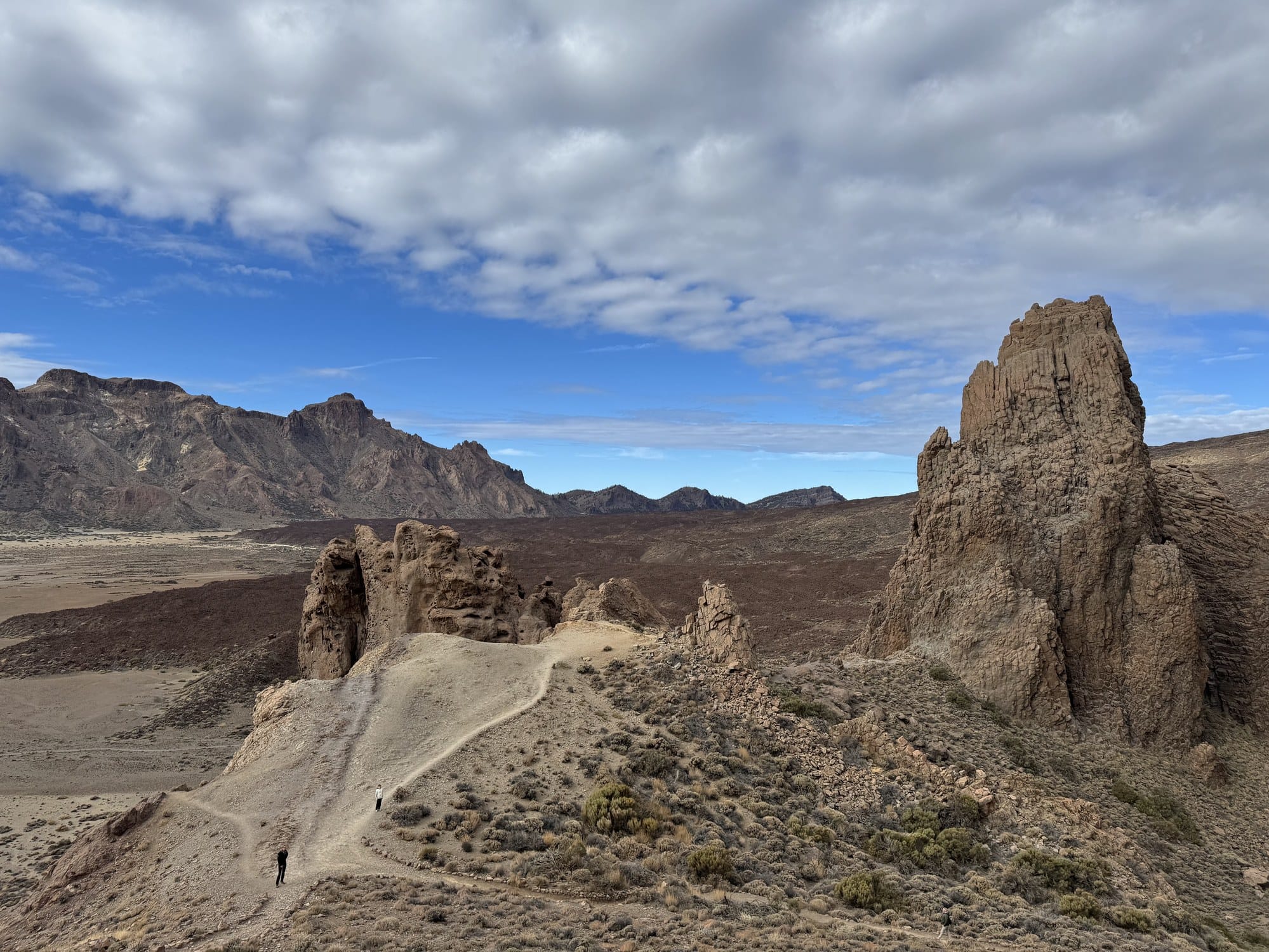
If you only do one thing inside the main caldera, make it the Roques de García loop. This 3.5 km circular trail starts across the road from the Parador de Cañadas del Teide and is, by a long stretch, the most photographed walking trail in the park — with good reason.
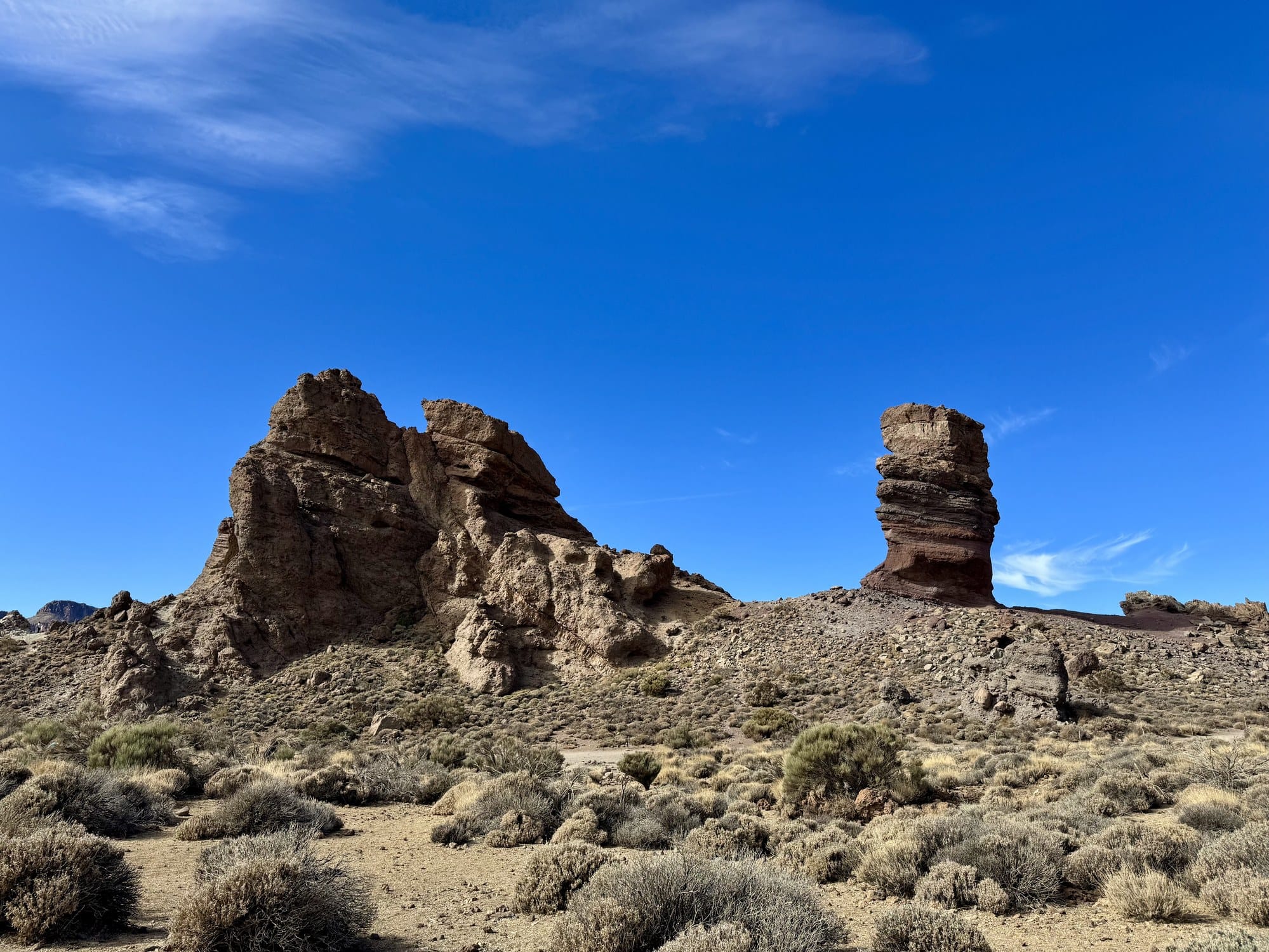
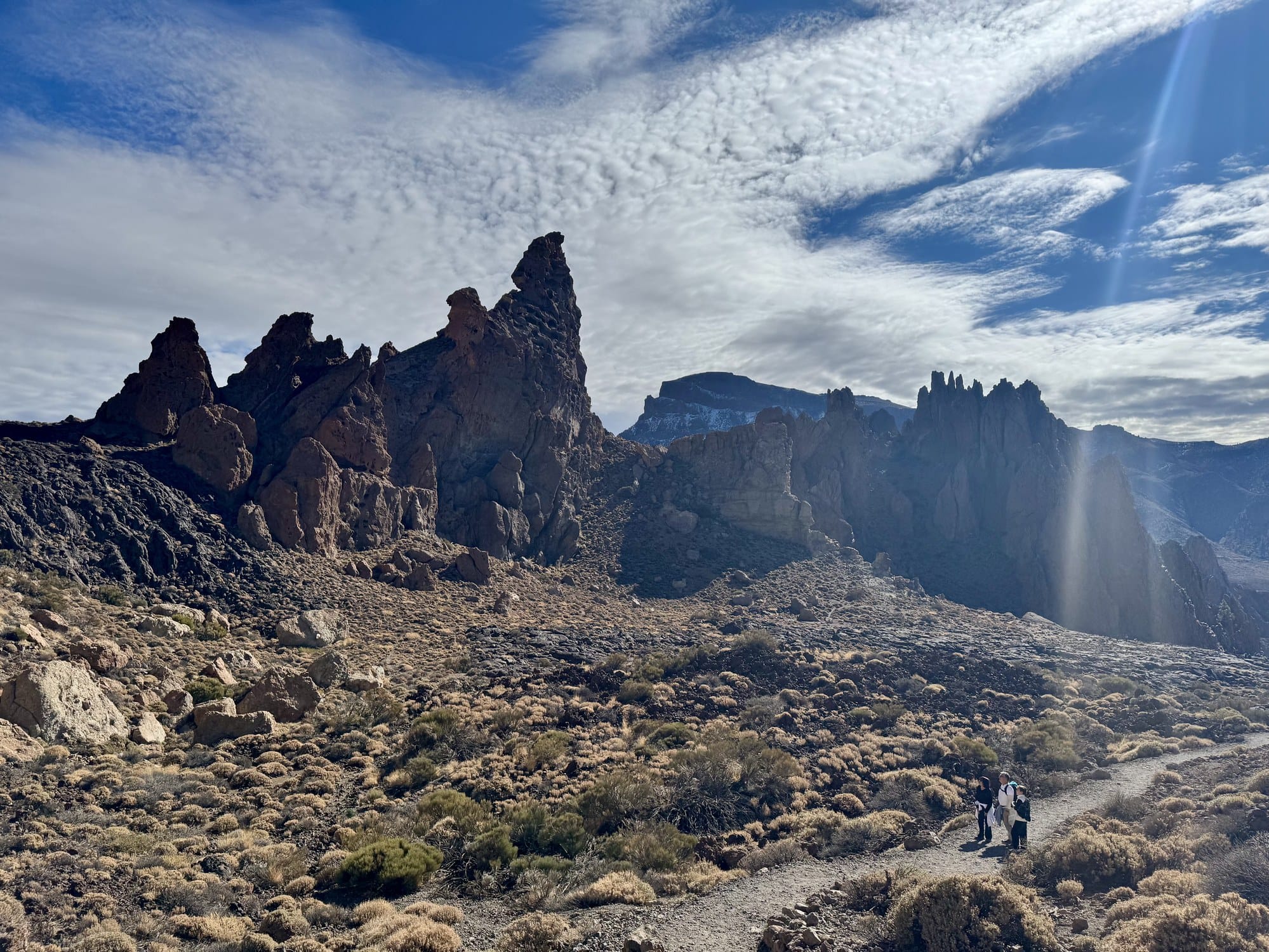
The path winds around a series of massive, weathered rock pillars sculpted from hardened magma. Each one has a name — Roque Cinchado, La Catedral, El Torrotito, La Ruleta — and each catches the light differently depending on the time of day. We started right after the hotel breakfast, and the caldera below the trail was still in shadow while the first sun caught the highest spires. Magic.
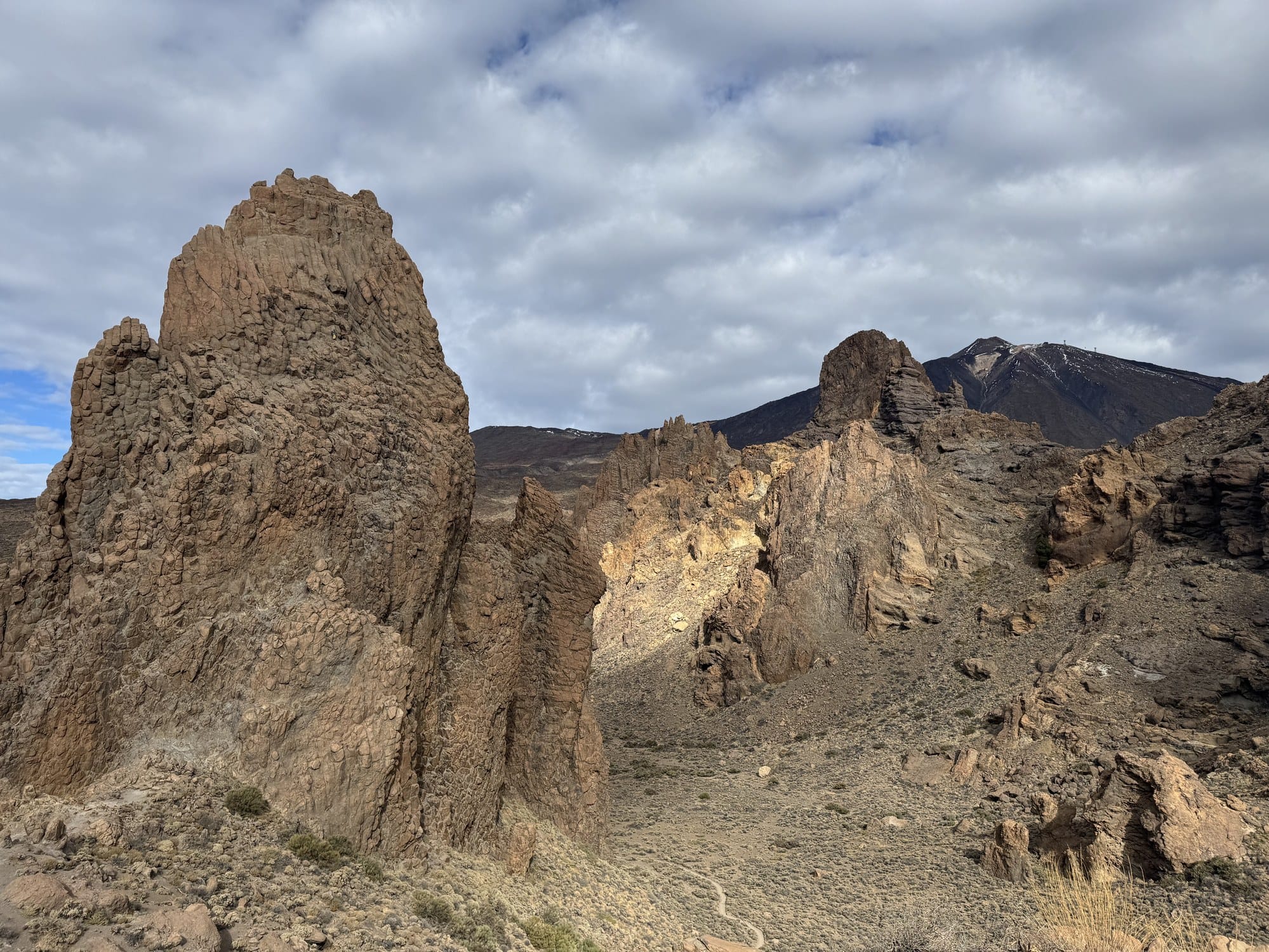
The Roque Cinchado — sometimes called the Árbol de Piedra, or "Stone Tree" — is the one most people come to see. It appeared for years on the back of the old 1,000-peseta note and has become a kind of unofficial emblem of the park. Stand at the Mirador de la Ruleta at the northern end of the loop and you get the textbook view: the Roque in the foreground, Teide rising directly behind.
Take the Full Loop, Not Just the Viewpoint
Most visitors stop at the Mirador de la Ruleta for a quick photo and leave. You don't want to be one of them. The full loop takes around 90 minutes at a relaxed pace and drops you onto the silent caldera floor, where the rock pillars tower above and the lava field of Las Cañadas stretches away toward the Montaña Guajara ridge.
Ride the Cable Car to 3,555 Metres
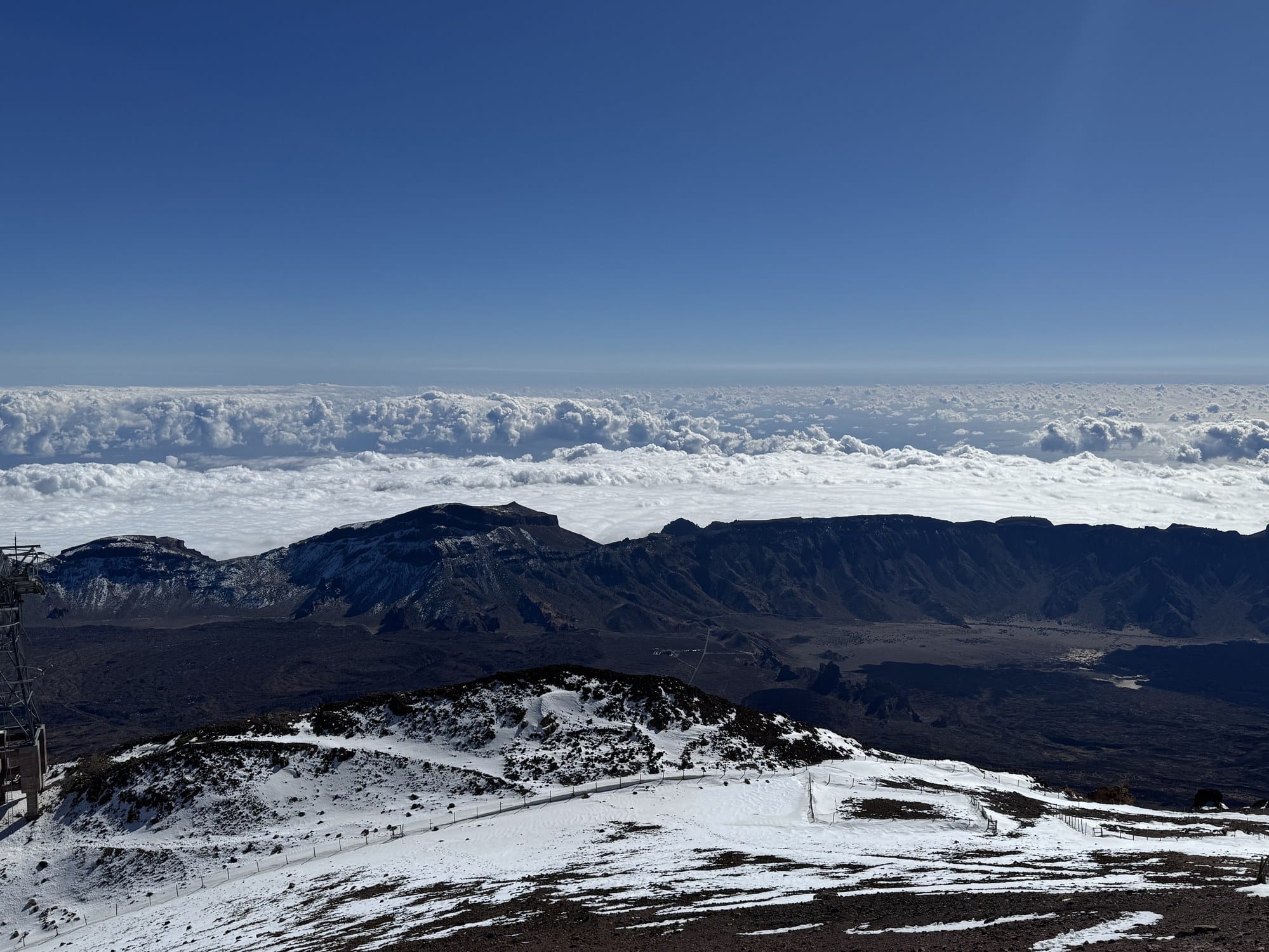
You can't legally walk to the very summit of Teide without a special permit — the Spanish authorities cap the number of daily climbers at around 200 — but the Teide cable car with pick-up from your hotel does most of the work for you. In just eight minutes, it climbs 1,200 metres to the upper station at La Rambleta (3,555m), leaving just 170 metres of vertical to the actual summit.
We booked our slot two weeks in advance for a around midday departure in early January, and the timing was perfect: clear weather at the summit, patchy clouds filling the caldera below, and enough afternoon light to linger on the terraces up top. The cable car does sell out regularly in high season, so reserving ahead is the difference between a seamless day and a wasted drive up.
What the Summit Views Look Like
From the upper station you can walk three short marked trails — no climbing permit required — that loop around the summit crater and out to two viewpoints. The Mirador de La Fortaleza looks north across the caldera toward La Orotava and, on a clear day, La Palma and La Gomera floating offshore. The Mirador de Pico Viejo faces west toward Teide's twin volcano and the immense crater it left behind.
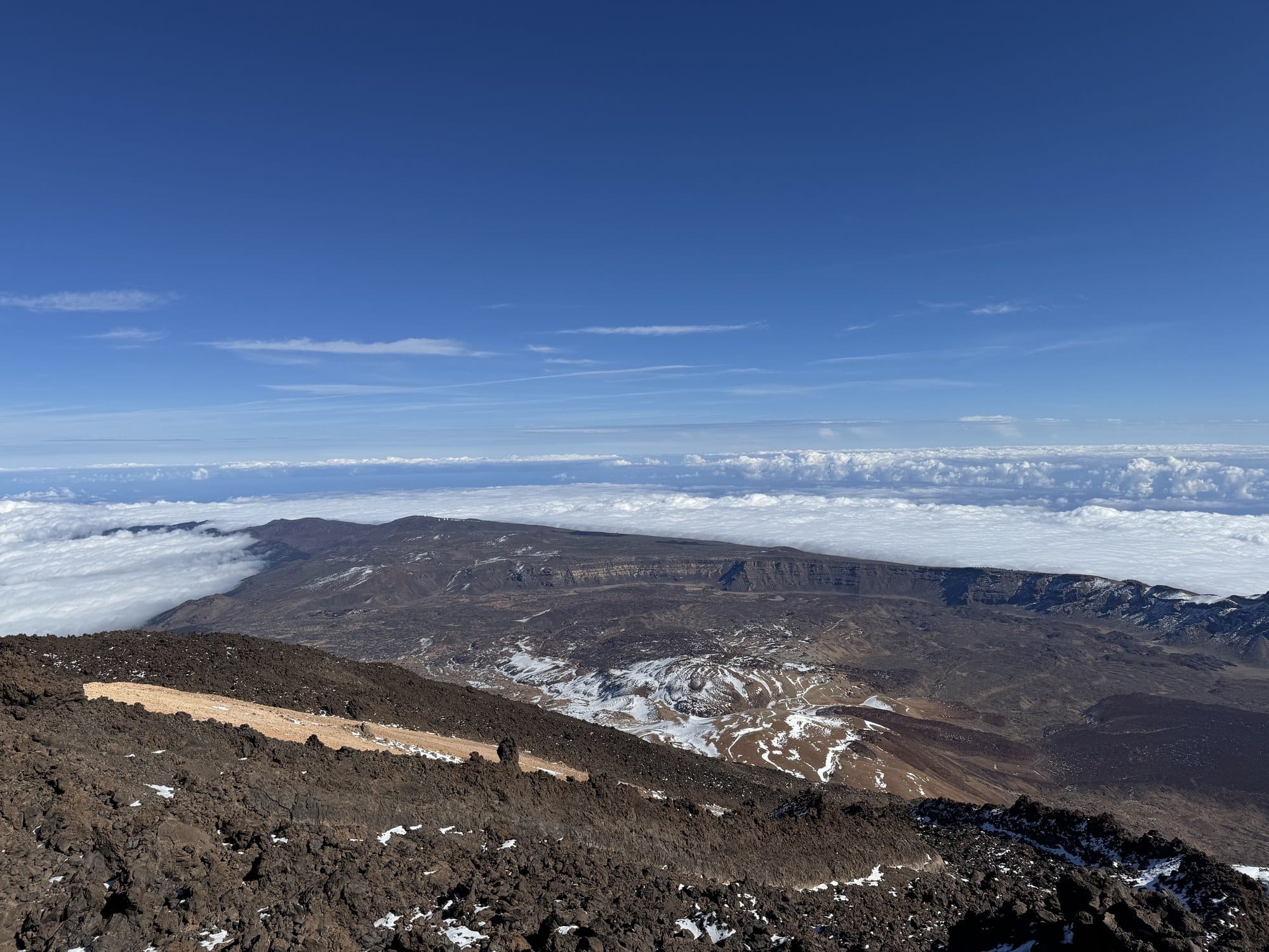
A practical heads-up: at 3,555 metres, the air pressure is already around 65% of sea level. Walk slowly, drink water, and skip the cable car entirely if anyone in your group has a heart condition. Our kids, aged 11 and 15 on this trip, felt the thin air within ten minutes — nothing dramatic, but enough to cut their sprint-uphill ambitions down to size.
Walk the Lunar Landscape of Minas de San José
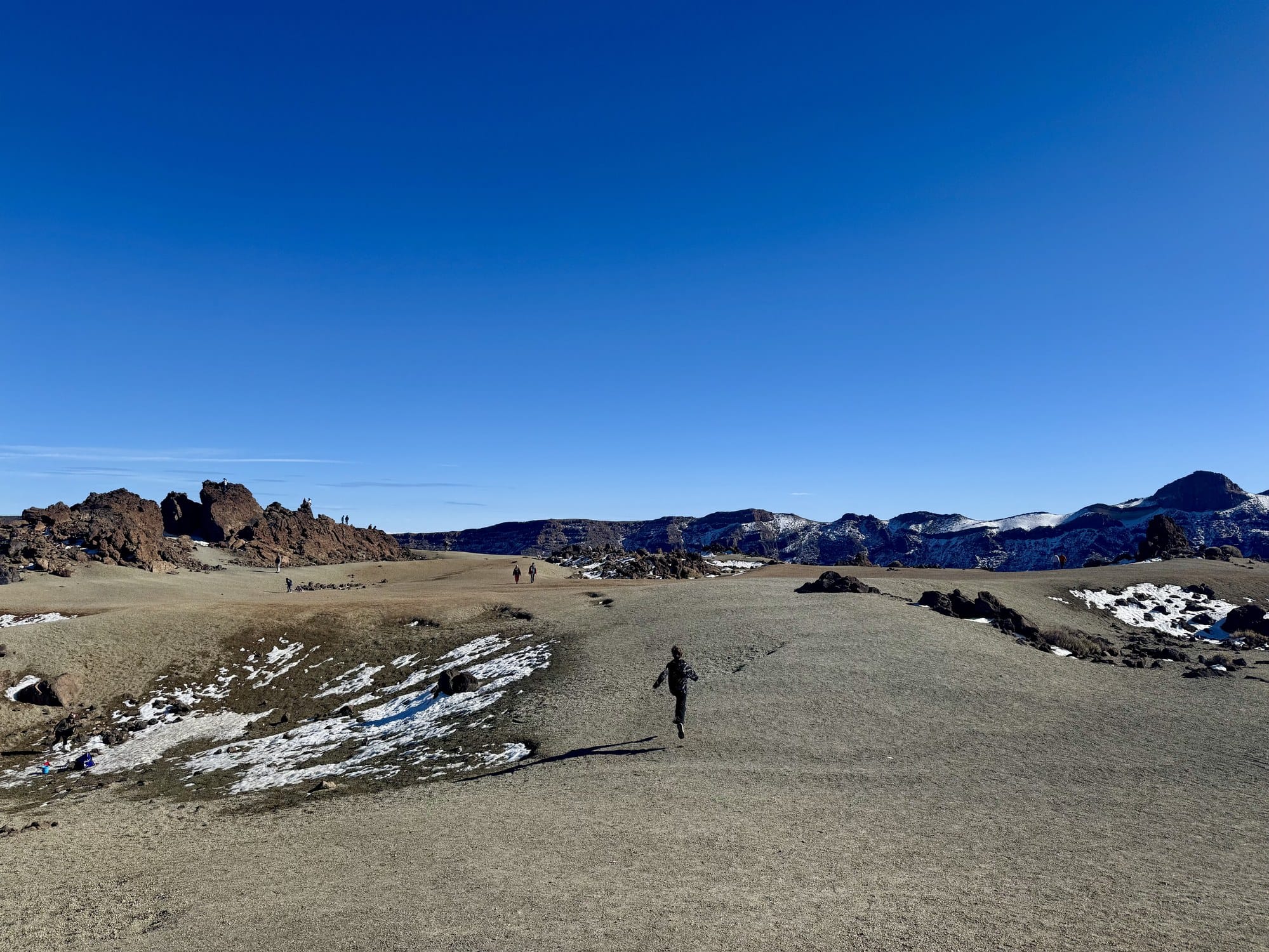
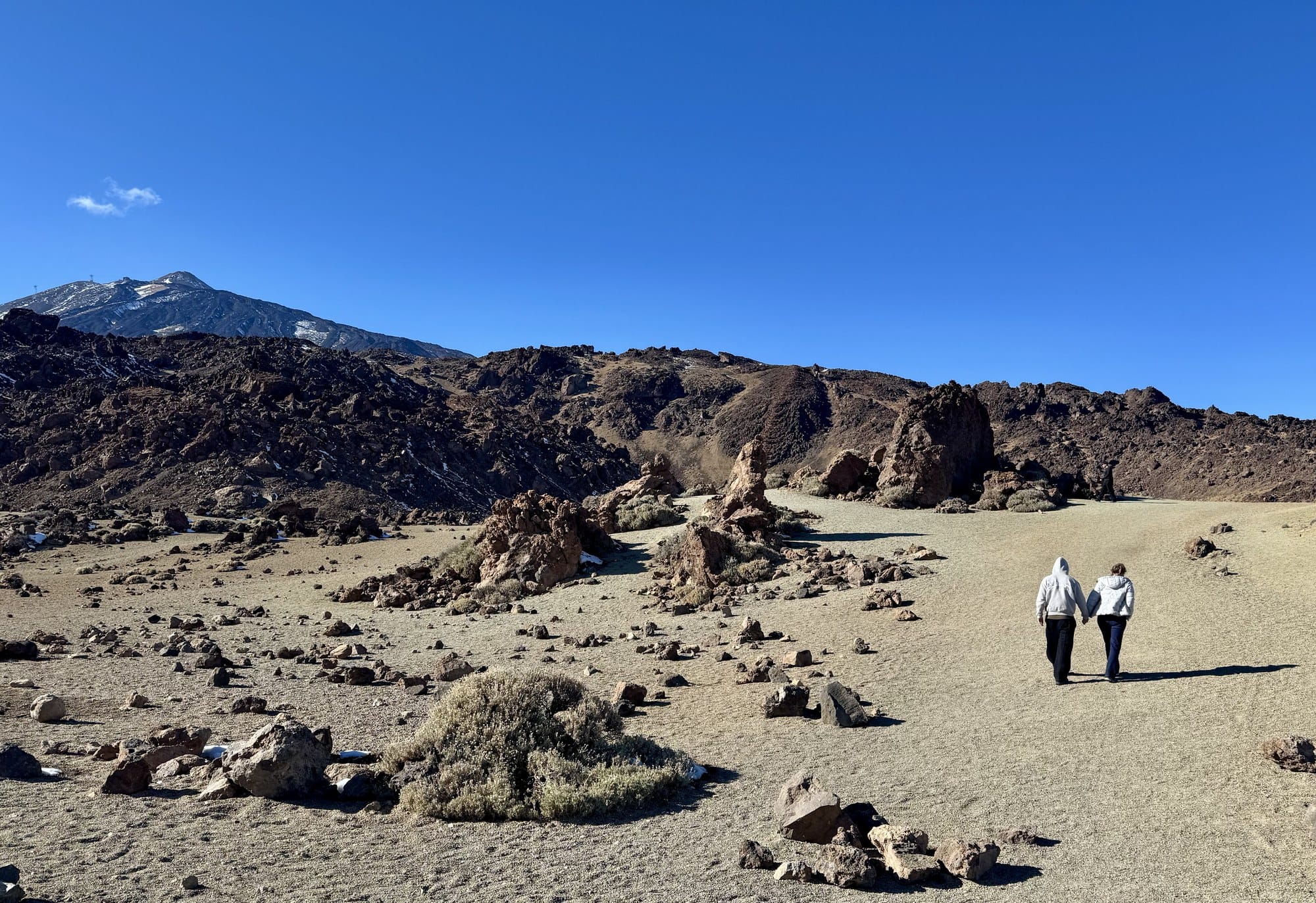
Between Roques de García and the cable car base, a short stop at the Minas de San José is one of the most otherworldly experiences inside the park — and by far the most underrated. The "mines" are a vast expanse of white pumice and volcanic sand that contrasts almost painfully with the red and black lava around it.
Children, in particular, will love this place. The sand is deep, soft, and safe, and the open dunes invite running. Our youngest didn't stop until he reached the far end.
Watch Sunset from Mirador de Chipeque
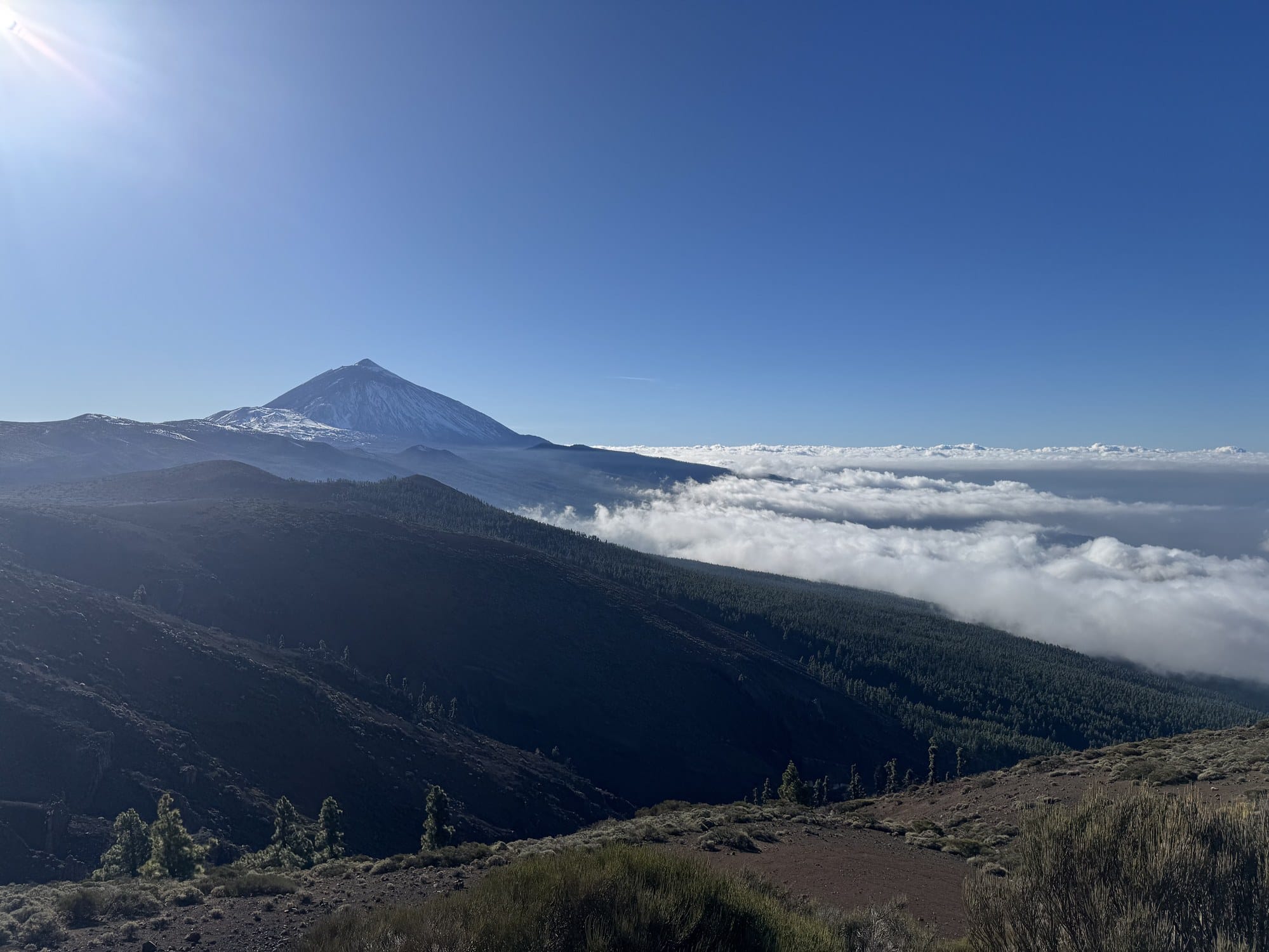
Before you leave the caldera on your second day, climb out via the TF-24 toward La Laguna — the "old" road that crosses the Anaga highlands through a ghostly pine forest. Twenty minutes from the park boundary, the Mirador de Chipeque appears on your left, and the view that opens up there is the best sunset view of Teide on the whole island.
From Chipeque you look down on a sea of clouds that pours out of the caldera and spills toward the north coast. Teide rises above it like a perfect black pyramid. On our visit, the light was soft gold by mid-afternoon in early January, and the whole viewpoint was nearly empty.
If you'd rather stay out after dark, the park is one of the best stargazing spots in Europe thanks to its protected night sky. A guided Teide sunset and stargazing experience combines both moments — alpenglow on the summit, then telescopes under a properly black Canary sky.
Planning Your Visit
Getting there: The park is easily reached by rental car from both sides of the island. Allow around 60 minutes from Puerto de la Cruz or Santa Cruz, 75 minutes from Costa Adeje. The roads are narrow, winding, and scenic — take it slow if anyone in the car is prone to motion sickness.
Cable car: Book a cable car slot ahead — the top stations sell out fast in winter and high summer. A round trip costs around €44.
Caldera floor trails: Free, no permit. Roques de García, Samara, Chinyero and Minas de San José all sit right on the road.
Summit crater access: Free but permit-only and strictly limited — apply at reservasparquesnacionales.es a few months ahead for a specific date and time window. If the permit calendar is already full by the time you book, the workaround is a guided summit climb with an official permit included — the guide books the slot for you.
Where to stay: There is only one hotel inside the park — the Parador de Cañadas del Teide — and staying there is the single best way to catch sunrise and the star-filled night sky. If the Parador is fully booked, compare nearby Tenerife hotels on Trip.com and pick a base in La Orotava or Vilaflor for a short morning drive into the park.
Getting around: If you haven't picked up a car yet, compare rental prices at Tenerife airports on Trip.com — a car is essential for Teide.
Best time to visit: Winter mornings (November–February) give you the cleanest air and snow on the summit; spring has wildflowers; summer is crowded and very hot on the caldera floor.
More Tenerife & Volcanic Landscapes to Explore
If Teide left you craving more of Tenerife's wild side, keep going around the island — the Teno peninsula is the second great volcanic landscape, and Anaga the oldest. And if volcanoes are now your thing, there's a lot more lava out there. — Puerto de la Cruz and North Tenerife