
Top Things to Do in Venice: A Complete Travel Guide
Venice delivers on every postcard promise and then some. Here's our complete guide to the best things to do in Venice — from San Marco to Burano, with the timing and insider details that make the difference.

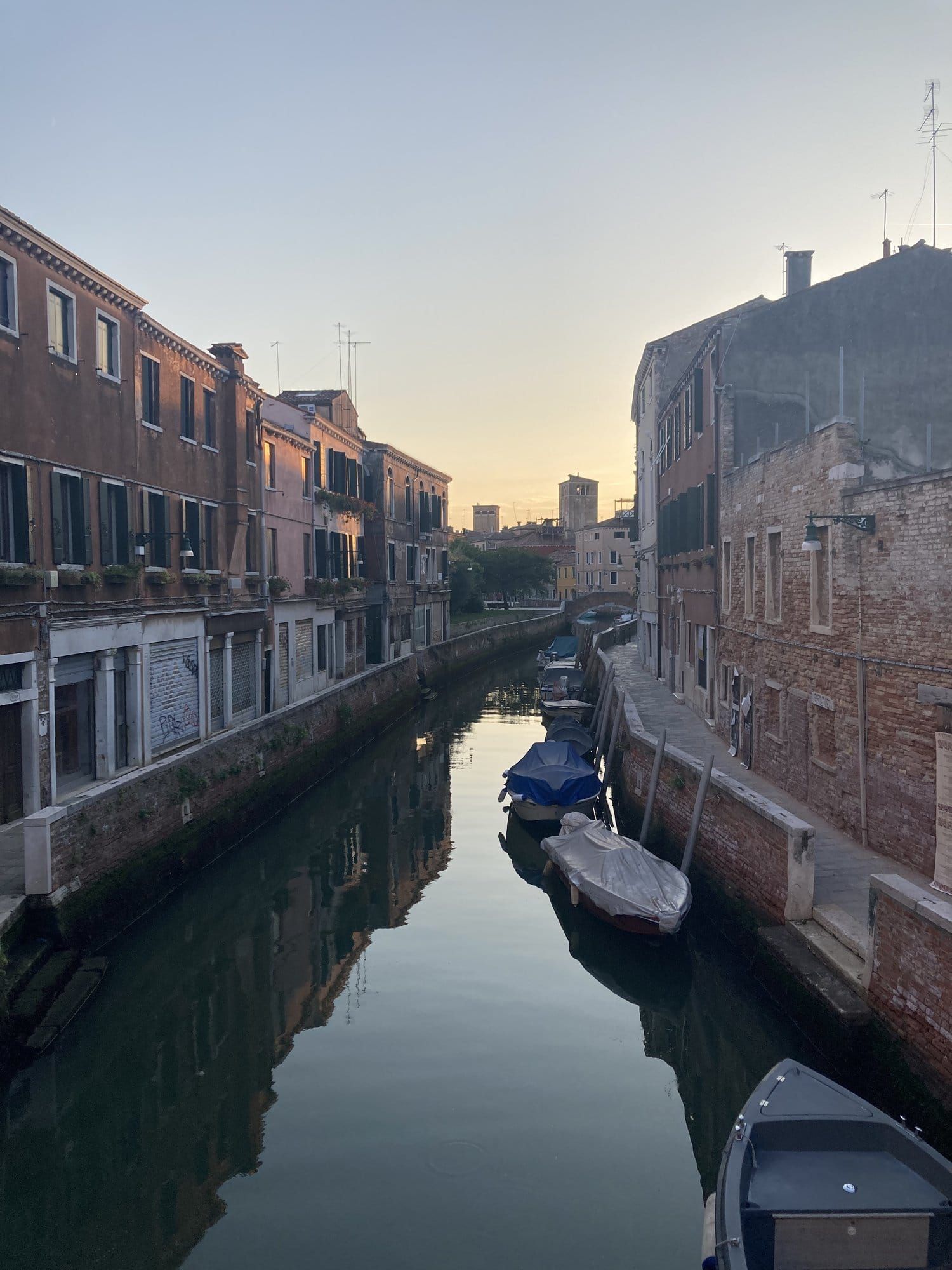
We hit Venice in the mid-morning on Sunday 20 August 2023, stepping off the vaporetto at San Zaccaria and walking the two-hundred metres to the Bridge of Sighs before the morning cruise crowds arrived. The canal below was unusually quiet; a single gondola slid through the white limestone arch of the Ponte dei Sospiri while the Riva degli Schiavoni was still in shadow. We had four days, two parents, two children (aged 10 and 14 at the time), and a campervan parked at a campsite near Castelfranco Veneto, half an hour's train ride inland.
This guide is the distilled version of what we actually walked, ate, and photographed from 19 to 23 August 2023: Venice proper, Burano for half a day, Dorsoduro at golden hour, and the quiet bits of Cannaregio that everyone means when they say the locals still live there. If you're visiting with kids and don't want to queue for ninety minutes to see the Basilica, this is the order we'd do it again in.
A quick calibration. August in Venice is hot, crowded, and extraordinary. We did our major sight-walking between 10:00 and 12:30, retreated for a long lunch indoors, then went back out from about 16:30 until the light died around 20:30. Aperitivo on a Cannaregio canal in the early evening with a glass of wine and a plate of cicchetti (crostini with crab, cheese, small salt fish) is the single memory our kids still ask about a year on.
Bookings: Some of the links in this article are affiliate links. This means that if you choose to make a booking, we will receive a small commission at no extra cost to you. Thank You!
The Bridge of Sighs and San Marco's Canals
Start where Venice starts for most visitors: the Ponte dei Sospiri. The enclosed limestone passage that crossed the narrow canal between the Doge's Palace and the old prison is the most photographed spot in the city for a reason — and the view from the Riva degli Schiavoni footbridge holds up. Mid-morning on a Sunday in August, the water below was in shadow and the stonework was catching the eastern sun; by midday the footbridge had a three-deep crowd of phones. If you want to walk through the corridor from inside (the view through the stone lattice that the convicted saw on their way to the prison), the Secret Itineraries tour of the Doge's Palace is the entry route.
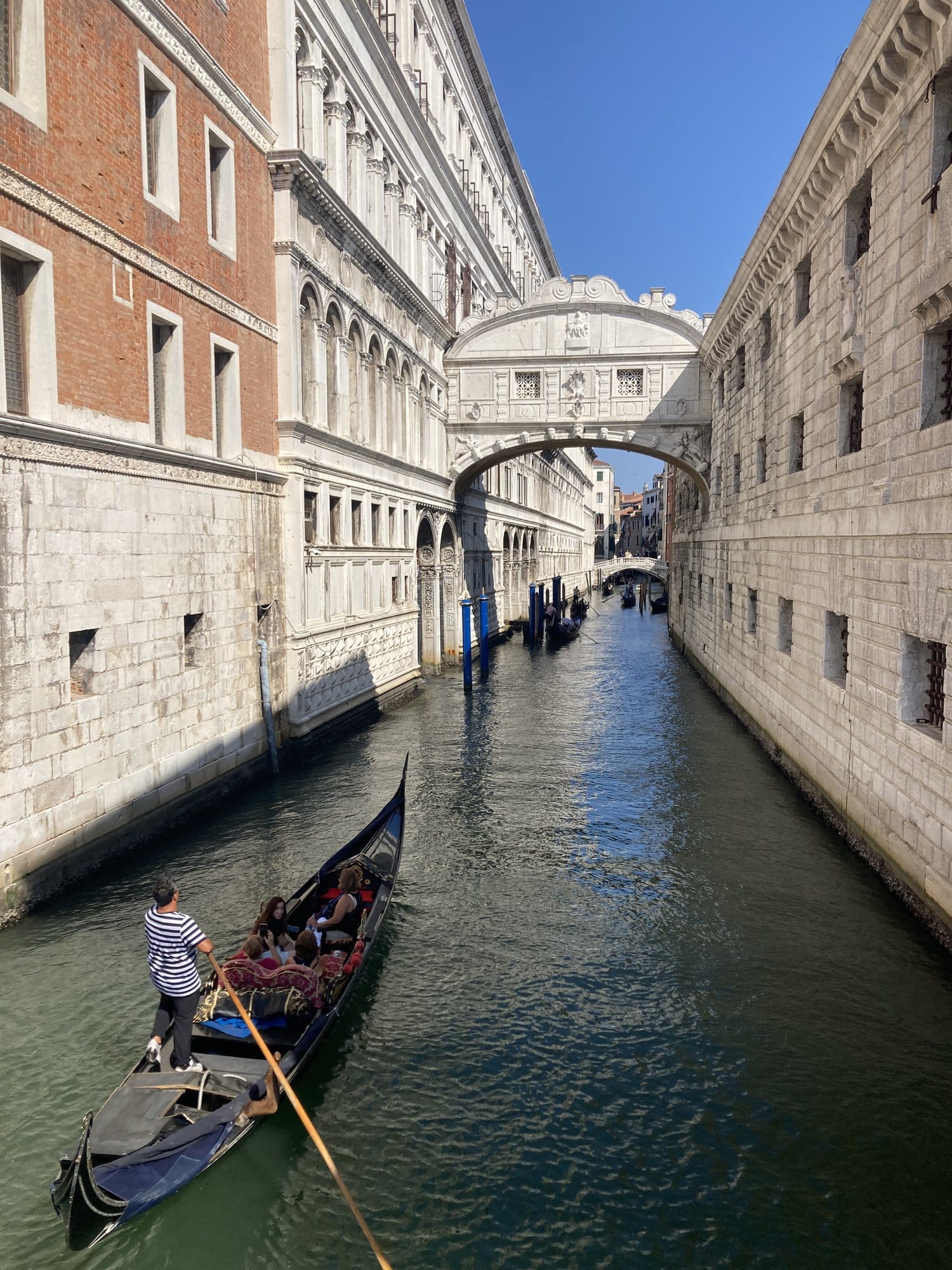
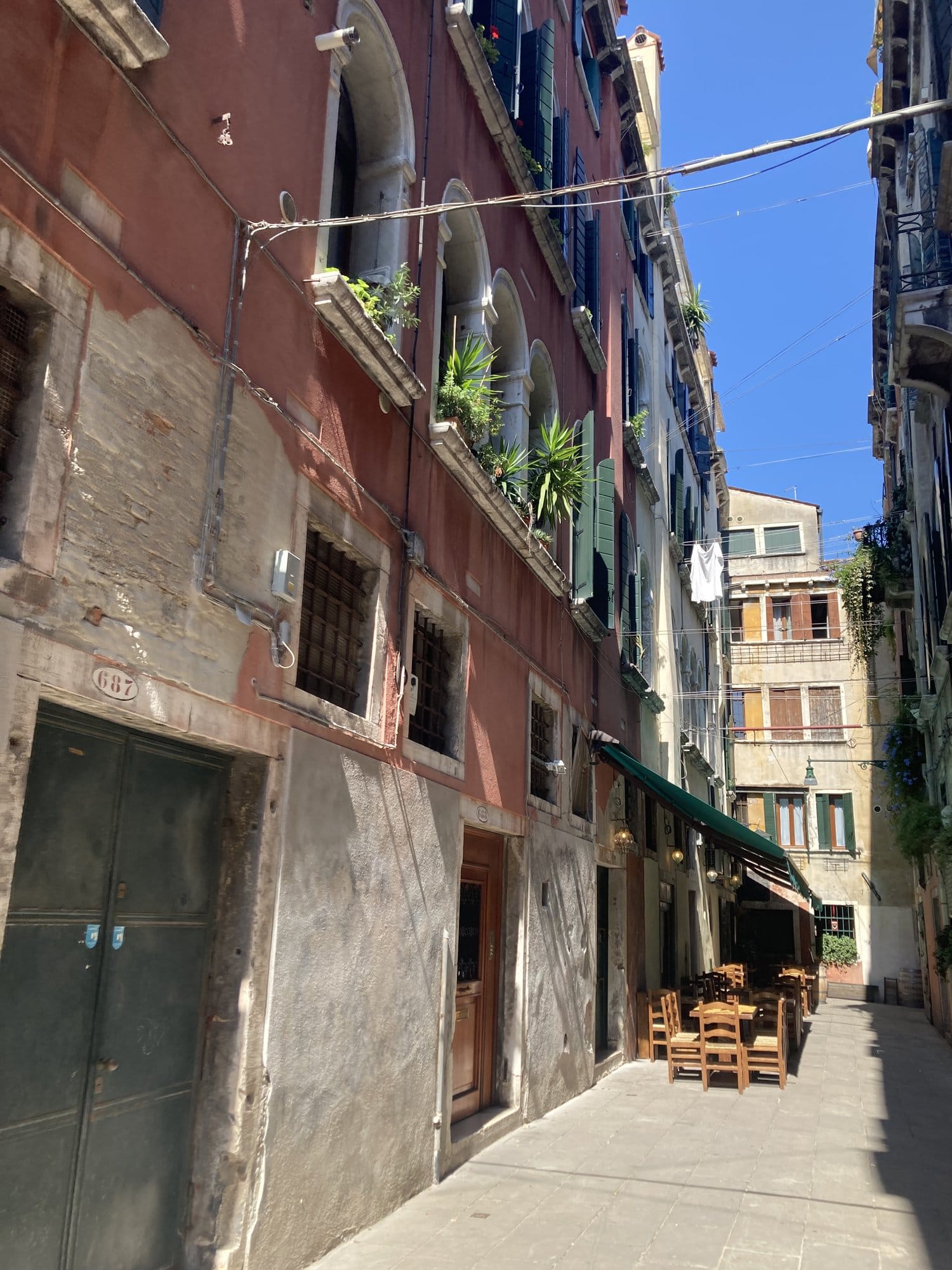
The area around San Marco is dense with canals worth exploring on foot. Walk north from the bridge and you'll find yourself in a quieter network of residential waterways — gondolas resting at their moorings, facades in shades of pink and terracotta, and the kind of reflections that make you stop every thirty meters to take another photo.
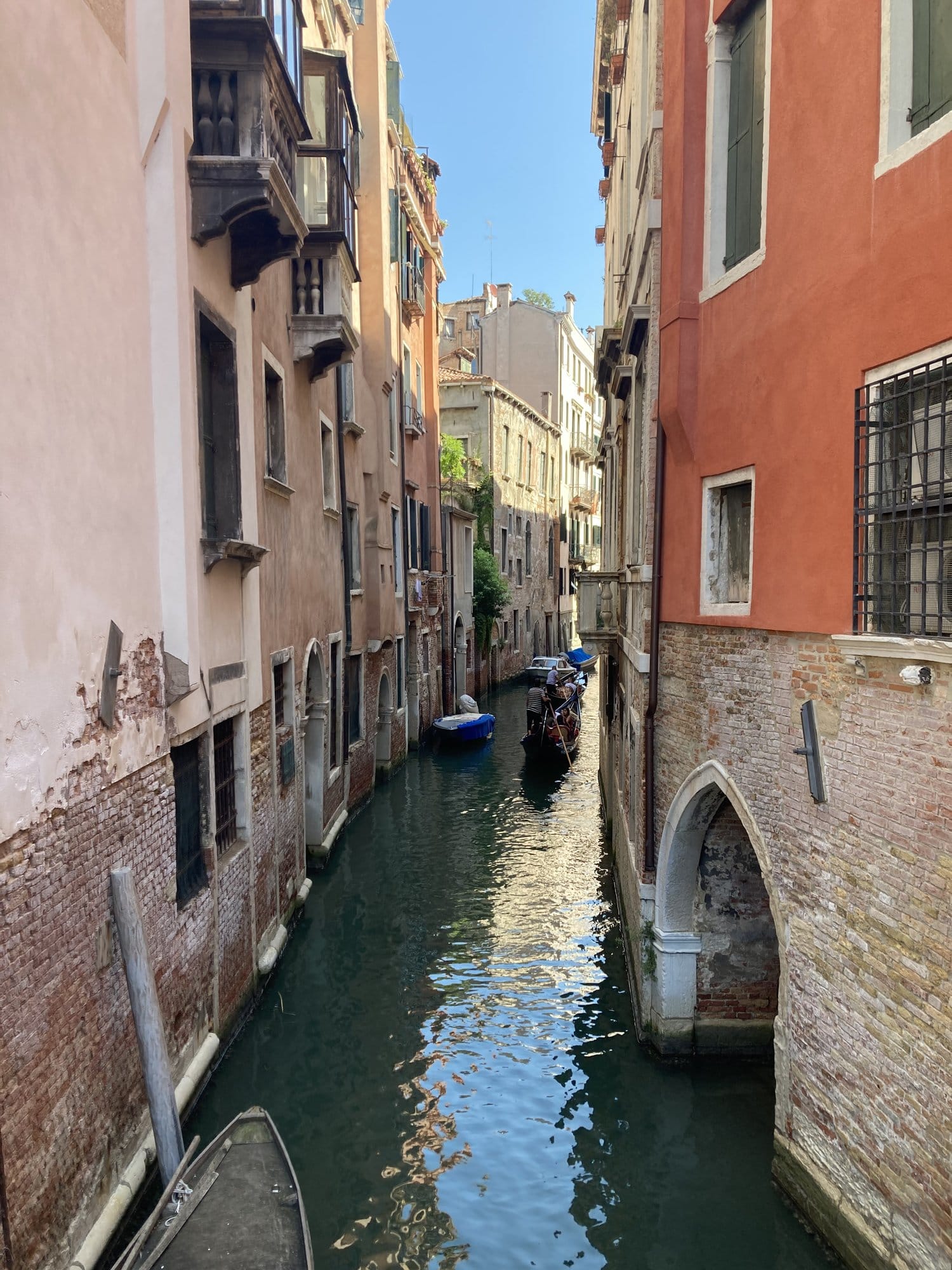
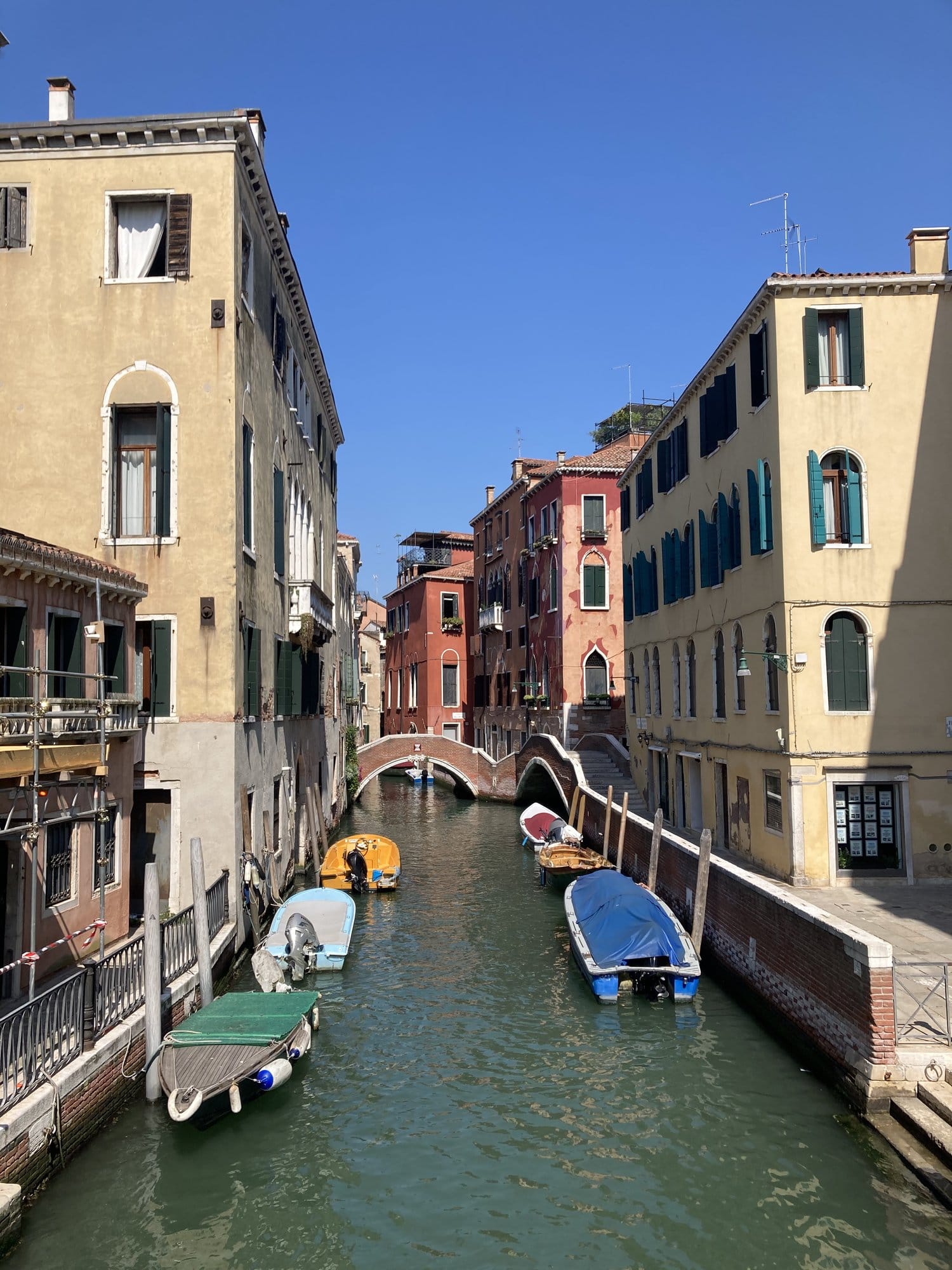
These back canals are where Venice feels most like itself — unhurried, residential, beautiful without trying. Duck into the narrow pedestrian alleys radiating from the canals. The brick-and-ochre buildings with their wrought-iron balconies and trailing plants tell you more about Venetian life than any museum.
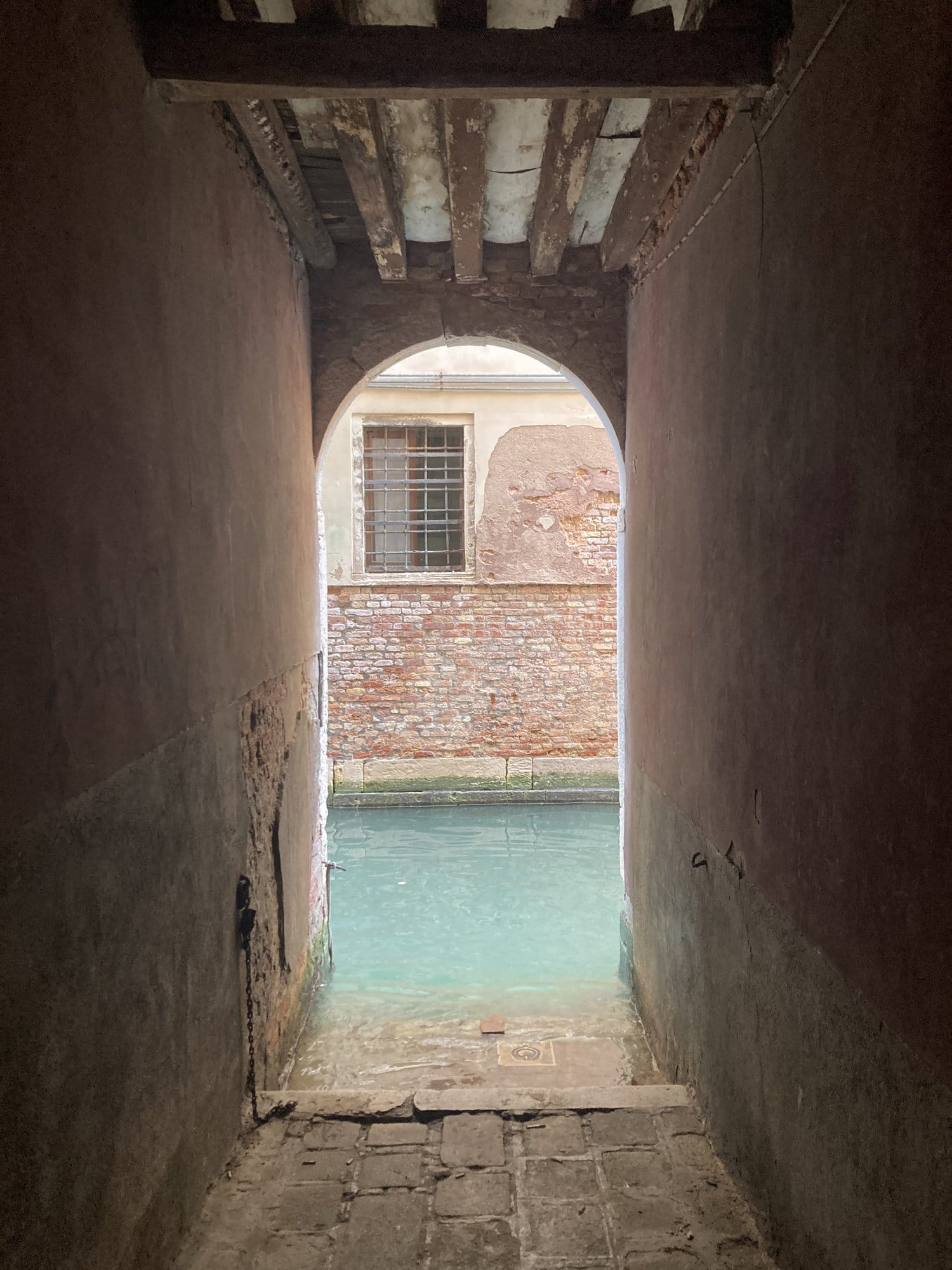
One corner worth the hunt: the vaulted brick archway that opens onto a small side canal near San Marco — cold shadow in the foreground, turquoise water in the rectangle at the end. Ours was IMG_1749 around midday in the alleys north of Calle dei Fabbri; anyone walking the back routes between Rialto and San Marco will hit something close to it. The light is best when the sun is nearly overhead and reflects off the water into the tunnel.
Gondolas and the Venice Experience
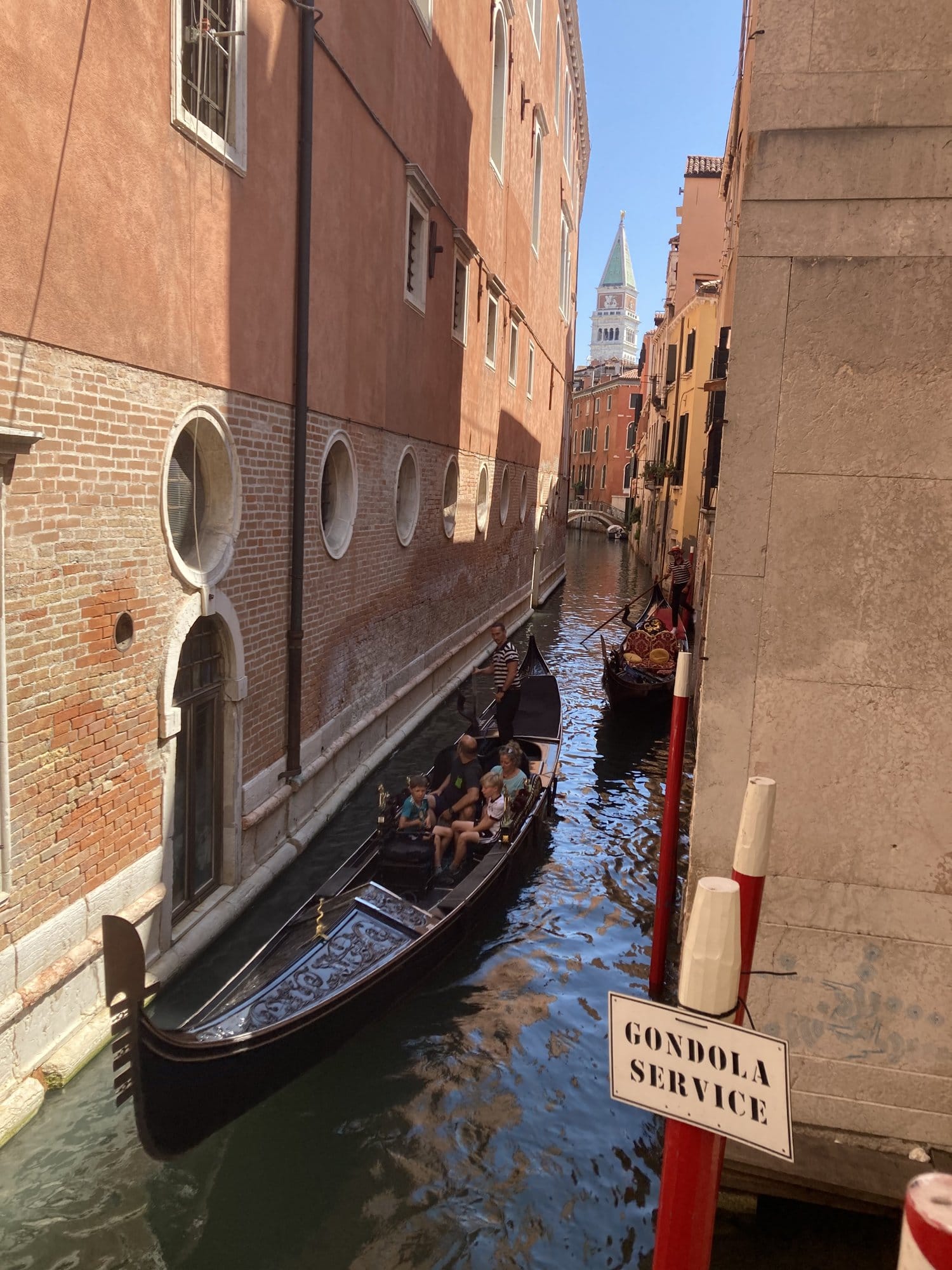
You'll see the gondola stations everywhere — the distinctive "GONDOLA SERVICE" signs with a campanile visible in the background. Whether you ride or just watch, the gondolas define the rhythm of Venice. If you want the experience without the private-ride price tag, a shared gondola ride along the Grand Canal with app-guided commentary is a smart option — you still get the glide through the canals, but at a fraction of the cost.
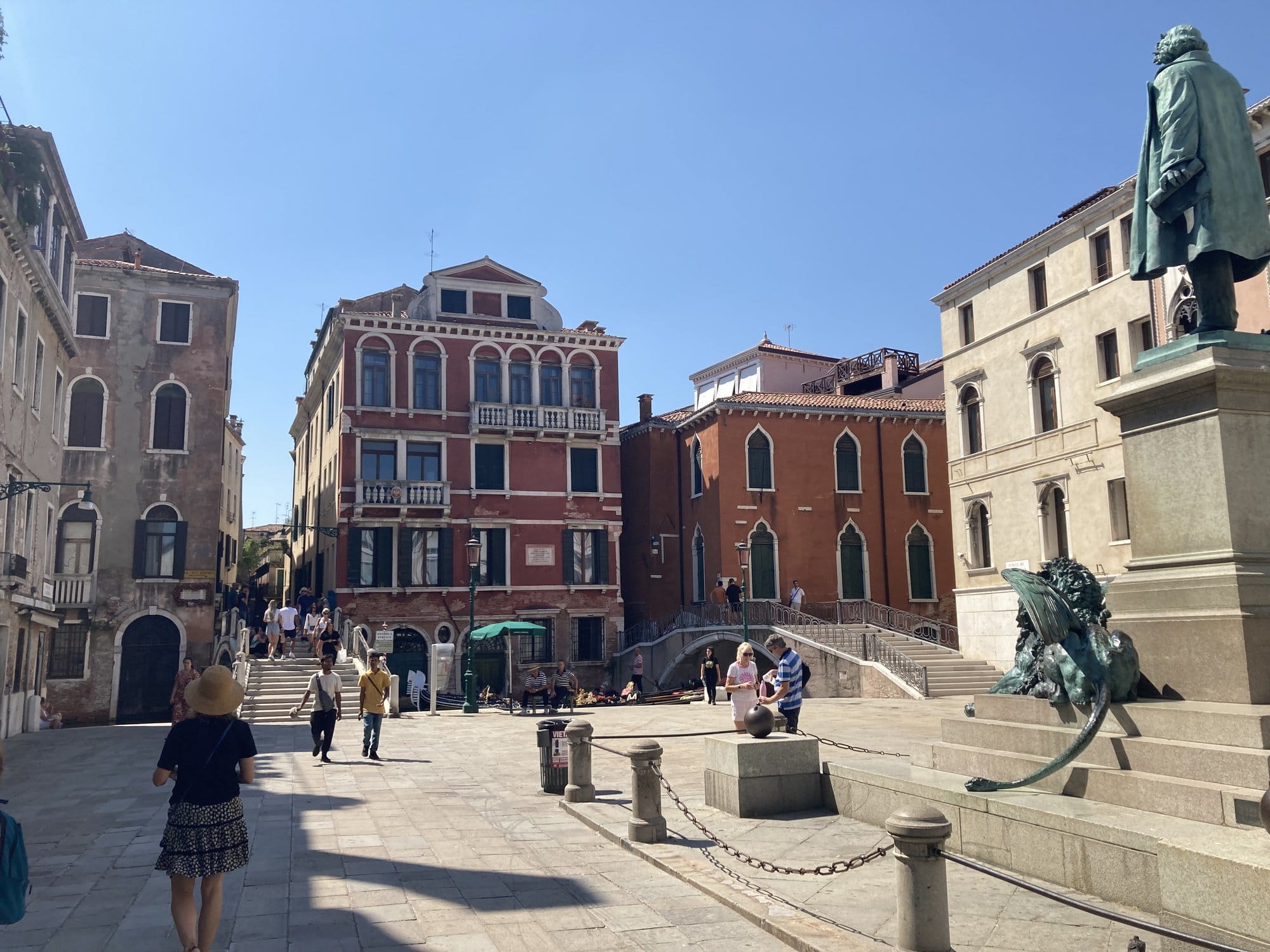
The squares between the canals have their own character. Campo Manin, with its bronze statue and Venetian buildings in warm reds and oranges, is a good place to pause and take in the city's layered architecture — medieval meeting Renaissance meeting the slow decay that makes Venice so photogenic.
Dorsoduro: Venice's Quieter Side
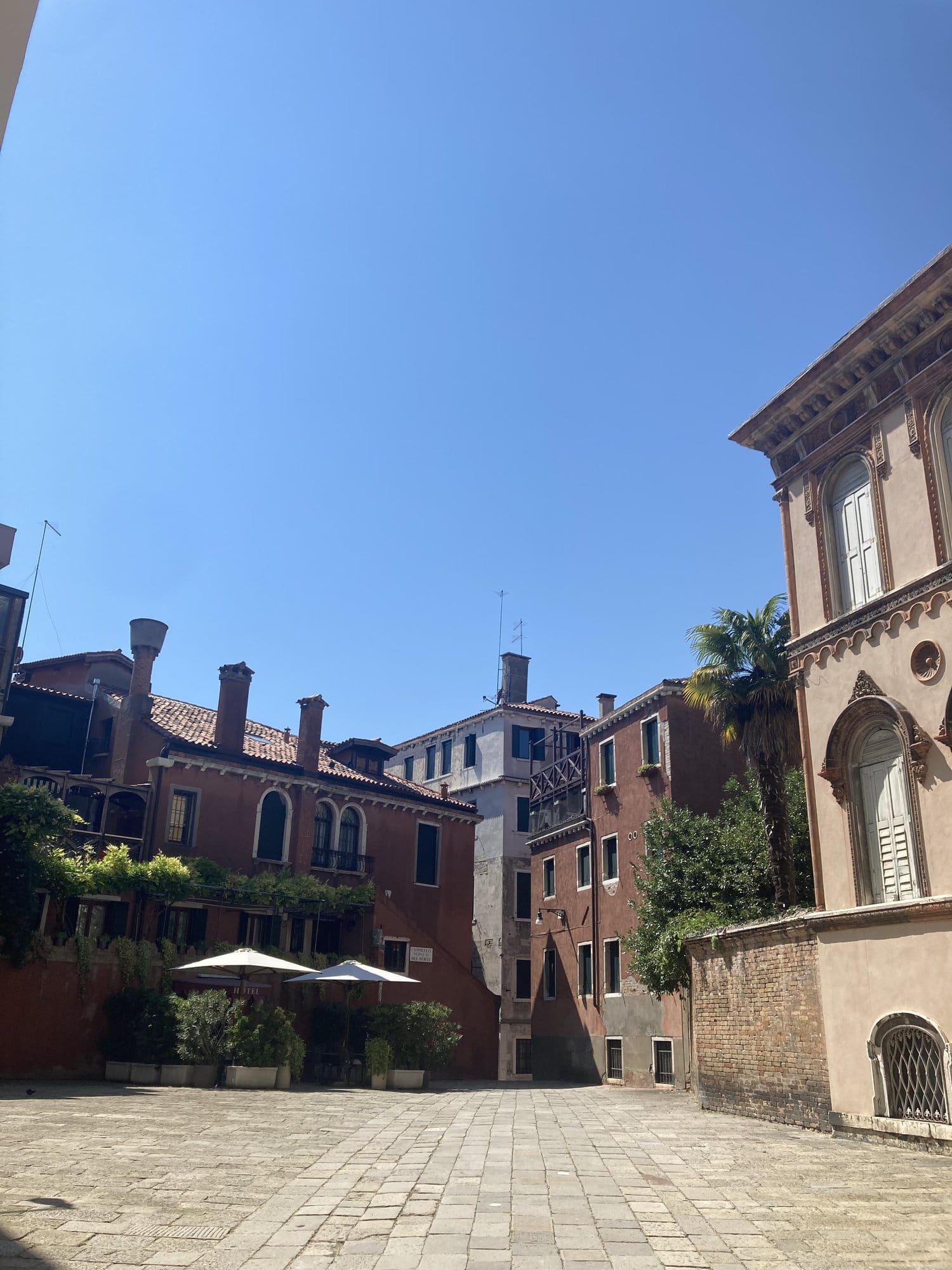
Cross south over the Accademia into Dorsoduro and the volume drops by half. The piazzas shrink, the crowds thin, and the façades go residential. Campo San Barnaba is a good landmark — tiny square, a single palm tree, a café with white parasols on the pavement. We ended up there in the mid-afternoon on a Sunday when most of Venice was queuing for the Basilica across the water. Dorsoduro is also where Gelateria Paolin is — see the next entry.
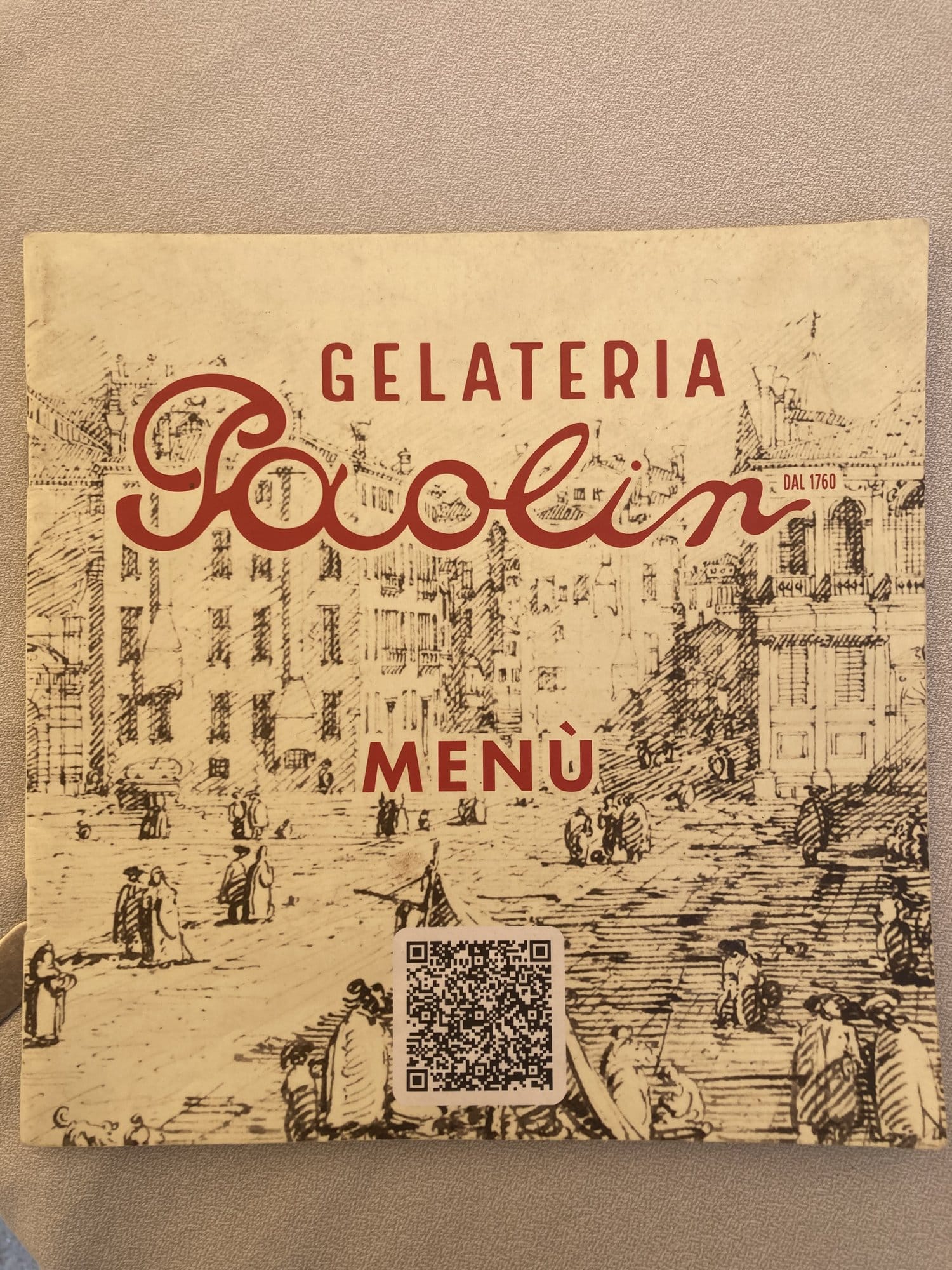
Stop at Gelateria Paolin in Campo Santo Stefano (Dorsoduro side). The sign says dal 1760 and the menu is a vintage print with a historical illustration of Venice that's worth a photo even before you order. The pistachio and fondente (dark chocolate) are the two our kids kept coming back for; the shop is open until late and the campo is quiet after 14:30.
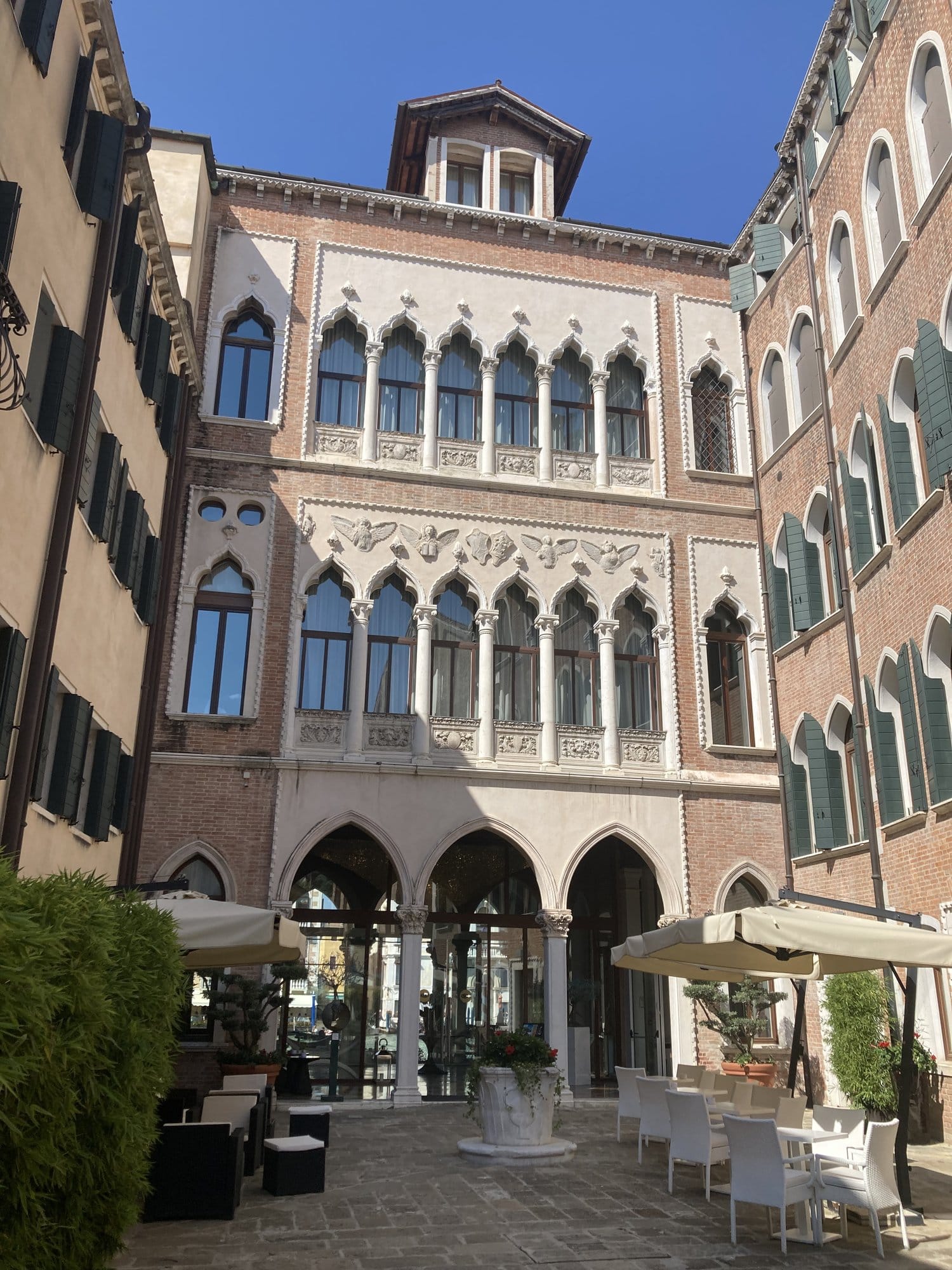
The neighborhood's architectural highlight is the succession of Gothic Venetian palazzi along its canals — pointed arched windows, ornate facades in brick and stone, and café terraces where you can sit and study the details at leisure.
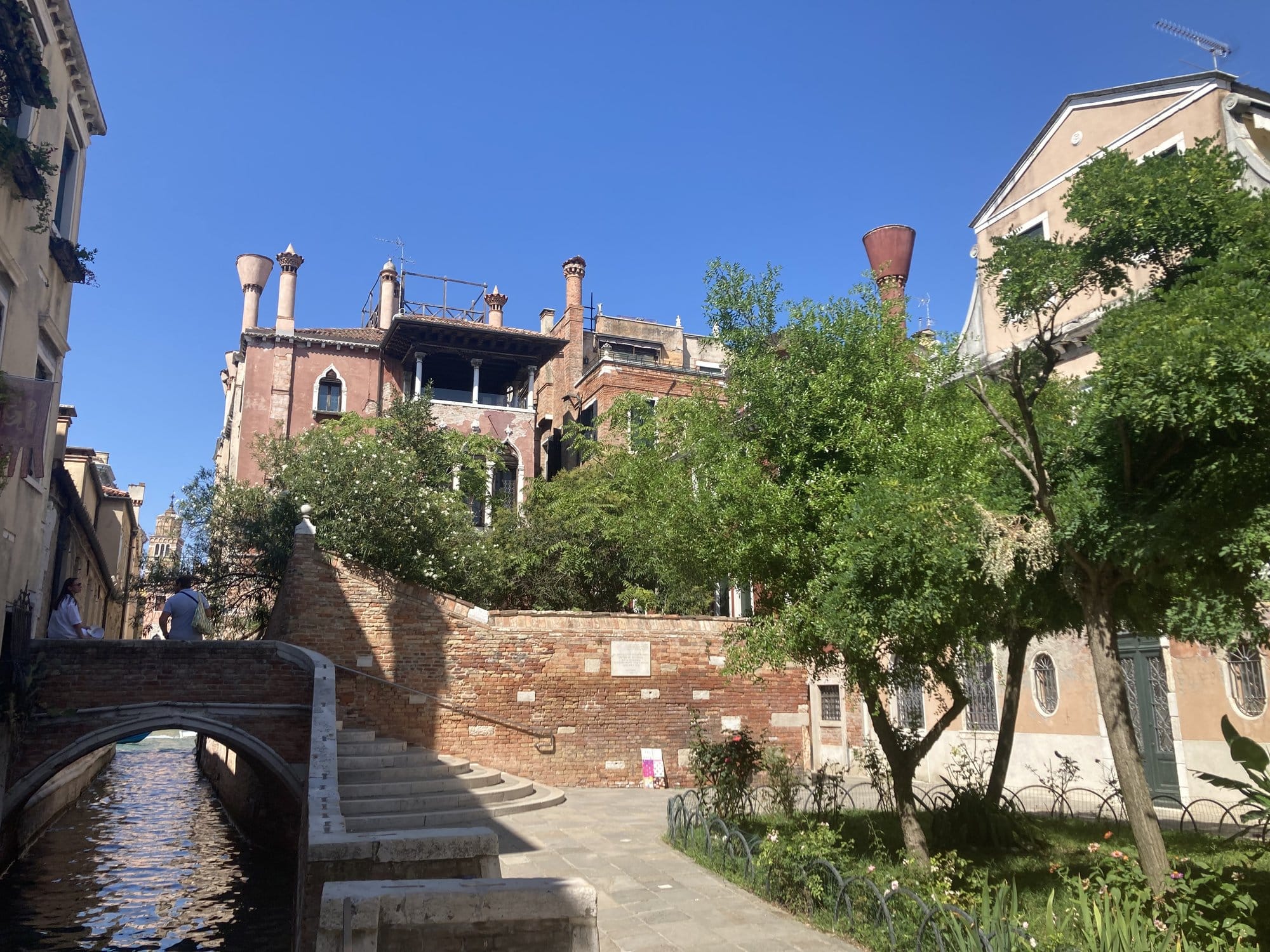
Walk further into Dorsoduro's side canals and you'll discover bridges draped in greenery, rooftop terraces with tall chimneys, and a quietness that rewards those who wander without a fixed destination.
The Grand Canal from Ponte dell'Accademia
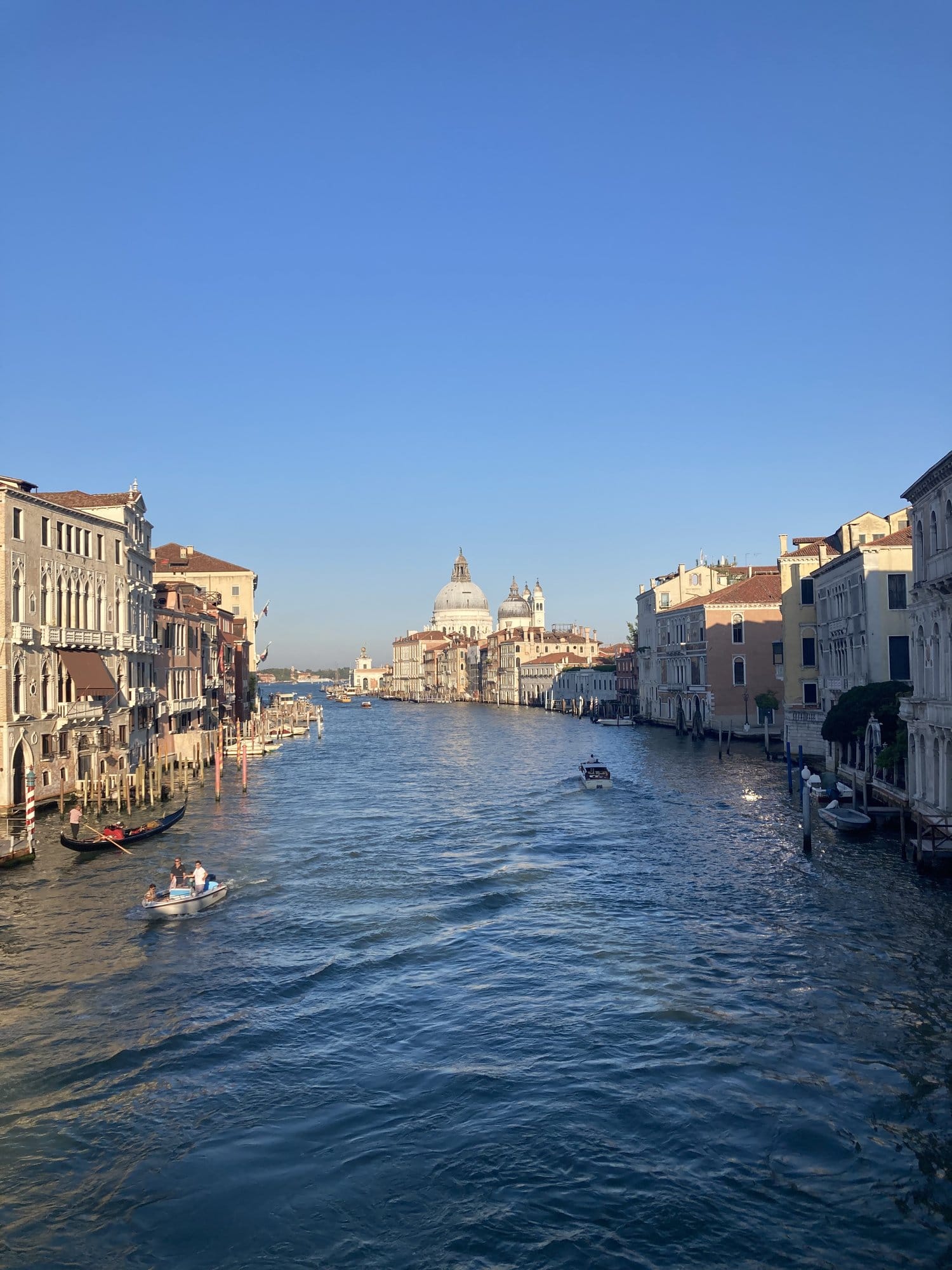
The Ponte dell'Accademia is the single most underrated viewpoint in Venice — a wooden bridge over the Grand Canal with the Basilica della Salute's dome anchoring the south end and the widest working stretch of canal in the city passing underneath. We crossed it three times in four days: once in the mid-afternoon (hard noon light), once in the late afternoon (long golden light, the photograph), once late in the evening on our way back to the mainland (blue hour, empty). If you only get one shot, make it between 18:30 and 19:15.
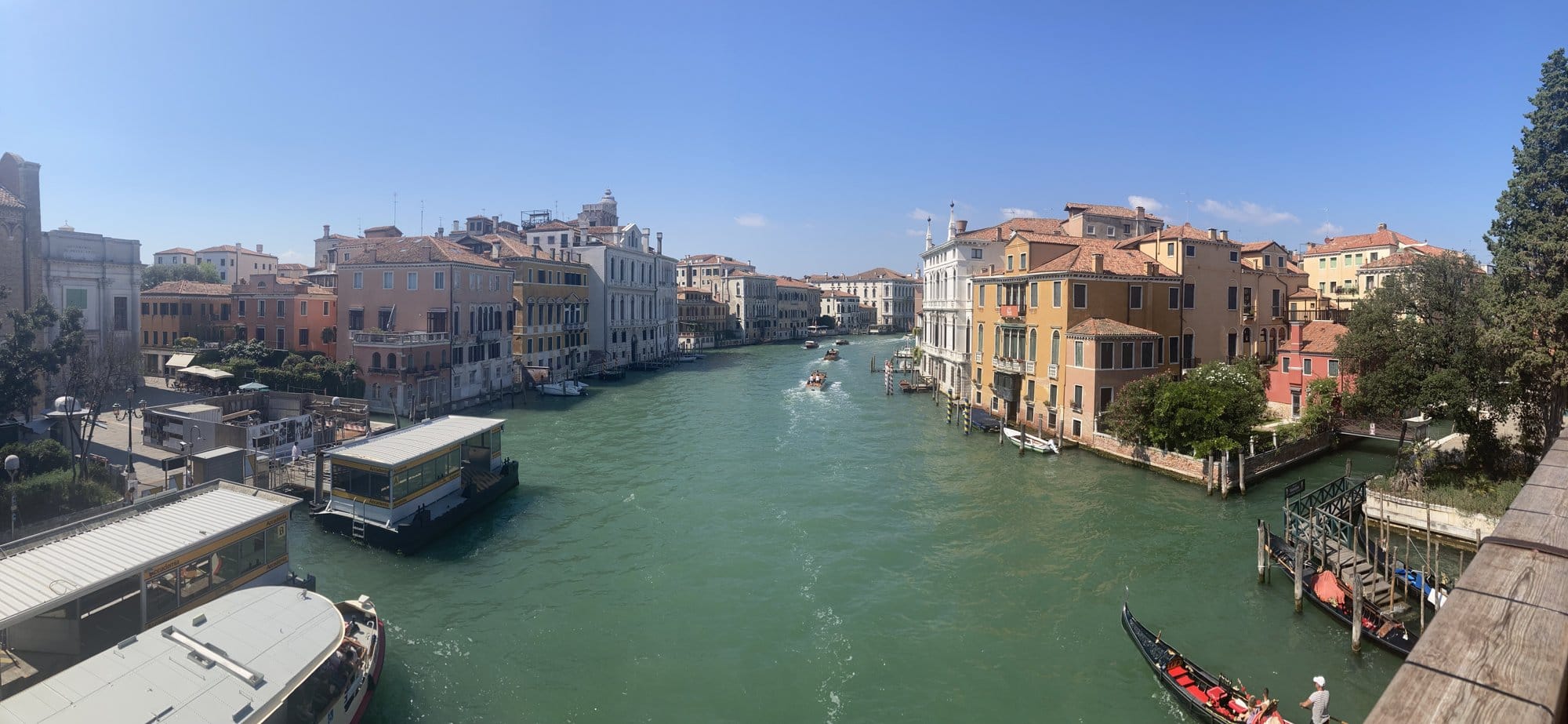
The evening version of this view is unfair. By 18:49 the canal is catching direct western light, the palazzo façades turn orange-pink, and the Salute goes from white to silhouette in about twelve minutes. We counted five other tripods on the bridge at that hour and it was still comfortably empty — this is not a sunset spot where you have to arrive forty minutes early.
San Giorgio Maggiore: Art Meets Architecture
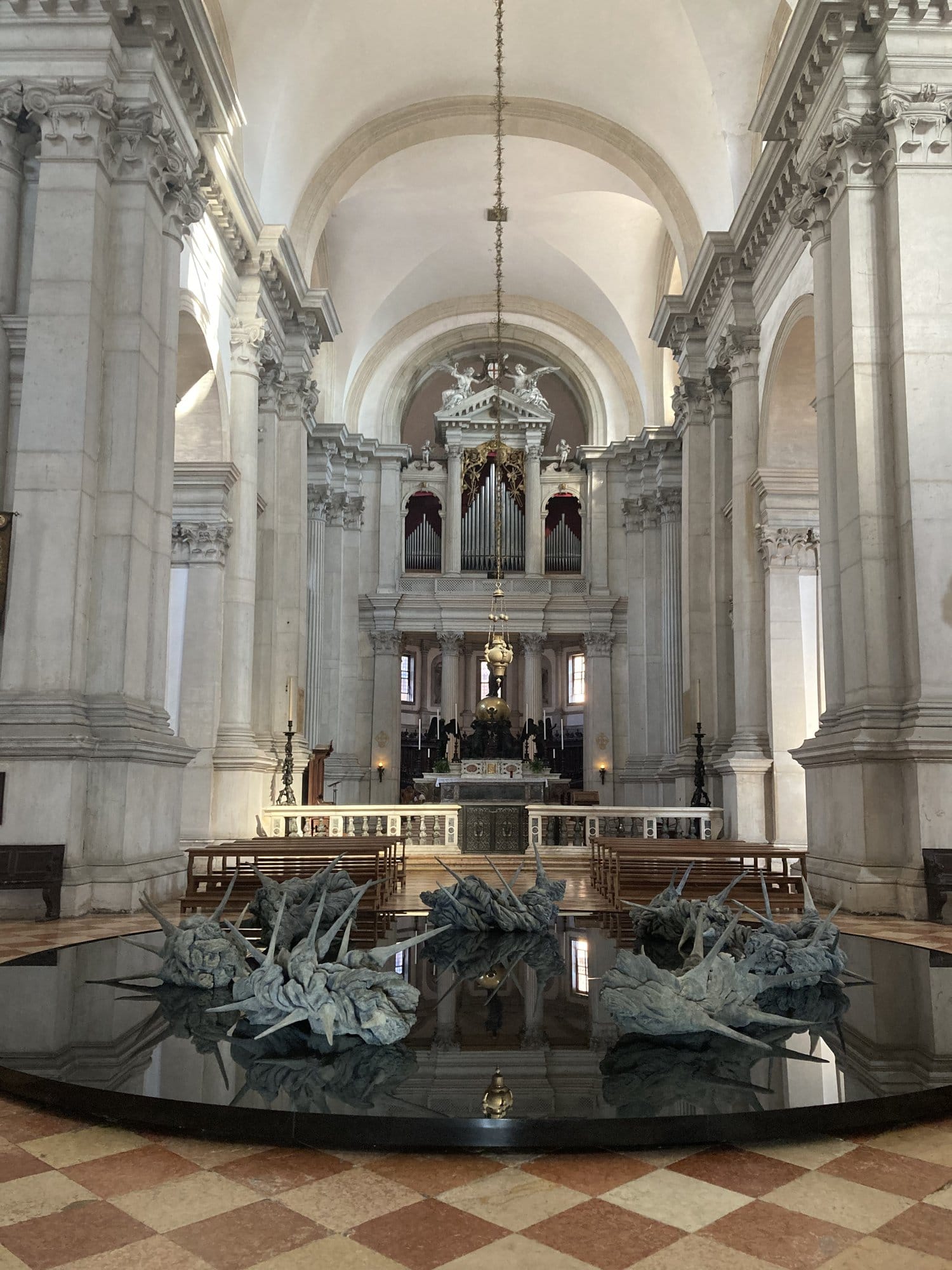
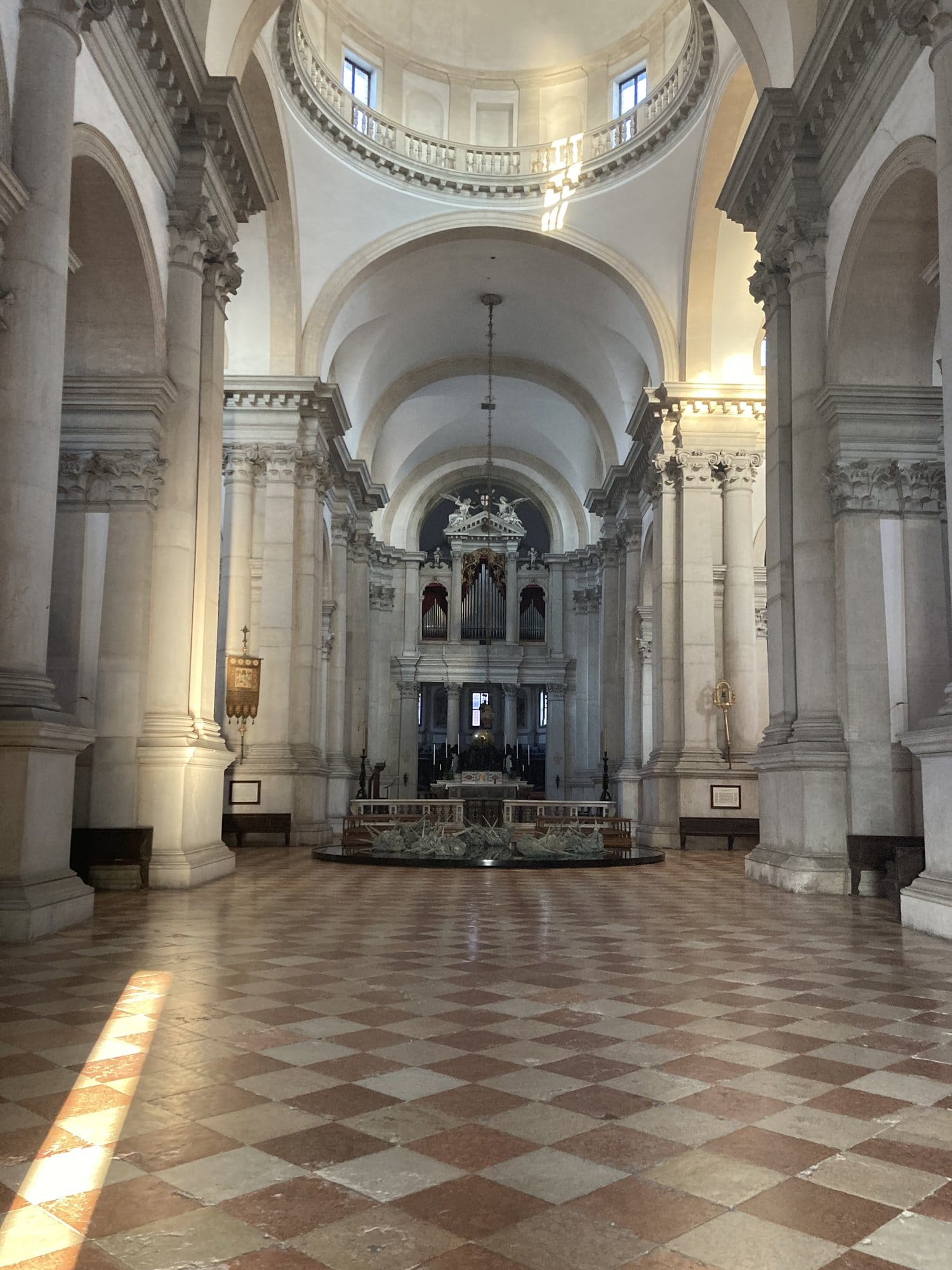
Vaporetto line 2 takes you to San Giorgio Maggiore in about five minutes from San Zaccaria. The Palladian basilica on the island is obvious from the water; the quieter surprise is inside. We were there at 17:06 and found a contemporary installation — a bronze sculpture standing in a shallow reflecting pool on the basilica floor, which mirrored the white marble nave and the pipe organ behind it. If you time the climb up the campanile for late afternoon, you get one of the cleanest unobstructed views of Piazza San Marco across the basin.
The light shifts through the afternoon. By early evening, golden sun streams through the side windows, catching the pink-and-white checkerboard floor and the imposing white columns. San Giorgio Maggiore at this hour feels more like a living artwork than a church.
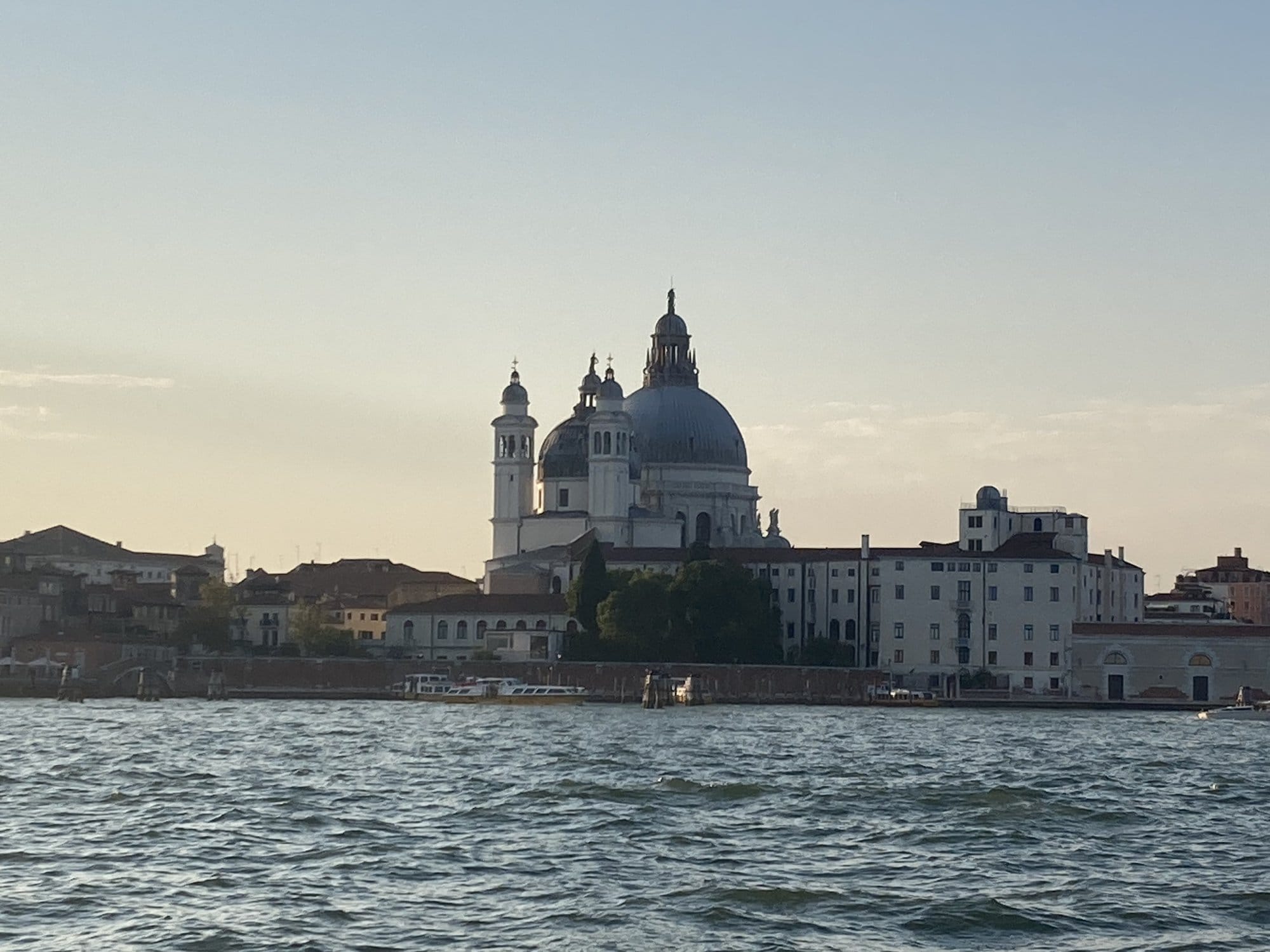
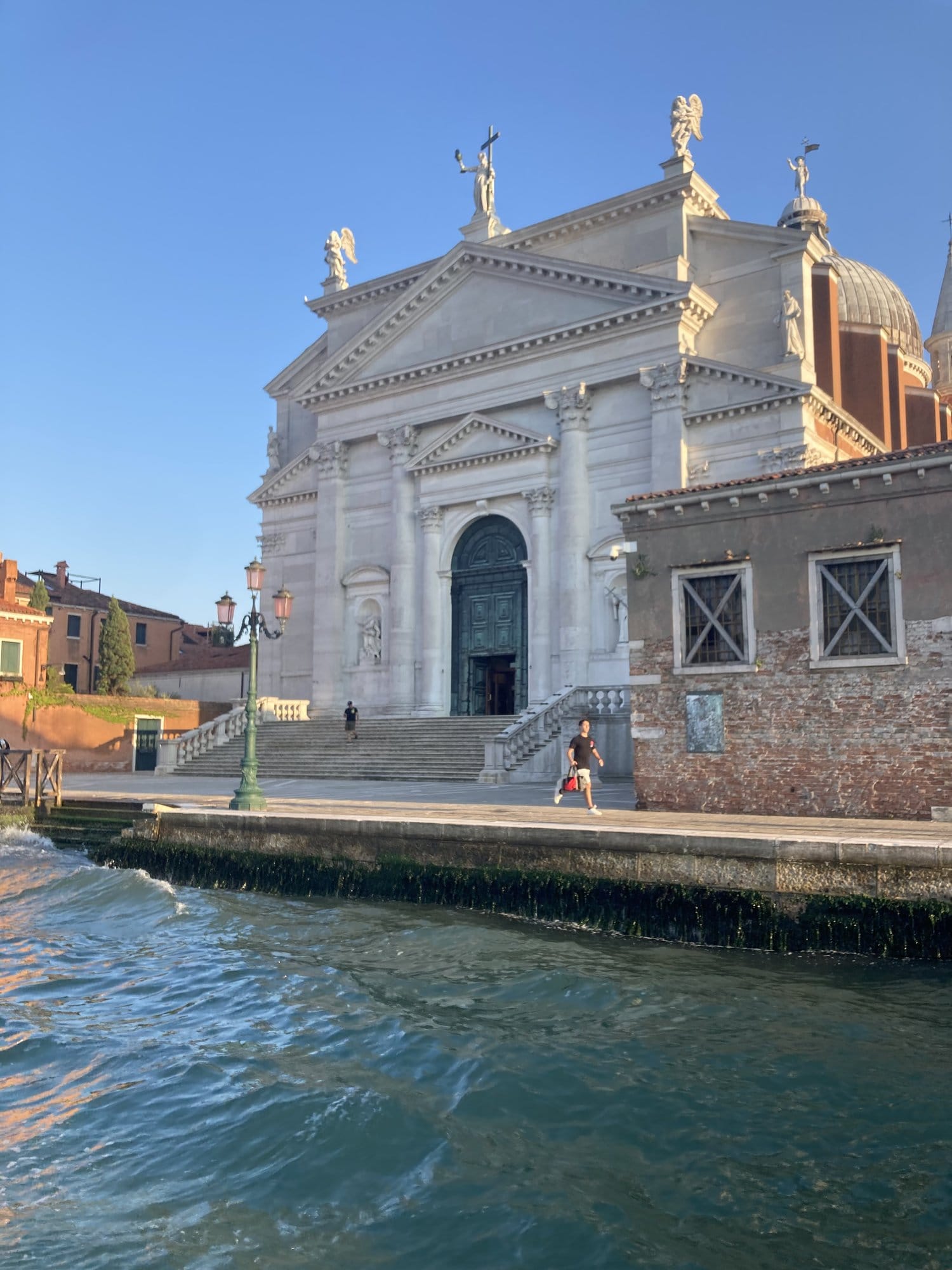
From the water on the return trip, two of Venice's most iconic churches frame the journey: the Basilica di Santa Maria della Salute with its majestic white dome catching the last light, and the Chiesa del Redentore on Giudecca with its Palladian white facade and crowning statues.
Piazza San Marco and the Rialto
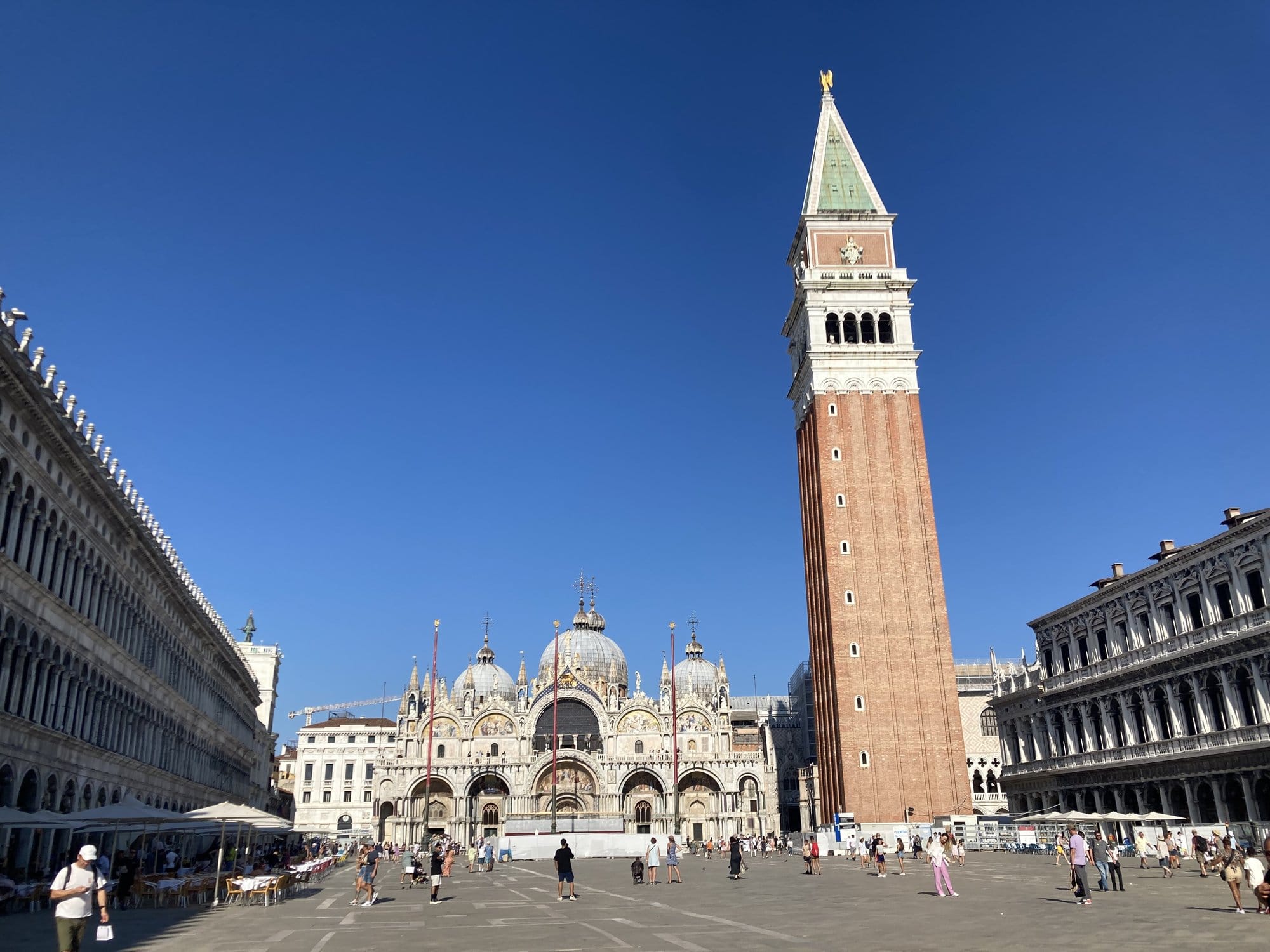
No visit to Venice is complete without setting foot on Piazza San Marco. The Basilica's Byzantine domes, the soaring Campanile, and the arcaded buildings surrounding the square create a space that manages to feel both intimate and monumental. Come in the late afternoon when the tour groups have thinned and the light turns the stone warm.
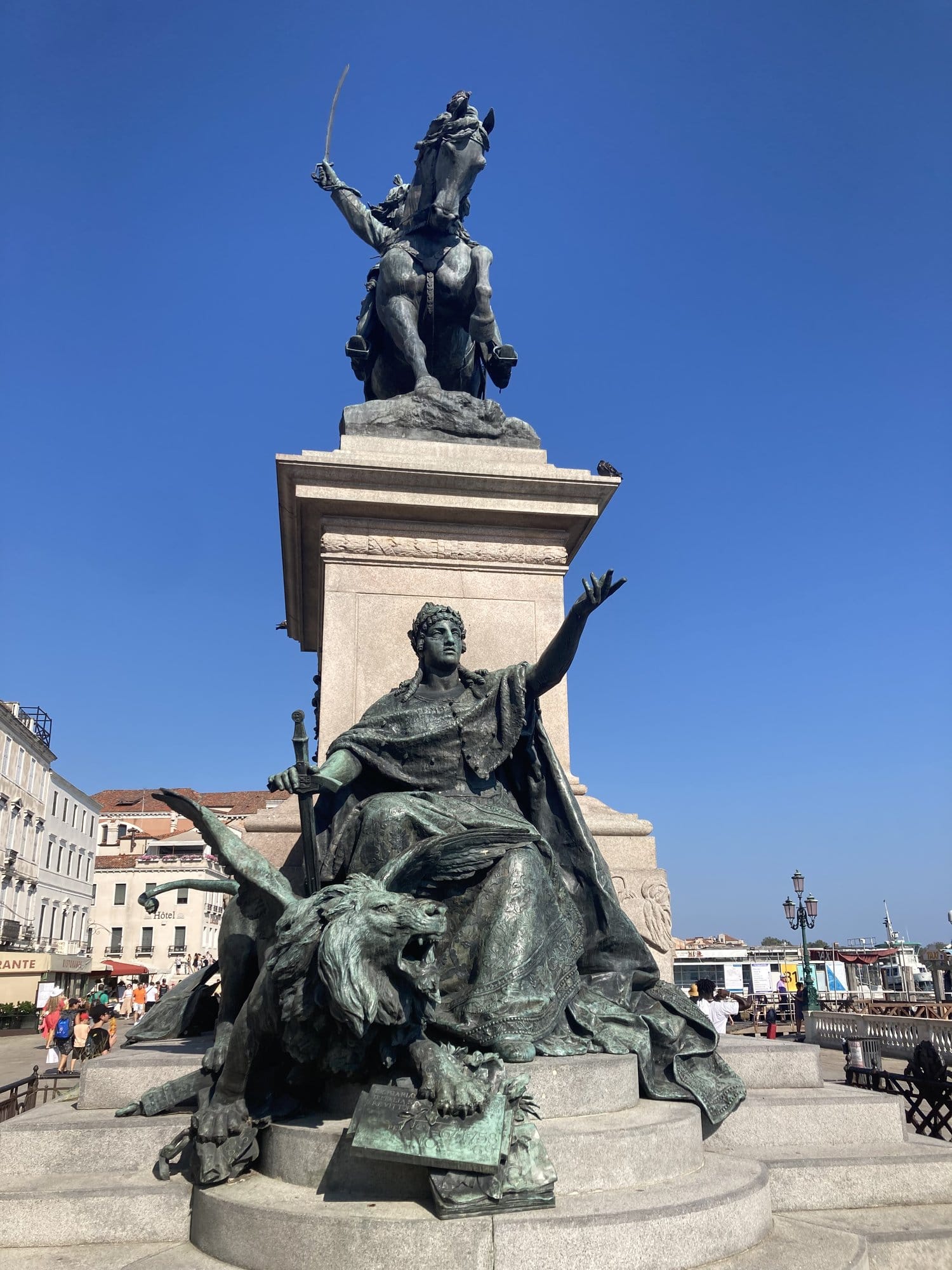
The Riva degli Schiavoni waterfront promenade connects San Marco to the eastern quarters, passing the imposing equestrian monument to Vittorio Emanuele II along the way.
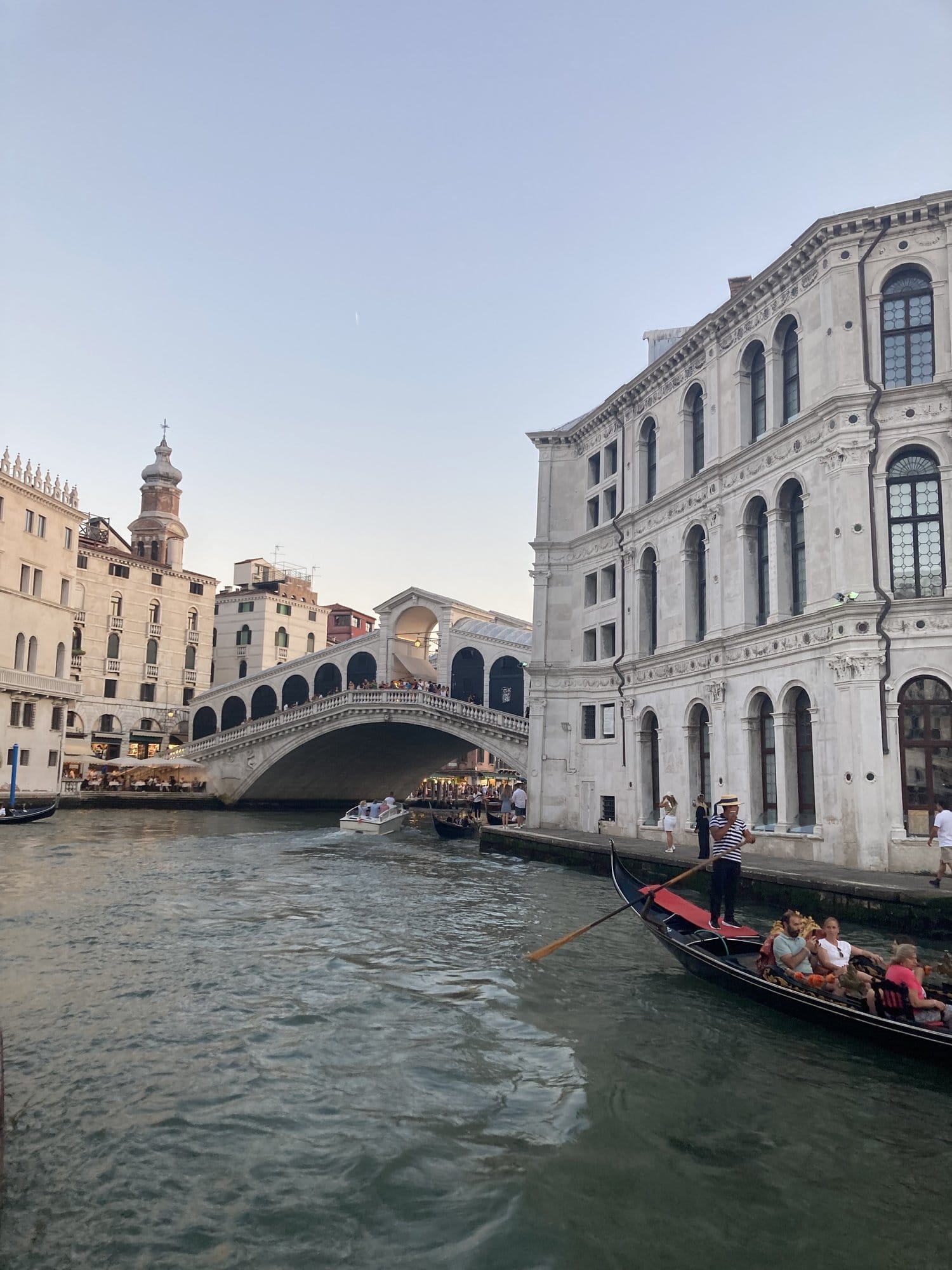
End the day at the Ponte di Rialto at 20:04 — that was when we were there on 22 August 2023, gondola threading under the arch, vaporetti running hard in both directions, the limestone bridge lit from below. The Rialto itself is best viewed FROM the water (a vaporetto on line 1 works, or the riverside terraces on the Fondamenta del Vin); the view from ON the bridge is of crowds.
A Palazzo Worth Seeking Out
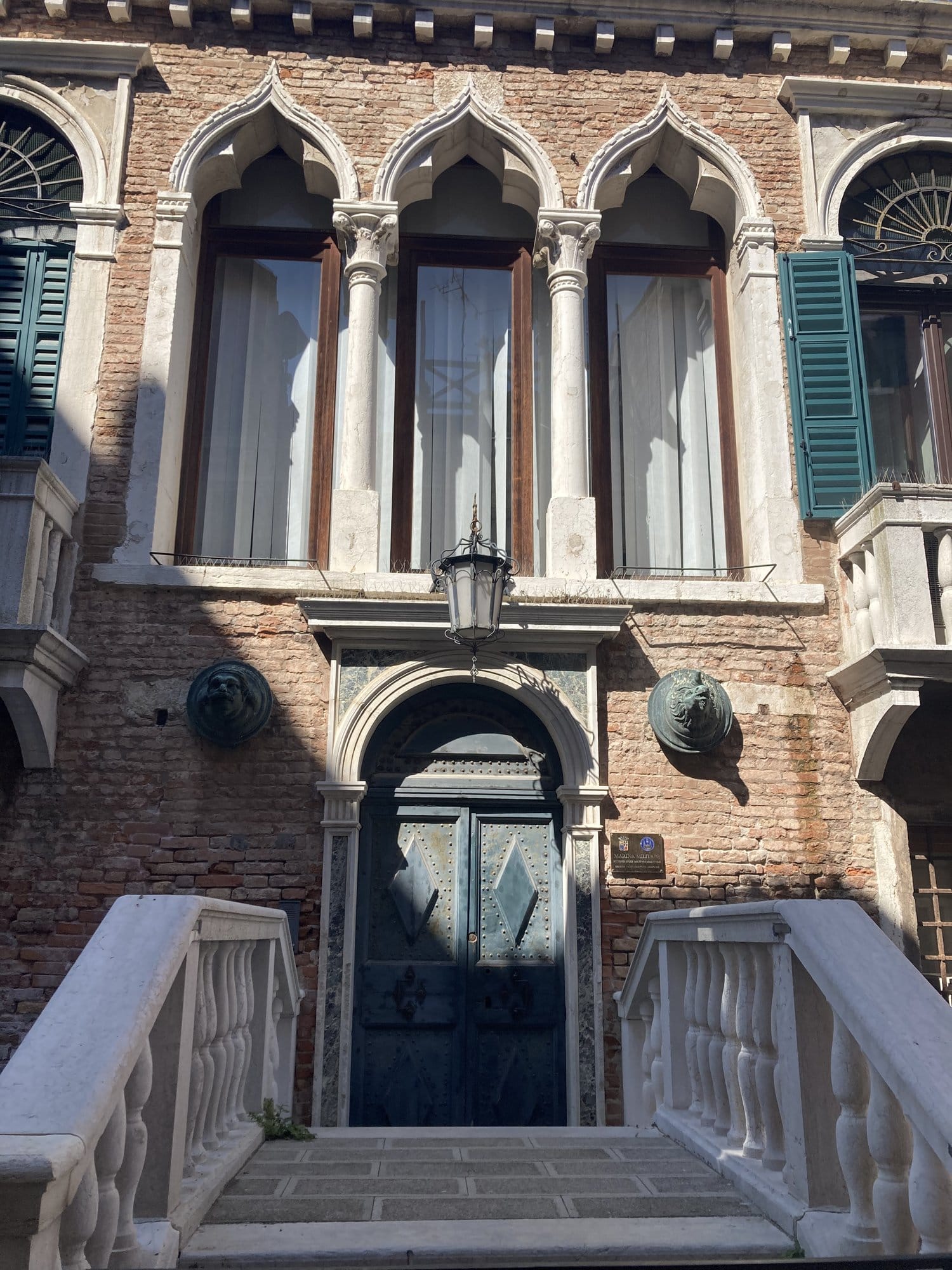
Venice rewards the curious. Off the main routes in the Castello quarter, you'll stumble across Gothic Venetian palazzi that seem untouched since the 15th century — pointed trefoil windows, white marble staircases, and sculptural details that belong in a museum rather than on a residential building.
Day Trip to Burano
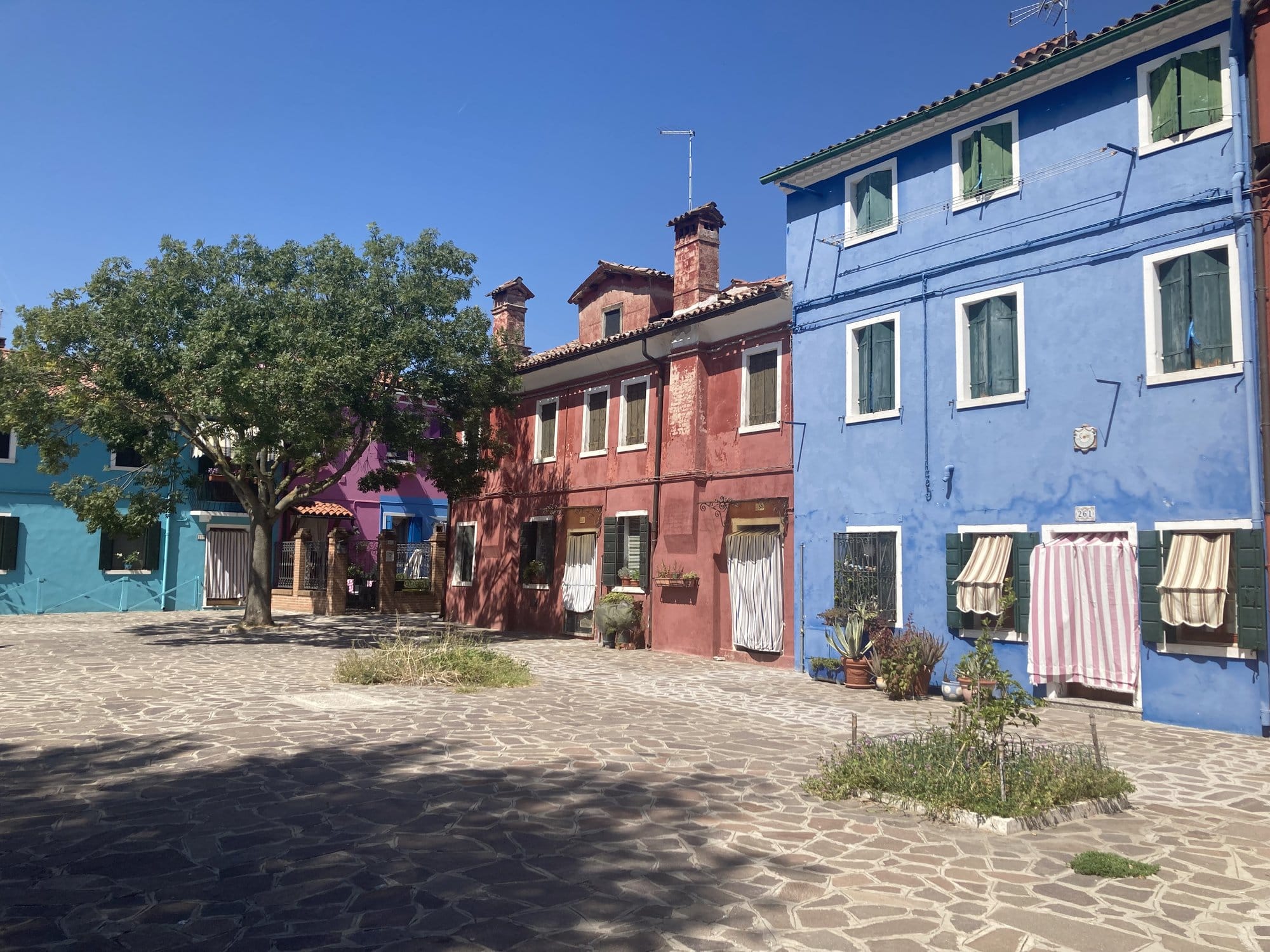
Burano is a 45-minute vaporetto ride on line 12 from Fondamente Nove — we set off mid-morning on Monday 21 August and were walking Burano's main canal by midday. The colour scheme (electric blues, hot pinks, turquoises, sunny yellows) is not a coincidence: the town's local by-law requires homeowners to pick from an approved palette and repaint on a regular cycle. The main canal is the postcard, but the side streets two blocks off the tourist spine are quieter and better for kids.
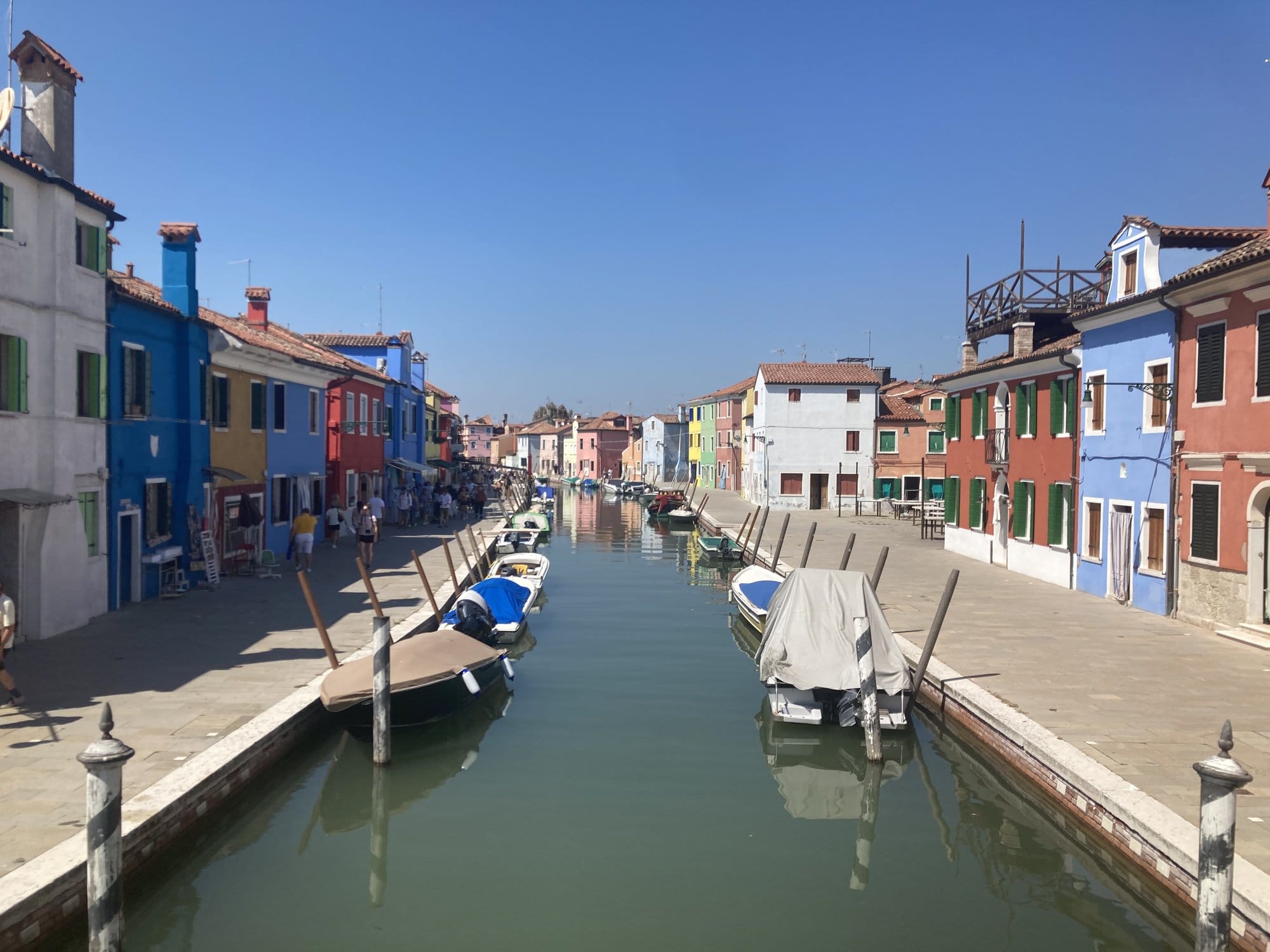
The main canal running through the island is Burano's postcard shot: a symmetrical perspective of multicolored facades reflected in the water, boats moored on both sides, and a bridge in the distance.
Give Burano about two hours. Walk the side streets, look at (or buy) the famous lace, and eat at one of the canal-side restaurants — order the risotto alla buranella if it's on the menu. The island is small enough to cover on foot without a plan. If you'd rather link the islands, there are organised half-day tours that include a glassblowing demo on Murano too, which saves you the vaporetto logistics.
The Basilica della Salute from the Water
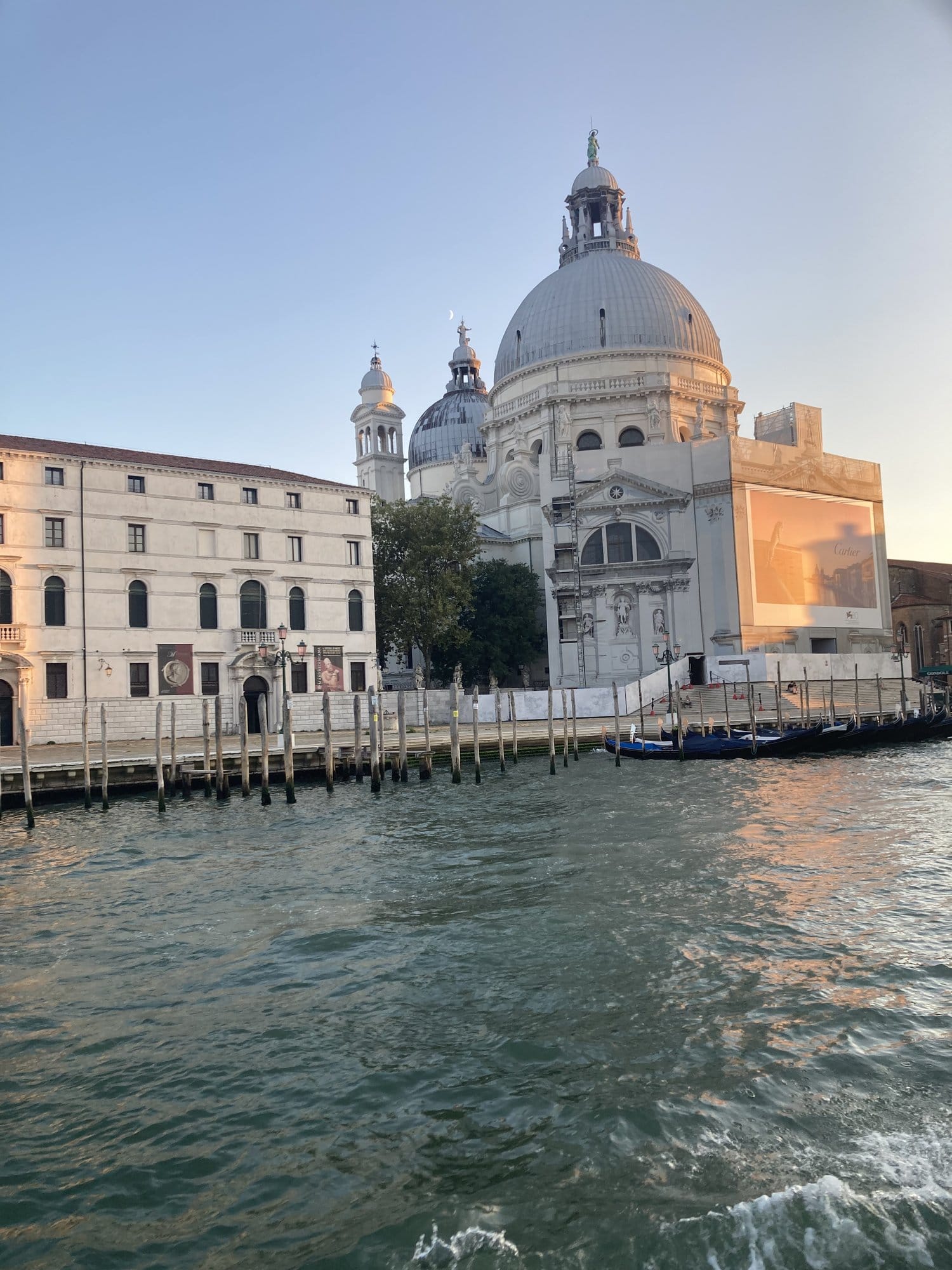
One last view that sits in every Venice gallery: the Basilica della Salute from the water at sunset. The white dome catches the warm light while wooden mooring poles (the bricole) line the quay in the foreground. This is the angle Canaletto painted in the 1730s and Turner chased a century later; our version, IMG_2159 in the early evening on 22 August 2023, is the same composition.
Find the Best Place to Stay
Use our interactive map to find accommodation near the spots mentioned in this article. Zoom in on the area that interests you most — Dorsoduro for quieter evenings, San Marco for proximity to the landmarks, or Cannaregio for the local atmosphere.
Practical Information
How to Get There
Venice is served by Marco Polo Airport (VCE), located on the mainland about 12km from the city center. You can compare flights to find the best deals. From the airport, the Alilaguna water bus runs directly to San Marco, Rialto, and other stops — it's slower than a bus or taxi but it's the most Venetian way to arrive. Alternatively, take the bus to Piazzale Roma and switch to a vaporetto.
If you're driving, park at Piazzale Roma or the Tronchetto island — Venice itself is entirely car-free. We left our campervan at a campsite near Castelfranco Veneto and took public transport in. If you need a rental car for day trips to the Veneto countryside or the Dolomites, book through Trip.com from the airport.
Getting Around
The vaporetto (water bus) is your main transport. A 24-hour pass is better value than individual tickets if you plan to use it more than three times. For Burano, take the Line 12 from Fondamente Nove — the ride is part of the experience.
Best Time to Visit
We went in late August (19-23 August 2023), which is peak season — the crowds on the main arteries are real between 11:00 and 17:00, but the light is extraordinary and a waterside dinner at 20:00 with a wet shirt on and a bottle of Soave is the thing you remember. For fewer crowds pick early spring (late March or April) or autumn (October and early November). Winter brings acqua alta (the high-tide flooding) but also a moody, almost-empty Venice if you don't mind wellies.
Budget
Venice is expensive by Italian standards. Budget around €15-20 for a sit-down lunch, €3-5 for a coffee at a bar (standing is always cheaper than sitting), and €30-40 for a vaporetto 24-hour pass for a family. Gondola rides start at €80 for a 25-minute shared ride.
FAQ
Q: How many days do you need in Venice? A: Three full days is the sweet spot. It gives you time for the major sights, a day trip to Burano, and enough margin to get lost — which is the best way to discover Venice.
Q: Is Venice worth visiting with kids? A: Absolutely. The vaporetto rides are an adventure in themselves, Burano is a hit with children who love color, and the gelato opportunities are endless. Just be prepared for a lot of walking and some bridge steps with strollers.
Q: Can you swim in Venice? A: Not in the canals, but the Lido beach is a short vaporetto ride away and has proper swimming beaches.
Pierrick visited Venice, Burano, and the Veneto for five days in late August 2023 with his family of four, using a campsite near Castelfranco Veneto as a base and commuting in by train and vaporetto. The golden-hour cross on the Ponte dell'Accademia at 18:49 on 22 August and the cicchetti-and-wine evening on the Fondamenta della Misericordia are the two that tend to come up first when people ask. More about his approach on the About page.
More to Explore
If Venice has ignited your appetite for Italian adventure, the Dolomites are just a few hours north — a completely different world of turquoise lakes and dramatic mountain trails. And if you're building a broader European itinerary, these destinations pair well with a Venice trip:
This article is also featured on GPSmyCity. To download this article for offline reading or create a self-guided walking tour to visit the attractions highlighted in this article, go to Walking Tours and Articles in Venice.