
Vergina and Pella — The Sites of Alexander the Great's Macedonia

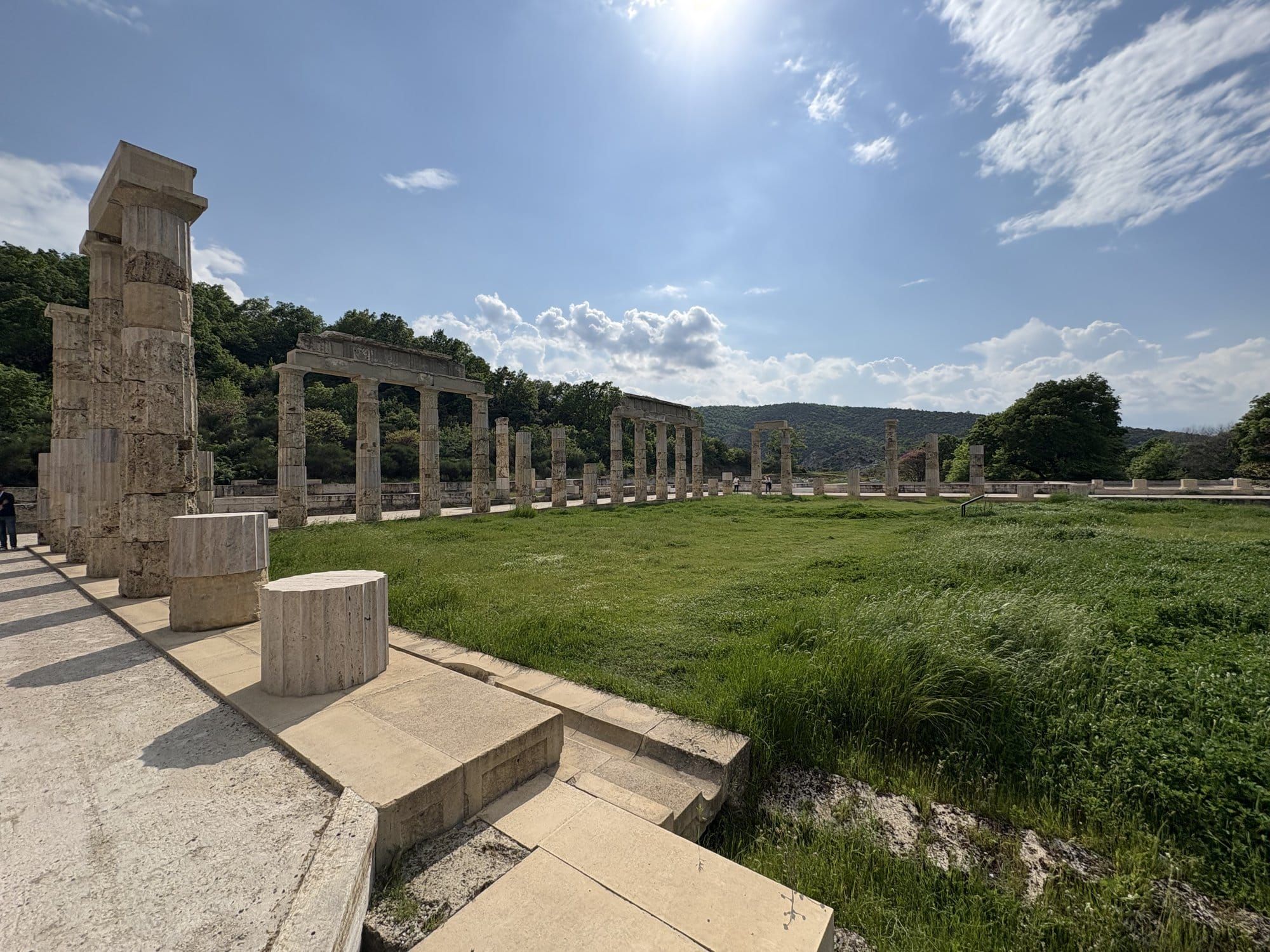
Alexander the Great died in Babylon at 32 and never came home. But the kingdom he inherited — ancient Macedonia — has two archaeological sites in northern Greece that, together, tell almost the entire story of how a small mountain kingdom built by his father Philip II became, in a single generation, the largest empire the world had yet seen.
One of the two is unforgettable. The other, we will say carefully, is for a niche visitor. This is a short practical guide to both.
Bookings: Some links in this article are affiliate links. If you book through them, we receive a small commission at no cost to you.
The Short Version
On the map below, we've centred between Vergina and Pella — the practical base if you want to do both Macedonian tombs in a single day without driving back to Thessaloniki for the night. Veroia is the closest town with hotel choice; Edessa to the west adds the waterfalls option as an extra half-day.
- Go to Vergina. Two hours, 12€ entry, indisputably one of the best archaeological sites in Greece. The royal tomb of Philip II is still intact, in situ, with the original gold casket. - Pella is optional. Compact open-air site with a few mosaic floors preserved under shelters. Fine if you have the time; genuinely skippable if you do not. - Combine with Veria. Twenty kilometres east of Vergina, Veria is an old Ottoman-era town with decent tavernas and a Jewish quarter — a good base or lunch stop.
If you have one afternoon, do Vergina properly and skip Pella.
Vergina — Aigai, the First Royal Capital
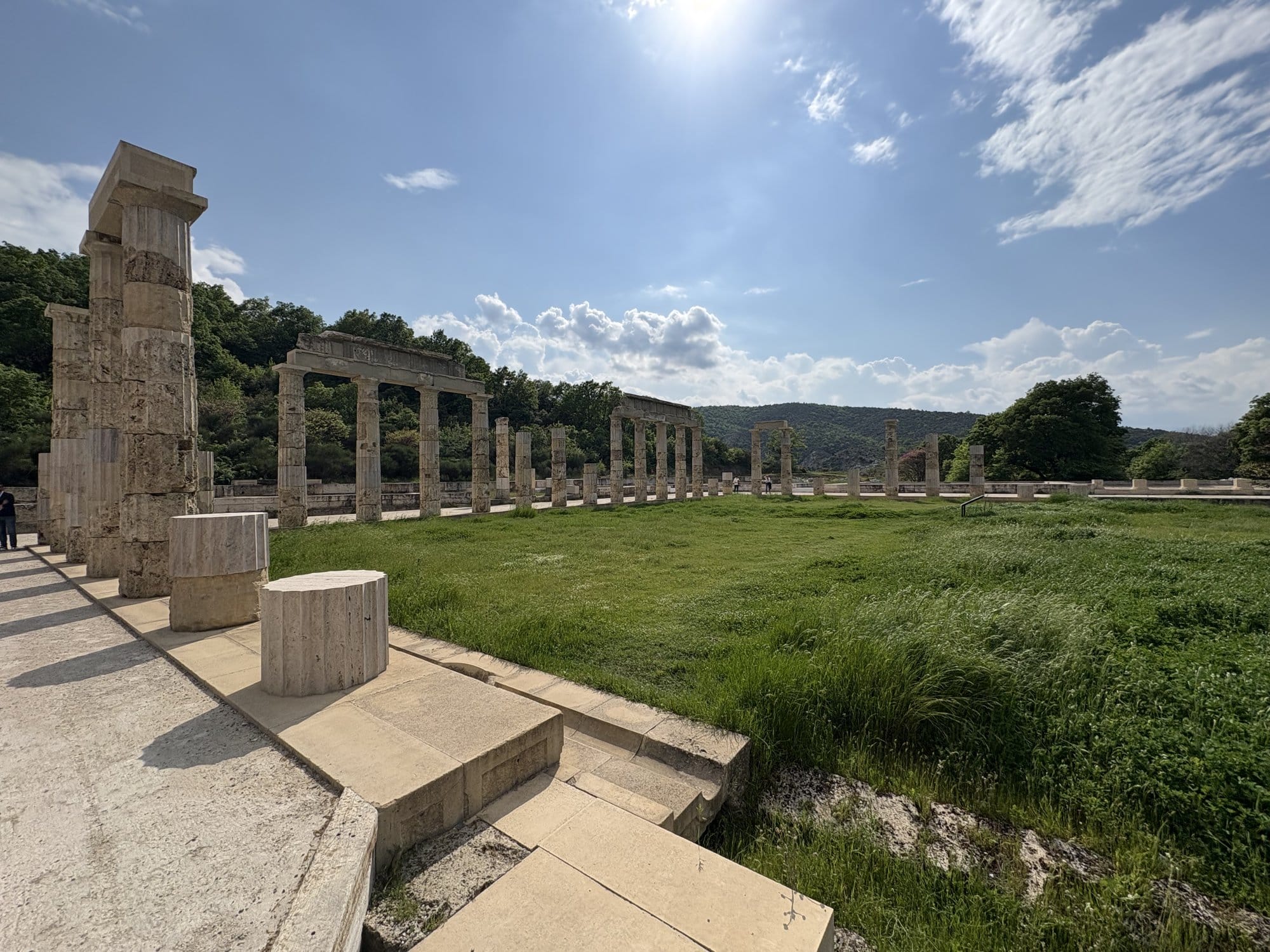
Vergina is the modern village built on top of the archaeological site of Aigai, the first capital of Macedonia. Aigai was the political and religious centre of the Macedonian kingdom before Pella. It is where the royal tombs were built — a sacred cluster of burial mounds — and where Philip II, father of Alexander, was assassinated in 336 BC.
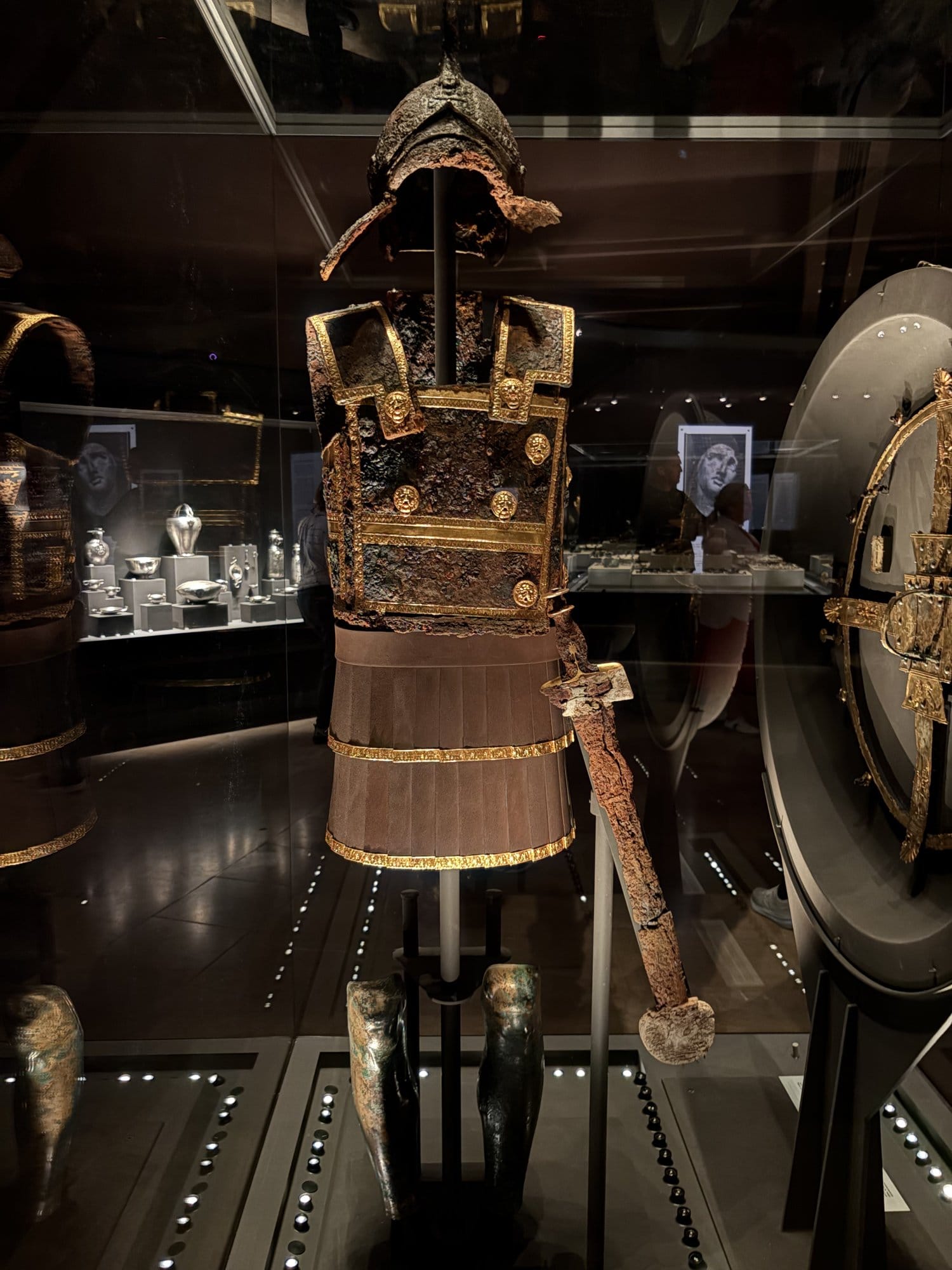
What makes Vergina extraordinary is that in 1977, Greek archaeologist Manolis Andronikos opened a tomb inside the largest of the burial mounds and found it intact — sealed, unlooted, its contents perfectly preserved. The tomb contained gold larnakes (funerary caskets), a silver dinner service, bronze armour, and human remains widely accepted to be those of Philip II himself.
The Vergina museum was built directly over the excavation. You walk into what looks like an ordinary earthen mound and descend into a dimly-lit climate-controlled chamber where the original tomb façades stand in front of you, and the gold larnax containing Philip's cremated remains sits in a display case six metres from where it was found. It is hard to overstate how rare this is. Most great archaeological finds end up in a capital city museum; Vergina kept its finds in situ.
Getting there
Vergina and Pella both sit within an hour's drive of Thessaloniki (SKG), making this the easiest day trip out of any northern Greece itinerary. SKG is 35 km south-east of these archaeological sites, so renting a car at the airport saves a same-day shuffle into the city.
Practical Details — Vergina
- Address: Aigai archaeological site, Vergina, Imathia. - Hours: 08:00-20:00 April-October; 08:00-15:30 November-March. Closed 1 January, 25 March, Easter Sunday, 1 May, 25-26 December. - Entry: 12€ per adult, 6€ reduced, free under 18. A combined ticket with the Pella museum (15€) is worth it if you plan to visit both. - Duration: 1h30 to 2h for the underground museum. Add 30 min for the two surface areas (the ancient palace and the upper tombs, separate from the main museum). - Photo policy: Photos allowed, no flash. Tripods forbidden. - Kids: Interesting for kids above ~9. The low light and the gold larnax grab attention. Younger kids will be bored.
The museum is about 80 km west of Thessaloniki, 20 km south of Veria, and 25 km east of a junction with the main north-south motorway. By car from Thessaloniki it takes 1h10.
Pella — The Later Capital, and Why It's More Subdued
Pella replaced Aigai as the Macedonian capital around 400 BC and was where Alexander was born in 356 BC. The city flourished for two centuries, declined after Roman conquest, and was gradually buried under silt and farmland as the river that served it changed course.
What survives today is an open-air site with three main areas:
1. The archaeological museum — a mid-size modern building with the site's most important finds, including three famous Hellenistic pebble-mosaic floors (the Deer Hunt, the Lion Hunt, Dionysus on a Panther). 2. The agora — rectangular plaza with column bases visible in outline. 3. A few preserved houses — shelters over mosaic floors.
The problem is that Pella has been stripped of much of what made it exciting. The best finds went to Thessaloniki. The site is flat, largely at ground level, and in early April we found it under a light rain with no other visitors and half the signage unreadable from weather damage.
If you love classical archaeology, go — it is half a day well spent. If you are a more general traveller, the judgment after visiting both is: Vergina is unmissable, Pella is skippable.
Practical Details — Pella
- Address: Pella archaeological site, about 40 km west of Thessaloniki on the Thessaloniki-Edessa road. - Hours: 08:00-20:00 April-October; 08:00-15:30 November-March. - Entry: 8€ per adult, 4€ reduced. - Duration: 1h for the museum + 45 min for the outdoor site. - Amenities: A small café at the museum. No restaurants in the immediate area.
Where to Base Yourself — Veria or Thessaloniki?
If you are doing Vergina (and possibly Pella) as a side trip from Thessaloniki, you do not need to sleep anywhere else — the drive from Thessaloniki is short enough to do as a day trip.
If you are mid-road-trip and coming from Zagori to Halkidiki, Veria is the natural stopover. It is 20 km from Vergina and has Ottoman-era architecture in its old quarter, several recommended tavernas in the main square, and a population of 40,000. We had dinner at a taverna on Platia Elias (the main square) — grilled lamb, local Xinomavro wine, a warm courtyard — for about 18€ per head.
Book the alternate Pella + Vergina full-day tour
Book the Thessaloniki walking & food tour (if you add a night)
A Half-Day Plan If You Only Have an Afternoon
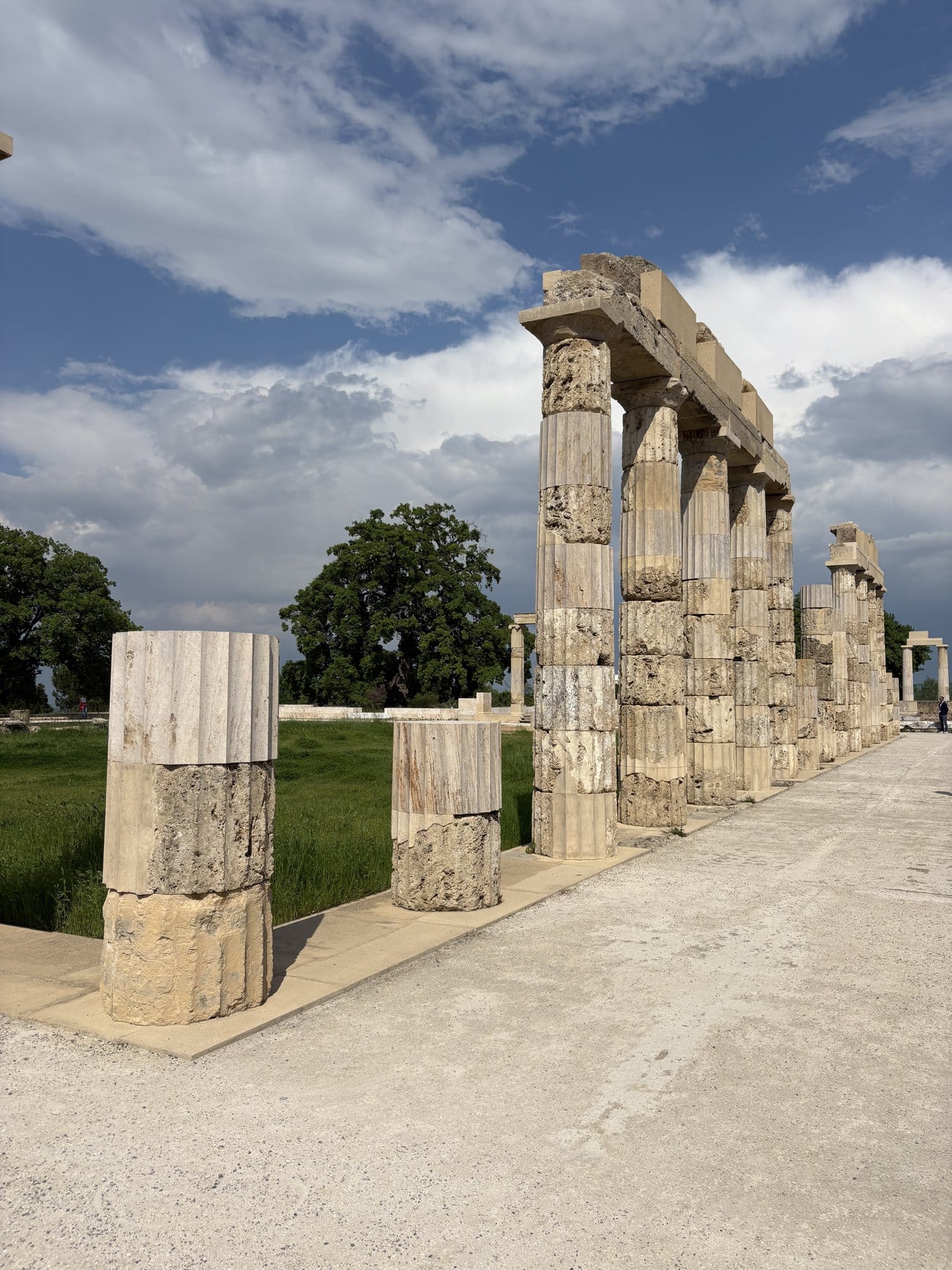
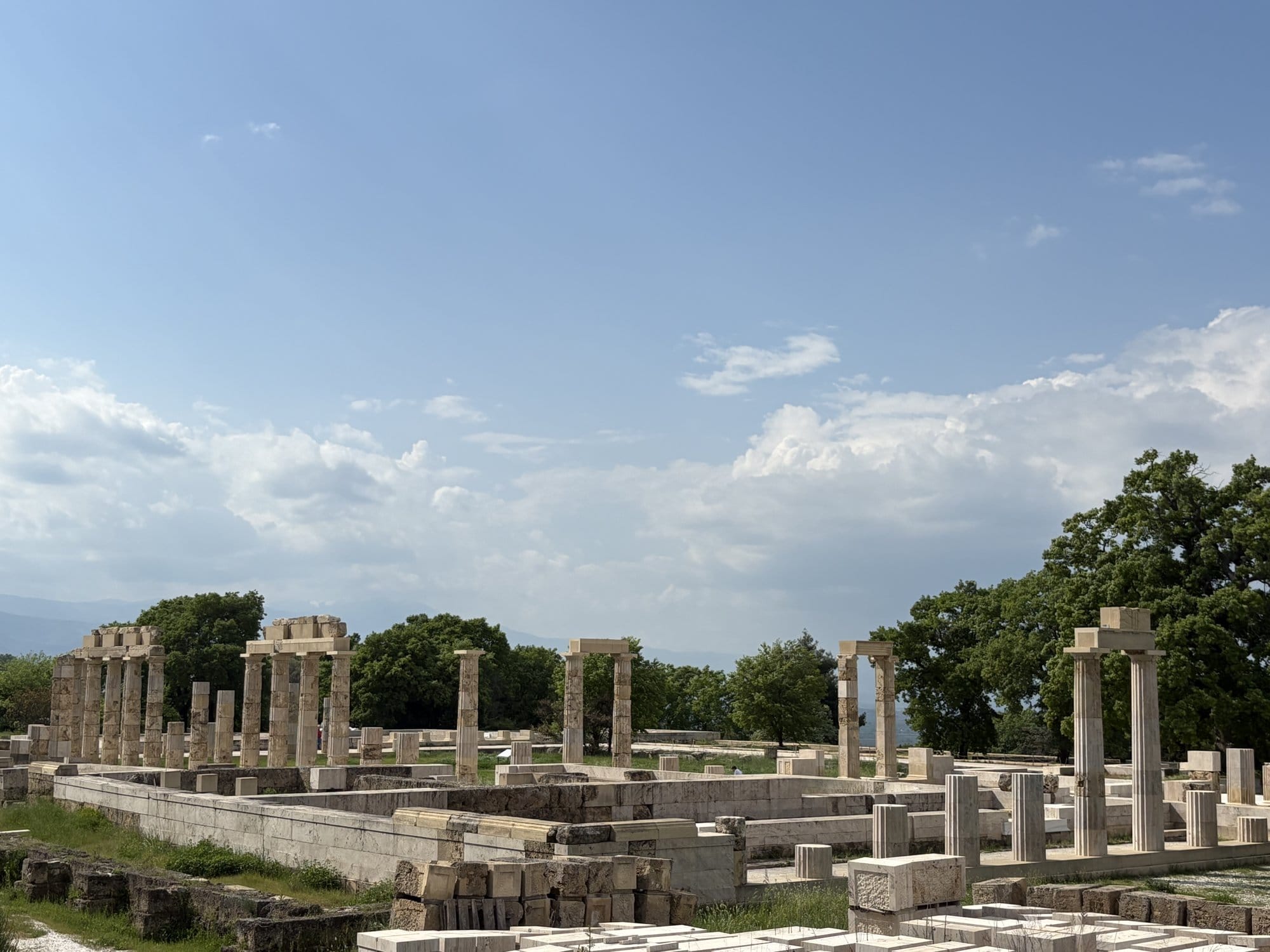
- 13:00 — lunch in Veria (30 min). Souvlaki and a salad at a main-square taverna, 12-15€. - 14:30 — drive 20 km to Vergina (25 min). - mid-afternoon — arrive, buy ticket, enter the underground museum. - 17:00 — finish the main museum. Walk over to the separate palace ruins (10-minute walk) if you have energy. - 18:00 — drive onward. From Vergina east to Thessaloniki is about 1h10; to Nikiti in Halkidiki about 2h10.
If you can get to Vergina earlier in the day (10:00 arrival is ideal), add the Pella museum on the drive back east — it is essentially on the motorway.
Book the Vergina + Pella day trip from Thessaloniki
Tours or Independent Visit?
Tours from Thessaloniki exist and usually cover Vergina on a half-day trip with transport, a guide, and sometimes a stop at Veria. Prices run 50-80€ per person. If you are travelling without a car, they are a clean solution.
Compare Vergina tours from Thessaloniki on GetYourGuide
If you have a car, we would visit independently. The museum has good audio descriptions included in the ticket price, and you will be in and out faster than any group tour.
Why the Vergina Tomb Matters
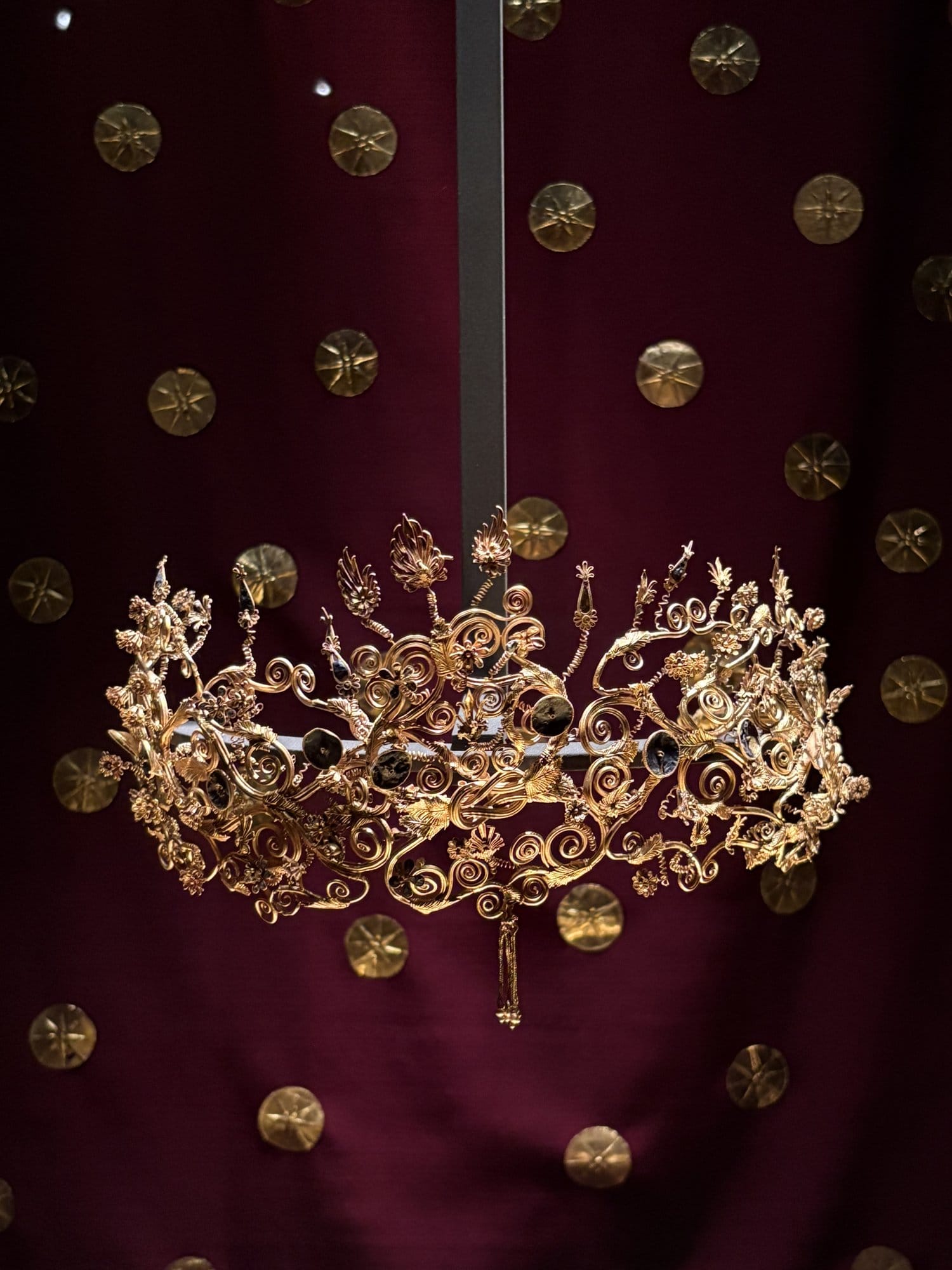
Philip II's tomb contains objects that rewrote textbooks. The gold larnax — a 10-kilo gold box containing the cremated bones — had never been opened between the day it was sealed in 336 BC and 1977, over 2,300 years. The golden wreath of oak leaves, the iron-and-gold cuirass, the ceremonial shield: none of it went through looters. Archaeologists could reconstruct, practically forensically, what a Macedonian royal funeral looked like.
The rare thing about Vergina is that you see the tomb façades where they were built. Other Greek tombs have been relocated to museums. The Macedonian kings built their tombs under earthen mounds, and when you step into the Vergina museum, you are literally entering under the mound. The architecture above your head is the original architecture. It is closer in spirit to the valley of the Egyptian kings than to a conventional archaeological museum.
Making Connections
If you are drawn to intact, in-situ archaeology where finds stay where they were found, we would also recommend the tombs of the Valle dei Templi in Sicily and the pre-Hellenic sites of Crete.
FAQ
Is the gold larnax on display? Yes, in the main museum, in a dedicated darkened case.
Are Philip II's bones on display? No — they are in a sealed container inside the larnax. You see the larnax, not the remains.
Can I photograph inside the museum? Yes, without flash. The lighting is low — a phone photo at higher ISO will work, but flash photography is strictly forbidden.
Can I visit both Vergina and Pella in one day? Yes, but plan 5-6 hours. Start at Vergina at opening (08:00), lunch in Veria, Pella museum in the early afternoon.
Is the site wheelchair-accessible? Mostly yes. The Vergina museum has ramps; the outer palace ruins are less easy on wheels but the main chamber is accessible.
Should a first-time Northern Greece visitor include Vergina? Yes, if they are not allergic to museums. Vergina is an exceptional site — one of the top three archaeological experiences in northern Greece.