
Where to Stay in Kyoto: Downtown, the Station, Gion or Arashiyama
For most visitors the answer is the downtown grid between Kyoto Station and Shijo-Kawaramachi: walkable, well connected and full of places to eat. Gion is for atmosphere, Arashiyama and Okazaki for quiet evenings.

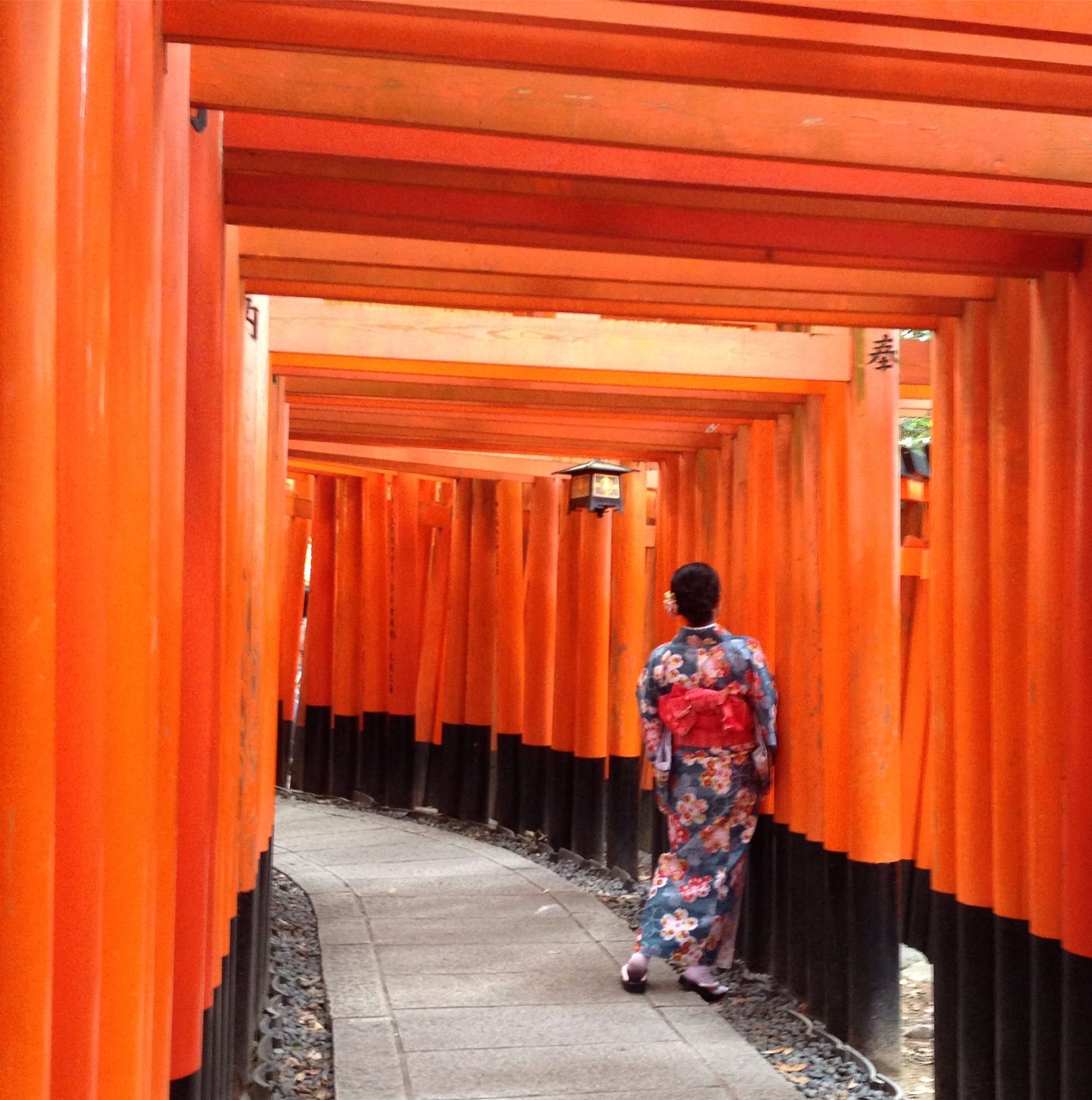
Kyoto looks like a one-base city, and for most people it is. The real question is which base, because the famous sights sit around the edges (Fushimi Inari to the south, Arashiyama to the west, Kinkaku-ji to the north-west, the temple belt along the eastern hills) and the city buses are slow and often full. Pick the wrong neighbourhood and you lose an hour a day in transit.
Bookings: Some of the links in this article are affiliate links. This means that if you choose to make a booking, we will receive a small commission at no extra cost to you. Thank you!
We spent a week in Kyoto with two kids at the turn of September and October 2017, using two bases, both traditional wooden townhouses (machiya): five nights in a self-catering house north of Kyoto Station, then two nights in a machiya inn downtown. Neither is listed on Booking.com any more, so for each we point you to the closest verified equivalent.
The short version: base yourself downtown or near the station, splurge on Gion only if atmosphere matters more than space, and keep Arashiyama, Okazaki and Nishijin for a night or two, or for a second visit.
The Short Answer
| Best for | Area | Our pick | Why |
|---|---|---|---|
| First-time visitors | Downtown | Kyomachiya Ryokan Sakura Urushitei | Townhouse-style ryokan about ten minutes' walk from Kawaramachi |
| Families needing a kitchen | Kyoto Station area | Sumihotaru Oboro Machiya House | Whole two-bedroom house for up to five, two JR stops from the station |
| Couples after atmosphere | Gion and Southern Higashiyama | Seikoro Ryokan | A ryokan founded in 1831, within walking distance of Gion |
| Tight budgets | Downtown | Piece Hostel Sanjo | Private doubles and family rooms at hostel prices |
| Day trips by rail | Kyoto Station | Hotel Granvia Kyoto | Inside the station, above the Nara and airport trains |
| Temples and gardens | Okazaki | Kyoto Nanzenji Ryokan Yachiyo | Next to Nanzen-ji, with empty lanes after dark |
| Evenings without crowds | Arashiyama | Homm Stay Nagi Arashiyama | The bamboo grove on foot once the day-trippers leave |
| Local life near Kinkaku-ji | Nishijin and Kitano | Nishijin Isa Machiya Holiday House | A whole townhouse in the old weaving district |
Where we stayed: Kyoto Karin, a machiya house north of Kyoto Station (five nights), and Kyoumachiya Inn Rakuoan, downtown (two nights), from 30 September to 7 October 2017.
How Kyoto Is Laid Out
Kyoto is a grid in a basin, closed by hills on three sides, with the Kamo river running north–south through it. Kyoto Station sits at the southern edge of the centre. About two kilometres north, Shijo-dori and Kawaramachi-dori form the commercial heart, with Nishiki Market just west of the river and Gion just east of it. The eastern hills (Higashiyama) hold Kiyomizu-dera, Yasaka Shrine, Nanzen-ji and the Philosopher's Path. Nishijin lies in the north-west, Arashiyama on the western edge.
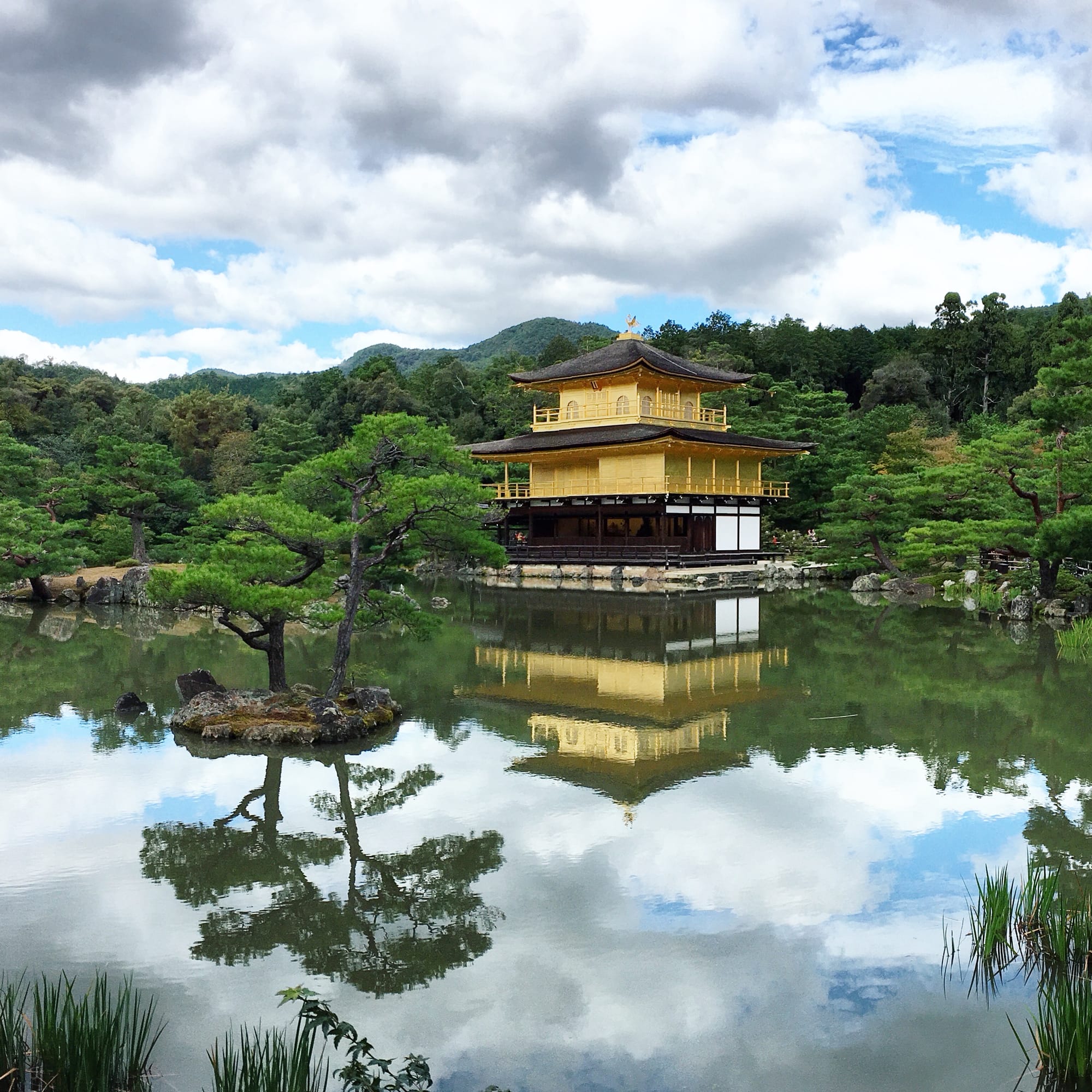
The subway has only two lines, so for the outlying sights you use JR, the private Keihan and Hankyu railways, the Randen tram and city buses. Buses charge a flat ¥230 for adults and ¥120 for children; a subway-and-bus day pass costs ¥1,100. The buses to Kiyomizu-dera and Kinkaku-ji are often packed, and that is the constraint most first-timers underestimate: a base near a rail station saves more time than a base near any one temple.
From Kansai International Airport, the JR Haruka reaches Kyoto Station in about 75 minutes; overseas visitors can buy a discounted one-way Haruka ticket for around ¥2,200. The limousine bus takes 85–90 minutes. From Tokyo, the Shinkansen takes about two hours fifteen minutes, and very large suitcases need an oversized-luggage seat reservation.
Three to four nights covers the classics plus Nara. We had first booked an apartment near Enmachi station, west of Nijo Castle, and cancelled it; districts like that are quieter and cheaper, but every sightseeing day starts with a longer ride.
Downtown Kyoto — Best All-Round Base, Few Views
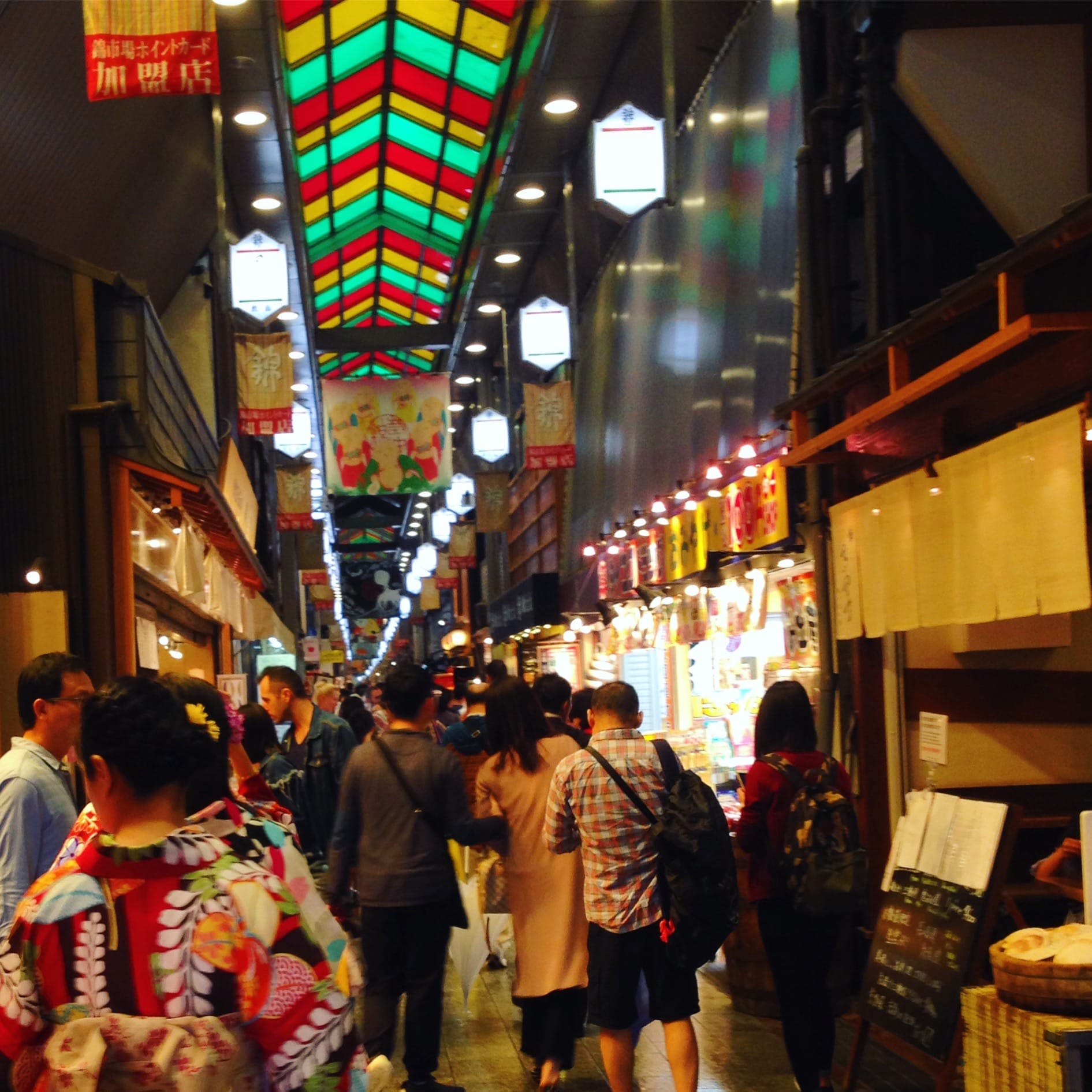
Downtown runs from Karasuma-dori east to the Kamo river, between Oike-dori and Gojo-dori. It is where Kyoto shops and eats: Nishiki Market, the covered arcades, Pontocho's restaurant lane. Gion is just across the Shijo bridge, and the lanes behind the avenues hold plenty of townhouses turned guesthouses.
It suits almost everyone on a first visit, families included: you walk to dinner, go back to rest in the afternoon and reach everything else by rail. What it is not is scenic, and the arcades are crowded from late morning.
Best for: first-time visitors, families, food lovers and stays of three to five nights.
Pros
- Walk to Nishiki Market, Pontocho and Gion
- Subway, Hankyu and Keihan stations close by
- The widest choice of rooms at every price
Cons
- Busy streets, little greenery away from the river
- Small hotel rooms
- Transport still needed for Kinkaku-ji, Arashiyama and Fushimi Inari
Getting around: Kyoto Station is two subway stops (about five minutes) from Shijo. Gion is 10–15 minutes on foot, Kiyomizu-dera about 30. Fushimi Inari is about 10 minutes by Keihan from Gion-Shijo; Arashiyama around 25 minutes by Hankyu, changing at Katsura.
Where to stay in Downtown Kyoto
- Budget — Piece Hostel Sanjo — hostel with dorms, doubles with private bathrooms and family rooms. Thousands of reviews and consistently high scores, near the Keihan, Hankyu and Tozai stations.
- Mid-range — Kyomachiya Ryokan Sakura Urushitei — townhouse-style ryokan, around €80 a night when we checked. Japanese-style rooms, family rooms and a bar downstairs; the nearest equivalent to the machiya inn where we stayed.
- Splurge — The Ritz-Carlton Kyoto — luxury hotel on the Kamo river by Nijo bridge. One of the city's most expensive addresses; check rates for your dates.
Our stay: Our last two nights, 5 to 7 October 2017, were at Kyoumachiya Inn Rakuoan, a machiya inn in the downtown lanes of Shimogyo ward, and cost around €75 a night. It still appears on other platforms as Kyoumachiya Inn Rakuouan but no longer on Booking.com, hence Sakura Urushitei above. The principle stands: a downtown machiya inn is the cheapest way to sleep in a traditional house with Nishiki and Gion on foot.
For how to spend your days from here, see our 4-day Kyoto itinerary with a Nara day trip.
Kyoto Station Area — Practical, Not Pretty
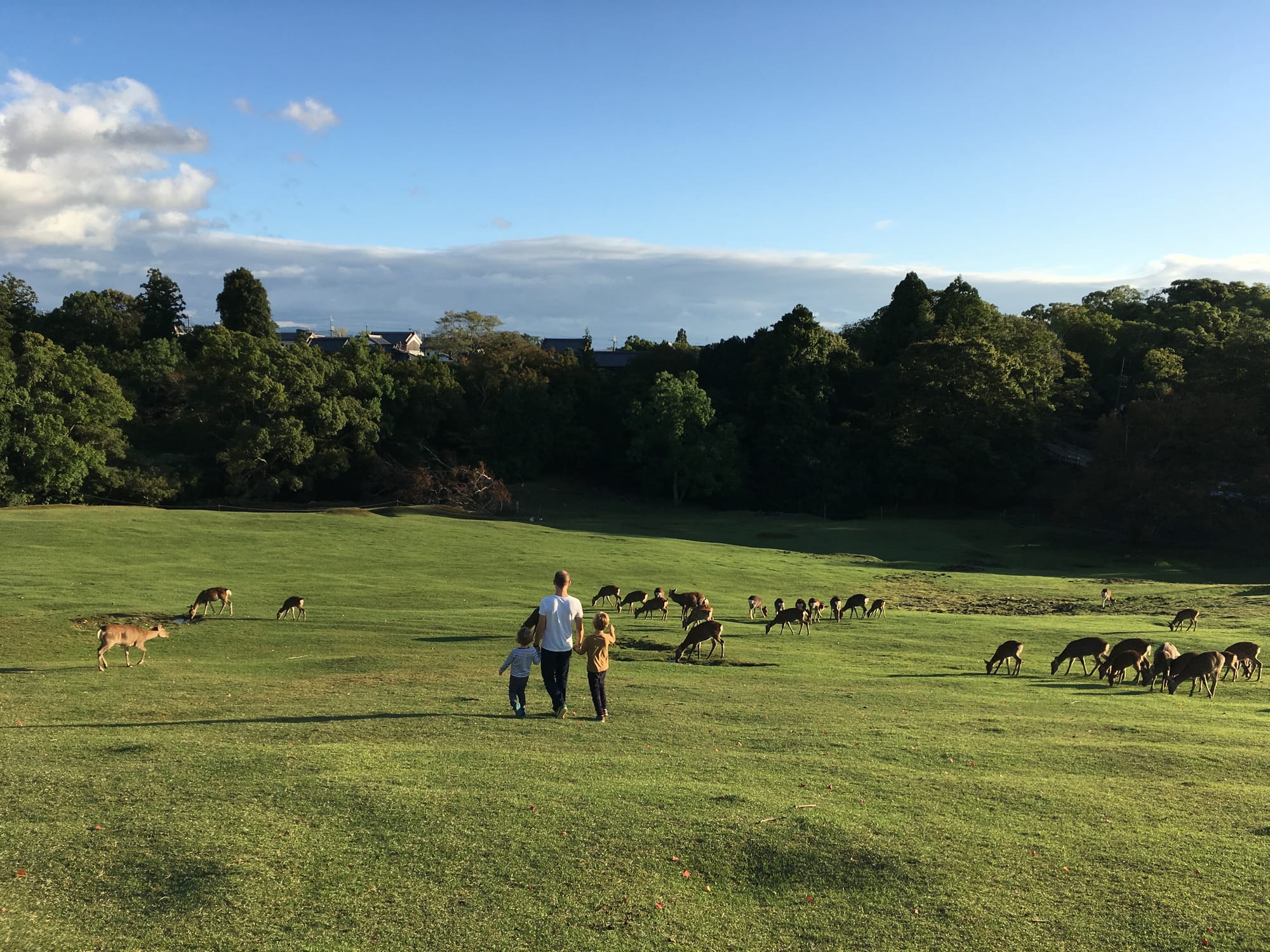
Kyoto Station is the transport hub: Shinkansen, the Haruka, JR lines to Nara and Arashiyama, subway and buses. Around it are big hotels, Kyoto Tower and, just north, the vast Honganji temples. The Kyoto Aquarium and Railway Museum, both easy wins with children, are a walk west.
The blocks north of the station towards Gojo-dori are a residential grid of small houses and workshops. This is where we rented our first base, and it is an underrated place to rent a whole house. It is not an area for evening strolls.
Best for: short stays, rail-heavy itineraries (Nara, Osaka, Himeji), late arrivals and heavy luggage.
Pros
- Direct trains to the airport, Nara, Fushimi Inari and Arashiyama
- Large hotels with more family rooms than downtown
- Whole-house rentals in the residential blocks
Cons
- Little atmosphere around the station itself
- Long bus queues for the eastern temples
- 20–30 minutes to Gion in the evening
Getting around: Fushimi Inari is two stops (about five minutes) on the JR Nara line, Nara about 45 minutes, Saga-Arashiyama about 15 minutes on the JR Sagano line. Downtown is two subway stops north; Kinkaku-ji about 40 minutes by bus.
Where to stay in the Kyoto Station area
- Budget to mid-range — Onyado Nono Kyoto Shichijo Natural Hot Spring — hotel with tatami-floored rooms, family rooms and a natural hot-spring bath, north of the station. One of the most reviewed hotels in Kyoto, and guests score it highly.
- Mid-range — Sumihotaru Oboro Machiya House — whole two-bedroom townhouse for up to five, with kitchen, washing machine and garden, a 9-minute walk from JR Tambaguchi, two stops from Kyoto Station. The closest equivalent to the house we rented.
- Splurge — Hotel Granvia Kyoto — large hotel inside the station building, with family rooms and an indoor pool. Worth it for early trains or big suitcases.
Our stay: Kyoto Karin was our first base, for five nights from 30 September to 5 October 2017, at around €90 a night. It was a self-catering machiya house in the lanes around Rokujo-dori, between Gojo-dori and the Honganji temples, with Kyoto Station and Gojo subway station both within walking distance. We found no current Booking.com listing for it, so we cannot vouch that it still takes guests; Sumihotaru Oboro offers the same space and kitchen. If you copy our split, consider reversing it: downtown first, the station last for an easy departure.
Gion and Southern Higashiyama — Atmosphere, at a Price
This is the Kyoto of the postcards: Hanamikoji-dori and its teahouses, the Shirakawa canal, Yasaka Shrine, and the stone-paved slopes of Ninenzaka and Sannenzaka climbing to Kiyomizu-dera. Stay here to walk them early or late, without the crowds.
The trade-offs are price, space and crowds. Rooms cost more than downtown for the same size, the lanes around Kiyomizu-dera are packed from mid-morning, and residents have closed some private lanes off Hanamikoji to tourists.
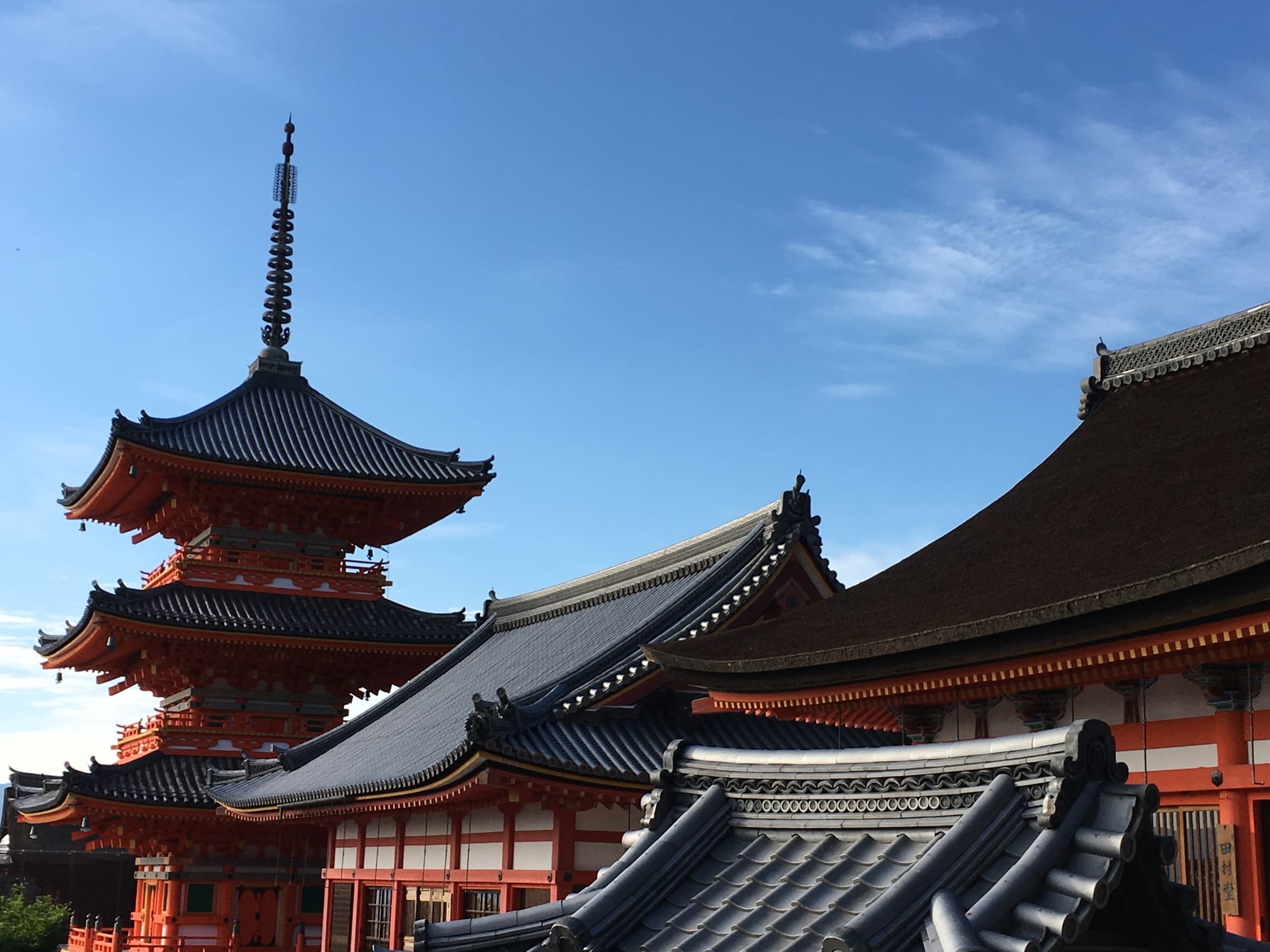
Best for: couples and a once-in-a-trip ryokan night.
Pros
- Old Kyoto on your doorstep morning and evening
- Walk to Kiyomizu-dera, Yasaka Shrine and Kennin-ji
- The best area for a traditional ryokan
- Keihan trains to Fushimi Inari from Gion-Shijo
Cons
- The most expensive area for the space
- Heavy daytime crowds around Kiyomizu-dera
- 45–60 minutes to Arashiyama and Kinkaku-ji
Getting around: Kiyomizu-dera is 20–25 minutes uphill on foot from Gion-Shijo, Fushimi Inari about 10 minutes by Keihan, Kyoto Station 15–20 minutes by taxi.
Where to stay in Gion and Southern Higashiyama
- Budget — Gion Ryokan Q-beh — hostel-style ryokan with private Japanese-style rooms, family rooms and dorms, mostly with shared bathrooms. Three minutes on foot from Yasaka Shrine and Kodai-ji.
- Mid-range — Hotel The Celestine Kyoto Gion — modern hotel ten minutes' walk from Gion-Shijo, around €240 a night when we checked. Guests mention rooms that are spacious by Japanese standards.
- Splurge — Seikoro Ryokan — ryokan founded in 1831, near the Kamo river at Gojo, around €370 a night when we checked. Traditional rooms, family rooms and thousands of excellent reviews.
Okazaki and Northern Higashiyama — Quiet Temples, Early Nights
North of Gion, the hills continue with Chion-in, Nanzen-ji, Eikan-do and the Philosopher's Path, a canal-side walk of about two kilometres up to Ginkaku-ji. Okazaki, on the flat ground below, is the museum and park district: Heian Shrine, the Kyoto City KYOCERA Museum of Art and Kyoto City Zoo, handy with children.
It is green and calm. That is also the downside: few restaurants, early nights, almost no budget beds, and the south and west a long way off.
Best for: second-time visitors, garden lovers and slow travellers.
Pros
- Walk to Nanzen-ji, Eikan-do, Heian Shrine and the Philosopher's Path
- More greenery and quiet than anywhere central
- Tozai subway at Higashiyama and Keage stations
Cons
- Few budget options and few places to eat at night
- 20–30 minutes to Kyoto Station
- Far from Arashiyama and Kinkaku-ji
Getting around: Higashiyama station is one stop from Sanjo-Keihan on the Tozai line; Kyoto Station takes 20–30 minutes with a change. Gion is a 15–20 minute walk south.
Where to stay in Okazaki and Northern Higashiyama
- Mid-range — Tassel Hotel Sanjo Shirakawa — hotel at Sanjo-Shirakawa, around €80 a night when we checked. Well placed between Okazaki and Gion.
- Mid-range to splurge — The Westin Miyako Kyoto — large hotel on the hillside at Keage, around €210 a night when we checked, a short walk from Nanzen-ji.
- Splurge — Kyoto Nanzenji Ryokan Yachiyo — ryokan established in 1915 beside Nanzen-ji, with a garden, around €290 a night when we checked.
Arashiyama — Evenings Without the Crowds
Arashiyama is a small riverside town on the western edge of Kyoto: the Togetsu-kyo bridge, Tenryu-ji and its Sogen-chi garden, the bamboo grove and, across the river, Iwatayama Monkey Park. Packed by day, it empties in the evening, and a night here gives you the riverbank and bamboo grove before the crowds return.
As a base for a whole stay it is poor: everything else is far away. As a one- or two-night stop, especially in autumn, it is a different Kyoto.
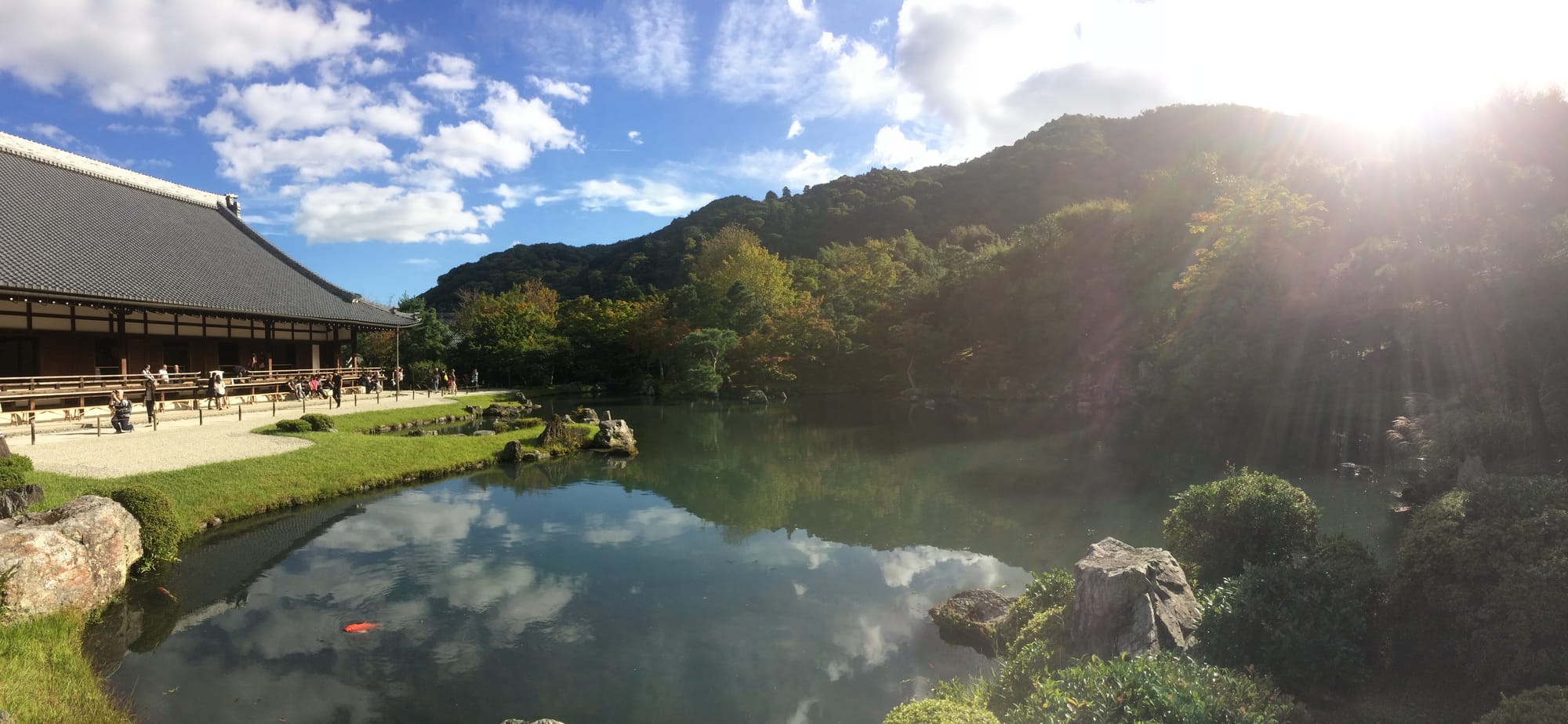
Best for: couples, nature lovers and anyone adding a quiet night to a central stay.
Pros
- Bamboo grove, Tenryu-ji and the river before the crowds
- Hills and forest instead of city streets
- Direct JR trains to Kyoto Station
Cons
- Far from Gion, Kiyomizu-dera and Fushimi Inari
- Very quiet evenings, few dinner options
- Almost no budget accommodation
Getting around: the JR Sagano line reaches Kyoto Station in about 15 minutes, Hankyu reaches downtown in about 25 with a change at Katsura, and the Randen tram reaches Shijo-Omiya in about 22. Gion is 45–60 minutes away.
Where to stay in Arashiyama
- Mid-range — Homm Stay Nagi Arashiyama — hotel in Saga-Tenryuji, around €125 a night when we checked, with the bamboo grove and Tenryu-ji on foot.
- Mid-range, for families — The GrandWest Arashiyama — apartment-style hotel five minutes from Hankyu Arashiyama station, around €145 a night when we checked. Family rooms with a tatami area; some units have a kitchen.
- Splurge — Suiran, a Luxury Collection Hotel — luxury hotel on the river, around €550 a night when we checked, and walkable to Tenryu-ji.
Nishijin and Kitano — Local Kyoto, Few Trains
Nishijin is the old weaving district north-west of the Imperial Palace, where silk brocade for kimono sashes has been made for centuries. Its lanes of townhouses and workshops see few tourists. At its western edge is Kitano Tenmangu shrine, known for its plum trees and its flea market on the 25th of each month; Kinkaku-ji is about 20 minutes' walk further on.
It suits a second visit, or a family renting a house in a real neighbourhood. It is not a convenient first base: there is no subway or JR station in the district itself, so most journeys start with a bus, and the evenings are very quiet.
Best for: repeat visitors and families renting a whole house.
Pros
- Real neighbourhood life, few tour groups
- Close to Kinkaku-ji, Ryoan-ji and Kitano Tenmangu
- Whole machiya houses for less than downtown
Cons
- No nearby subway or JR station; buses for most trips
- Few restaurants open late
- Far from Fushimi Inari and the eastern temples
Getting around: Imadegawa station on the Karasuma subway line is at the district's eastern edge; Kyoto Station is 30–40 minutes by bus or subway. The Randen Kitano line reaches Arashiyama in about half an hour, changing at Katabiranotsuji.
Where to stay in Nishijin and Kitano
- Budget to mid-range — Yadoya Nishijinso — ryokan near Horikawa-dori with tatami rooms for up to four and private bathrooms. It also has free parking.
- Mid-range — Kyoto Pleasant Hotel — hotel in central Nishijin with family rooms, around €95 a night when we checked.
- Mid-range — Nishijin Isa Machiya Holiday House — whole two-bedroom townhouse for up to five, with kitchen and washing machine, around €170 a night when we checked. Few reviews so far, all excellent.
What It Costs, and When to Book
Kyoto has become expensive: city hotel rates in April, May and June 2026 ran 16–20% above the same months of 2025. Rough nightly bands outside the peaks (prices checked October 2026):
- Budget: dorm beds from about €25–35; private rooms in hostels and simple ryokan from about €50–80.
- Mid-range: standard hotels from about €70–150; whole machiya houses for a family usually €150–250.
- Splurge: luxury hotels and top ryokan from about €300, often far more.
The peaks are cherry blossom (late March to early April) and autumn colours (mid-November to early December), when rates hit their highest. Golden Week (late April to early May) and New Year are also busy. January, February and the humid weeks of July and August are the softest months. Early October, when we went, falls between the peaks.
Book ryokan and machiya houses four to six months ahead for spring and autumn. Machiya houses and ryokan more often ask for prepayment than hotels, so read the conditions.
Since 1 March 2026, Kyoto's accommodation tax runs from ¥200 to ¥10,000 per person per night depending on the room rate (tiers in the FAQ below). It is usually collected at check-in, though some platforms charge it upfront.
For families, rooms for four are rare outside larger hotels, which is the main argument for a machiya house or apartment-style hotel. Breakfast is often extra and parking limited. In a machiya, expect steep stairs, low beds or futons and no reception desk.
Where This Fits in the Trip
Our 4-day Kyoto itinerary with a Nara day trip works best from downtown or the station area: Nishiki Market, Nara by JR, Kinkaku-ji with Arashiyama, then Fushimi Inari and Kiyomizu-dera. Extra nights belong at the edges, in Arashiyama or Okazaki.
Compare hotels in Kyoto on Trip.com
FAQ
What is the best area to stay in Kyoto for first-timers? The downtown grid between Karasuma-dori and the Kamo river. You can walk to Nishiki Market and Gion, the subway reaches Kyoto Station in five minutes, and it has the widest choice of rooms.
Is it better to stay near Kyoto Station or in Gion? Near the station if you plan rail day trips (Nara, Osaka, Himeji) or carry heavy luggage. Gion if you want the old streets on your doorstep early and late, and accept paying more for less space.
How many nights do you need in Kyoto? Three to four nights covers the classic sights plus a day trip to Nara. With five or more, add a night or two in Arashiyama or Okazaki.
Is a machiya rental a good idea with kids? Often, yes: a whole townhouse usually gives you two bedrooms, a kitchen and a washing machine. Expect steep stairs, low beds or futons, no reception and chilly rooms in winter.
How much is the Kyoto accommodation tax? Since 1 March 2026 it is charged per person per night by room rate: ¥200 below ¥6,000, ¥400 up to ¥19,999, ¥1,000 up to ¥49,999, ¥4,000 up to ¥99,999 and ¥10,000 from ¥100,000. It is usually paid at check-in.
When should you book for cherry blossom or autumn colours? Four to six months ahead for ryokan and machiya houses in late March, early April and November, when rates are at their highest.
Pierrick Jean stayed in Kyoto in September and October 2017 with his family. Prices and availability checked October 2026. More about how we write our guides.