
4 Days in Kyoto: The Perfect First-Timer's Itinerary (with a Nara Day Trip)
A practical 4-day Kyoto itinerary for first-timers — Nishiki Market's covered arcades, the Golden Pavilion, Arashiyama's monkey park, Fushimi Inari's torii tunnels and a day trip to Nara's sacred deer.

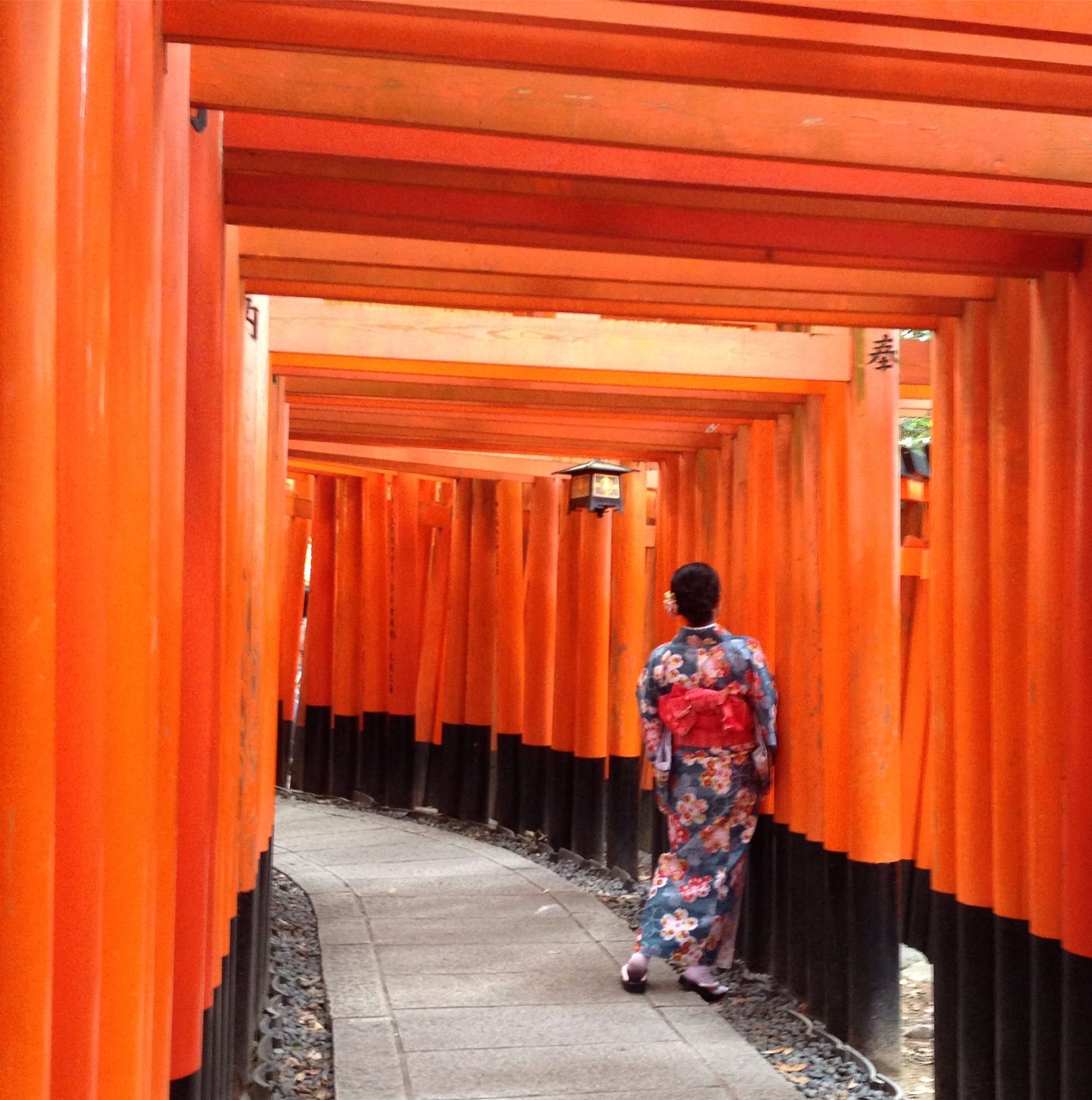
Lantern-lit arcades, vermillion torii gates marching uphill, and a golden pavilion floating on a mirror pond — Kyoto will unpack a thousand years of Japan in the time it takes to finish a matcha. Give yourself four days, and the former imperial capital reveals itself in layers: first the everyday rhythm of covered shopping streets, then the sacred gardens, then the quieter corners tucked into the hills.
This itinerary is built around four full days based in central Kyoto, with a day trip to Nara — the smaller, deer-filled town that launched Japanese Buddhism before Kyoto was even a capital. It's the classic first-timer's circuit, and it works. You'll see the icons without rushing, eat well, and still have time to wander between things.
Bookings: Some of the links in this article are affiliate links. If you choose to make a booking, we'll receive a small commission at no extra cost to you. Thank You!
Where to Base Yourself in Kyoto
Kyoto is compact by Japanese-city standards, and most of the sights in this itinerary sit within a 30-minute train or bus ride of downtown. The best area for first-timers is the wedge between Kyoto Station in the south and Shijō-Kawaramachi in the north — it puts you on the Karasuma and Keihan lines for Fushimi Inari and the east side, within walking distance of Nishiki Market, and ten minutes from the JR platforms for Nara and Arashiyama.
Use the map below to explore neighbourhoods and compare stays. Machiya townhouses in Gion are atmospheric but expensive; modern hotels near Kyoto Station are practical for luggage-heavy arrivals; Karasuma is the sweet spot for food and transport.
If you're arriving via Kansai International Airport (KIX), the Haruka Express train takes 75 minutes and drops you ten minutes on foot from most downtown hotels. For a no-fuss downtown base, compare Kyoto hotels on Trip.com — Karasuma and Shijō neighbourhoods cluster the best value with easy rail access.
Day 1 — Settle Into Kyoto's Covered Arcades
Don't try to do a temple on your first afternoon. Jet-lagged or not, the best way to start in Kyoto is to wander the covered shopping streets that stitch the downtown together — Teramachi, Shinkyōgoku, and the legendary Nishiki Market. These arcades are where Kyoto eats, shops and hangs out, and they give you the city's everyday pulse before you go chasing the postcards.
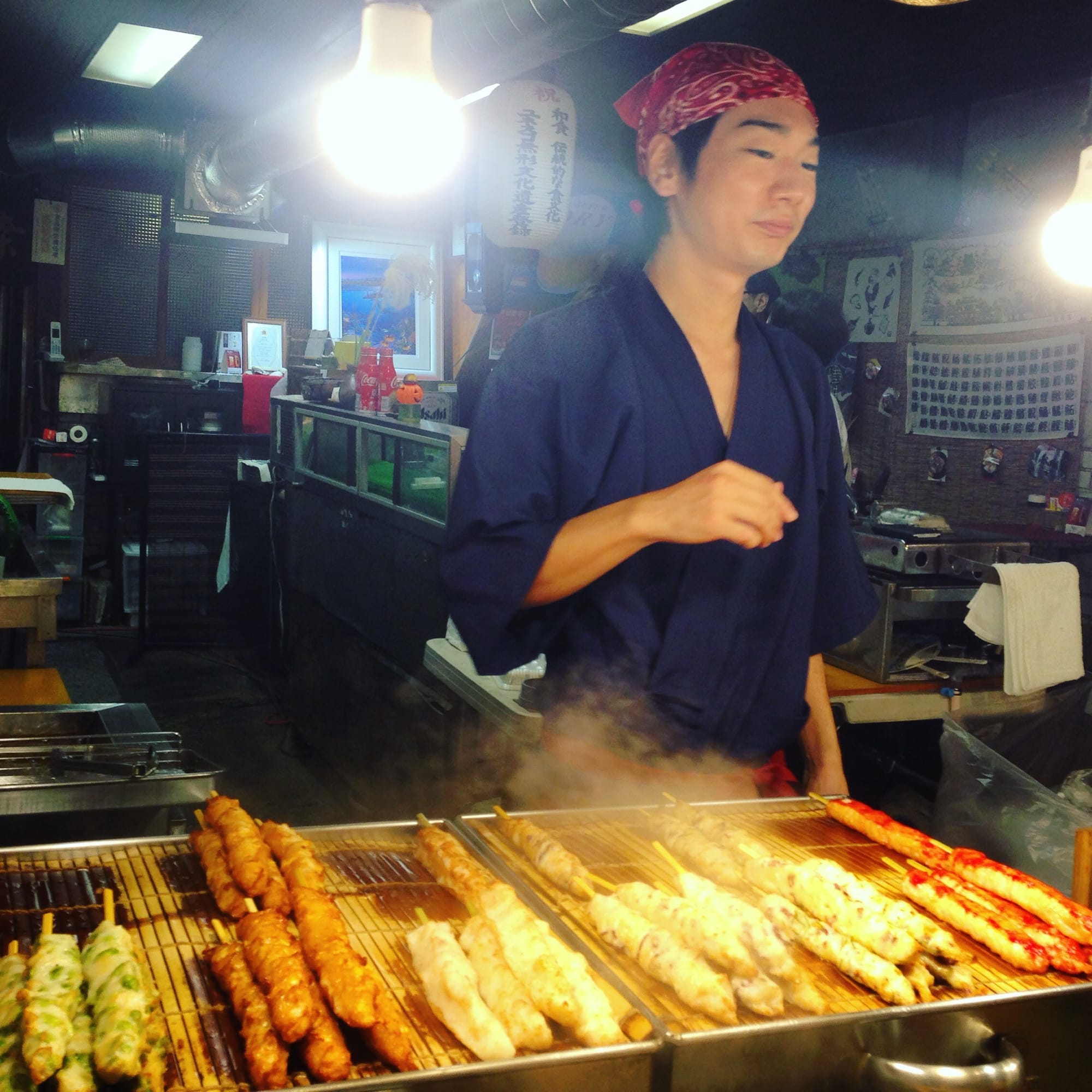
Start at the northern end of Teramachi, near Oike-dōri, and drift south. The pace is calm in the late morning, and the light filtering through the arcade roofs is unexpectedly pretty. Nishiki is the food spine — nearly 400 metres of pickle stalls, tamagoyaki griddles, knife makers, wagashi sweet shops and tiny counters selling skewers you eat standing up.
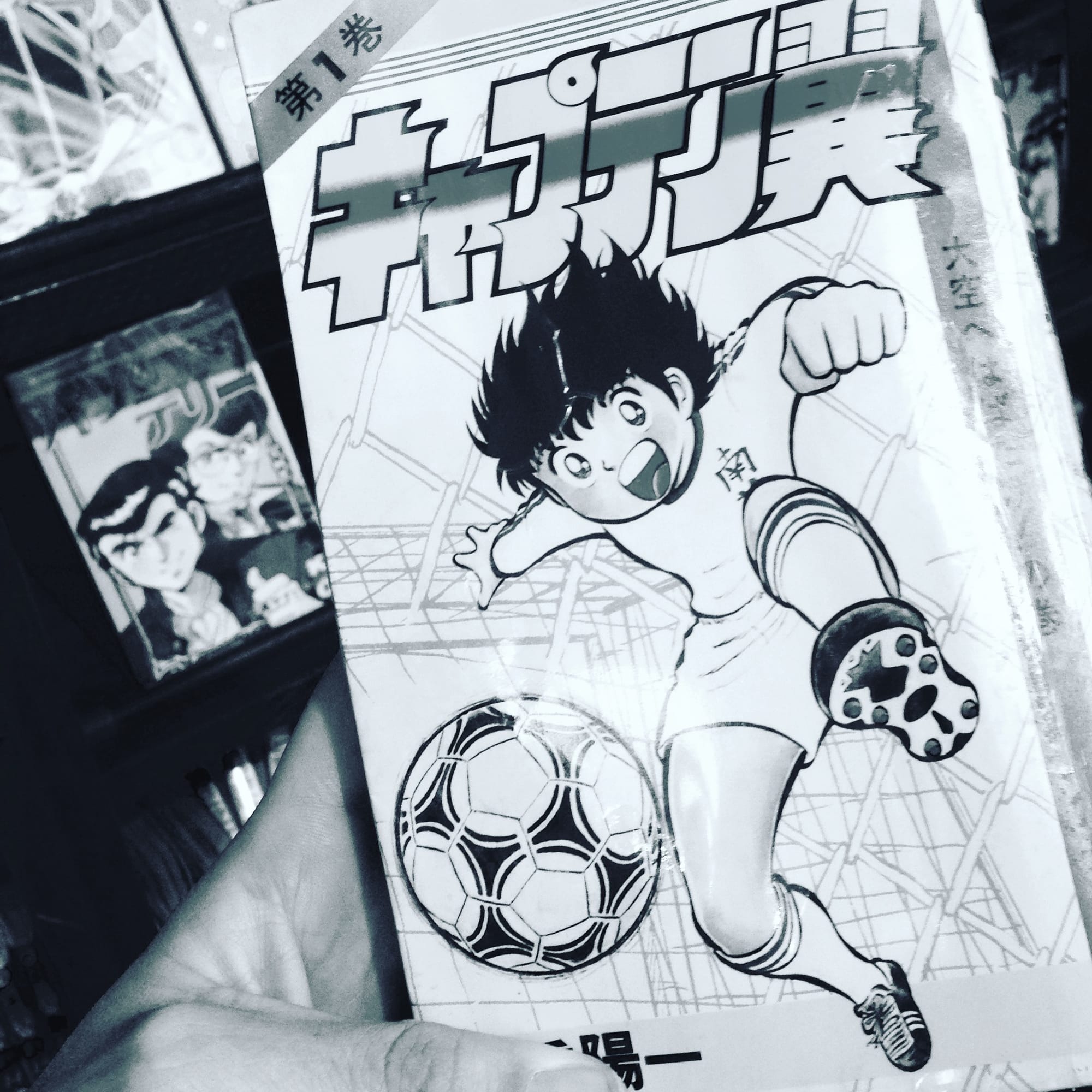
The neighbouring arcades keep surprising you. Slip into one of the manga and secondhand bookshops tucked between the food stalls and you'll find shelves of classics — from Tezuka to Captain Tsubasa — often at a fraction of what you'd pay elsewhere. It's a reminder that Kyoto isn't a museum town. People live here, and they've been doing their errands in these arcades for generations.
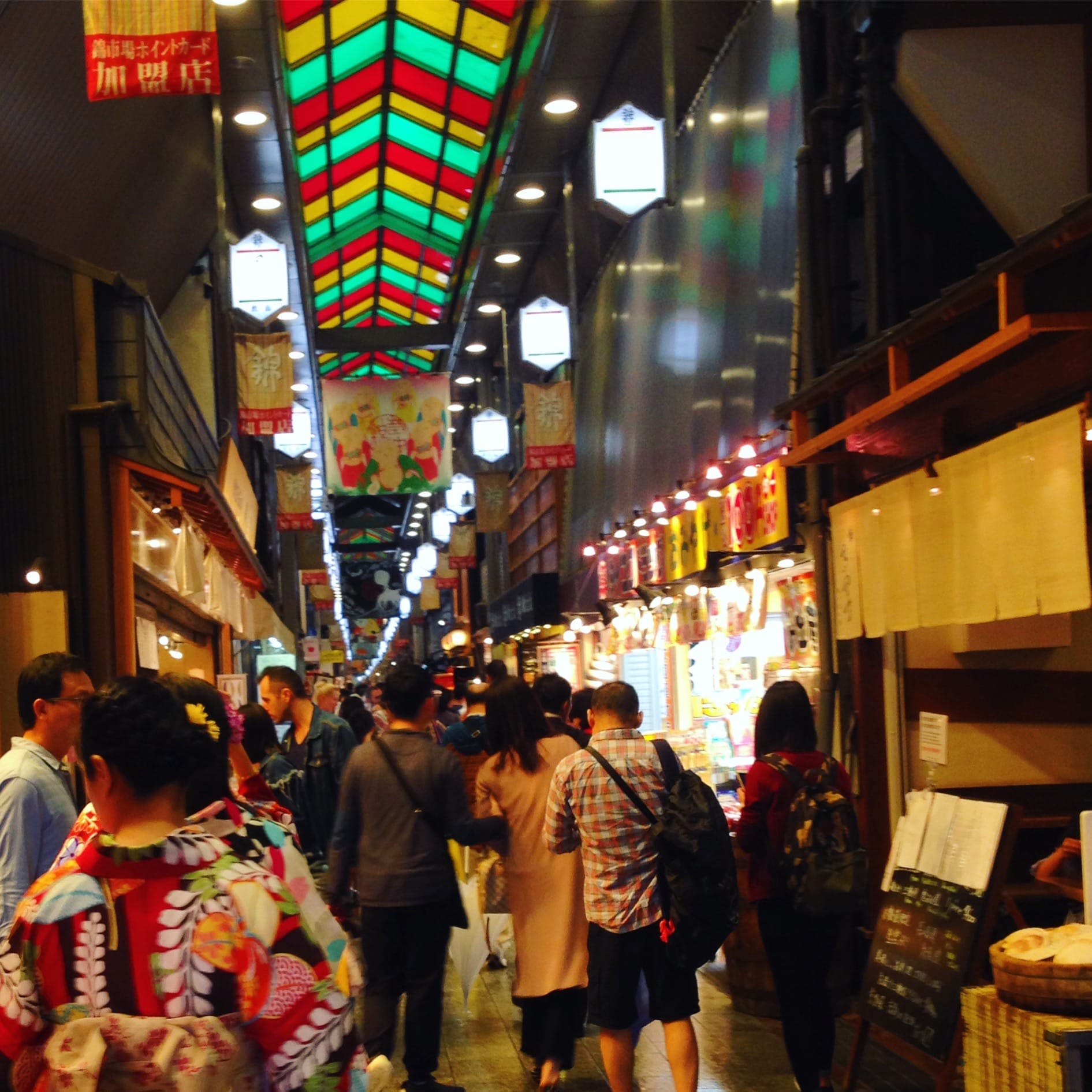
By mid-afternoon, Nishiki is in full swing. The stained-glass arcade roof in red, yellow and green turns every photo into a soft-focus film still. Look up — it's one of the most photogenic ceilings in the city, and most visitors miss it entirely because they're too busy pointing at food.
How long to spend: 3–4 hours. Start at Oike-dōri, walk south through Teramachi into Nishiki, exit at Kawaramachi and cross the Kamogawa river to Gion for sunset. A Nishiki Market food walking tour with a local guide is the fastest way to taste ten stalls you'd otherwise walk past — and to understand what you're actually eating.
Practical tip: Nishiki vendors increasingly ask you not to walk-and-eat in the narrow aisles. Step to the side of a stall (or into a small eat-in counter) and you'll get a warmer welcome.
Day 2 — Day Trip to Nara: Deer, Temples & a Floating Pavilion
Nara sits 45 minutes from Kyoto on the JR Nara Line and is one of the easiest day trips in Japan. It was the country's capital in the 8th century, which is why you'll find one of the oldest and largest wooden Buddhist temples in the world here — plus, famously, about 1,200 semi-tame sika deer that roam the park.
Take an early train, head for Nara Park, and work your way from Kōfuku-ji toward Tōdai-ji and the great Daibutsu bronze Buddha. The deer are everywhere. They're technically wild, they bow for crackers (sold by park vendors), and they have zero interest in your sightseeing plan. Kids love them; small kids can be a bit surprised by the nudging, so keep the cracker stash out of reach until you're ready.
The real treat is pushing past the tour-bus crush of Tōdai-ji and into the quieter meadows of Tobihino, in the southeast corner of the park. Here the deer graze at a slower pace, the grass stretches for hundreds of metres, and you can actually hear the birds again.
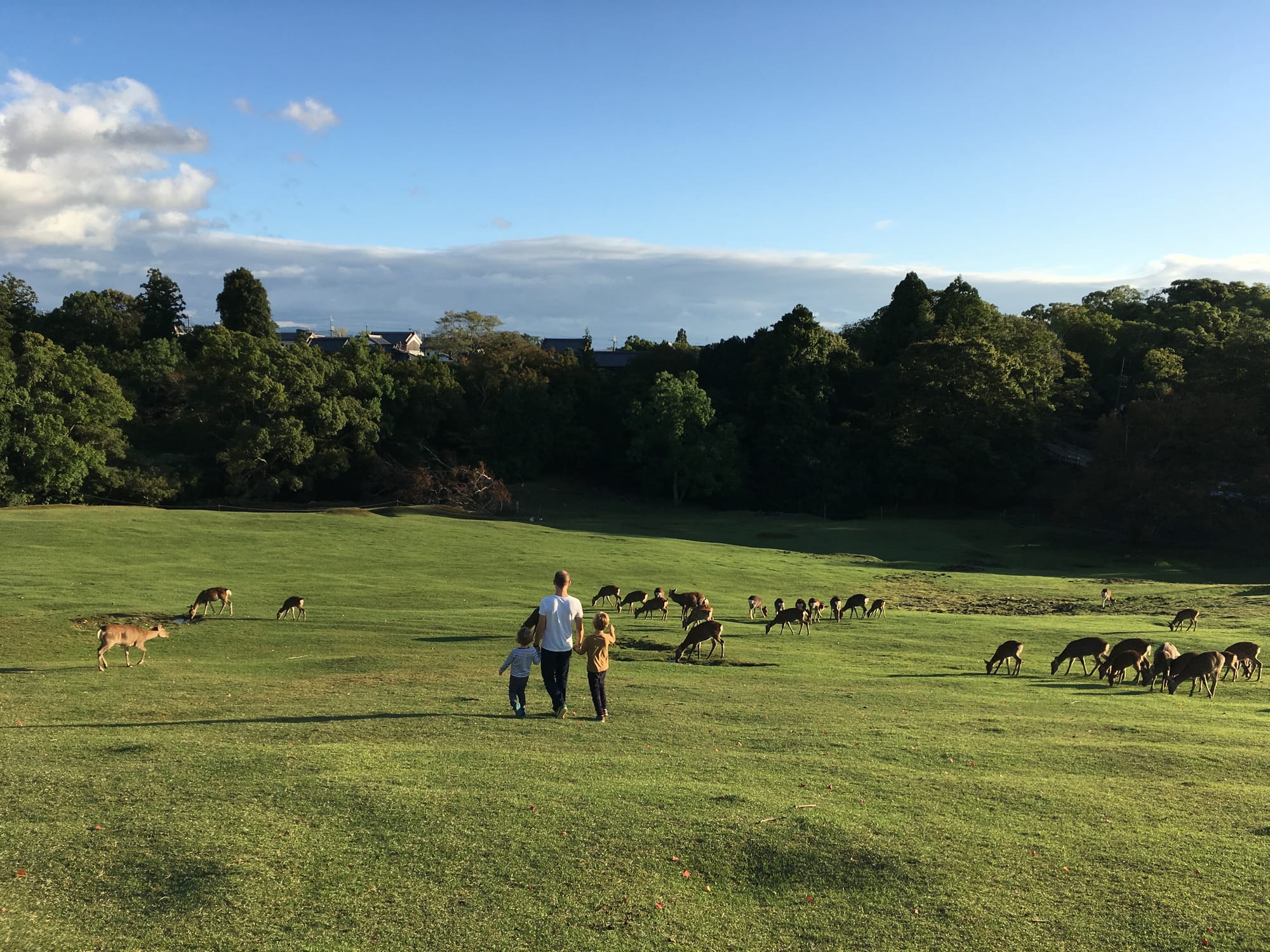
Save the last 45 minutes of daylight for Ukimido, the "floating pavilion" perched on stilts over Sagiike Pond. It's a ten-minute walk from Tobihino, it costs nothing, and the light in the hour before sunset is the single most atmospheric moment of a Nara day. Most coach tours have left by then. You'll often share the view with a handful of quiet visitors and the ripple of carp breaking the reflection.
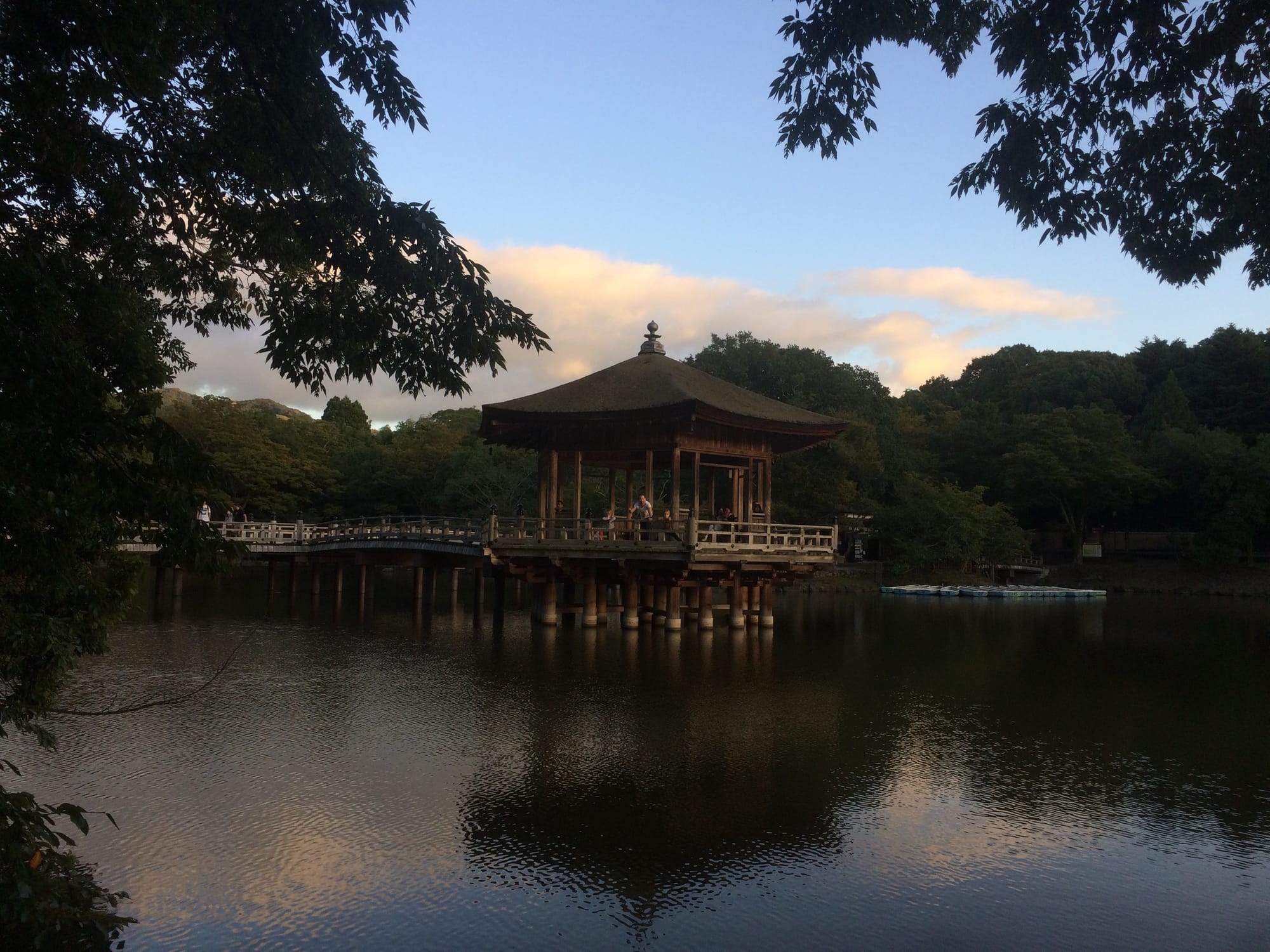
How to get there: JR Nara Line from Kyoto Station, rapid service (nara-bound), 45 minutes, around ¥720 each way. A guided Nara day trip from Kyoto is useful if you want temple context without navigating buses.
Practical tip: Don't buy the deer crackers until you're past the entry stalls near Kōfuku-ji — they're the same price in quieter corners and you'll draw fewer deer at once.
Day 3 — The Golden Pavilion & Arashiyama's Western Wonders
Day three pairs Kyoto's most famous single sight with its most cinematic neighbourhood. The Kinkaku-ji (Golden Pavilion) is best attacked first thing in the morning, before the tour buses. City buses 101 and 205 get you there from Kyoto Station in about 40 minutes; a taxi is ¥2,000–2,500.
On a clear, still morning, the reflection in Kyōko-chi — the mirror pond — is the reason you came to Japan. Two storeys of the pavilion are covered in gold leaf, and the water doubles everything: the gold, the pines, the sculpted islands, the clouds. You don't linger inside the grounds (the path is one-way and takes around 30 minutes), but you don't need to. The view hits you from the first platform.
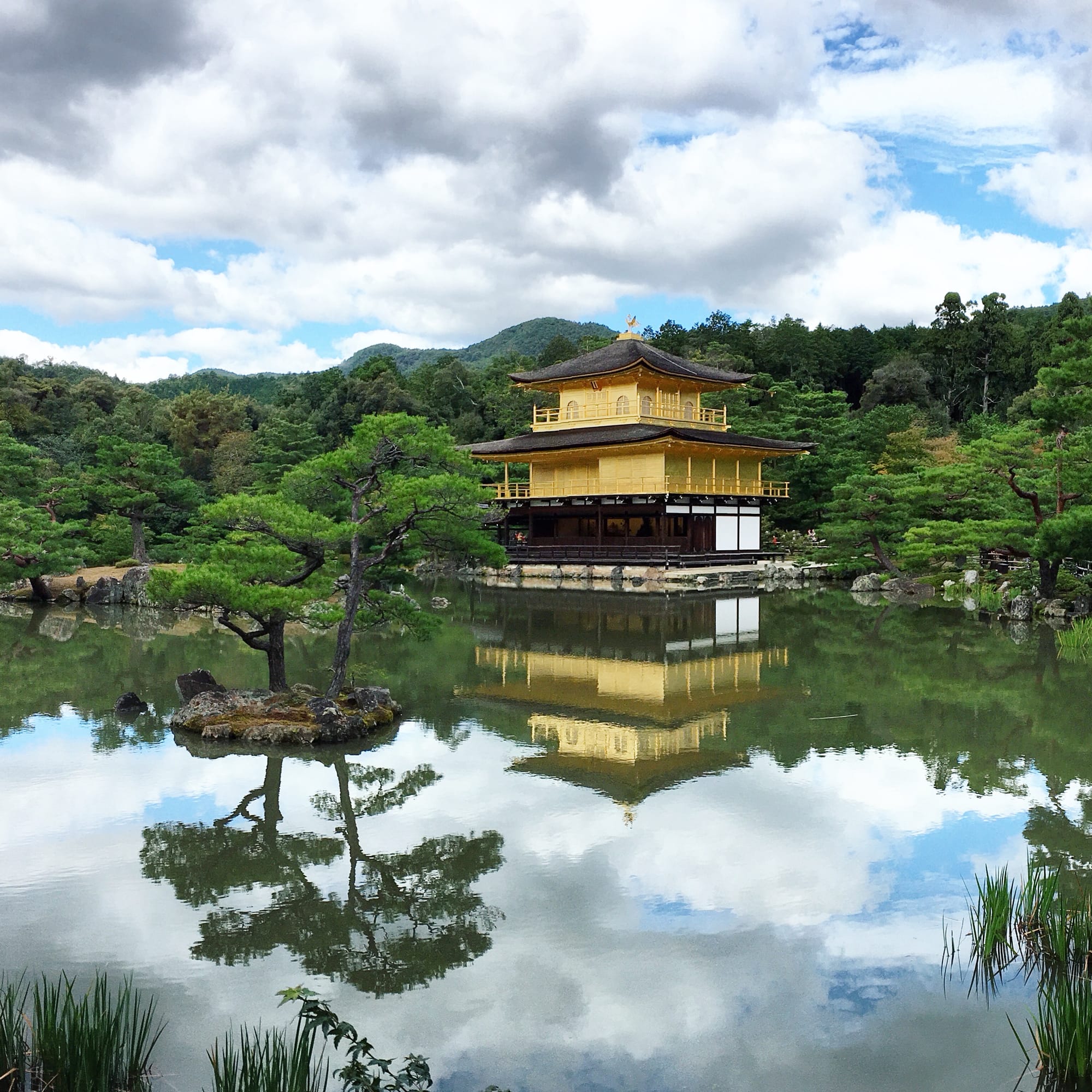
From Kinkaku-ji, cut west by bus or taxi to Arashiyama, the city's western edge. It's an hour away by public transport, or 15 minutes by taxi. Have lunch near Tōgetsu-kyō bridge, then disappear into Tenryū-ji, the Zen temple whose Sōgen-chi Garden is a UNESCO-listed masterpiece and one of the oldest surviving landscape gardens in Japan. Plan to circle the pond slowly — the angles shift as you walk, and the "borrowed scenery" of the Arashiyama mountains is the whole point.
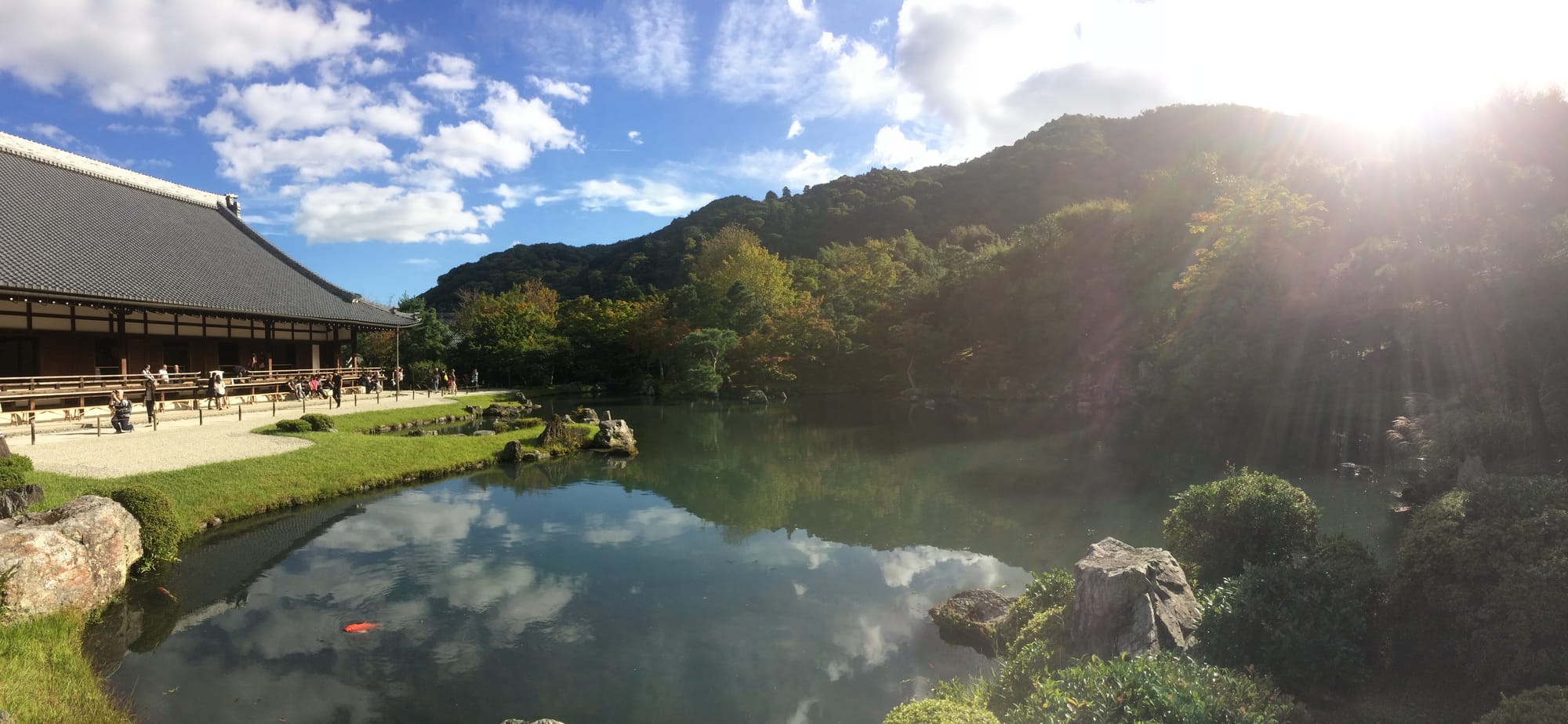
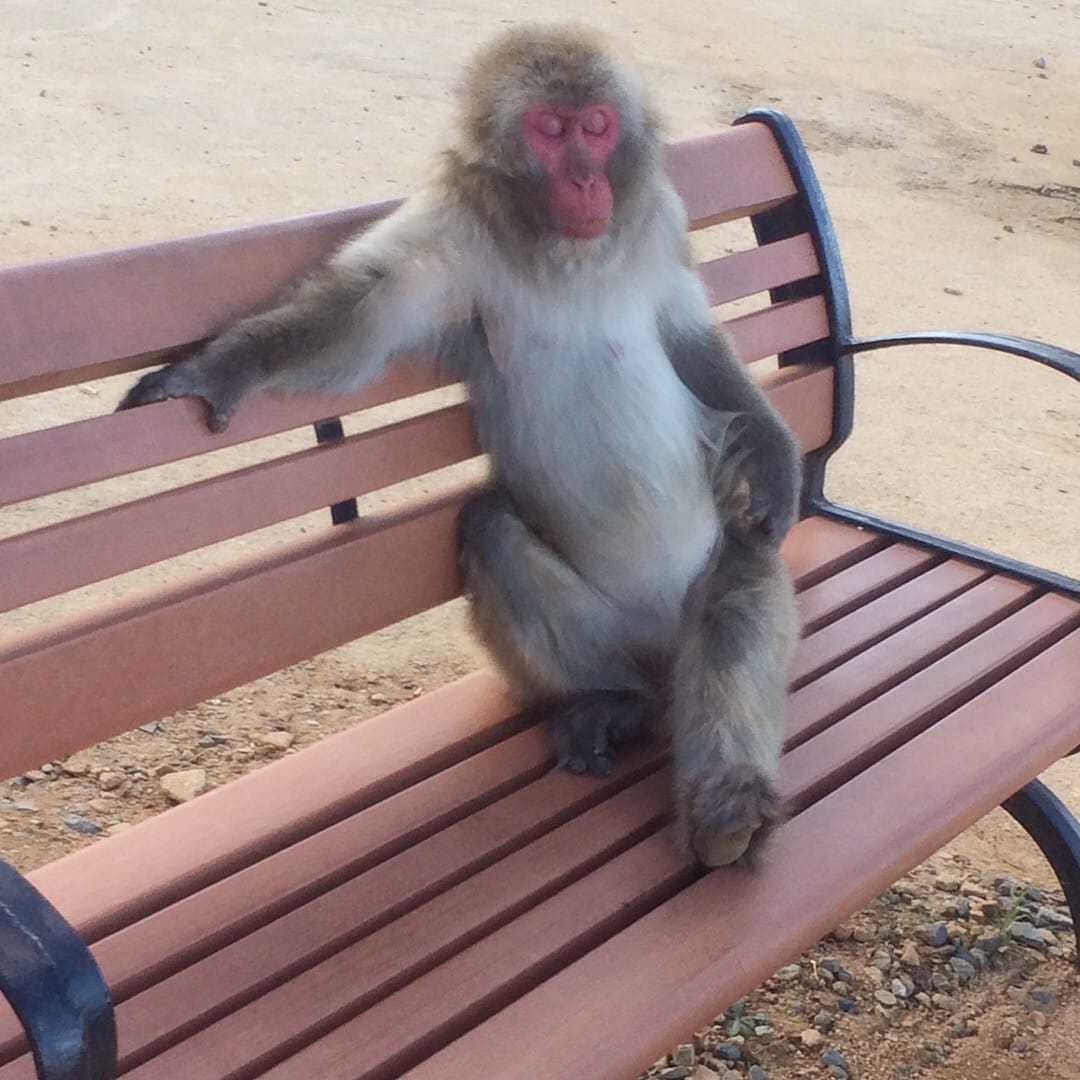
Most guides send you next into the bamboo grove, which is honestly a ten-minute walk through a corridor of green — worth it, but not as mysterious as photos suggest when there are 400 people with phones around you. Instead, if you have time and energy, cross the river and climb to the Iwatayama Monkey Park. It's 20 minutes of steady uphill, and at the top you'll find about 120 Japanese macaques roaming freely, plus a panorama over the whole of Kyoto. The monkeys are habituated but wild; watch them from a polite distance.
Practical tip: A morning tour that combines Kinkaku-ji with Ryōan-ji and Kitano Tenmangū is useful if you're short on time — it handles the buses for you and adds one of Kyoto's most famous rock gardens.
Day 4 — Fushimi Inari & Kiyomizu-dera
Save the two most photogenic sights for the last day. Fushimi Inari Taisha is a short ride south of Kyoto Station on the JR Nara Line (or the Keihan line, stop: Fushimi-Inari). Go early — 8 a.m. is ideal — to have the famous Senbon Torii corridor to yourself. Ten thousand vermillion gates snake up Mount Inari, donated by individuals and companies over centuries, and the effect of walking through them alone, in the hush of morning, is hard to forget.
The full mountain loop takes 2–3 hours at a steady pace, with several viewpoints over Kyoto on the way up. If you don't want to climb the whole thing, turn back at the Yotsutsuji intersection after 45 minutes — you'll have seen the best of the gates and the view is almost as good. A small-group Fushimi Inari early-morning guided hike is the easiest way to skip the crowds and understand the shrine's history in context.
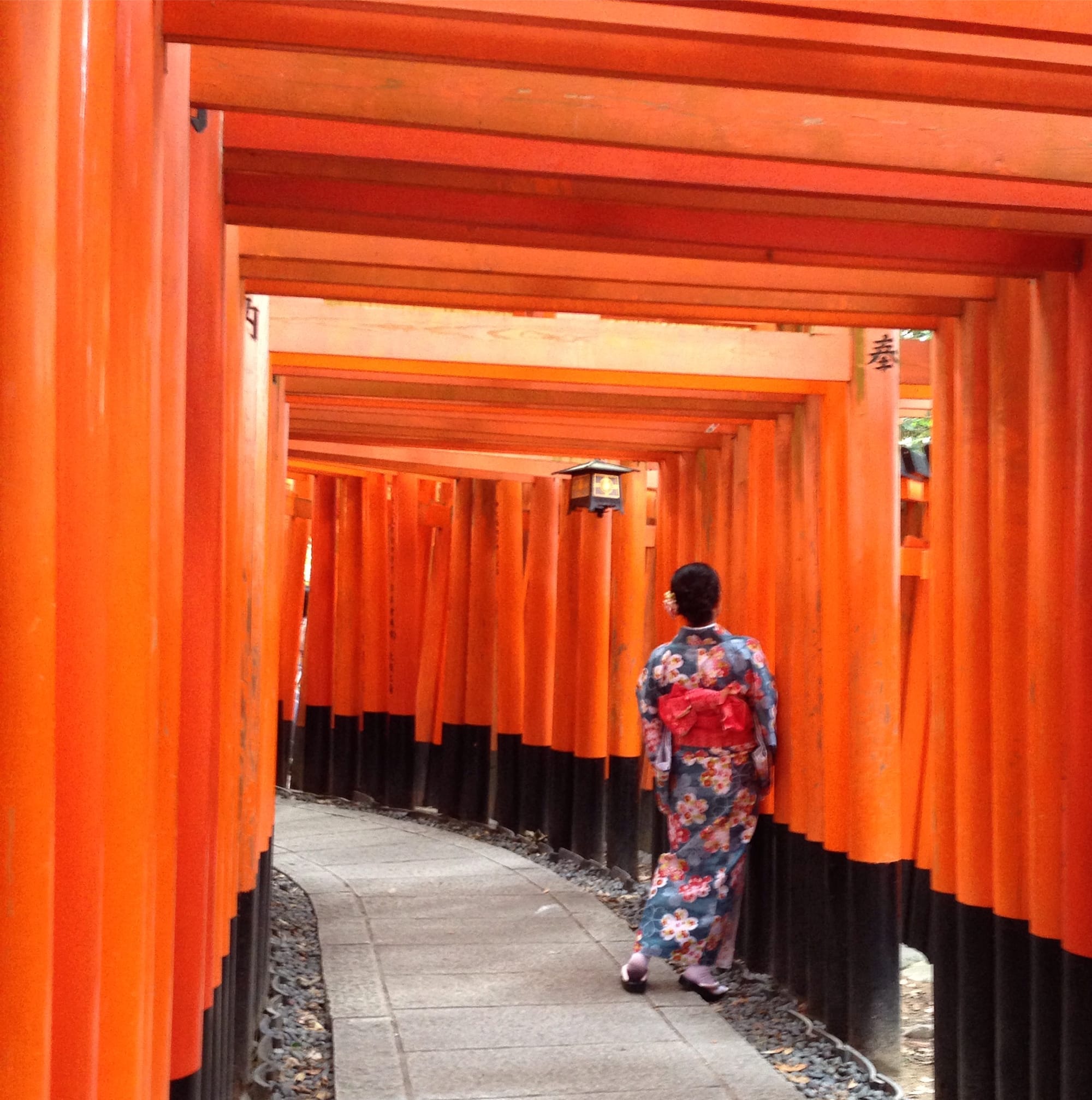
Come back into Kyoto for lunch, then spend the afternoon climbing through Higashiyama to Kiyomizu-dera, a temple that has stood on this hillside since the 8th century. The approach is half the experience: the narrow slope of Sannenzaka and Ninenzaka streets, lined with wooden townhouses, matcha stalls and souvenir shops, leads you up to the temple's massive wooden stage, held together without a single nail.
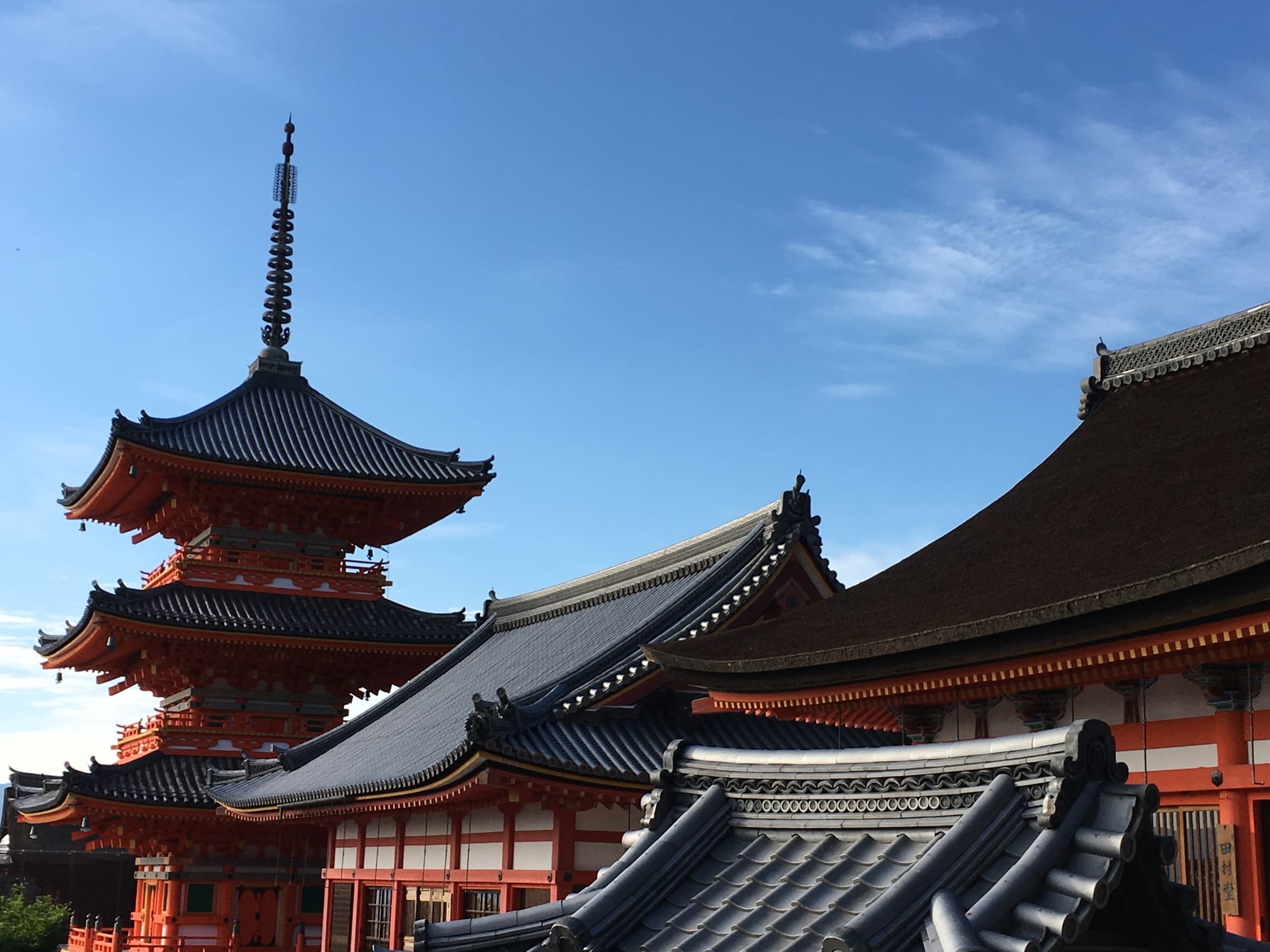
If you time it right, you'll finish the afternoon here as the sun drops behind the city. The viewing platform over Kyoto is one of the best in town, and the vermillion pagoda glows against the late light. Walk back down through Gion for dinner — the old geisha quarter is at its most atmospheric at dusk, when the paper lanterns come on along Hanamikōji-dōri.
Practical tip: A guided Gion geisha district walk at dusk is a gentle way to end the trip, and most tours include a stop for matcha in a traditional teahouse.
Practical Information
How to Get to Kyoto
Most international travellers fly into Kansai International Airport (KIX), which serves Osaka and is the closest hub to Kyoto. Compare compare flights and pick up the Haruka Express train at the airport — 75 minutes direct to Kyoto Station for around ¥3,640 one way.
If you're combining Kyoto with Tokyo, the Shinkansen (bullet train) takes 2h15 between the two cities. A JR Pass is still worth considering if you're doing Tokyo–Kyoto–Hiroshima, but for a pure Kyoto–Nara–Osaka loop it rarely pays off.
Best Time to Visit
Spring (late March to early April) for cherry blossoms and autumn (mid-November to early December) for red maples — these are the iconic seasons and everyone knows it, so book accommodation months ahead.
October — the month these photos were taken — is a sweet spot: the summer humidity is gone, the autumn colours haven't peaked yet, and the crowds are noticeably thinner. Temperatures sit between 15 and 23 °C, perfect for long walking days.
Avoid early August unless you enjoy sweating through your shirt at 7 a.m. Golden Week (late April to early May) and New Year are the busiest domestic travel weeks — prices spike and queues appear everywhere.
Getting Around
Kyoto's subway is limited (two lines), but the city bus network is excellent and covers every major sight. Buy an ICOCA card on arrival at the airport or Kyoto Station — it works on buses, trains and convenience stores across western Japan.
For Fushimi Inari and Nara, use JR Nara Line. For Arashiyama, use JR Sagano Line or the charming Keifuku Randen tram. Taxis are reasonable for short hops and essential if you're visiting Kinkaku-ji without wanting to lose an hour on a bus.
Budget Estimate for a Family of Four
- Accommodation (4 nights downtown hotel): €400–700 - Trains and buses (JR ICOCA top-ups): €80–120 - Temple entries (Kinkaku-ji, Tenryū-ji, Kiyomizu-dera, Nara Tōdai-ji): €40 total - Food (street food + one sit-down dinner per day): €180–280 - Day-trip train to Nara: €25
Plan on roughly €800–1,200 for four days excluding international flights.
Making Connections
Kyoto's appeal — sacred sites threaded through modern daily life — rewards travellers who love layered destinations. If this sounds like your kind of trip, here are a few more MapTrotting guides that sit naturally next to it:
FAQ
Is 4 days enough for Kyoto?
Yes, for the classic first-timer's circuit. Four days cover Kyoto's core icons (Golden Pavilion, Fushimi Inari, Kiyomizu-dera, Arashiyama) plus a Nara day trip without feeling rushed. If you want to add Osaka or dive into lesser-known neighbourhoods like Ōhara or Kurama, stretch to six or seven.
Is Kyoto better than Tokyo?
They're different cities, not competing ones. Tokyo is modern, fast and maximalist; Kyoto is older, slower and quieter. Most travellers combine them — 3 days Tokyo, 4 days Kyoto is the most common split on a first trip.
Do I need to speak Japanese?
No, but a few basics go a long way. Most signs at major stations, temples and tourist sights are in English. In small restaurants and arcades, menu boards are often Japanese-only — Google Translate's camera mode solves this instantly.
Can I visit Kyoto with kids?
Absolutely. Nara is a crowd-pleaser (deer! temples!), Arashiyama's monkey park is a winner for older kids, and the arcades are easy for strollers. Temples generally allow kids; most ask you to take shoes off at entrances.
Explore Kyoto with GPSmyCity
This article is also featured on GPSmyCity. To download this article for offline reading or create a self-guided walking tour to visit the attractions highlighted in this article, go to Walking Tours and Articles in Kyoto.
Conclusion
Four days in Kyoto won't exhaust a city that's been collecting culture for a thousand years — but it's enough to feel its rhythm. Start with the arcades, day-trip to Nara's deer and sunset pavilion, devote one day to the Golden Pavilion and Arashiyama, and end with the vermillion gates of Fushimi Inari and the wooden stage of Kiyomizu-dera. Eat everything. Walk more than you plan. And save at least one evening for doing nothing but wandering Gion at dusk, when the paper lanterns come on and the city seems to slow down just for you.