
Best Things to Do in Essaouira: A Family Guide
A family guide to the best things to do in Essaouira, Morocco — from the UNESCO medina and port to Sidi Kaouki's surf beaches, Diabat's Jimi Hendrix café, sunset camel rides at Smimou and an unforgettable yoga retreat at Douar Noujoum.

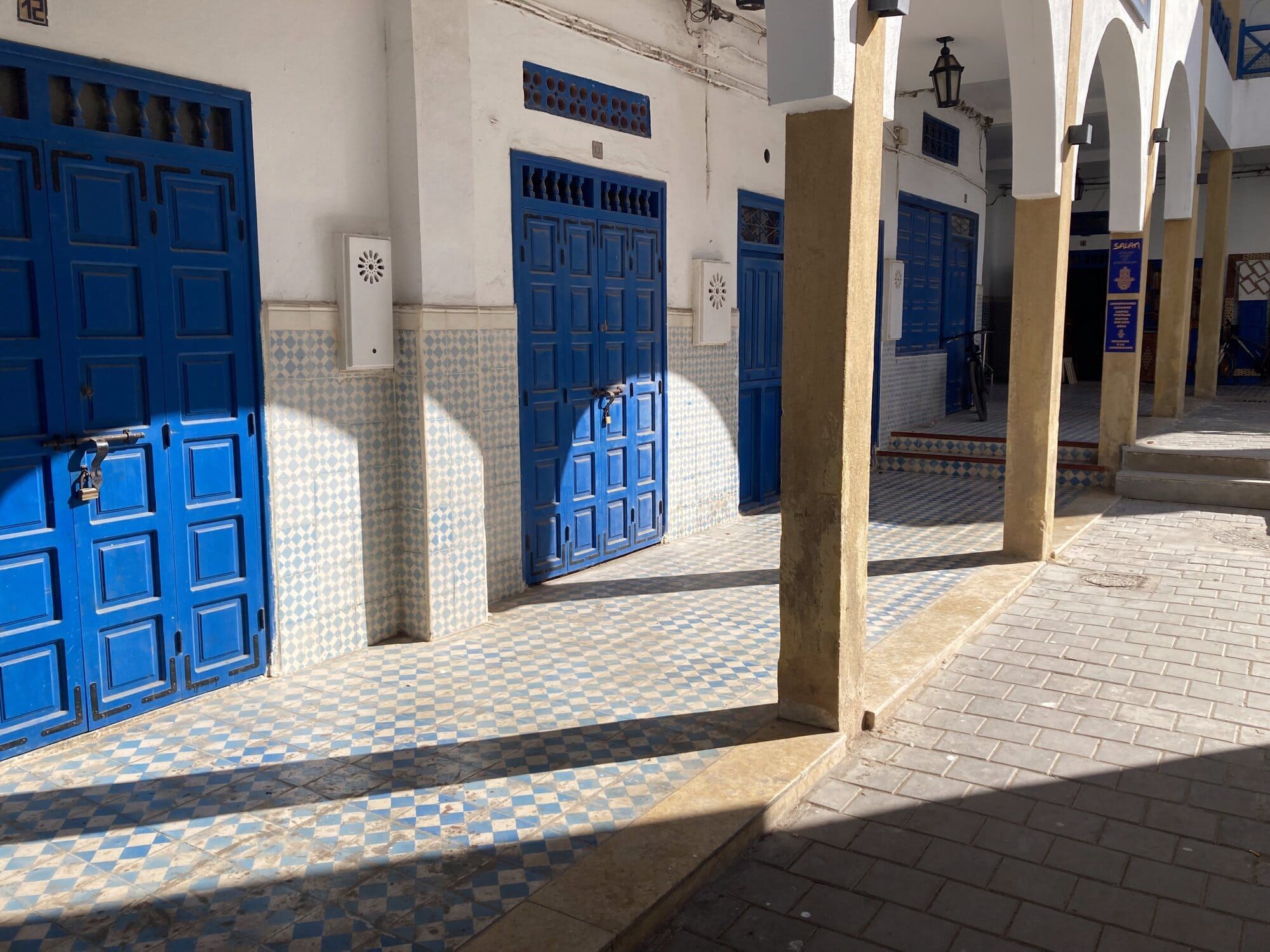
Windswept, walled and utterly unpretentious, Essaouira is the Morocco most travellers fall for without expecting to. The medina smells of salt and wood shavings, gulls circle a port piled with blue fishing boats, and a few kilometres south the dunes run uninterrupted all the way to Sidi Kaouki. This is the Atlantic side of Morocco — cooler, lighter, and a world away from the postcard image of Marrakech.
We spent a week based in Essaouira with family and friends in late April, travelling with kids aged 10 and 15, and used it as a springboard for surf, sunset camel rides and a memorable yoga retreat in the countryside just inland. Here's our take on the best things to do in Essaouira — including the offbeat details most guidebooks miss.
Bookings: Some of the links in this article are affiliate links. This means that if you choose to make a booking, we will receive a small commission at no extra cost to you. Thank You!
Get Lost in the Medina
Essaouira's medina is a UNESCO World Heritage Site, and unlike Marrakech or Fez, it is small, flat and almost impossible to feel harassed in. The layout follows a loose grid laid down by a French military engineer in the 18th century, which means that even with young kids, you are never more than five minutes from your riad.
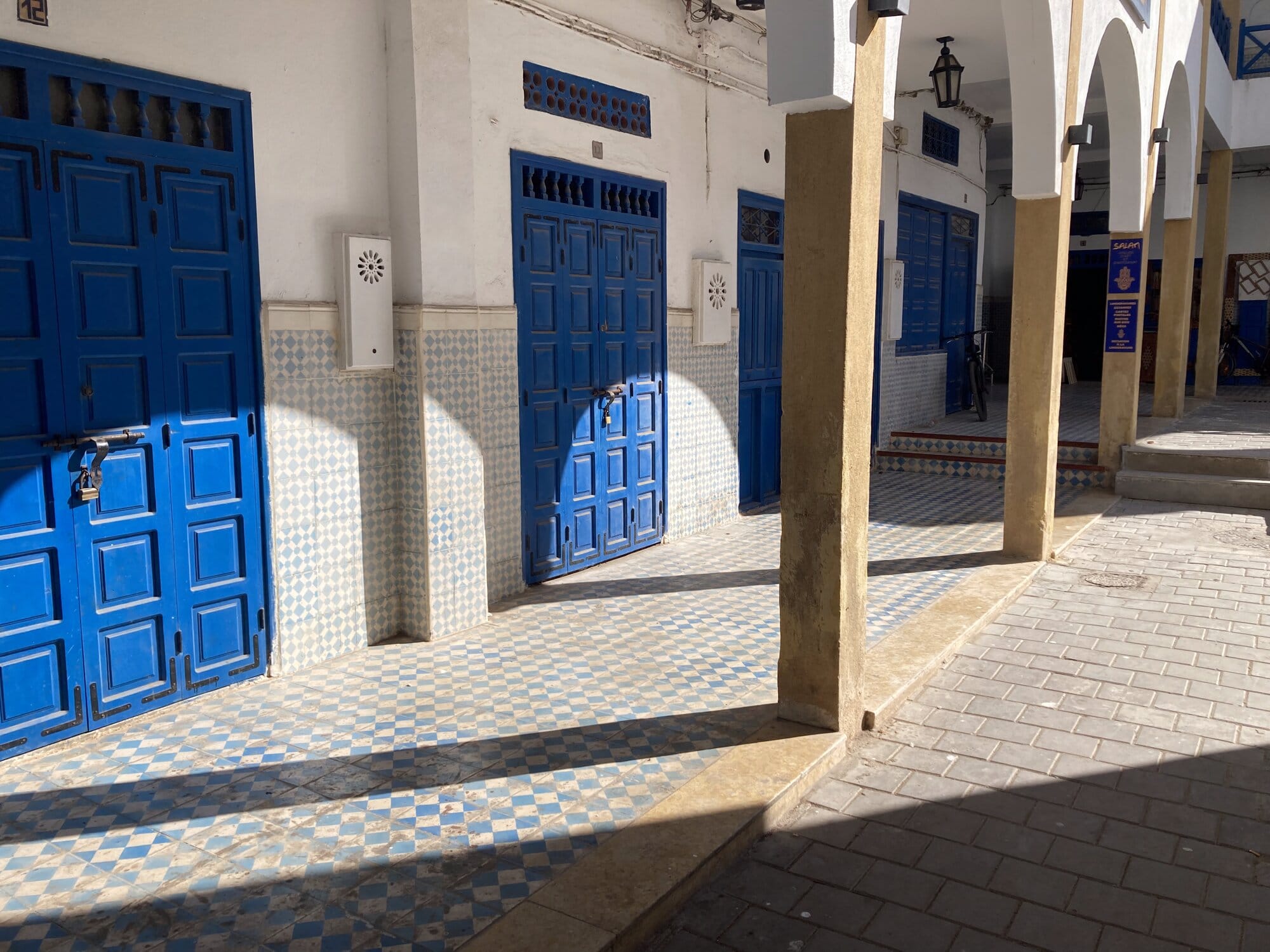
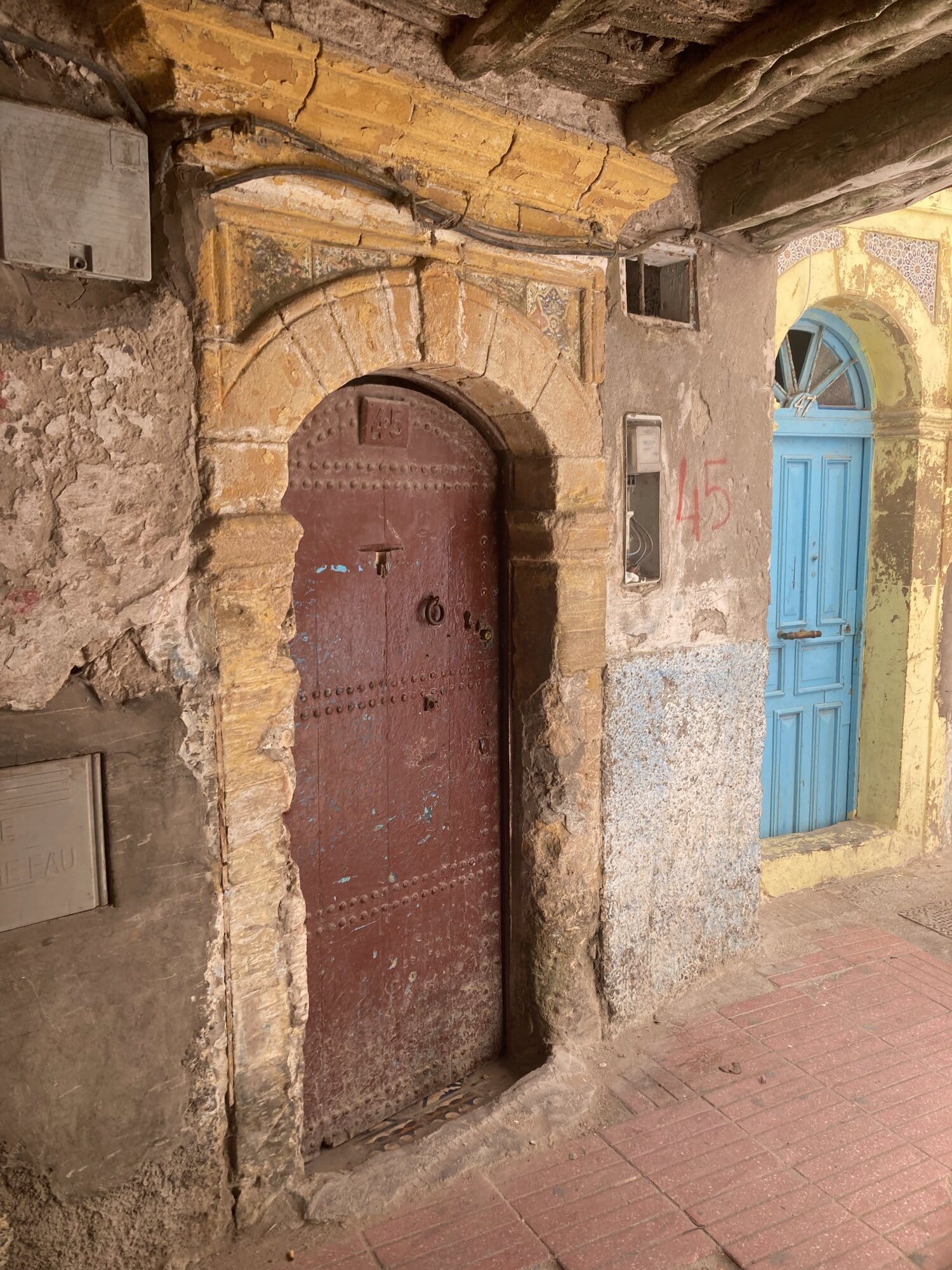
Wander without a plan. The light inside the medina changes by the hour — bright on the ramparts at midday, all long shadows and azulejo-blue doors by late afternoon. Stop for mint tea in one of the small courtyards, buy a few grams of argan paste from a co-operative, or just sit on the sea wall and watch the Atlantic batter the Portuguese-built fortifications. The ramparts doubled as the set for Astapor in Game of Thrones, and the seafront cannons still line the same crenellated walls.
For families, the best gateway into the medina is through Bab Doukkala in the north — it drops you straight into the fish smoker's lane and leads naturally to the port.
Eat Fresh Fish Sandwiches at the Port
The port of Essaouira is the best free show in town. Painted blue trawlers come in through the morning, seagulls wheel overhead in the thousands, and the quayside is lined with grills where you pick your fish straight from the ice and eat it ten minutes later.
The play here is simple: walk along the stalls, point at what looks good (sardines, sea bream, a few langoustines), agree on the price per kilo before you commit, and let the cook handle the rest. A plate of grilled fish with tomato salad and Moroccan bread runs around 60–100 dirhams per person, which is roughly €6–€10. It is one of those meals that tastes better because you are sitting on a plastic stool with the Atlantic right behind you.
For tajines inland, ask your riad for directions to Chez Fatima, a tiny gargotte in the medina where we ate lamb and prune tajines for less than €5 a head. The beignets sold in the alley round the corner are a few centimes each — hand them to the kids warm out of the pan.
Watch a Football Match at the Port Pitches
One of the unexpected highlights of our week turned out to be the blue astroturf pitches tucked between the medina ramparts and the port. Every afternoon, local kids in red and blue kits play pickup matches against the backdrop of the old city walls and a mural of the seafront. The boys in our group joined in a handball session with Moroccan kids who didn't share a language with them and didn't need to.
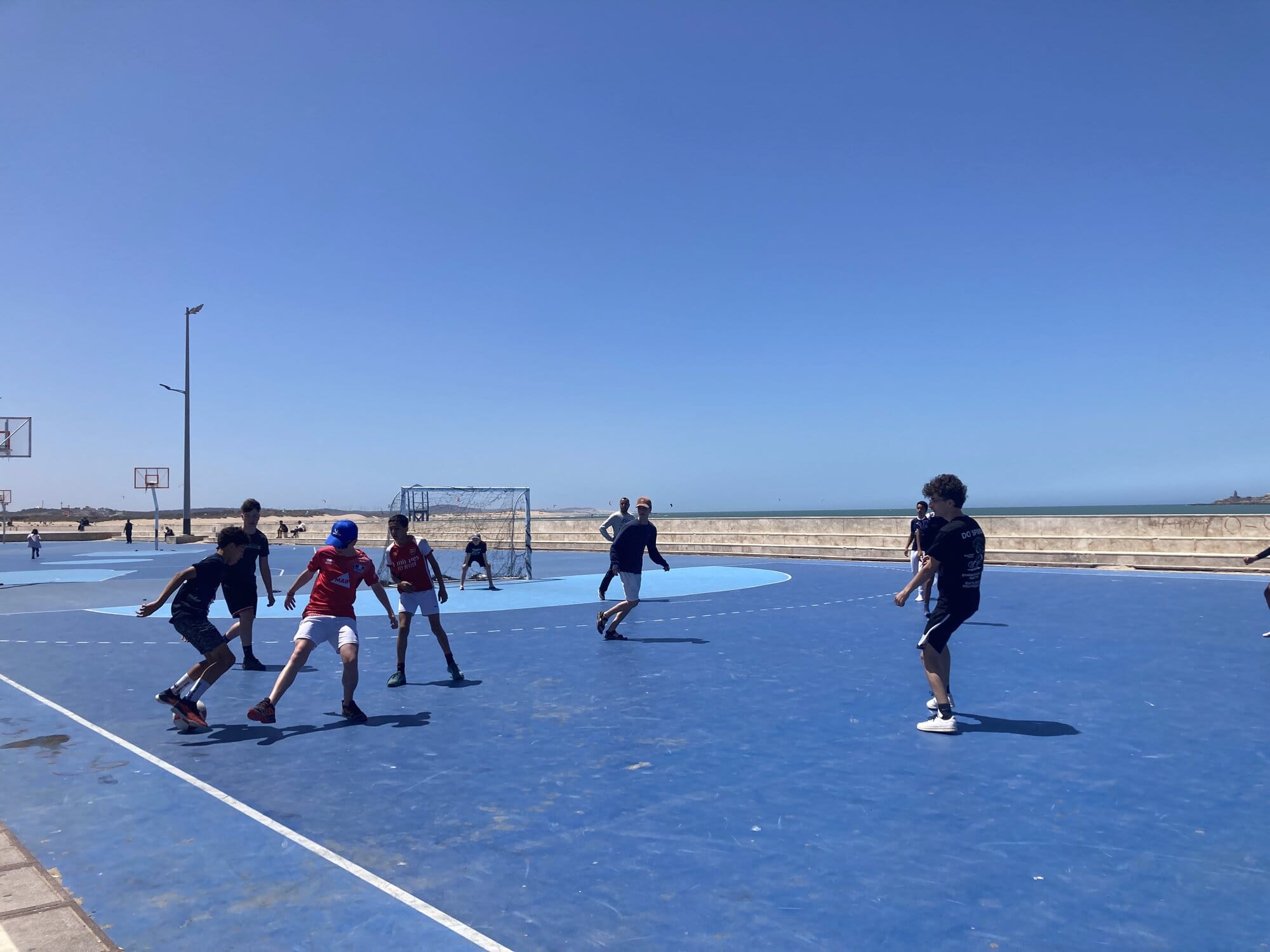
If you are travelling with kids aged eight and up, bring a ball and a pair of trainers — this is an easy way to break the ice with local families. The pitches are free, publicly accessible, and the atmosphere is unhurried. It is the sort of small, authentic moment that Essaouira throws at you when you least expect it.
Try an Authentic Hammam — Separately
A Moroccan hammam is one of those rituals you cannot really claim to have experienced Morocco without. Essaouira has a full range, from polished spa versions aimed at tourists to working neighbourhood hammams where the locals actually wash. We tried a proper no-frills men's hammam near the medina — the kind where the masseur pins you to a marble slab and scrubs you down with a kessa glove until you feel genuinely smaller.
Go for a local hammam (around 20–40 dirhams) if you want the real thing. Go for a riad hammam (around 300–600 dirhams) if you want hot tea, oils and dim lighting. Both are valid. The women in our group had their own separate experience — this is one of the few activities where splitting the group by gender is the whole point. Book through your riad or on GetYourGuide for a guided traditional hammam with massage.
Get a "jeune marocain" haircut
While you are at it, let the kids get their hair cut in a local barbershop. The "jeune marocain" cut — short back and sides, a faded fringe and a small design shaved into the temple — is what every teenager in the medina is wearing that season. It costs about 30 dirhams, takes fifteen minutes, and makes for the best travel souvenir your kids will bring home.
Surf and Bodyboard at Sidi Kaouki
South of town, the long sand beach of Sidi Kaouki is where Essaouira locals go to breathe. The waves are softer and more forgiving than further up the coast, which makes it one of the best beginner surf beaches in Morocco. The village itself is a handful of surf camps, beach restaurants and stables renting horses for rides along the sand.
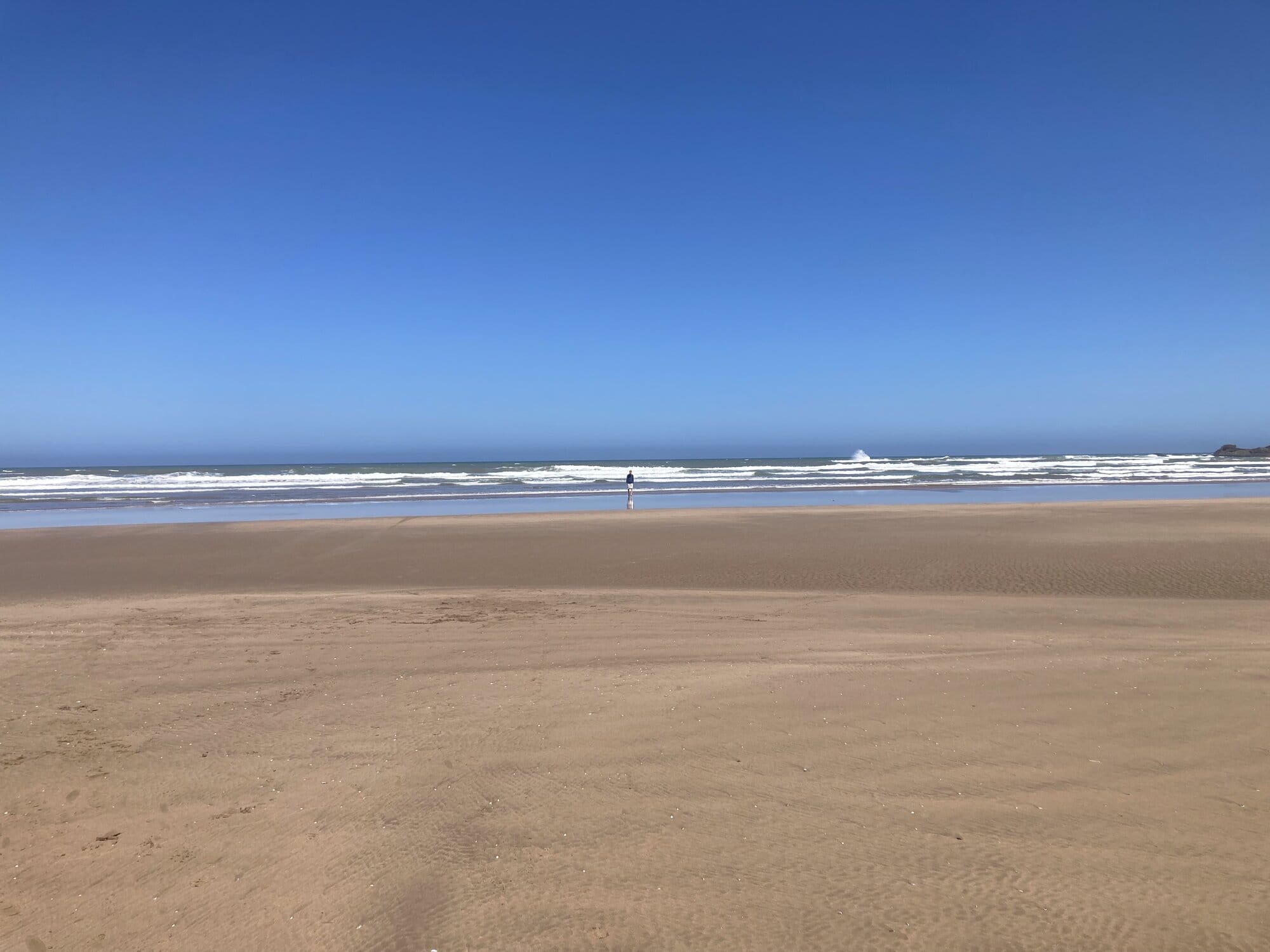
A half-day group surf lesson at Sidi Kaouki runs around 300–400 dirhams per person with board and wetsuit included — book through your surf camp or via GetYourGuide. Wind conditions tend to pick up from late morning onwards, so for calmer water, plan a dawn session and be on the beach by 8 am.
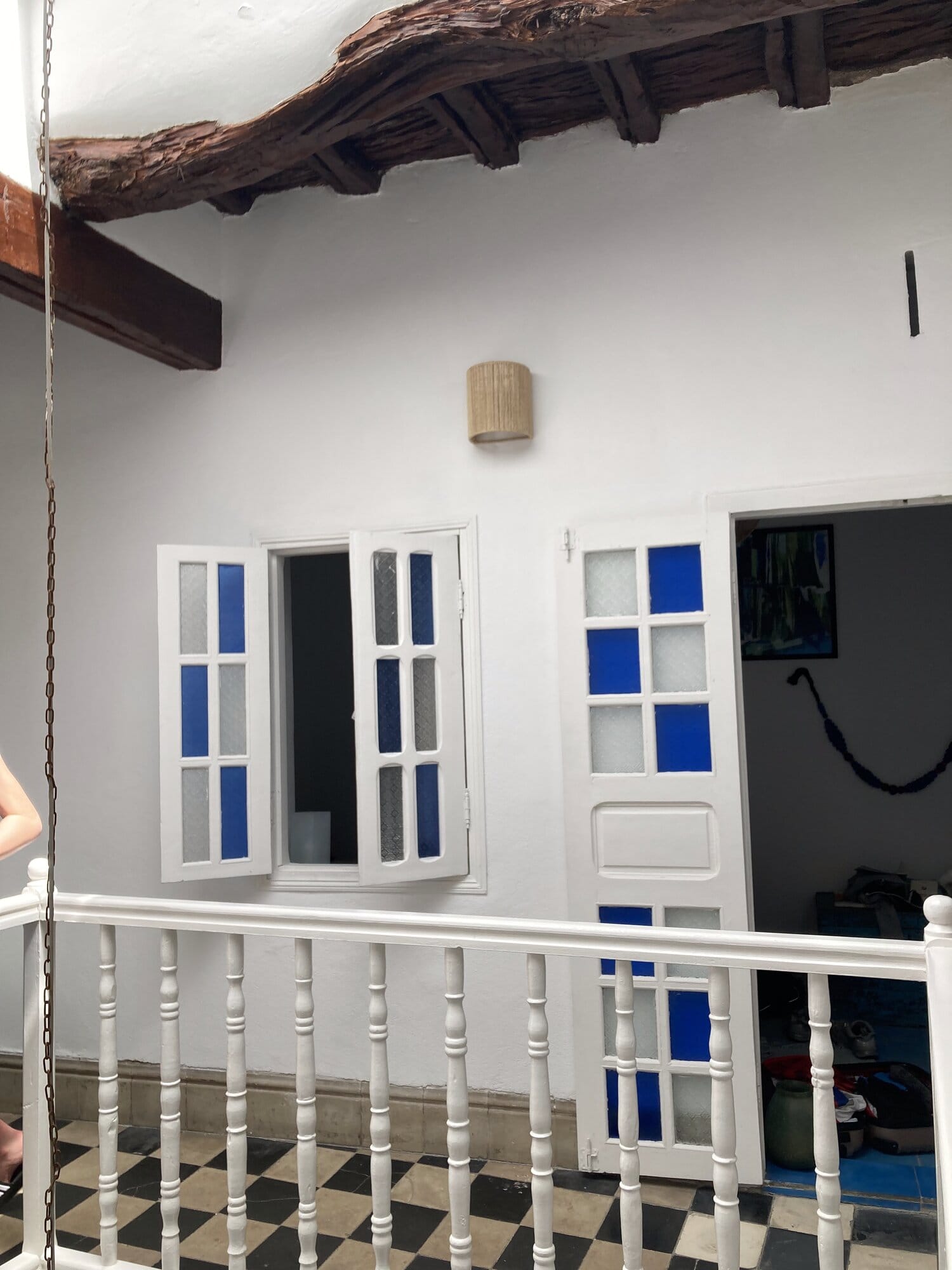
On the way back toward Essaouira, it is worth stopping at one of the rural guesthouses inland — the traditional Moroccan courtyards, with their tiled floors and cobalt-blue shutters, are what every design Instagram page is trying to replicate.
Drop in on Jimi Hendrix's Café at Diabat
Seven kilometres south of Essaouira, the tiny village of Diabat is where Jimi Hendrix famously spent a few days in 1969 — long enough to inspire a thousand guidebook paragraphs and a whole mythology around the song Castles Made of Sand. The ruined palace on the beach is almost certainly not what the song is about, but the legend is a lot more fun than the truth.
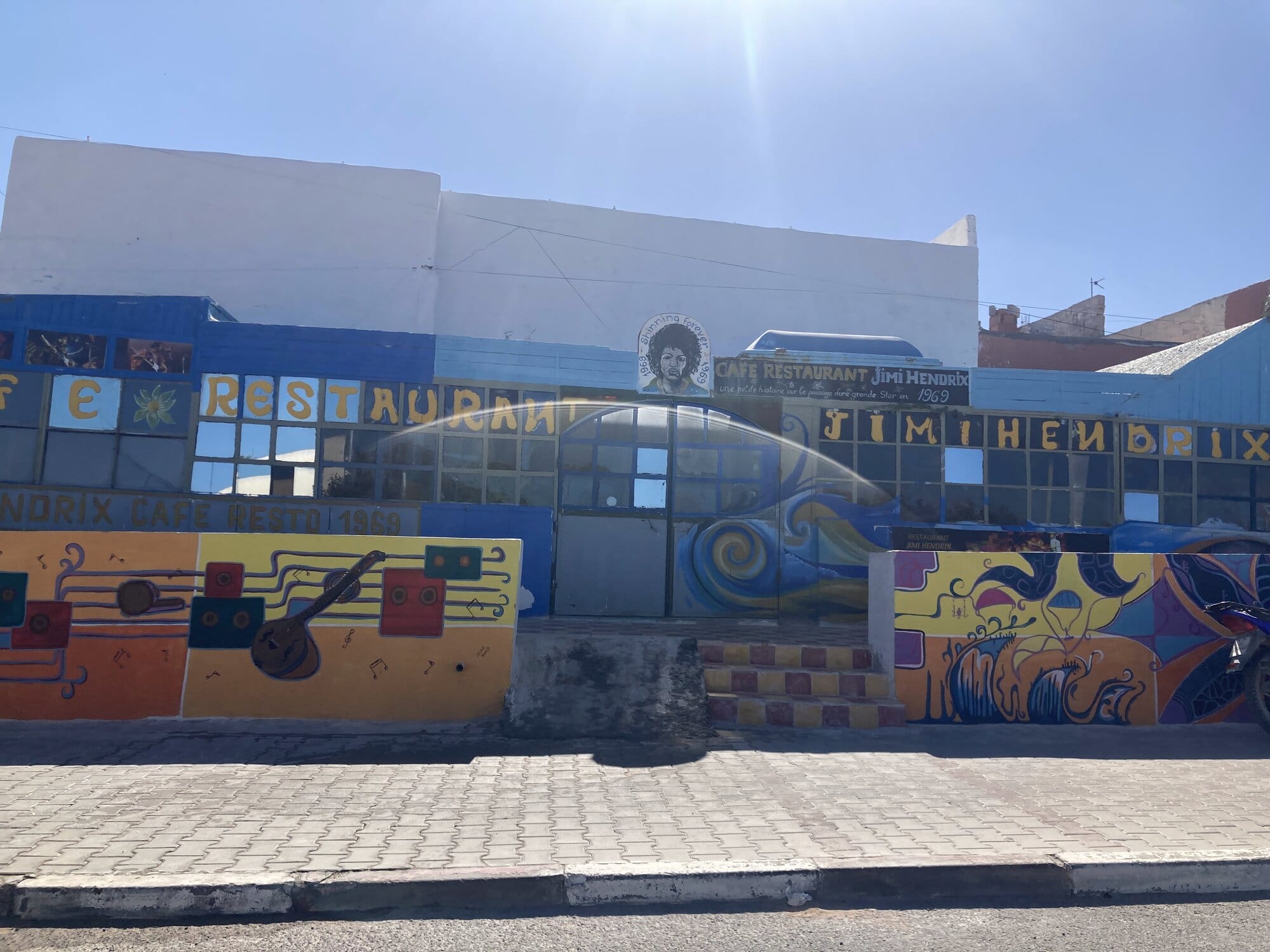
The Café Restaurant Hendrix in the centre of the village is as painted-and-repainted as you would expect — a big mural of Hendrix's face, a guitar, some stylised Atlantic waves. Stop for a mint tea, chat with whoever is at the counter, then walk down to the enormous empty beach below.
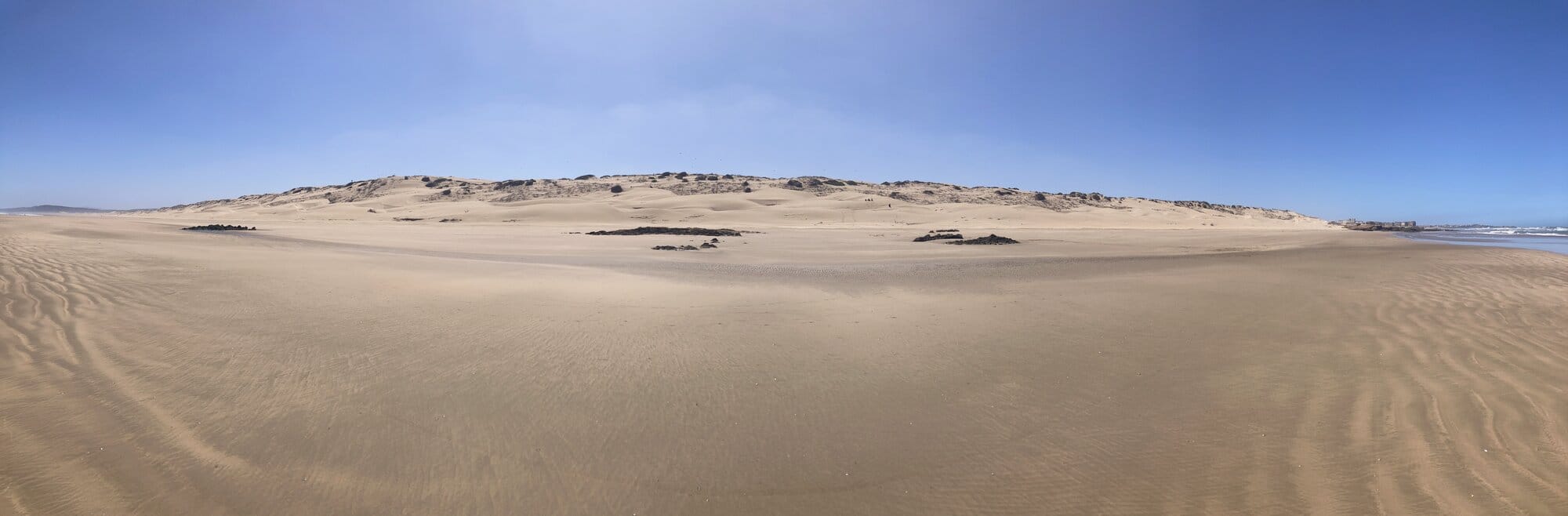
The dunes behind Diabat are wind-sculpted and almost always empty — a lovely place to let the kids run off some energy before heading back into town.
Chase the Sunset at Smimou
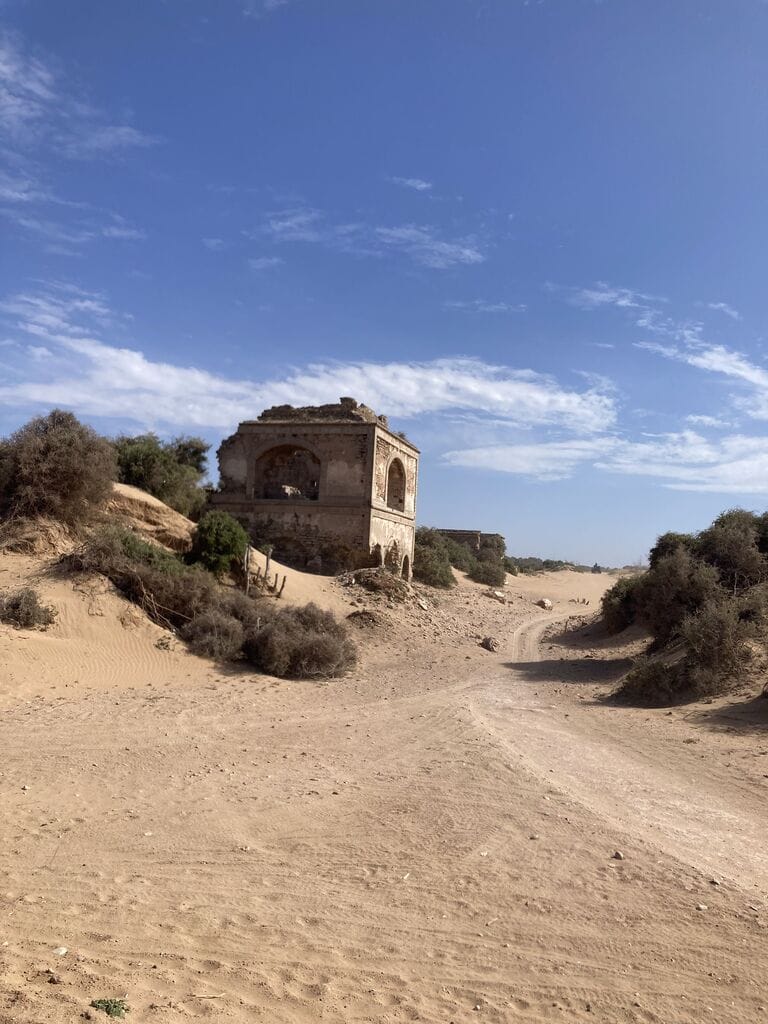
If you do one excursion south of Essaouira, make it Smimou at sunset. The coast narrows into a series of low bluffs and a tiny ruined marabout (shrine) sits half-buried in the dunes. We drove down in the late afternoon and watched camel caravans cross the beach in silhouette against the falling sun.
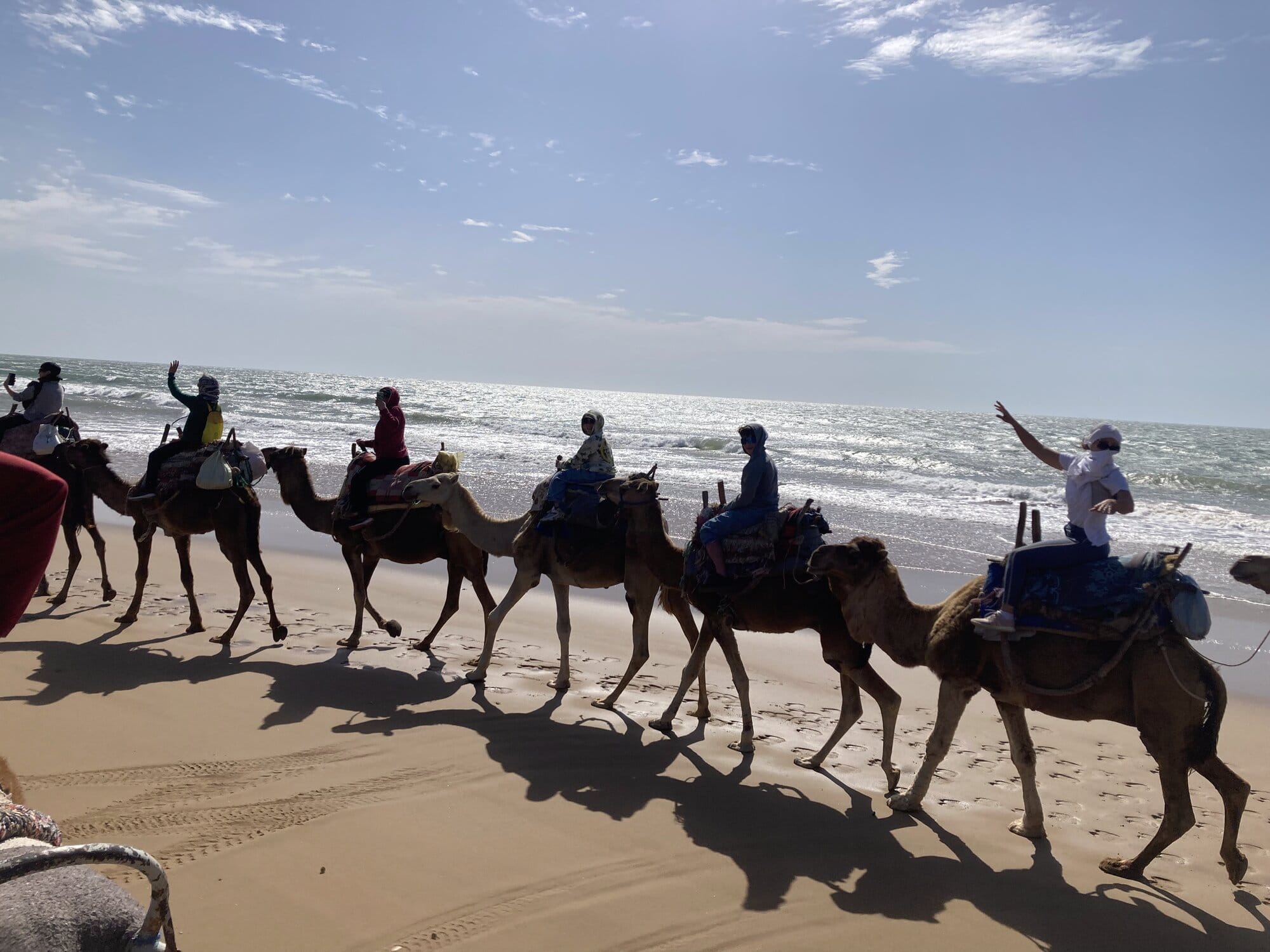
The camel-ride operators change with the seasons — ask at your riad or just stop when you see the herds gathering on the beach around 6 pm. A one-hour ride costs about 150–200 dirhams per person. You do not have to ride yourself to enjoy the scene; the best seats are a pair of flip-flops on the sand, a tea from the van selling them at the roadside, and a half hour of watching the colour drain out of the Atlantic.
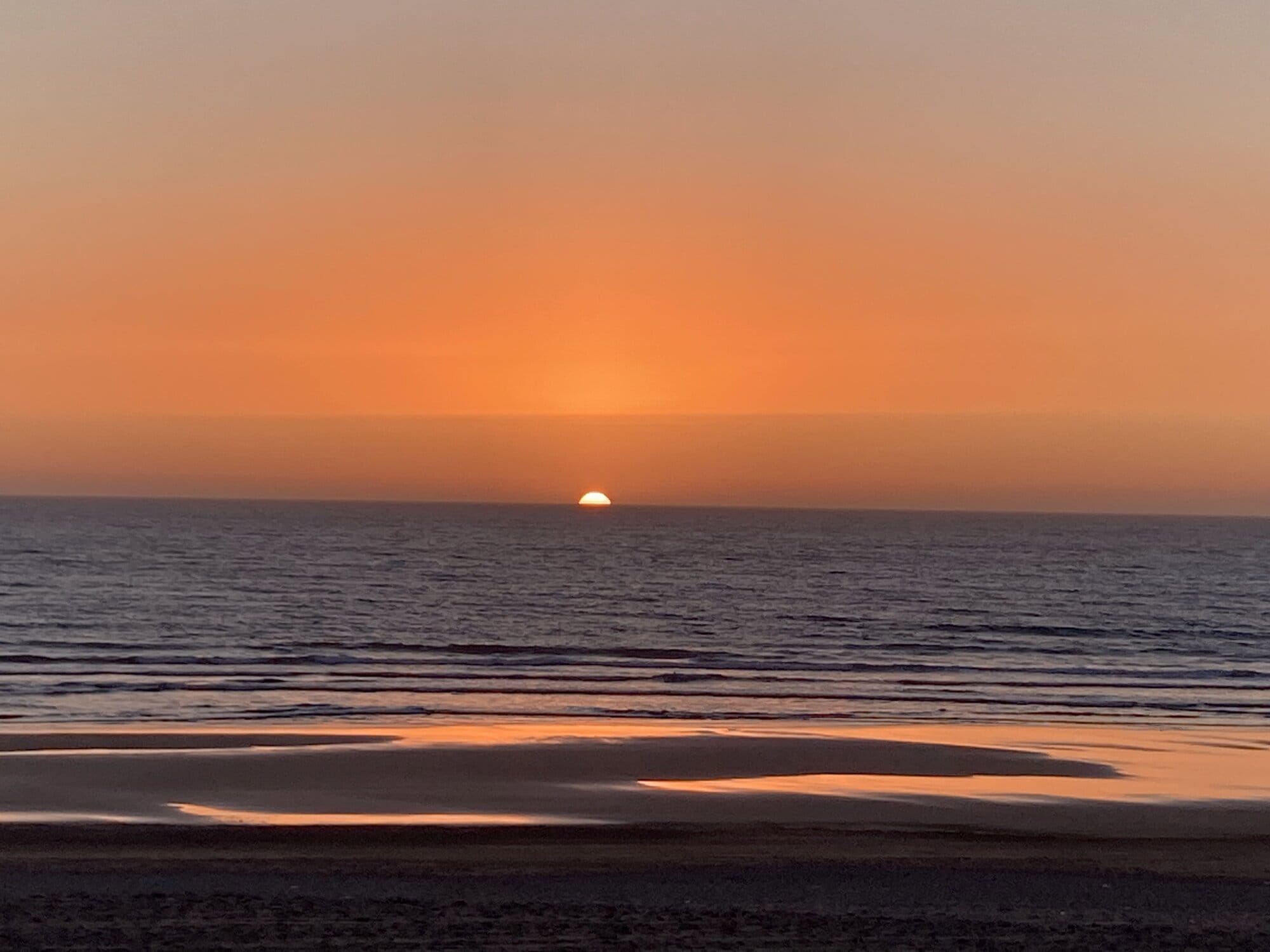
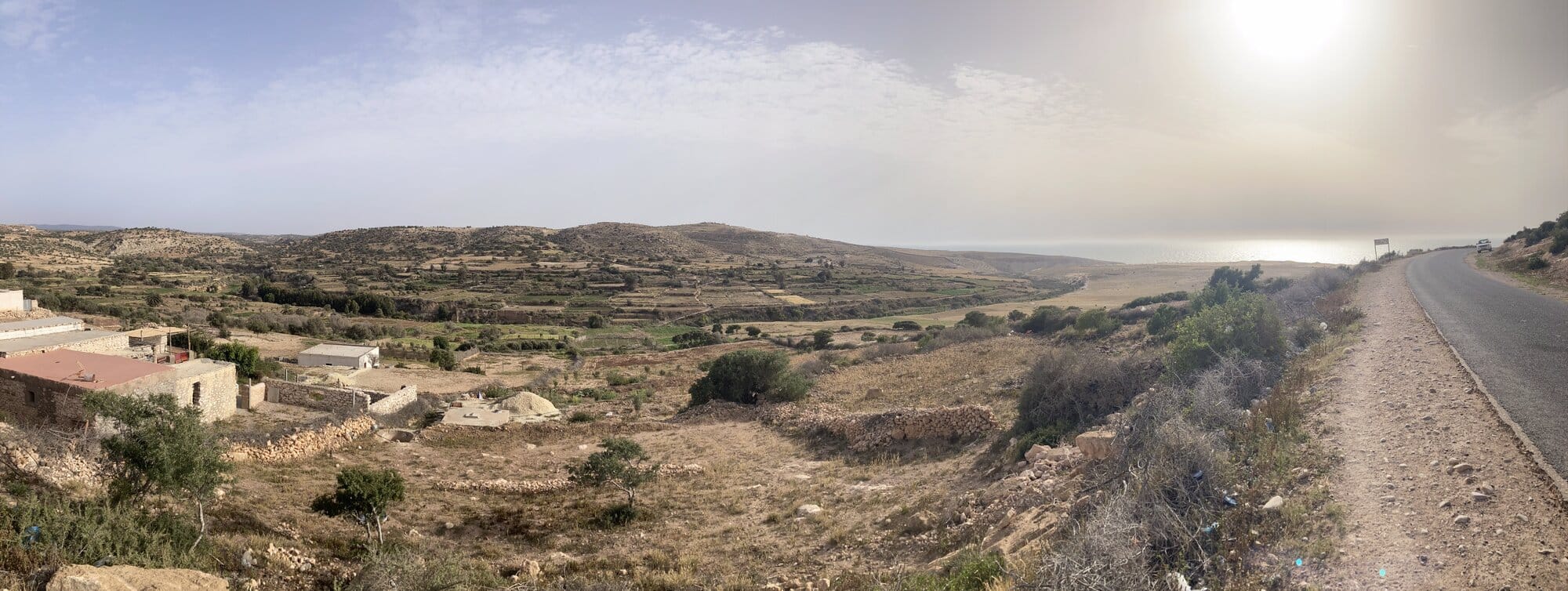
The drive back to Essaouira takes about thirty minutes on the P1002 coast road. The light on the hillside hamlets above the sea is one of those moments that makes you slow the car down.
Spend a Week in a Yoga Retreat at Douar Noujoum
A short drive inland from Essaouira, in the countryside around Ounagha, sits Douar Noujoum — a walled eco-lodge of rose-ochre kasbah buildings, a long blue pool, succulent gardens and a traditional hammam. It hosts week-long yoga retreats, and while not everyone in our group joined, the retreat was the emotional centre of the trip for those who did.
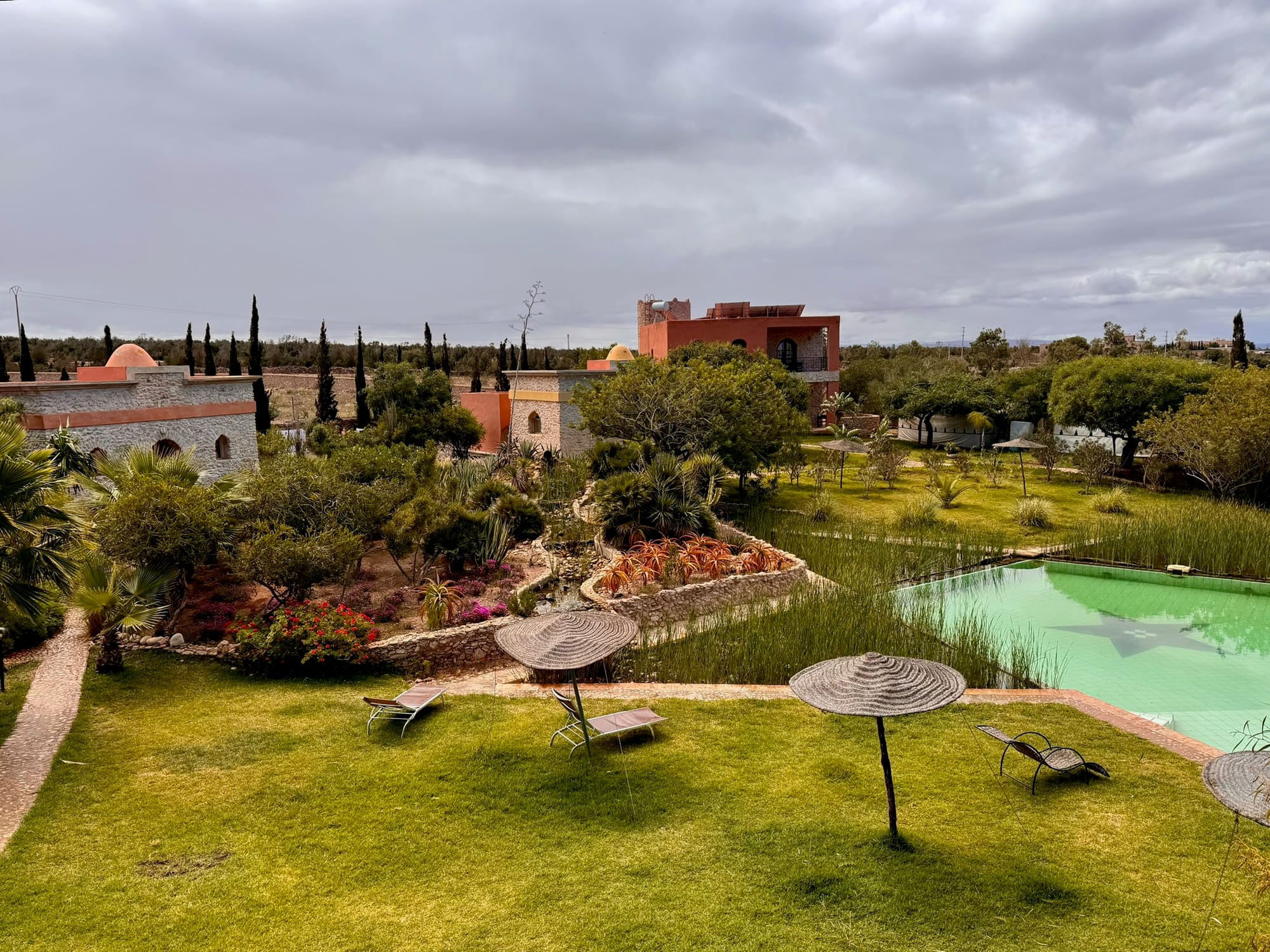
The programme at Douar Noujoum is built around yoga, fasting, silence and reconnection — long sessions on the roof terrace, no phone, no small talk, simple Moroccan meals and an emphasis on the body quietening down. The retreat ends with a night of desert bivouac by the sea, complete with djembé, Moroccan feast, a camel ride at dawn and yoga on the beach under the Atlantic sun.
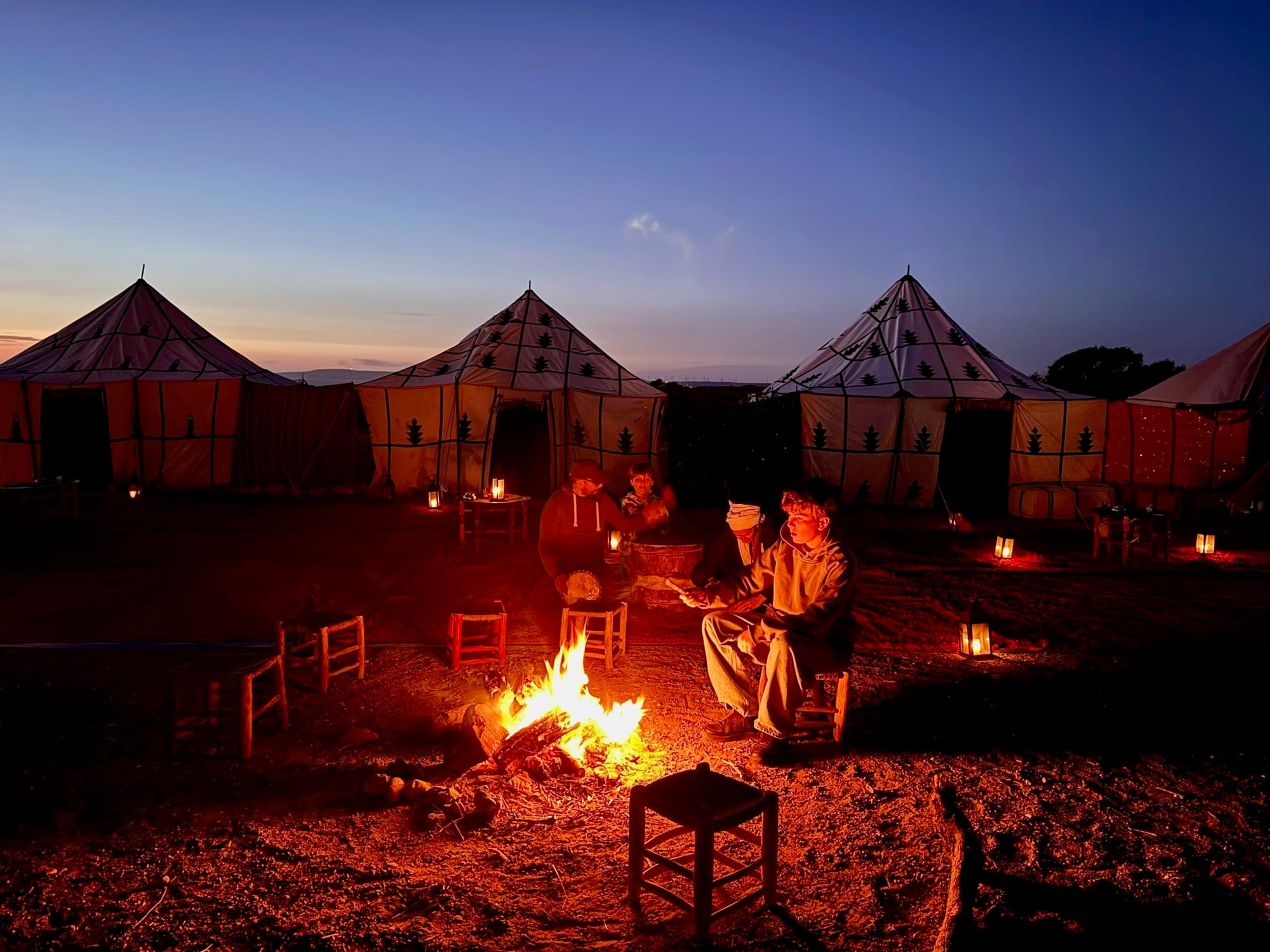
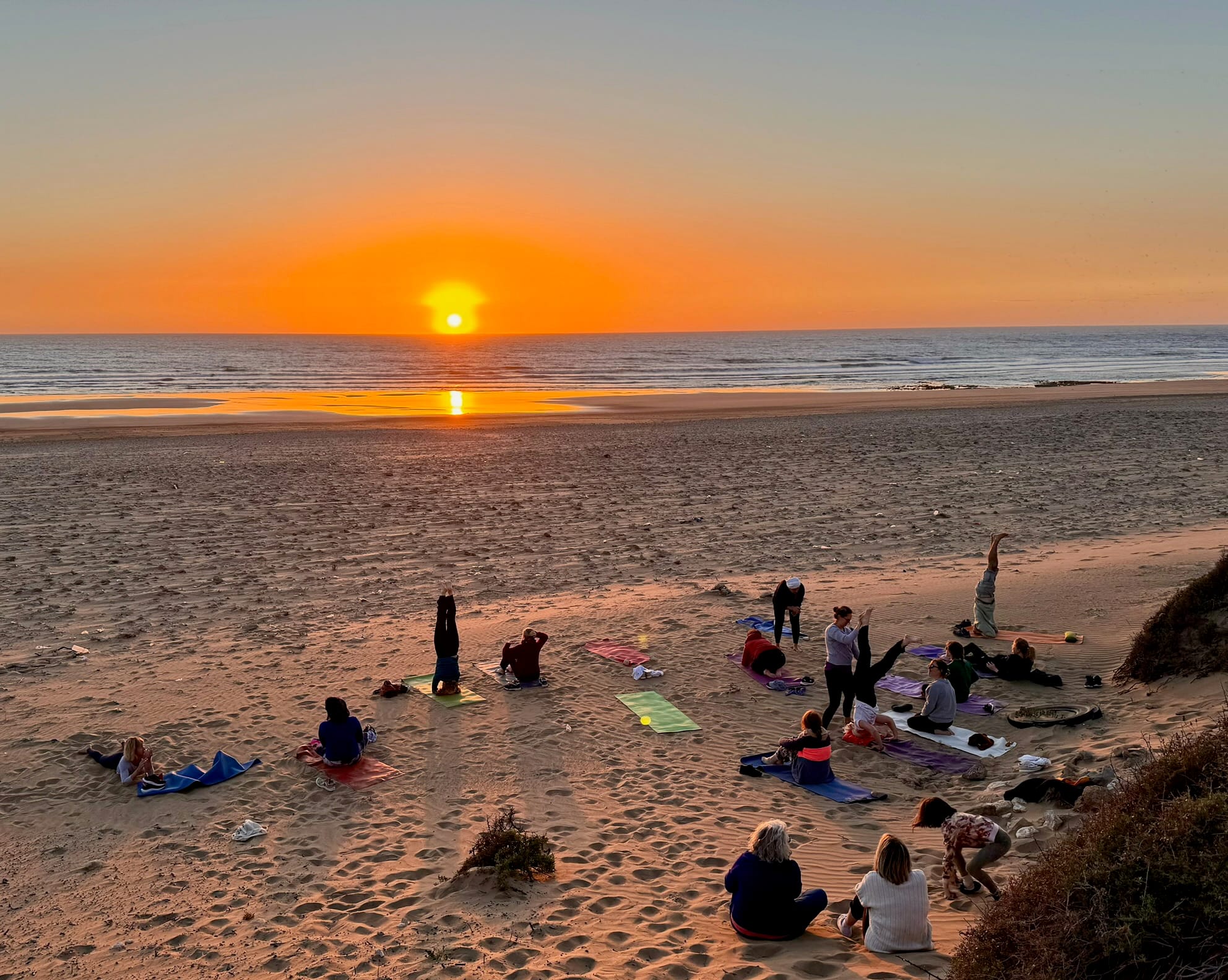
For the other half of our group, the week at Douar Noujoum meant space to do something entirely different — wander Essaouira, eat cheap tajines, play football at the port, surf at Sidi Kaouki, get a Moroccan haircut. Splitting up like that was one of the best travel decisions we have made. We came back together at the end of the week, both sides changed in different ways, and the two storylines made the trip much richer than a single shared itinerary would have.
If a retreat is not your thing, Douar Noujoum also takes guests for regular B&B stays — the rooms, pool and hammam are open to everyone. Book directly through douarnoujoum.com or check accommodation near Essaouira on Trip.com for alternatives.
Find the Best Place to Stay in Essaouira
There are three very different sorts of stay in Essaouira: a riad inside the medina for the atmosphere, a modern hotel outside the walls for the pool and easy parking, or a guesthouse in the countryside for a rural retreat. Families usually do best in the medina (short walks everywhere, no car to worry about) or at Sidi Kaouki if surfing is the plan.
Use our interactive map to find accommodation near the spots mentioned in this article. Zoom in on the area that interests you most.
Budget around €60–€120 per night for a comfortable family-friendly riad, more like €150–€250 for the nicer boutique riads with a pool. Sidi Kaouki guesthouses are usually cheaper (€40–€80). Browse Essaouira hotels and riads on Trip.com to compare.
Practical Information
How to Get There
Essaouira has its own small international airport (ESU), with direct seasonal flights from Paris, London, Luxembourg and a handful of other European cities. We flew into Essaouira and out of Agadir on an open-jaw ticket, which is the ideal setup if you plan to road-trip south afterwards. compare flights for the best fares.
If you are coming from Marrakech, it is a three-hour drive on the well-maintained N8, and day trips are easy to book. A car is not essential in Essaouira itself, but it is a huge asset if you plan to explore the coast south of town (Sidi Kaouki, Diabat, Smimou) at your own pace. Hire a car at Essaouira or Marrakech airport for the most flexibility — we rented two small Dacia hatchbacks and had no trouble on any road.
Best Time to Visit
Essaouira is cool, breezy and sunny most of the year. April to June and September to early November are the best windows: daytime temperatures around 22–26°C, warm enough for the beach in the afternoon, cool enough at night to sleep under a blanket. July and August bring the big Atlantic winds (this is the windsurfing capital of Morocco for a reason) and a huge local crowd. December to March is quieter and often spectacular, though evenings can be chilly.
We visited in late April and found it close to ideal — warm but not baking, uncrowded, and every restaurant table was available without booking.
Budget
Essaouira is notably cheaper than Marrakech. A port-side fish plate costs around €6–€10, a tajine at Chez Fatima less than €5, a mid-range riad around €80 a night, a surf lesson around €30–€40 including gear, and a hammam from as little as €3 at a local bath to around €60 at a boutique spa. Plan on €50–€80 per person per day as a comfortable mid-range family budget.
FAQ
Q: Is Essaouira suitable for a family with kids? A: Absolutely — arguably the most family-friendly town in Morocco. The medina is flat and small, the beaches are long and safe, traffic in the old town is almost nonexistent, and the scale of everything feels manageable. Kids from around six upwards will love the port, the horses on the beach and the football pitches.
Q: Is Essaouira safe to walk around at night? A: Yes. The medina is quiet and well lit, and the seafront is busy until fairly late. As anywhere, women alone may get some attention — but the vibe is dramatically more relaxed than Marrakech or Fez.
Q: Do we need a guide for the medina? A: No. The medina is laid out on a simple grid and is small enough that you will figure it out within an hour. A guide is only useful if you want deeper historical context, which you can arrange for a half day through your riad.
Q: Can we drink the tap water? A: Stick to bottled or filtered water. Food at established restaurants and port grills is generally safe — just make sure grilled fish is cooked through.
Explore Essaouira with GPSmyCity
This article is also featured on GPSmyCity. To download this article for offline reading or create a self-guided walking tour to visit the attractions highlighted in this article, go to Walking Tours and Articles in Essaouira.
More to Explore
If Essaouira's blend of Atlantic coast, medinas and slow travel has whetted your appetite for more trips like this one, these guides cover some of our other favourite corners of the world: