
Sidi Ifni, Aït Mansour & Southern Morocco Coast Guide
A family guide to southern Morocco's Atlantic coast — the palm canyon and natural pools of Aït Mansour, the Spanish art-deco town of Sidi Ifni, the cliffs of Legzira and the surf village of Mirleft.

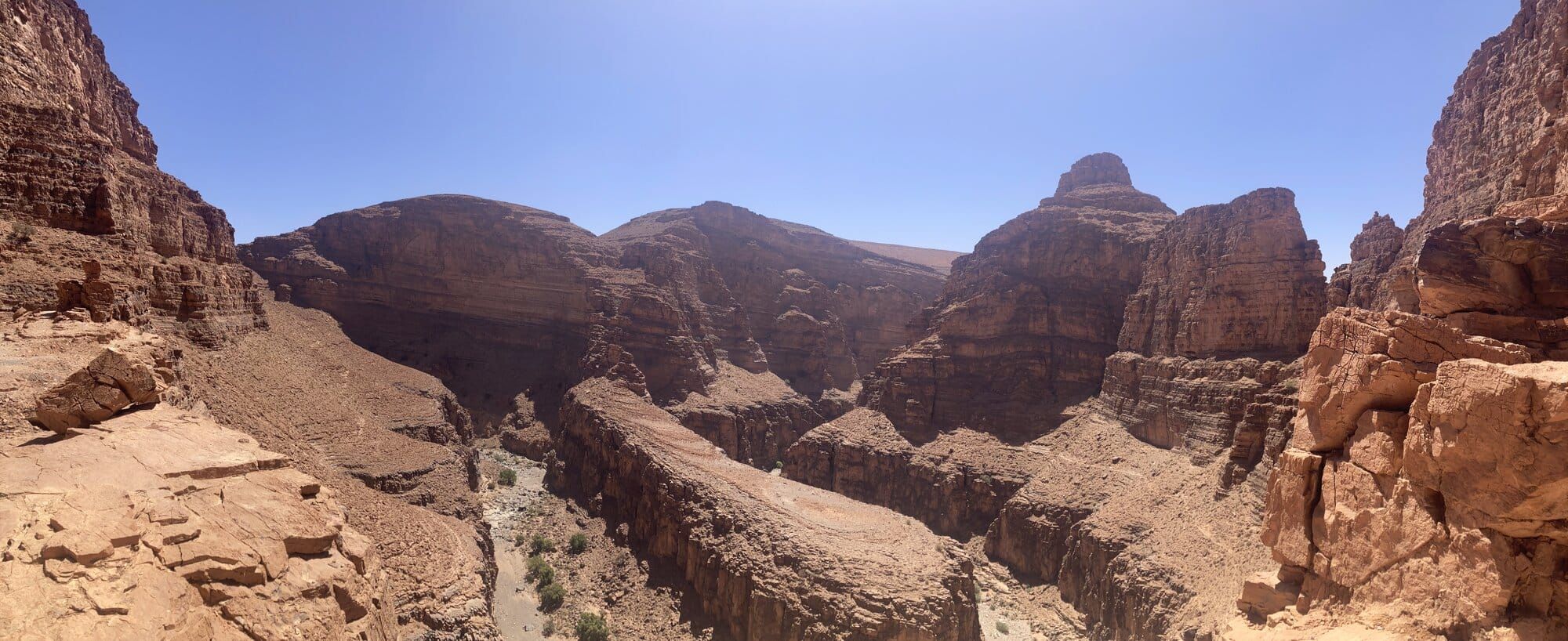
Drop south of Agadir and Morocco quietly changes character. The Atlantic cliffs get higher, the towns look more Andalusian than Arab, and the land behind them folds into palm-floored canyons with emerald swimming pools carved straight out of the rock. This is the southern coast most visitors never see — and the one we keep recommending to friends who have already done Marrakech, Fez and Essaouira.
We drove this stretch in late April and early May at the end of a two-week family road trip through southern Morocco, taking our time between Tafraout's granite and Agadir's airport. Here's our take on the best of Sidi Ifni, Aït Mansour and the southern Atlantic coast — the photogenic highlights, the family-friendly stops, and the quiet corners worth slowing the car down for.
Bookings: Some of the links in this article are affiliate links. This means that if you choose to make a booking, we will receive a small commission at no extra cost to you. Thank You!
Drive Through the Southern Anti-Atlas Canyons
The road south out of Tafraout traverses one of the most dramatic canyon systems in Morocco. Red-stratified gorges open and close as you drive, and every few kilometres a viewpoint gives you a look straight down into a dry riverbed lined with palms. This is one of those drives where you will want to leave early, pack lunch, and not plan too tight a schedule.
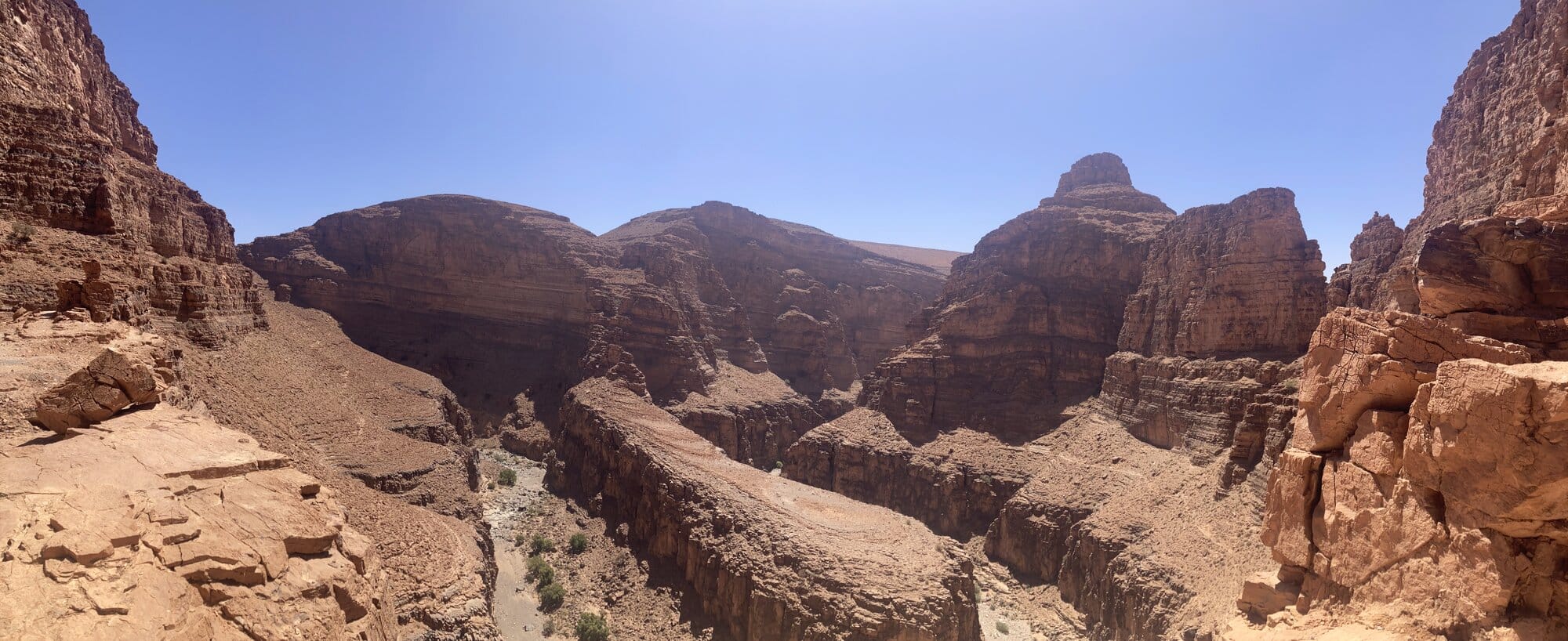
Stop often. The pull-outs are unmarked, the traffic is almost nonexistent, and at each bend you will see another version of the same rock — deeper red, sharper layering, a new formation that demands a photo.
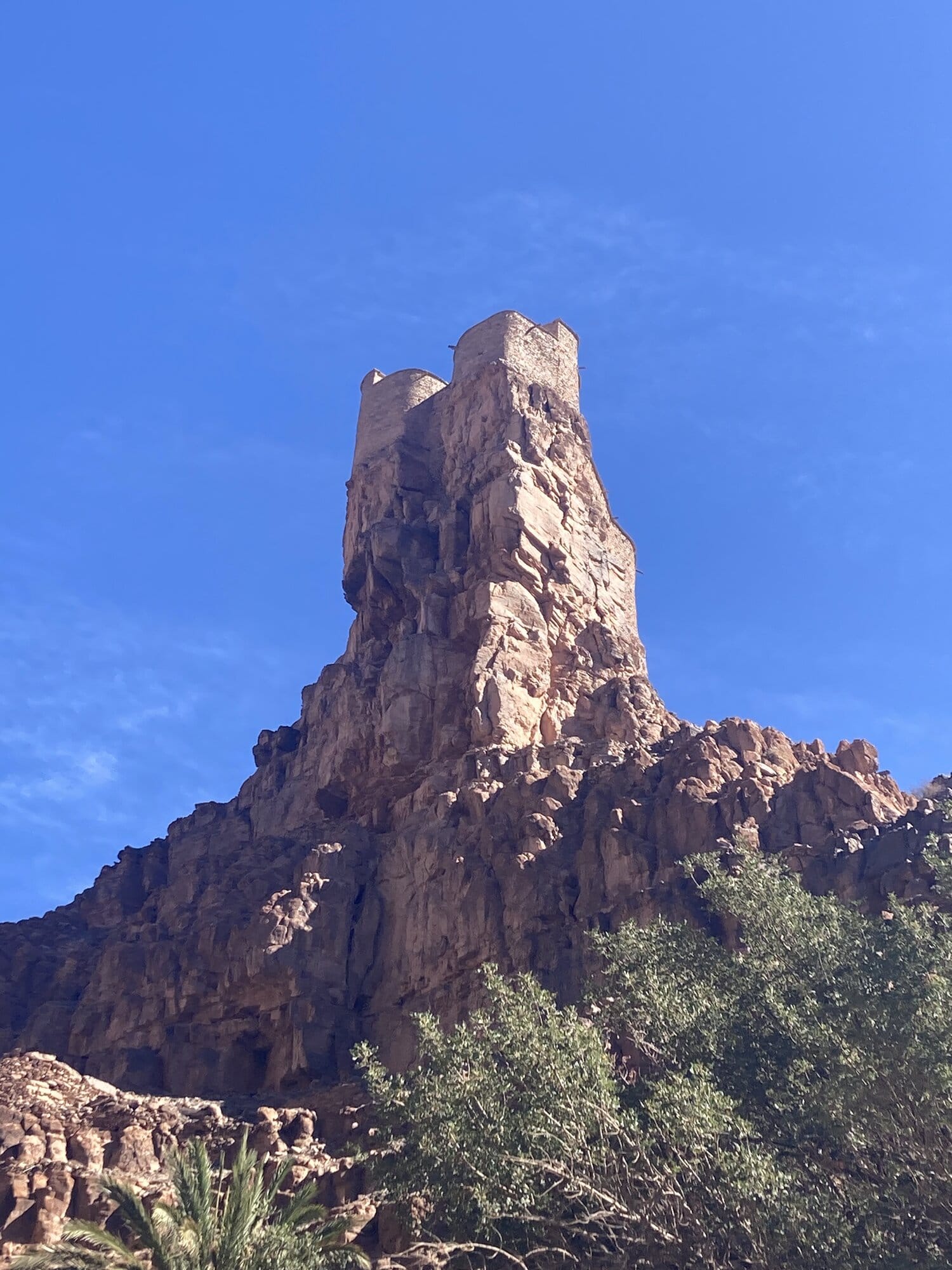
One of the most striking formations along the route is a natural spire of rock that stands vertically above a ridge — a pillar you can see coming for several kilometres. Keep your eye out for it on the road between Tarhjicht and Aït Mansour. A small café at the pass makes a good mint-tea stop.
Swim in the Emerald Pools of Aït Mansour
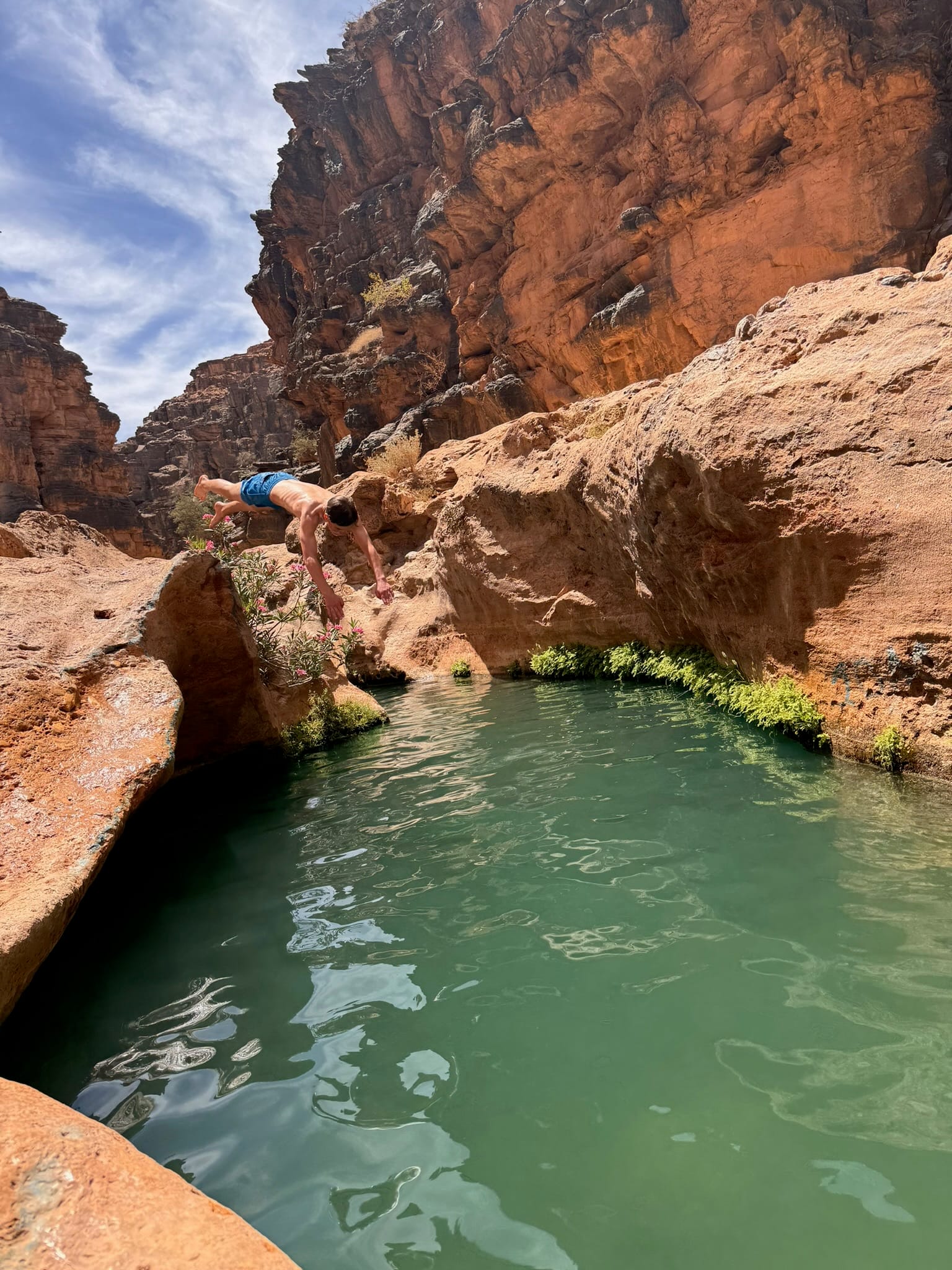
About two hours south of Tafraout, the canyon of Aït Mansour widens into a long palm oasis threaded with natural pools. The walls of the gorge are ochre and red; the water is green, cold and deep; and in several places the river has carved wide stone plunge pools perfect for a mid-afternoon dip. This is the highlight of the region for a family.
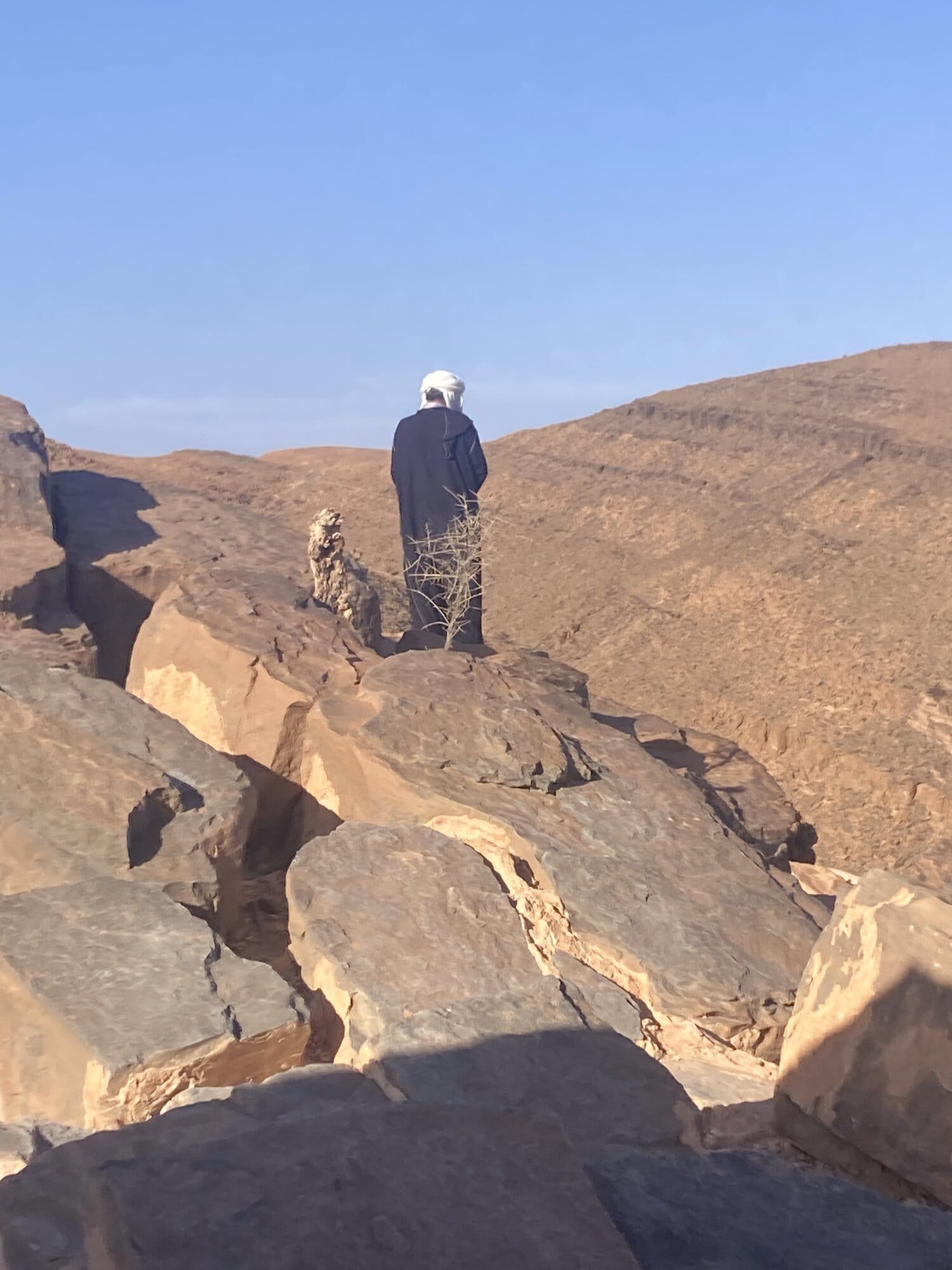
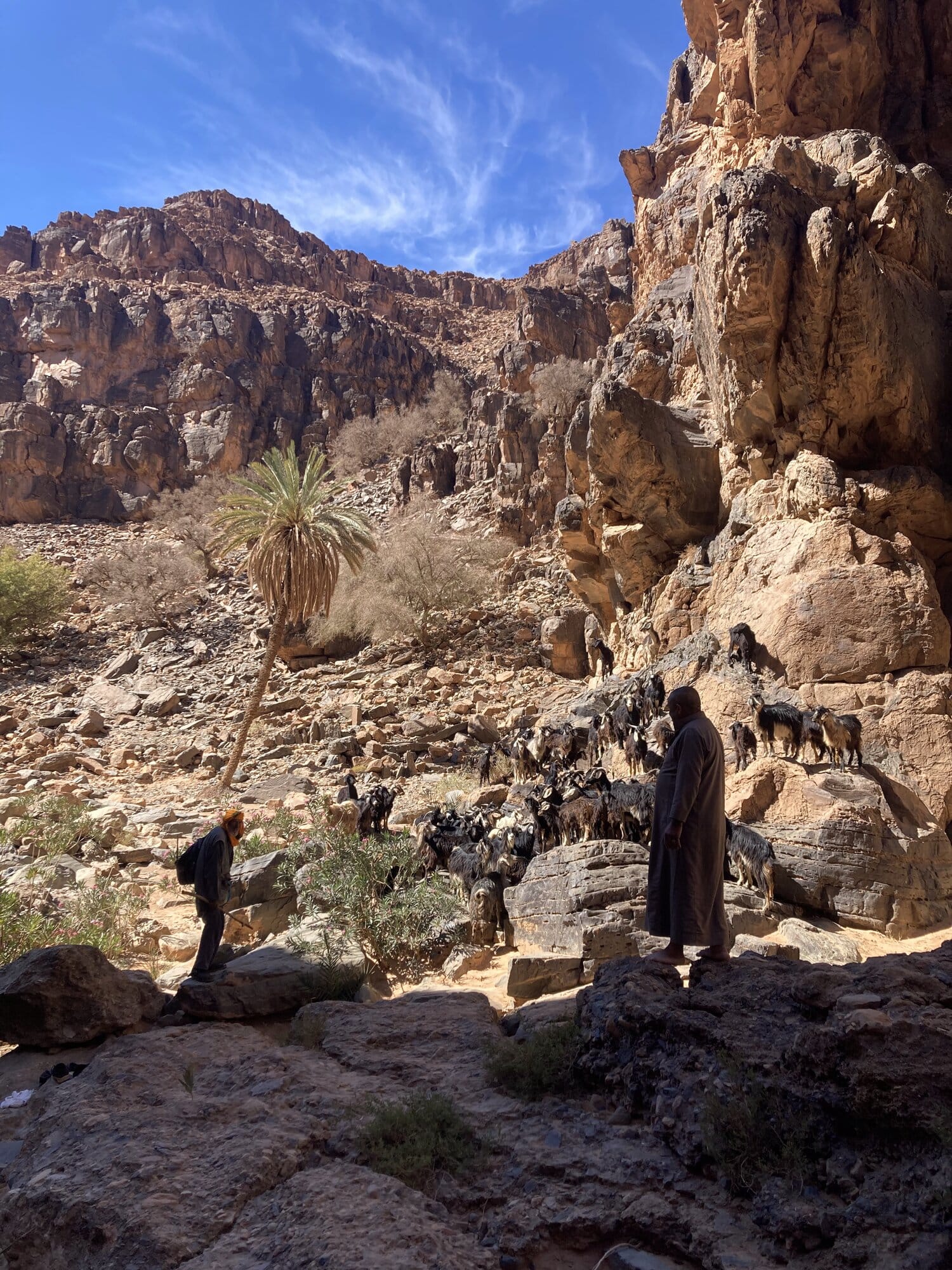
The canyon still functions as a working landscape — local shepherds move their goats through the gorges, palms are tended for dates, and small villages cling to the sides of the cliffs. Show respect, say hello, and you will often be invited for tea at the first café you pass.
The pools themselves are the real reason to come. Several are deep enough to jump into from low cliffs, though you will want to check the depth carefully yourself before letting anyone take a flying leap — the water level changes with the seasons. We were there in late April and the pools were full and cool, but spring runoff was still feeding them.
Pack a towel, a picnic, sandals for the rocks, and sun cream. There is no entrance fee and very little in the way of facilities, which is exactly what makes this place special. In high summer (July–August) the heat in the canyon is intense; spring and autumn are better.
If you would rather not drive yourself, day excursions to Aït Mansour and the palm canyons are bookable from Tafraout and Agadir — browse tours on GetYourGuide.
Wander the Art-Deco Streets of Sidi Ifni
Sidi Ifni is the biggest surprise on the southern coast: a pastel town of art-deco buildings perched above the Atlantic, all whitewashed walls, faded-pink shutters and mint-green trim. It was under Spanish administration until 1969, and the architecture feels directly transplanted from Andalusia — which, standing on a rooftop with a mint tea in hand, is part of the point.
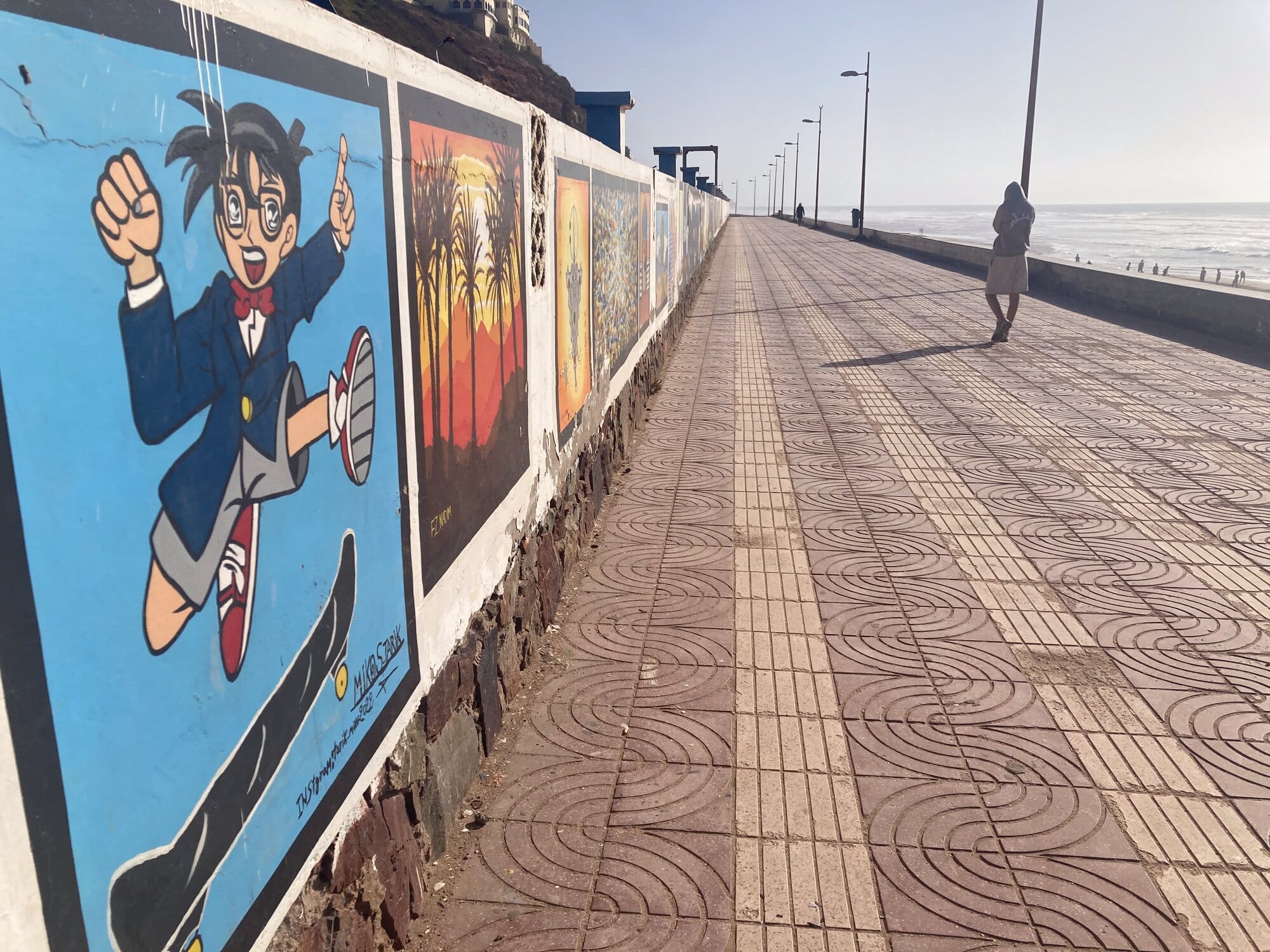
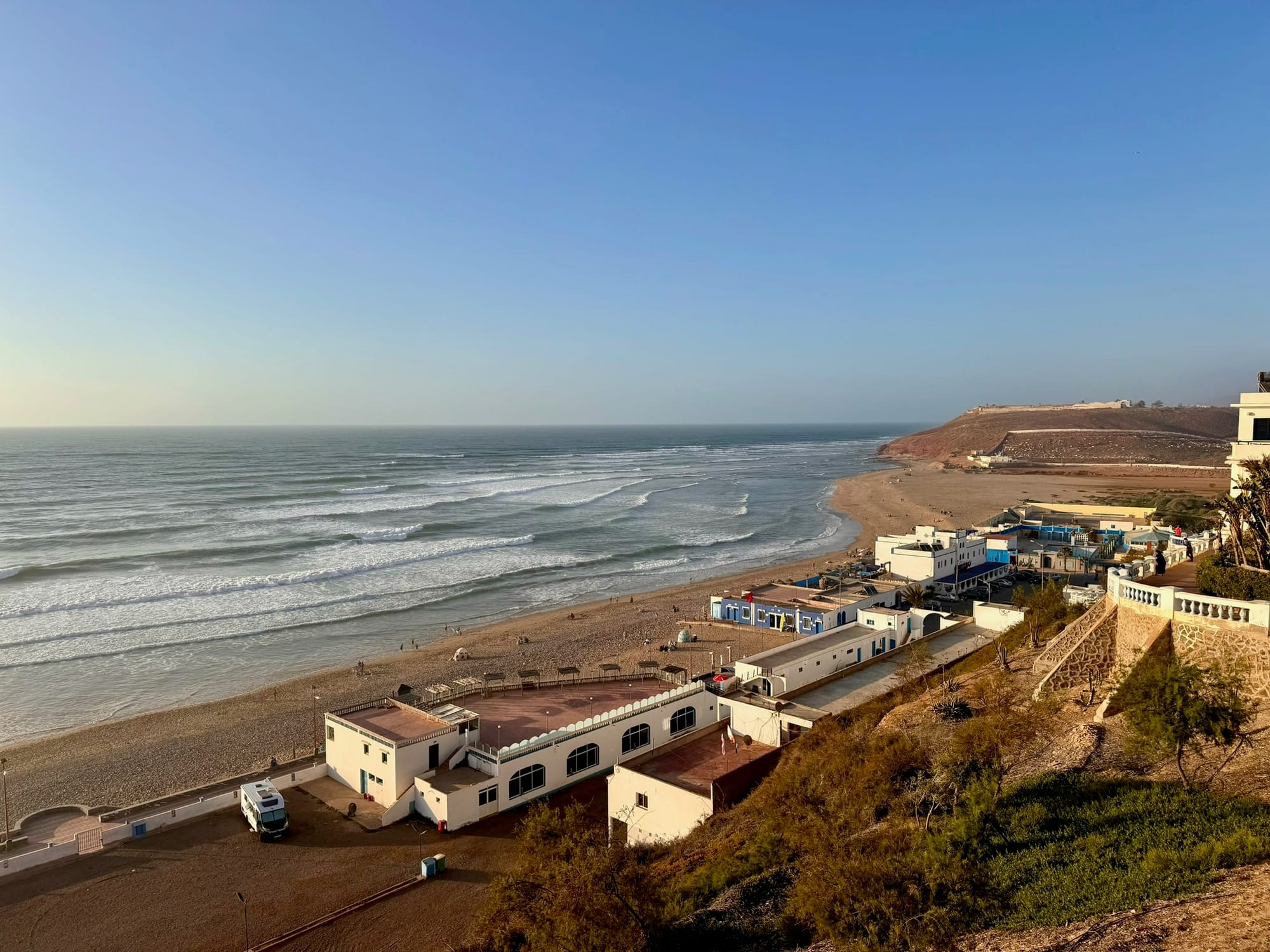
Start with a walk along the painted seafront promenade. Large murals line the wall and the view over the ocean is enormous. The promenade leads to the old lighthouse and back to the main plaza.
The town sits above a huge crescent-shaped beach backed by a chalk cliff. A few small rock islands stand offshore, and Atlantic swell wraps in lines along the sand. It is a working fisherman's beach rather than a resort beach — bring a picnic, not a parasol.
Catch sunset from a rooftop
Sidi Ifni is made for rooftops. In the old town, nearly every small hotel and café has a flat terrace you can climb up to, and sunset from the higher ones looks straight out to the Atlantic over a mosaic of pink, cream and pale blue roofs.
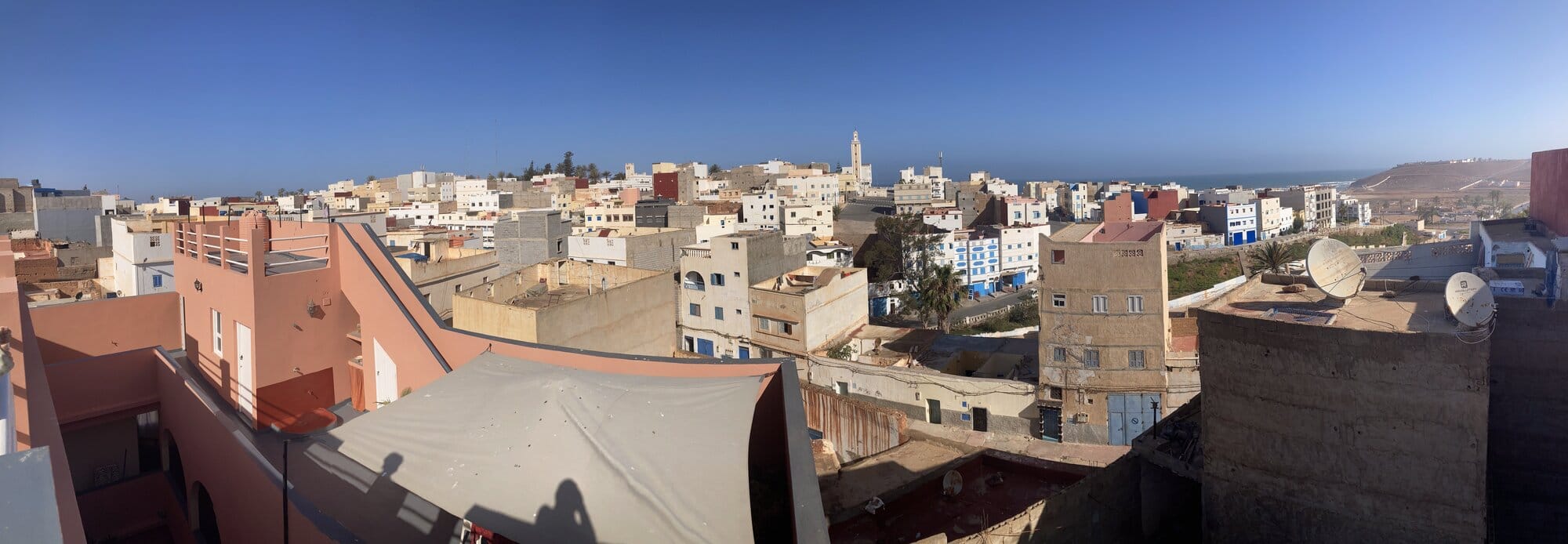
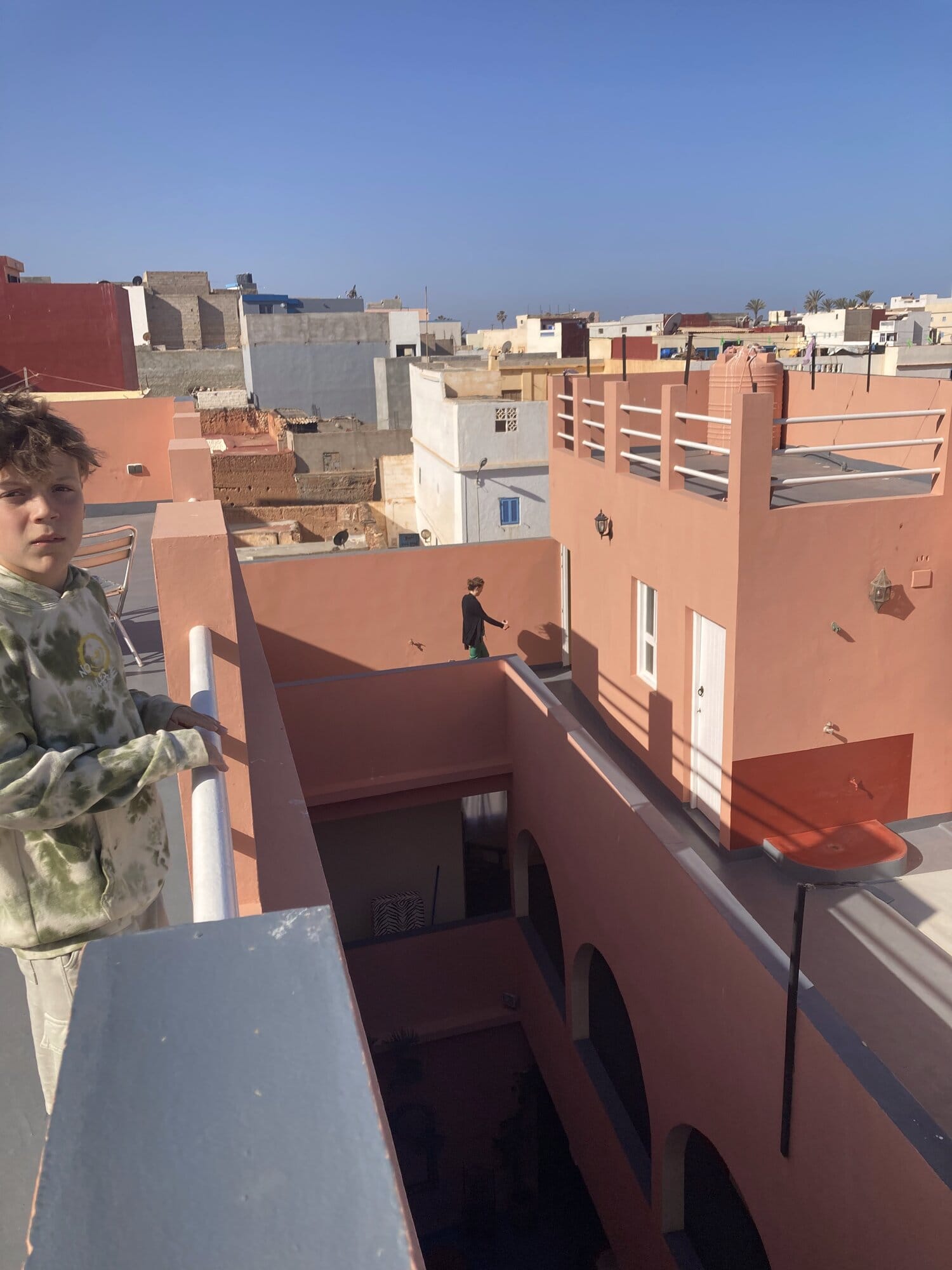
If you are travelling with kids, a rooftop sunset with a glass of mint tea and a plate of honeyed pastries is one of the easiest wins of the trip — no effort, no cost, huge view.
Take a Day Trip to Legzira Beach
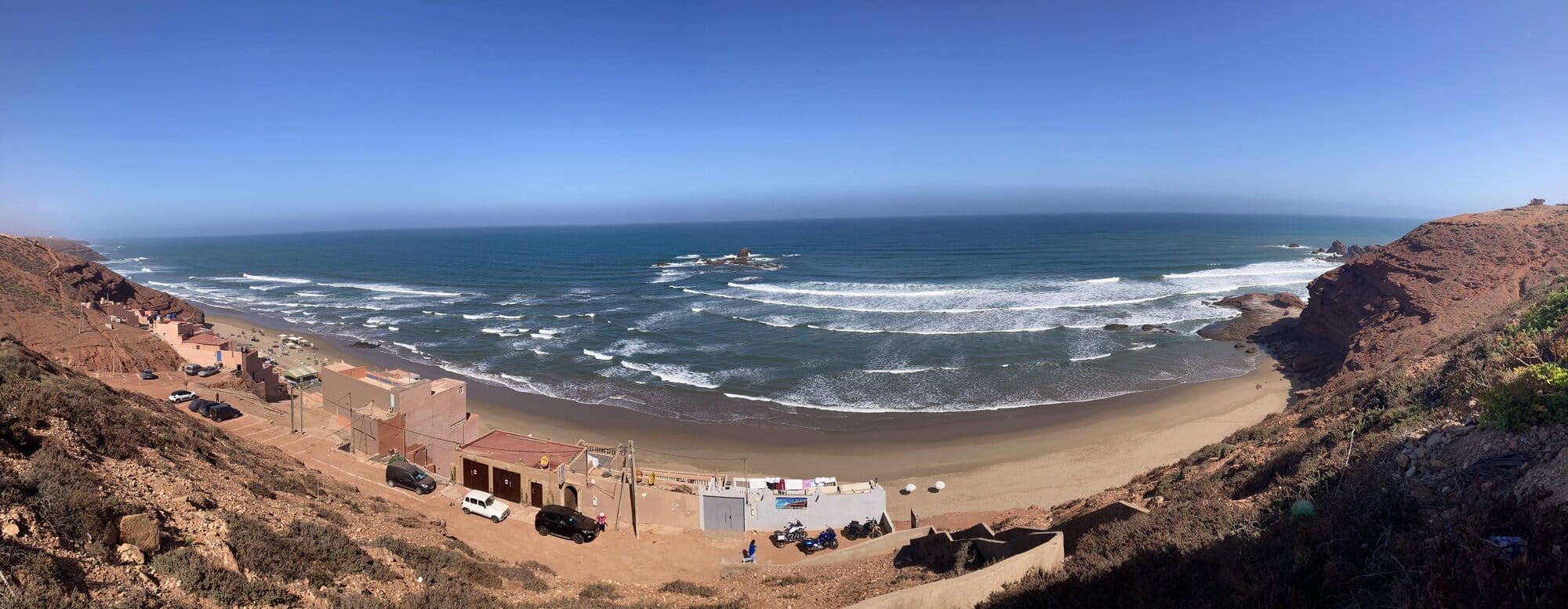
Half an hour north of Sidi Ifni, Legzira Beach is famous for its huge natural stone arches carved into the red cliffs. The largest arch collapsed in 2016, but what remains is still one of the most photogenic stretches of coast in Morocco — a long red-sand beach pocked with tide pools, curving between sculpted cliffs.
Come at low tide and walk as far along the sand as you like — each bend reveals a new set of sea caves and arches. There are a few simple cafés on the bluff above, serving tagines and grilled sardines with the beach thundering below.
For surfers, Legzira itself does not reliably break, but the beaches around Mirleft (just north) are among the best intermediate breaks on Morocco's southern coast. Book a lesson through one of the local surf camps, or try a guided surf session from Agadir or Mirleft on GetYourGuide.
Shop for Berber Rugs in Mirleft
Mirleft is the kind of small Atlantic town that you roll into planning to stop for lunch and then decide to stay the night. It is essentially one street of cafés, surf shops and artisan stalls, with beaches at either end and the mountains rising behind.
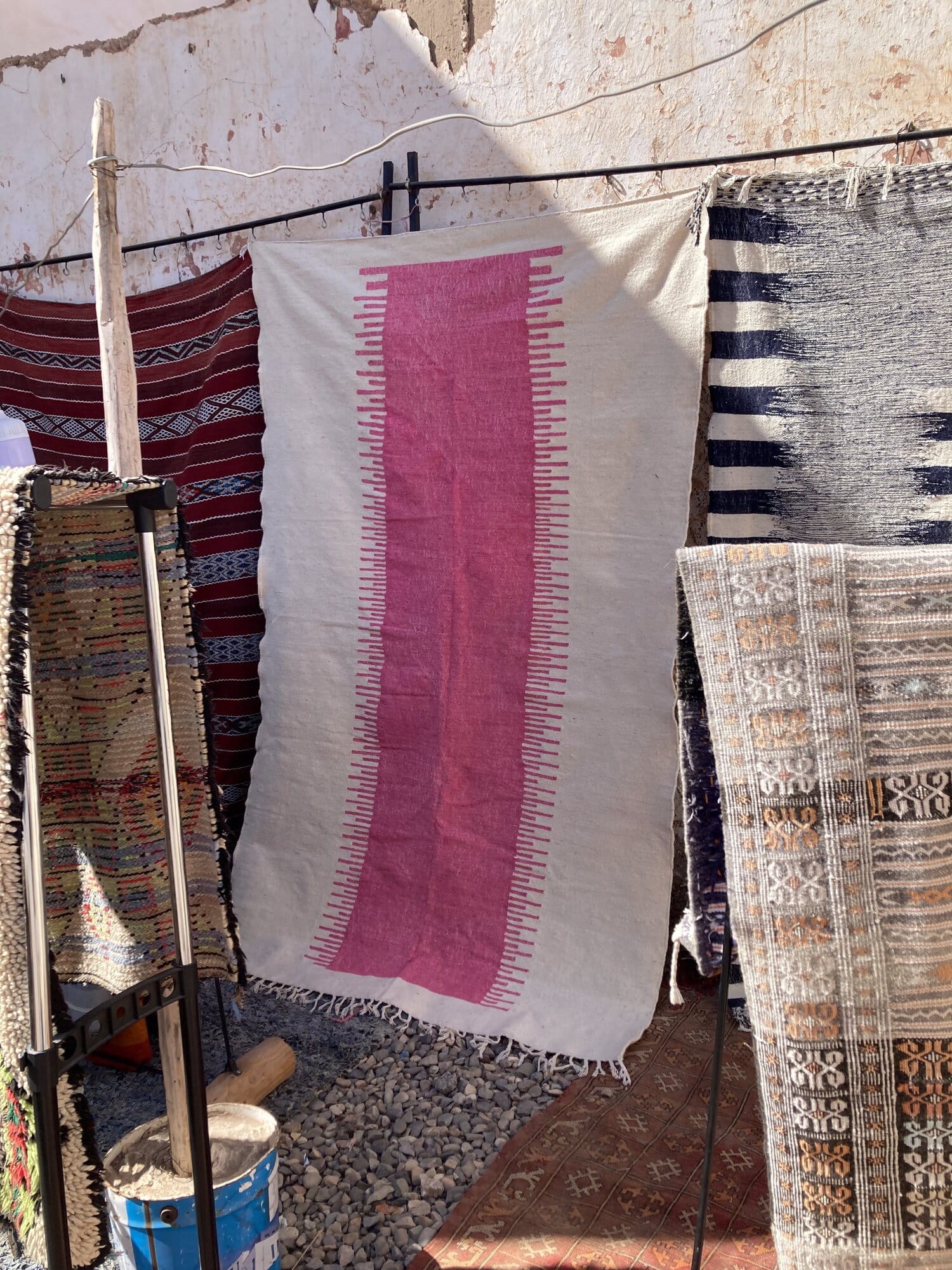
The rug stalls on the main street are excellent — traditional Berber kilims, mostly in cream, red and fuchsia, priced noticeably lower than in the big cities. We brought one home for the kids' bedroom and it is still the most complimented object in the house. Bargain politely (start at around half the first asking price), take your time, ask for tea, and come back the next day if you want. That is how it works.
If you are road-tripping with a car full already, most stallholders will happily ship to Europe for a fee — ask upfront and get a clear price.
Find the Best Place to Stay
Sidi Ifni and Mirleft are the two logical bases for this part of the coast. Sidi Ifni has more character, more restaurants and better rooftops; Mirleft is smaller, surf-centric and more relaxed. Both are small enough that anywhere in town is walkable.
Use our interactive map to find accommodation along the southern Atlantic coast:
Budget around €50–€90 per night for a good family room in Sidi Ifni or Mirleft; the more atmospheric riads with pools and sea views are closer to €120. Browse hotels in Sidi Ifni and Mirleft on Trip.com for a full range.
Practical Information
How to Get There
The whole southern Atlantic coast feeds off Agadir (AGA), which has direct flights from most major European cities and is roughly a two-hour drive from Sidi Ifni, Mirleft and Legzira. Our open-jaw flight into Essaouira and out of Agadir was ideal for this kind of road trip. compare flights to find the best fares.
A car is essential — local buses exist but are slow and infrequent. Hire a car at Agadir airport for the most flexibility. A small Dacia will handle every road mentioned in this article including the Aït Mansour canyon tracks.
Driving distances:
**Agadir → Mirleft:** ~1h45 Mirleft → Sidi Ifni: 40 minutes **Sidi Ifni → Aït Mansour (via Guelmim):** ~3h Aït Mansour → Tafraout: ~2h
Best Time to Visit
October to May is the sweet spot — warm sunny days, cool nights, manageable Atlantic swell. Summer (June–September) is hotter and busier with Moroccan holidaymakers, and the canyons can be uncomfortably warm by midday. We visited in late April and found it close to perfect: 24–26°C on the coast, pleasant water in the canyon pools, and uncrowded everything.
Budget
The southern coast is very affordable. A full tagine dinner runs around €10–€15 for two, a mid-range hotel €60–€90, a day of car hire and petrol around €40–€55, and most of the sights (canyons, beaches, rooftops) are free. Plan on €45–€70 per person per day as a comfortable family budget.
FAQ
Q: Are the Aït Mansour pools safe for kids to swim in? A: The shallower pools are fine for confident swimmers, but depths vary and there are no lifeguards. Inspect each pool yourself before letting children in, and avoid after heavy rain when currents can be stronger.
Q: Is Sidi Ifni worth a night, or just a day trip from Agadir? A: At least one night — ideally two. The art-deco town is at its best in late afternoon and at sunset from a rooftop, which a day trip rushed from Agadir will miss. Beaches and cafés benefit from unhurried time.
Q: Do we need a 4x4? A: No. Every road mentioned here was fine in a small hatchback. A 4x4 is only useful if you plan to explore further into the Western Sahara or very remote desert tracks.
Q: Can we combine this with the Sahara proper? A: Not easily. The big dune experiences (Erg Chebbi, Erg Chigaga) are a long drive inland from here — at least two days each way. The southern coast has its own character and works better as a stand-alone leg.
More to Explore
If the coast-meets-canyon feel of southern Morocco has clicked for you, these guides cover some of our other favourite corners of the world: