
Tafraout & the Anti-Atlas: A Family Travel Guide
A family travel guide to Tafraout and the Anti-Atlas mountains in Morocco — pink-ochre Berber villages, the Painted Rocks, the Chapeau de Napoléon, Amtoudi canyon and the quietest corner of the south.

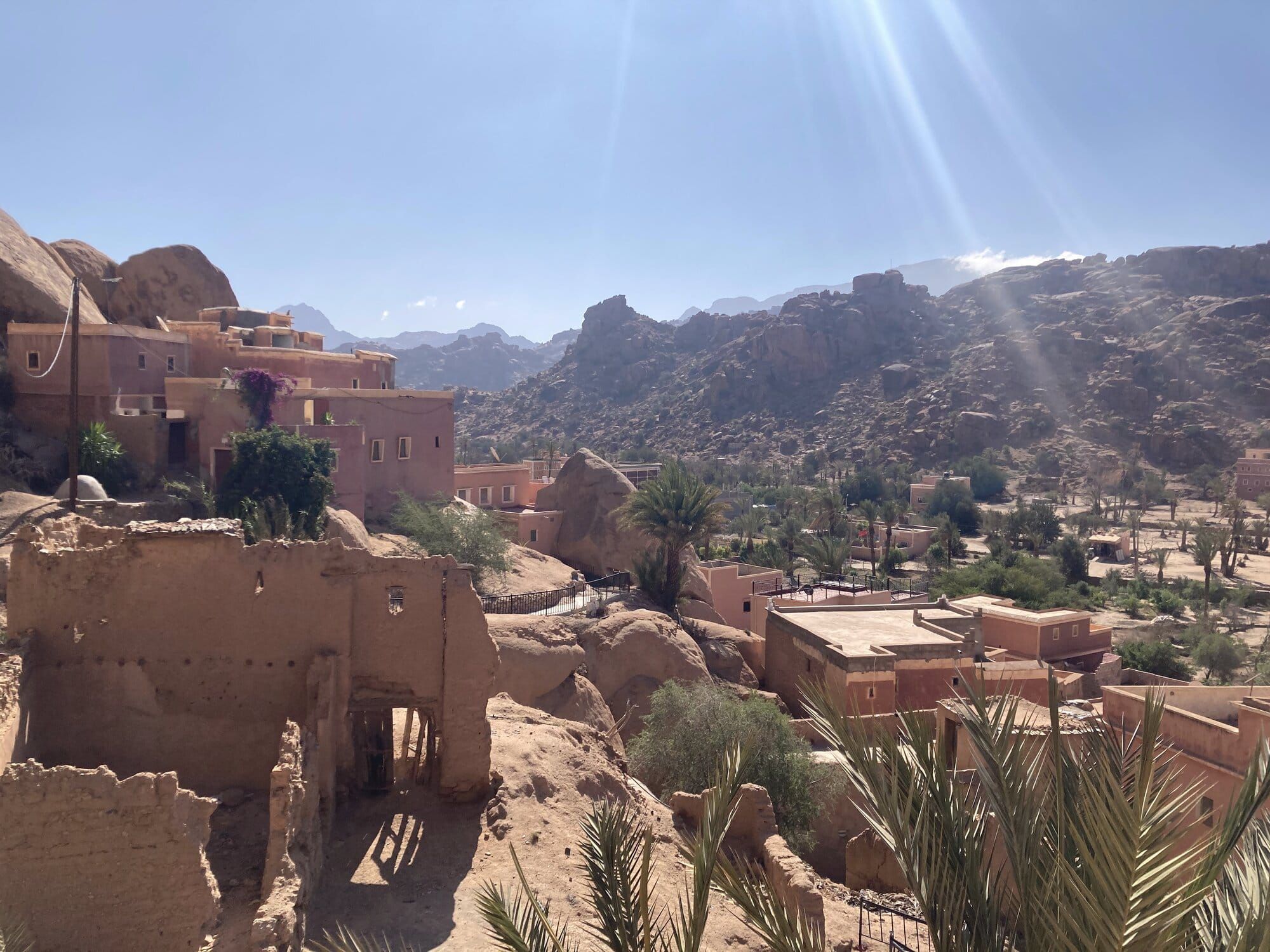
Tucked away in a granite bowl between the High Atlas and the Sahara, Tafraout is the kind of place you have to choose to go to — which is exactly why it stays the way it is. The town is small, pink-ochre and entirely unbothered by the coach tours that grind through Marrakech. The surrounding Anti-Atlas mountains are a geologist's playground: enormous rounded boulders piled like a giant's marbles, painted rocks in the middle of nowhere, palm-filled canyons and silent Berber villages built straight out of the hillside.
We spent three days in the Tafraout area in late April with our family and friends — a welcome slow-down after a week of Atlantic wind at Essaouira. Here's our take on the best things to do in Tafraout and the Anti-Atlas, with the practical information you need to make the most of a short stay.
Bookings: Some of the links in this article are affiliate links. This means that if you choose to make a booking, we will receive a small commission at no extra cost to you. Thank You!
Settle Into the Pink-Ochre Heart of Tafraout
Tafraout itself is a small market town of maybe 5,000 people, built in a shallow basin ringed by enormous granite peaks. The houses are painted in the soft pink-ochre that matches the surrounding rock, and the whole town blends into the landscape in a way that feels almost deliberate. Berber is the first language here, French is the second, and English is rarely needed.
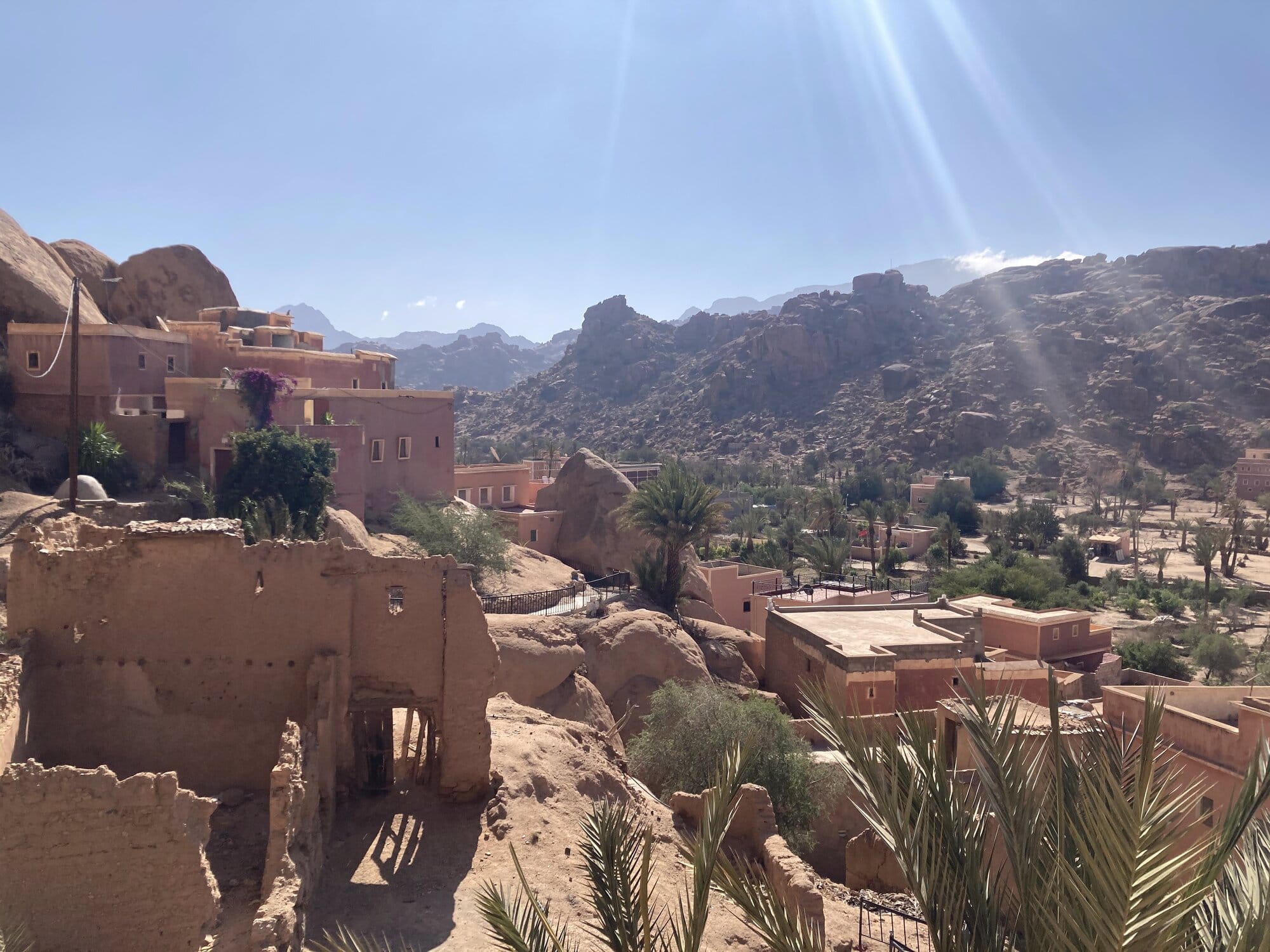
From any rooftop in town you get the same view: tight rows of rose-coloured houses, a couple of minarets, a few palms, and then the impossible round boulders of the Anti-Atlas rising straight behind. It is one of the most distinctive urban settings in Morocco, and in late afternoon light it is genuinely beautiful.
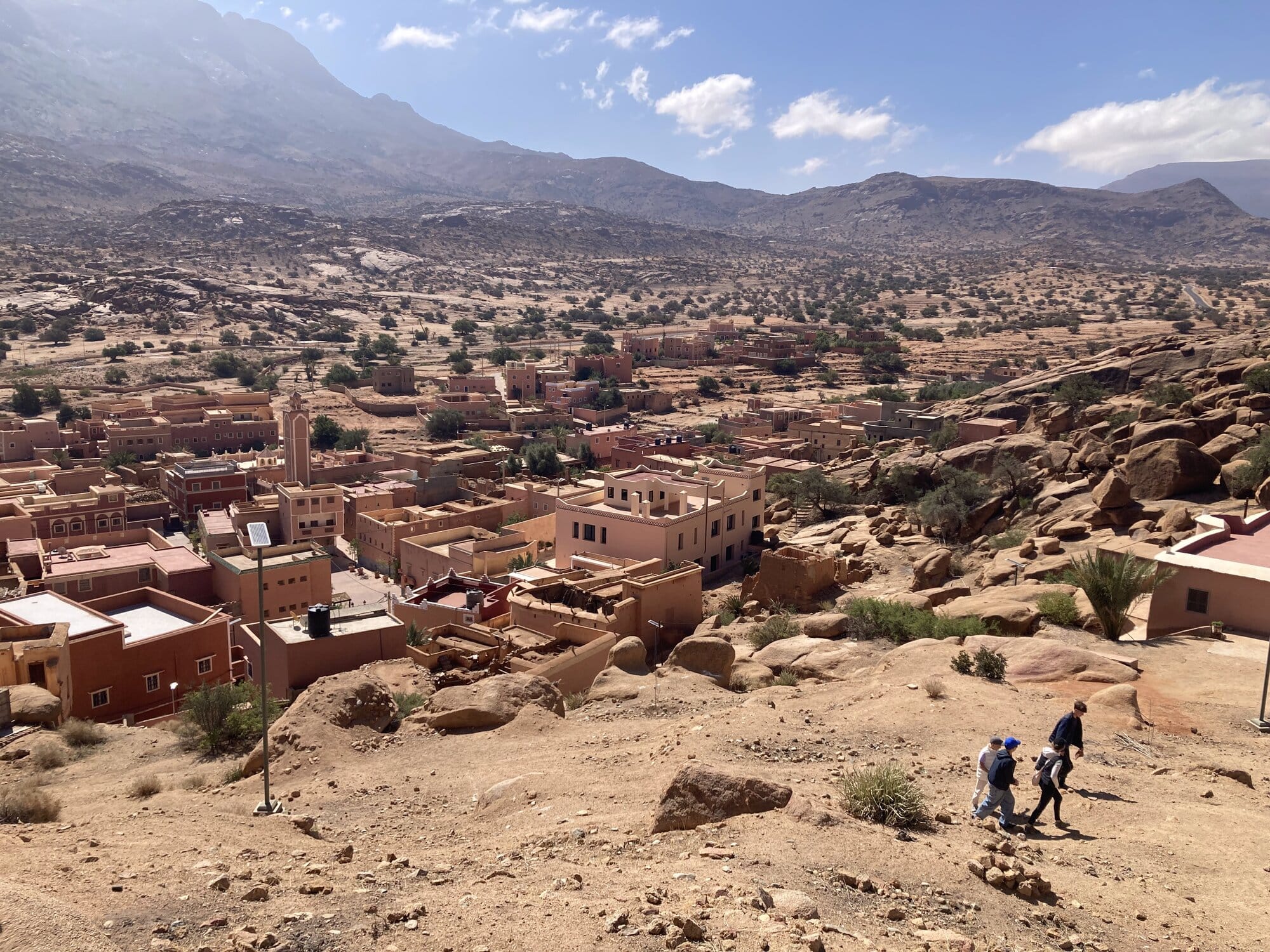
Short walks from the edge of town will take you into the boulder fields in fifteen minutes. The terrain is easy — rocky paths, low scrub, no real gradient — and perfectly suited to kids who need to burn off some car energy.
See the Chapeau de Napoléon
The Chapeau de Napoléon is a single colossal round boulder perched on a ridge above the town, its silhouette supposedly resembling Napoleon's hat (use your imagination). What it genuinely is, though, is the single best viewpoint over Tafraout and the surrounding valley — and it is a ten-minute drive from the town centre.
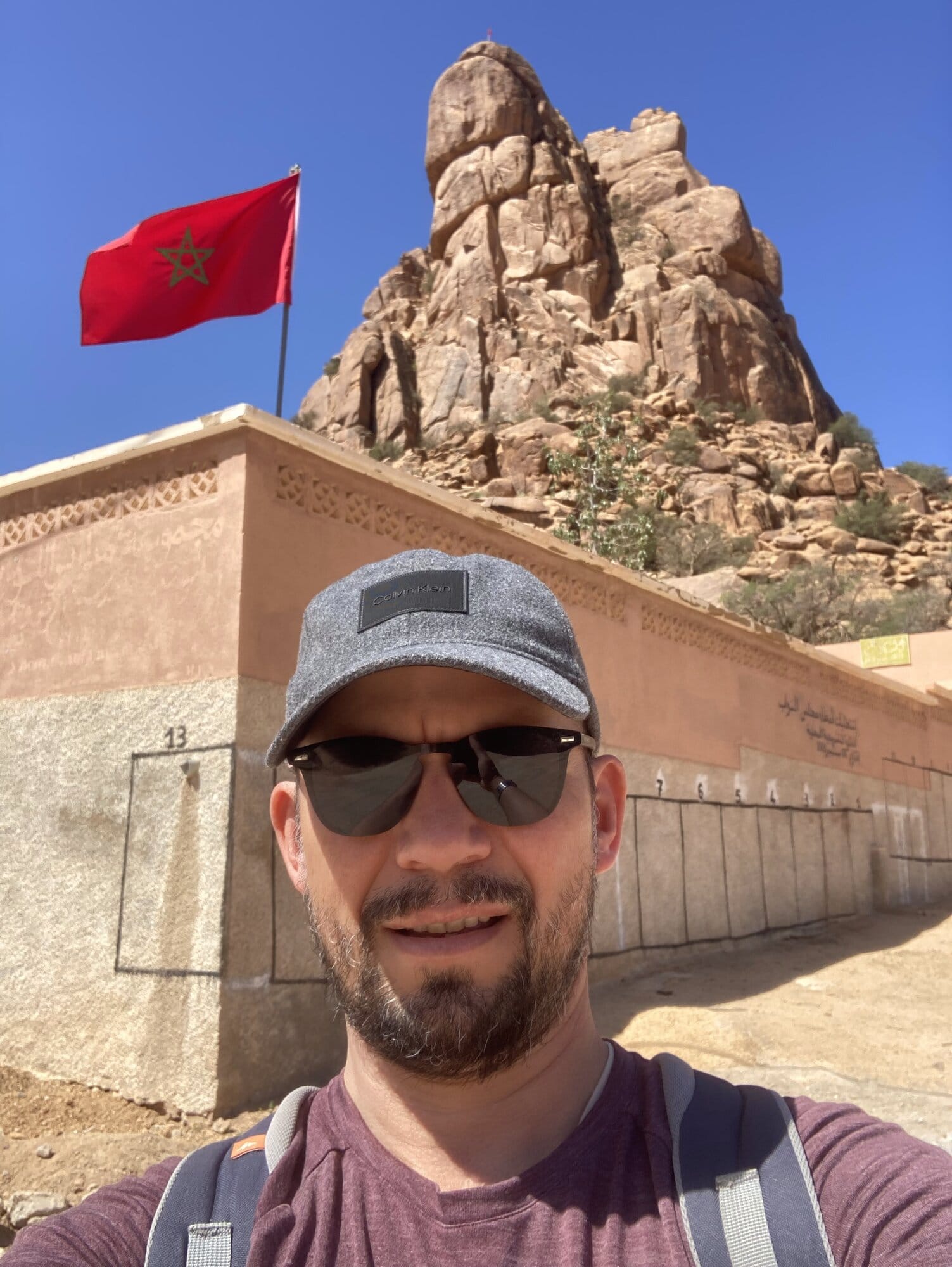
A Moroccan flag flies on a mast next to the rock, which gives a sense of scale (the flag is tiny next to the boulder). There is space to park, and a short uphill scramble gets you to the base. Sunset is the obvious moment, but we were there closer to midday and the light on the granite was still extraordinary.
This is one of those low-effort, high-reward stops that works for families — no hike, no entrance fee, five minutes and a postcard view.
Explore the Painted Rocks (Les Pierres Bleues)
Ten kilometres north of Tafraout, in a rolling landscape of scrub and granite, French artist Jean Vérame painted a cluster of enormous boulders in blue, red, yellow and black in 1984. The installation is called Les Pierres Bleues — the Painted Rocks — and forty years on, the colours have faded in places but the spectacle is still completely unexpected.
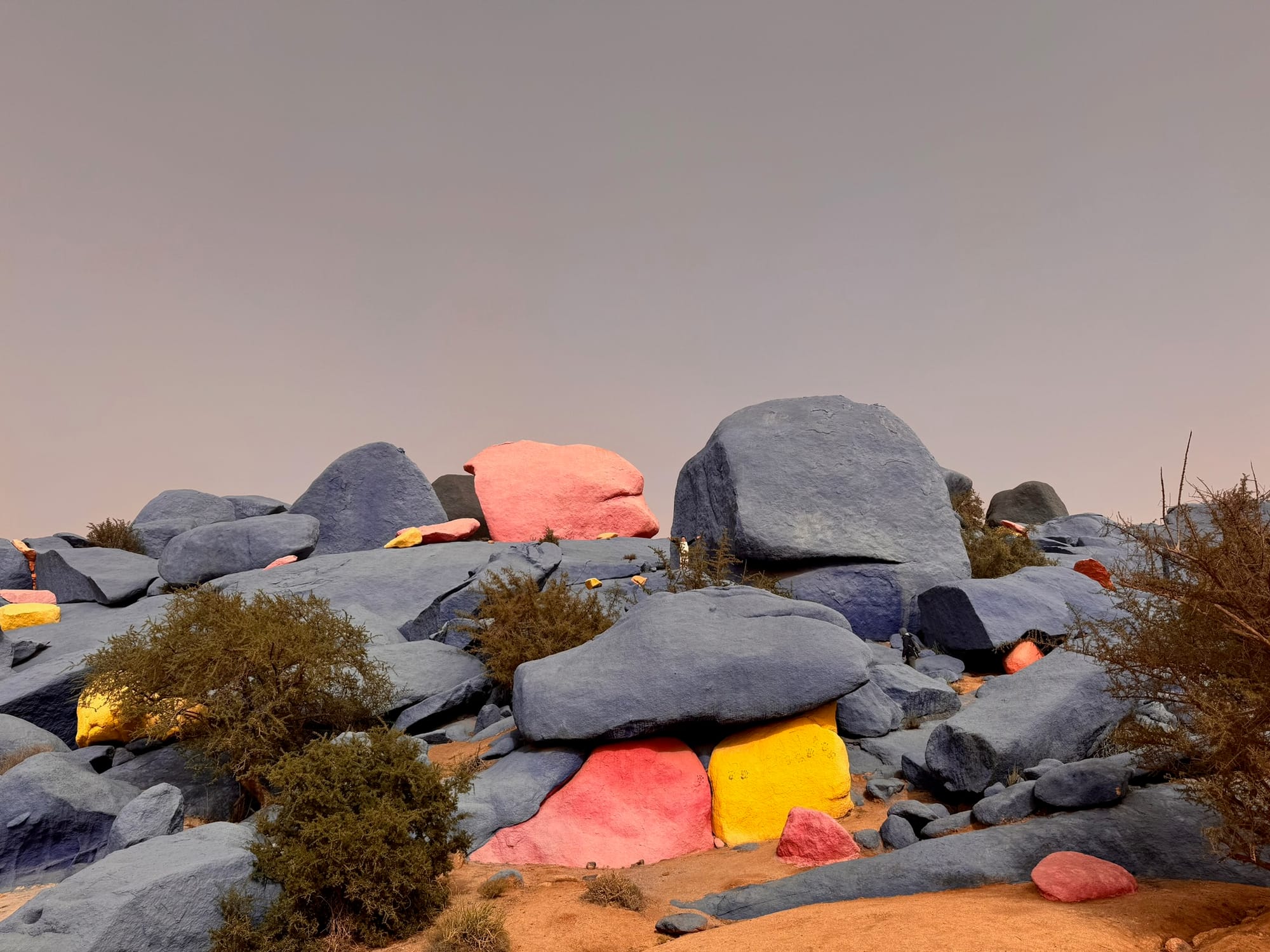
You can drive almost all the way to the rocks (the last few hundred metres are over bumpy dirt — any Dacia will make it) and then wander between the boulders freely. There is no fence, no ticket office, no guide. Kids love it — the scale of the rocks is genuinely enormous, and you can scramble up and sit on top of the biggest ones.
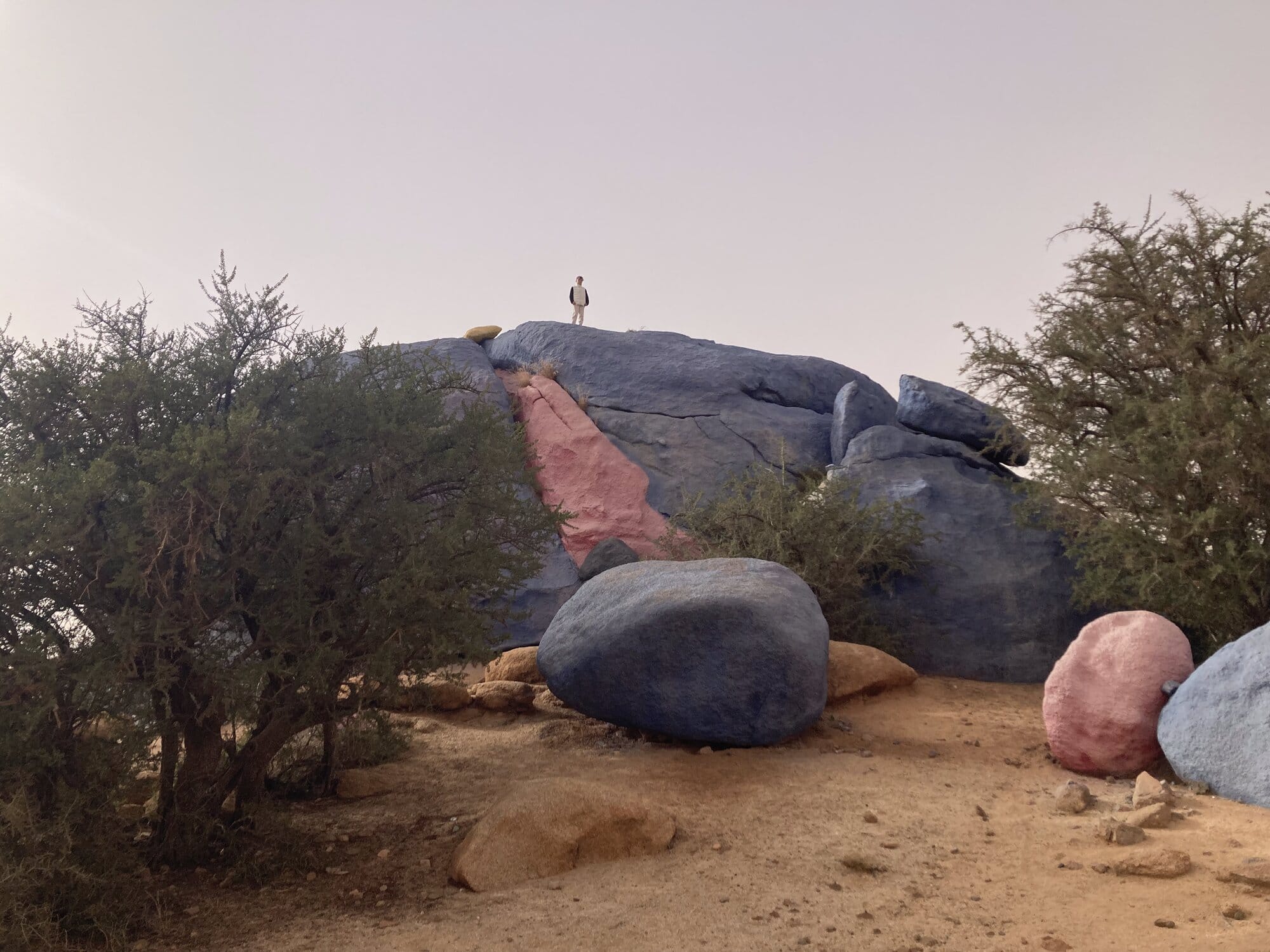
Late afternoon is the best moment — the crowds, such as they are, thin out, and the low sun warms the already intense colours of the rock. Bring a picnic and stay for sunset; there is almost nobody else around.
If you would rather have someone else do the driving, day tours from Tafraout or Agadir cover the Painted Rocks together with the Ameln valley and the Chapeau de Napoléon — browse Tafraout and Anti-Atlas tours on GetYourGuide.
Walk Into a Berber Village in the Ameln Valley
One of the quiet pleasures of the Tafraout area is walking into one of the small Berber villages in the Ameln Valley (north of town) or in the hills above. The houses are built directly into the rock — stacked fieldstone walls, flat earthen roofs, tiny windows to keep the interiors cool — and many are partly abandoned as the younger generation has moved to bigger towns.
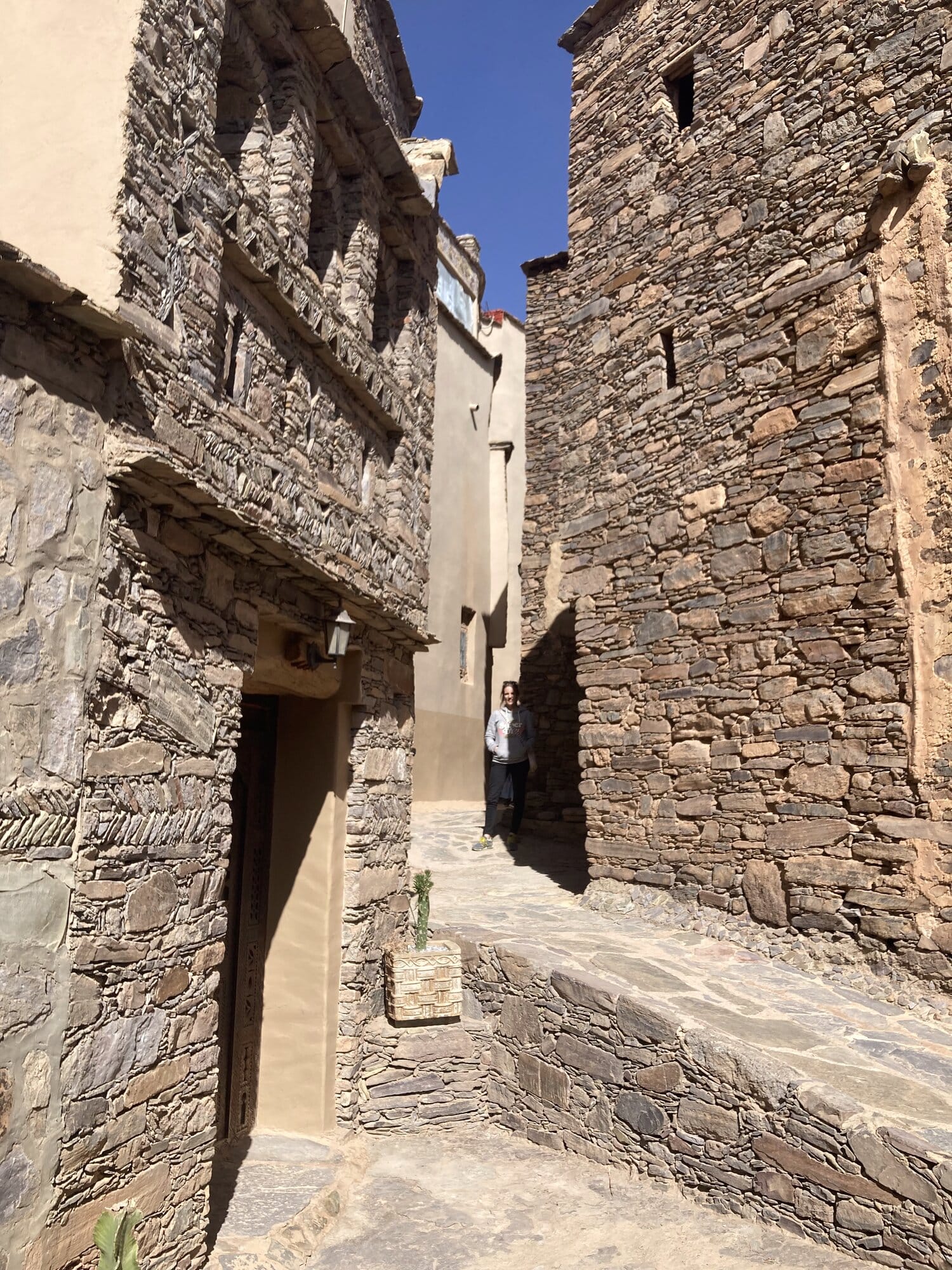
Just walking through with respect — saying salam to the few people you see, not photographing faces — is one of the most memorable things we did in the region. If you have a local guide, they can introduce you to families who still make argan oil in the traditional way and will happily share tea with visitors.
Drive Down to Amtoudi and Its Canyon
About two hours south-east of Tafraout, near the village of Amtoudi, the land suddenly opens into one of the most photogenic palm canyons in Morocco. A strip of date palms runs along the floor of a red-walled canyon, and an old fortified granary (agadir) clings to the cliff high above.
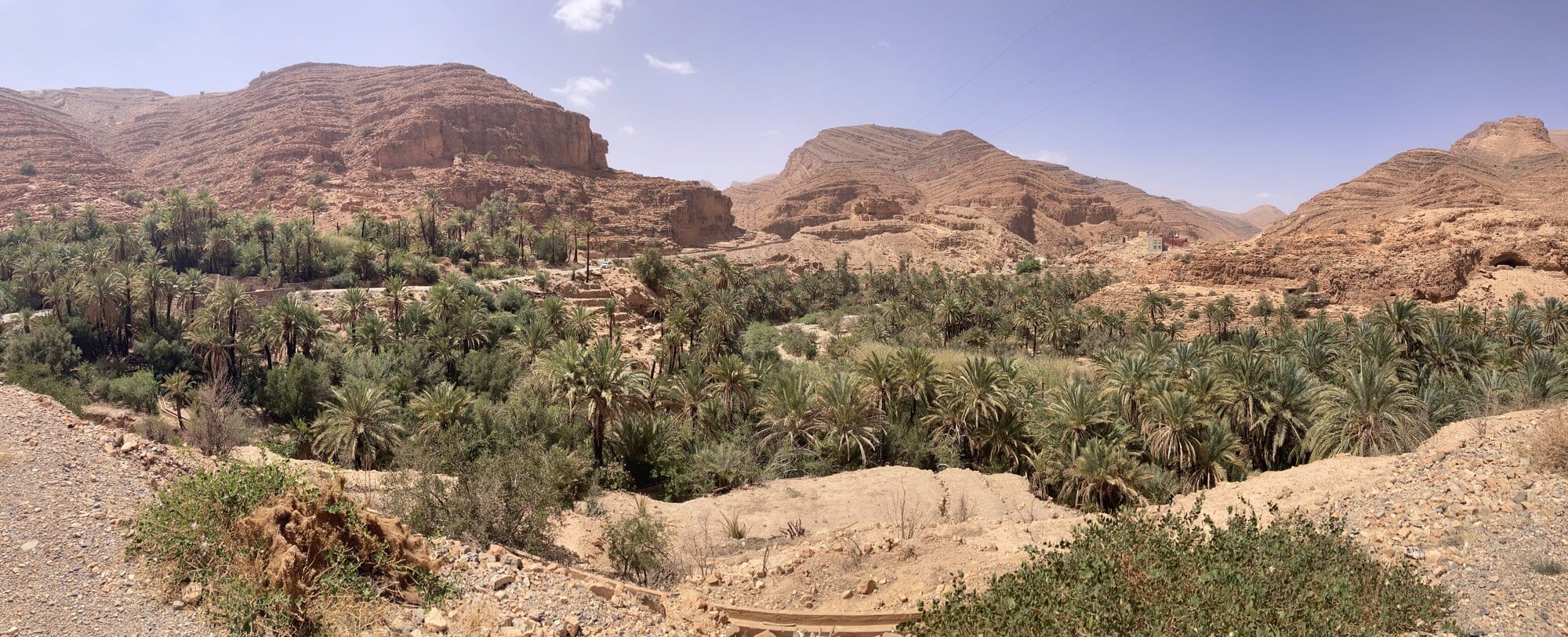
The drive itself is the main event — long empty roads, occasional road-side argan trees with goats climbing in the branches, and progressively more dramatic canyons as you approach Amtoudi. You can hike up to the hilltop agadir (about 45 minutes each way, moderate) or simply walk through the palm grove for an hour and have lunch at one of the small family-run cafés in the village.
If you are travelling with younger kids and prefer not to do the agadir hike, the palm canyon walk alone is reward enough. Either way, this is one of those drives that keeps reminding you how big and empty southern Morocco actually is.
Browse the Tafraout Souk
Tafraout's souk is not the sprawling affair you find in Marrakech or Fez — it is a few streets of family-run shops selling the things the area is genuinely known for: argan oil, Berber silver jewellery, tin tagines, slippers and a handful of rugs. Prices are lower than in the big tourist cities, and the atmosphere is a world apart — no touts, no pressure, just shopkeepers happy to sit down for tea.
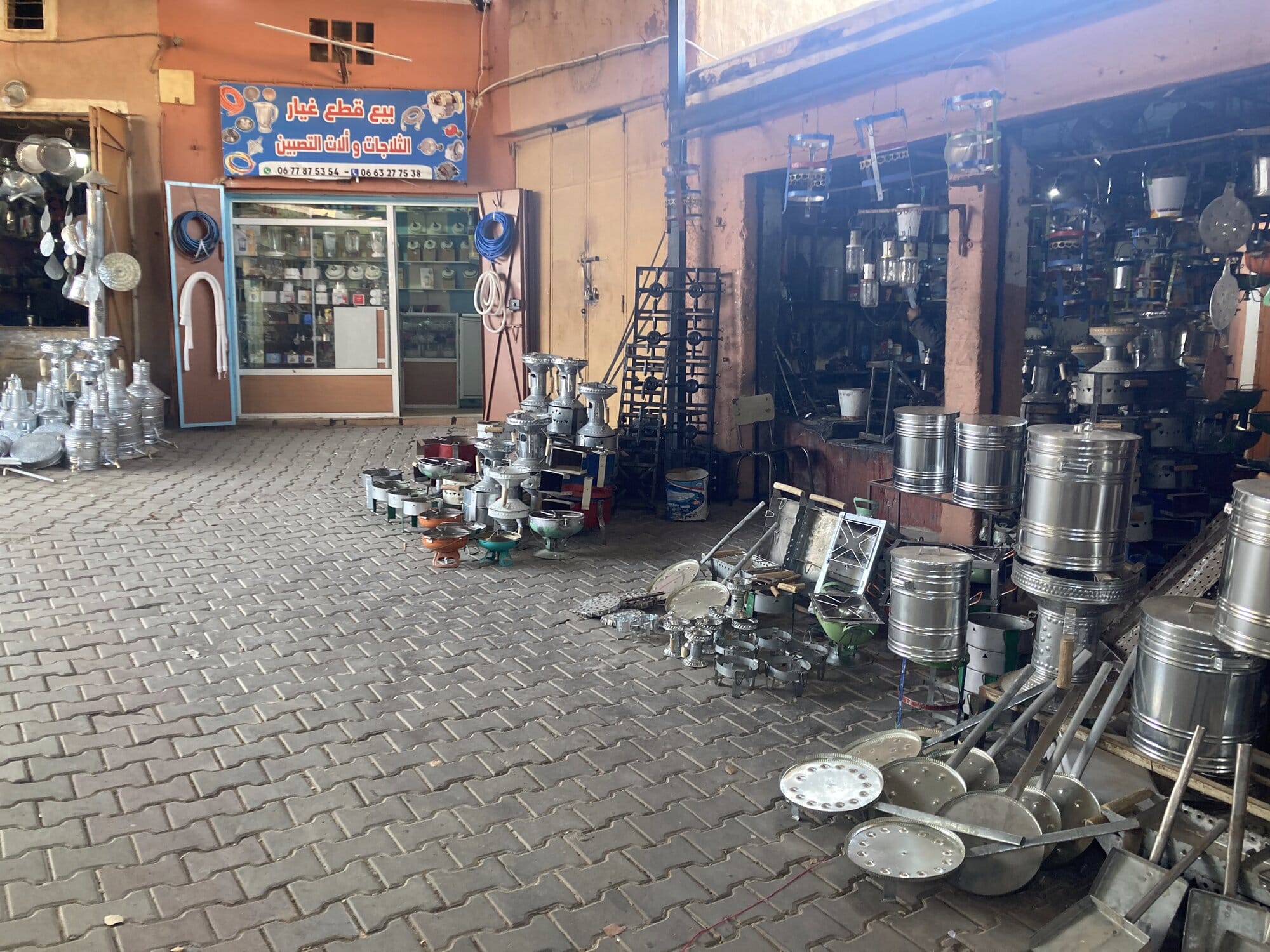
For food, the town has a handful of small restaurants serving Berber tagines — try the lamb-and-prune or the chicken-and-preserved-lemon. A full tagine for two with bread, salad and mint tea will rarely set you back more than €15.
Find the Best Place to Stay in Tafraout
Tafraout has a good spread of mid-range and budget hotels, most of them in a kasbah-style painted to blend with the surrounding rock. The best are just outside the town, with pools overlooking the granite ridges.
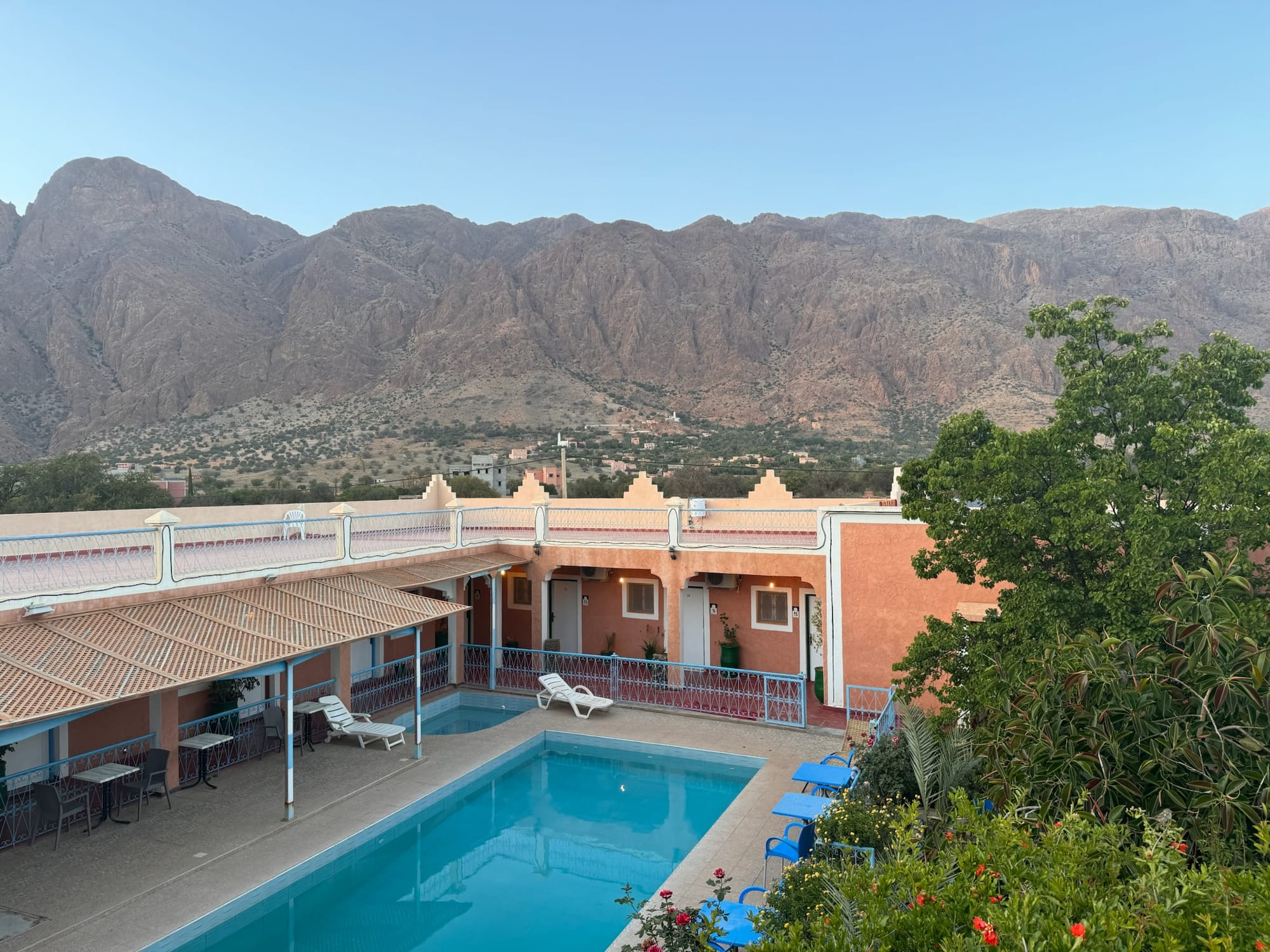
We stayed in a small hotel with a pool that looked straight at the Anti-Atlas — by the time the sun dropped, the ridges were glowing copper and the bougainvillea on the garden walls was humming with bees. For what it cost (around €70 a night for a family room in April), it was one of the best-value stays of the trip.
Use our interactive map to find accommodation near Tafraout, the Painted Rocks and the Ameln Valley:
Budget around €40–€80 per night for a good mid-range hotel in Tafraout itself, a bit more for the nicer places just outside town with pools. Browse Tafraout and Agadir hotels on Trip.com for options.
Practical Information
How to Get There
Tafraout is a small town in the middle of the Anti-Atlas — there is no airport and no train. The realistic options are:
**By car from Agadir:** roughly three hours via Aït Baha on the R105. This is the easiest route and the one we took. By car from Essaouira: around six hours via Agadir. Break the journey on the coast south of Essaouira if you can. * By car from Marrakech: around seven hours via Taroudant, which is beautiful but long in a day.
A car is essential for anything outside Tafraout itself — the Painted Rocks, the Ameln Valley, Amtoudi and the Chapeau de Napoléon all need your own wheels. Hire a car in Agadir for the most flexibility — a small Dacia will handle every road you are likely to take.
Tafraout sits in the Anti-Atlas mountains, 3.5 hours by car from Agadir airport (AGA) — the closest international gateway. Royal Air Maroc, Ryanair and easyJet all fly into AGA from major European cities; pick up a rental at arrivals since the mountain road south is winding and there's no train.
Best Time to Visit
October to April are the best months — warm and sunny during the day, cool at night, almost no wind. We visited at the very end of April and still had pleasant daytime temperatures in the mid-20s. May through September brings serious heat (35–40°C and higher) and is generally not comfortable for families.
The almond blossom festival in February is a regional highlight — the Ameln Valley floors turn pink and white with the flowering trees.
Budget
The Anti-Atlas is one of the cheapest parts of Morocco. A tagine dinner runs around €10–€15 for two, a hotel room with pool around €60–€90, a day's car hire from Agadir €25–€40, and most of the sights are free. Plan on €40–€60 per person per day as a comfortable family budget.
FAQ
Q: Is Tafraout worth the drive from Agadir? A: Yes — ideally plan at least three nights. It is a long drive for a single night. The Painted Rocks, the Chapeau de Napoléon, the Ameln Valley and Amtoudi together justify the distance easily, but you need two full days minimum on top of travel days.
Q: Is it suitable for families with kids? A: Very much so. The walks are short and flat, the roads are easy, the atmosphere is relaxed and the local people are welcoming. The boulder fields around the Painted Rocks are a natural playground.
Q: Do we need a 4x4? A: No. Every road we drove — including the tracks to the Painted Rocks and Amtoudi — was fine in a small hatchback. A 4x4 is only useful if you want to explore off-road desert tracks.
Q: Can we drink the tap water? A: Stick to bottled water. Tagines and grilled food at established restaurants are fine — just be cautious with raw salads.
More to Explore
If the quiet landscapes and slow pace of the Anti-Atlas have whetted your appetite, these guides cover some of our other favourite off-the-beaten-path corners: