
Ciutadella, Menorca: Old Town, Calas & Pont d'en Gil
Ciutadella is Menorca's western jewel — a medieval port town of honey-coloured stone, vibrant fish markets and some of the Balearics' most photogenic turquoise coves.


We drove into Ciutadella in the last light of Wednesday 28 October 2020, arriving at the western-shore viewpoint in the late afternoon with the town lights already coming on. Menorca was our first Balearic — six days, two kids (then 7 and 11), one rental car, and a loop strategy that put three nights on the east coast (Maó, Sant Lluís) and three on the west (Ferreries and Ciutadella). This guide covers the western half: the old town we walked on 30 October, the Pont d'en Gil we visited twice for two different sunsets, and the south-coast calas we fit in between.
The old town core is about 350 metres across — you can walk it in 40 minutes if you're not stopping, and a whole morning if you are. The south-coast calas (Cala Galdana, Cala en Turqueta, Macarella) are all within a 25-minute drive. Pont d'en Gil, the natural arch everyone photographs, sits 10 minutes north-west of town along the cliff coast. If you're basing here, two full days is the minimum; we made it work in one and a half and left wanting another afternoon.
Disclosure
This guide contains affiliate links to booking platforms and activity providers. Purchases through these links support our research and allow us to continue creating detailed travel guides.
Ciutadella Old Town: Layers of History
Ciutadella's old town reads as a layer-cake of occupations: Muslim-era street plan (narrow, curving, north-south), Gothic overlay from the 1287 Aragonese reconquest, then the Venetian-influenced courtyards and facades added by the Spanish aristocracy in the 17th–18th centuries. The result is a town where you'll turn off a main street into a 14th-century vaulted passage, exit into a 18th-century palace courtyard, and find a 20th-century painted door on the next block. That mix, not the pastel colours, is what makes the walk worth it.
Start at Plaça des Born. The obelisk in the middle was raised in 1857 to commemorate the 1558 Ottoman sack — an event that (contra the happy-ending version in most guides) actually ended with the town taken, 3,500 residents carried off to Constantinople, and the place rebuilt from ruins. The Cathedral of Menorca — Santa Maria de Ciutadella — sits on the site of the main mosque and retains the orientation of it; we got there in the mid-morning on Friday 30 October, the interior in early sun, and paid a €4 adult / €2 student combined ticket that includes the adjoining Claustre del Seminari.
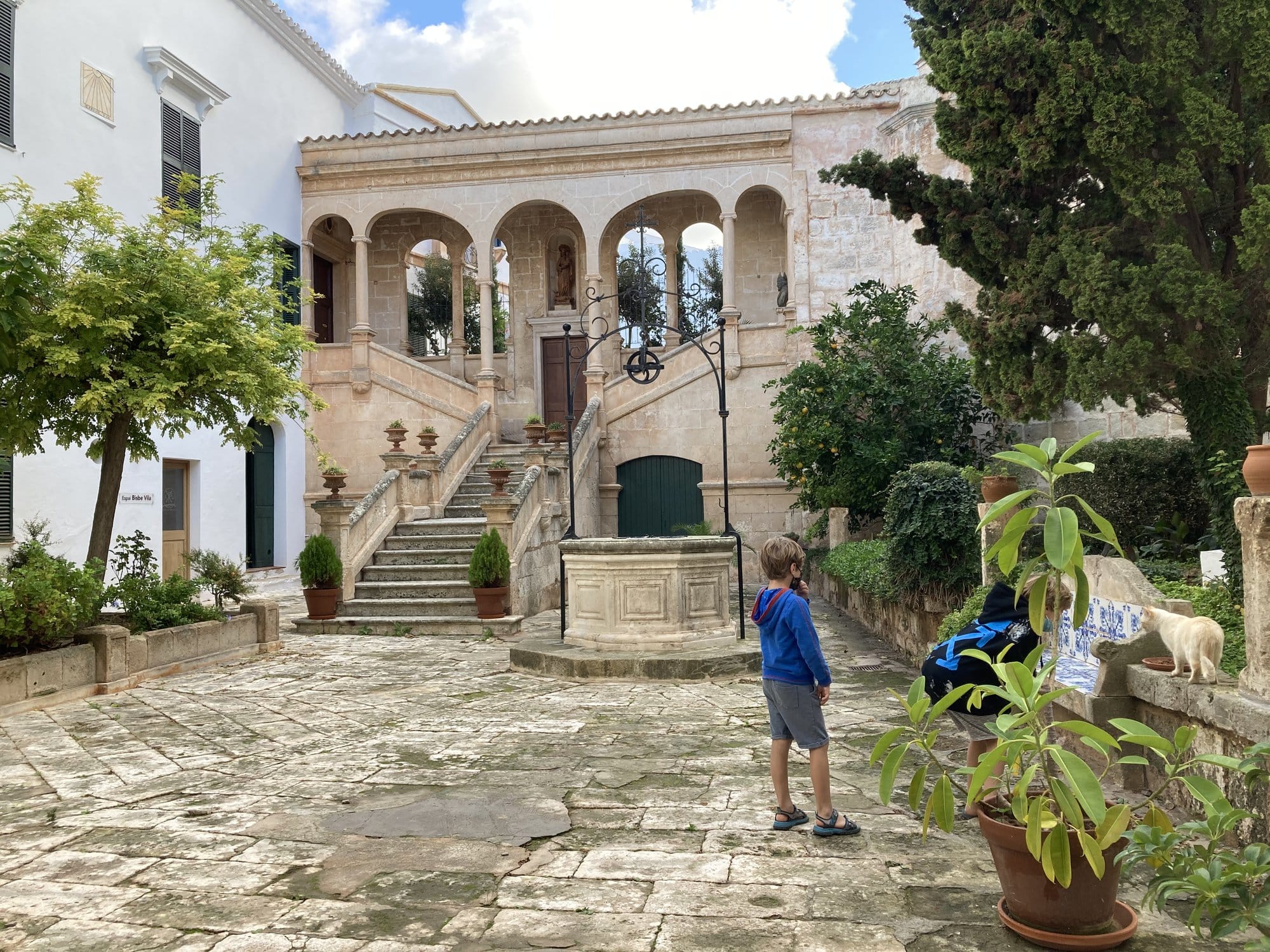
Off the Plaça, walk down Carrer Major des Born and cut left onto Carrer del Seminari. Mid-morning, we stepped into the courtyard of Can Salort (or a similar 18th-century casa senyorial — the signage was patchy) and caught our 7-year-old running a loop around the central cistern under a whitewashed arched portico. These palaces are mostly still private residences on the upper floors; the street-level courtyards are intermittently open, and it pays to just push half-open doors. We'd seen five courtyards by midday that we'd have walked past entirely if we hadn't.
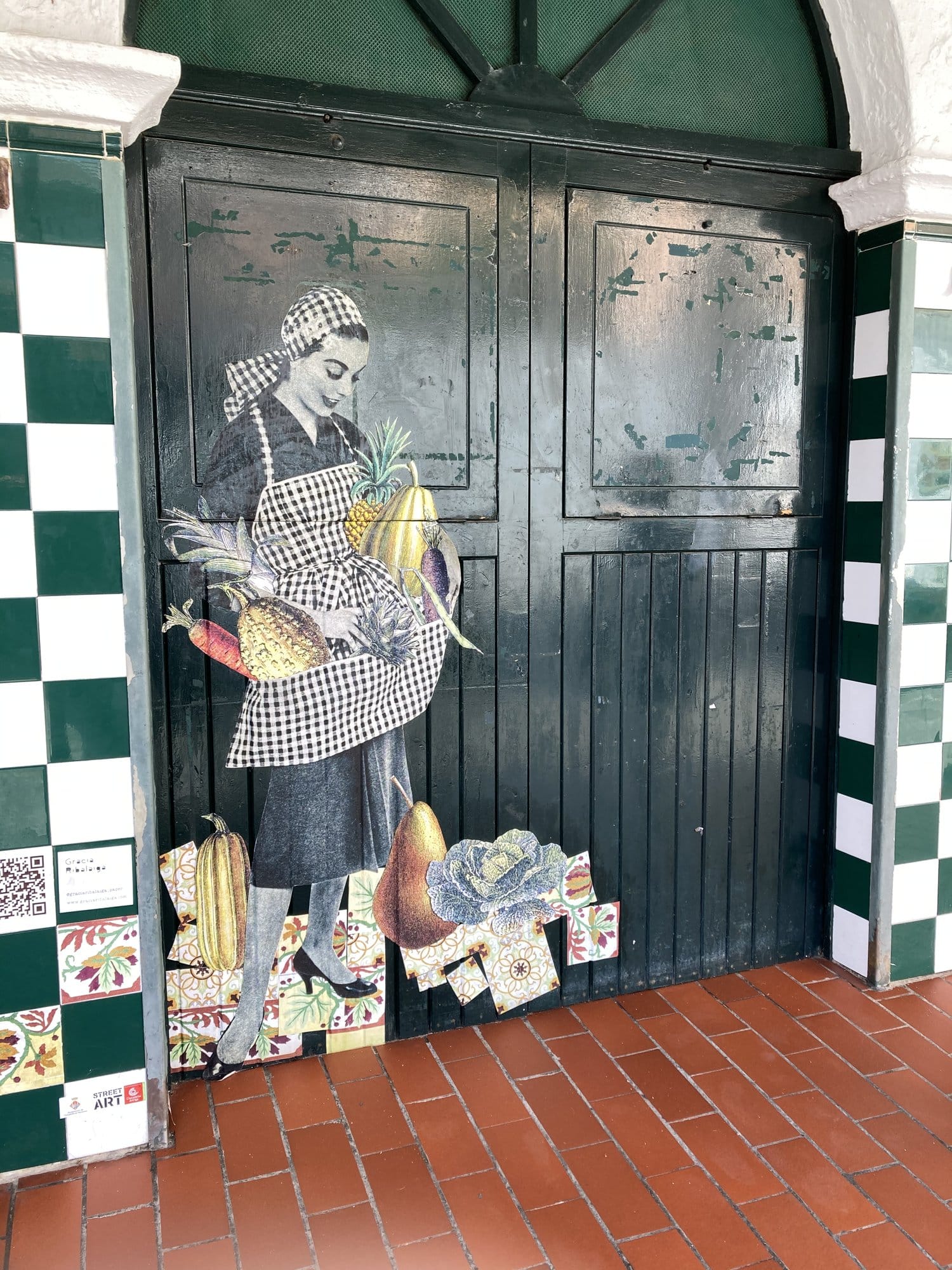
The painted doors are the most photographed detail in Ciutadella for a reason — we stopped around midday on Carrer Seguí for a particularly ornate one with a full botanical mural: yellow and green, a stylised pomegranate tree, a Menorcan fig pattern border. These aren't historical; most were painted in the 2010s by local artists as part of an informal beautification project. The town now has about forty notable painted doors scattered through the old core; our kids turned it into a spotting contest and we got 18 in roughly two hours.
The Fish Market & Local Food
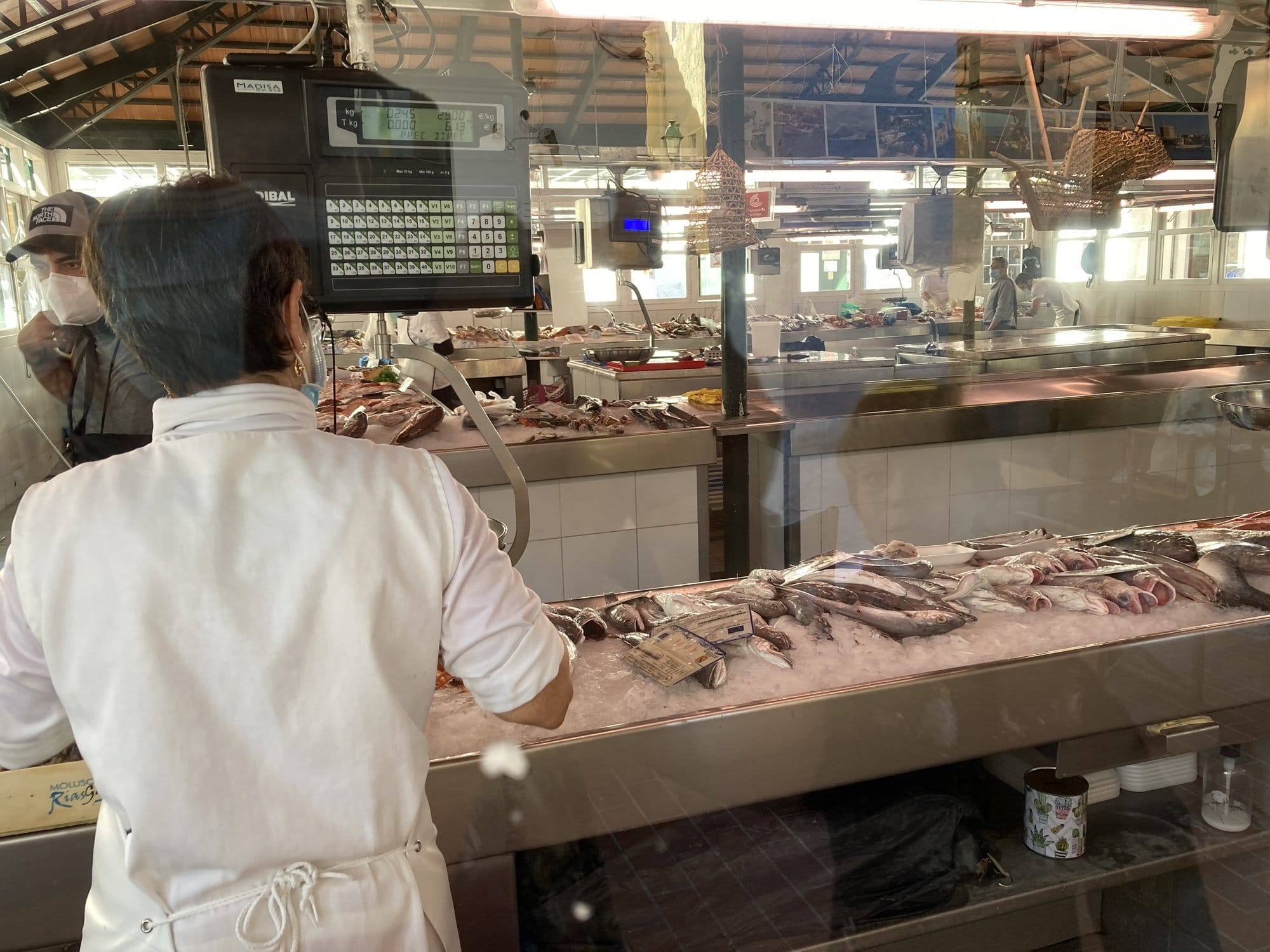
Mercat de Peix — the fish market — sits two streets north of the cathedral on Plaça de la Llibertat, in a compact 19th-century iron-frame building that's open Tuesday to Saturday 07:00–14:00. We walked through around midday on Friday 30 October and counted seven active counters; the catch that morning was gilt-head bream, sardine, local squid, and a single 4 kg grouper that the vendor behind it was in the process of breaking down. Most of the morning's business was already done — the serious local buying happens before 09:00 — but it's still worth thirty minutes just to see how a working Mediterranean fish market feels when the tourists haven't arrived.
Three restaurants directly off the market (Ses Persianes, Ulisses, Smoix) do the obvious thing: buy the morning's fish through a side door and serve it at lunch. A main course of grilled bream ran €18-22 in autumn 2020; caldereta de langosta (Menorcan lobster stew — the island's signature dish) €60-70 per person. If you're travelling with kids, a plate of grilled sardines (about €8) and some pa amb tomàquet will keep most 7-year-olds happy and cost much less than the set menus the bigger harbour restaurants push at tourists.
Street Art & Cultural Pockets
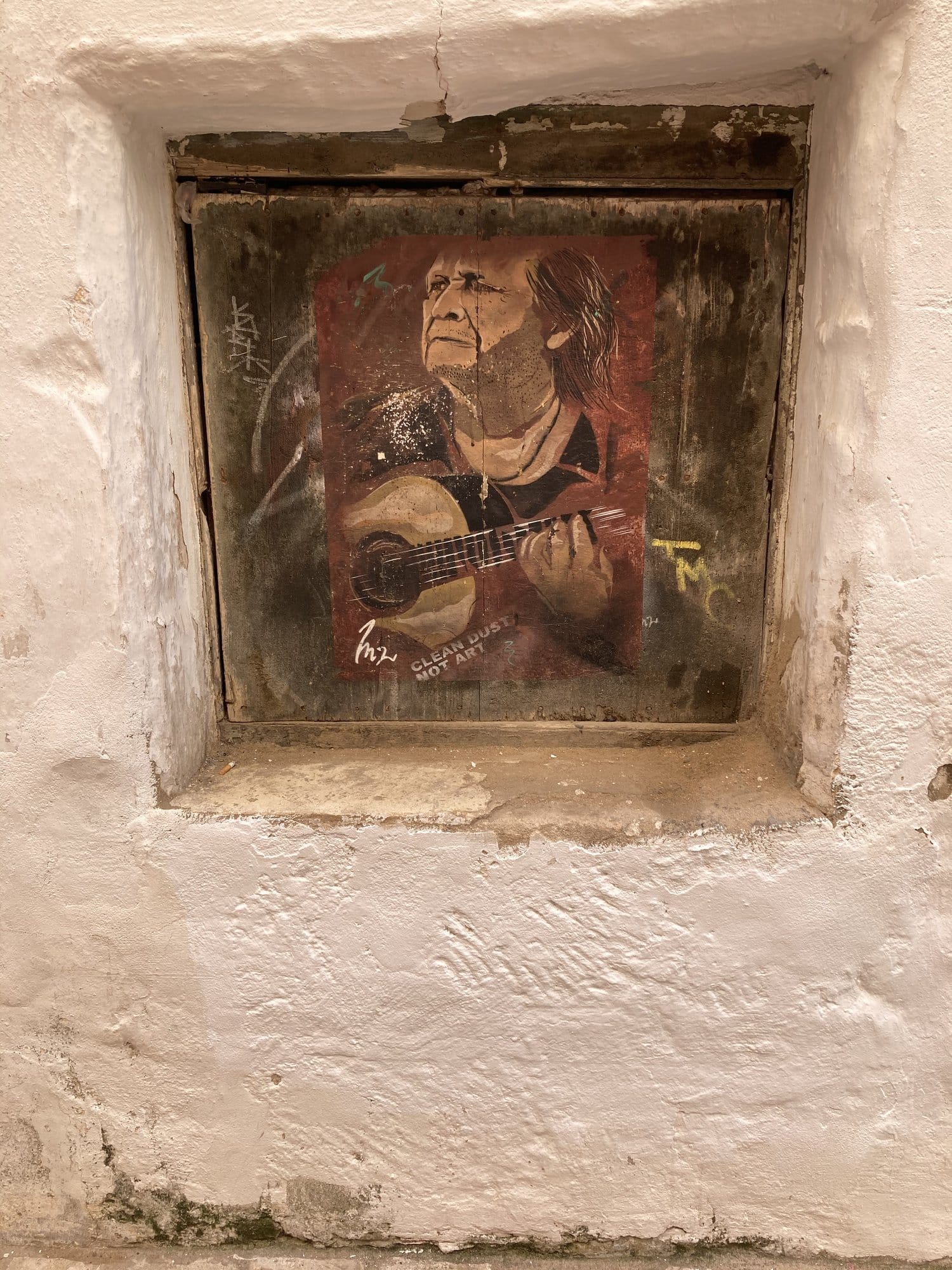
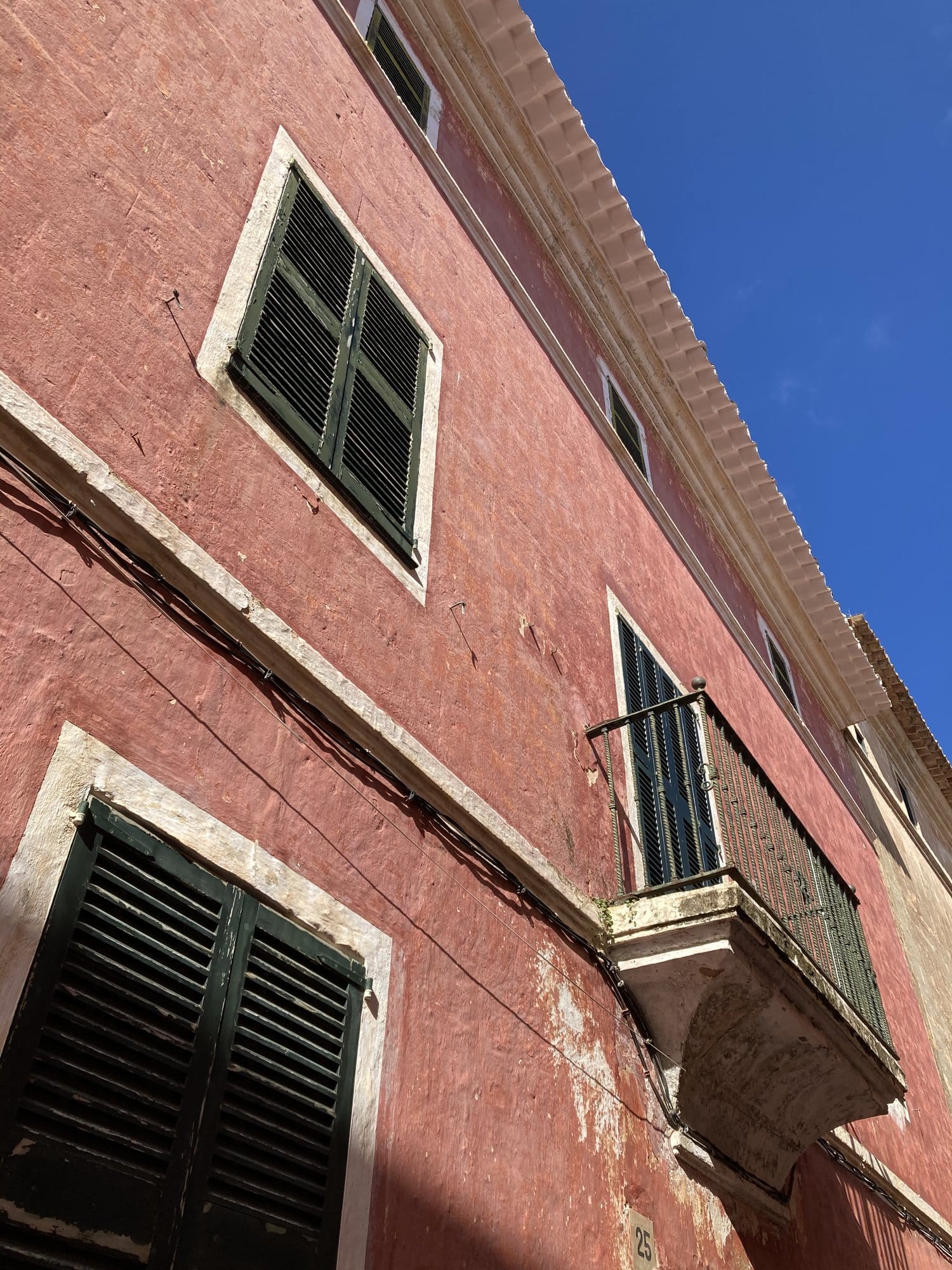
Late in the morning we found a large street mural of a guitarist mid-performance on a wall at the end of Carrer des Rosari — we'd seen smaller murals throughout the walk, but this one is two storeys high and has become a steady photo stop. Ciutadella has an active street-art scene compared to Maó: the town commissions pieces during its Festes de Sant Joan in June, so the inventory refreshes every year. We followed it with a pink-and-white iron-balcony facade a block east at 11:13 — another of the spots that photographs itself.
Art galleries cluster on the quieter east side of the old town, particularly around Carrer de la Pau. Small, independent galleries showing local painters, sculptors, and photographers. They're low-pressure places — owners are genuinely interested in the work, not pushy sales. Good for browsing and getting into conversation with people who live here.
The Waterfront & Harbour Walks
Beyond the old town, the waterfront widens. Sailboats crowd the harbour, their lines creating graphic patterns against the water. Small beaches (called playas) tuck into the harbour's edges — tiny strips of sand, shallow water, local feel. These aren't tourist beaches but working ones where townspeople swim and locals' kids play.
Walk along the waterfront at dusk and the light turns everything golden. Reflections in still water, the cathedral's spire catching the last sun, the stone facades glowing. It's the soft-focus postcard moment — and genuinely worth hanging around for.
Cala Galdana: The Showstopper
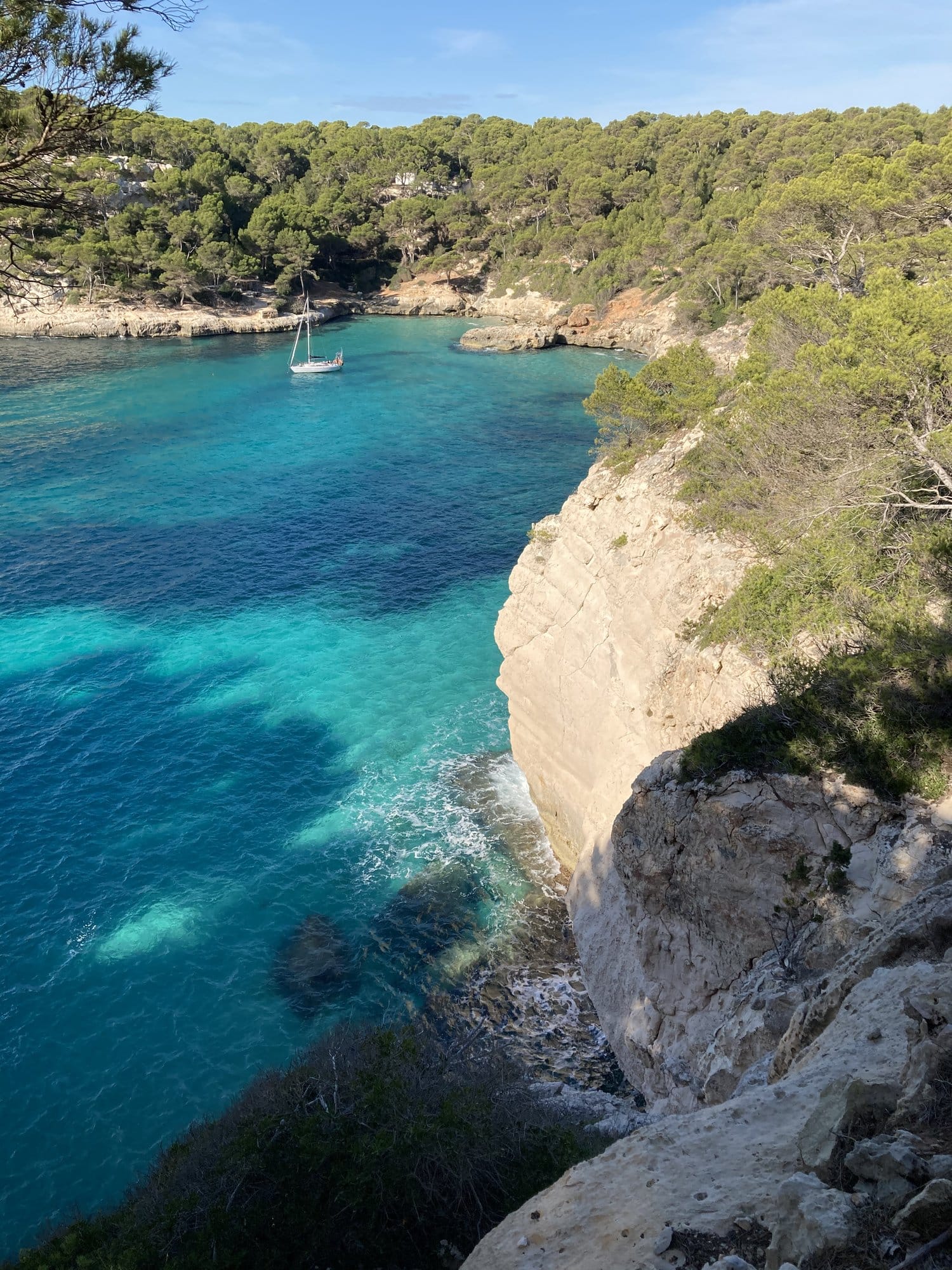
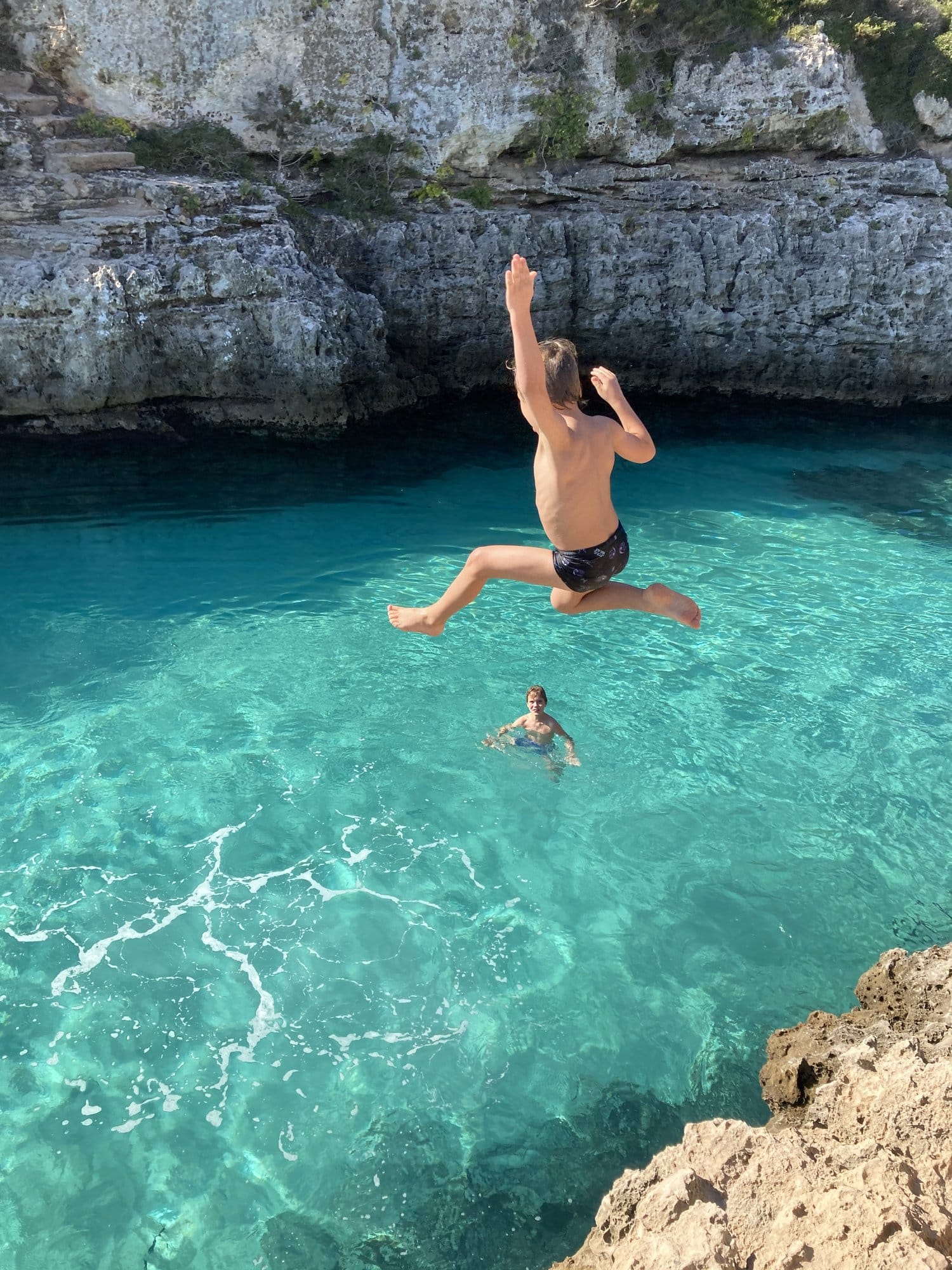
Cala Galdana is 22 minutes south of Ciutadella by car on the Me-22. We stopped for the clifftop overlook shot in the mid-morning on 28 October — the mirador just west of the Hotel Audax parking, the one that catches the cove in a single frame with a single sailboat in the middle. The cove is about 200 metres wide, walled by 90-metre pine-covered limestone cliffs, and the water genuinely is the unreal turquoise everyone photographs. Parking underneath: signed lot at Hotel Audax, €6/day in October, full by 10:00 in August.
In October we had the sand mostly to ourselves — maybe twenty people spread across 200 metres. In peak July/August weekends, you'll see 400+ beach umbrellas and the path down backs up. Go before 09:00 or after 17:00. The sand is fine and pale; the shelf drops away fast about 15 metres out, which some 7-year-olds find off-putting. Lifeguards work May–October only. Water shoes help for the rocky patches near the east headland.
From the cliff-top car park, there's a steep walking path down to the beach. Taking it down is easier than ascending afterward — pace accordingly with children. Swimmers should be confident in the water; currents can pick up when wind comes from the south, and lifeguards are seasonal.
Pont d'en Gil: The Natural Arch
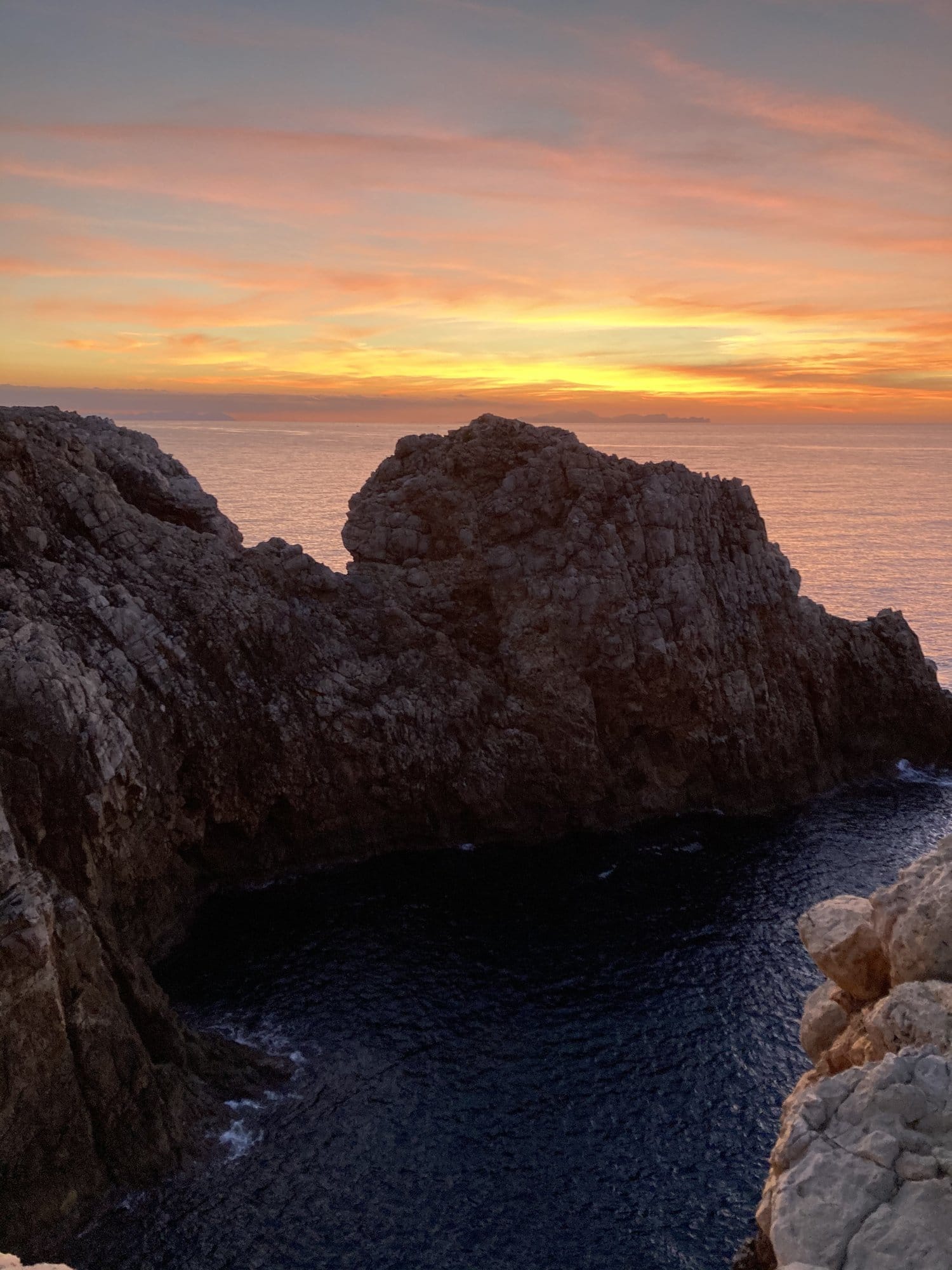
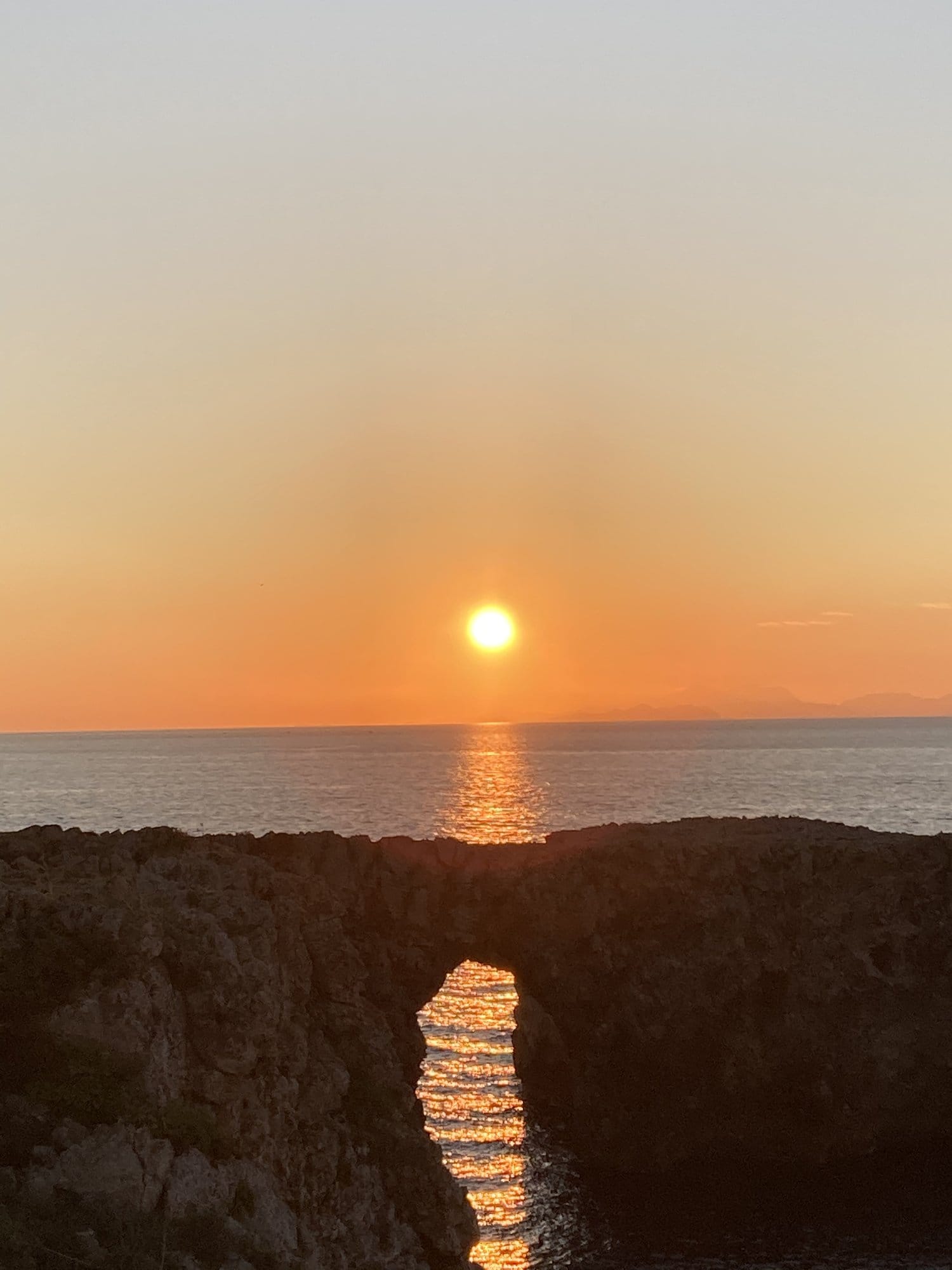
Pont d'en Gil is roughly 10 minutes by car north-west of Ciutadella — drive the Me-24 to the Cala en Forcat / Cap d'Artrutx area, then follow signs. From the small dirt lot on the cliff edge, it's a 200-metre walk over rocky ground to the viewpoint. The arch is a 20-metre limestone span (not 30 — multiple guidebooks get this wrong) rising above the sea, and from the right angle at the right time of year the sun drops clean through the centre. We went twice: Thursday 29 October in the late afternoon for the first attempt, then Friday 30 October a little earlier and 17:31 for a second, cleaner run after we'd scouted the angle.
The path is short (200 m) but genuinely rocky — we had no problem with our 7-year-old, but anyone in smooth-soled shoes will slip. No shade the whole way. The cove under the arch is reachable by a steep scramble on the right-hand side, and most visitors don't swim there (it's small, current-prone, and the climb back up is harder than it looks). The viewpoint above is the real destination. In October, the sun drops through the arch between roughly in the late afternoon and in the early evening depending on week — we arrived in the late afternoon for the 30 Oct shot, which gave us thirty minutes of setup before the peak minute.
The magic is purely visual. You're not here to swim; you're here to watch the light change through 30 metres of ancient stone. Timing matters: arrive too early and the sun's high and harsh; too late and it's dark. Check sunset times and aim for 20 minutes before.
South Coast Calas: Variety & Drama
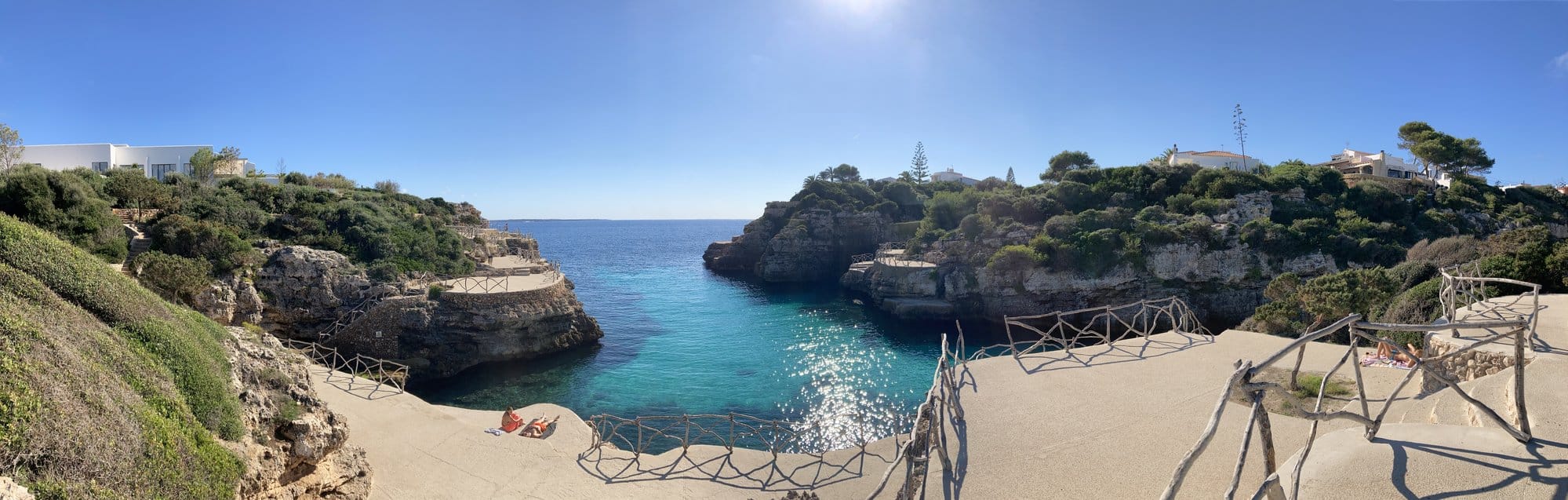
Beyond Cala Galdana, the south coast offers a string of calas of varying difficulty and character. These are the four we'd recommend prioritising based on what kind of day you want (numbers are October 2020 visitor counts, multiply by 5-10x for peak summer):
Cala Mitjaneta — the neighbour of the more famous Cala Mitjana. Reach it via the same trailhead (Torre d'en Galmés access, from the Me-12 near Ferreries) and a 25-minute walk east-south-east through pine forest. No facilities, no lifeguard. Water drops off fast 10 m out — good for adults and older kids comfortable swimming over 2 m depth, less ideal for paddlers.
Cala de Santa Galdana — not to be confused with Cala Galdana, this is an adjacent pocket cove. More intimate, fewer crowds, good for families seeking a quieter version of the same geography.
Cala en Bosc — the resort-village version of a cala, with restaurants, ice-cream kiosks, and paid parking right behind the sand. Go here when you want a full day with toddlers and no hike; skip it if you're looking for the raw limestone-cove experience. There's also a small marina and a coastal path out to Cap d'Artrutx lighthouse (2 km, flat, stroller-friendly).
Cala Blanca — northern coast, white sand, clear water, good for snorkelling. Sheltered from south winds, making it a solid choice when other calas are windy.
Logistics for the calas, rolled up: each requires a car (10-30 minutes from Ciutadella), a 5-25 minute walk from the parking, and self-provisioning (water, shade, snacks — no kiosks except at Galdana and en Bosc). Park the car in official lots only; the Camí de Cavalls (the old island-circumference trail) uses the headlands around most calas and your rental will be ticketed if you block the path. Our 7-year-old managed Cala Turqueta (20-min walk in) without fuss; Macarella (35-min walk in) was the limit.
Calas by Boat
Hiring a small boat or joining a group tour from Ciutadella harbour lets you access calas inaccessible by land and reach hidden spots between the major beaches. Tours run half or full days, including swimming stops and often a lunch on the boat. Good for families seeking a different angle on the coast, and useful in summer when land-based calas are crowded. — Menorca's east coast beaches and Maó
Exploring the Cliffs
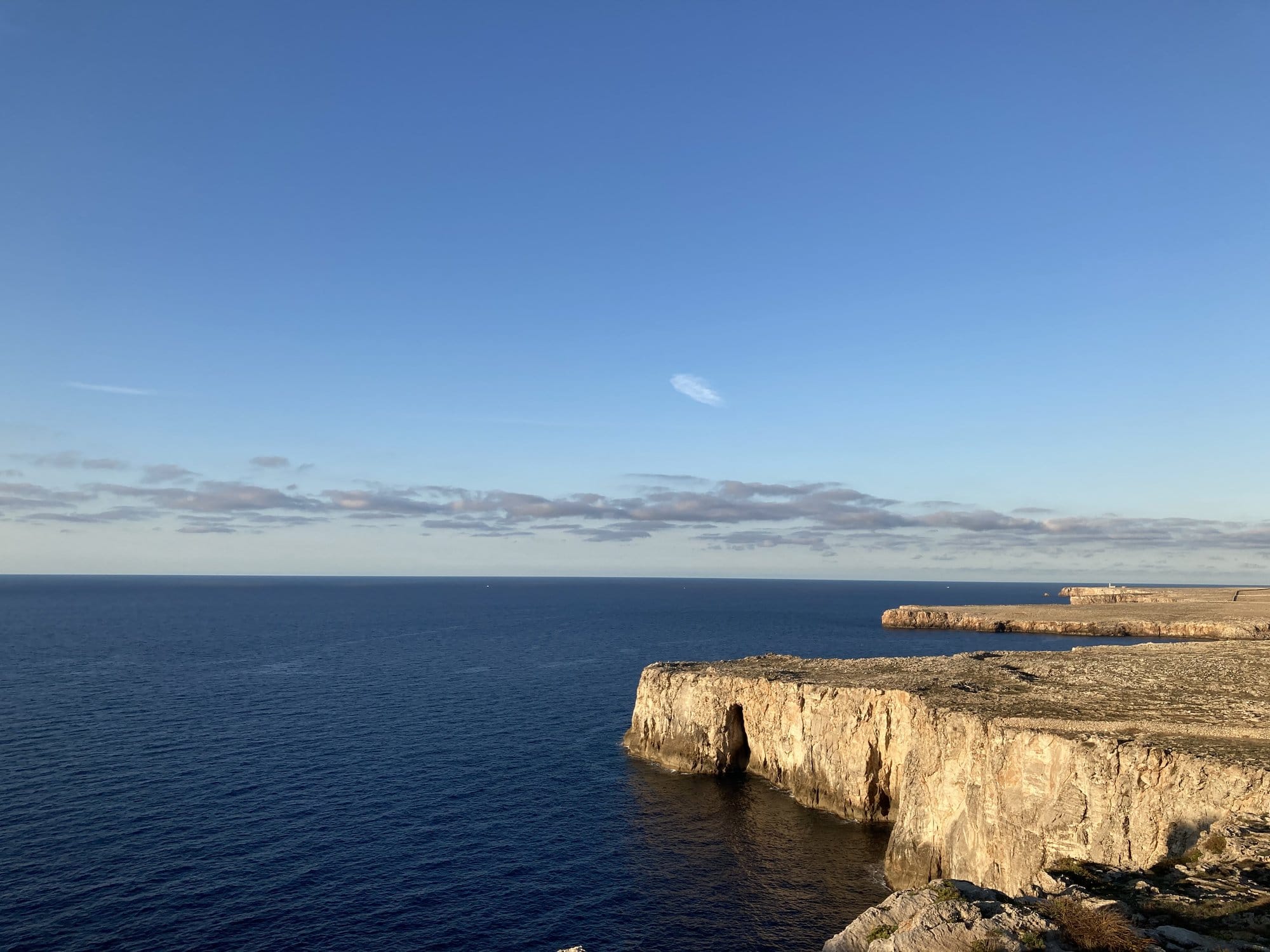
The Camí de Cavalls (GR-223) is a 185-kilometre waymarked trail circumnavigating Menorca, and the western section between Cala Galdana and Cap d'Artrutx is arguably the most scenic. The segments are officially graded Easy/Medium/Difficult by the Menorca tourist board; the Galdana–Macarella stretch (3.5 km, 1h30, rated Easy) is the obvious family pick. Unlike the interior hikes, these clifftop sections have minimal shade — start before 10:00 in July/August.
The coastal stretch from Cala Galdana to Cala en Bosc offers the most accessible walking — about 5 km, manageable for families with older kids, with viewpoints and side paths to small beaches. The path rises and falls along the cliff edge, offering constant views of the sea and the layered geology of the limestone cliffs.
Wear proper shoes (trail runners or hiking boots), bring water, and start early. Phone signal is spotty; tell someone where you're going. The cliffs are genuinely dramatic — 100+ metres to the sea in places — so keeping children supervised is essential.
Twilight & Evening Light
We spent most of our best-lit hours either in the town (morning 08:30-11:30 on the 30th) or on the west cliffs (late afternoon 16:45-18:00 across both days). Arrival in Ciutadella on the 28th caught the town in the late afternoon — the lights already on, coastal valley winding road lit by low sun; our kids had already fallen asleep in the back seat. If you're coming from the east of the island on a day trip, aim to arrive by the late afternoon in October, 19:30 in July — you'll miss the hot middle of the afternoon and catch the town lighting up.
Post-sunset, the Plaça des Born fills gradually — not a scene, just the town's own evening promenade (the passeig). Restaurants on the square and down Carrer Ses Voltes hit their rhythm around 21:00 (late by northern European standards, early by Menorcan). An aperitif — vermut casolà at Bar Imperi on the Born (€3.50 in 2020) — is the honest local move. We had ours on 29 October and got our kids a plate of chips for €2.80.
Cathedral, Markets & Street Scenes
Inside, the cathedral is a single-nave Catalan Gothic space with a 24-metre vault — austere stone, seven side chapels with baroque 18th-century altarpieces retrofitted into the medieval structure, and clerestory light that sits directly on the high altar between about 10:00 and 11:30 in autumn. It's active — services Monday and Wednesday evenings plus Sunday mornings; visitor hours wrap around them. Dress code is loose (shorts fine, swimwear no), and the adjoining museum of religious art is worth the €2 upcharge for a 16th-century illuminated missal and the panel paintings.
Two-visit logic for Mercat de Peix: first time (07:30-08:00) to watch the catch arrive and the early buyers work; second time (12:30-13:30) for lunch at one of the three market restaurants, when the morning's counters have restocked the kitchens. We did one visit on 30 October at 11:02 — mid-morning is the least interesting slot but the only one that worked for our schedule.
Streets themselves are the attraction. Painted doors, wrought-iron balconies, unexpected staircases, carved lintels. Walking without a map, letting alleys lead where they will, is the best way to discover the town's texture.
Getting there
Ciutadella is at the western end of Menorca, 50 km from the only airport — Maó (MAH) on the east coast. Renting a car at MAH is the only practical way across; the island's east-west bus is slow and skips the south-coast calas you'll want to detour to.
Practical Information
Getting There
Menorca is served by regular flights from mainland Spain (Barcelona, Madrid, Valencia) and other European cities. Direct flights from UK are seasonal. The airport is east of Maó; hire a car at the airport for exploring (essential for reaching calas). From Maó airport to Ciutadella is about 45 minutes by car.
Public transport (buses) connects major towns but is infrequent; a car is strongly recommended for flexibility, especially with families.
Where to Stay
Ciutadella's old town has small hotels and guesthouses — charming but variable in comfort. Consider staying in the town for the cultural immersion, accepting that rooms are often compact. Family-friendly hotels cluster on the outskirts with more space.
South of Ciutadella, larger resorts serve families (Cala Galdana particularly has accommodation options). The trade-off: convenience and facilities versus proximity to the town's authentic character.
When to Go
May–June and September–October are ideal. Warm, sunny, not yet at peak summer heat. Beaches are accessible without the August crowds. Families appreciate the September window when European schools haven't resumed.
July–August is peak tourist season; beaches are packed, accommodation expensive. Viable but requires early planning.
November–April is cooler and wetter; daylight shorter. Many seasonal restaurants close. Calas still accessible but less appealing for swimming.
Budgeting
Menorca is moderately expensive compared to mainland Spain, comparable to coastal Catalonia. Meals in harbour restaurants range from €12–30 per person. Rental cars are €30–50/day. Boat tours €50–80/person.
Accessibility
Ciutadella's old town is genuinely medieval — narrow streets, irregular cobbles, stairs. Wheelchair access is limited. Calas are generally reached by car then a short walk on rough paths; most aren't wheelchair-accessible.
Safety
Ciutadella is very safe. Petty theft is rare. Swim in designated areas; currents can be unpredictable around certain calas. Weather can change quickly in autumn; check forecasts before cliff walks.
Language
Catalan is the local language; Spanish is widely understood; English is increasingly common in tourist areas. Restaurants often have English menus; locals appreciate attempts at Spanish.
Plan Your Trip
Activities: You can browse Ciutadella tours and activities to make the most of your visit.
Activities: You can explore the south coast calas by boat to make the most of your visit.
Accommodation: Use Trip.com to find hotels in Ciutadella with competitive rates and free cancellation.
Maó or Ciutadella is the decision that shapes the whole trip — we compare the two towns, the resorts and what October actually costs in our guide to where to stay in Menorca.
Find the best deals on accommodation:
FAQ
Is Ciutadella better than Mahón?
Different characters. Mahón is the modern capital, functional and larger. Ciutadella is smaller, more medieval, more atmospheric. For tourism, Ciutadella is the choice. For facilities and services, Mahón offers more options.
Can families with young children do the calas?
Yes, with planning. Cala Galdana is the easiest — gentle water entry, facilities nearby. Other calas require more hiking and offer less in terms of amenities. Pont d'en Gil is worth the visit for the arch, but the walk is rocky.
Is a car essential?
Yes, for reaching calas and the south coast. Buses exist but run infrequently. Taxis are available but expensive for repeated trips.
How crowded are the beaches?
July–August: very crowded, especially Cala Galdana. May–June and September–October: moderate. Smaller calas are quieter year-round. Arrive early to secure good spots and parking.
Are the cliffs dangerous?
Respect is required. They're high (100+ metres in places) and dramatic. Stay back from edges, supervise children, and avoid walking clifftop paths in poor visibility or high winds. Rescue services are available but remote areas take time to reach.
What's the food like?
Excellent fresh seafood, simple preparation. Local specialities include caldereta de langosta (lobster stew) and fresh grilled fish. Restaurants are good; street food options are limited compared to larger Spanish cities.
Is Menorca touristy?
Less touristy than Mallorca or Ibiza but increasingly popular. Ciutadella and calas attract visitors, especially in summer. May–June and September–October offer a better balance of accessibility and authenticity.
Related Reading
For similar explorations of coastal European cities, consider:
- Things to Do in Porto — another historic Mediterranean port with character - Things to Do in Venice — medieval waterfront charm in an entirely different setting - Things to Do in the Algarve — dramatic coastal cliffs and golden beaches in southern Portugal - French Alps Family Road Trip — for families seeking adventure and spectacular landscapes
External Resources & Booking
Accommodation
Trip.com Menorca Hotels — Compare options across Ciutadella and surrounding areas
Stay22 — Accommodation Near Calas — Map-based booking for flexibility
Activities & Tours
GetYourGuide — Menorca Boat Tours — Group tours to calas and coastal explorations (Affiliate: MQH2KRA)
Planning & Info
Menorca Tourism Official Site — weather, events, practical information
Local newspapers and blogs — current conditions, seasonal updates, local recommendations
Sunset timing, seasonal weather, and beach conditions can change. Check local resources before planning specific days. Families should verify school term dates if traveling during European school breaks; popular periods book months in advance.
Ciutadella rewards slow travel. Plan to stay at least two days — one for the town, one for calas exploration. A third day allows for cliff walks and deeper exploration of the landscape that makes western Menorca distinctive.
About the Author
Pierrick Jean and his family (wife plus two kids, then 7 and 11) spent three nights in western Menorca on a late-October 2020 trip, basing in Ciutadella to walk the old town (30 October), cover the south-coast calas (28–30 October), and shoot Pont d'en Gil twice (29 and 30 October). All prices and timings here are from that trip; seasonal rates will be higher in July–August. Photos in this guide are ours. More about how we write travel guides on the About page.
This article is also featured on GPSmyCity. To download this article for offline reading or create a self-guided walking tour to visit the attractions highlighted in this article, go to Walking Tours and Articles in Ciutadella de Menorca.