
Menorca East & Centre: Maó, Monte Toro & Wild Beaches
Eastern Menorca blends the charm of Maó's harbour with the wild beauty of its northern beaches and the sweeping views from Monte Toro, the island's highest point.

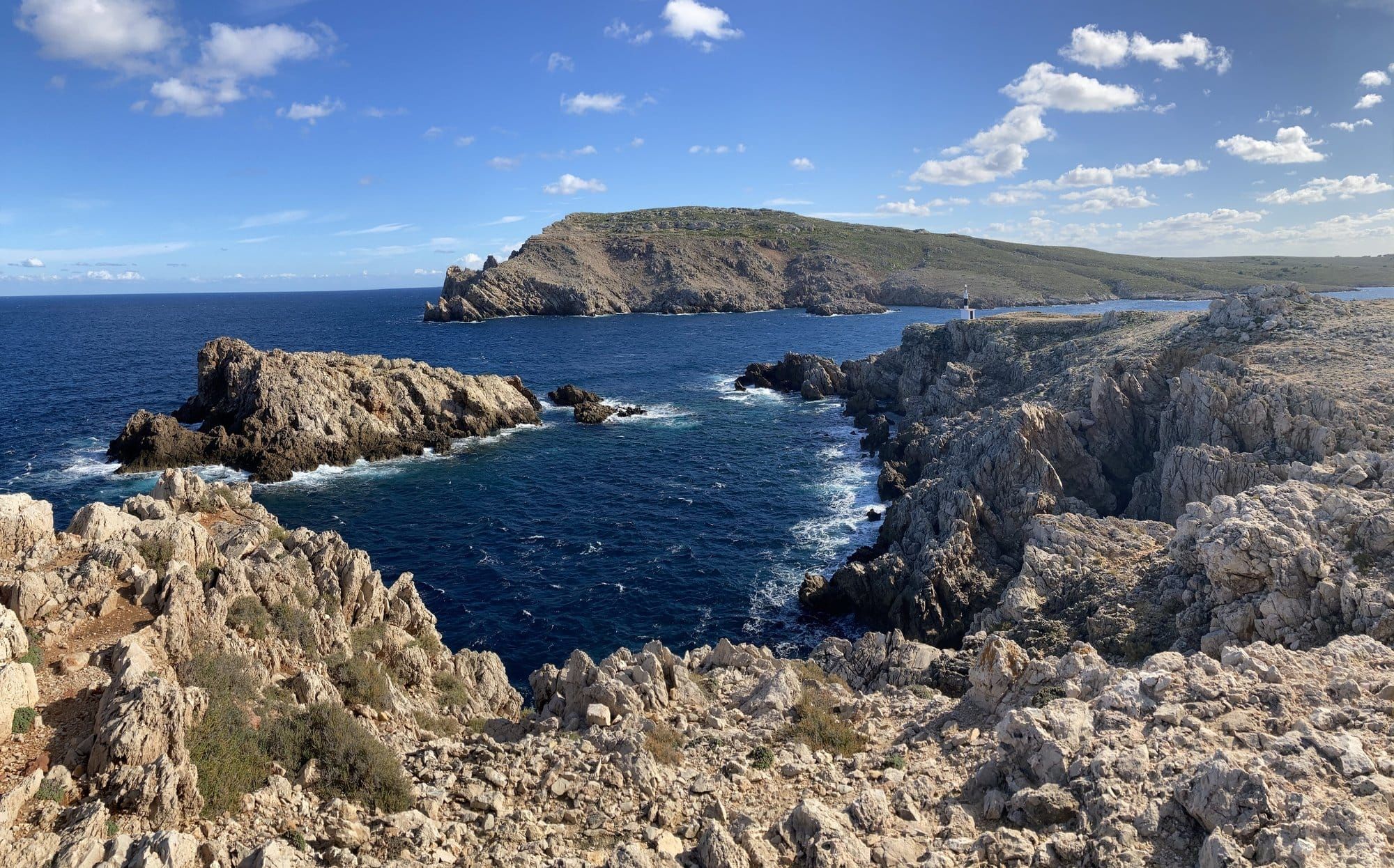
At 17:23 on a late-October afternoon in 2020, the gilded angel above the Monte Toro sanctuary caught the last of the sun and the whole island stretched out below — the harbour of Maó to the east, the green valley of es Mercadal to the west, the cliffs of the north coast a thin line on the horizon. It was the fourth day of a six-day family road trip based out of a vacation rental called HEVRESAC in central Maó (mustard sofa, a working wood-burning stove), and the rhythm of eastern Menorca had started to make sense. This guide distils what that week taught us about the quieter half of the island — the villages where tourism barely registers, the cove beaches reached on foot, and the flat 358-metre summit that anchors everything else.
Eastern Menorca divides cleanly into three moods. Maó and its harbour bring shops, restaurants and a Georgian-era colonial layer you won't find elsewhere in the Balearics. Monte Toro and es Mercadal are the interior — farmland, a single white road up to a sanctuary, and the sunset angel silhouette. North of those two lies the wild coast: Cala Pregonda, Cap de Cavalleria, and the Camí de Cavalleria cliff path. Kids from roughly 8 upwards handle all three comfortably; younger travellers are happier on the gentler southern coves near es Migjorn Gran and Sant Lluís.
Affiliate Disclosure
This guide contains affiliate links to hotels, tour operators, and travel booking services. We earn a small commission if you book through these links at no extra cost to you, which helps us maintain this site and plan more journeys.
Maó: Harbour Capital and Gateway
Maó (Mahón) sits at the eastern tip, built around one of the Mediterranean's finest natural harbours. The town has served as capital since the British occupation in the 18th century, and that colonial legacy lingers in Georgian facades and English street names alongside Catalan identity.
The Harbour and Waterfront
The porto (harbour) is Maó's heartbeat. Lined with restaurants and bars, it feels less touristy than comparable Mediterranean waterfronts. Families find the promenade walkable and safe, with clear views across the water to the opposite shore. In October, when summer heat fades, waterfront dining becomes genuinely pleasant—you can sit with a café con leche or vermut while the kids run in circles on the paved areas without everyone melting.
The narrow streets climbing from the harbour—carrer Hannover, carrer Nou—contain boutique shops, small galleries, and family-run cafés where you'll overhear as much Catalan as Spanish. Parking is tight but manageable. A couple of hours exploring here fits easily into a half-day plan.
Where to Stay in Maó
Vacation rentals dominate Maó's accommodation scene. The town centre locations offer walkability to the harbour and restaurants, though street noise can be notable on weekends. Apartments in converted town houses often feature original Menorcan details—high ceilings, exposed beams, traditional tile work—though modern amenities vary.
For families, look for properties with outdoor space. Even a small patio makes a difference when traveling with kids. Properties just outside the main town—in outlying neighborhoods like Es Castell to the south—trade proximity for quieter surroundings and easier parking.
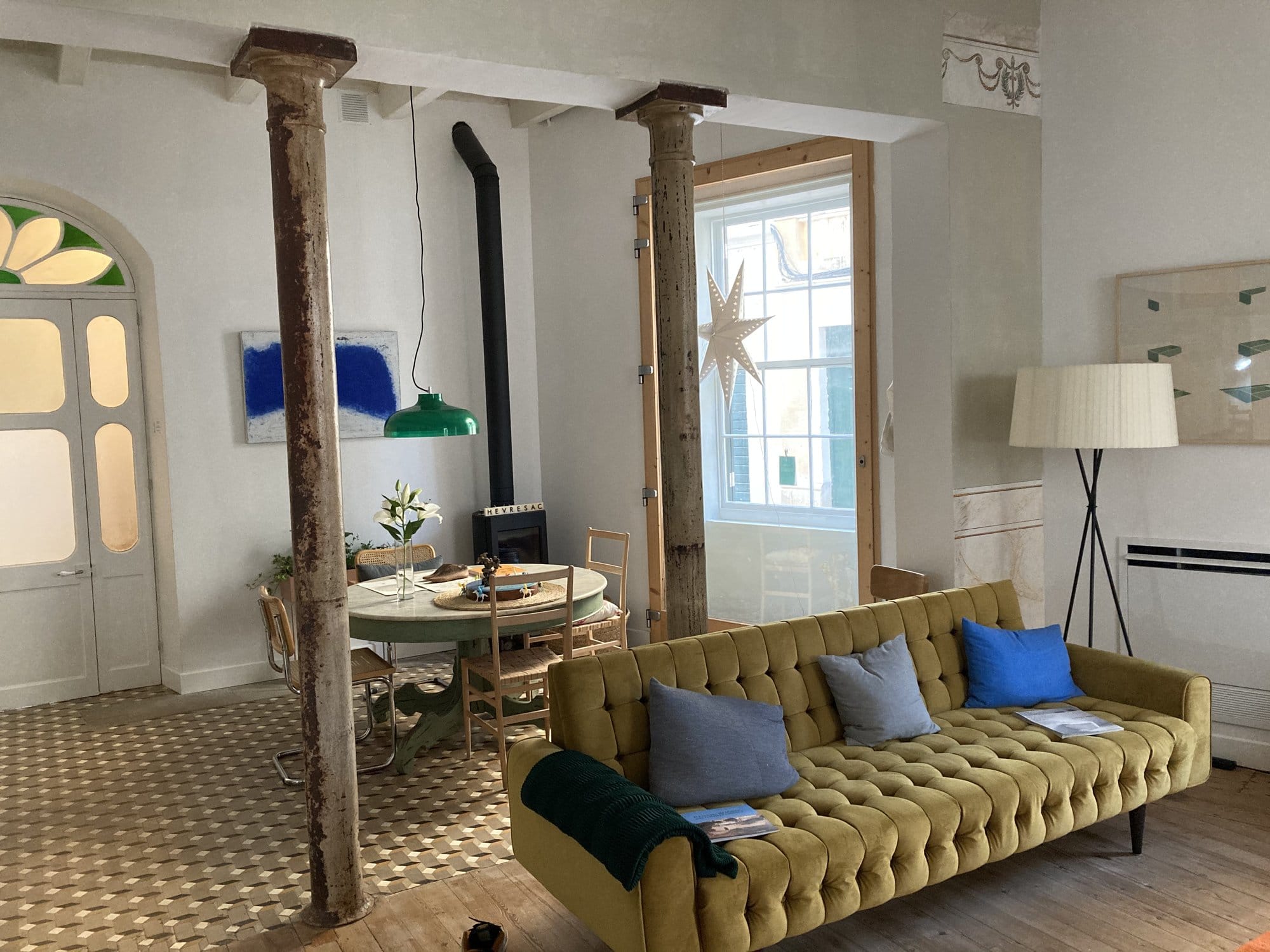
Vacation rental interior with period details — Maó, Spain
Monte Toro: Island Summit and Panorama
Menorca's highest point at 358 metres might not sound dramatic, but the 360-degree views from the summit chapel are extraordinary. Monte Toro dominates central Menorca, visible from almost everywhere on the island, and reaching it takes only 20 minutes by car from Maó.
The Summit and Sanctuary
A narrow road winds to the top, where a white sanctuary (the Santuari de la Mare de Déu de Monte Toro) has stood since at least the 14th century, though rebuilt several times. The current structure dates to the 1950s, but what matters is the vantage point: on a clear day, you see south to the southern coast, north to where the cliffs drop toward Fornells, and east-west across the island's undulating centre.
The gilded Sagrat Cor statue on the summit is visible from Maó on a clear day. Sunset is the obvious moment — in late October it falls around 18:15 and the statue silhouettes cleanly against the sky. Arriving at 17:00 gives time to walk the summit loop (a 45-minute circumference path), drink a café cortado at the small bar, and still catch the light change. The staircase up to the sanctuary is short but the wind on top can surprise you; bring a layer even in summer.
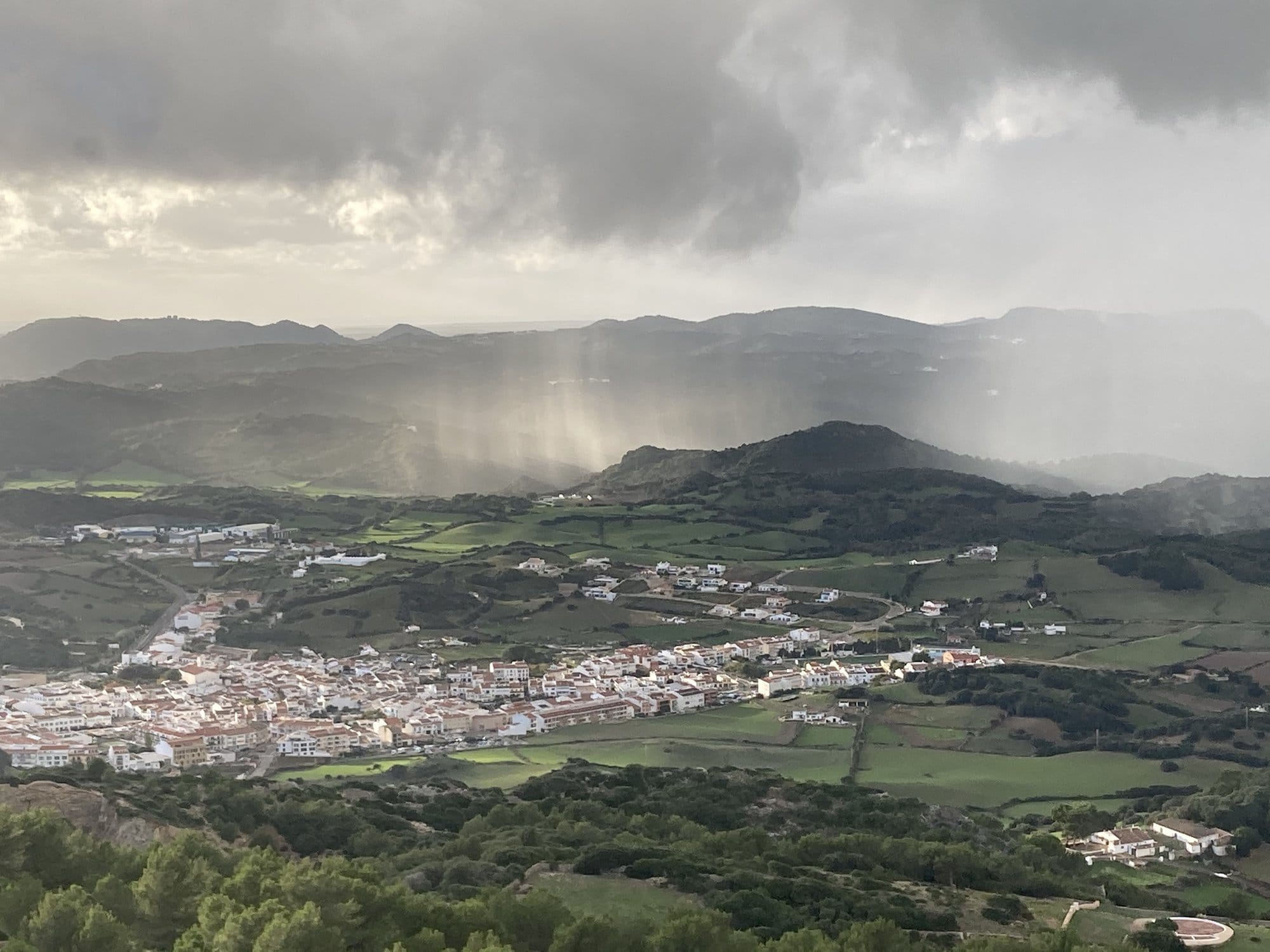
Monte Toro valley views with central plateau rolling toward the coast — Monte Toro, Spain
Practical Logistics
Parking is ample at the summit. A small bar operates during daylight hours, useful for refreshments if visiting with kids. The sanctuary itself is typically open, though visitors are asked to be respectful. The walk around the summit area is short and manageable for families—no major climbing required once you've driven up.
October weather often cooperates: temperatures are comfortable, rainfall minimal, and visibility excellent. Morning visits beat afternoon crowds, and the light is clearer.
Es Mercadal: Centre Village Heart
Between Maó and the western regions lies es Mercadal, a functioning market town where locals actually live and shop. It lacks tourist infrastructure by design. There's a modest main plaza, cafés catering to Menorcans rather than visitors, and agricultural shops selling local cheese and wine to islanders.
That's the draw. Es Mercadal gives you the working version of the island, not a curated one. A morning market (weekdays, until roughly 13:00) sells produce, fish and local cheese to Menorcans doing the weekly shop. Restaurants around the plaza serve pa amb tomàquet, grilled fish and simple salads at prices that don't shock — expect €12-18 for a main. The pace is unhurried; lunch starts at 13:00 and runs long.
It's a 15-minute drive from Monte Toro's summit down to es Mercadal, making it natural to pair them in a day's itinerary. Stop for lunch, wander the main street, then continue to your next destination.
North Coast: Caves, Cliffs, and Cavalleria
The northern coast between es Mercadal and Fornells is where Menorca gets wild. Car roads end or become rough tracks, forcing a choice: walk or miss it. For families up for coastal exploration, the rewards are dramatic.
Caves and Geological Drama
Several cave systems punctuate the northern cliffs, reached on foot from the road toward Fornells. The island's most famous cave, though, is on the south coast: Cova d'en Xoroi, at Cala en Porter—a string of caves carved into the limestone cliff face, with terraces hanging over the sea, run as a bar by day and a club by night. The setting is cinematic: golden rock, turquoise water, the mouth of the cave opening to the Mediterranean.
Getting down to the cave involves stairs carved into the cliff. The path is steep but not technical, manageable for kids who are comfortable on uneven terrain. The beach inside the cave area is small but memorable.
Along the north coast, the shoreline becomes progressively less developed. Dramatic cliffs rise hundreds of metres, and access is mostly on foot. The Camí de Cavalleria (a walking path) runs along or near the clifftops, offering some of the island's most imposing coastal views.
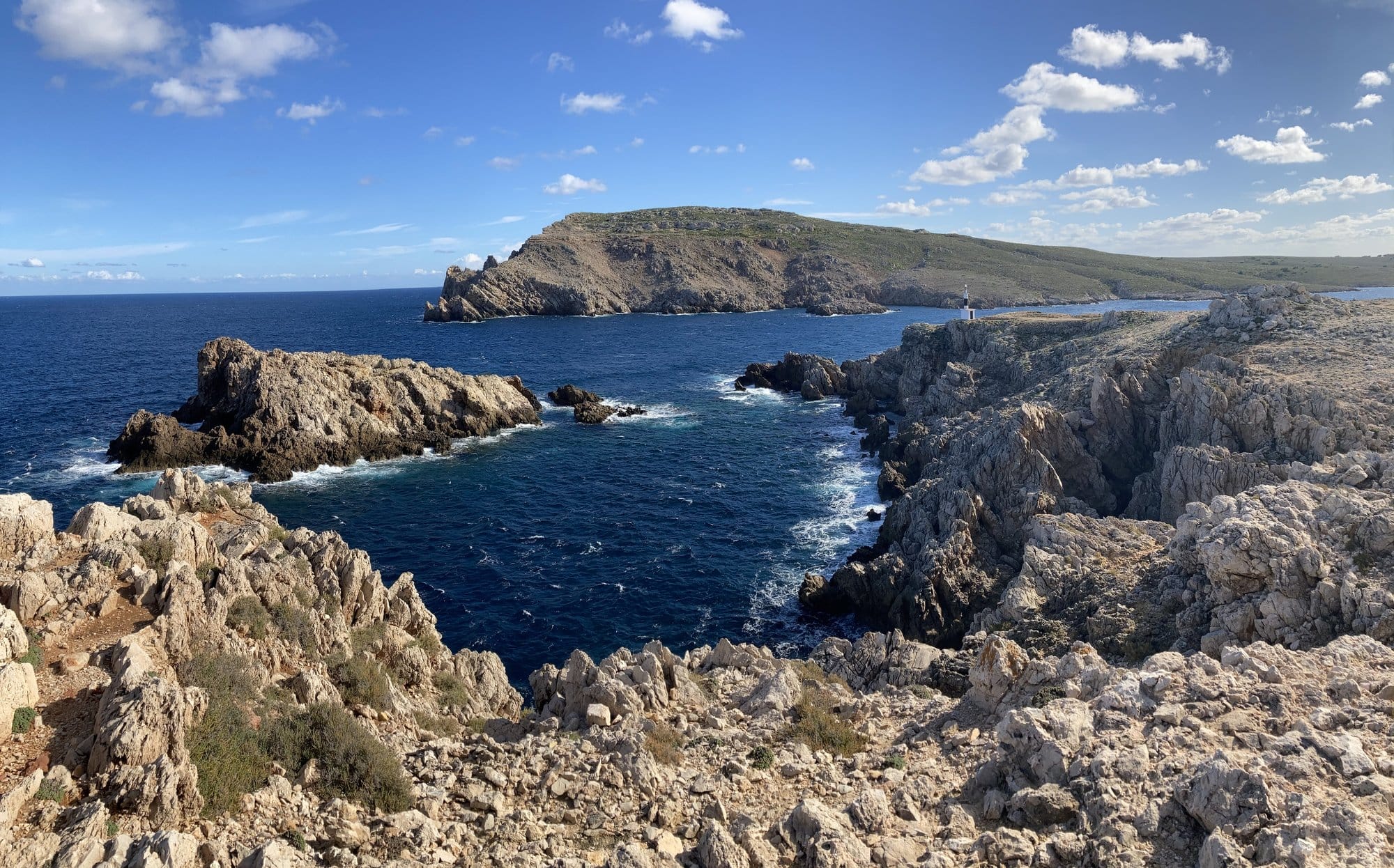
Dramatic north coast cliffs dropping to turquoise water — Northern Menorca Coast, Spain
Pregonda and Hidden Beaches
Pregonda—a sandy beach backed by pine forest—requires a 15-minute walk from a small car park but rewards the effort. It's far less crowded than southern beaches. The water is cooler due to northern exposure, but the setting is spectacular: sand and dunes backed by wild vegetation, and cliffs visible to the west.
Families with mobile kids enjoy Pregonda more than they enjoy major resort beaches. There's room to spread out, minimal commercial development, and a sense of discovery. October brings calmer seas and smaller crowds than summer months.
Es Migjorn Gran and the South Coast
The south coast around es Migjorn Gran flips the equation: wider beaches, warmer water, and settlements close enough to reach on foot. The contrast with the north — which can mean 15 minutes of walking from a small car park to reach Cala Pregonda — is practical, not just poetic. On the south side, you park and you're on the beach.
Es Migjorn Gran itself is a village set back from the coast, preserving what little tourism reaches this shore. The southern beaches—Binidalí, Binigaus—feature golden sand and calm water (or at least calmer relative to the north). They're family-friendly without being family-only—a good balance.
A sunset visit to one of these beaches combines beautifully with an early evening meal in the village. October light is ideal: golden, soft, and long-lasting as the sun drops toward Africa just beyond the horizon.
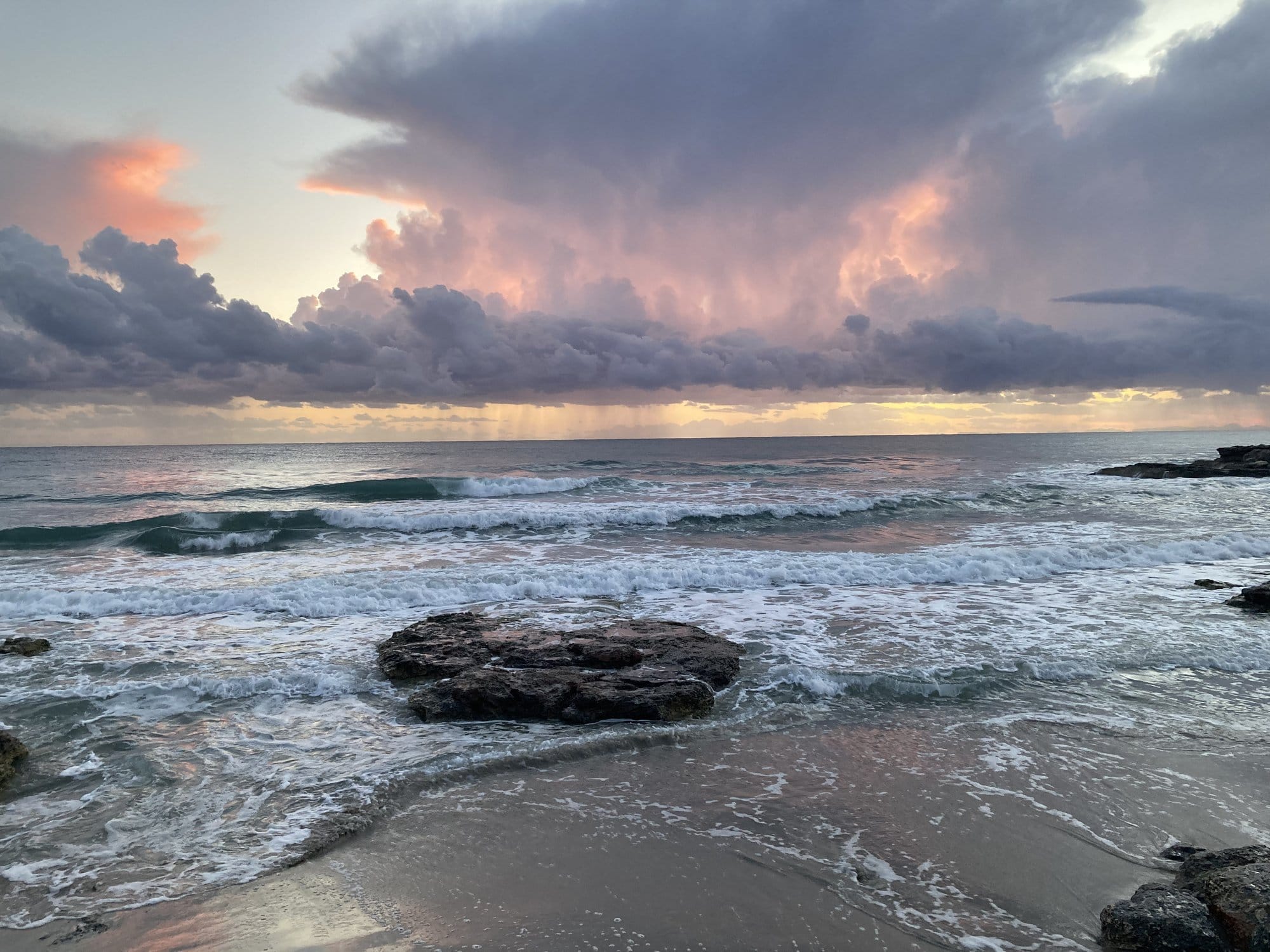
Beach sunset with warm light on sand and calm water — es Migjorn Gran, Spain
Sant Lluís: Eastern Outpost
Sant Lluís occupies the southeastern corner, founded by the French during occupation and retaining a somewhat different character from other Menorcan settlements. It's quiet, with good restaurants and a slow pace.
The coastal areas near Sant Lluís—particularly toward Punta Prima—have more developed infrastructure than remote northern or southern spots, but still avoid the density of major resort zones. Families here find a middle ground: amenities without overwhelming tourism.
Cove Beaches and Easy Access
Golden coves and small beaches dot the area around Sant Lluís. Some have minimal facilities but offer access to clear water without serious hiking. Turquoise inlets backed by modest cliffs create photogenic scenes perfect for families who want accessible beauty.
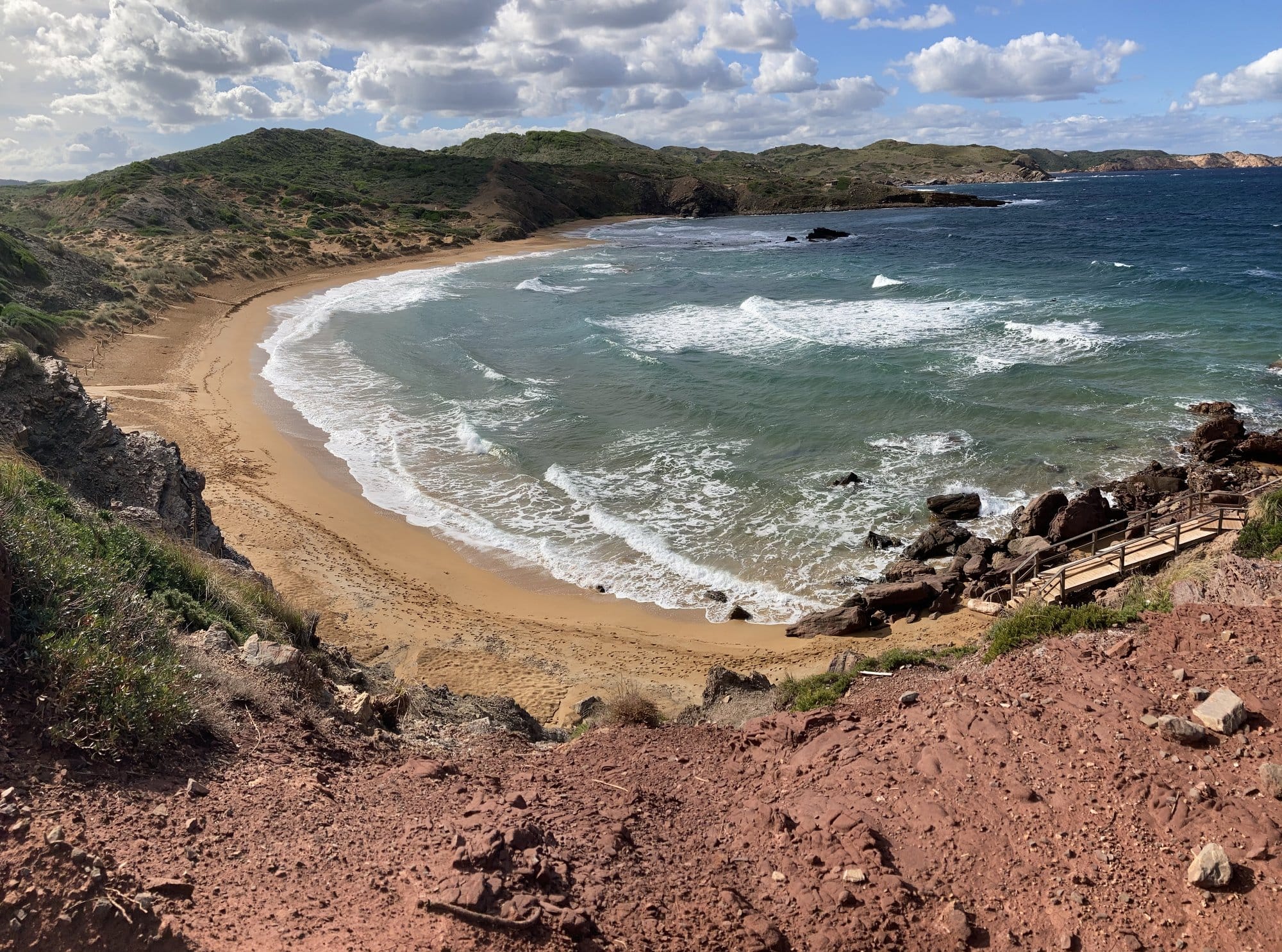
Golden cove with turquoise water and inviting sand — Sant Lluís, Spain
Beaches and Water for Families
Eastern Menorca's beaches vary dramatically by exposure and development level. The contrast between wild northern cliffs and calm southern shores offers choice depending on mood and family readiness. — Menorca family beaches and quiet coves
North Coast: Adventure and Drama
Northern beaches suit families with older kids or those comfortable with undeveloped environments. Water is colder, waves more unpredictable, infrastructure minimal. Pregonda and areas near Cavalleria demand some effort to access but deliver isolation and raw beauty.
South Coast: Comfort and Calm
Southern beaches near es Migjorn Gran, Binigaus, and Sant Lluís offer warmer water, gentler conditions, and family-friendly setups. Sand is finer, and you'll see other families. It's not overcrowded in October, but it's more mainstream than northern alternatives.
Turquoise Shallows and Wading
In October, water temperature hovers around 18-20°C, refreshing but manageable for a quick swim or wade. Shallow, turquoise bays—particularly in the south—are ideal for kids testing water confidence. Several coves feature sandy bottoms with minimal rocks, easing concerns about stubbed toes.
Children wading in turquoise water at a shallow cove — Menorca, Spain
Hiking and Walking Routes
Eastern Menorca rewards walkers of all abilities. The French Alps family road trip showcases mountain terrain on a grander scale, but Menorca offers its own gentle walking culture suited to shorter legs and modest elevation changes.
Camí de Cavalleria (North Coastal Path)
This waymarked route runs along the northern cliffs, offering sections suitable for families. The entire route is lengthy, but portions—particularly around Pregonda to Cavalleria—work as morning or afternoon outings. Views are constant, and the path is generally clear, though uneven in places.
Monte Toro Circumference
A walking path loops around the summit area, offering 360-degree views in stages. It's short enough to complete with kids but detailed enough to maintain interest. Allow 45 minutes to an hour depending on age and mood.
Village Walks
Es Mercadal and Sant Lluís suit rambling. There's no official trail; instead, you simply wander from the main plaza down side streets, discovering local architecture, gardens, and the texture of Menorcan life away from tourist zones.
Practical Information for Families
When to Visit
October combines pleasant weather, fewer crowds, and acceptable water temperature. Summer brings larger tourist numbers and heat that can overwhelm families with young kids. Winter is quiet but rainfall increases and some restaurants close. — Ciutadella's old town and western calas
Getting Around
Rent a car. Eastern Menorca's spread and the location of beaches and villages makes a vehicle essential. Roads are well-maintained and straightforward. Parking at towns and beaches is abundant except in peak July-August.
Maó airport (MAH) is on the east side of Menorca, perfect for this itinerary — 4 km to Maó town centre and within a 30-minute drive of Cala Mesquida, Es Grau and Monte Toro. Direct flights from Barcelona run multiple times a day in summer; UK and German charters cover most of the rest.
Dining and Food
Menorcan cuisine emphasizes seafood, local cheese, and simple preparation. Eat where locals eat—es Mercadal, the Sant Lluís main plaza, harbour-side in Maó. Food is fresh and costs are reasonable. Restaurants often have limited hours; lunch runs roughly 1-4 PM, dinner 8 PM onward.
Fish stew (caldereta de llagosta) is the signature dish, though pricey. More accessible are grilled fish, prawns, local cheese with bread, and sobrasada (spiced sausage). October menus are less touristic and more local than summer's offerings.
Accommodation Strategy
Book accommodation with flexibility. Having a base in Maó, es Mercadal, or Sant Lluís lets you explore surrounding areas daily. Vacation rentals with kitchens save money and offer flexibility for families, particularly those with young kids who eat outside typical restaurant hours.
Essential Services
Maó has supermarkets, pharmacies, and all standard services. Smaller villages have basic supplies but not specialty items. Stock up in Maó if you have specific needs.
Language
Spanish and Catalan coexist. English is spoken in tourism areas and by younger residents, but less so in villages. Basic Spanish phrases help. Menorcans appreciate effort, even broken attempts.
Family FAQ
Is eastern Menorca suitable for younger children? Yes, particularly the southern beaches and central villages. Northern beaches and dramatic cliffs suit older kids more comfortably. The pace is relaxed, and facilities exist in main towns.
How much time should we spend here? A week allows unhurried exploration—time to base in Maó, take day trips to Monte Toro and beaches, explore villages, and revisit a favorite spot. 3-4 days covers highlights but feels rushed.
What's the water temperature in October? Approximately 18-20°C. Enjoyable for wading and quick swims; suits those accustomed to cooler water but might feel cold for young kids used to heated pools.
Are there crowds? October is shoulder season—far fewer tourists than July-August, but more than winter. Popular sites like Cova d'en Xoroi see visitors, but restaurants have tables and beaches aren't packed.
Can we access beaches with young kids? Southern beaches (es Migjorn Gran area) and Sant Lluís coves are very family-friendly. Northern beaches require hiking and suit older kids more comfortably.
What's the driving time between key areas? Maó to Monte Toro: 25 minutes. Monte Toro to es Mercadal: 15 minutes. Maó to Sant Lluís: 20 minutes. The island is small; nowhere feels far.
Comparison and Context
For families familiar with Portugal's Algarve coast, eastern Menorca offers comparable coastal variety but with fewer large resorts and a more distinct local culture. Where the Algarve blends beaches with golf courses and leisure infrastructure, Menorca remains deliberately quieter.
The Dolomites' hiking culture parallels Menorca's walking ethos, though on a radically different scale—Menorca hikes are measured in hours not days, and elevations in hundreds of metres not thousands. But the principle is similar: access the landscape on foot, experience it intimately.
Plan Your Trip
Activities: You can explore Menorca's activities and tours to make the most of your visit.
Activities: You can book a kayaking excursion along the coast to make the most of your visit.
Accommodation: Use Trip.com to find accommodation in Menorca with competitive rates and free cancellation.
Maó or Ciutadella is the decision that shapes the whole trip — we compare the two towns, the resorts and what October actually costs in our guide to where to stay in Menorca.
Find the best deals on accommodation:
More Island Adventures
For broader Mediterranean exploration and family travel tips, explore these resources:
- Spanish coastal destinations: Northern Italy Road Trip offers a similar Mediterranean-meets-culture formula across the Adriatic - Family travel planning: Oman Family Road Trip provides parallels in combining beach and cultural exploration with young travelers - Southern European context: Portugal Travel Guide covers a broader Iberian peninsula region if extending your travels - Aegean alternatives: Halkidiki Beaches Guide — Sithonia's pine-rimmed Greek coves with quieter swimming, similar pacing for families
Eastern and central Menorca reward a slow pace. The itinerary that worked for us in late October 2020 looked like this: two nights based in Maó (harbour walks, Monte Toro at sunset, a half-day in es Mercadal), two nights on the move (Cap de Cavalleria, Cala Pregonda, an evening beach in es Migjorn Gran), then the final two in Ciutadella at the other end. Six days felt right; four would have skipped the north, eight would have left room for the southern coves at a slower tempo. Water in October hovered around 19°C — cool but swimmable for short dips, and the beaches were nearly empty.
Pierrick explored eastern and central Menorca in late October 2020 with his family of four, based in a vacation rental in central Maó. The Monte Toro sanctuary at sunset and the walk down to Cala Pregonda remain the two moments he comes back to most when people ask where to start on the island. More about his approach on the About page.