
Dali and Shaxi: Bai Country by Scooter
Dali has the lake, the pagodas and the crowds. Shaxi, three hours north, has a market square that has barely changed since the caravans stopped coming. Do both.


Dali is the stop everyone makes in northern Yunnan, and it earns it: a walled old town under a wall of mountains, a lake the size of a small sea, and three pagodas that have been standing since before the Norman conquest. It is also busy, and it knows its own value.
Shaxi is three hours further north, off the main road, and it is the opposite. A single cobbled square, a wooden theatre stage, a bridge over a shallow river, and a valley of garlic fields. It was a staging post on the Tea Horse Road — the caravan route that carried Yunnan tea to Tibet and brought horses back — and when the caravans stopped, so did the town.
Take them as a pair. Two nights each is about right, and the contrast is the point.
> Some links in this guide are affiliate links. If you book through them it costs you nothing extra and helps keep this site running. We only recommend places and operators we would use ourselves.
Stand Under the Three Pagodas
The Three Pagodas of Chongsheng Temple are the image of Dali, and unusually for a famous sight they do not disappoint at close range.
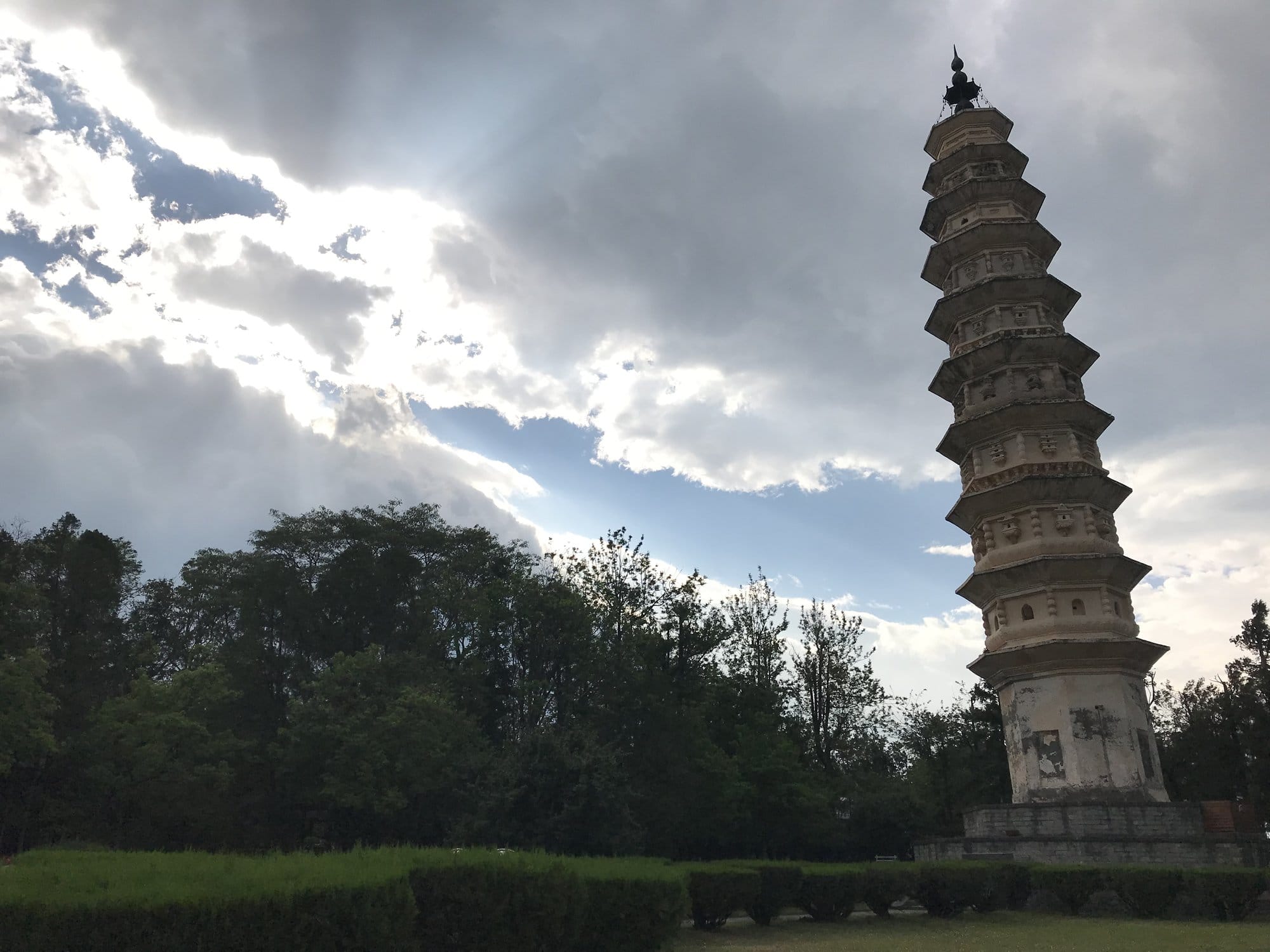
The central one, Qianxun Pagoda, rises 69.6 metres over sixteen storeys and was built between 823 and 840 under the Nanzhao kingdom — a state that ruled this corner of Asia long before it was China. The two flanking pagodas came roughly a century later, and are shorter at 42 metres and ten storeys each. All three are national treasures, and all three came through the 1925 Dali earthquake standing while most of the town around them fell down.
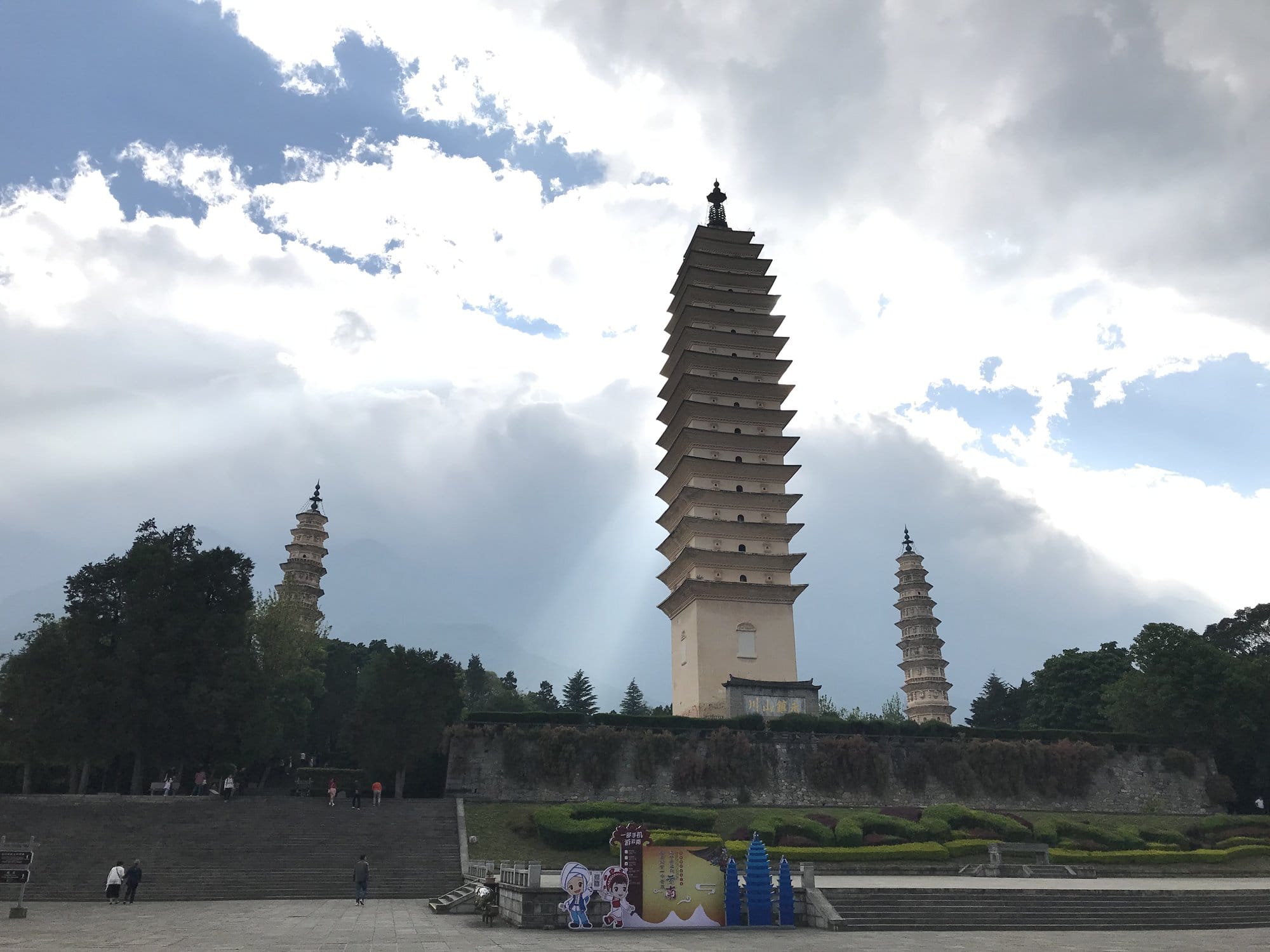
If you would rather have the Nanzhao history explained than read the panels, a guided tour of the pagodas and Chongsheng Temple covers the complex properly. They are best seen from a distance that lets you take in all three at once and register how precisely they are placed relative to each other. The reflecting pool behind the complex is the classic angle; the lawns in front work just as well and cost nothing.
From the air the arrangement makes even more sense — a straight line of three, with the temple complex climbing the slope behind and the Cangshan range beyond that.

> A word of warning about flying here. The wind funnels off the Cangshan range and through the park in gusts that arrive without notice. A drone launched in still air can be picked up and carried the length of the grounds within seconds — which is exactly what happened to the shot above, and it was retrieved on foot at the far side of the park by following its last known position. If you fly, fly low, keep it close, and check the current rules on drones in China and over heritage sites before you travel.
Take a Boat Out on Erhai
Erhai is forty kilometres long and sits between the old town and the mountains on its far shore. It is the reason Dali exists.
A boat trip on Erhai is the easy way to get out on the water without negotiating at the jetty. The most rewarding short outing on the water is the crossing to Xiaoputuo, a rock the size of a tennis court sitting alone offshore with a two-tiered pavilion built on top of it and nothing else. Small boats run out from the eastern shore. It is busy in a cheerful way — pilgrims, day-trippers, a few stalls — and the pavilion is genuinely beautiful from the water as you approach.
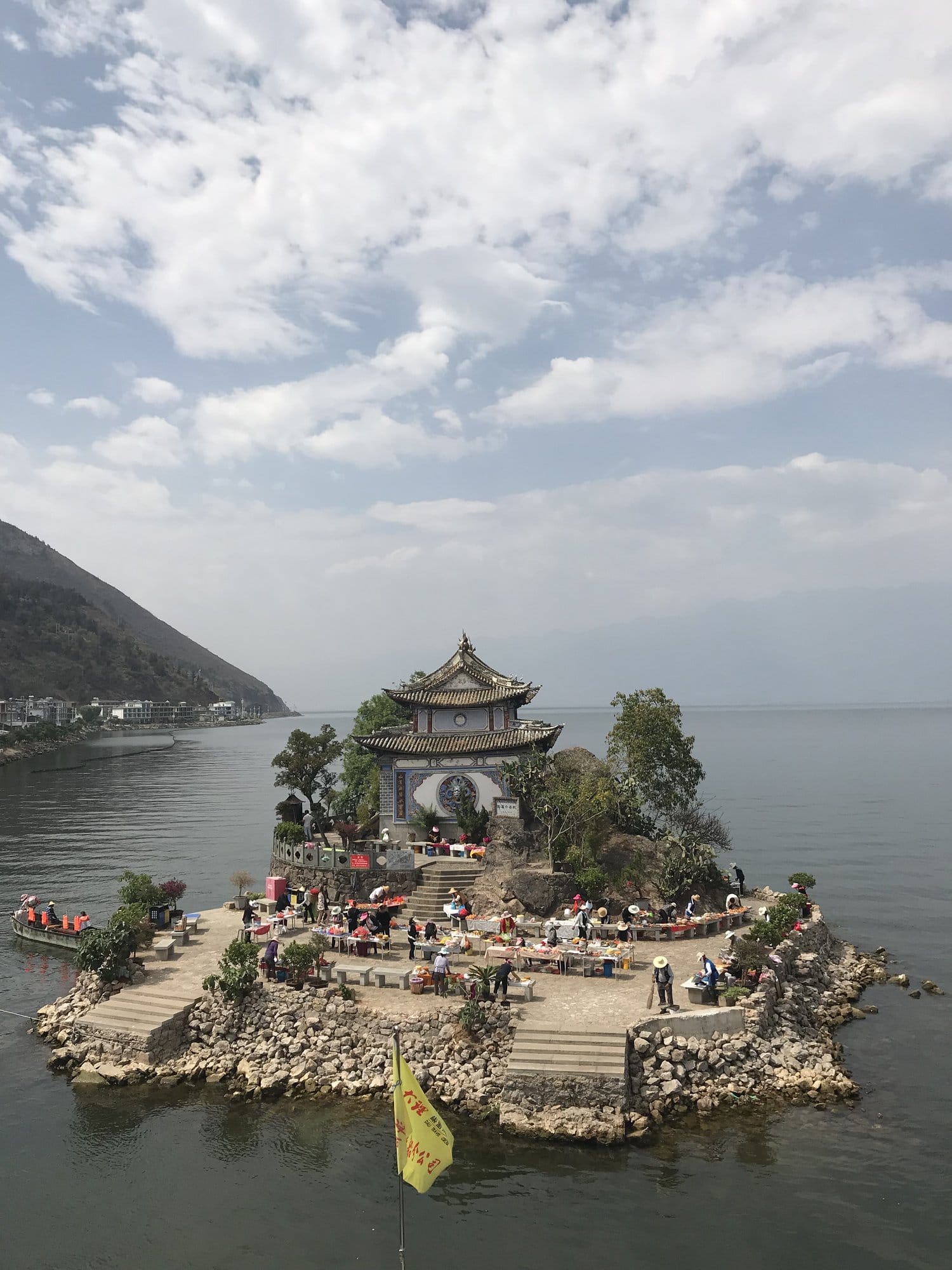
The lake shore is also where Dali's cycling and scooter culture makes most sense; the road along the water is flat, the villages strung along it are quieter than the old town, and the views back to the Cangshan range are the best in the region.
Stay Inside the Walls in Dali
Dali old town has the widest choice of accommodation in northern Yunnan, and the inns inside the walls are the ones worth having. The courtyard format is standard: rooms around an open yard, a lot of carved wood, and a breakfast table with a view of the mountains.
The Dali Yunxi Boutique Inn on Dongyu Street is a short walk from the south gate and the main streets, and its interior is closer to a small gallery than a hotel lobby — shelves of local ceramics, flowers, a courtyard you will actually sit in.

Go North to Shaxi
The bus from Dali to Shaxi takes about three and a half hours and drops you at a village that has almost nothing in common with where you started.
Sideng Square is the heart of it: a small cobbled market square with a two-hundred-year-old wooden theatre stage on one side, a temple on the other, and earth-walled buildings closing the other two. It is the only surviving market square on the Tea Horse Road, and standing in it you can see exactly how the system worked — caravans in, goods out, everyone watching the stage in the evening.
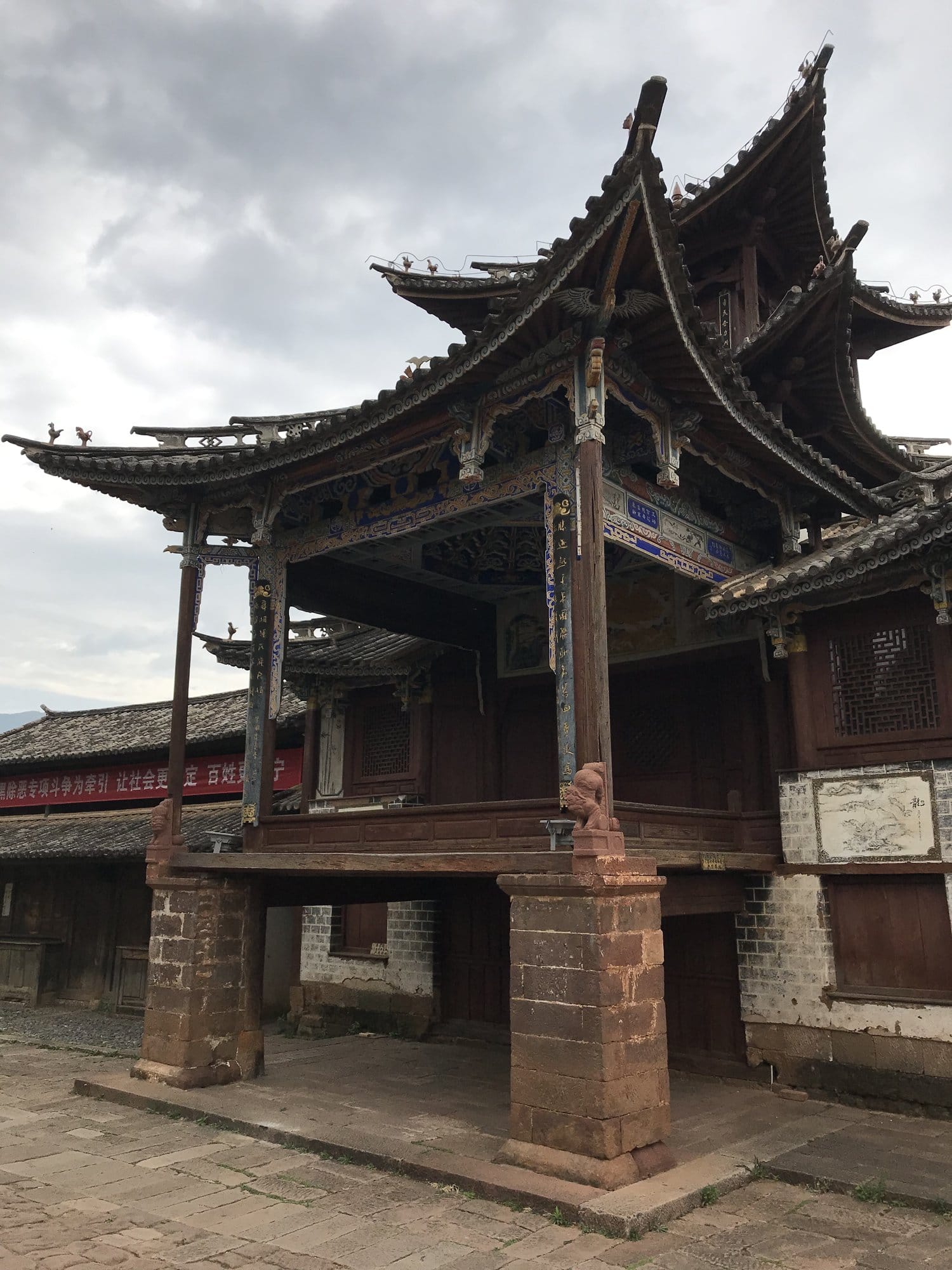
The square has a handful of cafés in restored buildings around it, and they are good. Shaxi Taste, on the square itself, is the obvious morning stop — blackboards, bougainvillea, tables in the sun, and a coffee that would not embarrass a European town.
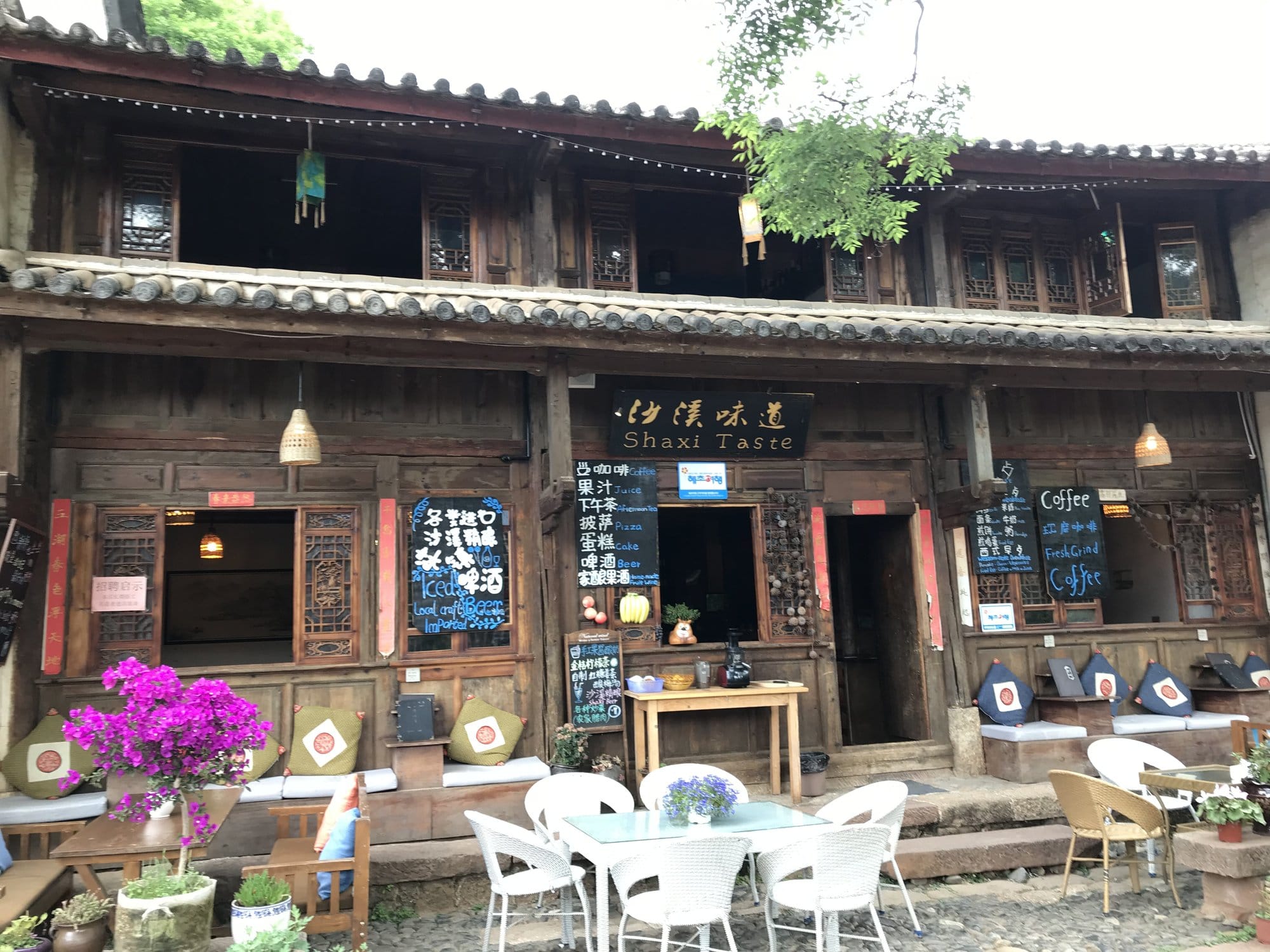
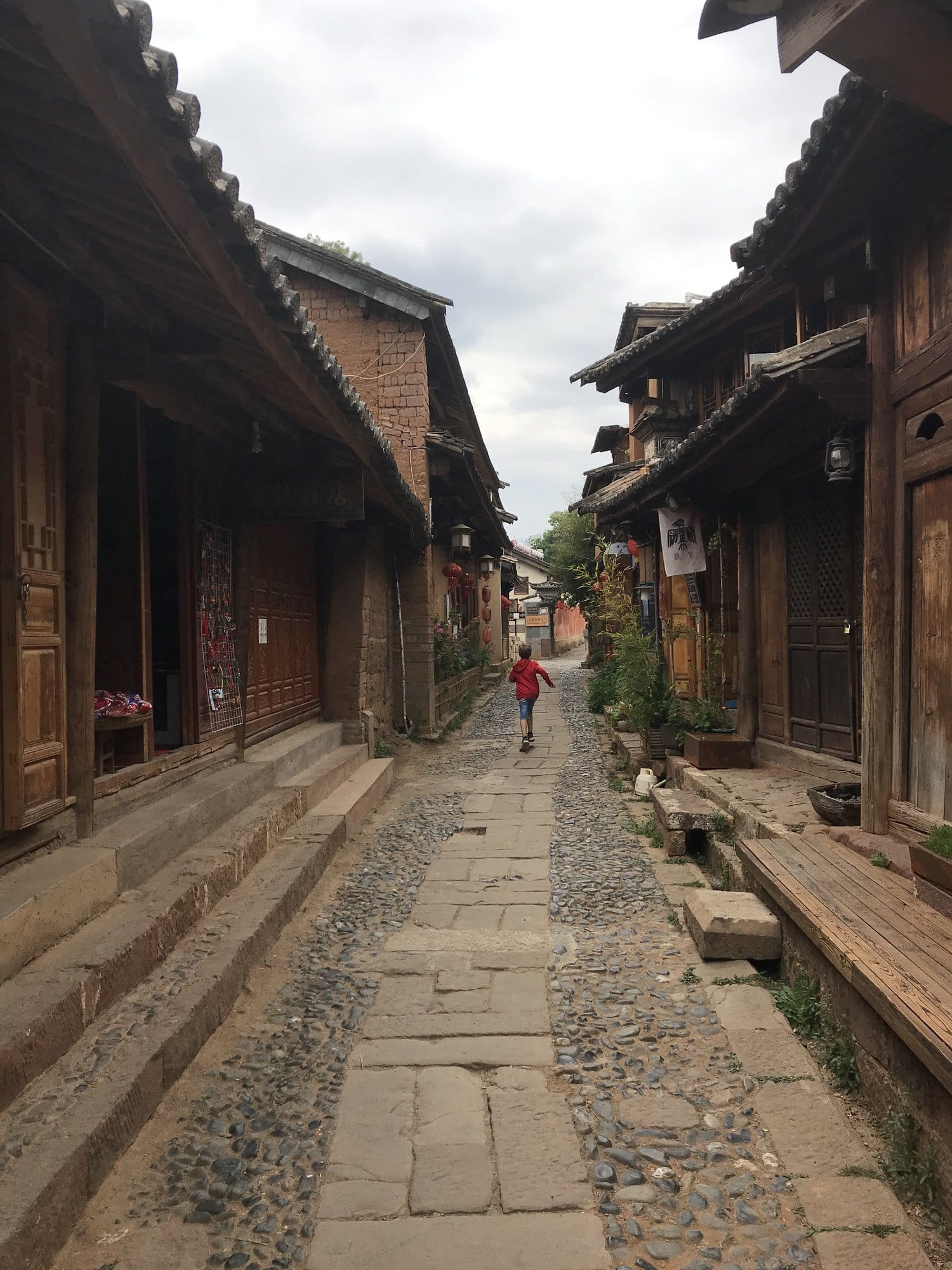
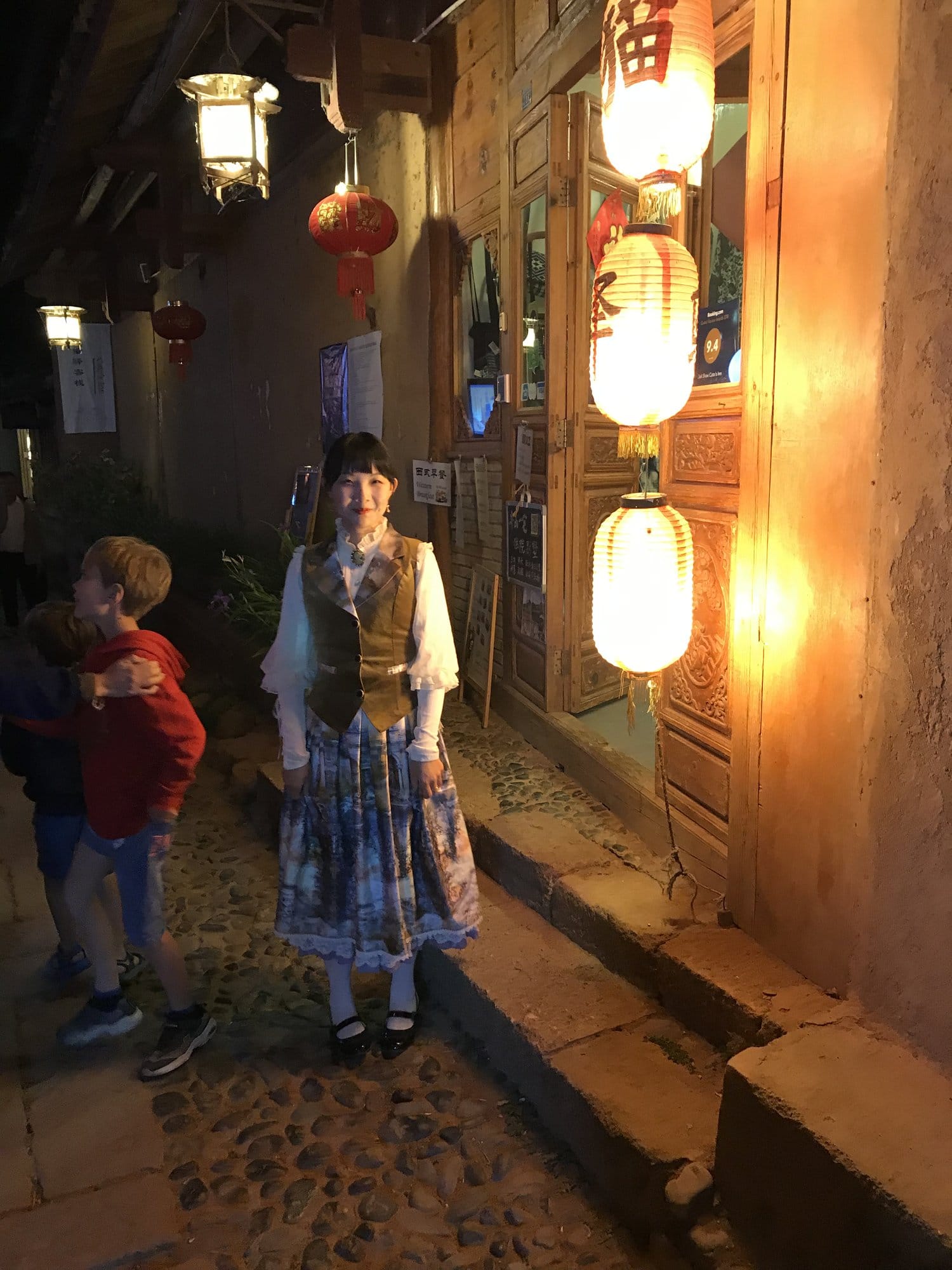
Walk out of the square in any direction and you are in lanes of cobblestone and earth walls, with almost no traffic. In the evening the lanterns go on and the place is close to silent.
Rent a Scooter and Ride the Valley
This is the single best thing to do in Shaxi, and it is the reason to give the village two nights instead of one.
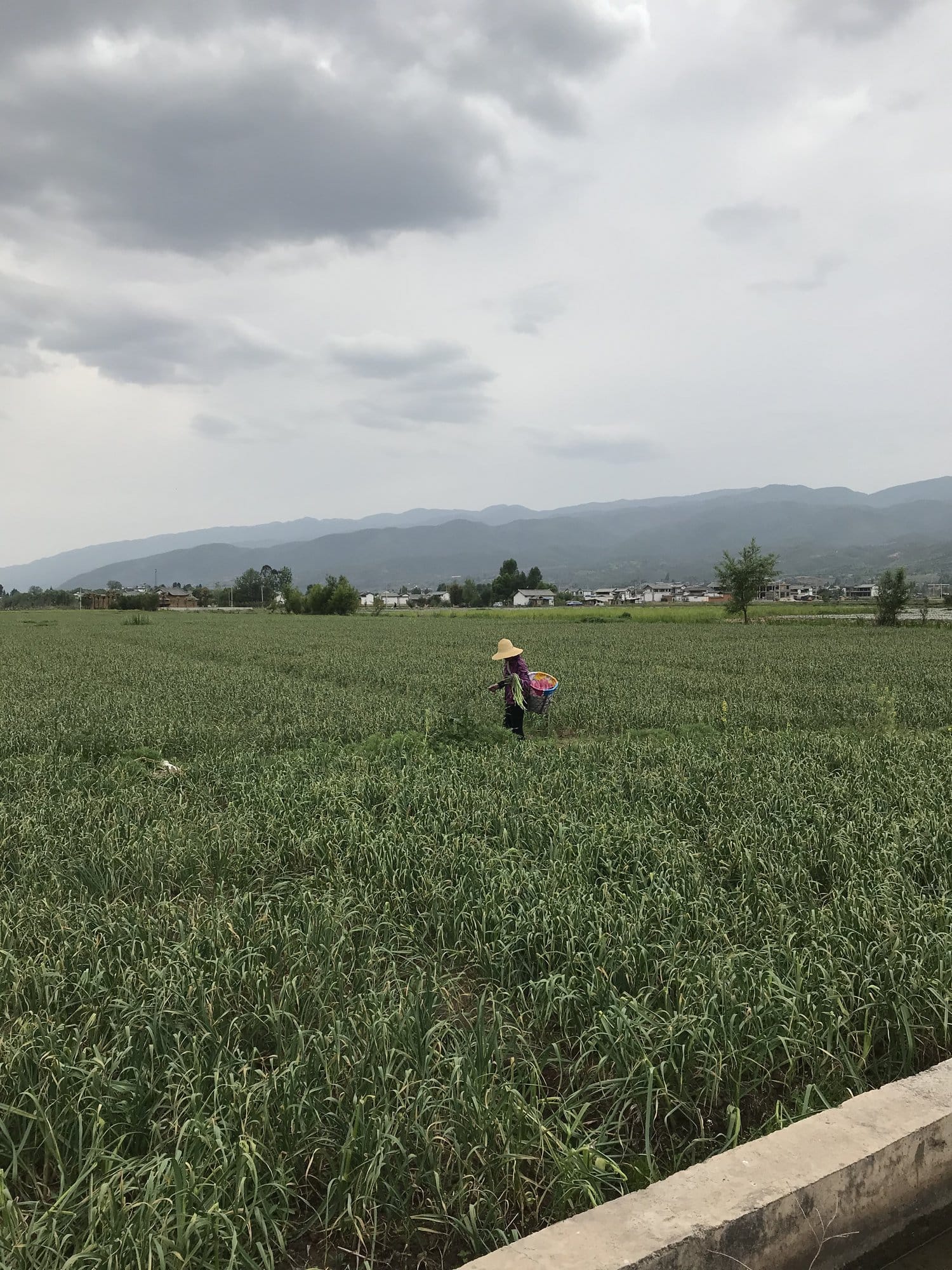
Scooters rent by the day from guesthouses and from a couple of places near the square. The valley beyond the village is flat, the roads are quiet, and within ten minutes you are riding between fields with nobody else on the road. Shaxi grows garlic at scale, and in spring the valley is a solid green sheet of it, with farmers working the rows in conical hats.

Ride out to the Yujin Bridge, the old stone arch that carried the caravan road over the Heihui river just outside the village. The arch and its reflection close into a perfect circle in still water, which is the kind of thing Chinese bridge builders did on purpose.
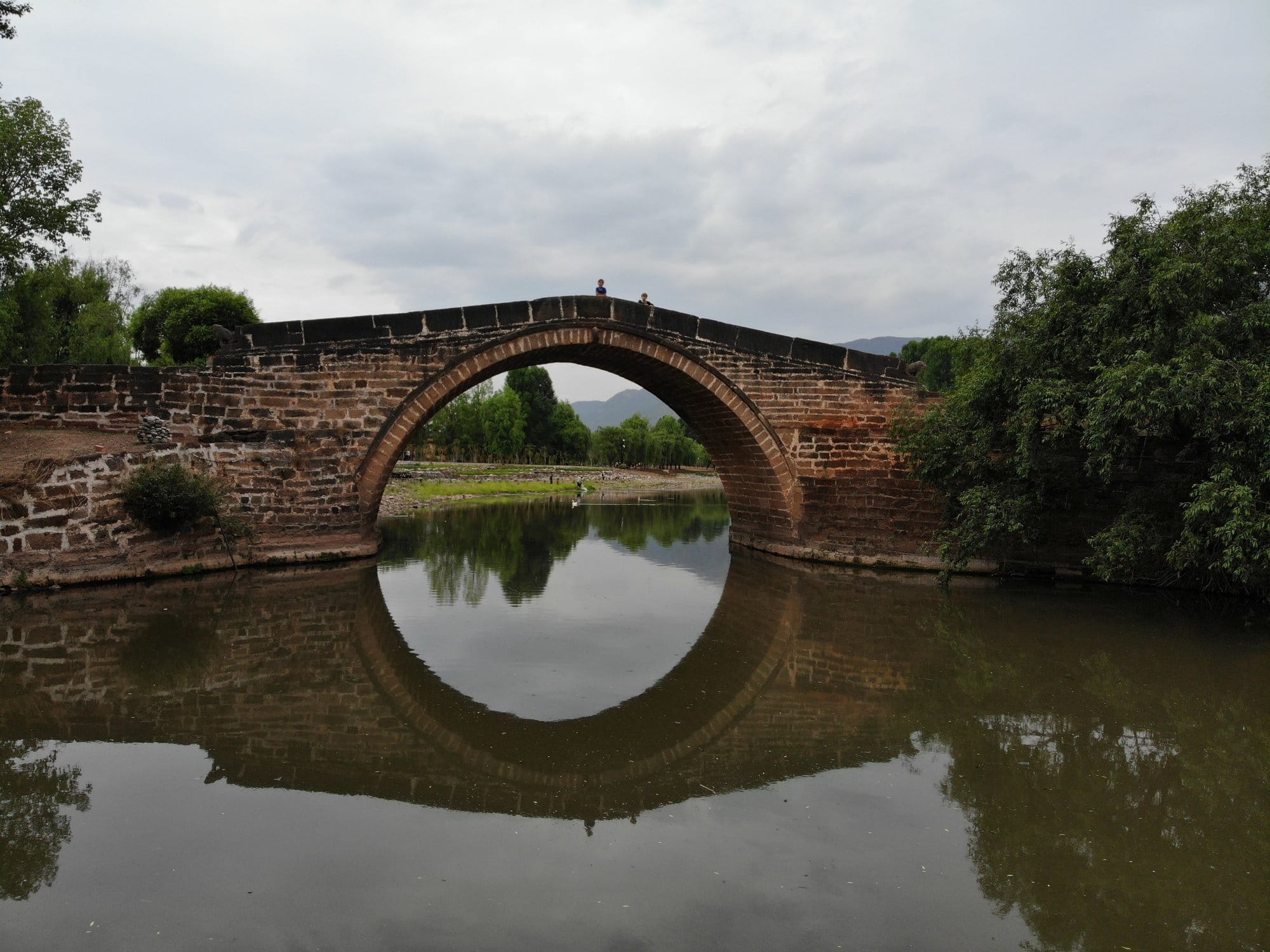
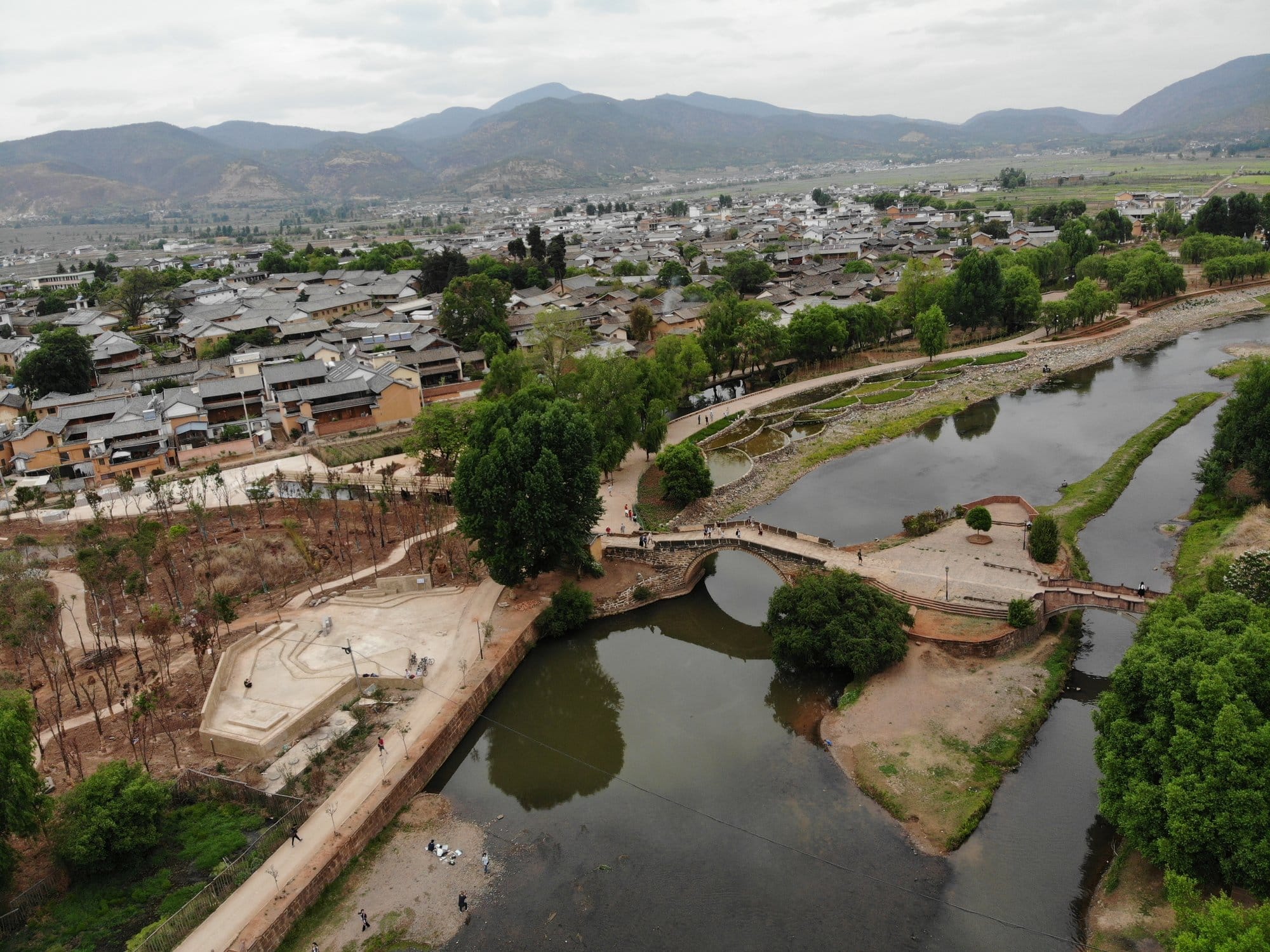
One caveat: the riverbanks around the bridge were being landscaped at the time of our visit, and the area may look different now — probably tidier, possibly with an entry fee. Check locally.
The Part Nobody Plans
Sit on a bench in Shaxi for long enough and something will happen, and it will be better than anything on your itinerary.
The village elders occupy the stone benches along the main lane through the middle of the day, smoking long pipes and watching the traffic, which is mostly other elderly people. They will make room for you. Children travelling with you will be adopted immediately and without ceremony.

There is a photographic economy at work here worth understanding. Chinese domestic tourists like being photographed with foreign visitors, and will ask. The pleasant discovery is that it works both ways: ask in return and you will almost always get a yes and a laugh. The exchange is mutual, which makes it something quite different from a stranger pointing a lens at a villager.
Getting There and Around
Kunming to Dali: high-speed trains run through the day and take around two hours to Dali station, which sits outside the old town — a taxi or shuttle covers the last stretch, and many inns will collect you.
Dali to Shaxi: buses take around three and a half hours. There is no railway to Shaxi. Guesthouses will usually tell you the current departures, which change.
Getting around: Dali old town is walkable and the lake shore is best on two wheels. Shaxi is walkable end to end in fifteen minutes, and a scooter for the valley.
Confirm times locally when you book — schedules on this route change more often than published sources keep up with.
Practical Information
How long to stay. Two nights in each. Dali can absorb more if you want the lake properly; Shaxi is small but the valley is the point, and a single night means no scooter day.
Tickets. The Three Pagodas complex is ticketed and not cheap. Shaxi village is free to walk; individual sites around it may charge.
Altitude. Dali sits around 2,000 metres and Shaxi slightly higher. Cool evenings, strong sun, and nothing that causes altitude problems.
Scooter rental. Straightforward in Shaxi, but rules on what licence a foreign visitor needs to ride legally do change — ask your guesthouse and check before you ride rather than after.
Frequently Asked Questions
Is Dali or Shaxi better? They are not competing. Dali has the major sights, the lake and the choice of restaurants; Shaxi has the atmosphere and the quiet. Visiting both, with two nights each, gives you the contrast that makes the pair worthwhile.
How do you get from Dali to Shaxi? By bus, in roughly three and a half hours. There is no train to Shaxi.
What is Shaxi known for? Sideng Square, the only surviving market square on the Tea Horse Road, with its two-hundred-year-old wooden theatre stage, and the Yujin Bridge over the Heihui river.
Are the Three Pagodas worth the entrance fee? The pagodas themselves are over a thousand years old and were standing when most of Dali fell in the 1925 earthquake. If you have any interest in architecture, yes.
Can you rent a scooter in Shaxi? Yes, by the day from guesthouses and rental shops near the square. Check the current licence requirements for foreign riders before setting off.
More to Explore
<!-- BOOKMARK CARDS — grouped here, never mid-article -->