
Tiger Leaping Gorge with Kids: What Three Hours of Climbing Actually Looks Like
The High Trail is the best-known trek in Yunnan and the question nobody answers honestly is whether children can do it. They can. Here is what it costs them, and what it gives back.

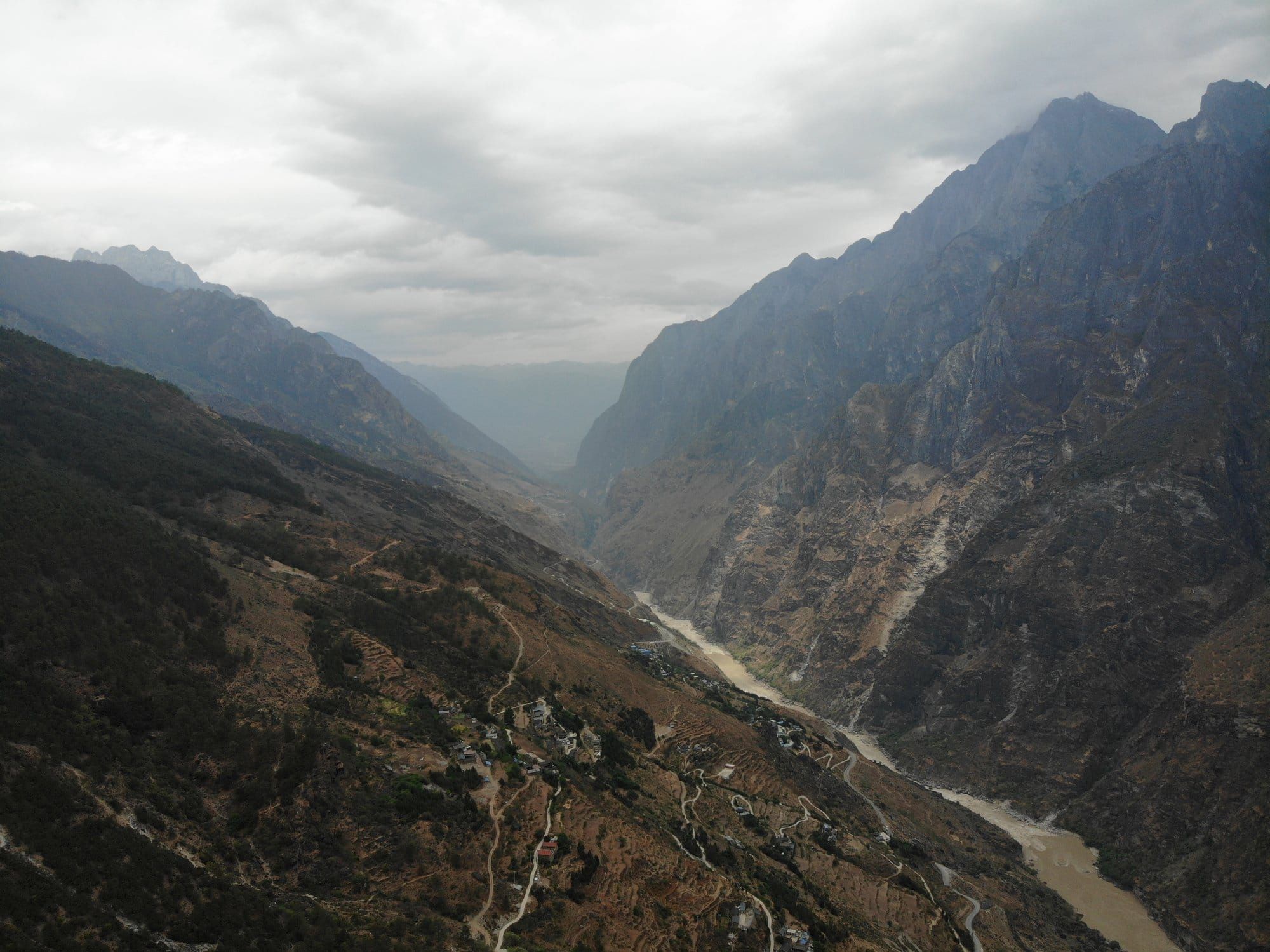
Search for the Tiger Leaping Gorge and you will find two kinds of article. One is written by agencies and tells you the trail is 22 kilometres, that the 28 Bends are strenuous, and that October is the best month. The other is written by people in their twenties with a single rucksack, for whom the whole thing was a good day out.
Neither answers the question families actually ask, which is: can a five-year-old do this?
Yes. With a caveat that has nothing to do with fitness.
> Some links in this guide are affiliate links. If you book through them it costs you nothing extra and helps keep this site running. We only recommend places and operators we would use ourselves.
What the Trail Actually Is
The gorge is cut by the Jinsha — the upper Yangtze — between two ranges that rise to over 5,000 metres, and the walking route known as the High Trail runs along the northern flank well above the river, from Qiaotou at one end to Tina's Guesthouse at the other. It is about 22 kilometres end to end and most people walk it over two days, sleeping at one of the guesthouses strung along the way.
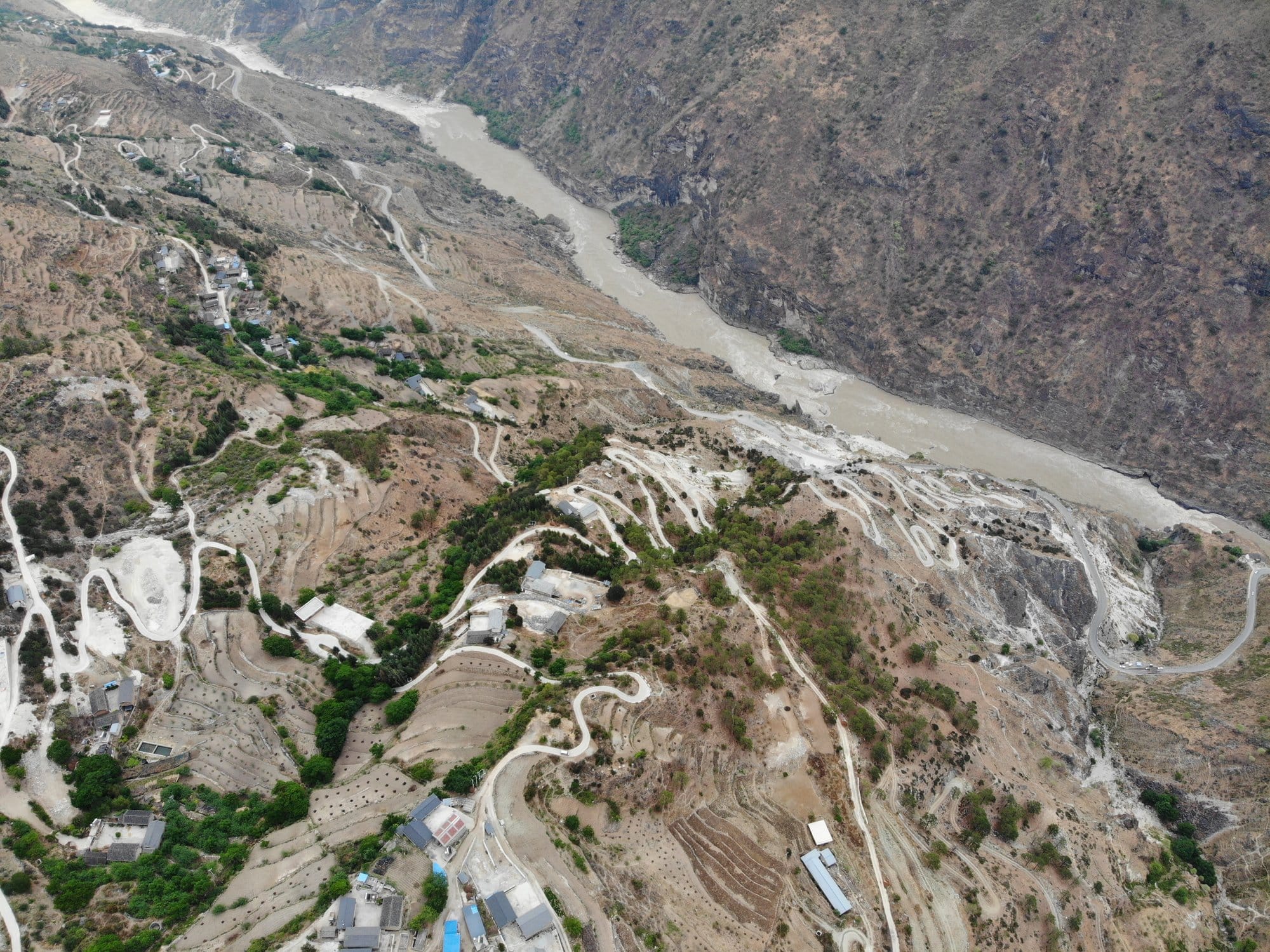
If you would rather not organise the logistics yourself, a guided two-day trek with a local guide covers transfers, the guesthouse and the luggage forwarding in one booking. The reputation rests on one section, the 28 Bends: a switchback climb of over 500 metres that takes around an hour and arrives at the highest point of the route. Everything before it is a steady ascent; everything after is undulating with a long descent at the end.
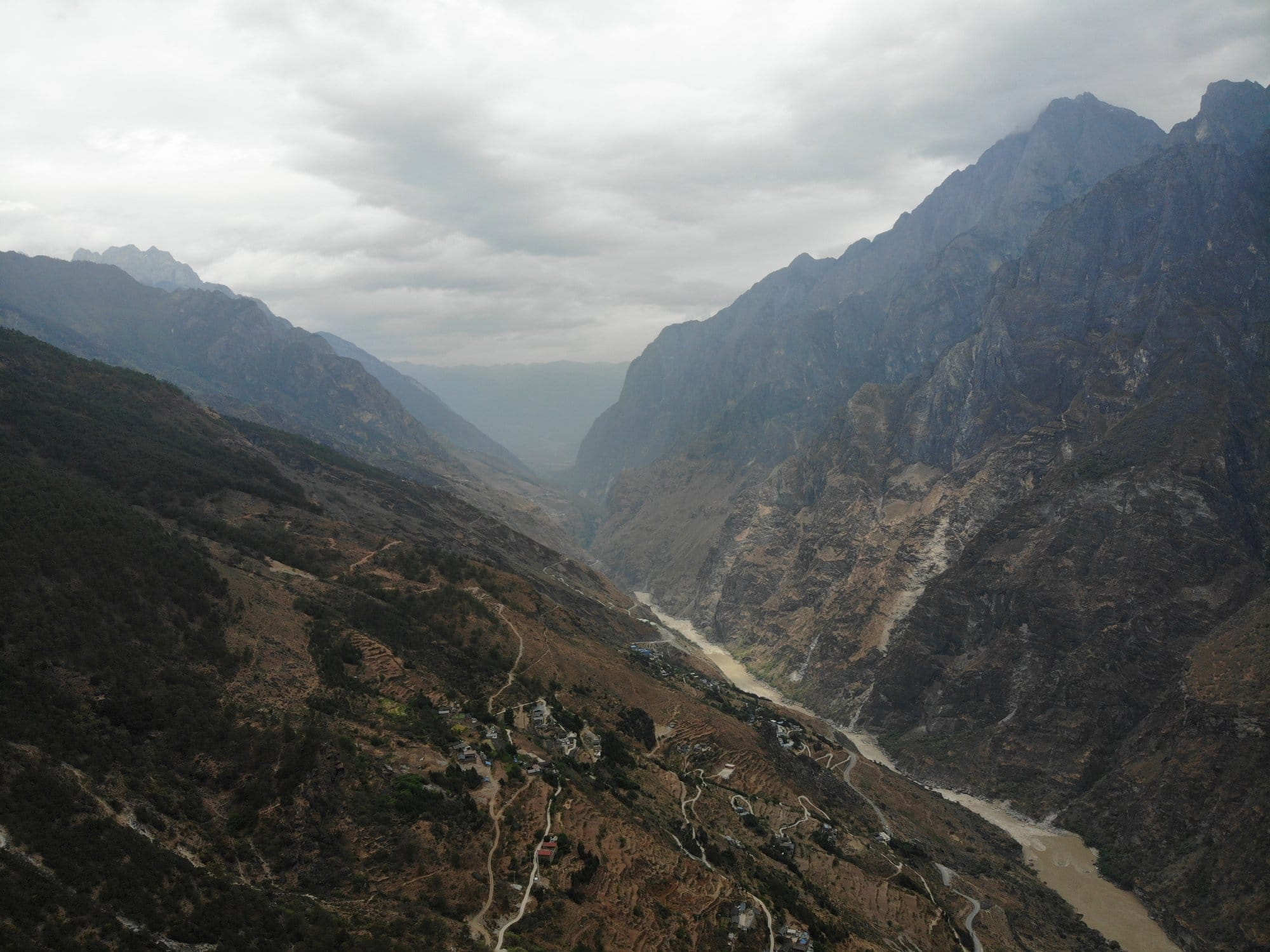
The scale is difficult to convey and easy to underestimate from the road. From above, the hamlets on the slope look like dropped grains of rice, and the switchbacks of the path are visible for kilometres as thin pale threads against brown rock.
The Climb, Hour by Hour
Here is the honest version, walked with a group of seven including three children, the youngest five years old.
The first hour is the steepest introduction the trail offers and the one where morale is decided. It goes up from the start with no warm-up. Nobody enjoys it.
The second hour is better, because the views open. This is where the gorge stops being a valley you are in and becomes a thing you are looking at: the far wall rises in a single sweep of grey rock streaked with scree, and there is enough of it to keep a child looking up rather than at their feet.
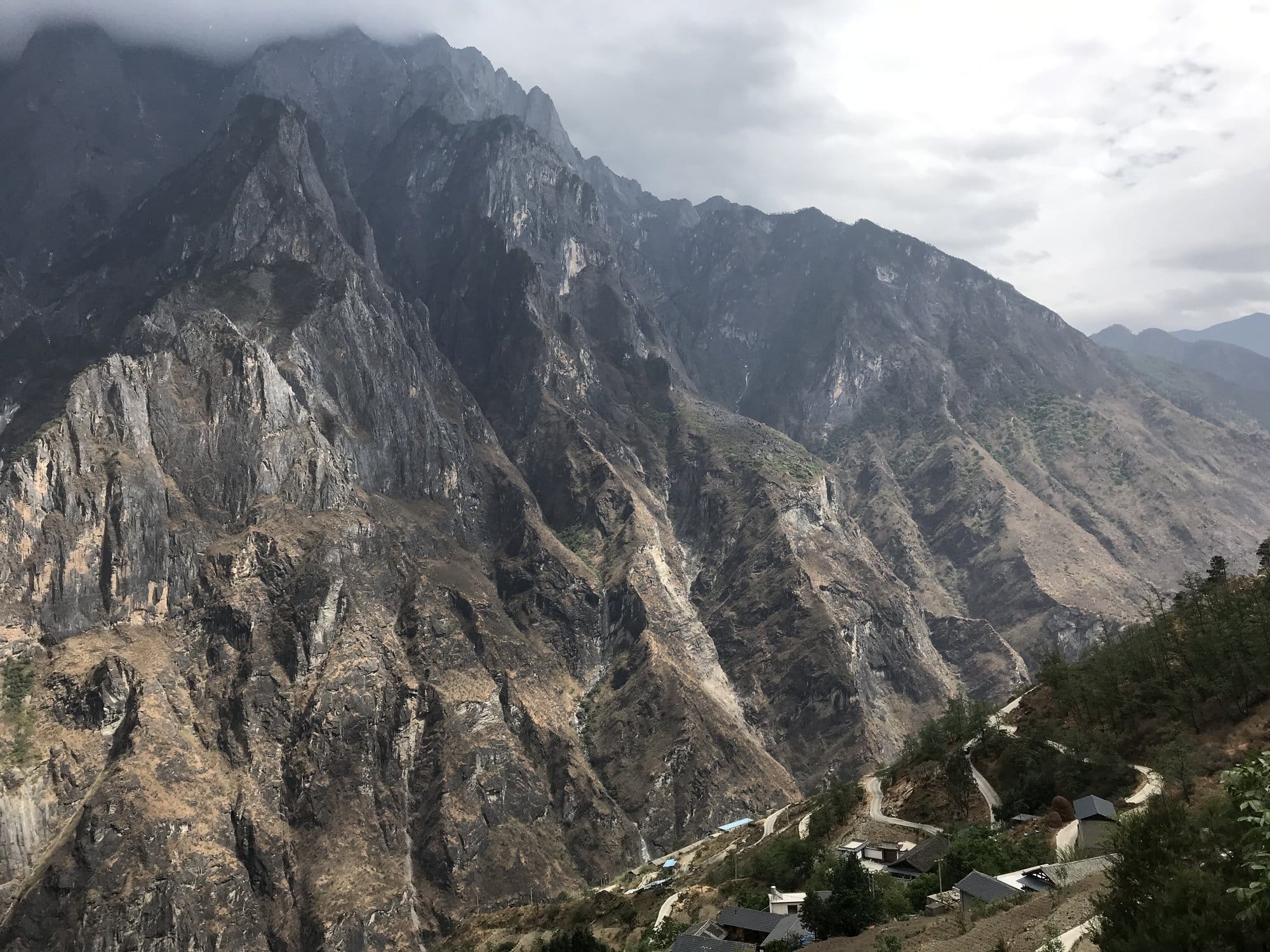
The third hour is the test. Legs are tired, the novelty has worn off, and the trail narrows to a ledge cut into the cliff with a drop on one side. This is where the five-year-old started complaining. He kept walking.
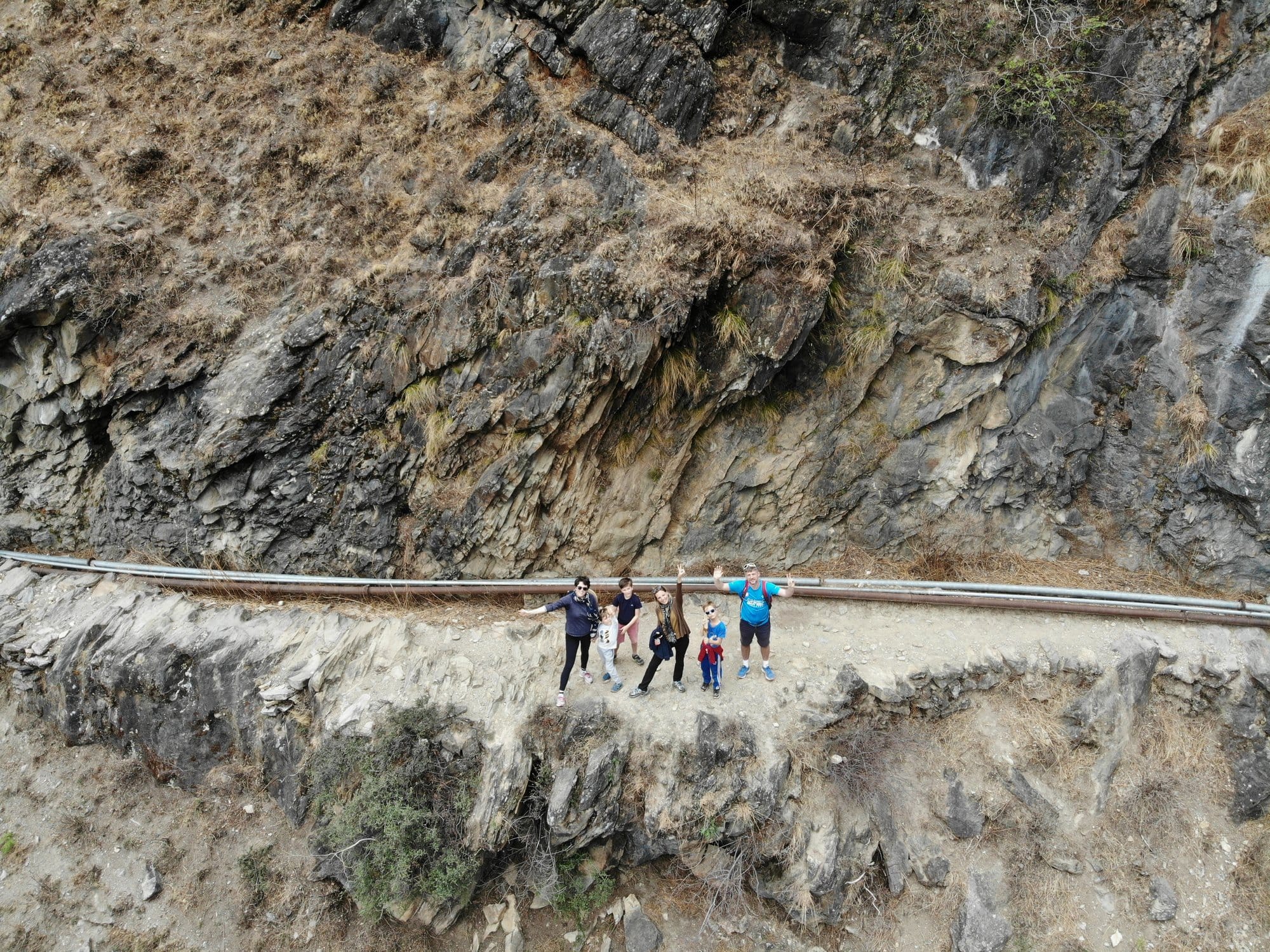
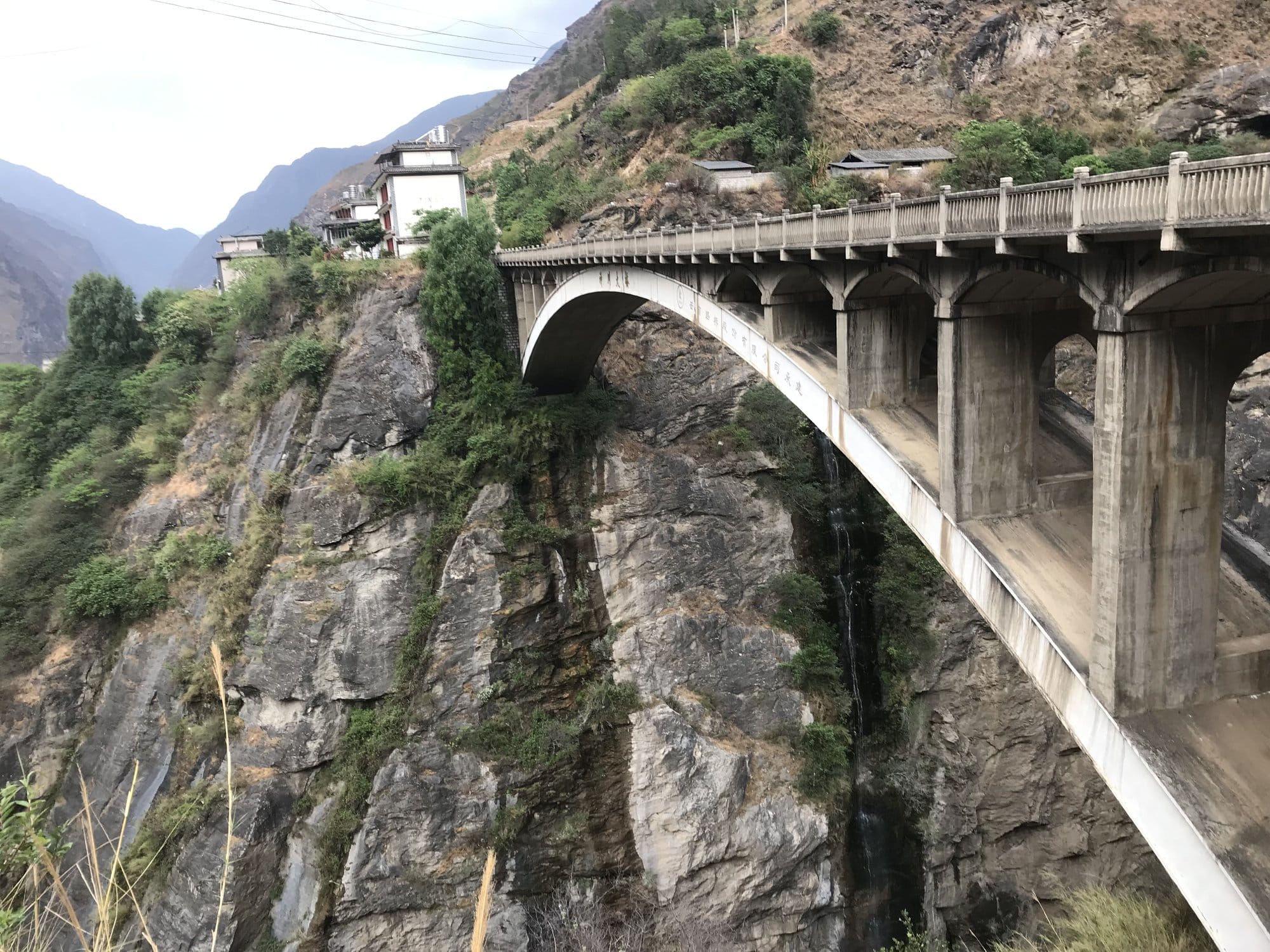
The last stretch delivers. The trail descends, a road bridge appears across a side gorge, and there is somewhere to sleep at the end of it. The relief of that is a real part of the experience, and children feel it more than adults do.
Doing It with Young Children
The caveat mentioned above is this: the constraint is not fitness, it is patience. Young children can climb for three hours. What they cannot do is climb for three hours without reason, and the reason has to be visible.
Some things that help, all of them learned the hard way:
Walk the first day only. You do not have to do the full two-day route. Walking the ascent, sleeping at a guesthouse on the trail and taking the road out the next morning gives children the best of it — the climb, the views, the arrival — and skips the long flat second day that bores them.
Start early. The middle of the day on an exposed slope at this altitude is hot, and heat is what turns a tired child into an immovable one.
Count something. Bends, hamlets, goats. The 28 Bends section is a gift in this respect, because it is literally numbered.
Carry the water. Guesthouses on the trail sell drinks but the gaps between them are long.
Accept the grumbling. It is not a signal to turn back. It is the sound of a child doing something difficult.
What you should not do is treat the drop on the outer edge as a thing to argue about. The ledge sections are wide enough, but they are ledges. Hold hands, walk on the inside, and do not let anyone run ahead.
Where to Sleep on the Trail
The guesthouses along the High Trail are its best feature. They are simple — a row of rooms, a terrace facing the gorge, a kitchen doing one menu — and the terraces at the end of a day of climbing are worth the walk on their own. The well-known ones, in the order you reach them, are the Naxi Family Guesthouse, Tea Horse Guesthouse, Halfway Guesthouse and Tina's at the far end.
Book ahead in spring and autumn. Do not assume a room will be free because the trail felt empty — rooms along the trail are limited and the good terraces go first.
Down to the Water: the Middle Gorge
Below the High Trail, a separate path drops to the river at the narrowest point, where a rock in mid-channel is the one a tiger is supposed to have used to cross in a single bound. It is a short, extremely steep descent — the return climb includes ladder sections that are close to vertical — and there is a small fee for the final bridge.
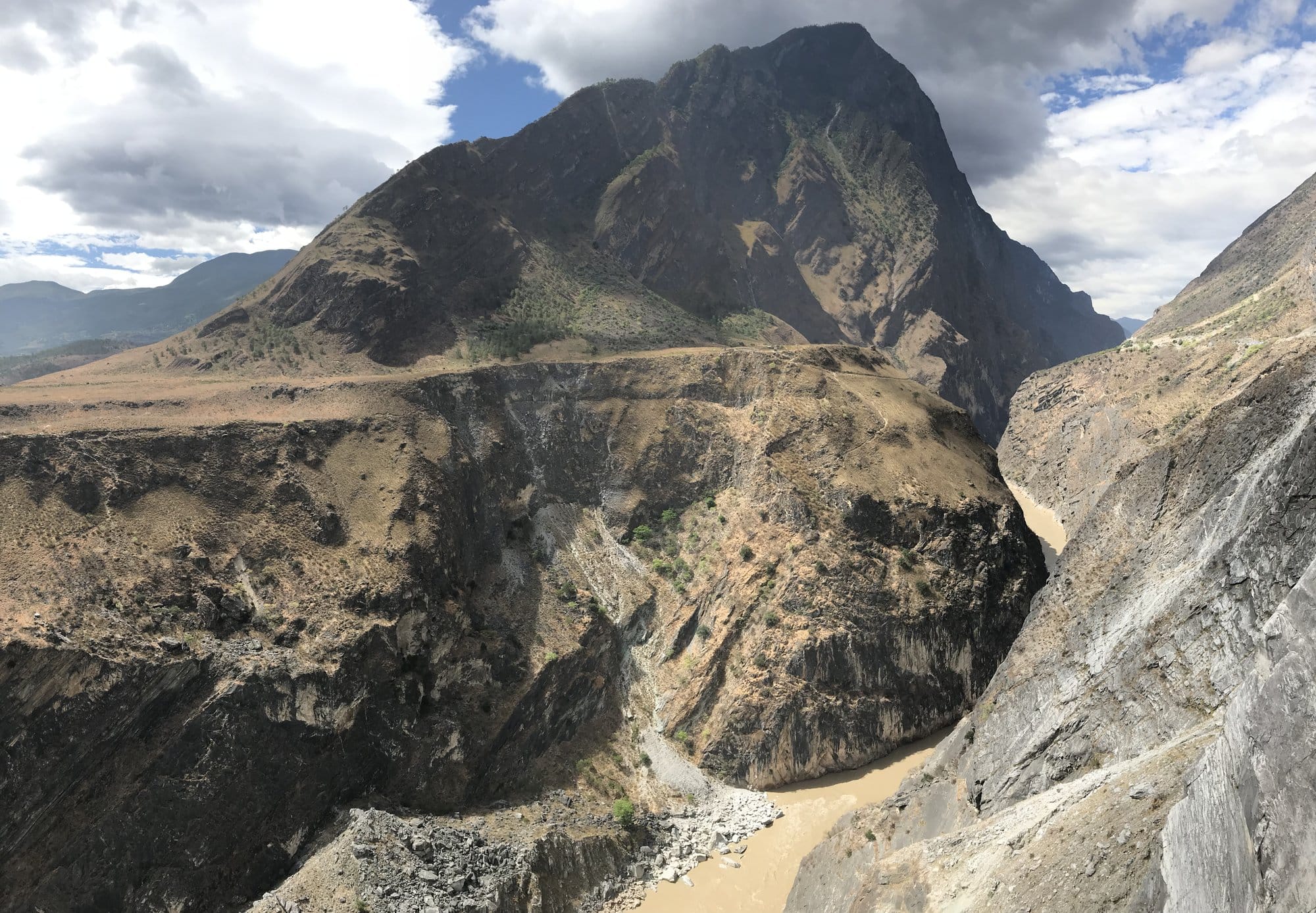
With small children this is the section to skip, or to do only as far as the viewpoint. The view from the High Trail is better anyway.
The Detour Worth Making: Baishuitai
Two hours east of the gorge, on the road towards Shangri-La, is a place almost no itinerary includes.
Baishuitai is a hillside of white travertine — calcium carbonate laid down by mineral springs over thousands of years into a staircase of shallow terraces holding pale turquoise water. It looks like the rice terraces of Yuanyang rebuilt in marble, and the comparison lands harder when you have seen the originals earlier the same trip.
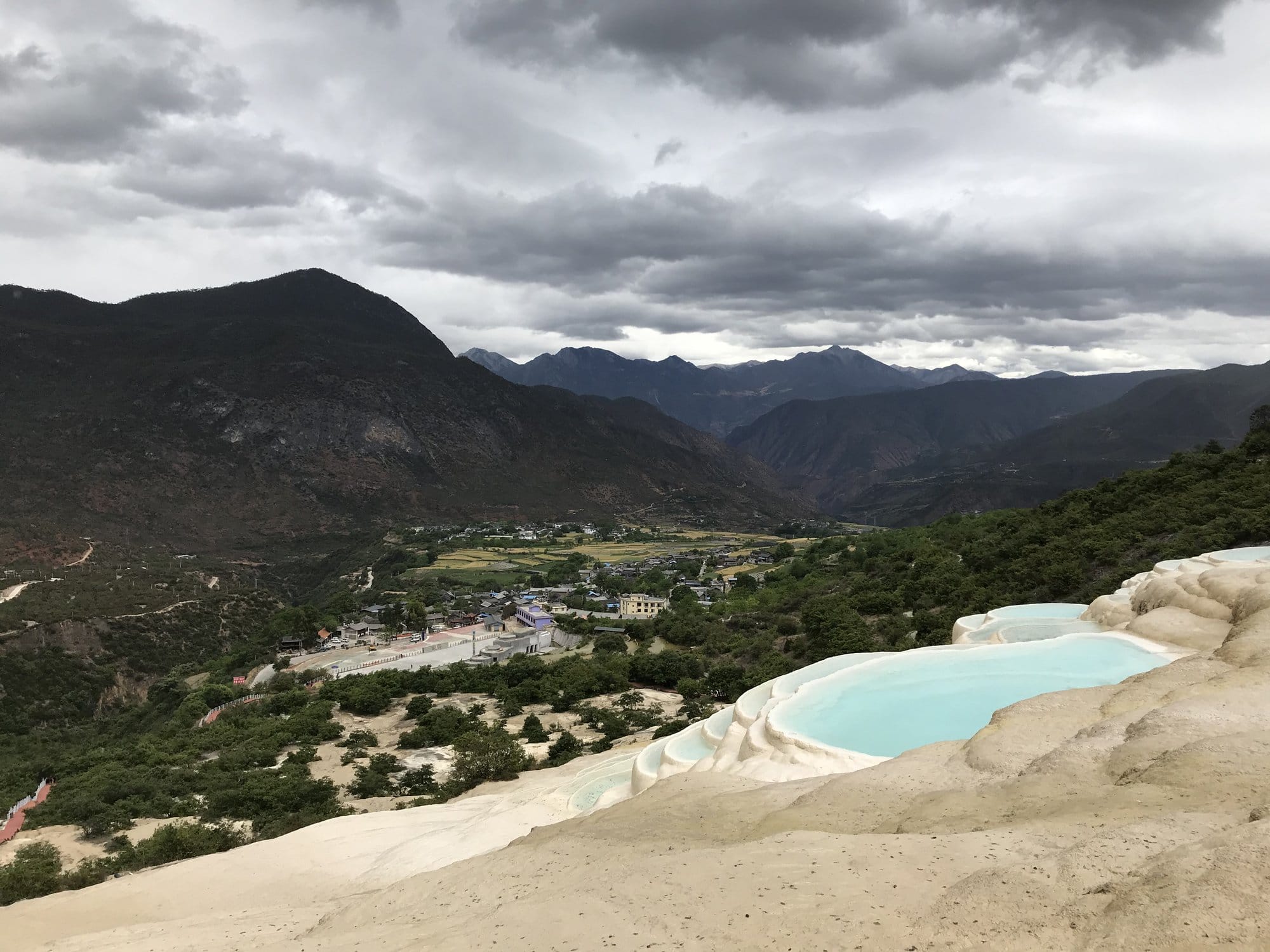
It is also a place children immediately understand. Flat white rock, shallow pools, nothing to break. Ours ran.
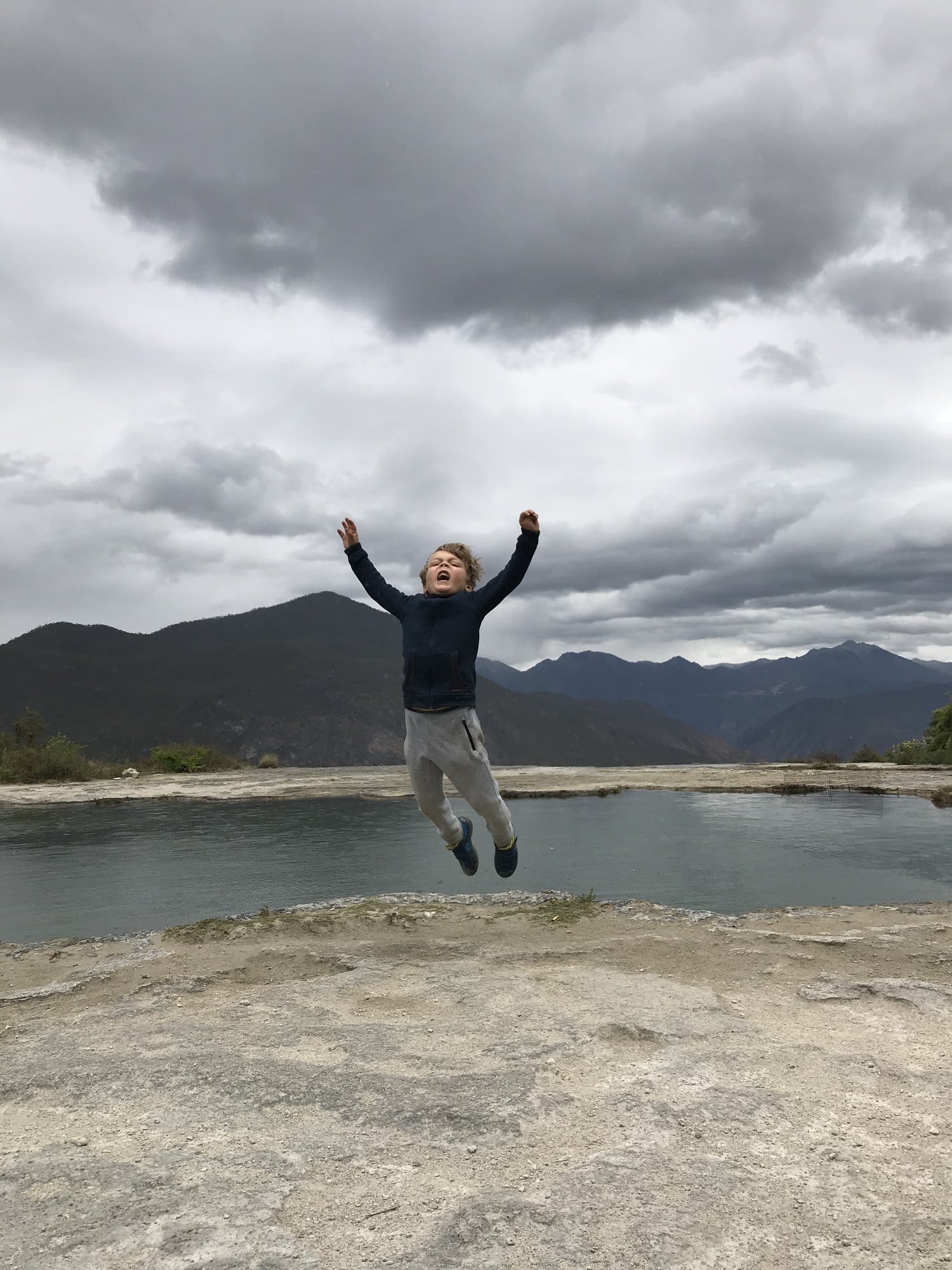
Baishuitai is sacred to the Naxi as the birthplace of their Dongba religion, and there is a village and a small ticketed area. An hour is enough, and it breaks the drive north perfectly.
Should You Push On to Shangri-La?
This is the real decision of the trip, and the honest answer comes from having got it wrong on paper and right in practice.
The plan was two nights at the gorge and a bus straight back down to Lijiang. What actually happened is that the second gorge night got dropped, the group pushed north through Baishuitai instead, spent a night at 3,300 metres in Shangri-La, and came back down to Lijiang the following day.
The argument for going was the least sophisticated one available: we are too close not to. The verdict, some years later and checked with the other family, was unanimous — no regrets.
What it costs you: one gorge night, roughly four hours of additional road, and a night at altitude.
What it buys you: a Tibetan monastery the size of a small town, a plateau landscape that looks nothing like the rest of Yunnan, and yaks by a lake. It is the single biggest change of scenery on any Yunnan itinerary.
On the altitude. Going this way gives you a gradual profile almost by accident: the gorge at roughly 1,800 to 2,400 metres, Baishuitai at 2,600, one night at 3,300, then down to 2,400 at Lijiang. Three steps up, a single night at the top, and a descent the next day. It went fine for our group, including the five-year-old. That is one family's experience and not a guarantee — if you are travelling with a young child, someone elderly, or anyone with a heart or lung condition, take medical advice before you go rather than after you arrive.
Getting There and Away
From Lijiang the gorge is about two hours by bus to Qiaotou, where the High Trail starts. This is the standard approach.
From Shaxi or Dali, buses run north and take around two hours from Shaxi.
Onward to Shangri-La is roughly two to three hours by road from the far end of the gorge, via Baishuitai if you want the detour.
Onward to Lijiang from Tina's is about an hour and a half.
Bus times on these routes change with the season and the road conditions; ask your guesthouse the night before rather than relying on a published timetable, including this one.
Practical Information
When to go. Spring and autumn. Avoid June to September, when the risk of landslides on the trail is highest.
Tickets. The gorge is a ticketed scenic area, with a separate small charge for the bridge to Tiger Leaping Rock in the Middle Gorge.
Luggage. Guesthouses at the start will forward bags to the far end for a small fee. Do this. Walking the High Trail with full luggage is a choice, not a requirement.
Fitness. Three to four hours of uphill on day one, on a good path. No technical difficulty, no equipment beyond decent shoes.
Altitude. The trail tops out well below 3,000 metres. It is a walking route, not a mountaineering one.
Frequently Asked Questions
Can you hike Tiger Leaping Gorge with children? Yes. Children of five and up can walk the first day's ascent of the High Trail, which takes three to four hours with breaks. The limiting factor is patience rather than fitness, and walking only the first day then taking the road out avoids the flatter second day that bores them.
How long does the Tiger Leaping Gorge trek take? The full High Trail is about 22 kilometres and is usually walked over two days, with one night at a guesthouse on the trail. Walking only the first day's climb and leaving by road the next morning is a common shorter option.
What are the 28 Bends? A switchback section on the first day climbing more than 500 metres in around an hour, and the hardest part of the route.
Where do you sleep on the Tiger Leaping Gorge trail? At guesthouses along the High Trail — the Naxi Family, Tea Horse, Halfway and Tina's are the best known. Book ahead in spring and autumn.
Is Baishuitai worth the detour? Yes, if you are continuing north to Shangri-La. The white travertine terraces are about two hours east of the gorge and need only an hour, and they break the drive.
Should you continue from Tiger Leaping Gorge to Shangri-La? It costs an extra night and around four hours of road, and it buys the biggest change of scenery on a Yunnan itinerary — Tibetan plateau, monastery and yak country at 3,300 metres. If the altitude suits your group, go.
More to Explore
<!-- BOOKMARK CARDS — grouped here, never mid-article -->