
Jianshui: The Old Town Most Yunnan Itineraries Skip
A Confucian temple, a merchant's garden of 42 courtyards, a seventeen-arch bridge and a street full of potters — Jianshui deserves two days, and almost nobody gives it one.

Jianshui has a problem, and the problem is geography. It sits on the road between Kunming and the Yuanyang rice terraces, which means most travellers pass through it — change buses in it, even sleep in it — on their way to somewhere they have heard of. They give it an afternoon.
That is a mistake, and an easy one to correct. This is a town with a Confucian temple large enough to get lost in, a merchant's mansion of forty-two courtyards, one of the most beautiful bridges in China a short ride outside town, and a street of potters still working a clay that has been fired here for a thousand years. Two days is about right.
> Some links in this guide are affiliate links. If you book through them it costs you nothing extra and helps keep this site running. We only recommend places and operators we would use ourselves.
Cross the Double Dragon Bridge at Golden Hour
If you see one thing in Jianshui, see this.
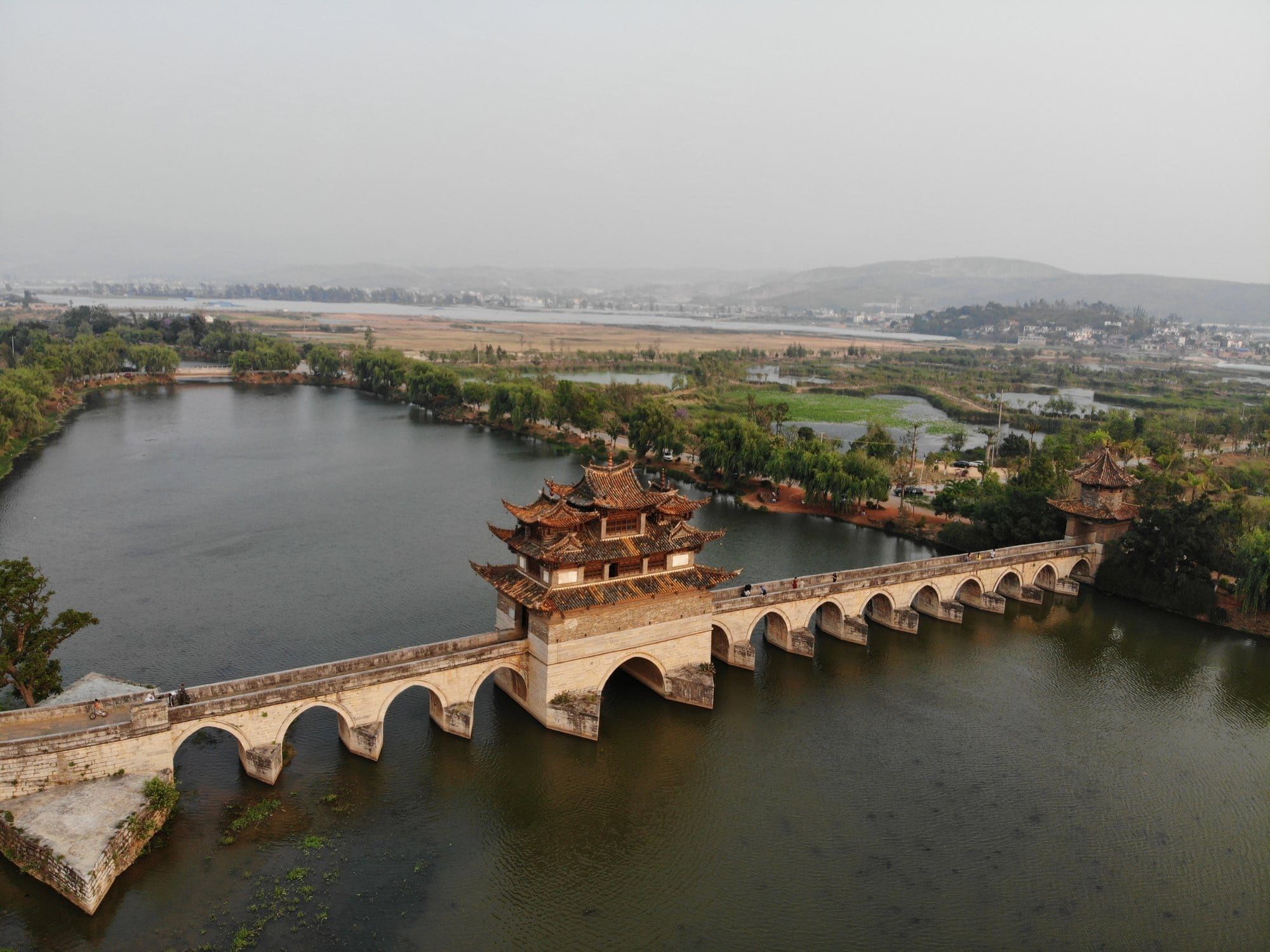
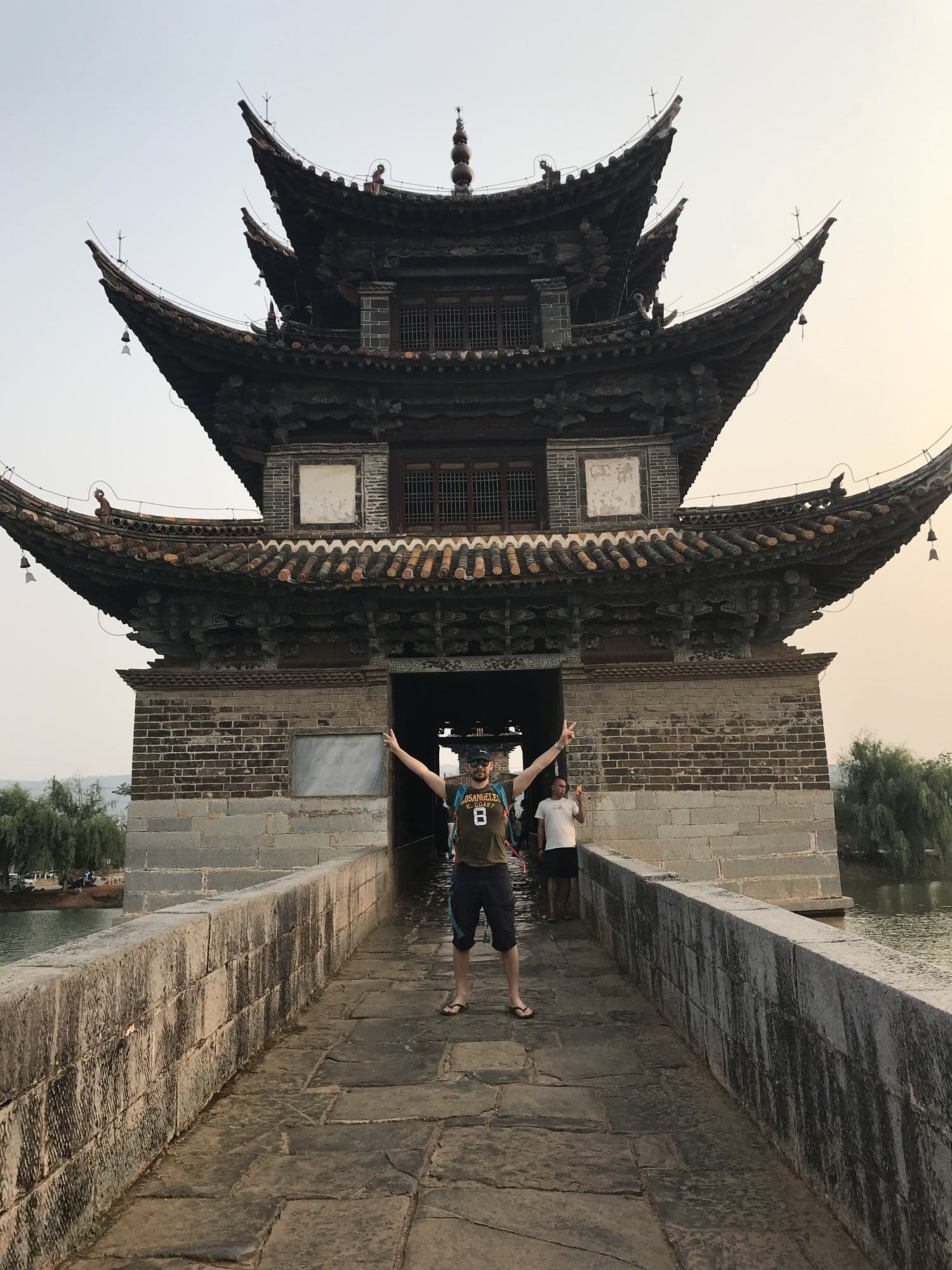
The Shuanglong Bridge — Double Dragon Bridge, known locally as the seventeen-arch bridge — spans the confluence of the Lujiang and Tachong rivers a few kilometres west of town. It began life under the Qianlong emperor as a modest three-arch crossing and was extended to its present seventeen arches in 1839. It runs 148 metres, carries three wooden pavilions along its length, and the central one rises three storeys and twenty metres, rebuilt at the end of the nineteenth century. It has been protected as a major national historical site since 2006.
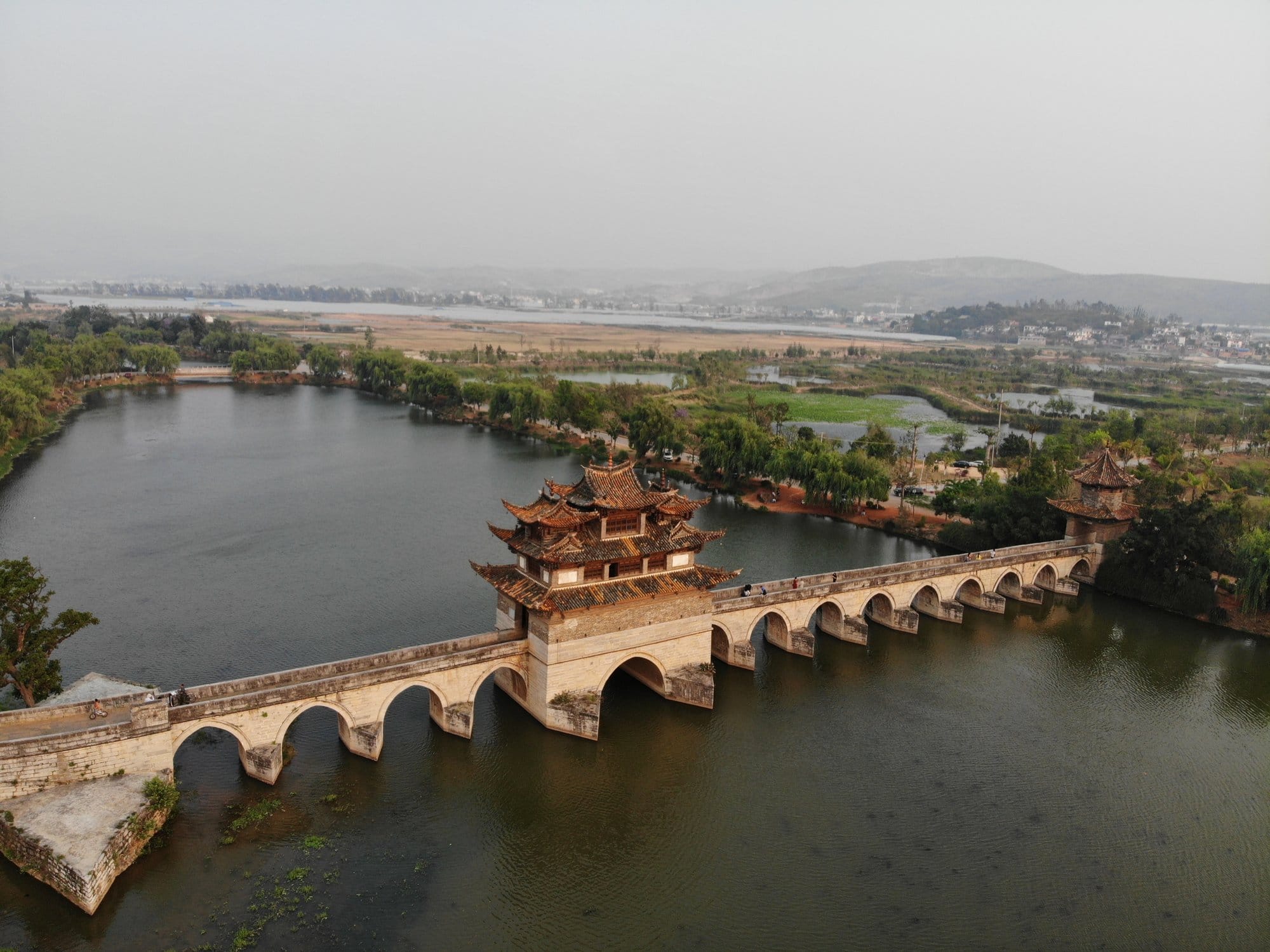
Numbers do not do it justice. What makes it extraordinary is the setting: the bridge crosses shallow water and reed beds with nothing much around it, so the pavilions sit in the landscape rather than in a town, and the whole thing looks less like infrastructure than like something that grew there.
Go in the last hour of daylight. The stone warms up, the pavilions throw long reflections, and the crowds — such as they are — have gone home. Walk the full length: the far end is quieter and gives the better view back.
Give the Confucian Temple More Time Than You Planned
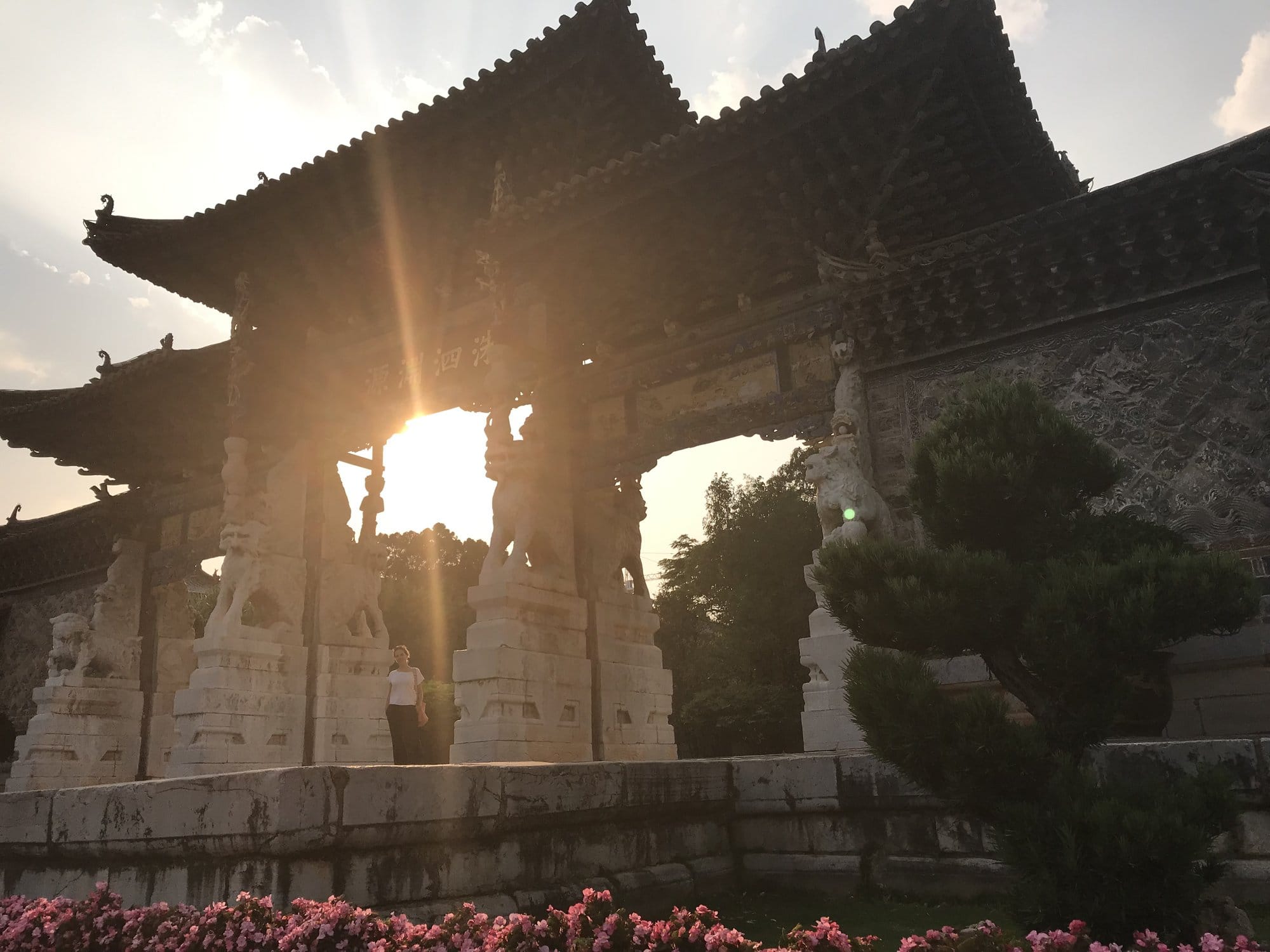
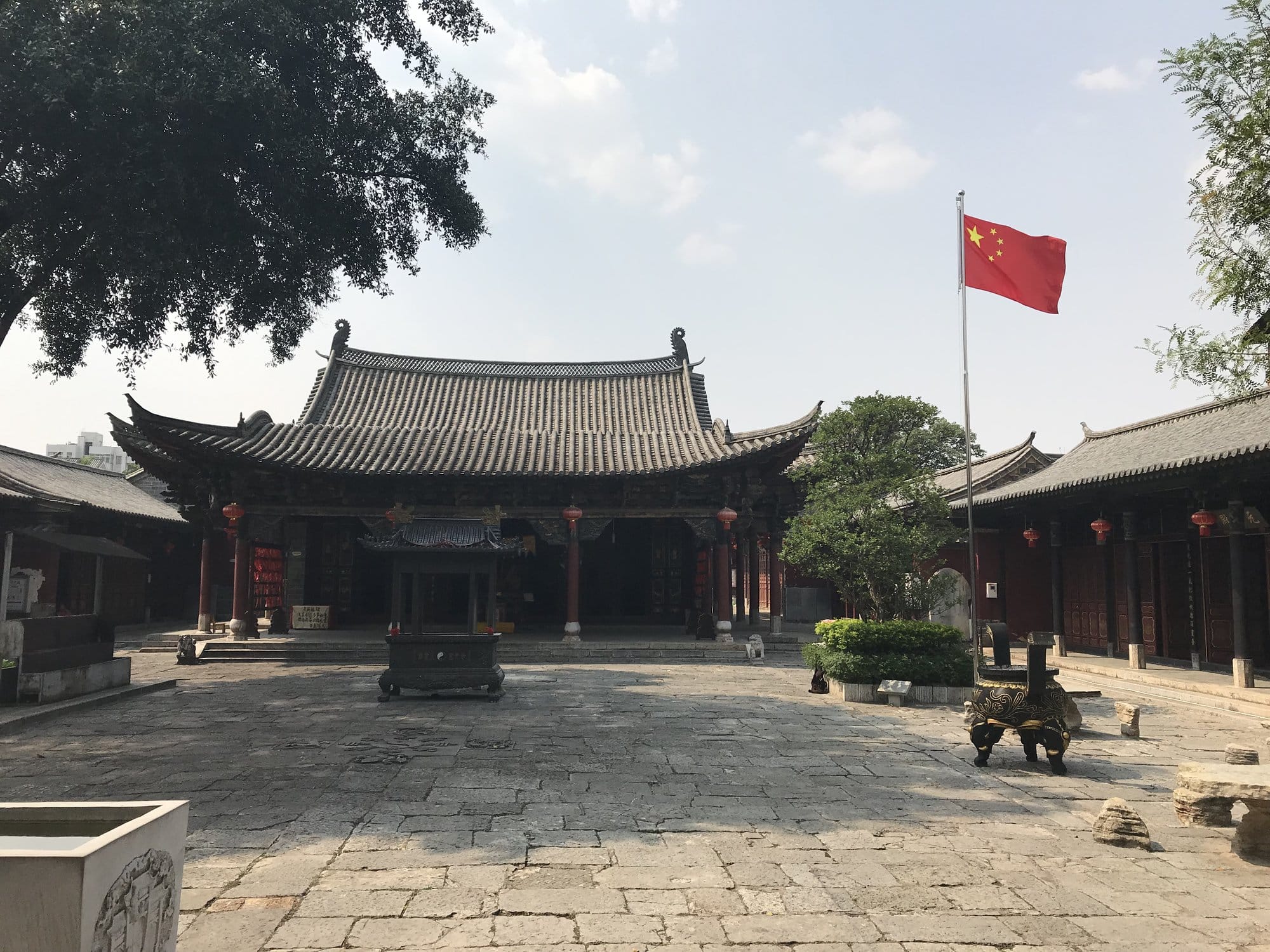
Jianshui's Confucian Temple is among the largest in the country, and it is the reason this small border town has the architecture it does — a Ming and Qing centre of learning, endowed for centuries by a scholarly class that had money and something to prove.
You enter through a sequence of stone ceremonial gateways, each carrying carved lions on its pillars and an inscription across the lintel. One reads 萬世宗師 — Master of Ten Thousand Generations, the classical epithet for Confucius. Come late in the day and the sun drops directly through the arch.
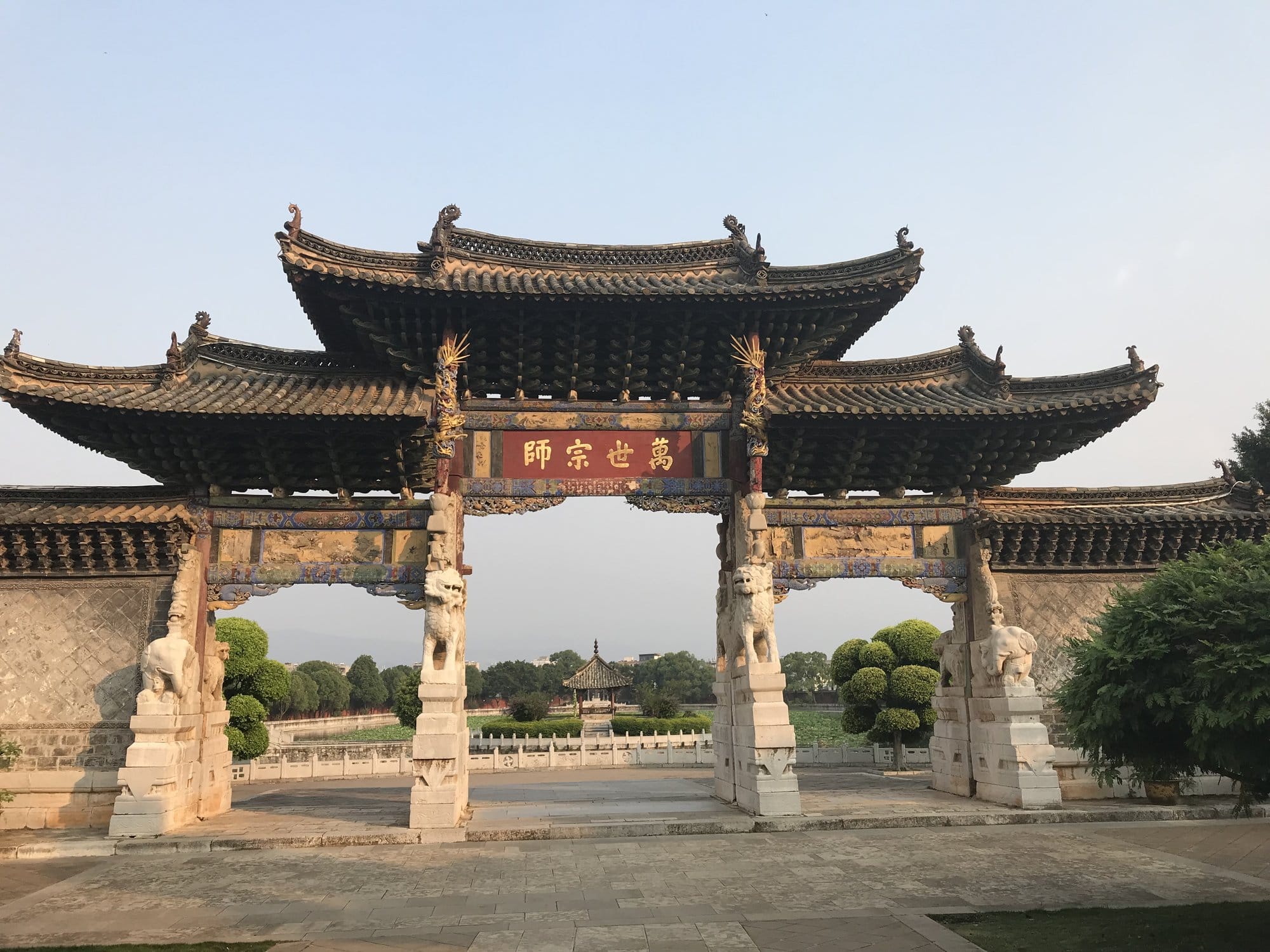
A guided visit of the temple and the old town is worth considering if you want the history rather than just the architecture. Beyond the gateways the complex opens into courtyards, ponds and halls, and the scale is what surprises people. Budget two hours rather than the forty minutes most itineraries allow.
The old town has other temples besides, quieter and largely unvisited, and wandering into one you had not planned on is part of the pleasure of a town this size.
Walk the Zhu Family Garden Slowly
The Zhu Family Garden is the other set-piece, and it is a different kind of impressive: not a public monument but the private compound of a wealthy merchant family, built in the late Qing under the Guangxu emperor and extended for decades afterwards.
It covers around 20,000 square metres and contains 214 rooms and 42 courtyards, laid out on an asymmetrical grid that locals nickname Yunnan's Forbidden City. It is protected as a national cultural relic. Carved beams, painted rafters, latticework windows, and courtyard after courtyard of them.
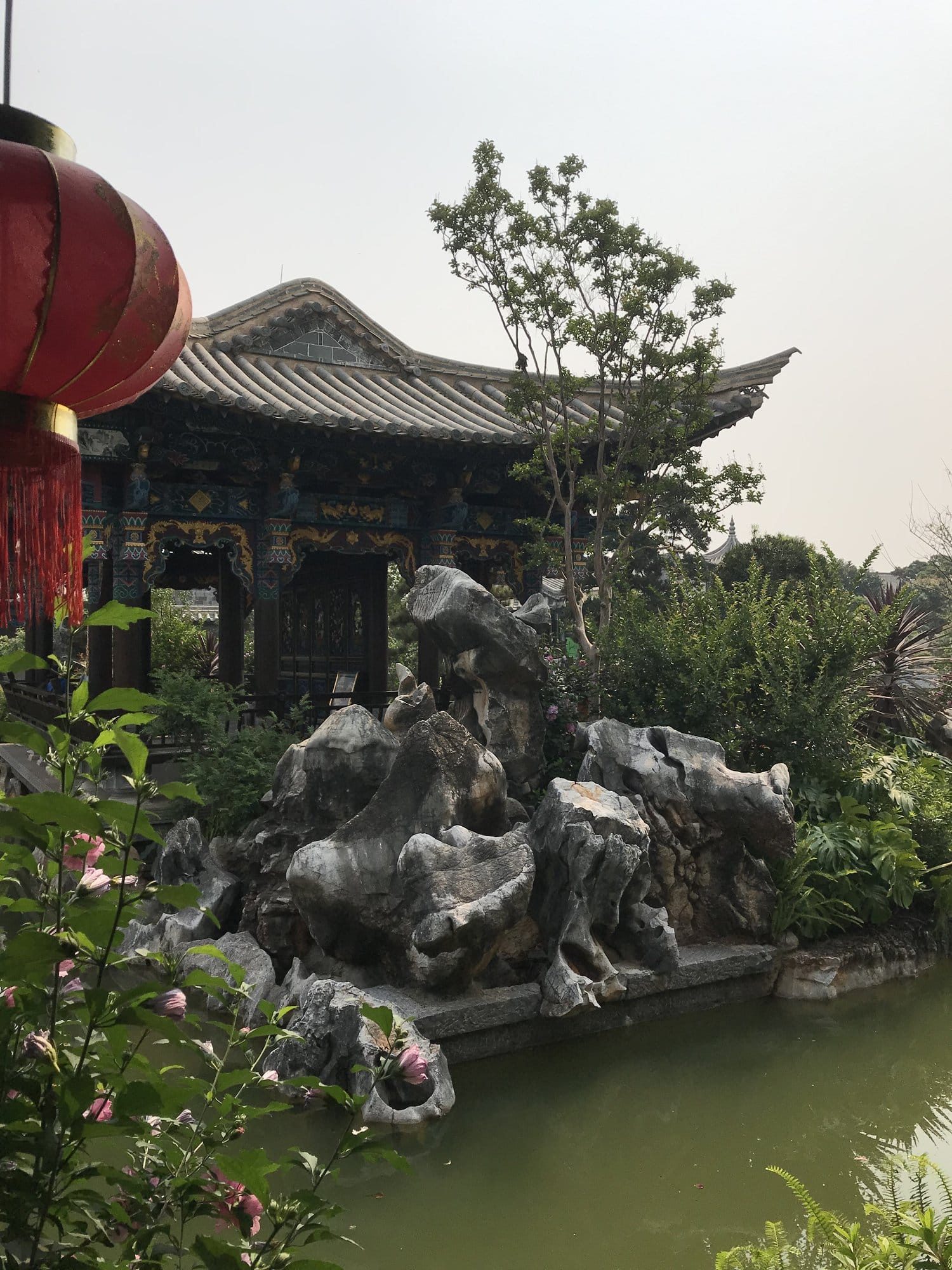
The garden is also the best place in Yunnan to understand what a classical Chinese garden is actually doing. The form rests on three elements held in tension — water, stone and planting — and the Zhu compound gives you all three in a single view: a still pond, a rockery of eroded limestone arranged to read like a miniature mountain range, and pots of lotus set against the woodwork. Nothing is symmetrical and nothing is accidental. The intent is that the view changes with every few steps, so that a walled compound feels larger than its walls.
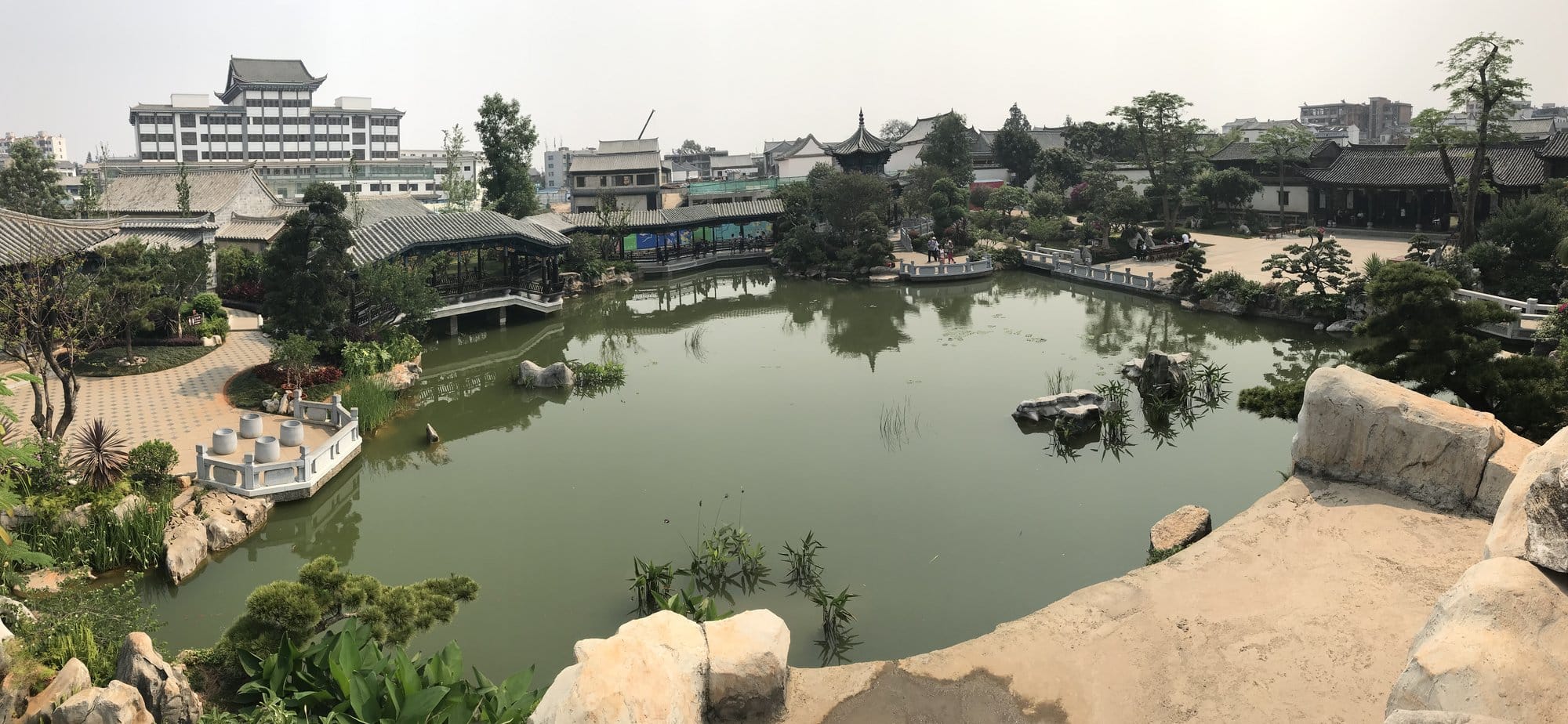
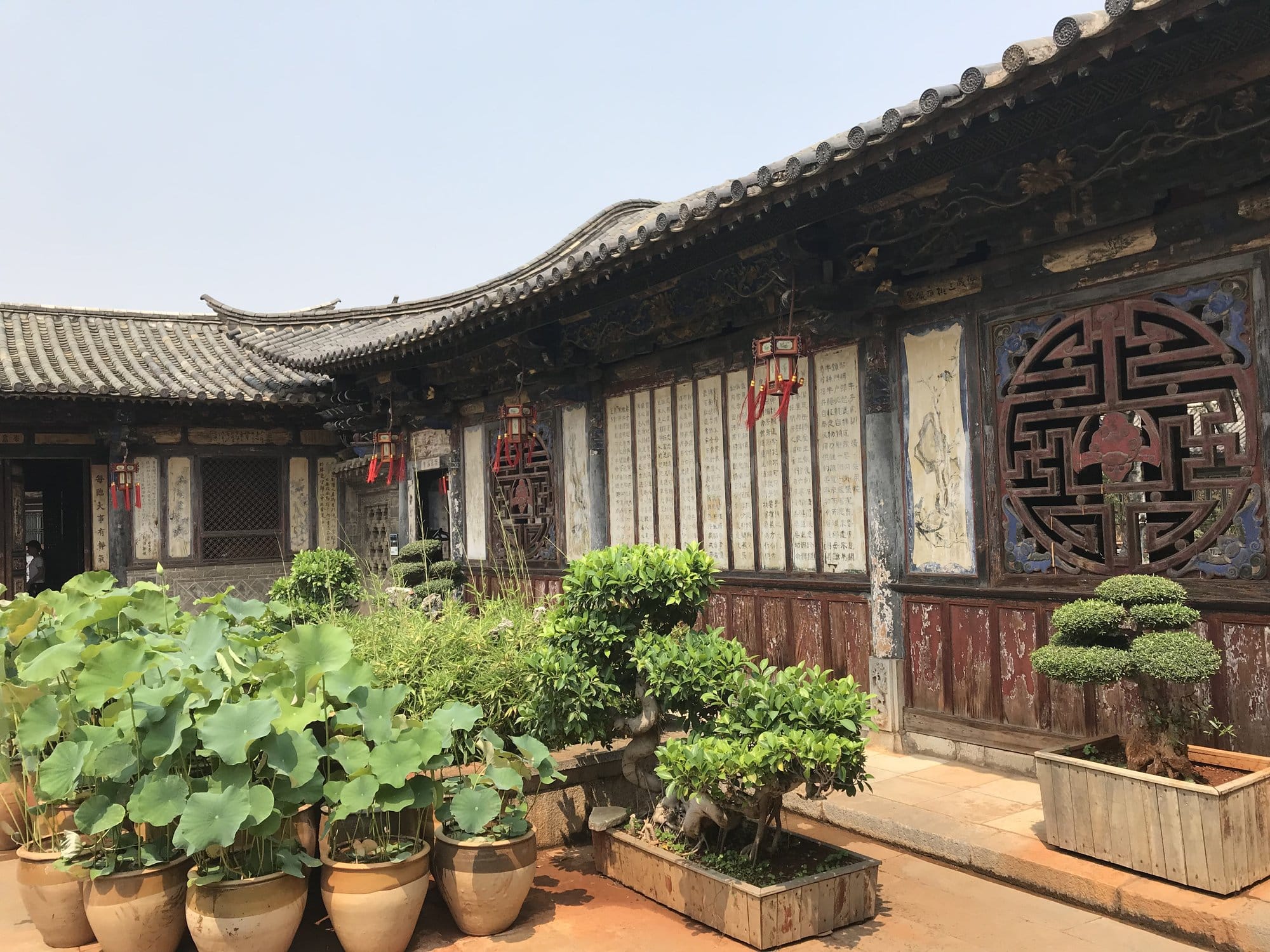
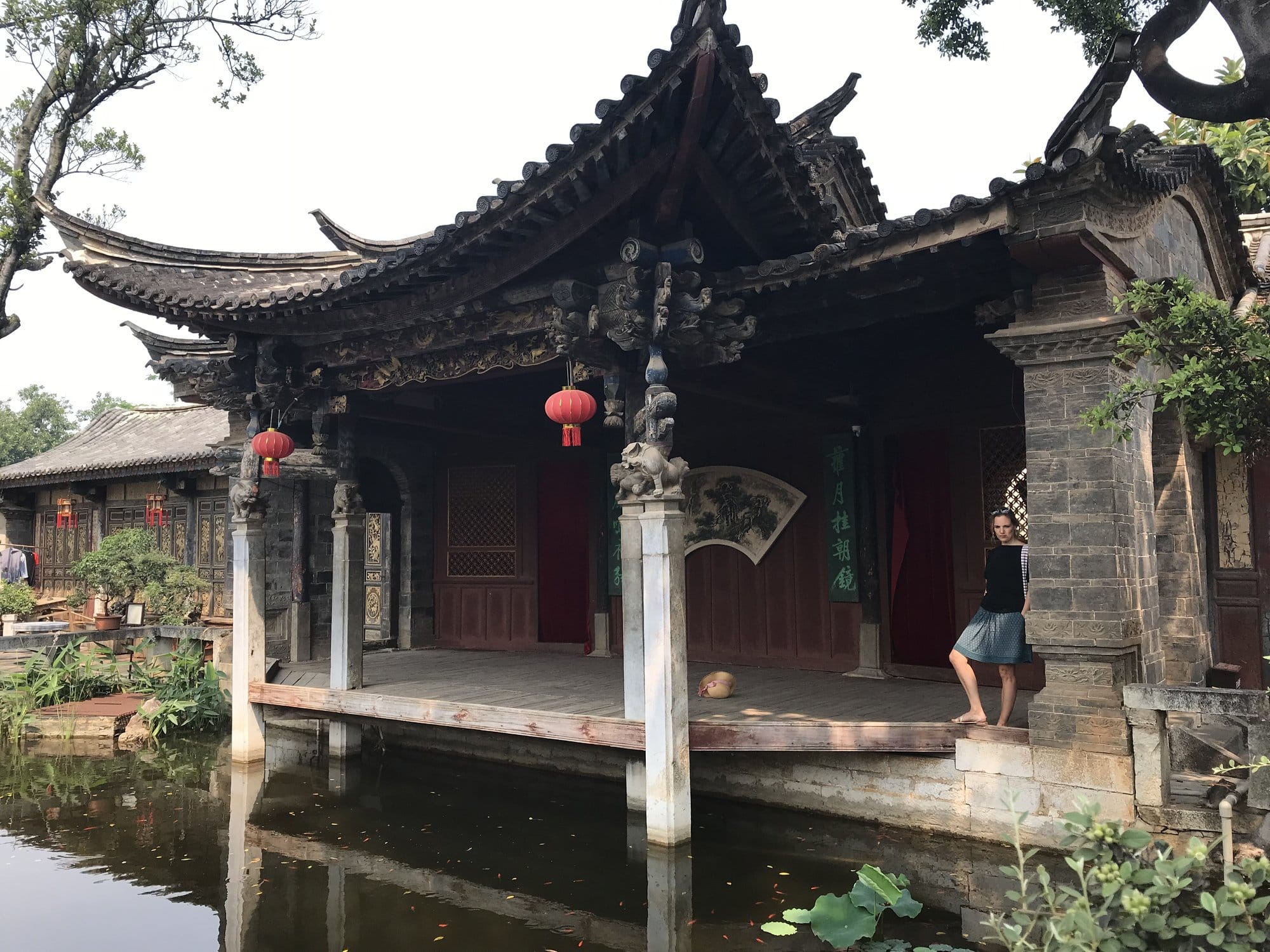
Two details worth looking for: the pavilion built out over the water, where the fish come to the surface in the shade, and the circular moon gates cut through the compound walls — a device for framing the next courtyard as a picture before you walk into it.
Buy Pottery Where It Is Made
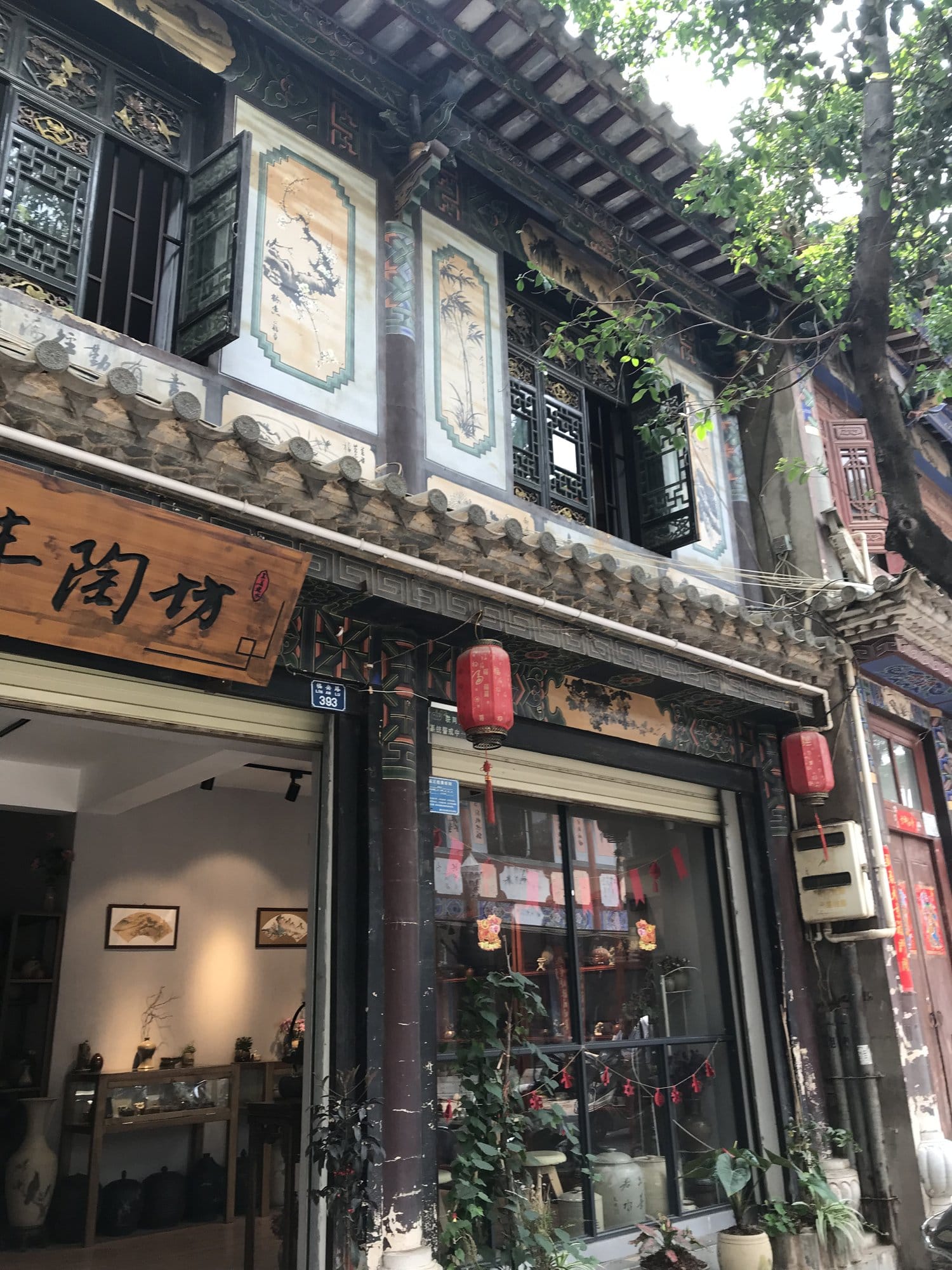
Jianshui has been firing purple pottery — zitao — for a very long time, and it is one of the four famous pottery traditions of China. The clay comes from nearby hills and fires to a dense, dark body that is polished rather than glazed, which gives it a soft sheen and a surprising weight in the hand. Pieces are often carved and inlaid with calligraphy before firing.
Workshops and showrooms line the old town streets. You can watch pieces being thrown and carved, and prices run from a few yuan for a small cup to serious money for signed work. A teapot is the classic buy.
Let the Old Town Do Its Thing
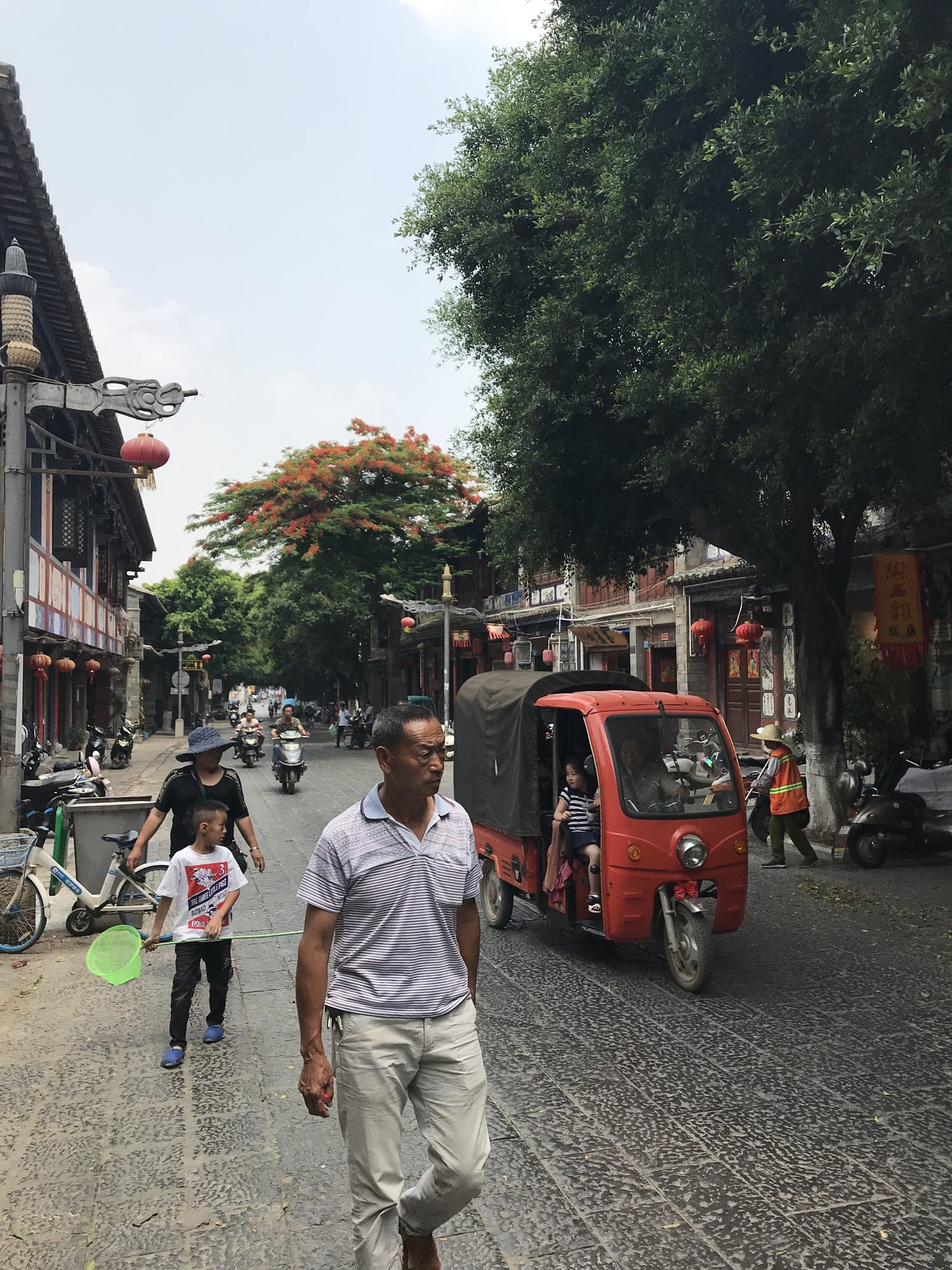
Beyond the ticketed sights, Jianshui is simply a good town to be in. The main street runs under flame trees that bloom scarlet in spring, electric tuk-tuks in outrageous colours shuttle people about, and the shophouses have the deep carved wooden fronts that money and a long history of scholars tend to produce.
The roadside trade in the surrounding valleys is worth a stop of its own. Drop down towards the Red River and you find fruit sold straight off the back of trucks — lychees piled on blankets in season, grapes and oranges in baskets, sellers in embroidered headdresses doing brisk business with passing cars. It is the best snack stop on the road and it costs almost nothing.

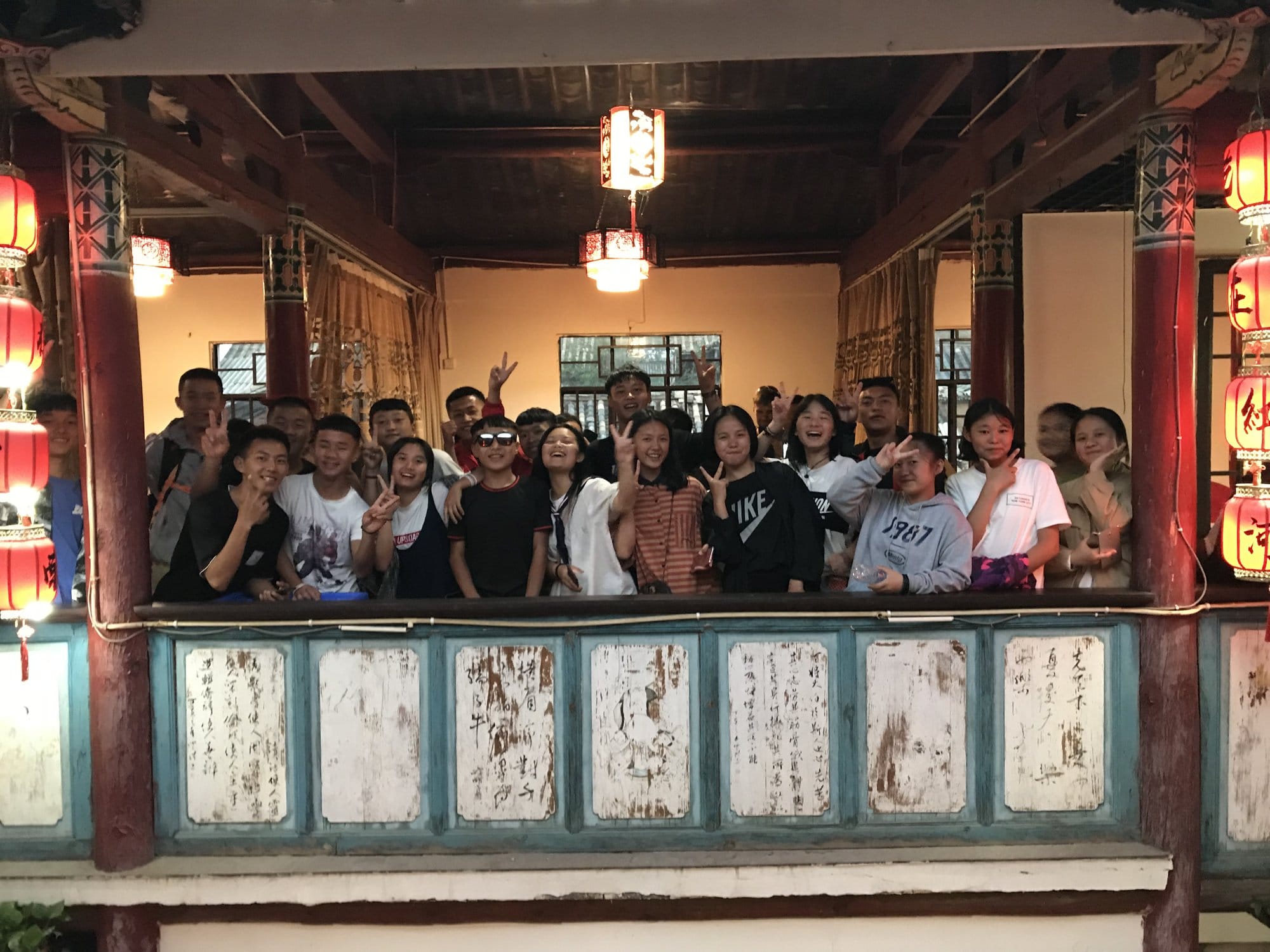
Eating is a pleasure here. The town's courtyard restaurants are built the way its houses are — a square patio open to the sky with galleries running round it on the upper floor. Diners lean over the balustrade and, this being China, will happily wave across at you and pose for a photograph. Grilled tofu is the local speciality, cooked on a charcoal grid in front of you and eaten piece by piece.
Where to Stay
Stay in the old town, in a courtyard house. There are several, and the difference between one of these and a business hotel on a ring road is the difference between visiting Jianshui and being in it.
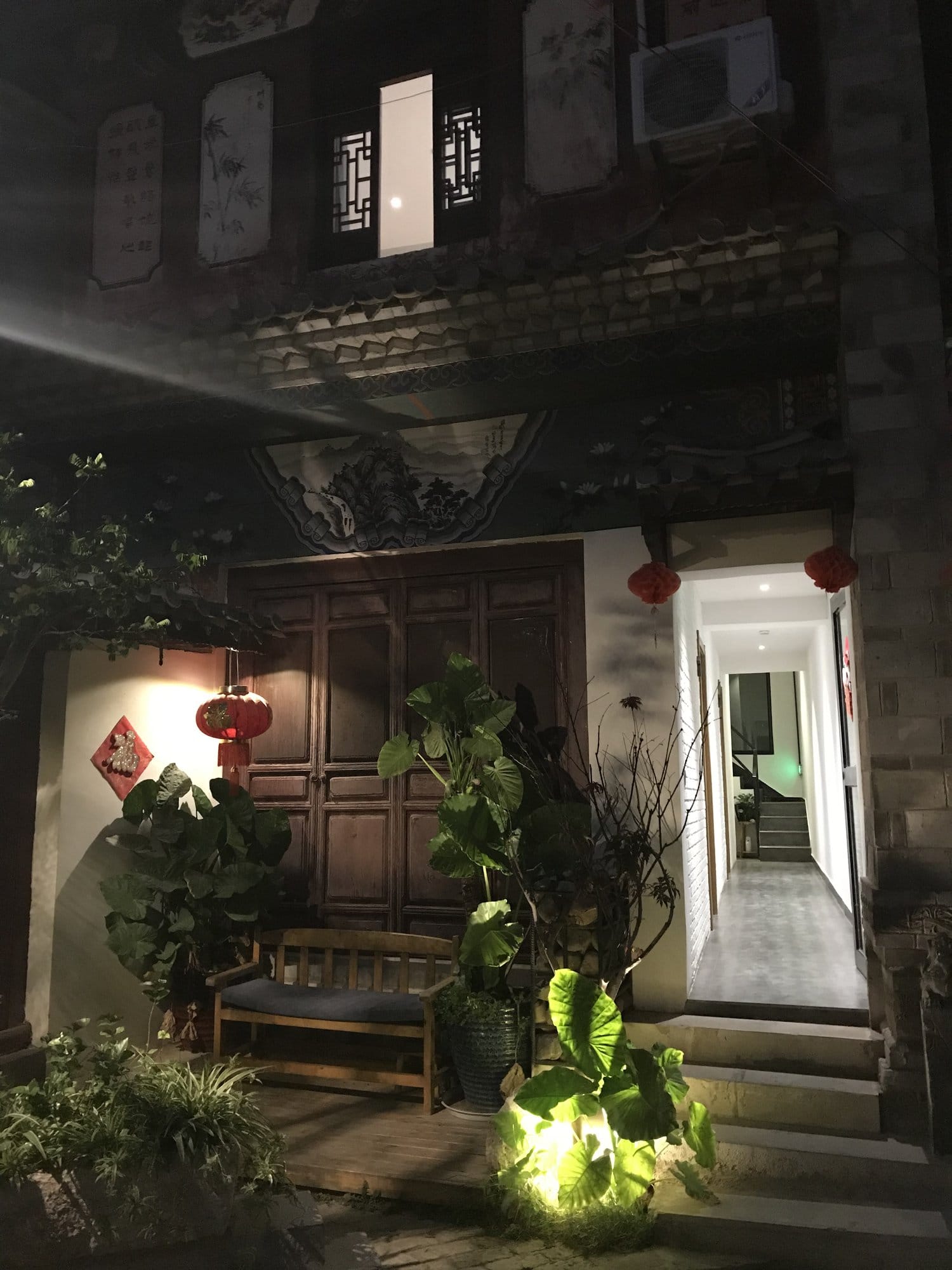
The Typha International Youth Hostel, tucked down Ruyi Lane off Lin'an Road, is a restored courtyard building a few minutes' walk from the main sights — massive wooden doors, lanterns in the yard, and a good deal quieter than the address suggests.
Getting to Jianshui
Jianshui is the easiest stop in southern Yunnan to reach, which is part of why skipping it makes so little sense.
From Kunming, high-speed trains run several times a day and take roughly two and a half to three and a half hours to Jianshui station. It is a short taxi ride from the station into the old town.
From Yuanyang, buses run from Xinjie roughly every half hour through the day and take about three hours.
Within town, the sights are walkable apart from the Double Dragon Bridge, which is a short taxi or tuk-tuk ride west. A narrow-gauge tourist train also runs out along the old French-built line towards the bridge and the village of Tuanshan — a slow, scenic option if you have the time, and worth checking current timetables for, since it does not run continuously.
As always, confirm schedules when you book rather than relying on any published timetable, this one included.
Practical Information
Tickets. The Confucian Temple, the Zhu Family Garden and the bridge are ticketed separately. A combined ticket is sometimes offered — ask at the first site you visit.
How long to stay. Two nights. One night means choosing between the temple, the garden and the bridge at golden hour, and all three deserve the time.
Getting around. Walkable in the centre. Tuk-tuks are plentiful, cheap, and negotiated before you get in.
Translation. As everywhere in Yunnan, English is limited outside the guesthouses. Install an offline translation pack before you arrive — Google Translate's online service does not work in mainland China, though its offline pack does if you download it in advance.
Frequently Asked Questions
Is Jianshui worth visiting? Yes, and for more than a night. It holds one of China's largest Confucian temples, a late-Qing merchant garden of 42 courtyards, the seventeen-arch Double Dragon Bridge, and a living pottery tradition. Most itineraries give it an afternoon, which is not enough.
How many days do you need in Jianshui? Two nights allows a full day for the temple and the garden and a second afternoon for the bridge at golden hour and the pottery workshops.
What is Jianshui famous for? Its Confucian temple, its purple pottery known as zitao, the Double Dragon Bridge, and grilled tofu.
How do you get from Kunming to Jianshui? High-speed trains run several times daily from Kunming and take approximately two and a half to three and a half hours.
Can you visit Jianshui and the Yuanyang rice terraces on the same trip? Yes — they are about three hours apart by bus and pair naturally, with Jianshui as the stop on the way to or from the terraces.
More to Explore
<!-- BOOKMARK CARDS — grouped here, never mid-article -->