
Yunnan Itinerary: 11 Days from the Rice Terraces to Shangri-La
A south-to-north route across Yunnan by train and bus, from the Hani rice terraces at 240 metres to the Tibetan plateau at 3,300 — with no hire car at any point.

Yunnan is the size of Germany and contains most of the climates you can name. Its southern border touches Vietnam, Laos and Myanmar and grows lychees; its northern edge runs into the Tibetan plateau and grazes yaks. You can cross between the two in under a fortnight.
The route below does exactly that, south to north, in eleven days. It climbs from the Red River valley at around 240 metres to a monastery town at 3,300, and every stage of it is done by train, bus or shared van. No hire car, at any point. That is not an ideological position — it is the simplest way to travel here, and one of the more useful things nobody tells you.
> Some links in this guide are affiliate links. If you book through them it costs you nothing extra and helps keep this site running. We only recommend places and operators we would use ourselves.
The Route at a Glance
| Stage | Nights | Getting there | Time |
|---|---|---|---|
| Kunming | 1 | Fly in | — |
| **Yuanyang** rice terraces | 2 | Train to Jianshui, then bus | ~6h total |
| **Jianshui** | 2 | Bus from Yuanyang | ~3h |
| **Dali** | 2 | Train via Kunming | ~5h |
| **Shaxi** | 2 | Bus from Dali | ~3h30 |
| **Tiger Leaping Gorge** | 1 | Bus from Shaxi | ~2h |
| **Shangri-La** | 1 | Road via Baishuitai | ~3h |
| **Lijiang** | 1 | Road from Shangri-La | ~3h |
Eleven nights, eight stops, and a single direction of travel. You can compress it to nine days by giving Jianshui and Shaxi one night each, and you can extend it almost indefinitely at the northern end.
Run it in reverse if your flights suit that better — fly into Lijiang, finish in Kunming. The only thing to keep is the order of altitude: gaining it gradually rather than arriving at 3,300 metres on day one.
Why You Do Not Need a Car
Yunnan has one of the better public transport networks in provincial China, and the itinerary above is built entirely on it.
High-speed rail covers the spine: Kunming to Jianshui in two and a half to three and a half hours, Kunming to Dali in about two, Kunming to Lijiang further north. Long-distance buses cover everything the railway does not, on a frequency that makes advance booking largely unnecessary outside public holidays — Jianshui to Yuanyang runs roughly every half hour through the day.
For the last few kilometres — from Xinjie up to the Yuanyang viewpoints, from Dali station into the old town, around the Shaxi valley — you use shared vans, tuk-tuks, guesthouse pickups and scooters. Guesthouses arrange most of this as a matter of course, and asking yours is almost always faster than organising it yourself.
The one thing this costs you is the roadside stop. You will not be pulling over whenever a view appears. What you get in exchange is not driving mountain roads at altitude with tired children in the back, which on balance is the better trade.
Day by Day
Days 1–3: Yuanyang Rice Terraces
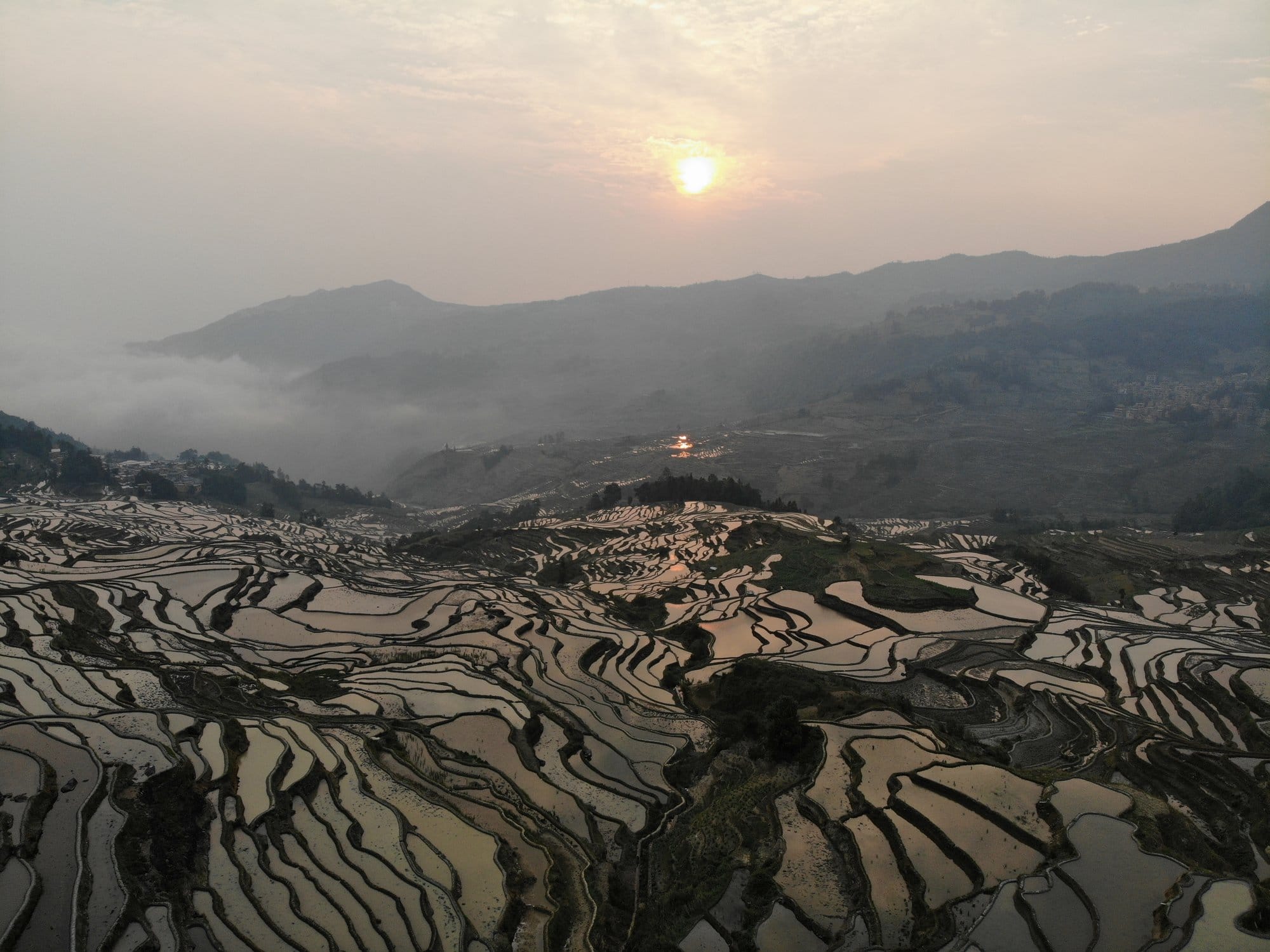
The Hani terraces are the reason many people come to southern Yunnan, and they reward precision: which viewpoint, which hour, which month. Sunrise at Duoyishu is the fixed point of the trip. Stay in a village on the ridge rather than in town so that you are twenty minutes from the platform rather than forty in the dark.
Two nights, so that a misted-in morning does not cost you the whole thing.
→ Full guide: Yuanyang Rice Terraces: Which Viewpoint, Which Hour, Which Season
Days 3–5: Jianshui
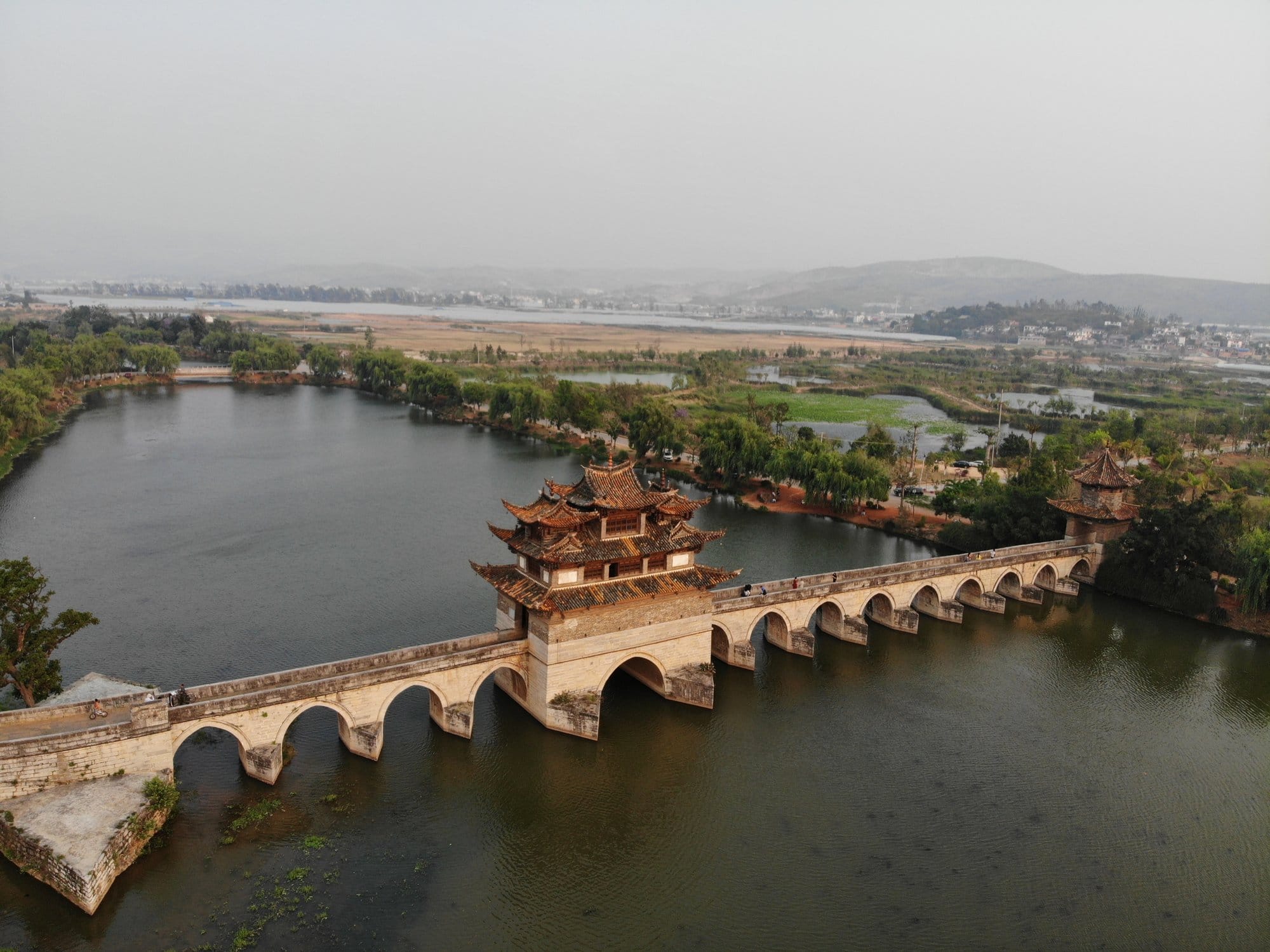
Most itineraries treat Jianshui as a bus change. It holds one of the largest Confucian temples in China, a late-Qing merchant garden of forty-two courtyards, a seventeen-arch bridge outside town, and a street of potters working a thousand-year-old clay.
Two nights, and you will still leave with things undone.
→ Full guide: Jianshui: The Old Town Most Yunnan Itineraries Skip
Days 5–9: Dali and Shaxi
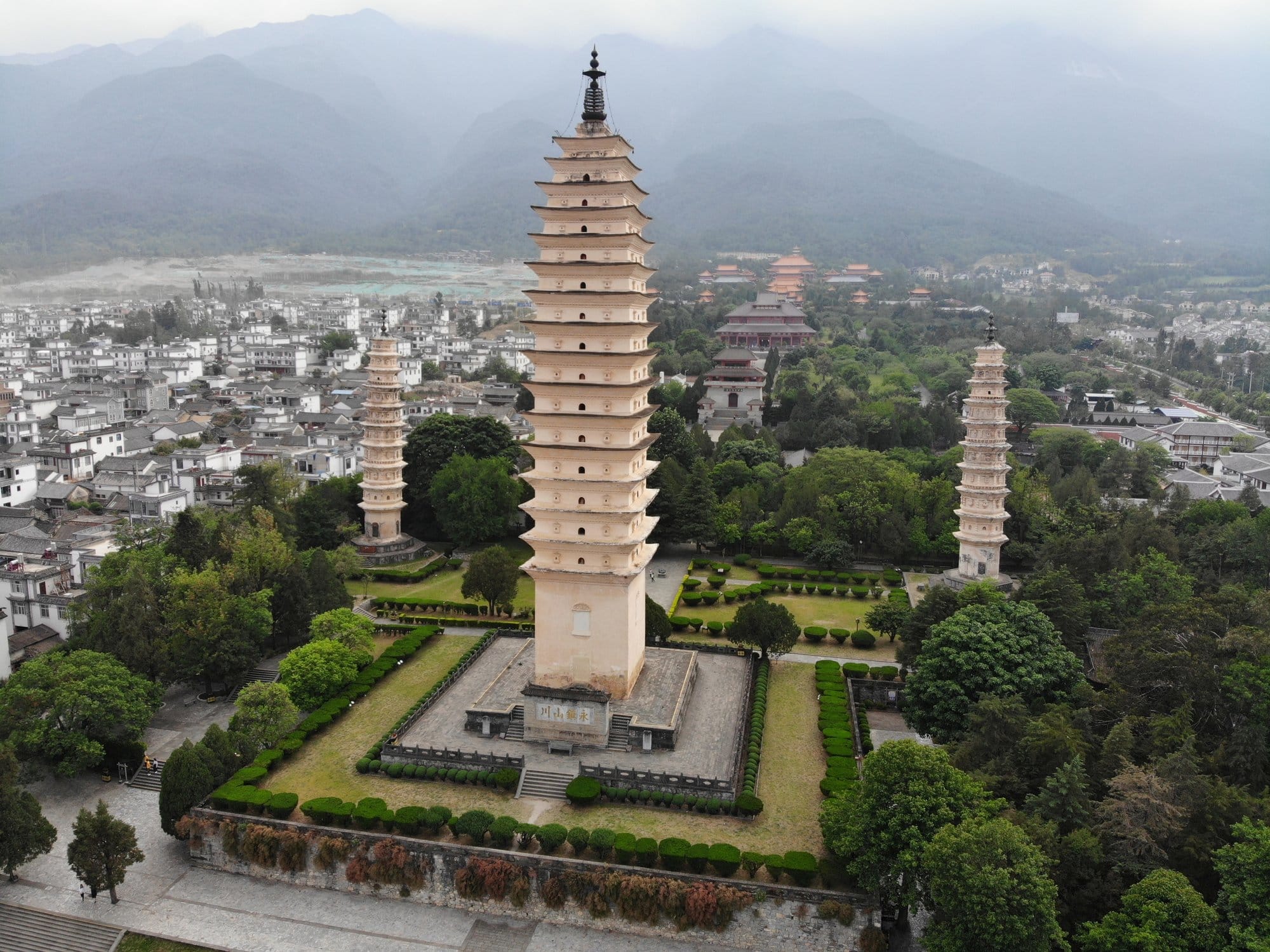
Dali is the busy one, and earns it — three Nanzhao-era pagodas, a forty-kilometre lake, a walled old town under a mountain range. Shaxi, three and a half hours north, is the opposite: one cobbled square with a two-hundred-year-old theatre stage, and a valley of garlic best seen from a rented scooter.
Two nights each. The contrast is the point.
→ Full guide: Dali and Shaxi: Bai Country by Scooter
Days 9–10: Tiger Leaping Gorge
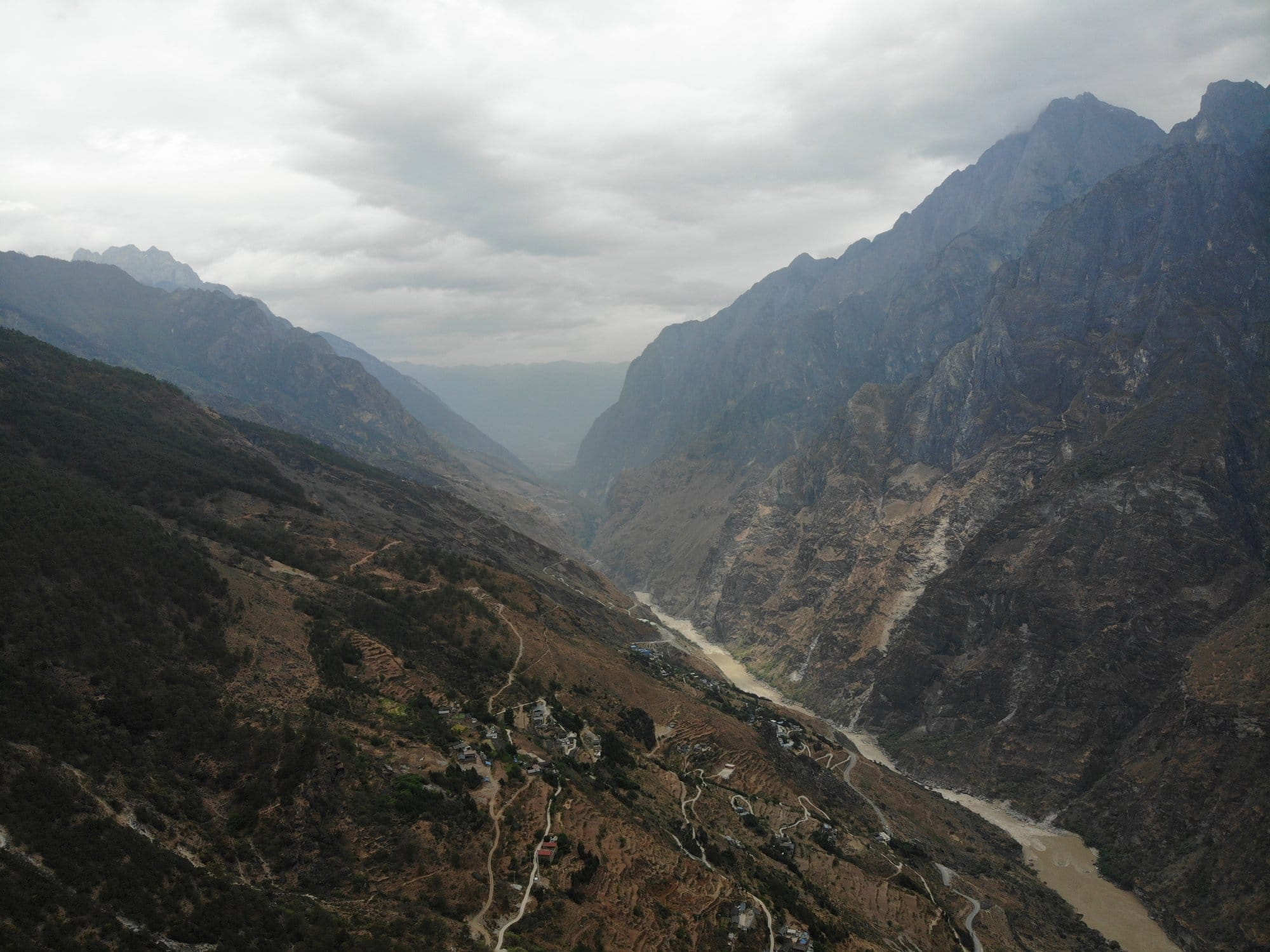
The best-known walk in Yunnan, and more accessible than its reputation suggests. Three to four hours of climbing on day one gets you the whole thing; walking out by road the next morning skips the flatter second day. Children of five and up manage it.
→ Full guide: Tiger Leaping Gorge with Kids: What Three Hours of Climbing Actually Looks Like
Days 10–11: Shangri-La, then Lijiang
The plateau is the payoff, and it is the stage most itineraries cut. Ganden Sumtseling monastery, Napa Lake and its yaks, and the thin bright air of 3,300 metres. Break the drive north at Baishuitai, a hillside of white travertine terraces holding turquoise pools.
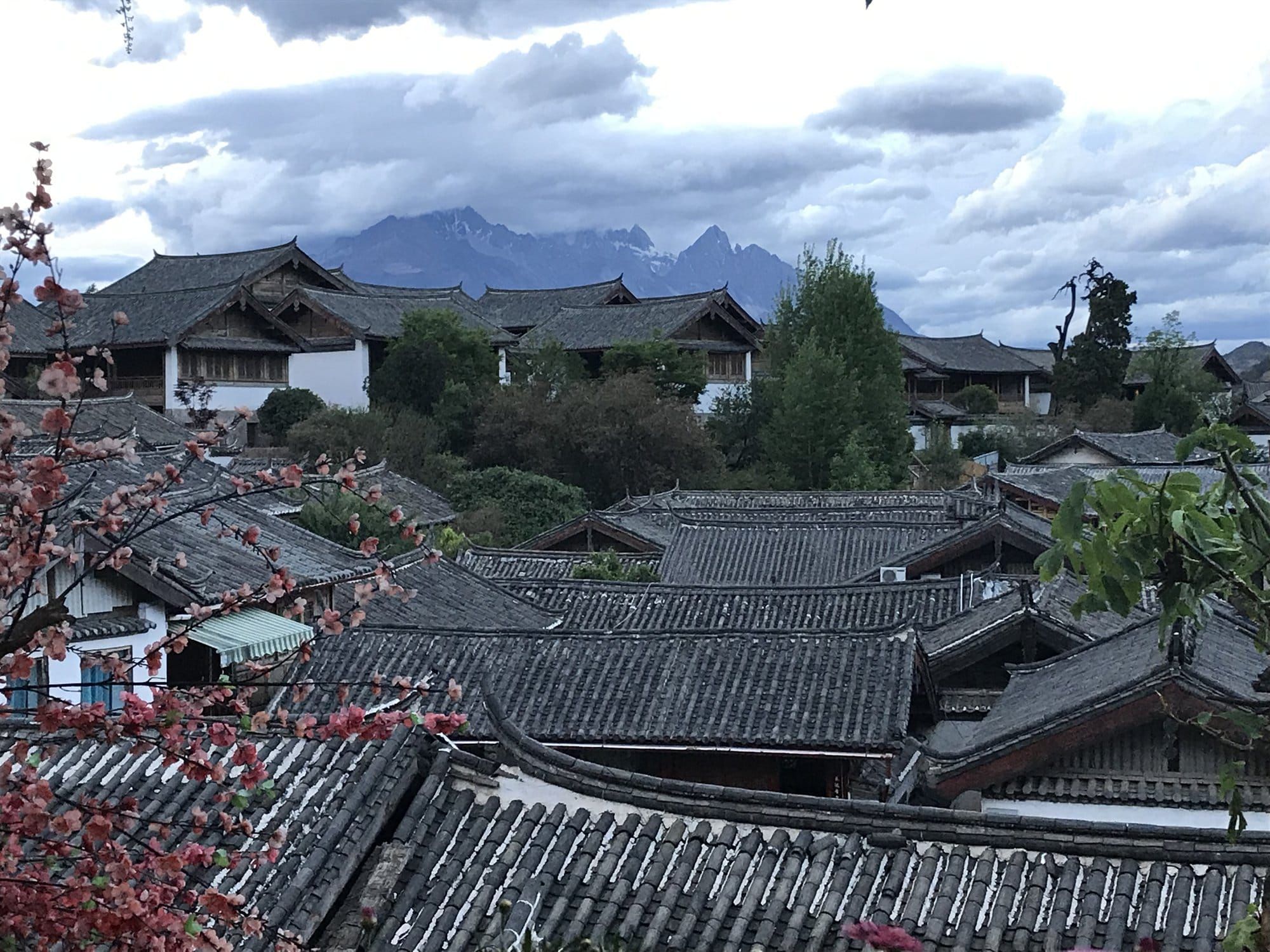
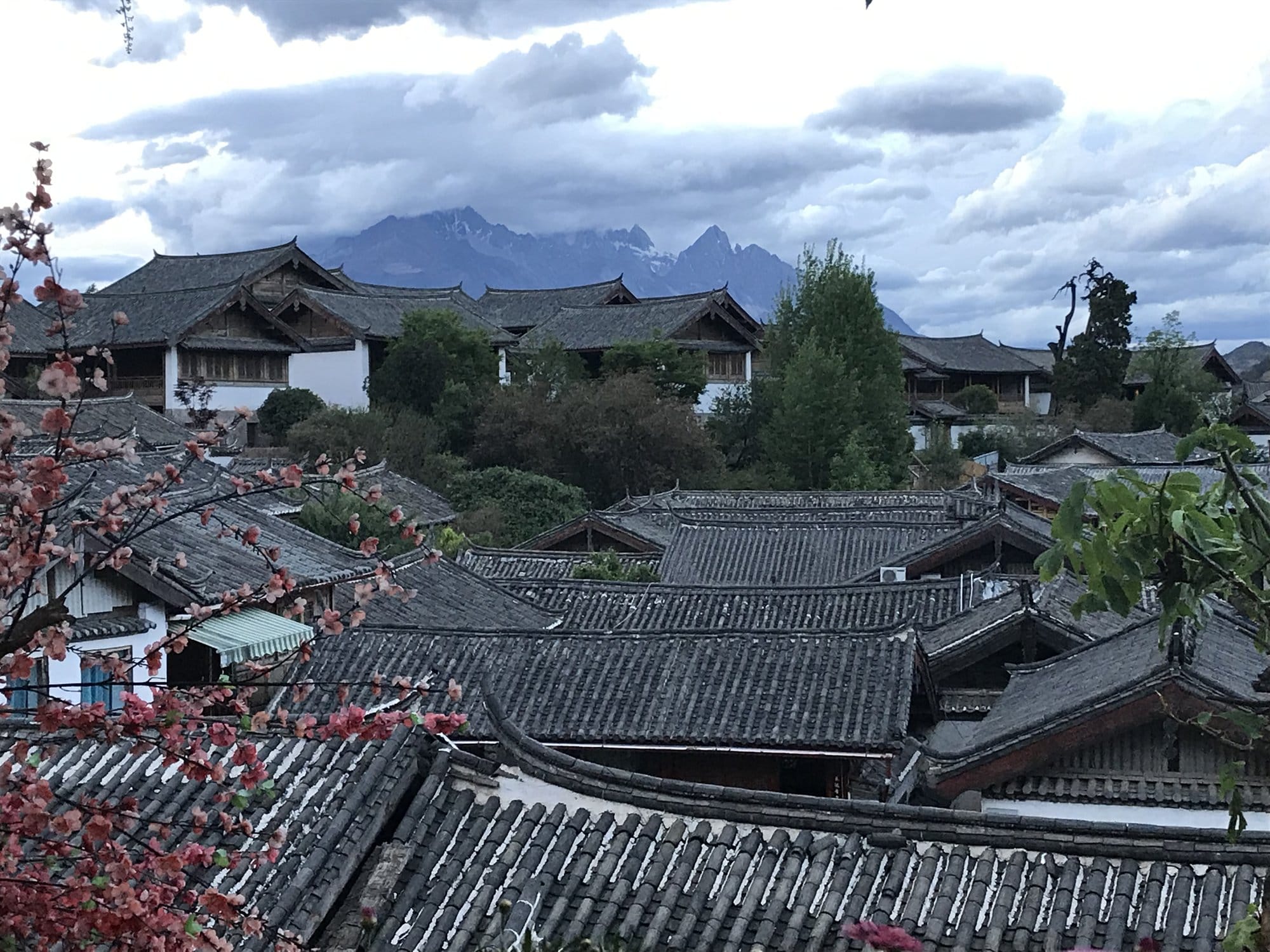
Then down to Lijiang to finish, where the old town's roofs sit under Jade Dragon Snow Mountain.
→ Full guide: Lijiang and Shangri-La: Old Town Roofs and the Tibetan Plateau
When to Go
The single biggest variable is what the rice terraces are doing.
Flooded and empty, roughly winter through early spring, is the postcard version — mirror reflections across whole hillsides. It is also the coldest and the mistiest, and mist at dawn ruins the one thing you came for.
Planted and green, from late spring into summer, gives you a green staircase and no reflections.
The shoulder gives you both. Transplanting happens plot by plot over weeks, so a single hillside can hold mirrors and young rice a few hundred metres apart.
Further north the calculation differs. Spring and autumn are best for walking the gorge; June to September carries a real landslide risk on the trail and is the time to avoid. Those same summer months are the wild mushroom season, which is its own reason to come.
Practical Information
Visa. French citizens currently enter visa-free for 30 days, under an arrangement extended to the end of 2026. It has been extended in stages, so check the current end date and your own nationality's status before booking.
Translation — the trap. Google Translate's online service does not work in mainland China; Google shut down its China translation service in 2022 and the firewall blocks the rest. Its offline language pack does work, but only if you download it before you arrive. Apple Translate, Microsoft Translator with offline packs, and Pleco for the dictionary are the alternatives. Install something before you fly. Outside the guesthouses, English is close to non-existent on this route.
Money. Mobile payment is standard everywhere, including village shops. Carry some cash for the smallest places and for buses.
Altitude. The route gains height gradually and that is deliberate: 240 metres in the Red River valley, 1,800 at the terraces, 2,000 at Dali, 2,400 in the gorge, 2,600 at Baishuitai, 3,300 at Shangri-La for one night, then back down to 2,400 at Lijiang. Flying directly into Shangri-La skips all of that. Anyone travelling with young children, older travellers or people with heart or lung conditions should take medical advice before the trip.
Drones. The landscapes here are extraordinary from the air. Check the current registration rules and restrictions over scenic and heritage sites before you travel, and be wary of valley wind — gusts off the Cangshan range near Dali arrive without warning.
Timetables. Every duration on this page is an order of magnitude, not a booking. Rail and bus schedules on these routes change; confirm locally.
Where This Itinerary Can Be Shortened
If you have nine days rather than eleven, cut a night from Jianshui and a night from Shaxi. Both are still worth the stop.
If you have seven, drop the northern end: Kunming, Yuanyang, Jianshui, Dali. You lose the plateau, which is a genuine loss, but the southern half stands on its own.
What not to do is keep all eight stops and shorten each one. Yuanyang with a single night is a gamble on the weather, and the gorge without a night on the trail is just a viewpoint from a road.
Frequently Asked Questions
How many days do you need in Yunnan? Eleven days covers the classic south-to-north route from the Yuanyang rice terraces to Shangri-La with two nights at the main stops. Nine days works by cutting a night at Jianshui and Shaxi. Seven days covers the southern half only.
Do you need a car to travel around Yunnan? No. High-speed trains cover Kunming to Jianshui, Dali and Lijiang, long-distance buses cover the rest, and shared vans, tuk-tuks and guesthouse pickups handle the last few kilometres. The entire route described here is done without a hire car.
What is the best time to visit Yunnan? Late winter to early spring for flooded rice terraces, late spring for a mix of flooded and green, and spring or autumn for walking Tiger Leaping Gorge. Avoid June to September for the gorge because of landslide risk, though those months are wild mushroom season.
Is Yunnan suitable for travelling with children? Yes. The route is built on trains and buses rather than long drives, the Tiger Leaping Gorge High Trail is walkable in a day by children of five and up, and the altitude is gained in stages. Take medical advice before travelling if anyone in the group has a heart or lung condition.
Does Google Translate work in China? Not online. Google shut down its mainland China translation service in 2022 and the site and the app's online features are blocked. The offline language pack works if downloaded before arrival, as do Apple Translate, Microsoft Translator with offline packs, and Pleco.
Can you fly into Shangri-La directly? Yes, but it places you at around 3,300 metres within hours of leaving low altitude. Arriving by road from Lijiang or Tiger Leaping Gorge gives a far gentler profile.
More to Explore
<!-- BOOKMARK CARDS — grouped here, never mid-article -->