
North Lanzarote: Haría, Mirador del Río & the Famara Cliffs
North Lanzarote is where the island reaches its most dramatic — towering cliffs, volcanic crater hikes and sweeping views across the Atlantic to La Graciosa. A landscape of raw beauty and isolation.

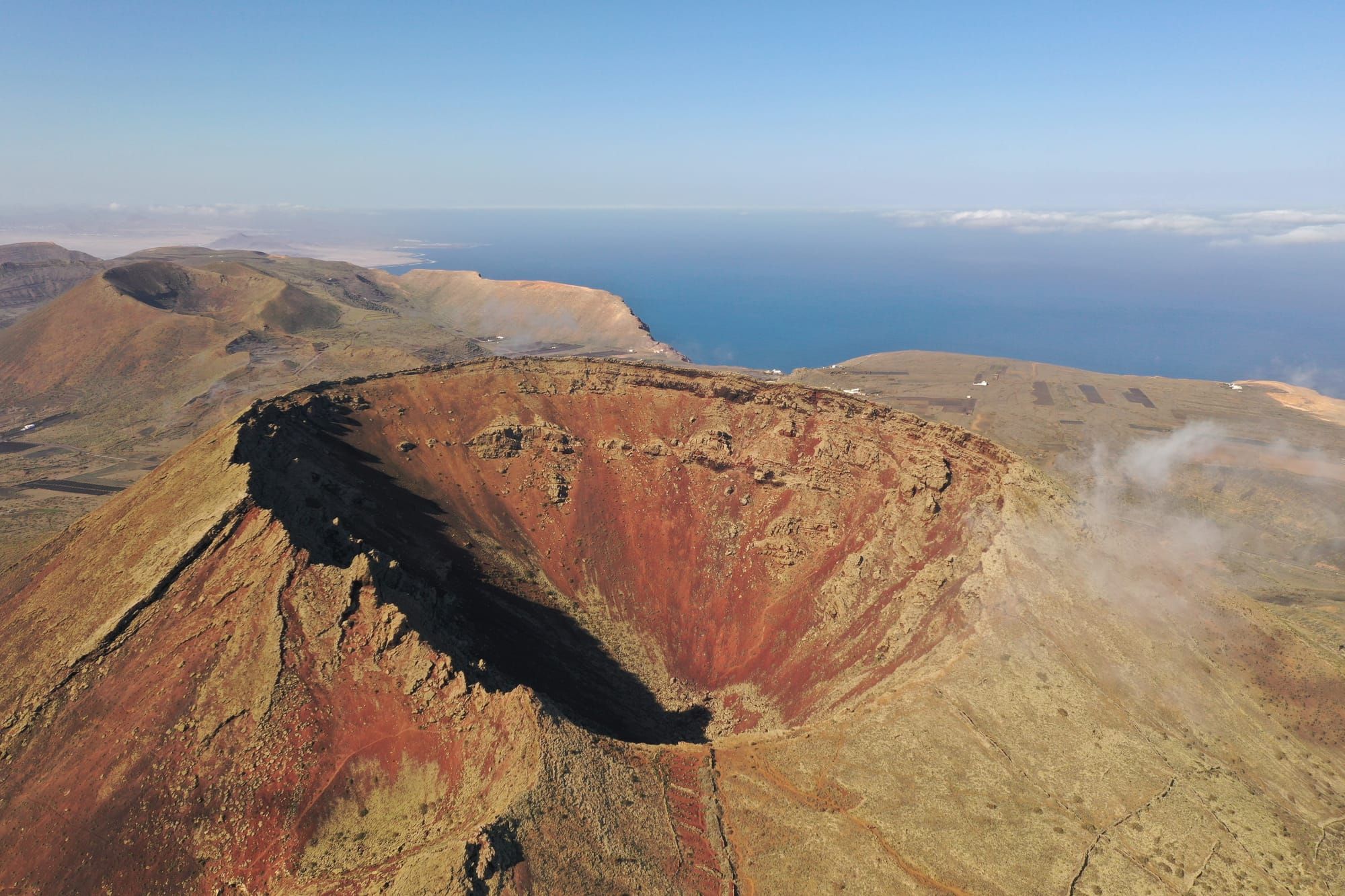
The north of Lanzarote is where the island becomes wild. The Risco de Famara — a wall of cliffs rising nearly 500 metres straight from the sea — dominates the landscape. The views from the cliffs stretch across the Atlantic to the neighbouring island of La Graciosa, and on a clear day the horizons seem to stretch forever. This is the most dramatic part of the island, and also the most remote.
The drive north from the central resorts takes you through a landscape that shifts from volcanic interior to lush green valleys filled with palm trees, then back to barren volcanic ridges. The north demands exploration — it rewards you with some of Lanzarote's most memorable experiences.
Bookings: Some of the links in this article are affiliate links. This means that if you choose to make a booking, we will receive a small commission at no extra cost to you. Thank You!
Haría: The Oasis Valley
Haría is a small village tucked into a valley in the north of the island, surrounded by thousands of palm trees that create an almost tropical environment utterly incongruous with the barren volcanic landscape outside the valley. The village is peaceful and traditional, with a handful of restaurants and shops, but what makes it remarkable is its setting.
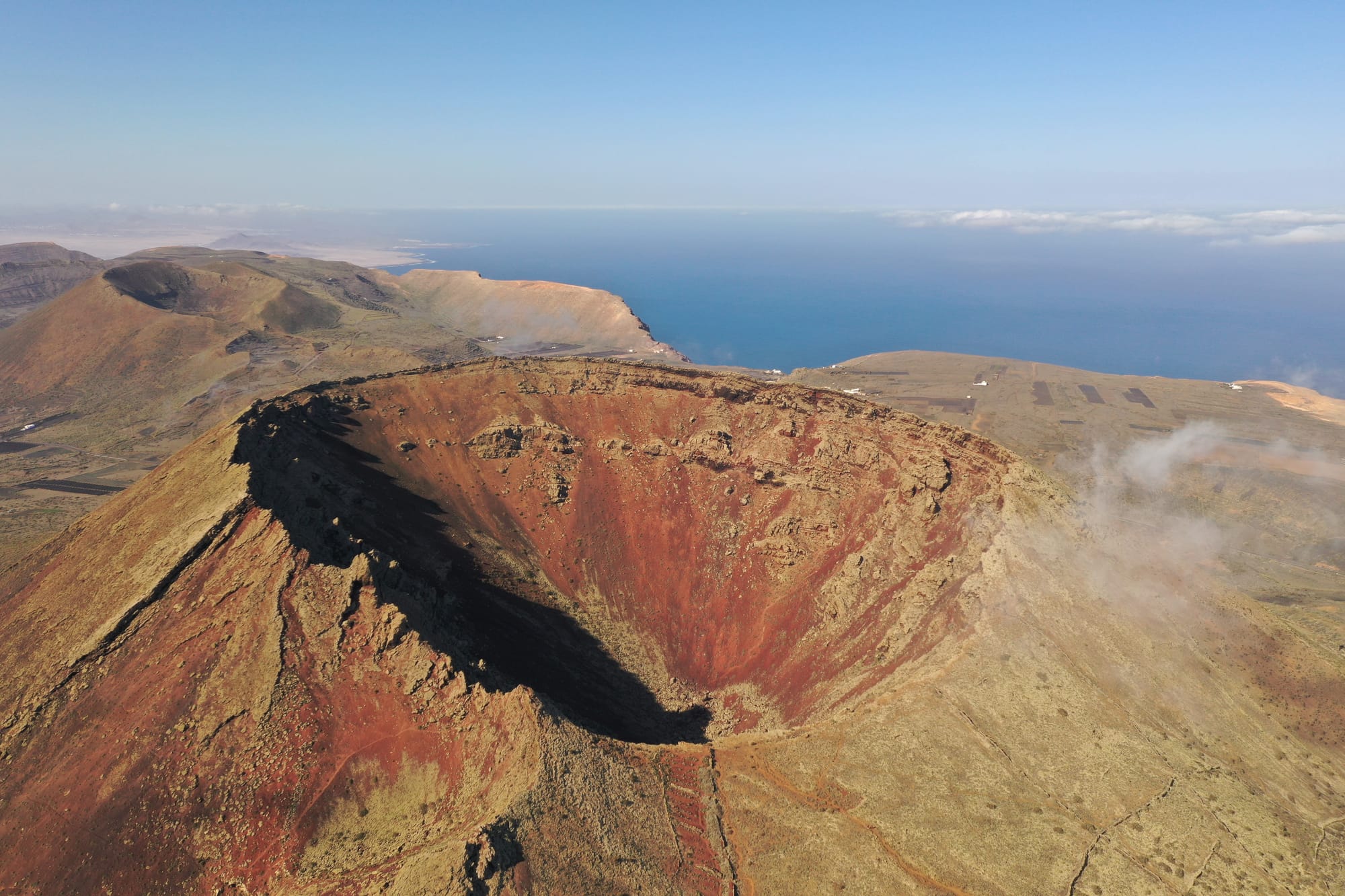
The valley was created by ancient volcanism, and the underground water supplies make it a natural oasis. Wandering through the palm-shaded streets feels like stepping into a different world. There is a peaceful, almost meditative quality to the village that stands in stark contrast to the dramatic volcanic landscape visible from the valley's rim.
Haría also serves as a starting point for volcanic hiking. Several trails lead up from the village into the volcanic peaks above, offering spectacular views across the northern landscape. Book a guided tour combining Haría hiking and Manrique sites
Hiking the Volcanic Peaks Above Haría
One of the most spectacular ways to appreciate Lanzarote's volcanic landscape is from above, and several hiking routes lead from Haría into the surrounding volcanic terrain. The trails wind through lava fields, past crater cones, and across ridges with breathtaking views.
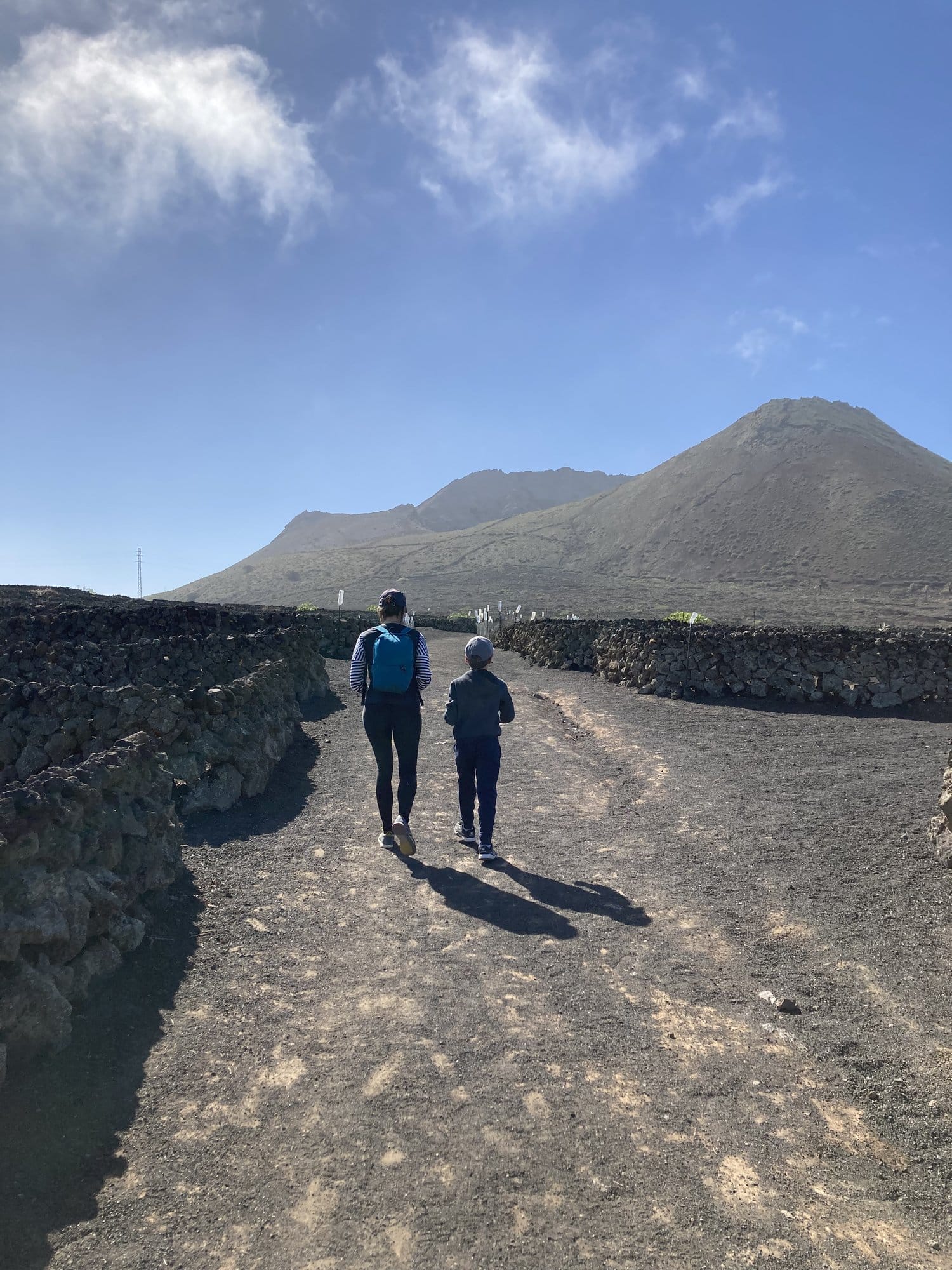
The walks range from easy 30-minute strolls to more serious hikes lasting several hours. Even short walks reveal incredible landscapes — the volcanic rocks range in colour from glossy black obsidian to deep reds and yellows where minerals have stained the surface. The geological story is written in the rock beneath your feet.
The volcanic landscapes are at their most atmospheric in the late afternoon, when the low sun picks out every ridge and crater in sharp relief. We took a late afternoon walk and found ourselves almost alone in a primordial landscape, with the light turning everything golden. These are the moments that make Lanzarote unforgettable.
Mirador del Río: A Building That Becomes the Landscape
César Manrique's Mirador del Río is perched at the northern end of the Famara cliffs and offers one of the most spectacular views in the Canary Islands. What makes the building remarkable is how completely Manrique integrated it into the landscape — the structure is almost invisible from a distance, built into the cliff-face with minimal disruption.
Inside, the building frames views across to La Graciosa and the turquoise strait separating the islands. The interior spaces are light, open, and feel almost as though they are part of the landscape rather than separate from it. It is a masterclass in how architecture can enhance a landscape without dominating it.
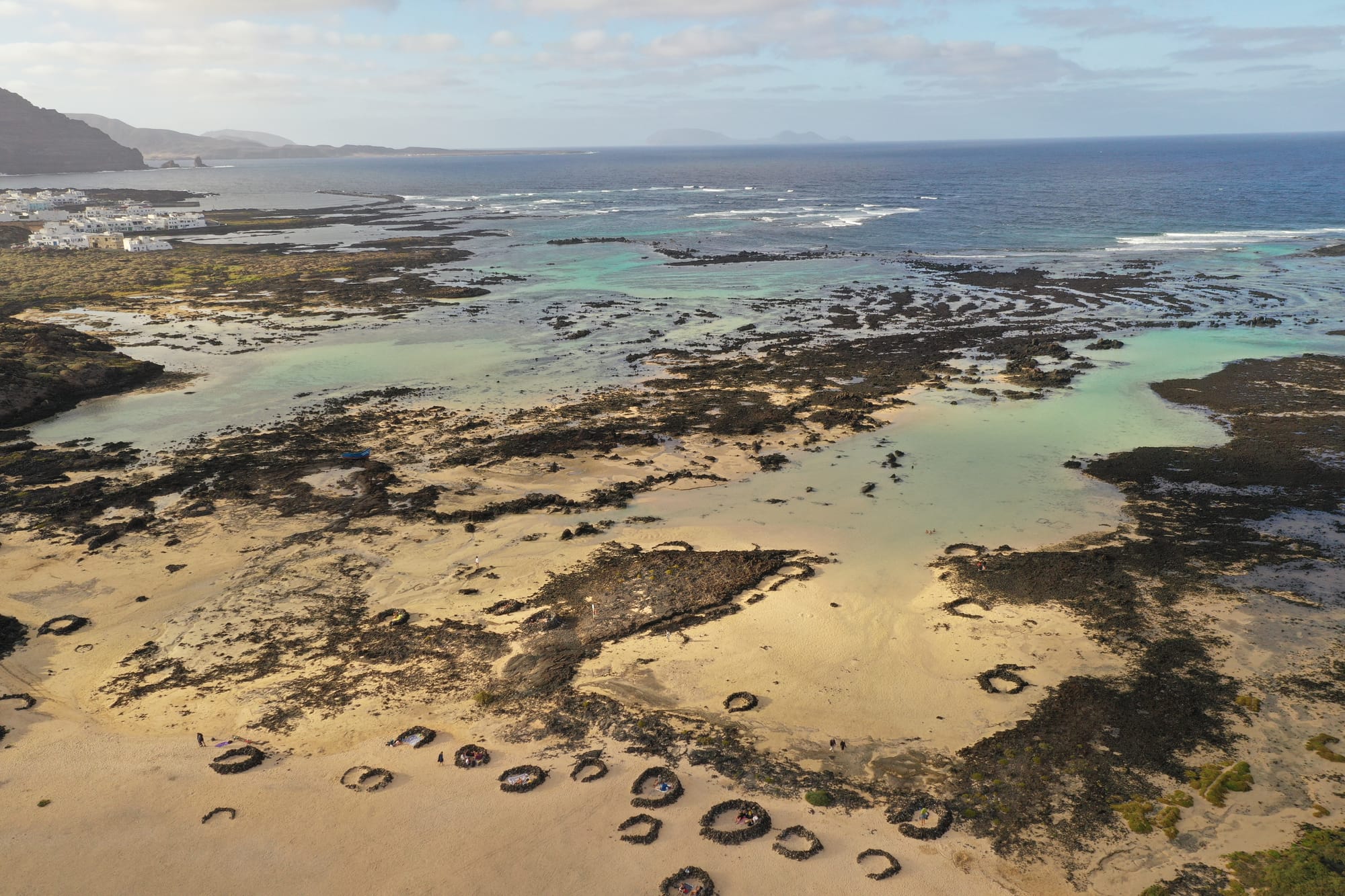
Entry is around €7–€9, and it is worth every euro. The crowds are relatively light compared to other Manrique sites, and the viewing area gives you almost a full 180-degree panorama. Bring a jacket — the wind can be strong and the air cool, even in February.
The Famara Cliffs: Lanzarote's Most Dramatic Coastline
The Risco de Famara is a wall of cliffs that runs along the northwestern coast of Lanzarote, rising nearly 500 metres straight from the sea. The cliffs are visible from many points on the island, but experiencing them up close is utterly different from any photograph.
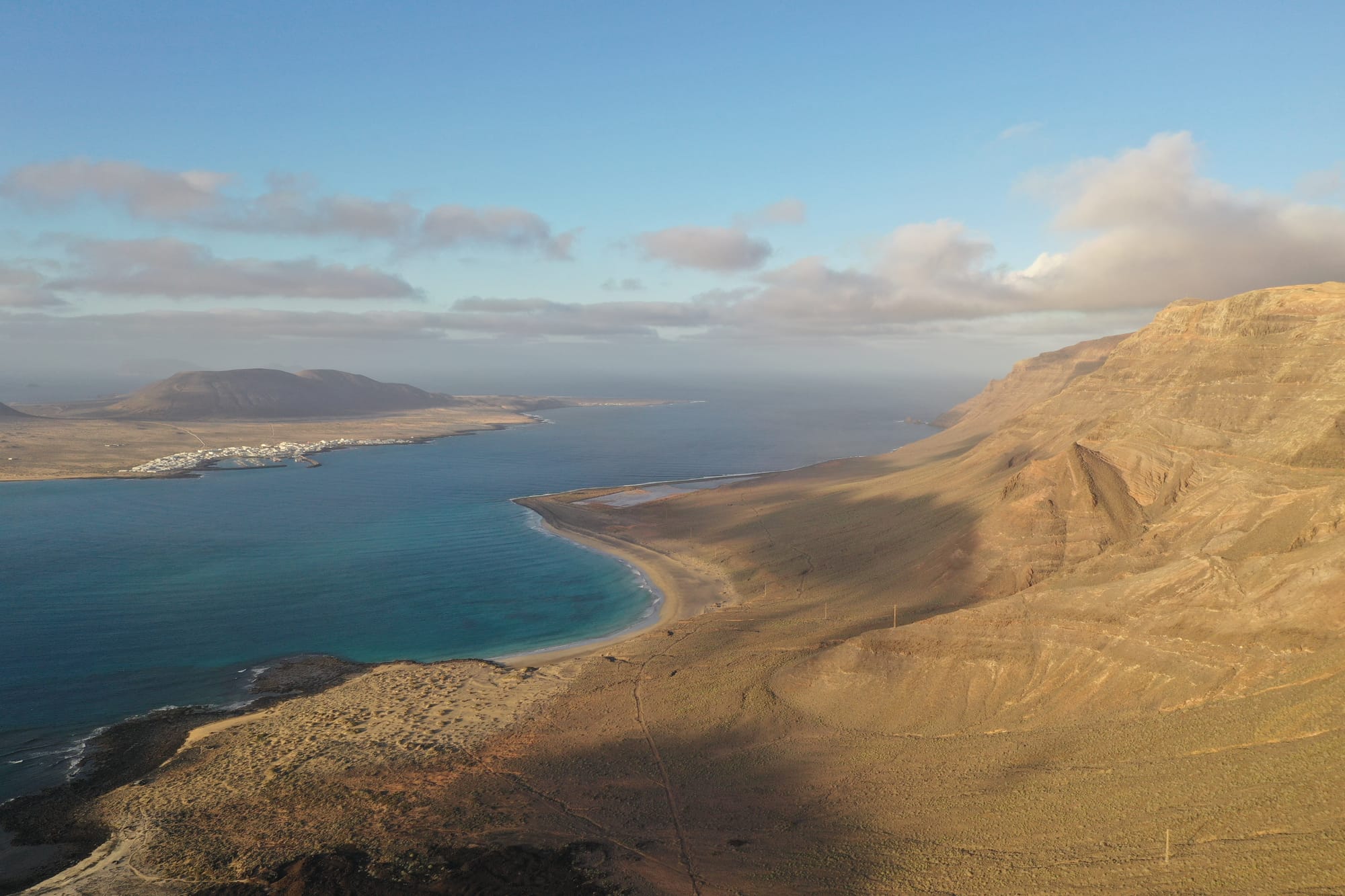
Several viewpoints line the clifftop, and each offers a different perspective. The main viewpoint at Mirador del Río gives you the most dramatic vantage point, but the road along the cliffs has numerous pullouts where you can stop, stand at the edge, and feel the vastness of the Atlantic stretching away below.
The cliffs are particularly spectacular at sunset, when the setting sun catches the cliff faces and the landscape glows in shades of orange and red. If you can arrange your schedule to end your day here in the late afternoon, you will be rewarded with one of the most extraordinary natural spectacles on the island.
La Graciosa: The Car-Free Island
La Graciosa is a car-free island off the northern coast of Lanzarote, reached by a 25-minute ferry from the small port of Órzola. The island is tiny — you can walk across it in an hour — and almost entirely undeveloped. There are a handful of restaurants, a couple of hotels, and endless empty beaches.
Book a day-trip sail to La Graciosa to experience this pristine coastal environment. Most tours depart from Órzola in the morning and include lunch, snorkelling stops, and a few hours on the island to explore.
La Graciosa feels like stepping back in time — there are no cars, no development, no crowds. The beaches are quiet and empty even in high season. The water is clear and warm, ideal for snorkelling. If you want to experience Lanzarote's coast in its most raw and undeveloped state, La Graciosa is essential.
Famara Beach: For Surfers and Walkers
Back on Lanzarote, Famara is the island's premier surf beach — a vast sweep of golden sand backed by the dramatic cliffs. The Atlantic swell here is consistent, and in winter the beach attracts surfers from across Europe. But you do not need to be a surfer to appreciate Famara — the beach itself is spectacular.
The wide expanse of sand stretches for kilometres, and at low tide the wet sand reflects the sky and cliffs perfectly, creating an almost surreal landscape. Walking along Famara at dawn or dusk, when the beaches are empty and the light is soft, is one of the great experiences Lanzarote offers.
There is a village behind the beach with restaurants, cafes, and a laid-back atmosphere that contrasts with the more touristy southern resorts. It is a good place to spend an afternoon or evening, watching the light change across the cliffs.
Hiking from Haría to the Coast
One of the most rewarding walks on Lanzarote is the descent from Haría down to the northern coast. The trail takes you from the green palm-filled valley through increasingly barren volcanic terrain, eventually reaching the clifftop with views across the Atlantic.
The walk is moderately strenuous but extremely rewarding. You move through distinct landscape zones — from tropical vegetation to lava fields to ocean views — in the space of just a few kilometres. The geological changes are as dramatic as the scenic ones.
The walk takes about 3–4 hours depending on your pace and fitness level, and is suitable for families with children aged 10 and up. Start early in the day to maximize daylight, and bring plenty of water — there is no shade once you leave the village.
Practical Information
How to Get There
The northern tip of Lanzarote is about 40 km from Arrecife airport. A rental car is essential — there is virtually no public transport in the north. The roads are good but winding, especially the mountain pass between the centre and north.
Lanzarote's César Manrique airport (ACE) is in the south of the island — fly in from most European hubs (Ryanair, easyJet, TUI run year-round) and pick up the rental at arrivals. Haría and Mirador del Río are an hour's drive north; budget extra for the slow coast road from Famara if you want the views.
Best Time to Visit
The north is windier than the south due to its exposed coastline. Winter (November–March) is the best season for hiking and exploring. Summer can be very windy and occasionally too warm for comfortable walking, though the weather is still generally pleasant.
Budget Guidance
A typical day in the north might look like:
- Mirador del Río entry: €7–€9 per person
- La Graciosa day trip: €35–€50 per person
- Restaurant meals: €15–€25
- Hiking tours: €30–€50 per person
- Car hire: €25–€35 per day
Maps
Use our interactive map to find accommodation and explore the northern attractions.