
Best Things to Do in Lanzarote: A Family Road Trip Guide
Lanzarote is unlike anywhere else in Europe. An island of black lava fields, rust-red volcanoes, turquoise coves and white-washed villages — this family guide covers the whole island.

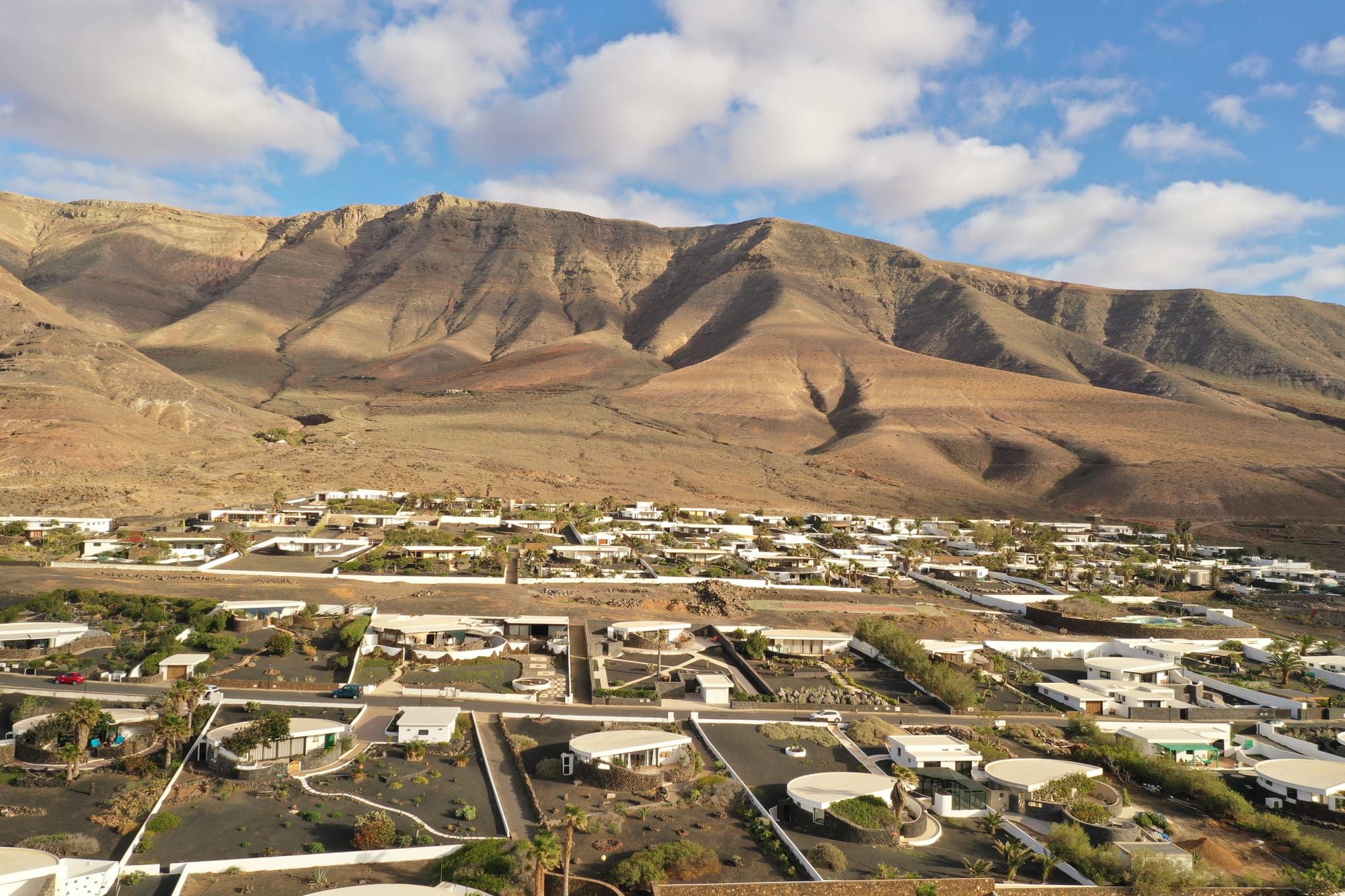
Lanzarote is unlike anywhere else in Europe. An island of black lava fields, rust-red volcanoes, turquoise coves and white-washed villages, it feels more like landing on another planet than arriving at a holiday destination. The volcanic eruptions of the 1730s reshaped the landscape so dramatically that large parts of the island still look as though the lava cooled yesterday.
We spent a week here in February 2022, driving the island from tip to tip with the children. Lanzarote is one of those rare places where art, nature and geology collide — thanks largely to César Manrique, the local artist who turned the island into an open-air gallery by building his most ambitious works directly into the volcanic landscape. Here is our complete guide to exploring Lanzarote as a family.
Bookings: Some of the links in this article are affiliate links. This means that if you choose to make a booking, we will receive a small commission at no extra cost to you. Thank You!
Why Lanzarote?
Lanzarote is special because it has evolved unlike any other Mediterranean destination. Most popular islands have been shaped by tourism development — beaches built up with resorts, cultural sites packaged for visitors, landscapes commercialized. Lanzarote has done something different. The artist César Manrique convinced the island's government that sustainable tourism required respecting and enhancing the landscape, not dominating it. As a result, large parts of Lanzarote still feel wild, authentic and utterly distinctive.
The island is small — you can drive from end to end in an hour — but remarkably varied. Within a few kilometres you move from sandy beaches to volcanic lava fields, from tropical palm valleys to clifftop vistas, from wine country to artist hideaways. This variety makes it an ideal destination for families who want both relaxation and adventure, both comfort and exploration.
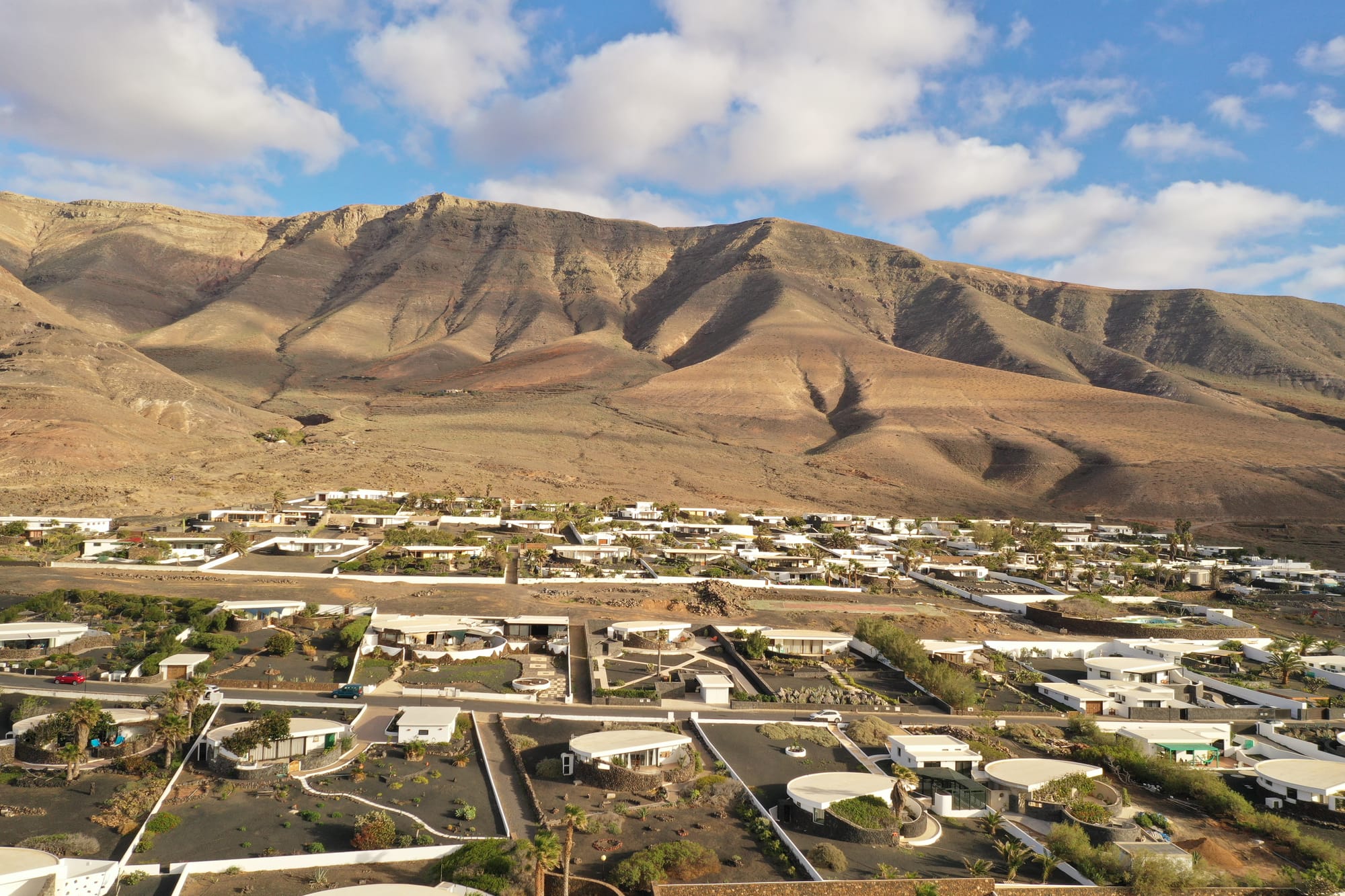
Lanzarote in Winter: What to Expect
We visited in February and it turned out to be one of the island's best months: sunny days in the low to mid-20s, quiet villages and no queues at Timanfaya. Winter is high season for Northern Europeans chasing the sun, but outside Christmas, New Year and the February school holidays it rarely feels crowded.
- Weather: expect around 20–23°C during the day and 14–16°C at night from December to February, with very little rain.
- Sea: the Atlantic is around 18–19°C in winter, refreshing rather than warm. The sheltered Papagayo coves are the most pleasant for a swim.
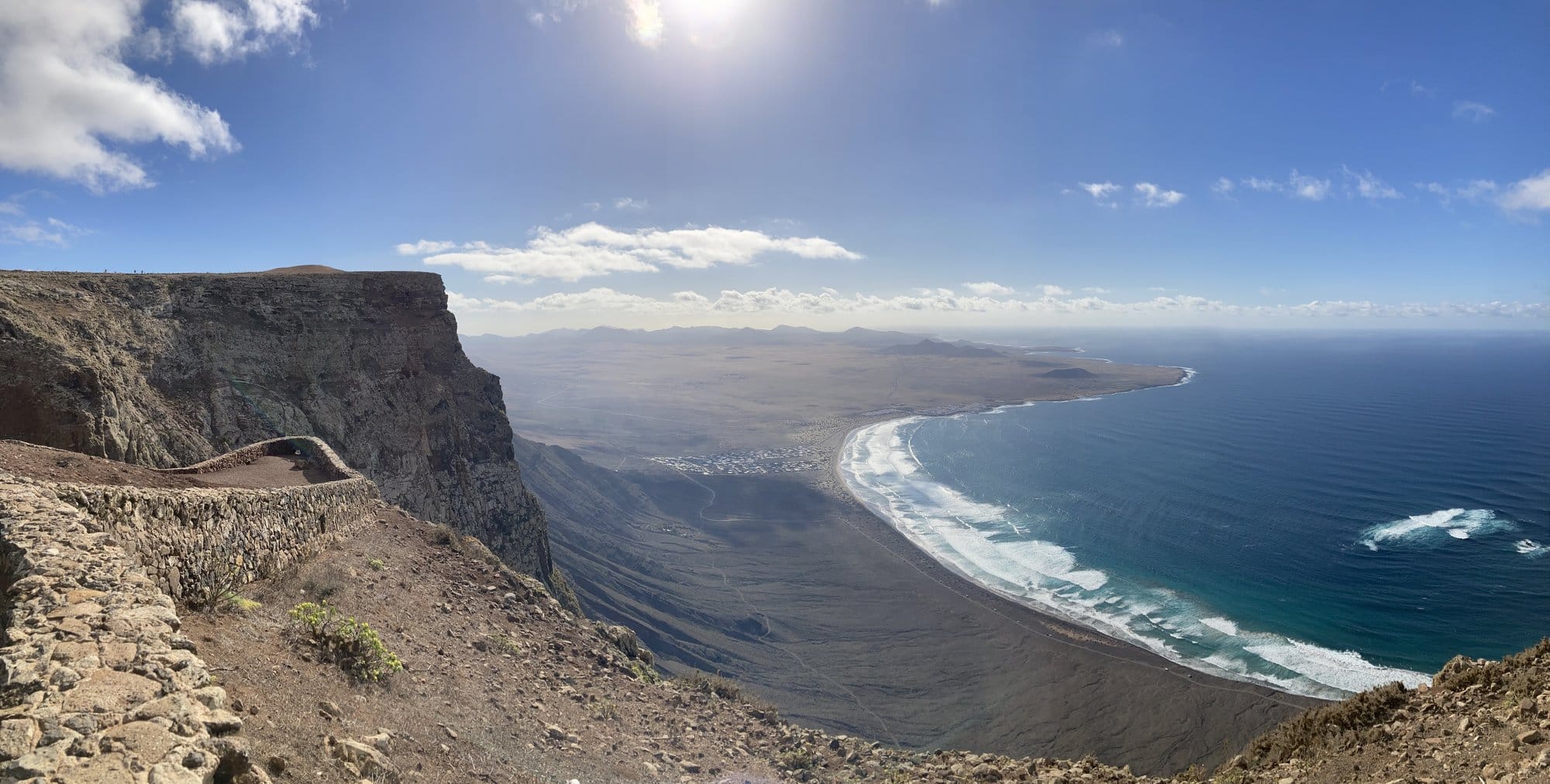
- Wind: the trade winds can be strong on the north and east coasts, so pack a windproof layer for viewpoints like the Mirador del Río.
- Prices: flights and car rental peak around Christmas, New Year and the February half-term, so book those dates early.
The Island's Main Regions
Lanzarote divides naturally into three distinct regions, each with its own character:
South Lanzarote: Beaches and Hidden Coves
The south is where families gravitate for beach holidays. Long sandy beaches at Puerto del Carmen and Playa Blanca offer all the amenities families need — restaurants, beach bars, water sports, calm water. But the south also has quieter alternatives: the turquoise coves of Papagayo are ideal for snorkelling, and the surreal green lagoon at El Charco de los Clicos is one of Lanzarote's most unforgettable sights.
Read our complete guide to South Lanzarote
Central Lanzarote: Volcanoes and Art
The centre is the island's most dramatic region. Timanfaya National Park contains some of the most alien landscape in Europe — vast fields of solidified lava stretching to the horizon. The unique wine region of La Geria produces Malvasía Volcánica in conditions found nowhere else in the world. And César Manrique's architectural masterpieces — the Jardín de Cactus, the Fundación Manrique, Mirador del Río — are scattered across the volcanic landscape.
Read our complete guide to Central Lanzarote
North Lanzarote: Cliffs and Drama
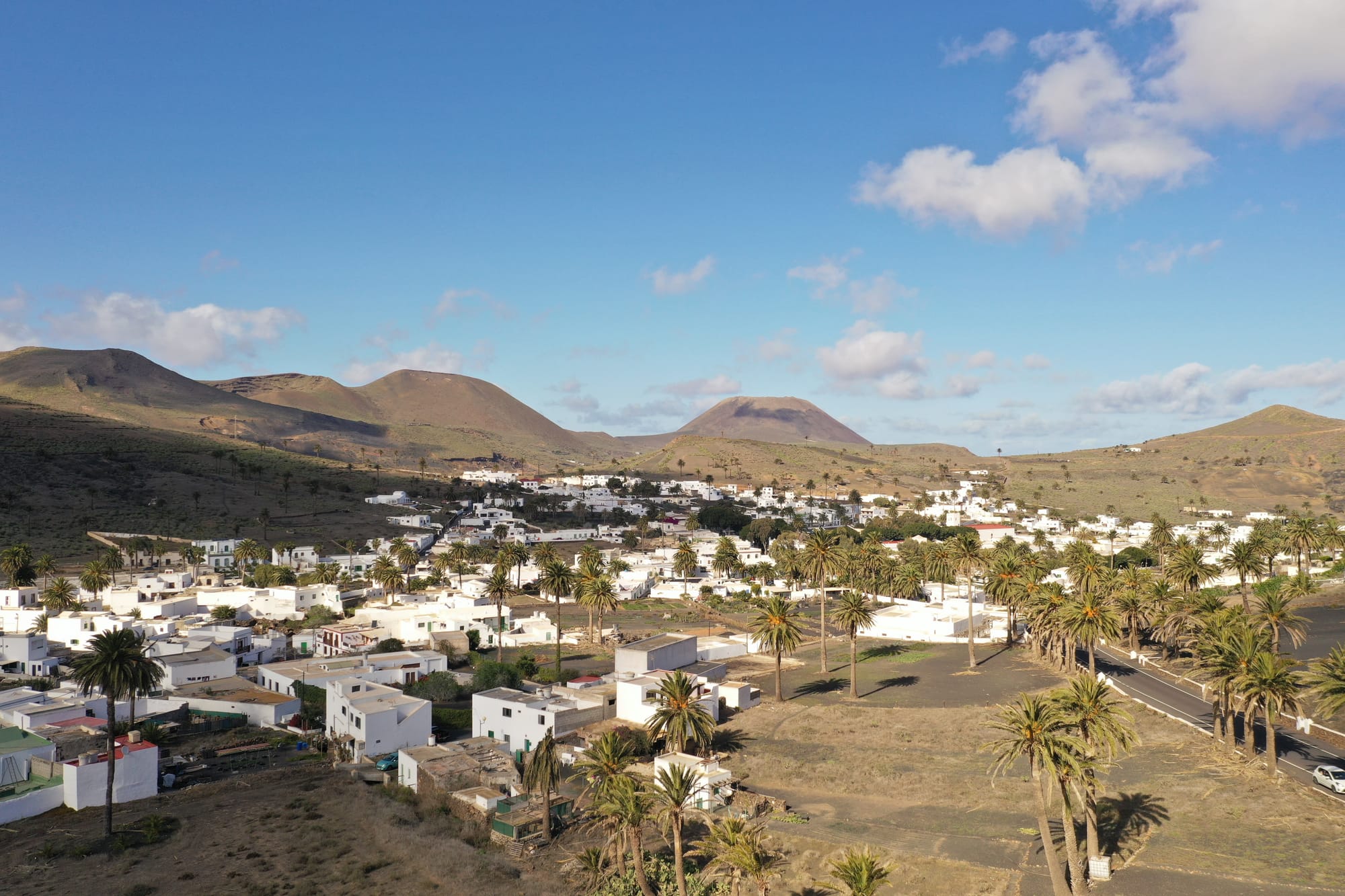
The north is Lanzarote's most dramatic region. The Risco de Famara — a wall of cliffs rising 500 metres straight from the sea — dominates the landscape. From the clifftop, you can see the neighbouring island of La Graciosa and the turquoise strait separating them. Haría, a village tucked in a palm-filled valley, offers a complete contrast to the surrounding volcanic terrain.
Read our complete guide to North Lanzarote
Where to Base Yourself
Lanzarote is small enough that your choice of base matters less than on larger islands — you can reach any attraction within an hour's drive. But certain bases work better for certain travel styles:
Costa Teguise is centrally located and has good beaches, making it ideal for families who want access to all regions. It is less developed than Puerto del Carmen and feels more relaxed.
Playa Blanca in the south is excellent if you prioritize beach relaxation while still having day-trip access to Timanfaya and other central attractions.
Puerto del Carmen is the most developed resort, with the widest range of restaurants and nightlife. It works well if you want more of a conventional beach-resort vibe.
Arrecife, the capital, is utilitarian but has good ferry connections and access to all regions.
Budget around €70–€120 per night for a comfortable self-catering apartment or villa. Self-catering gives you flexibility with meal times, particularly important when travelling with young children.
A Suggested 5–7 Day Itinerary
Day 1: Arrive, settle into your accommodation, explore your local beach.
Day 2: Drive to Timanfaya National Park. Spend the morning on the self-guided drive through the lava fields, then take the included bus tour. Lunch at El Diablo restaurant grilling over volcanic heat.
Day 3: Explore the wine region of La Geria. Visit a bodega for wine tasting and lunch, then drive to the Jardín de Cactus.
Day 4: Hike Caldera Blanca (or a shorter volcanic trail if you prefer). Afternoon visit to the Fundación César Manrique.
Day 5: Drive north to Haría. Explore the palm valley, visit Mirador del Río, enjoy views across the Famara cliffs.
Day 6: Day trip to La Graciosa or explore northern beaches (Famara is excellent for walking at low tide). Evening at a clifftop viewpoint for sunset.
Day 7: Relax at your chosen beach, swim, read, prepare for departure.
César Manrique: The Artist Who Shaped the Island
César Manrique is central to understanding Lanzarote. Born on the island in 1919, he became an architect and artist with a radical vision: development should enhance the landscape, never dominate it. He convinced the island's government to pass laws protecting the landscape and limiting development. He then built a series of landmark buildings — restaurants, viewpoints, museums — that demonstrate how architecture can integrate with, rather than intrude upon, nature.
Visiting Manrique's creations — the Fundación, the Jardín de Cactus, Mirador del Río, the restaurant at Timanfaya — gives you insight into a singular artistic vision. Each building feels at home in the volcanic landscape. Each enhances the experience of the place. This is the reason Lanzarote feels different from other holiday destinations.
Explore Lanzarote with GPSmyCity
This article is also featured on GPSmyCity. To download this article for offline reading or create a self-guided walking tour to visit the attractions highlighted in this article, go to Walking Tours and Articles in Lanzarote.
Practical Information
How to Get There
Lanzarote's César Manrique airport (ACE) has direct flights from most major European cities. Compare flights to Lanzarote expensive.
A rental car is essential. Public transport on the island is limited, and the best experiences require driving between scattered villages and viewpoints. Hire a car at Lanzarote airport
Best Time to Visit
Lanzarote has year-round sunshine, with temperatures between 18°C and 30°C. Winter (November–March) is the best time for hiking and sightseeing — warm enough for the beach but not too hot for active exploration. Summer is hotter and busier, with peak prices in July and August. February, when we visited, was ideal — sunny, mid-20s, and quiet.
Budget
Lanzarote is moderately priced for a European destination. Expect around:
- Accommodation: €70–€120 per night
- Restaurant meals: €15–€25
- Attraction entry fees: €7–€25
- Car rental: €25–€40 per day
- Activities and tours: €20–€50 per person
A family of four could comfortably travel on €150–€200 per day including accommodation, meals, car hire and activities.
Booking Attractions
Many popular attractions have timed entry tickets, especially in summer. Book ahead for:
- Timanfaya National Park (though morning entry is usually available)
- Jardín de Cactus
- Manrique sites
- Wine tours
- Snorkelling and water-sports activities
Off-season (November–March), booking is usually unnecessary.
FAQ
Q: Is Lanzarote good for families with young children? A: Excellent. The beaches at Playa Blanca are sheltered and safe, the Manrique attractions are fascinating for all ages, and the volcanic landscape turns the whole island into an adventure. Most hikes are manageable for children aged 6 and up.
Q: How many days do you need in Lanzarote? A: A week is ideal. You need at least five days to see the main attractions without rushing — Timanfaya, the Manrique centres, the Famara cliffs, the beaches and a winery visit. A long weekend works if you focus on the highlights.
Q: Is Lanzarote just about volcanoes? A: The volcanic landscape is the headline, but there is much more — beautiful beaches, excellent food, Manrique's art-architecture, a unique wine region, and the neighbouring island of La Graciosa for a day trip. It is a surprisingly varied destination for its size.
Q: Can I visit La Graciosa from Lanzarote? A: Yes. Ferries run regularly from Órzola at the northern tip of Lanzarote. The crossing takes about 25 minutes, and La Graciosa is a car-free island with pristine beaches and excellent snorkelling. Book a day-trip sail to La Graciosa
Q: What is the best combo tour for a short visit? A: Book a combo tour of Timanfaya and La Geria wine tastingcover two major attractions in a single day.
Finding Accommodation
Use our interactive map to search and compare accommodation across Lanzarote: