
Lijiang and Shangri-La: Old Town Roofs and the Tibetan Plateau
Lijiang gets written off as a tourist trap and Shangri-La gets written off as a marketing exercise. Both judgements are lazy, and half a day in the right places undoes them.

Two towns, two reputations, both unfair.
Lijiang is the one people warn you about: a UNESCO old town so thoroughly restored and so thoroughly visited that you will read it described as a theme park. Shangri-La is the one people smirk at: a county town called Zhongdian until 2001, when it was officially renamed after the valley in a 1930s novel in a piece of tourism branding so bare-faced it is almost admirable.
Neither reputation survives contact. Lijiang has a working market five minutes from the souvenir streets. Shangri-La has one of the largest Tibetan monasteries outside Tibet, sitting at 3,300 metres above a plateau that looks nothing like the rest of Yunnan. Pair them, give them three nights between them, and the trip finishes on its highest note.
> Some links in this guide are affiliate links. If you book through them it costs you nothing extra and helps keep this site running. We only recommend places and operators we would use ourselves.
Lijiang: Go Where People Are Buying Things
Dayan, the old town at the heart of Lijiang, is a maze of cobbled lanes, canals and grey-tiled roofs built by the Naxi and rebuilt after the 1996 earthquake. It is on the UNESCO list and it is busy.
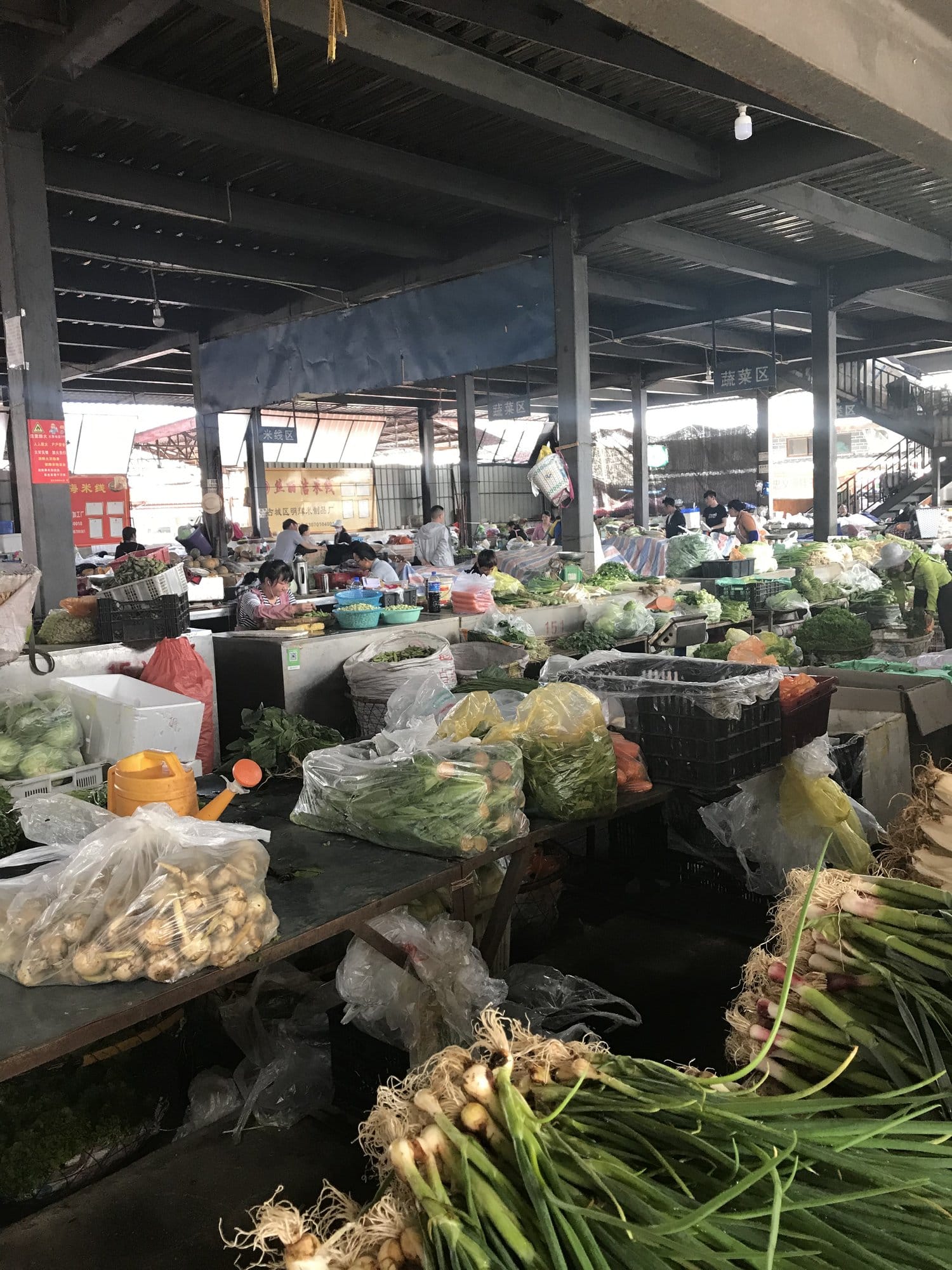
The trick is simple: walk until the shops stop selling souvenirs and start selling food. Ten minutes will do it. The covered produce market is where the town actually feeds itself — crates of garlic, bundles of spring onions with the roots still on, cabbages stacked shoulder high, and traders who have no interest whatsoever in whether you buy anything.
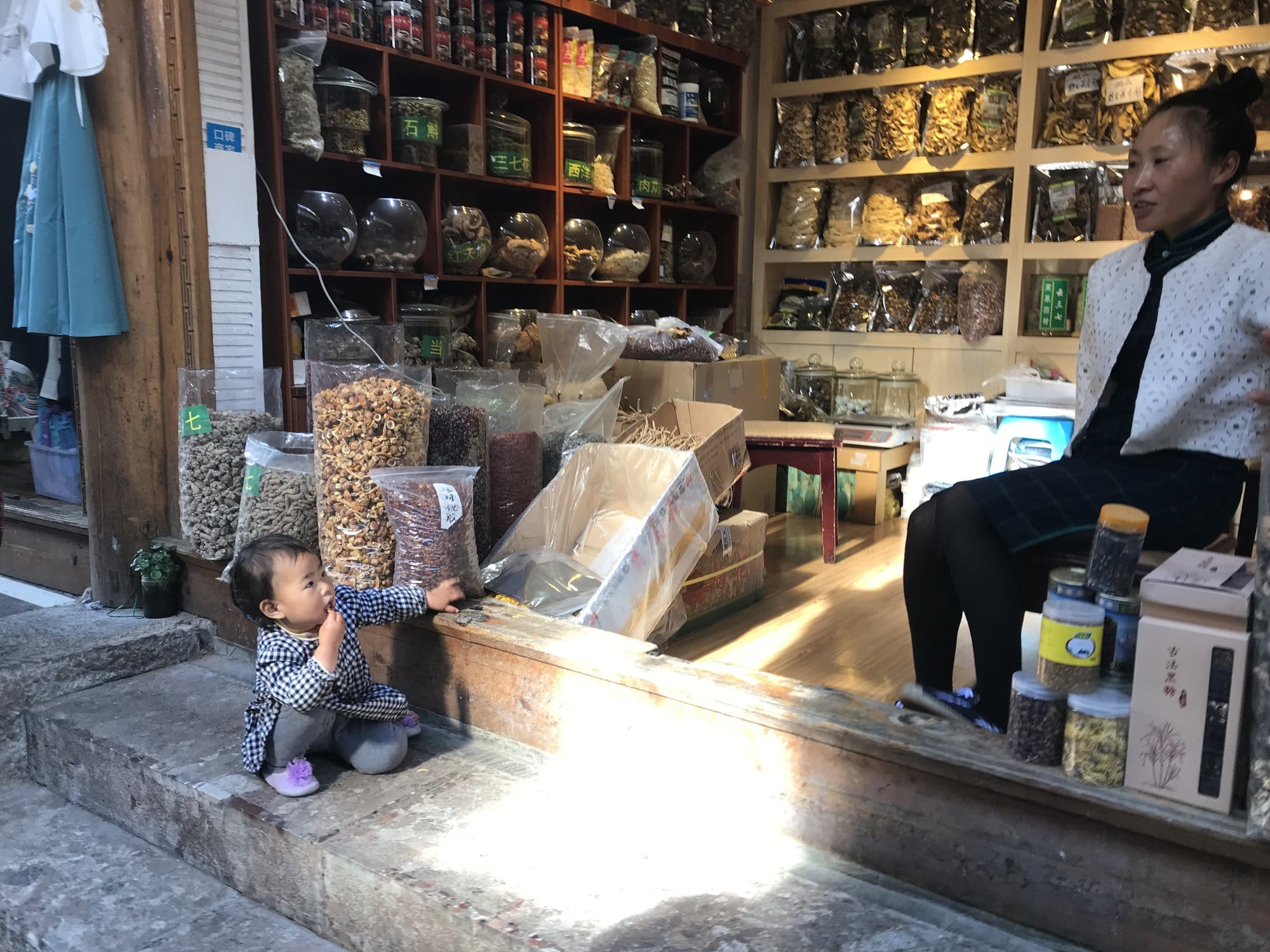
Nearby are the dried-goods shops, which are the ones to linger in: glass jars and clear bags of dried mushrooms, roots, seeds and barks, sorted by grade and priced accordingly, with a shopkeeper sitting among them and a toddler playing on the step.
A Note on Yunnan Mushrooms
Yunnan is the mushroom capital of China and it is worth understanding what you are looking at.
The fresh wild season runs from June to September, on the monsoon rains. That is when the markets fill with matsutake from the high pine forests, ji cong that grows only alongside termite colonies and cannot be farmed, and jian shou qing, a bolete that bruises indigo when you press it. Outside those months what you will see is dried — which is not a consolation prize, since dried is how most of it is sold, kept and cooked anyway, and it travels home in a way fresh does not.
If you are there in season and eating wild mushrooms in a restaurant, one thing is worth knowing. Jian shou qing is safe thoroughly cooked and not safe undercooked: it causes vivid hallucinations, and hundreds of people are hospitalised in Yunnan each summer because of it. Eat wild mushrooms in restaurants that know what they are doing, never forage or cook them yourself without an expert, and let them cook properly. This is a local sport, not a local hazard — but it is a sport with rules.
Climb the Lion Hill at the End of the Day
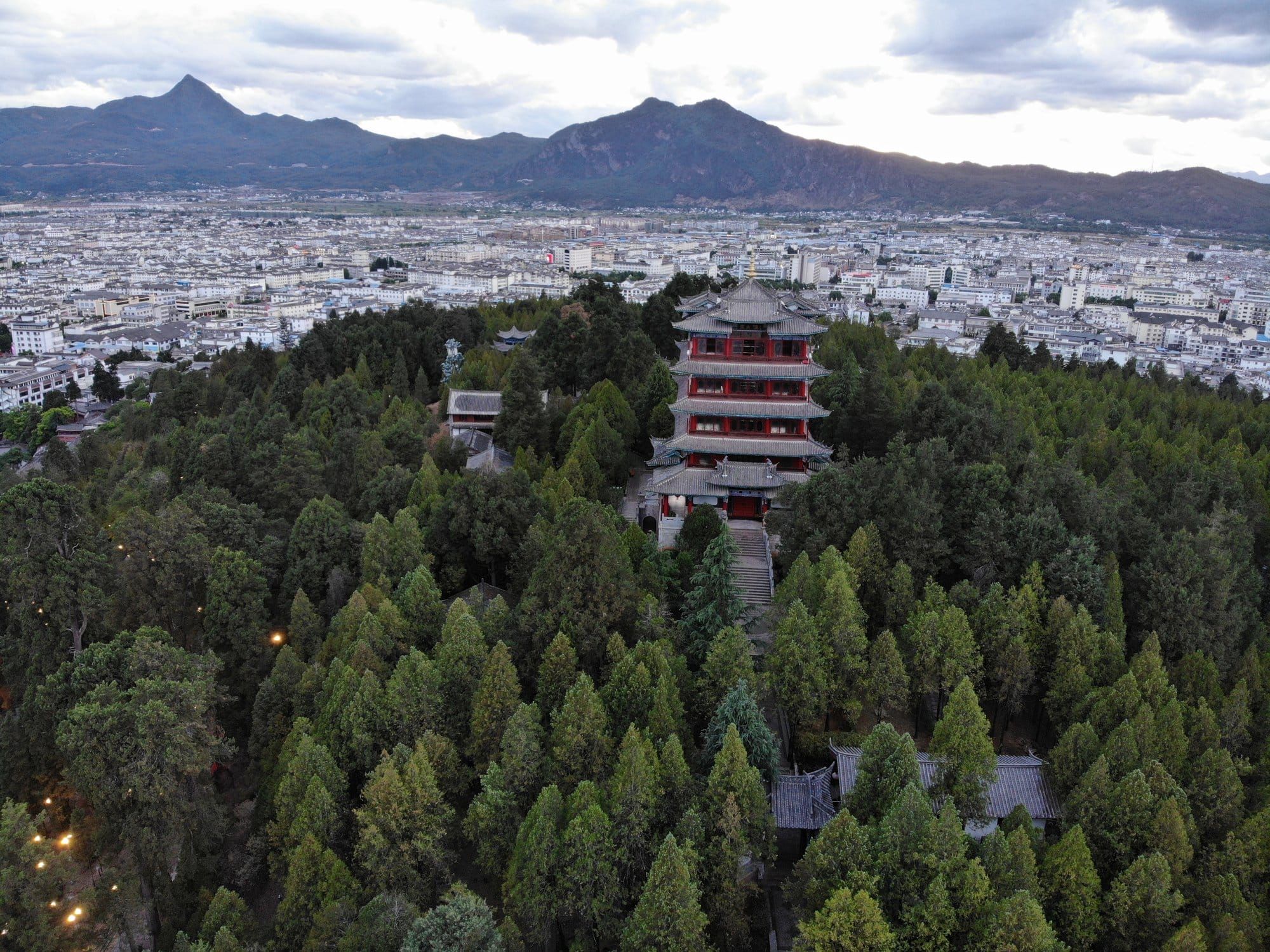
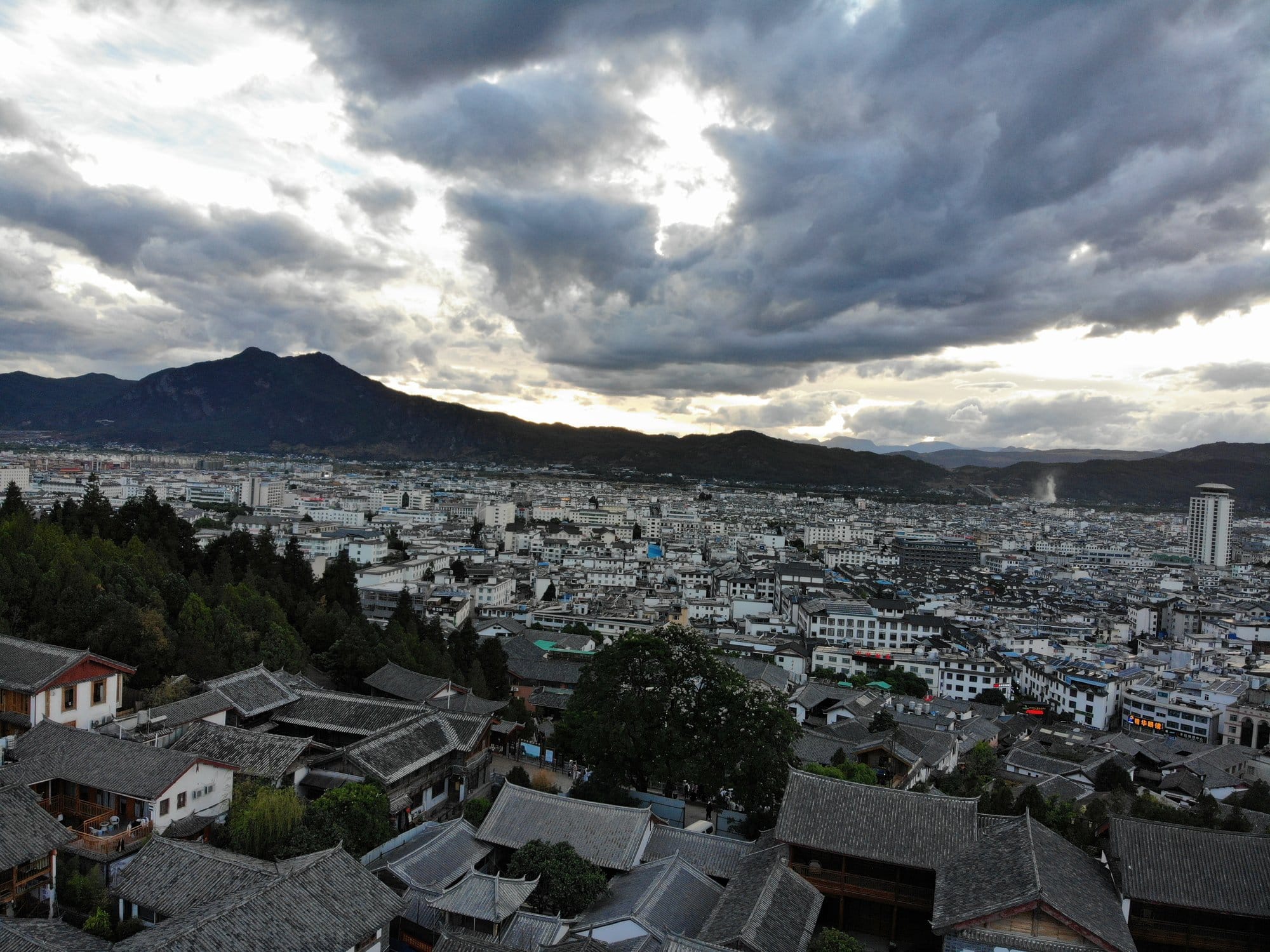
Wangu Tower stands on Lion Hill above the old town, in a stand of old cedars, and the climb takes fifteen minutes. Go in the last hour of light.
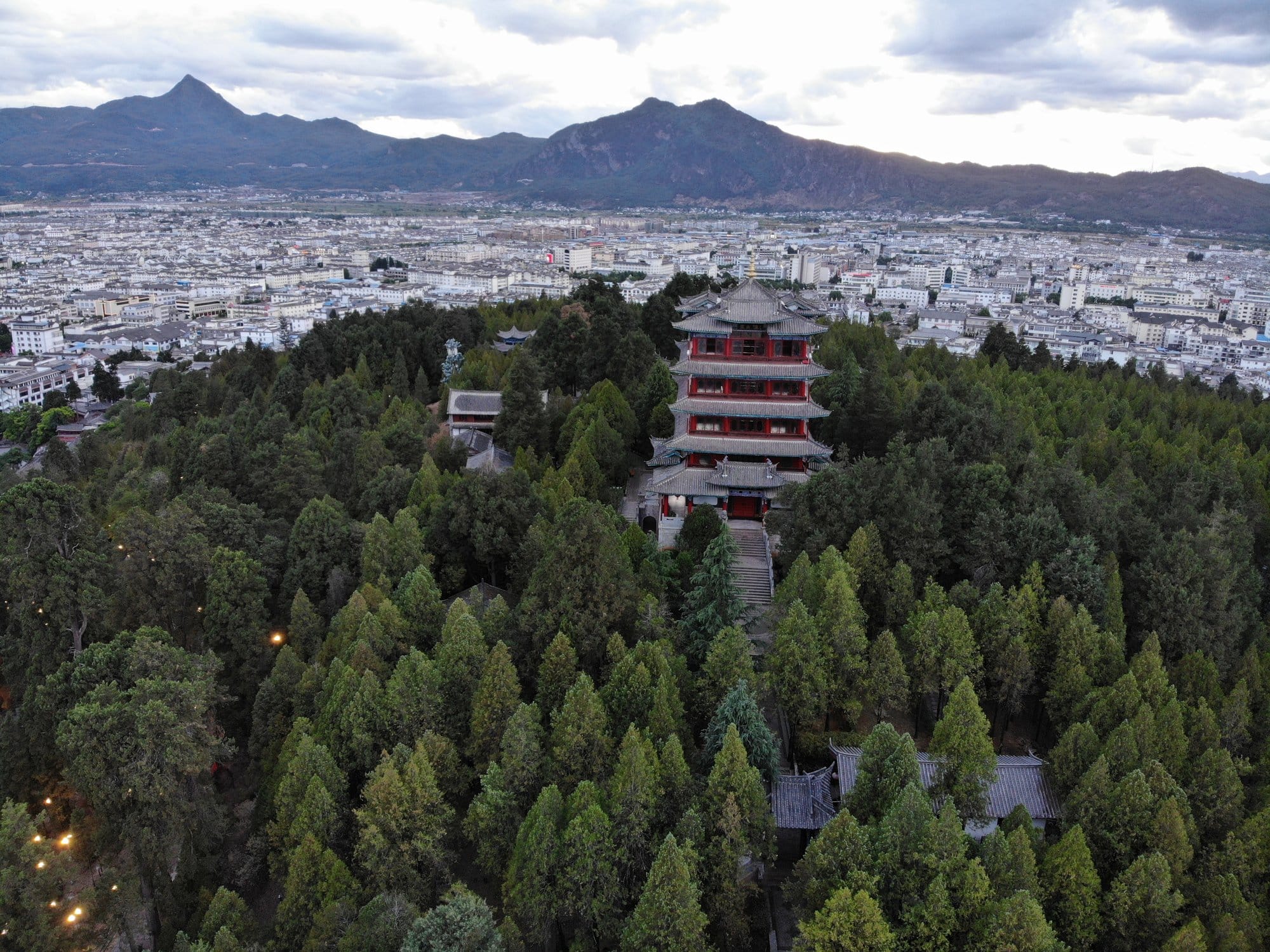
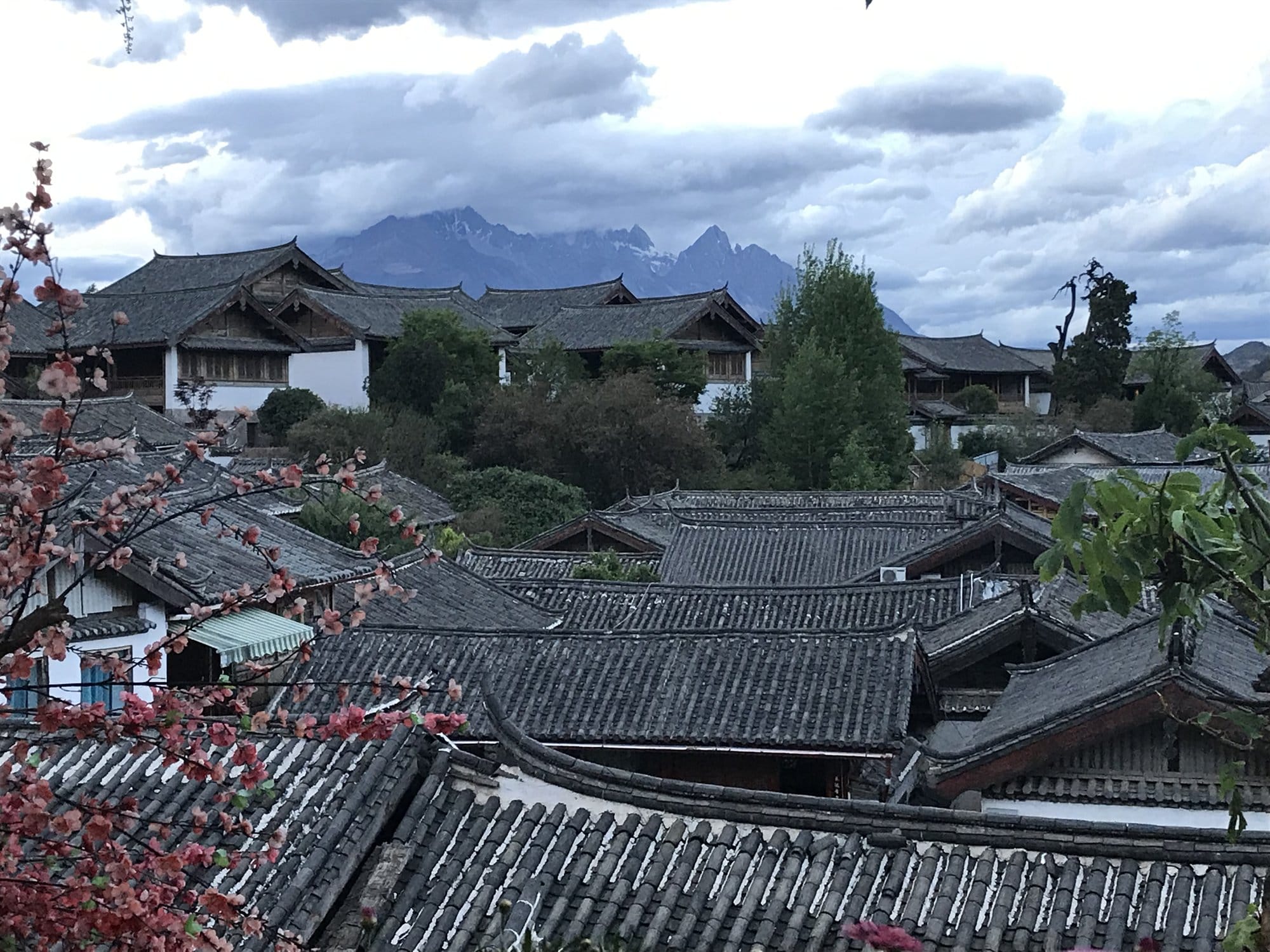
What you get is the thing Lijiang is actually about: an unbroken field of grey tiled roofs, crossed by lanes you cannot see into, with the modern city pressing against its edge and the mountains closing the view.
And on a clear evening, the payoff — Jade Dragon Snow Mountain, snow-covered at over 5,500 metres, sitting above the roofline at the end of the valley.
Let the Evening Happen
Lijiang after dark is the version most guides do not describe, because it is neither the daytime crush nor the bar street. Between the two, the residential lanes go quiet and warm.
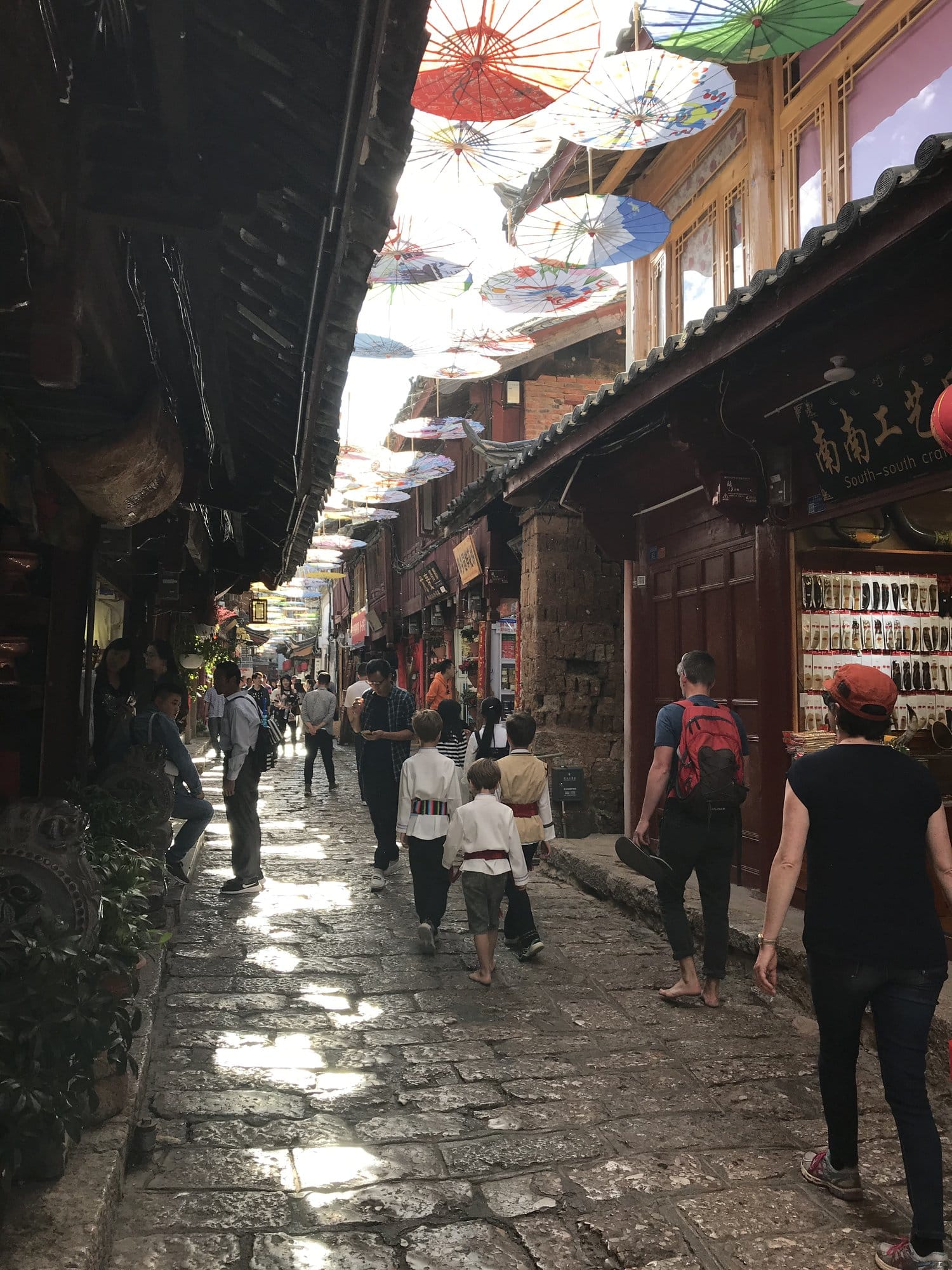
Some of them are dressed for it — one runs under a canopy of paper parasols hung in rows, which sounds like exactly the sort of thing to be cynical about and is in fact very pretty.
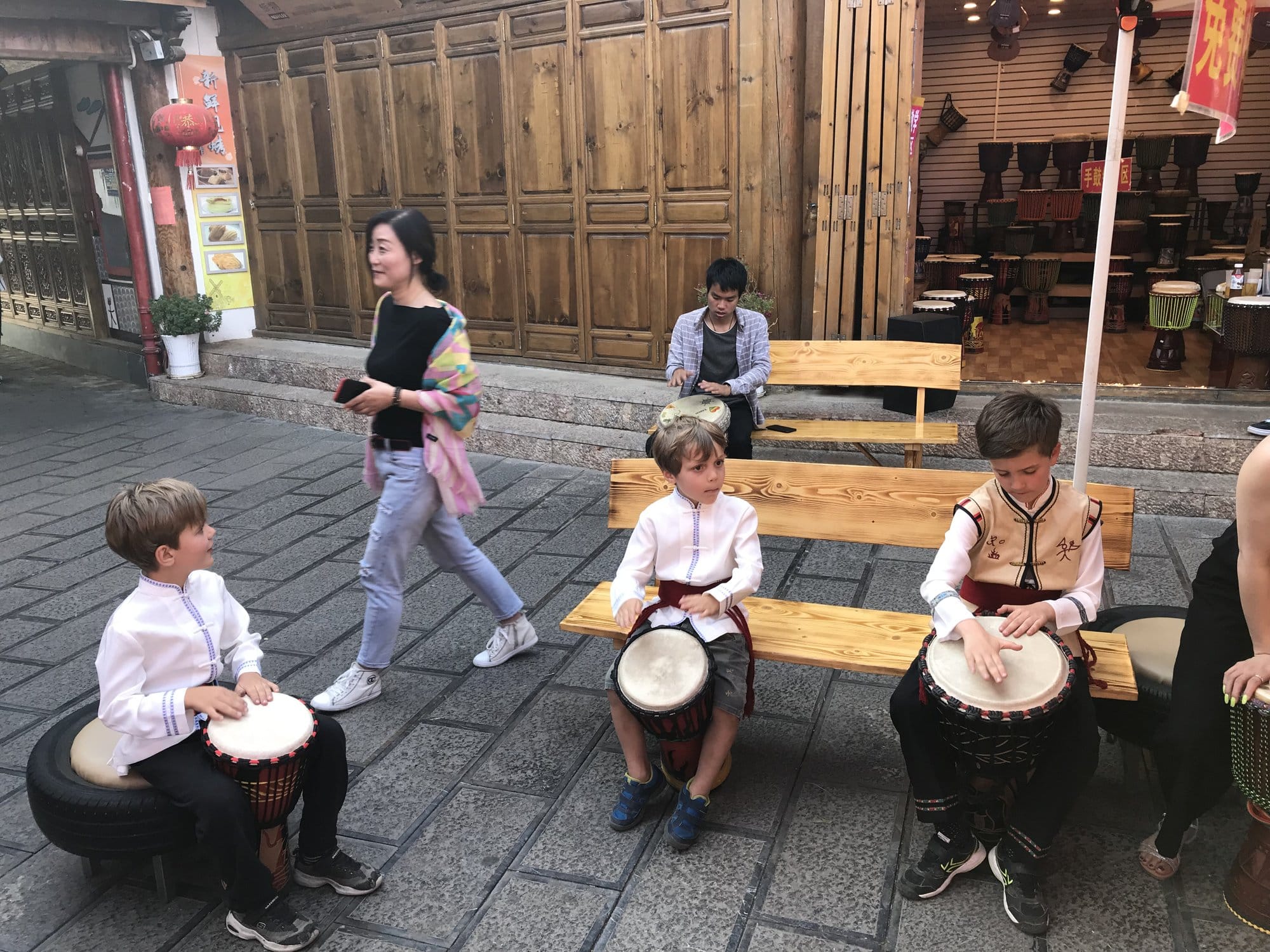
The drum workshops are the other thing to look out for. Lijiang makes and sells hand drums, and the shops set stools out on the pavement and let people play. Children who sit down at them tend not to get up for a while, and the crowd that gathers is entirely local.
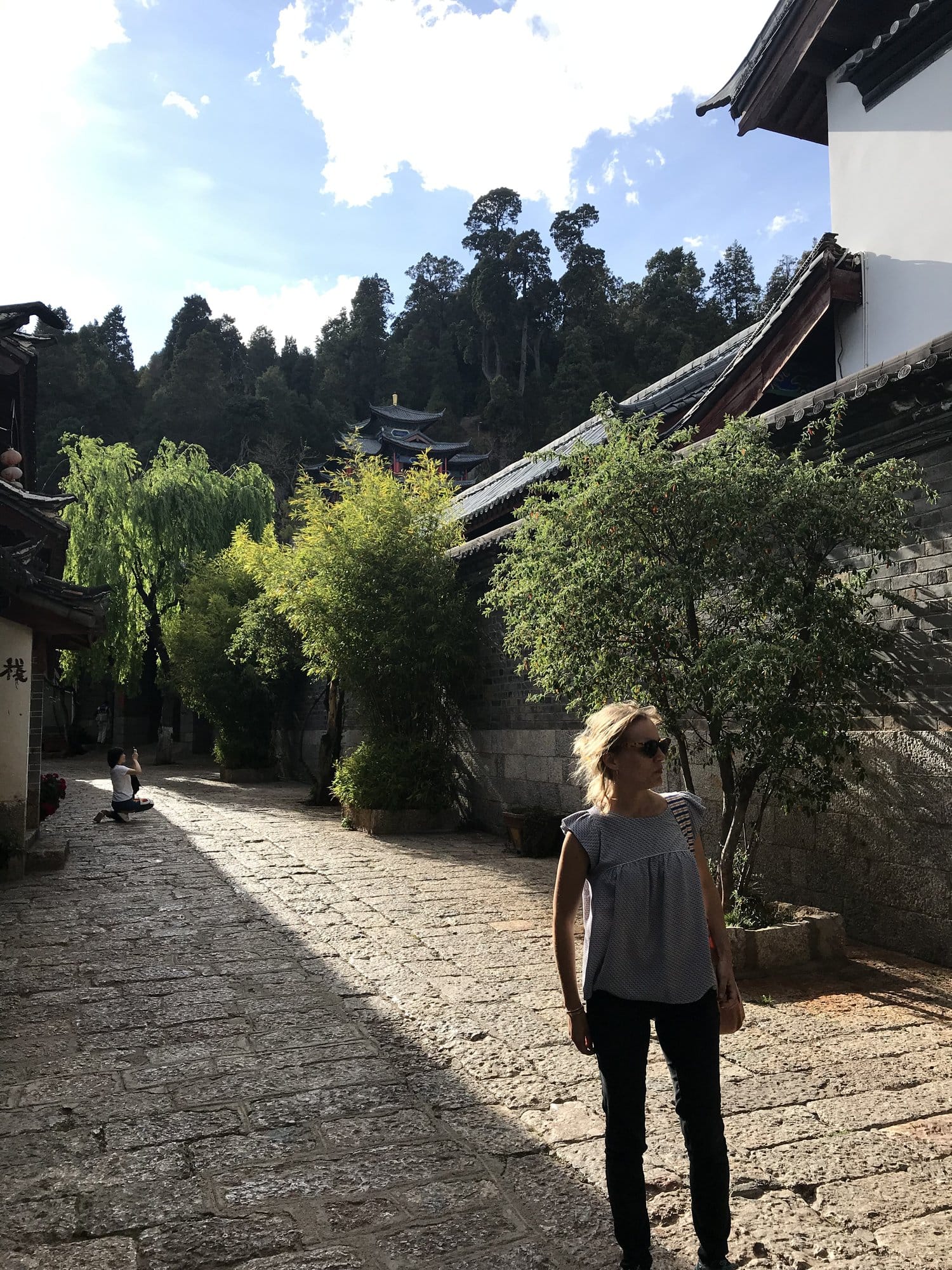
Elsewhere the lanes simply run between whitewashed walls under old trees, with a temple roof visible above them, and almost nobody about.
Shangri-La: Ganden Sumtseling
Three hours north of Lijiang the road climbs onto the plateau, and the change is abrupt: wide valleys, grazing land, prayer flags, and air that is noticeably thinner.
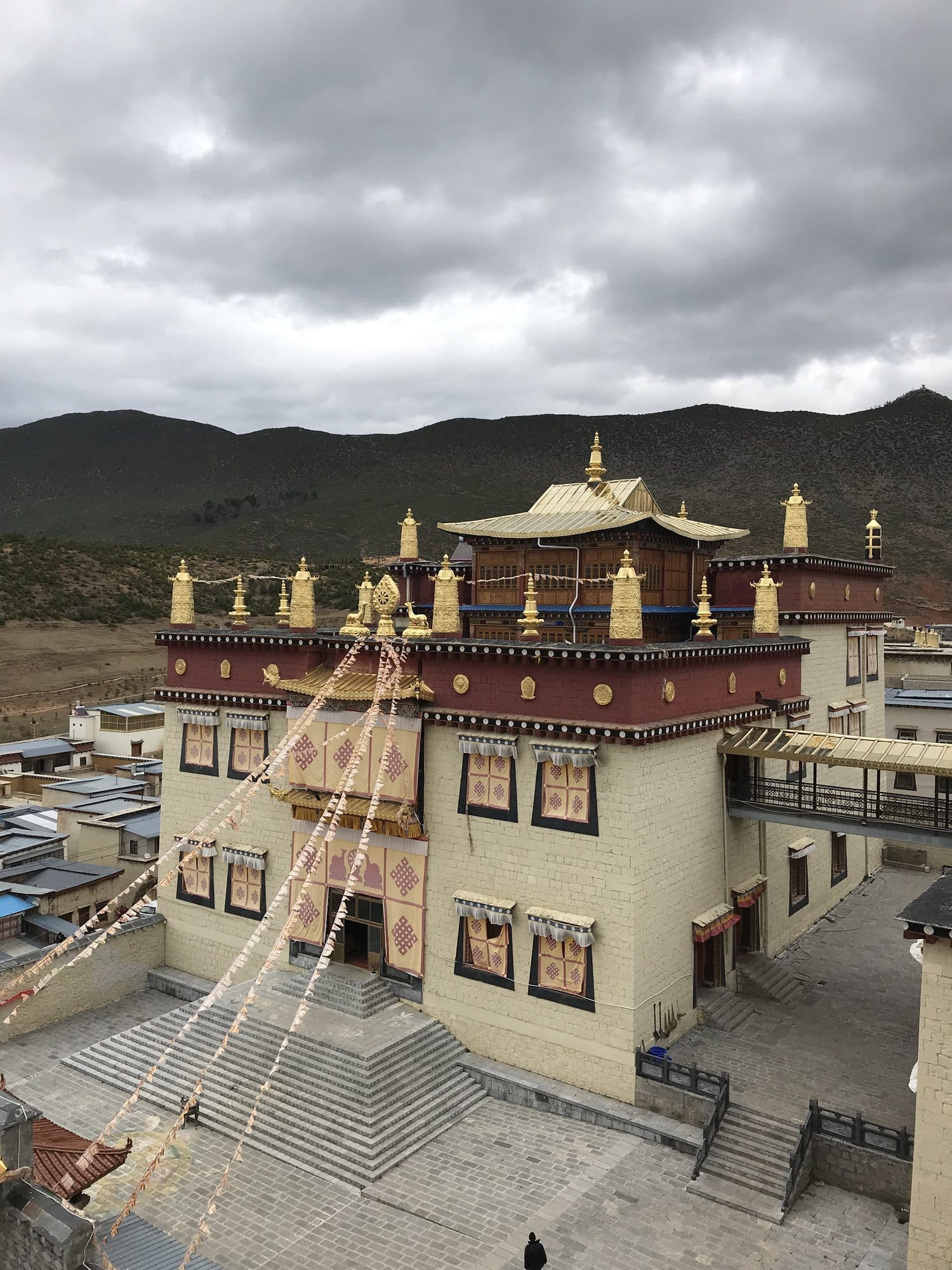
Ganden Sumtseling Monastery — known in Chinese as Songzanlin — sits above the town on a hillside, and its nickname, the little Potala, is earned. It is a Gelug monastery founded in the seventeenth century, the largest in Yunnan, and it reads as a walled village rather than a building: whitewashed monks' quarters climbing the slope, and at the top the assembly halls under gilded roofs.
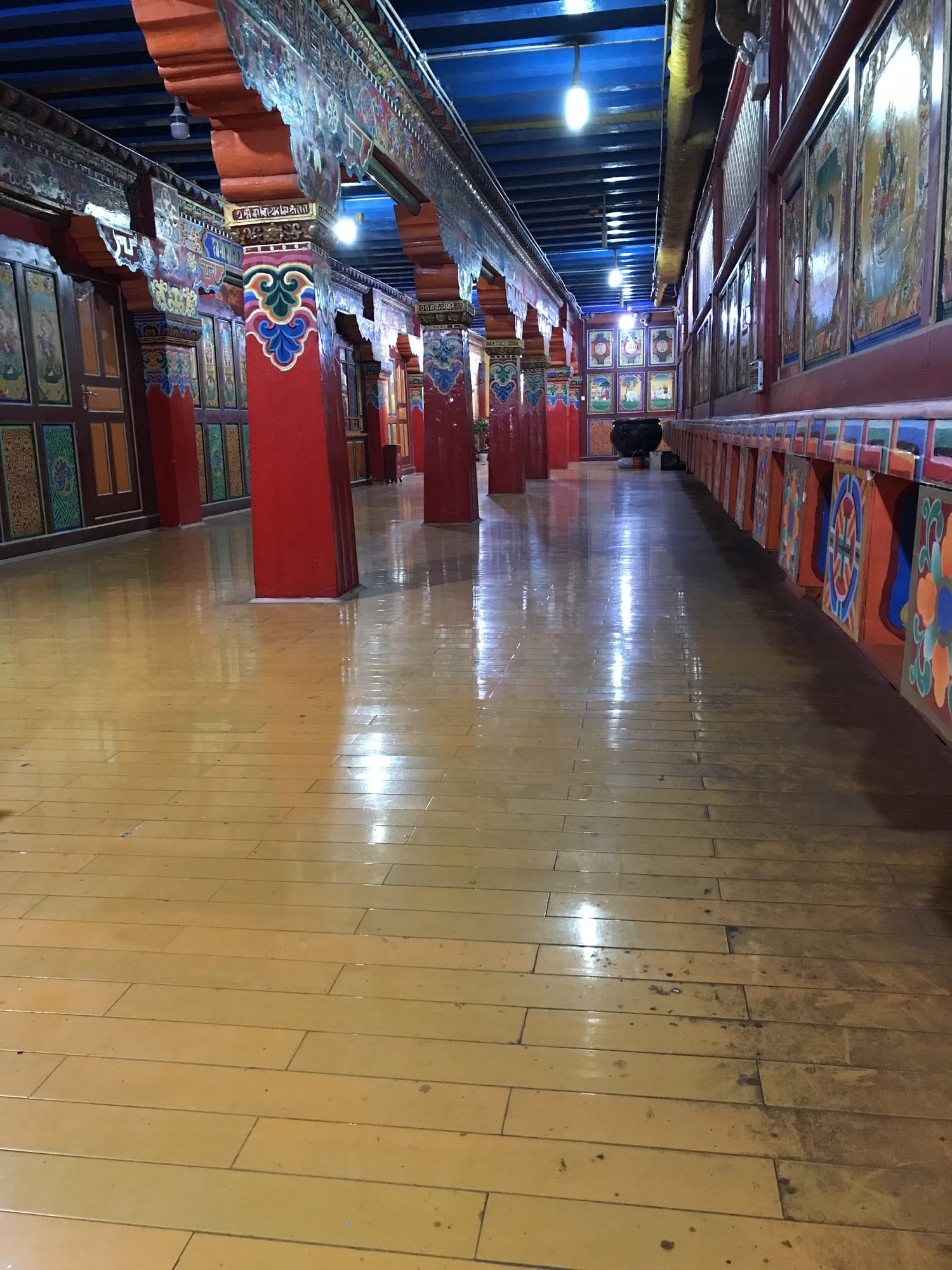
Inside, the main halls are dim, enormous and heavily painted — rows of red columns, a polished plank floor, thangkas along the walls. It is a working monastery and quiet in a way that the courtyards outside are not.
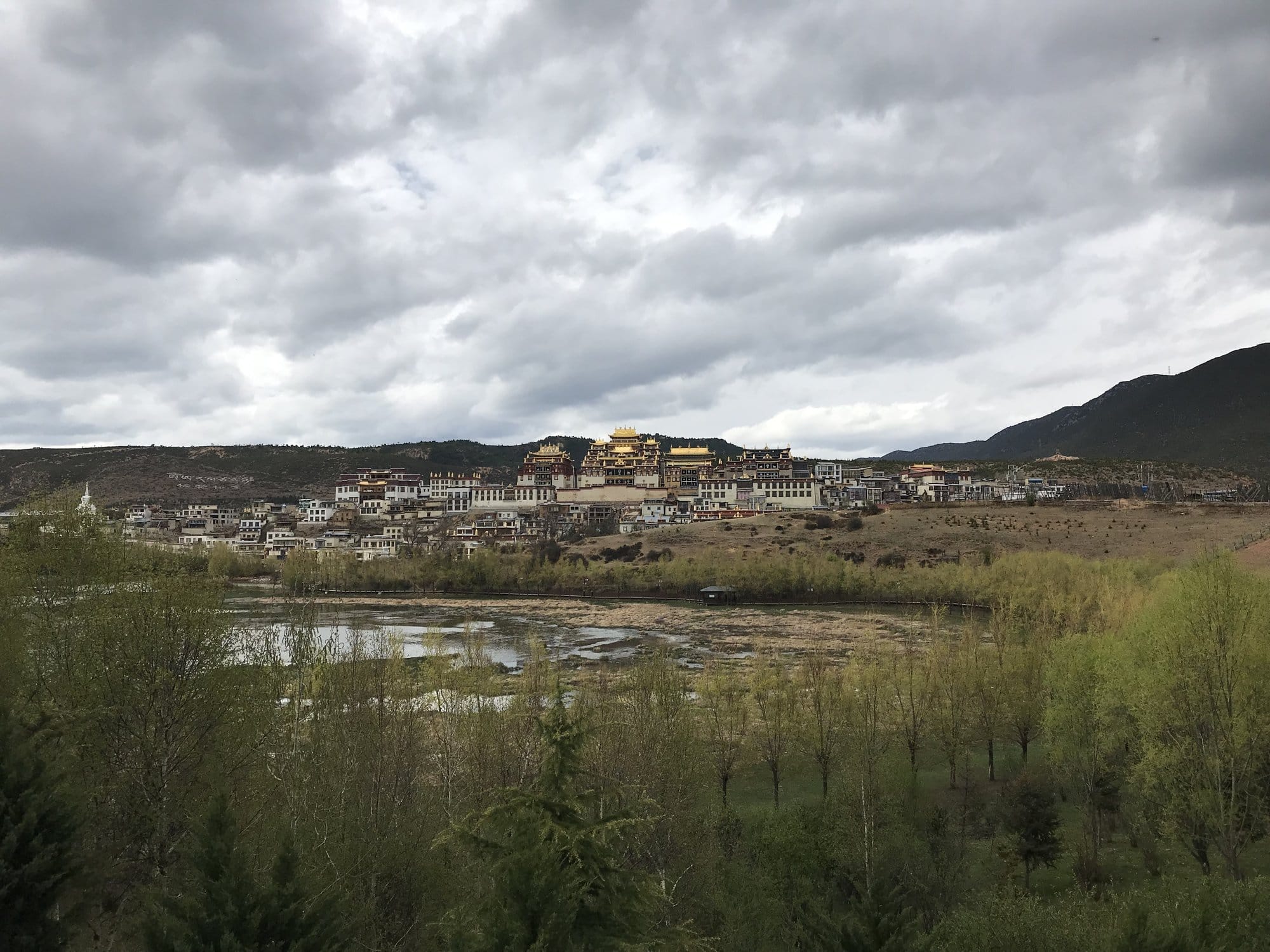
Seen from across the wetland below, the whole complex makes more sense: a hill town of white and ochre with its gold roofs at the summit.
A guided visit of the monastery is worth it here more than almost anywhere else on this itinerary — the iconography rewards someone explaining it. Allow two hours. There is a shuttle from the ticket office, and the climb to the assembly halls is a real climb at this altitude.
Napa Lake and the Plateau
Below the town, Napa Lake is a seasonal wetland that swells with the summer rains and shrinks to grazing marsh the rest of the year. Black-necked cranes winter here. The rest of the time it is yak country, and the yaks stand about at the roadside with the indifference of animals that have never been in a hurry.
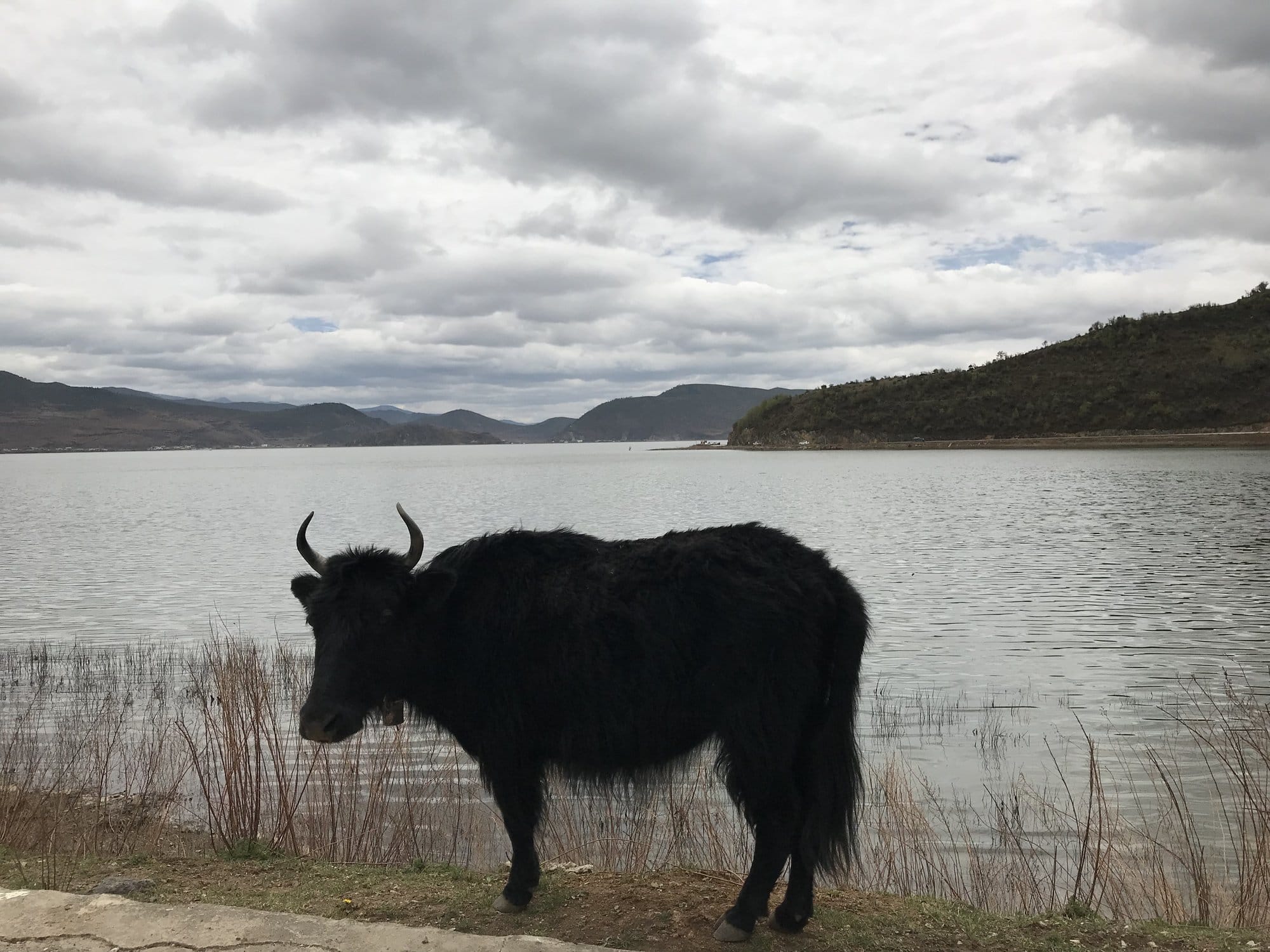
It is fifteen minutes from town and worth the trip for the light alone — the plateau does something to distance that is hard to describe and immediately obvious in person.
Dukezong, the Old Town
Shangri-La's own old town, Dukezong, sits below Guishan hill with its temple and enormous prayer wheel at the top. The walk down into it from the surrounding slopes gives the best introduction — the town spread out below, the temple roofs above it, and the plateau beyond.
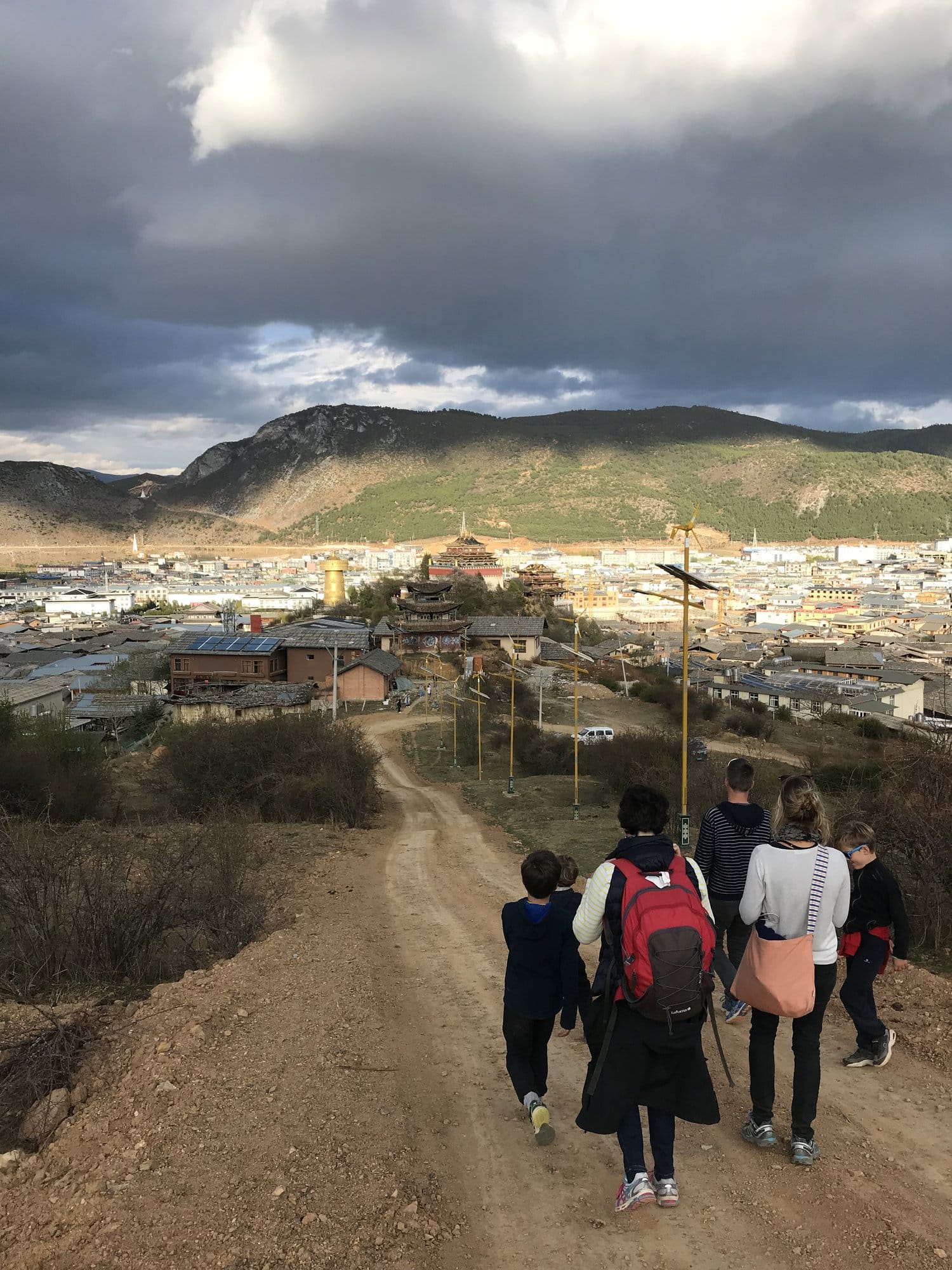
The old town has been substantially rebuilt in recent years, so check what is currently open and restored before planning a long visit.
The Altitude Question
Shangri-La sits at roughly 3,300 metres. That is high enough to be worth thinking about, and it is the single most common reason families skip it.
Here is what one family's ascent looked like, arriving from the south: Tiger Leaping Gorge at roughly 1,800 to 2,400 metres, then Baishuitai at 2,600, then a single night at 3,300 in Shangri-La, then down to 2,400 at Lijiang. Three steps up, one night at the top, descent the next day. Nobody in the group was affected, including a five-year-old.
That is an experience, not a guarantee. Coming the other way — flying straight into Shangri-La's airport from low altitude — is a different proposition entirely, and arriving by road from the south is the gentler option if you have the choice. If you are travelling with a young child, an older traveller, or anyone with a heart or lung condition, take medical advice before the trip.
Where to Stay
In Lijiang, stay inside the old town. The lanes are pedestrian, which means a short walk with your bag from wherever the taxi can reach, and it is worth it — Dayan at seven in the morning, before the day-trippers arrive, is a different town. The Manty House on Xinhua Street sits in the middle of it.
In Shangri-La, the guesthouses around Dukezong are the atmospheric choice. Kevin's Trekker Inn on Dawa Road is a long-standing budget option used by walkers coming off the gorge.
Getting There and Away
Lijiang has an airport with domestic connections, and is reached by train and by bus from Dali and Kunming. From Tiger Leaping Gorge it is about an hour and a half by road.
Shangri-La is roughly three hours north of Lijiang by road, or two to three hours from the far end of the gorge. It also has an airport — convenient, but it puts you at 3,300 metres within a couple of hours of leaving sea level.
Check current schedules locally rather than relying on published timetables, this one included.
Frequently Asked Questions
Is Lijiang worth visiting or is it a tourist trap? Both things are true at once. The main souvenir streets are crowded and commercial, but the covered produce market, the dried-goods shops, the residential lanes after dark and the view from Wangu Tower at dusk are all genuine and all within ten minutes' walk of the crowds.
What is Shangri-La in China? A county town on the Tibetan plateau in northwest Yunnan, called Zhongdian until it was officially renamed Shangri-La in 2001 after the valley in James Hilton's novel. It sits at roughly 3,300 metres and is home to Ganden Sumtseling, the largest Tibetan monastery in Yunnan.
How high is Shangri-La and is altitude sickness a risk? Around 3,300 metres. Arriving by road from Lijiang or Tiger Leaping Gorge gives a gradual ascent; flying in directly from low altitude does not. Anyone travelling with young children, older travellers or people with heart or lung conditions should take medical advice before the trip.
When is mushroom season in Yunnan? Fresh wild mushrooms run from June to September with the monsoon rains, including matsutake and the prized ji cong. Outside that window the markets sell dried mushrooms, which is how most of the crop is stored and cooked anyway.
How do you get from Lijiang to Shangri-La? By road in roughly three hours. Shangri-La also has an airport, though arriving by road gives a far gentler altitude profile.
How long do you need in Lijiang and Shangri-La? Three nights between them: two in Lijiang and one in Shangri-La covers the monastery, Napa Lake, the old town and an evening on Lion Hill.
More to Explore
<!-- BOOKMARK CARDS — grouped here, never mid-article -->