
North Tenerife: Puerto de la Cruz, La Orotava & Icod de los Vinos
Puerto de la Cruz and its black-sand beach, La Orotava's baroque streets tumbling down to the sea, a thousand-year-old dragon tree in Icod, and Garachico lit up for New Year's Eve — the green, cultured side of Tenerife.

The north of Tenerife is the part of the island most visitors miss. Almost everyone heads south to Costa Adeje or Las Américas for the sunshine and the beach resorts — but the real Tenerife, the one with history, banana plantations, baroque churches and black-sand beaches, lives on the wetter, greener northern slopes. This is where the island started.
We based ourselves in the north for the first half of a nine-day family trip and used it as a hub for day trips to Teide, Teno and Anaga. Here's how to make the most of Puerto de la Cruz, La Orotava, Icod de los Vinos and Garachico — the four towns that together define northern Tenerife.
Bookings: Some of the links in this article are affiliate links. This means that if you choose to make a booking, we will receive a small commission at no extra cost to you. Thank You!
Swim at Playa Jardín in Puerto de la Cruz
Puerto de la Cruz is the oldest tourist town in the Canaries — humble British and German tourists have been coming here since the 19th century, long before the south was even paved. The result is a resort town that actually feels like a town: a working fishing port, a historic centre with narrow streets, and an astonishing garden-backed beach on its western edge.
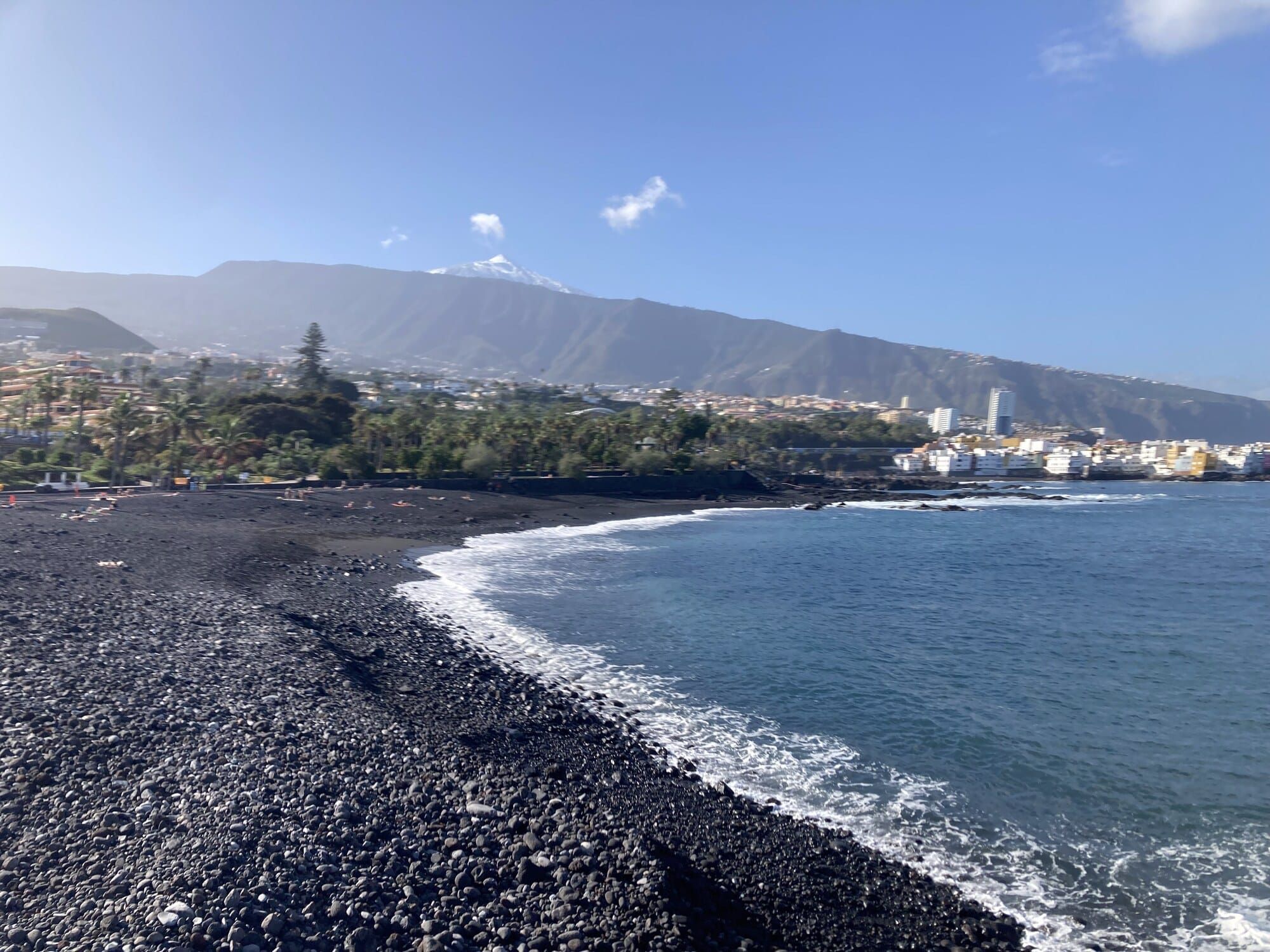
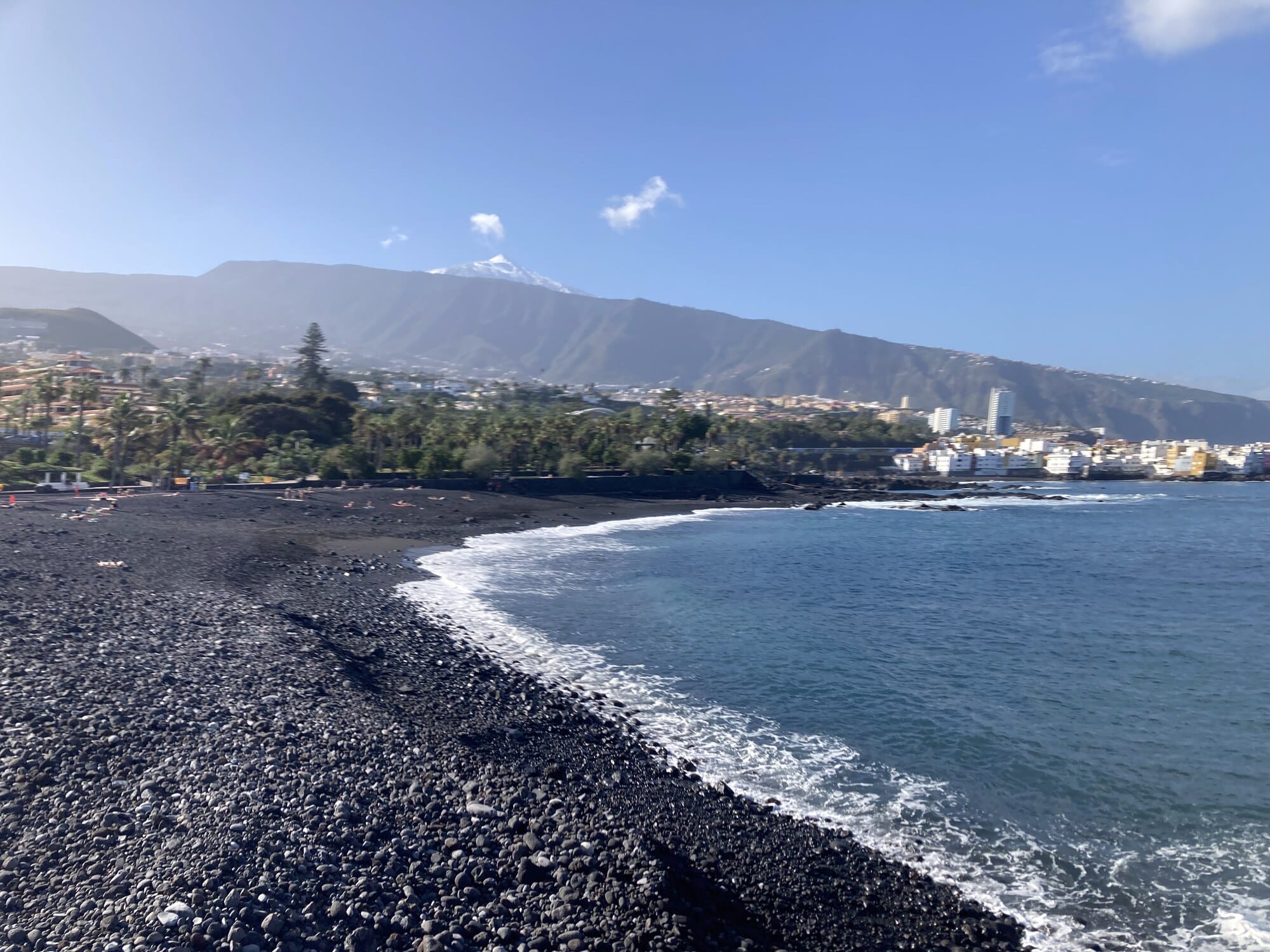
Playa Jardín is the best beach in town and one of the most scenic on the island. Designed by César Manrique (Lanzarote's most famous son), it's a curve of black volcanic sand set against a backdrop of tropical gardens and, on a clear day, the snow-topped cone of Teide rising 3,718 metres behind. The water is calmer here than at the open-Atlantic beaches further west, and two breakwaters keep the swell manageable for kids.
Before or after the beach, wander east into the old town — the Plaza del Charco is the heart of Puerto and a good spot for a vermouth at an outdoor table. If you're travelling with kids and want a full-day escape from the driving, Loro Parque tickets on the western edge of Puerto de la Cruz give you one of Europe's best-rated zoos with parrots, orcas and a rebuilt penguin habitat.
Stop at a Coastal Mirador on the Way
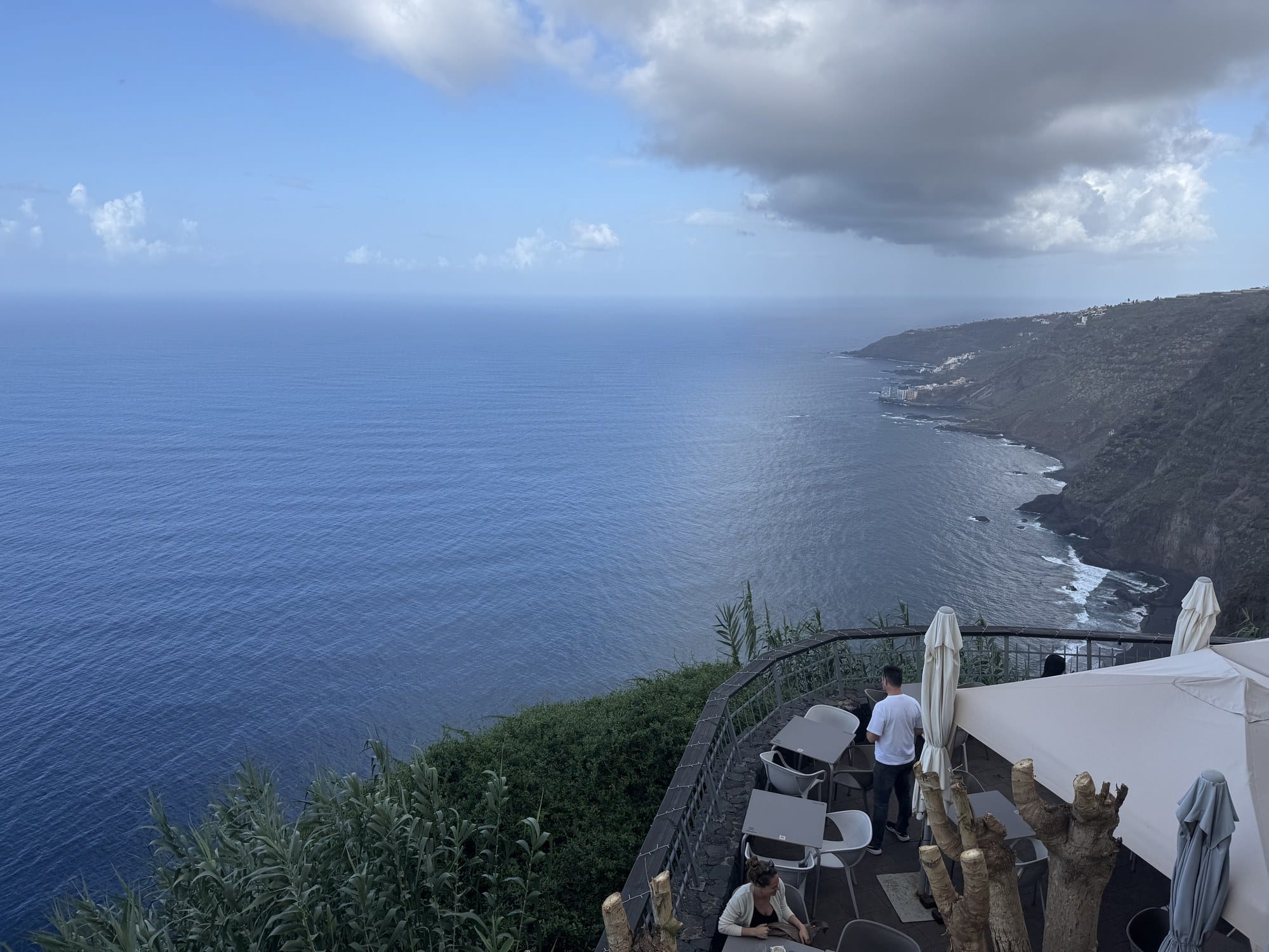
The TF-5 motorway between Santa Cruz and Puerto de la Cruz runs inland, but the old coastal road threads through a string of small towns — El Sauzal, Tacoronte, La Matanza — each with its own clifftop mirador looking down on the Atlantic. If you have an unhurried half-day, the terrace at Mirador de La Garañona in El Sauzal is a lovely lunch stop, with black lava coast below and the ocean stretching to the horizon.
Walk the Jardín Botánico of Puerto de la Cruz
A short drive or bus ride from the centre of Puerto lies one of the best botanical gardens in Europe. The Jardín Botánico — officially the Jardín de Aclimatación de La Orotava — was founded in 1788 as a halfway house for tropical plants travelling from Spain's American colonies to the royal gardens in Madrid. More than two centuries later, it's still quietly doing its job.
The star of the show is an absolutely enormous Moreton Bay fig (Ficus macrophylla) whose aerial roots have merged into a cathedral of wood twenty metres across. You walk underneath it, crane your neck, and struggle to tell tree from trunk from buttress.
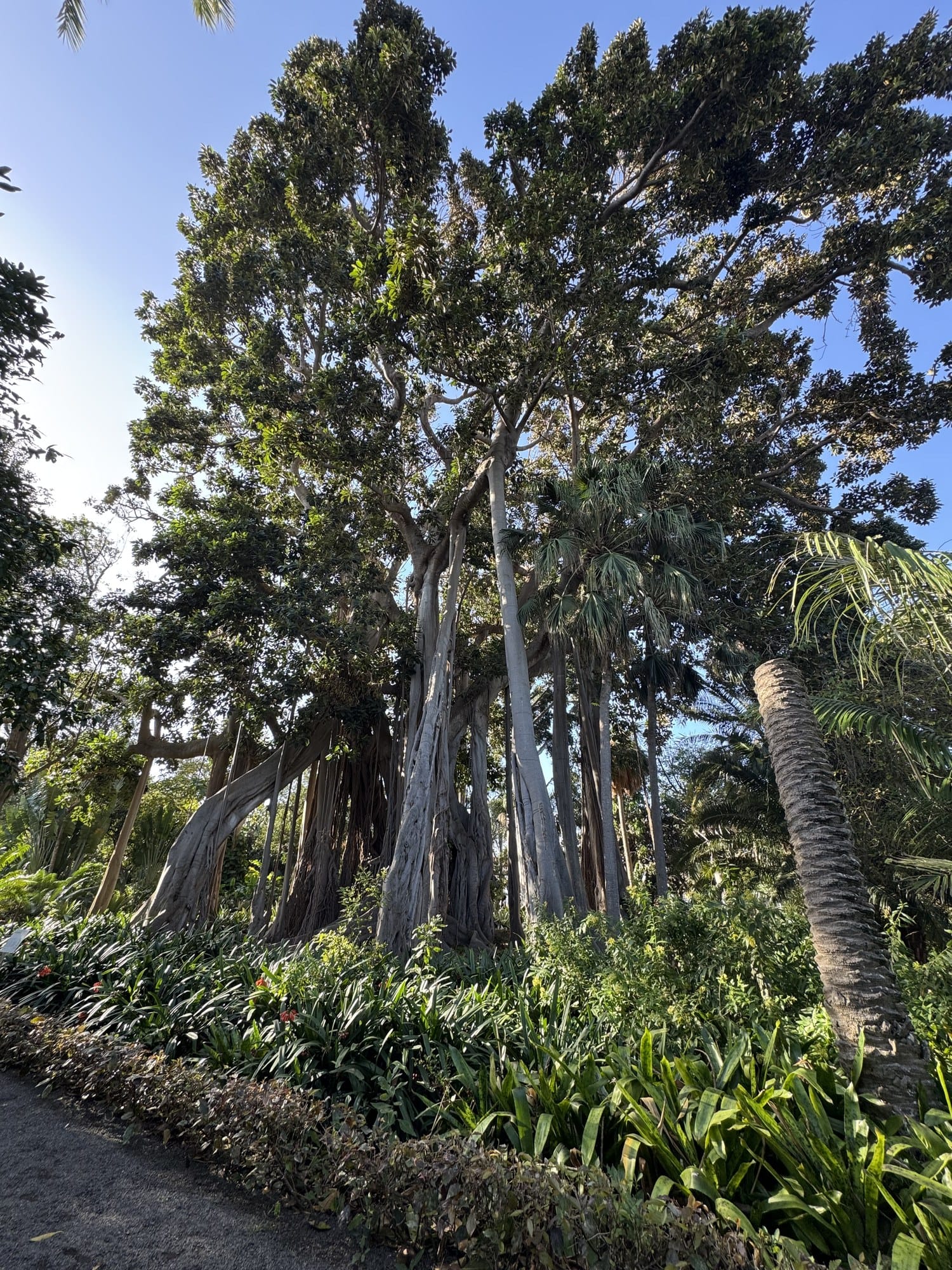
From a different angle, the sheer scale of the root system becomes clear — it's less a tree and more a small forest pretending to be one.
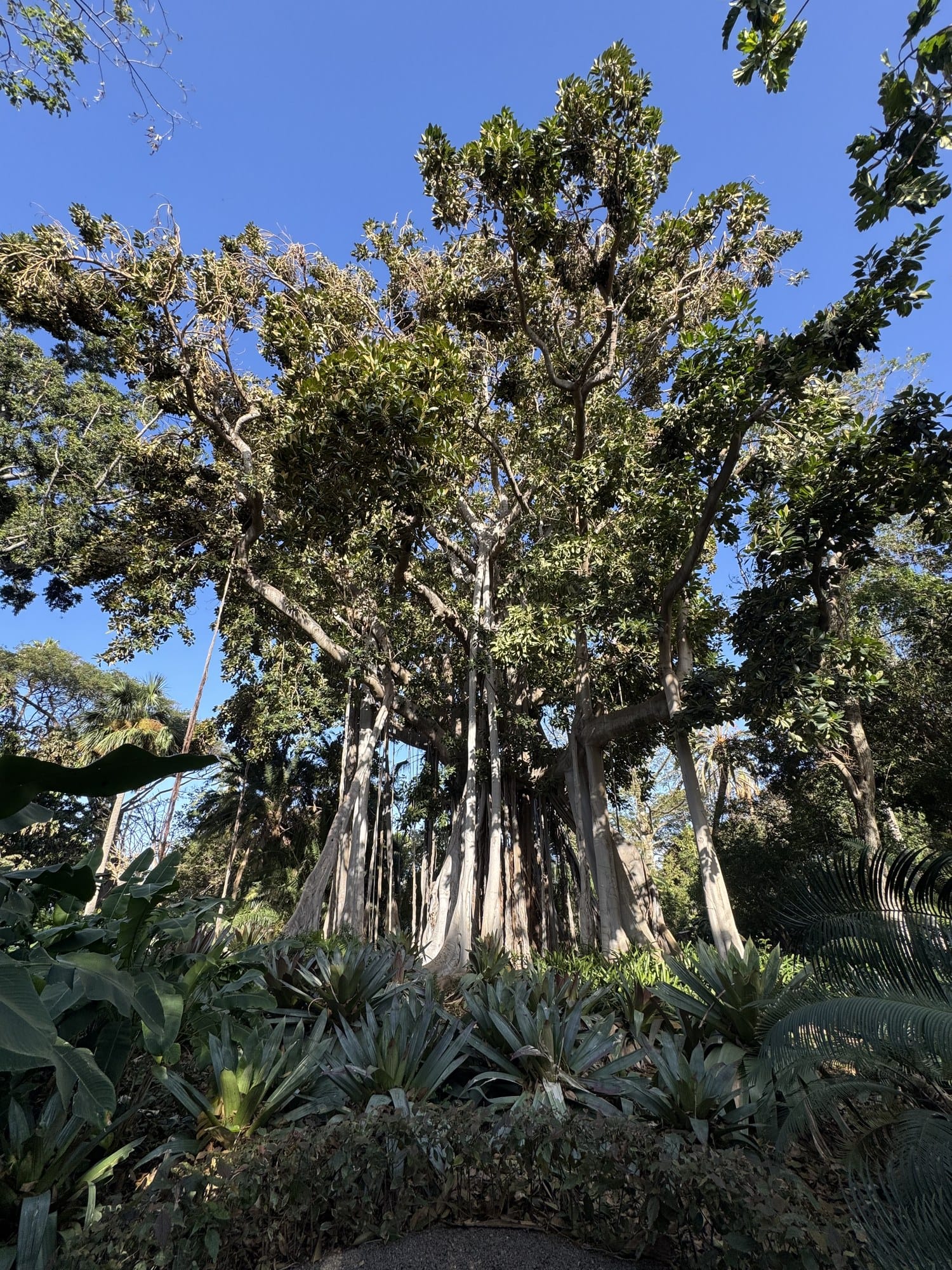
The rest of the garden is small (about 2.5 hectares) but dense, with bromeliads, orchids and a tropical greenhouse. Allow an hour.
Wander the Old Town of La Orotava
A 15-minute drive up the hill from Puerto takes you to La Orotava — and for many visitors, it's the single prettiest town on the island. Built on a steep slope overlooking the valley, La Orotava has been the traditional capital of wealthy Canarian farming families for centuries. The result is a concentrated historic centre of wooden balconies, baroque churches, and cobbled streets that always slope.
The best vantage point is the Jardines Marquesado de la Quinta Roja, a small terraced garden from which you can look down on the tiled roofs of La Orotava and out to the Atlantic beyond.
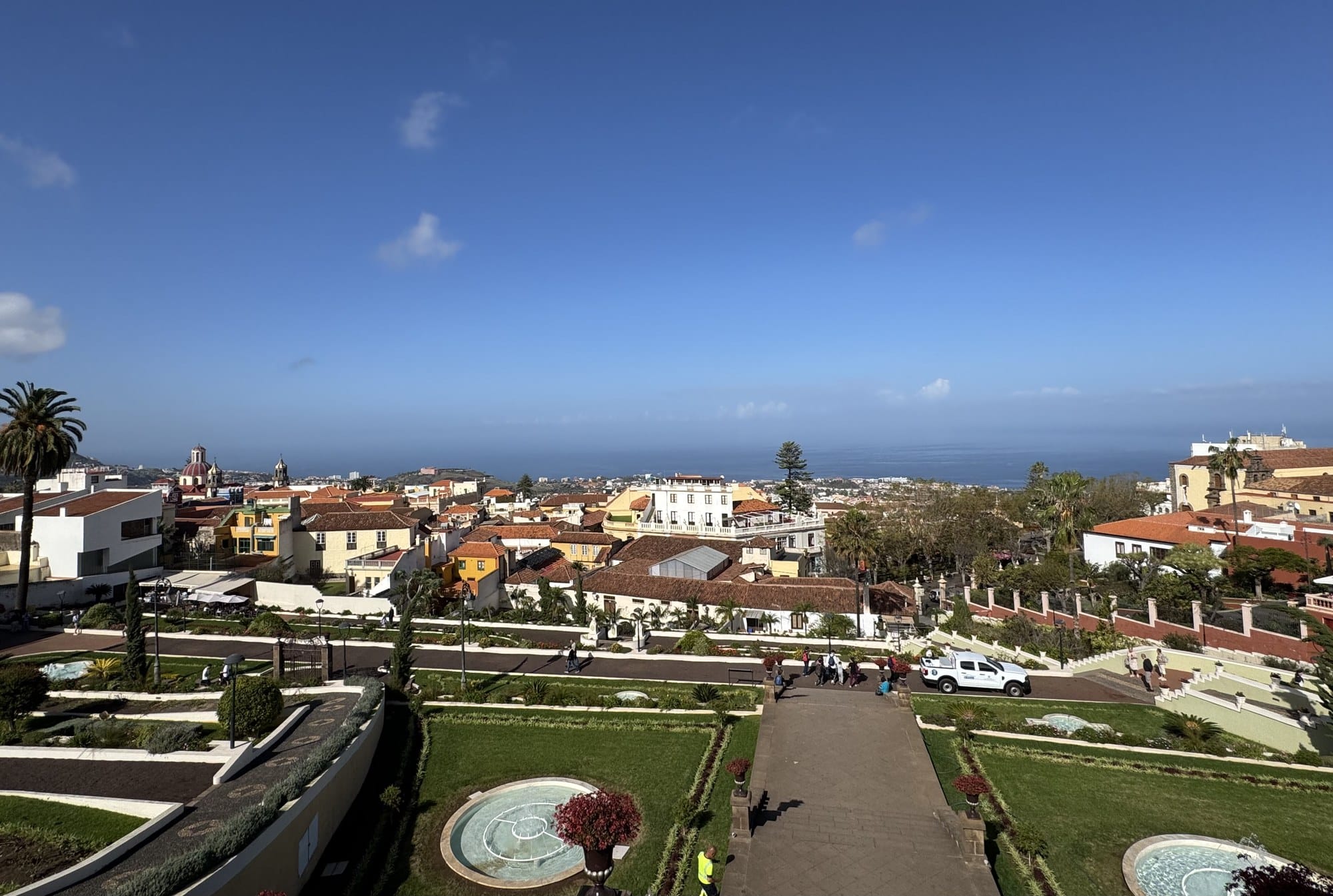
From there, walk down into the old town proper. The Iglesia de la Concepción is the baroque showpiece; the Casa de los Balcones and Casa Lercaro display carved wooden balconies that have become the icon of traditional Canarian architecture. For an hour with a local historian, a 130-minute guided walking tour of La Orotava will unpack the baroque churches, balconies and carpet-art tradition in a way no guidebook can.
See the Belén Navideño at Christmas
If you visit La Orotava between mid-December and early January (as we did), you'll catch the Belén — a giant Nativity scene set up on the Plaza del Ayuntamiento, right in front of the pink façade of the town hall. The Belén here is one of the most elaborate in the Canaries, with a full village of hand-modelled clay figures, a shooting-star illumination suspended above the square, and a constant stream of locals and visitors stopping to photograph it.
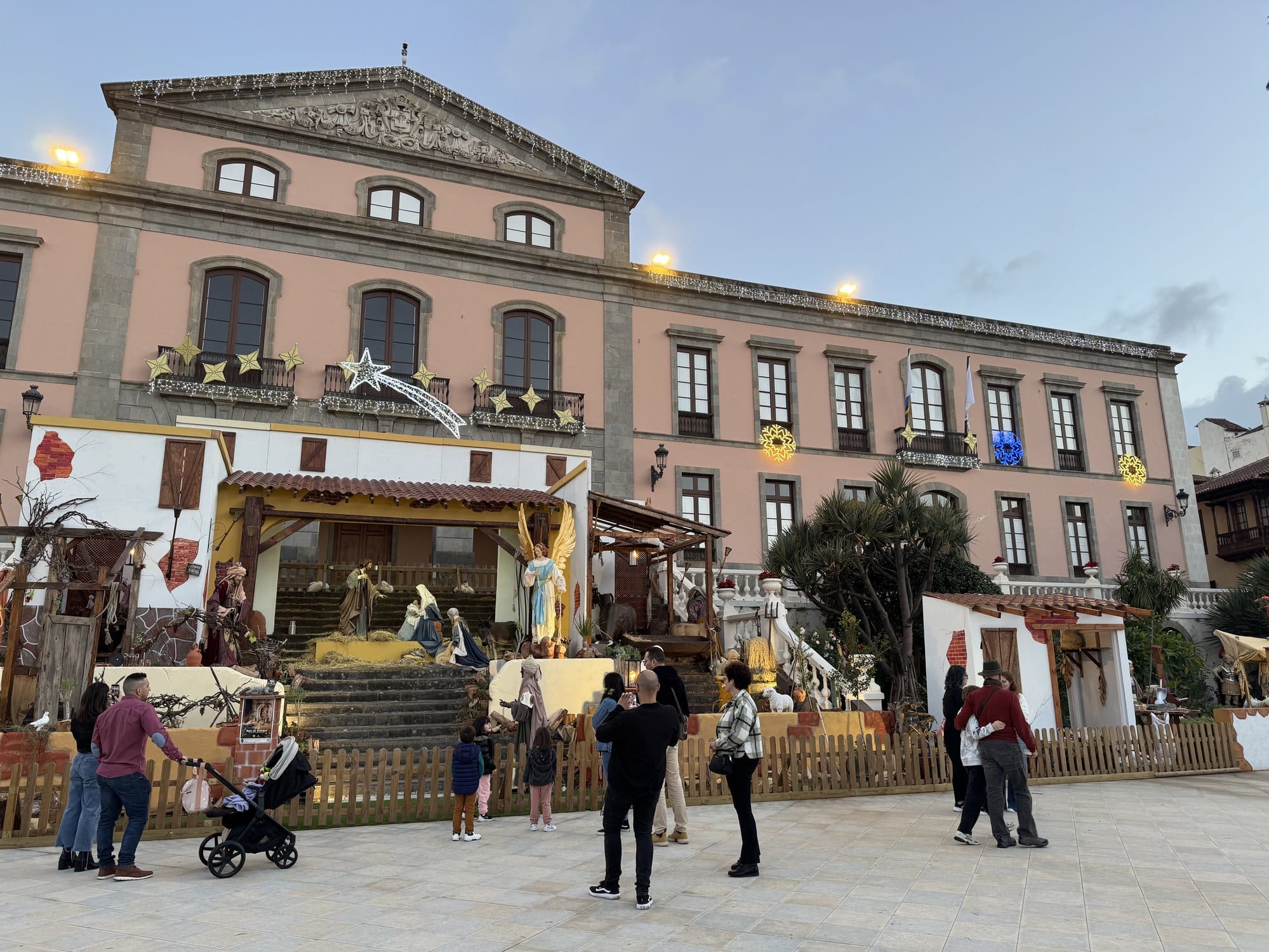
If possible, see it at dusk when the lights come on.
Drive West to Icod de los Vinos
Half an hour west of Puerto, the road delivers you to Icod de los Vinos — a small town wrapped around the hillside above one of the most famous trees on earth.
The Drago Milenario is a dragon tree (Dracaena draco), the emblematic species of the Canaries. Local tradition says this specific tree is a thousand years old; modern botanists put the age closer to 400–800 years, but either way it's the oldest and largest known dragon tree on the planet. It stands in its own small park with a palm for company, and you pay a few euros to get close — grab your Drago Milenario and botanical garden ticket ahead to skip the small ticket queue — or you can photograph it for free from the steps of the church across the road.
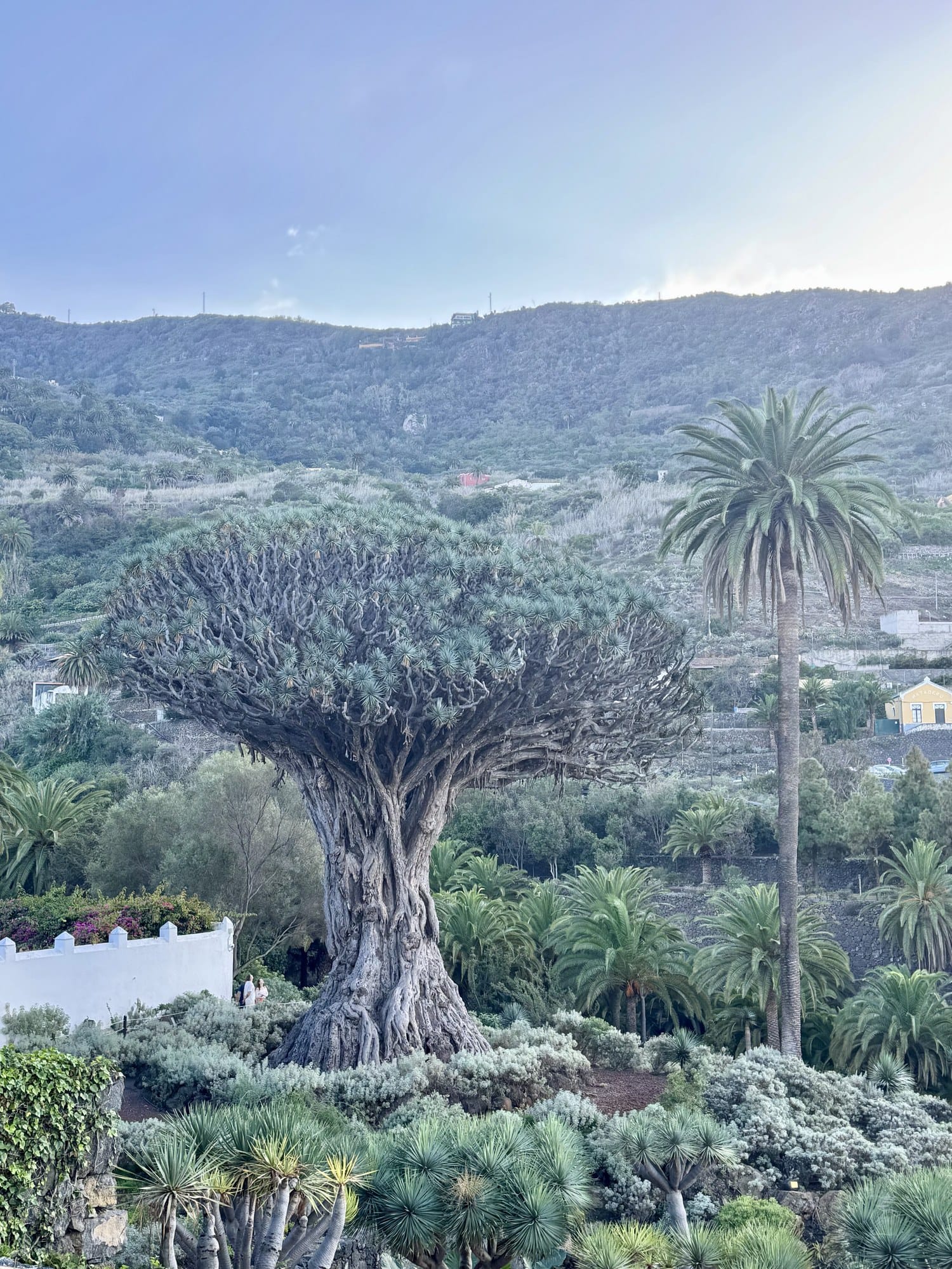
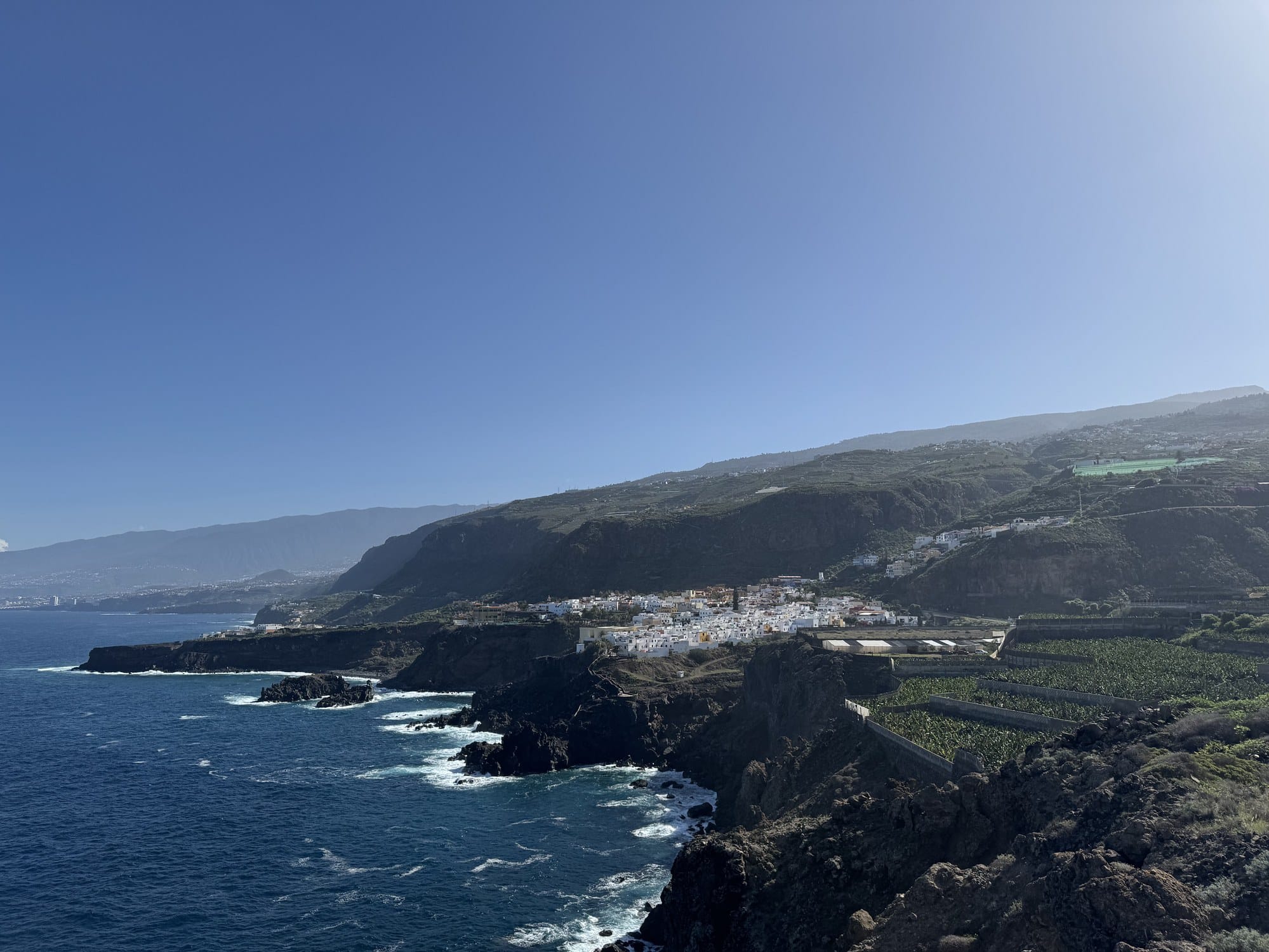
From the town itself, a short drive takes you to Mirador San Marcos — a clifftop viewpoint looking down on a small crescent of black-sand beach and a patchwork of banana plantations stepping down to the Atlantic.
Time Your Visit to Garachico for the Evening
A ten-minute drive west of Icod sits Garachico — once Tenerife's main port, until the 1706 eruption of Volcán Trevejo filled the harbour with lava. The town was rebuilt slightly inland, and today it's one of the quietest, most charming corners of the island: a grid of narrow streets, a 16th-century castle sticking out into the sea, and a series of natural lava rock pools (the Piscinas Naturales El Caletón) where you can swim directly in the Atlantic.
Garachico is especially good in the evening, when the tourist coaches have left and the place belongs to locals. On New Year's Eve, the central plaza takes on a festive atmosphere: oversized illuminated snowflakes hang from the palms, a full-scale Nativity scene occupies one end of the square, and the whole town gathers under the lights to welcome the new year.

Whether you time it for the holidays or any ordinary evening, try to stay for sunset — the light on the baroque church and the lava coast is as good as anywhere in the Canaries.
Planning Your Visit
Where to base yourself: The north is the best base for a full exploration of Tenerife. Puerto de la Cruz gives you the most choice; La Orotava is quieter and more atmospheric; Garachico is a romantic small-town option. Browse Tenerife hotels on Trip.com to compare options.
How long: Two full days is enough to hit all four towns at a leisurely pace. One day would force you to skip either Garachico or the botanical garden.
Getting there: Pick up a rental car on Trip.com at Tenerife North (TFN) airport — it's 20 minutes from Puerto de la Cruz. The north airport is far more convenient than Tenerife South for this itinerary.
Weather: The north is wetter and cooler than the south year-round, which is why it's greener. Pack a light layer even in summer. Clouds often bank up against the north slope by mid-afternoon — mornings are the clearest time for Teide views.
Guided experiences: The Jardín Botánico and La Orotava are easy DIY visits. If you're short on time, a full-day Teide and northern Tenerife grand tour combines the Drago, Garachico, Icod and a Teide caldera stop in a single day with hotel pickup.
More of Tenerife & the Canary Islands
The north is only one slice of Tenerife. Teide, Teno and Anaga each deserve their own day and their own article — and if the green, cultured side of the island spoke to you, there are a few more MapTrotting guides that go well alongside. — Lanzarote's volcanic heart and art — wild coast of south Lanzarote