
Best Beaches in Mallorca: Coves, Cliffs & Turquoise Water
Mallorca's coastline is a collection of turquoise coves tucked beneath limestone cliffs, wide sandy bays and dramatic headlands that rival anything in the Mediterranean.

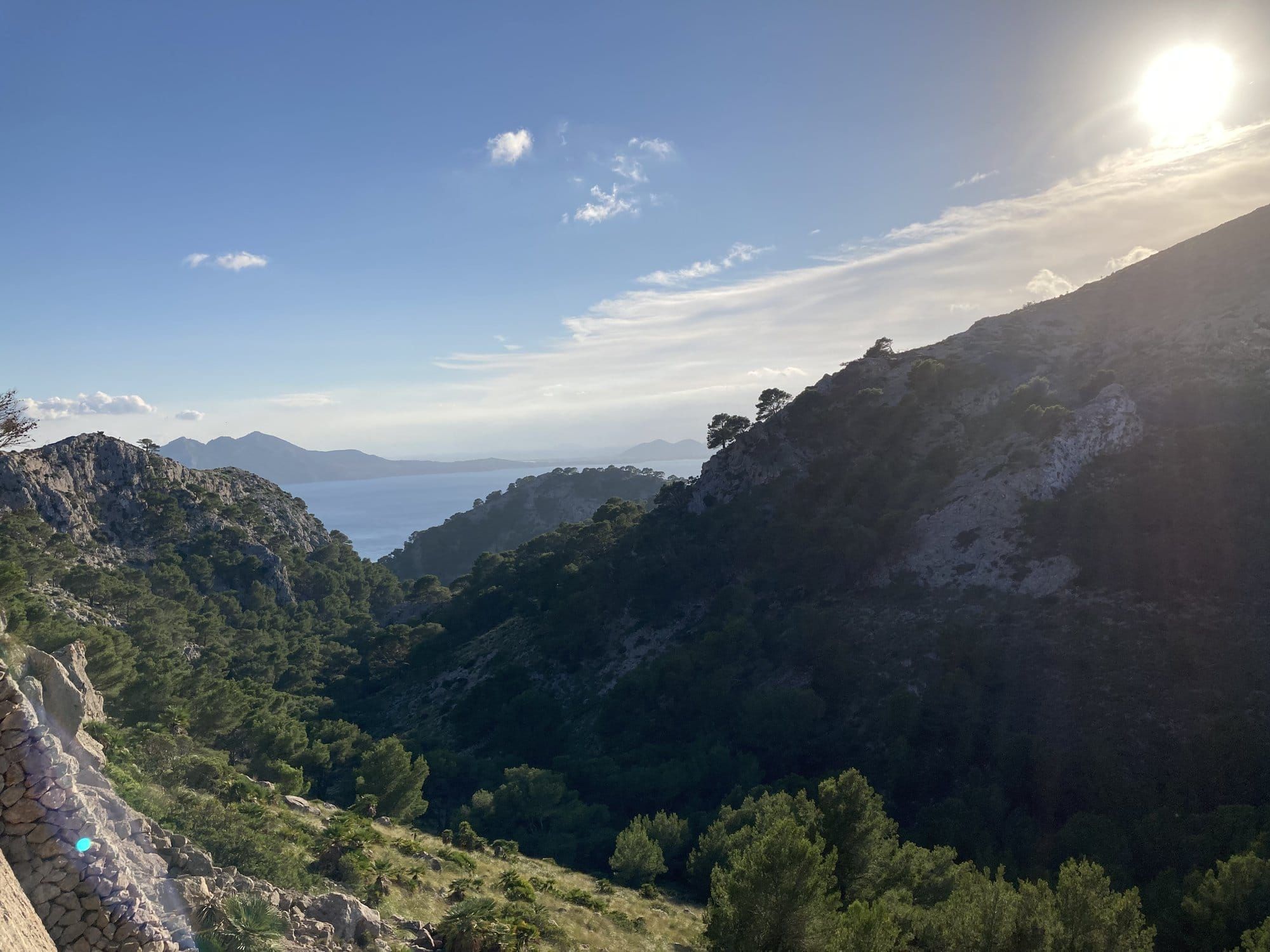
We landed in Palma on 25 October 2021 with two kids (then 8 and 12), a rental car booked for ten days, and a list of beaches we'd been scrolling on Instagram for months. What we found on the island wasn't the Mediterranean cliché — it was a coastline that shifts character roughly every 30 kilometres, and an off-season window (late October into early November) where the water was still 22°C and Cala Llombards had exactly four other families on it at midday.
This guide covers the beaches we actually swam at over those ten days, driven in a logical loop from the southeast around to the northern cape: Santanyí's limestone coves (days 1–2), the Capdepera–Pollença–Formentor corridor on day 3, Alcanada on day 4, the Serra de Tramuntana and Sóller on days 5–6, then Deià and Palma. No artificial 'top 10' — just the stops that made us stop the car and stay.
Affiliate Disclosure
This article contains affiliate links to external booking platforms. MapTrotting may earn a small commission when you book accommodations or tours through our partners, at no additional cost to you. These partnerships help support our travel research and allow us to continue producing detailed destination guides.
Santanyí's Hidden Coves: Mallorca's Turquoise Heart
We based ourselves near Santanyí for the first two nights. The southeast corner trades the island's big-bay real estate for a chain of narrow calas — limestone gorges cutting inland to small sandy heads — and the drive between them rarely takes more than fifteen minutes. Two delivered enough that we'd make the detour from Palma for them alone.
We pulled into the dirt lot above Cala Llombards around midday on Monday 25 October. The walk down is five minutes of pine needles and sandstone steps; the cove itself is maybe 50 metres wide, flanked by two fishermen's huts (escars de barques) carved straight into the rock. Kids were in the water before we'd even laid out towels — the shelf is so gradual you can walk out twenty metres and still stand. We ate cold tortilla on the sand; there's no bar, no lifeguard, no umbrellas for rent. In peak August you'd need to arrive before 9 a.m. to park; in late October we had the lot half-empty at lunchtime.
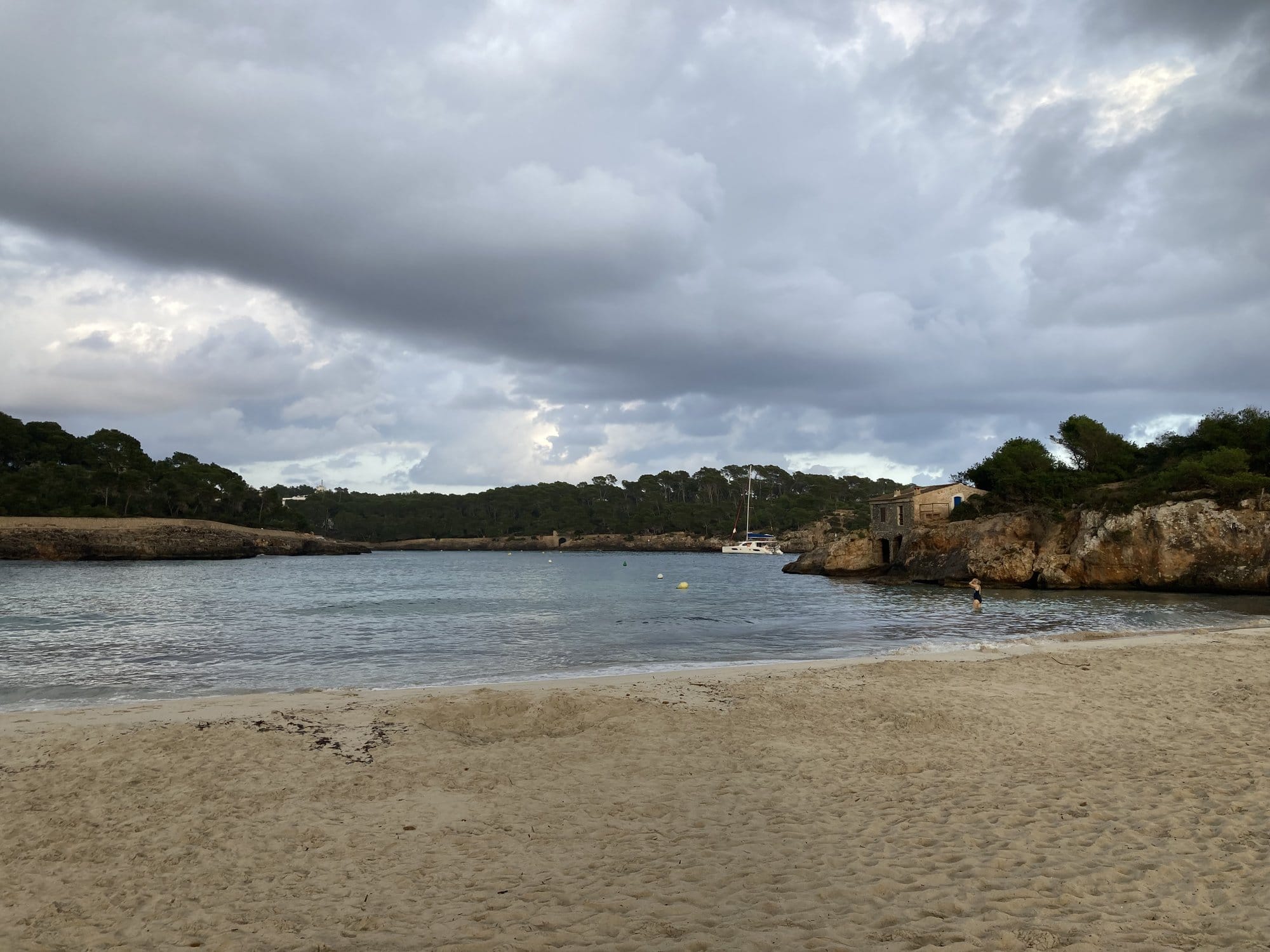
Cala Santanyí, a four-minute drive north, is the easier-access sister: a wider arc of sand, two chiringuitos open through October, and parking that's both free and actually adequate. We came back in the late afternoon on day 2 — the beach there at 17:44 felt closer to a family lido than a wild cove, and that's what you want when the kids are tired of geology. The town itself (three kilometres inland) runs a Wednesday market; we skipped it but friends who timed it right came back with honey, olives, and the kind of sobrasada that doesn't travel well.
The Santanyí region works well as a beach-based base for several days. Accommodation ranges from small apartment rentals in town to villa properties in the surrounding countryside. The coastal drive south from Palma takes roughly ninety minutes, making it accessible but far enough from the capital to feel genuinely removed.
Capdepera's Rocky Majesty and Sheltered Bays
On Wednesday 27 October we left Santanyí in the mid-morning and drove the coast road north-east to Capdepera — about 70 minutes. The shift is noticeable: the calas of the south give way to bigger rock formations, longer beaches, and a different colour palette (more pine, less agave). We did three beaches here in a morning, which in August would have been impossible.
We parked at Cala Agulla in the mid-morning — the lot at the end of the road (follow signs from Cala Ratjada) was €5 for the day and half-full. The bay runs roughly 450 metres, pine forest coming down to within ten metres of the sand, and the water stays knee-deep for a surprisingly long stretch out. Our kids wandered out maybe thirty metres before it came up to their shoulders. A single restaurant at the east end (Sa Caseta) was still serving lunch in late October; west of that there's nothing, which is part of the point.
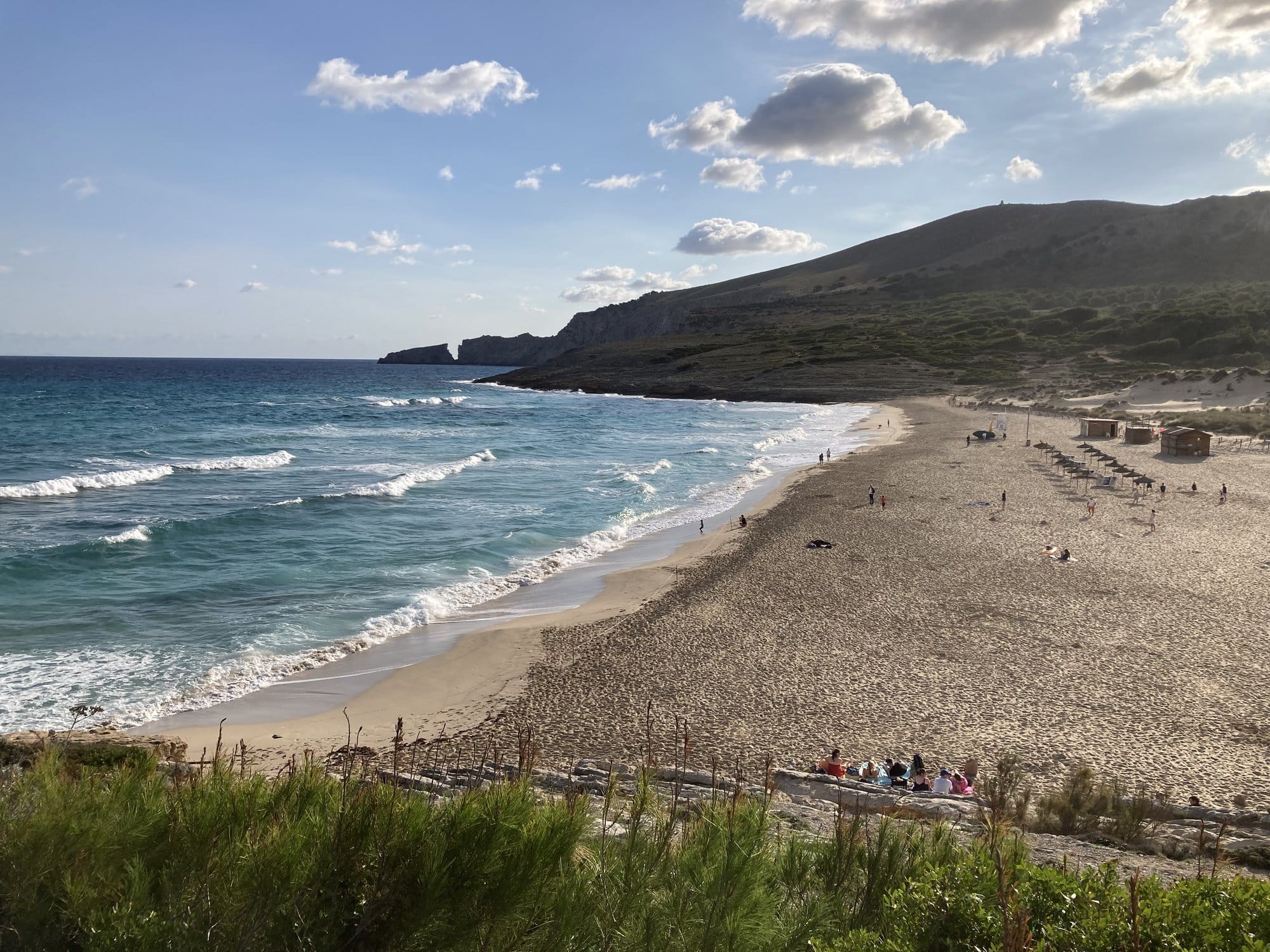
Cala Mesquida sits just over the headland — you can walk there from Agulla in about 25 minutes on the signed coastal path, or drive ten minutes via Capdepera village. It's a wider, scrubbier beach with coarser sand and the kind of low dunes that get roped off in spring for shearwater nesting. The swell is noticeably bigger than at Agulla; we didn't let the 8-year-old past knee-depth. A small wooden beach bar operates April–October.
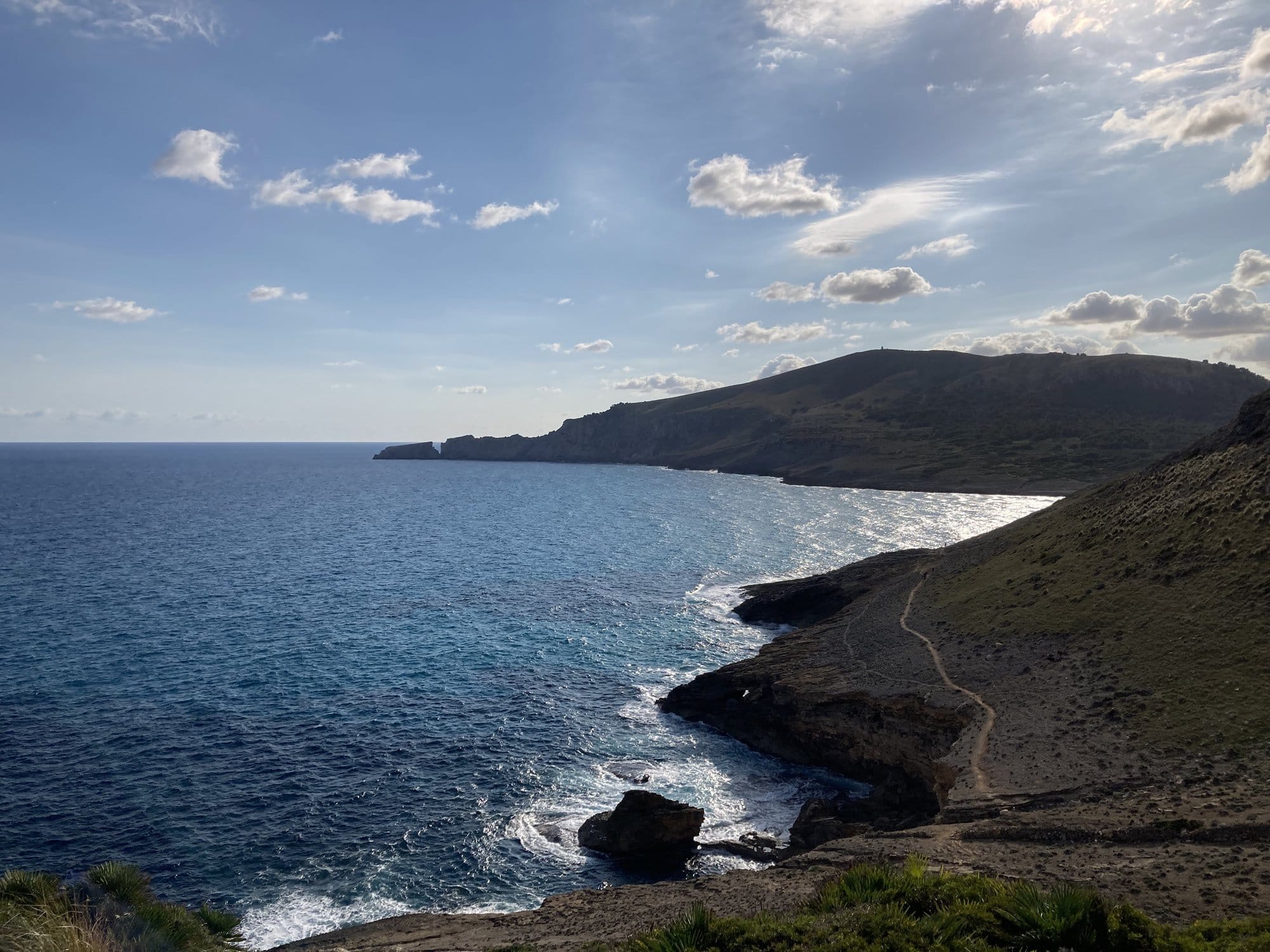
We doubled back to Cala Agulla around 10:39 for the short coastal walk north of the car park — fifteen minutes gets you onto a headland (the miradors are signed from the end of the Agulla path) where limestone cliffs drop 40 metres straight into turquoise water. It was here we realised how different the geology is from Santanyí: pale gold rather than bone-white, with long horizontal banding. Morning sun hits these cliffs from the sea side; by late afternoon they're mostly in shadow.
Capdepera village sits 3 km inland on a hilltop and is worth 90 minutes (not a morning). The 14th-century castle at the top — Castell de Capdepera, €3 entry — wraps the whole hill in battlements and gives the best panorama of the north-east coast we got all trip. If you're basing here instead of Santanyí, the drive to Alcúdia is 40 minutes and to Formentor about an hour.
Pollença Bay: The Island's Largest Sandy Expanse
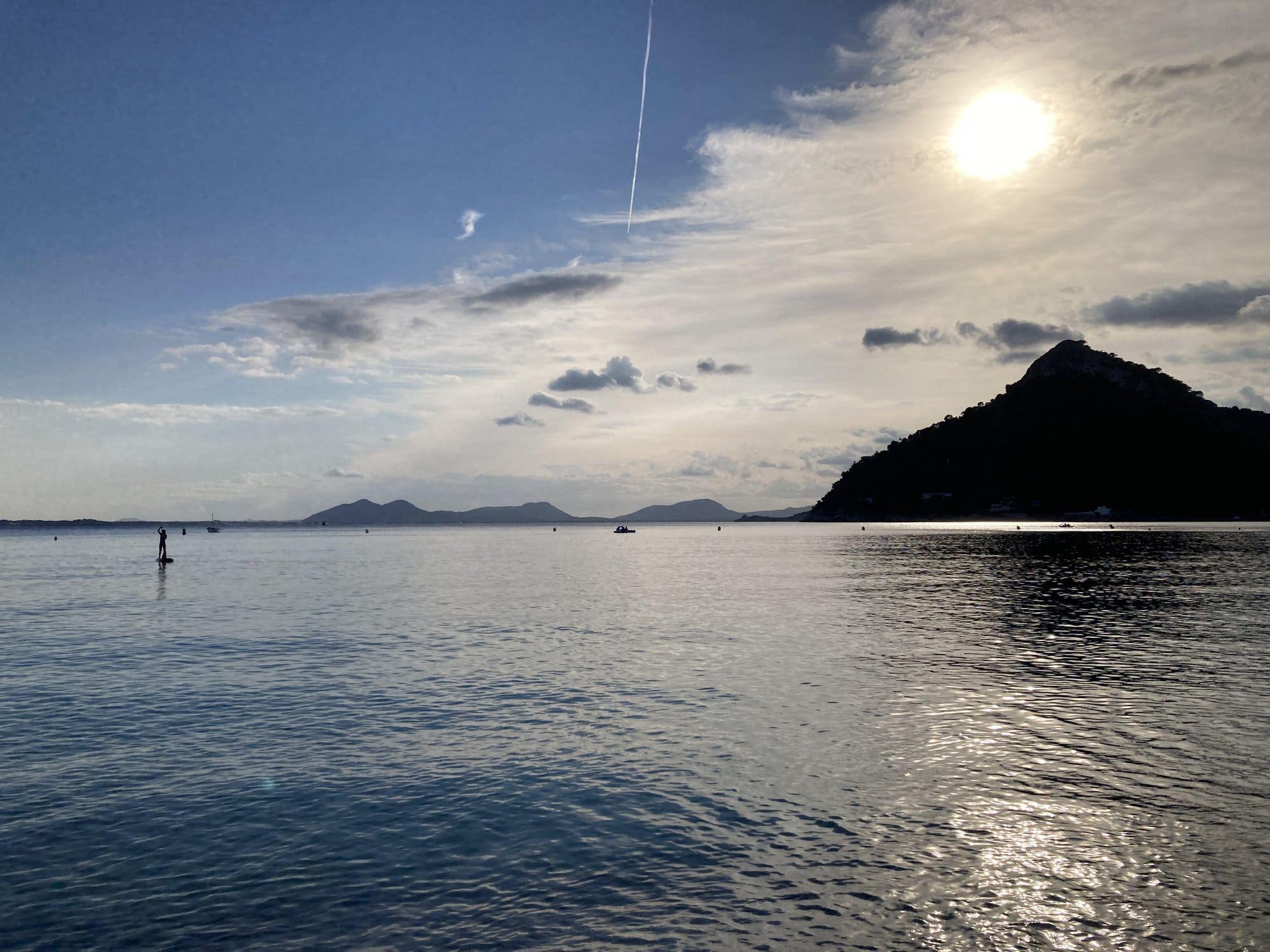
From Capdepera we drove an hour west to Port de Pollença, stopping at the promenade around the late afternoon for what turned out to be the most photographed sunset of our trip. Pollença Bay is the largest sandy stretch on the island — roughly 3 km end to end — and it's the easiest drop-in with kids: paid parking along the length of the promenade, a continuous seafront walk, and lifeguarded sections in summer. The wind tends to pick up in the afternoon (we'd skip it for sunbathing after 15:00), which is also when the kitesurfers set up at the western end.
The town of Pollença is a 10-minute drive inland — not to be confused with Port de Pollença on the bay. The famous stairway (the Calvari, 365 steps crowned with a tiny chapel) took our 12-year-old four minutes; the 8-year-old stopped to count out loud and took closer to ten. It's a proper old Mallorcan town with an honest-to-god Sunday market in the plaça major — no crystals, no essential oils, just fruit, honey, and the odd butcher shouting over rabbit prices.
If you have kids under 10 and want one beach to park yourself at for a full day, Pollença Bay is the pragmatic answer. The shallow shelf runs out so far that even our non-swimmer felt confident to waist depth, and there are roughly a dozen beach bars along the promenade — none memorable, all adequate, most with a toilet. The paid lots behind the promenade run €2/hour or €12/day; arrive before 10:30 in summer to find a spot on the first row.
Cap de Formentor: The Scenic Drive and Dramatic Headland
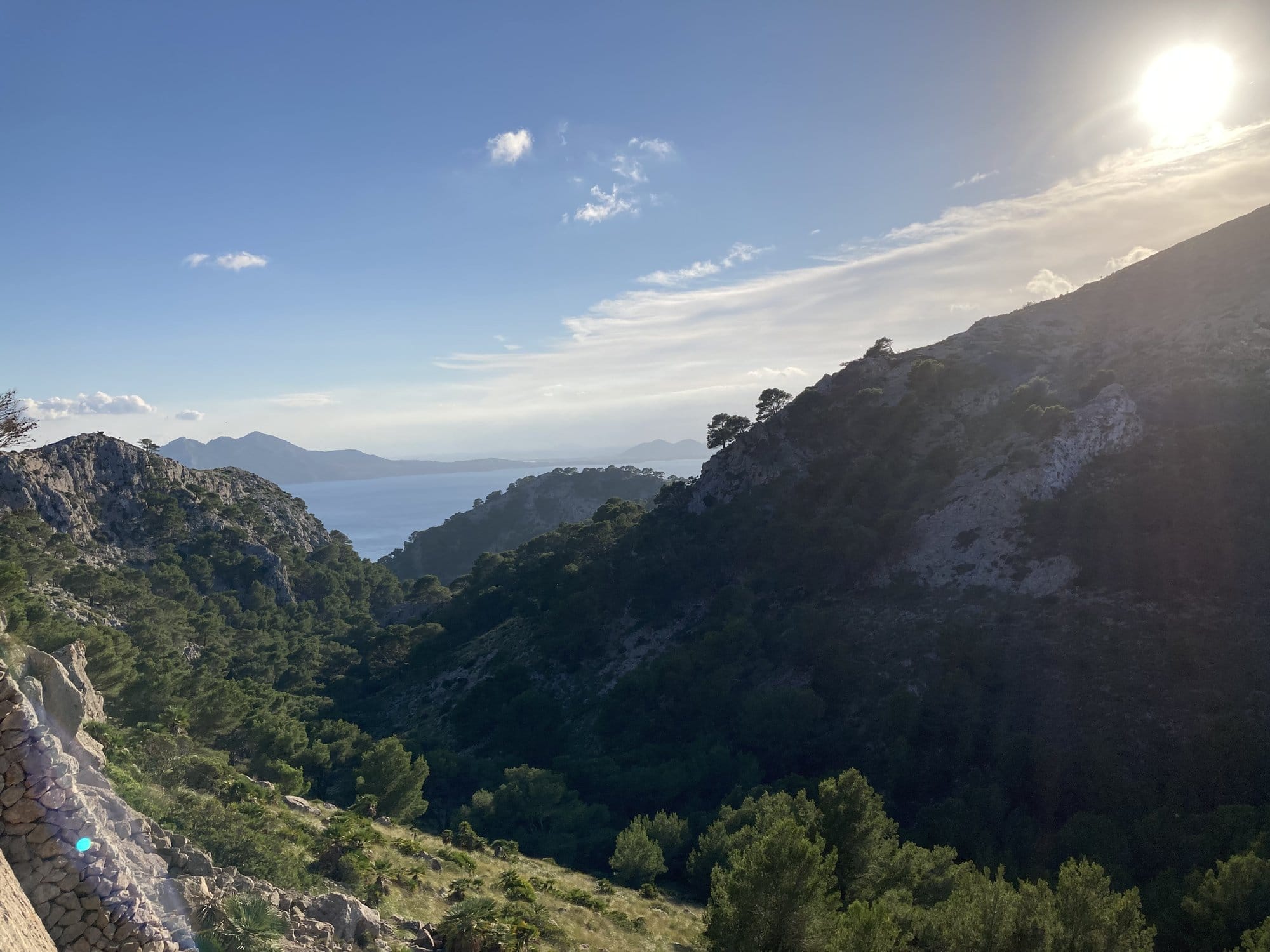
We started the Formentor drive in the late afternoon on 27 October, chasing the last of the day's light. The 14-kilometre road peels off from Port de Pollença and climbs through pine forest for the first four kilometres, then opens out at the Mirador es Colomer — the stopover we reached in the late afternoon, parking on the shoulder because the official lot was already full. Between June and September the road is closed to private cars between 10:00 and 19:00 (a shuttle runs from Port de Pollença); in late October we drove the full length ourselves, solo on some stretches.
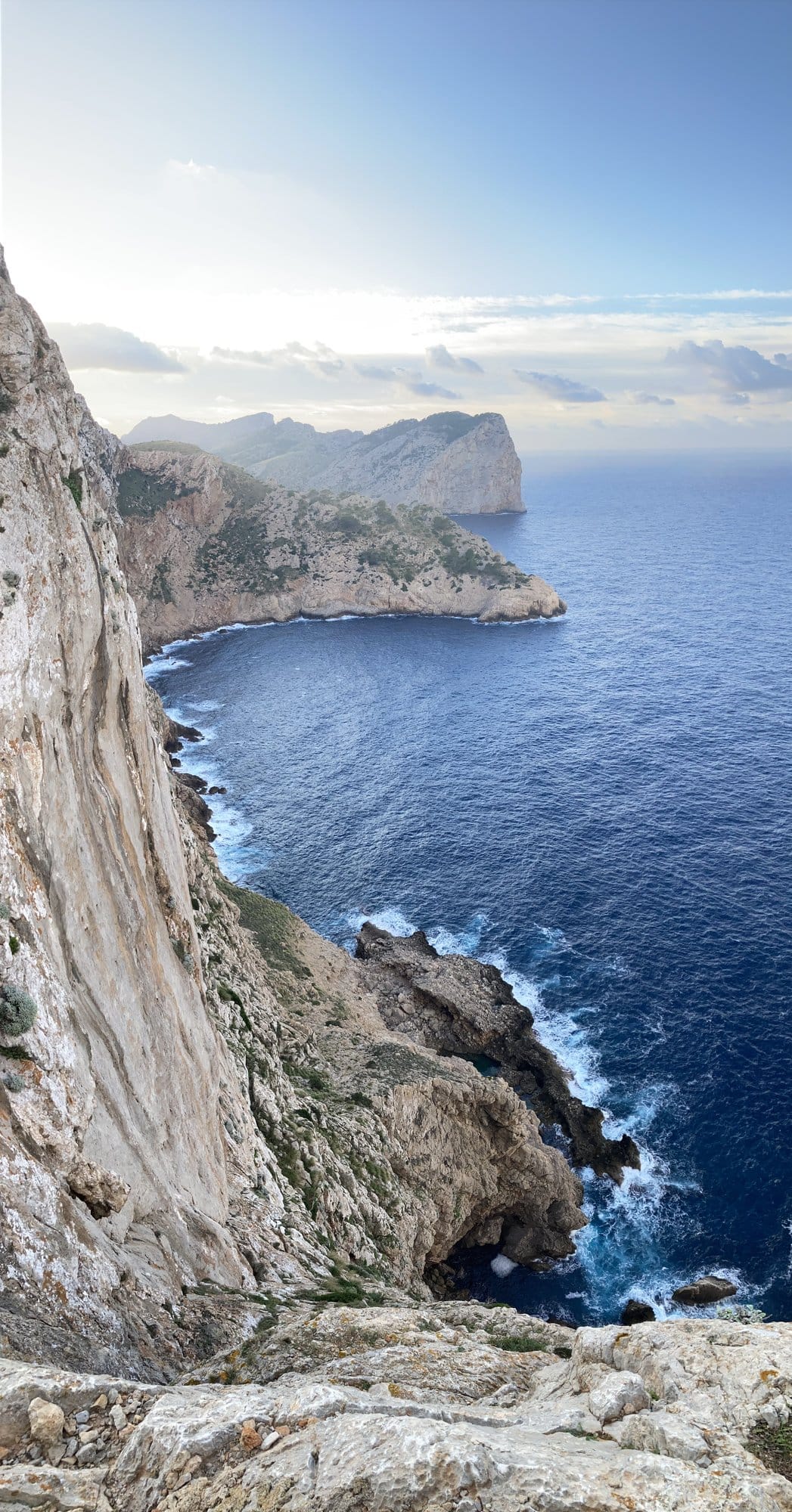
We reached the Cap de Formentor lighthouse in the late afternoon, roughly thirty minutes before sunset in late October. The final kilometre is a single-lane cliff road with passing bays; driving it with light fading was the only part of the trip where I was glad we had the smaller rental (a Fiat 500X rather than a family SUV). From the lighthouse terrace the drop is 210 metres to the water, and on a clear evening you can just make out Menorca's outline to the east. The lighthouse café shuts at 20:00 and the queue for photos at the viewpoint balcony gets long; the drive back in full dark takes 45 minutes, not 30.
The Cap cliffs are Tertiary limestone layered in horizontal bands, tilted just enough to read the depositional history at a glance. Two hikes drop from the lighthouse: a short 20-minute path to a small lookout on the southern side (rated easy, doable with kids), and a more serious 2-hour descent toward Platja de Formentor's eastern cove (rated moderate, not with an 8-year-old). We did the short one and turned around when the path got gravelly.
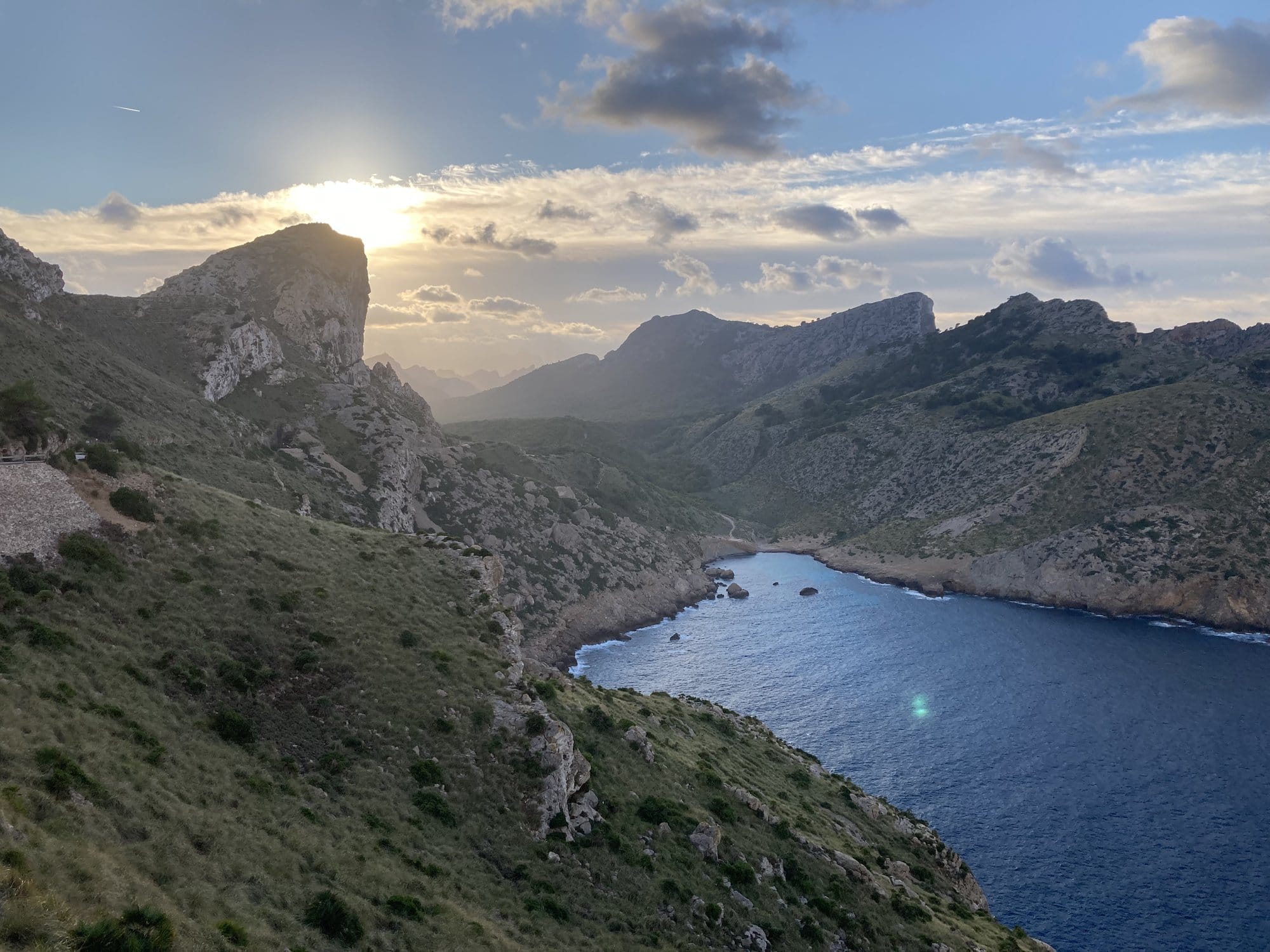
Plan on four hours for the round trip from Port de Pollença — that's the drive (45 minutes each way with stops), the lighthouse visit (30 minutes), and two or three miradors on the way (10–15 minutes each). Aim to arrive at the faro at golden hour: 90 minutes before sunset puts you in the best light without the headlights-on return that caught us out.
Alcúdia and Alcanada: Northern Anchors
Thursday 28 October was our Alcúdia day. From Pollença it's 15 minutes south along the MA-12; from Palma airport it's 45 minutes on the motorway. The town sits on a thumb of land with water on three sides — which historically made it a Roman naval base (Pollentia), and today means you can beach-hop around the peninsula without doubling back inland.
The main Platja d'Alcúdia runs about 5 km along the bay's west side — wide, gently sloping, and fronted by a long strip of concrete-block hotels that are honest about what they are. The old town, 1.5 km inland, is walled, compact (you can loop the 14th-century muralles in 40 minutes), and more worth the visit than the main beach itself. Tuesday and Sunday market days fill the plaça with about 80 stalls.
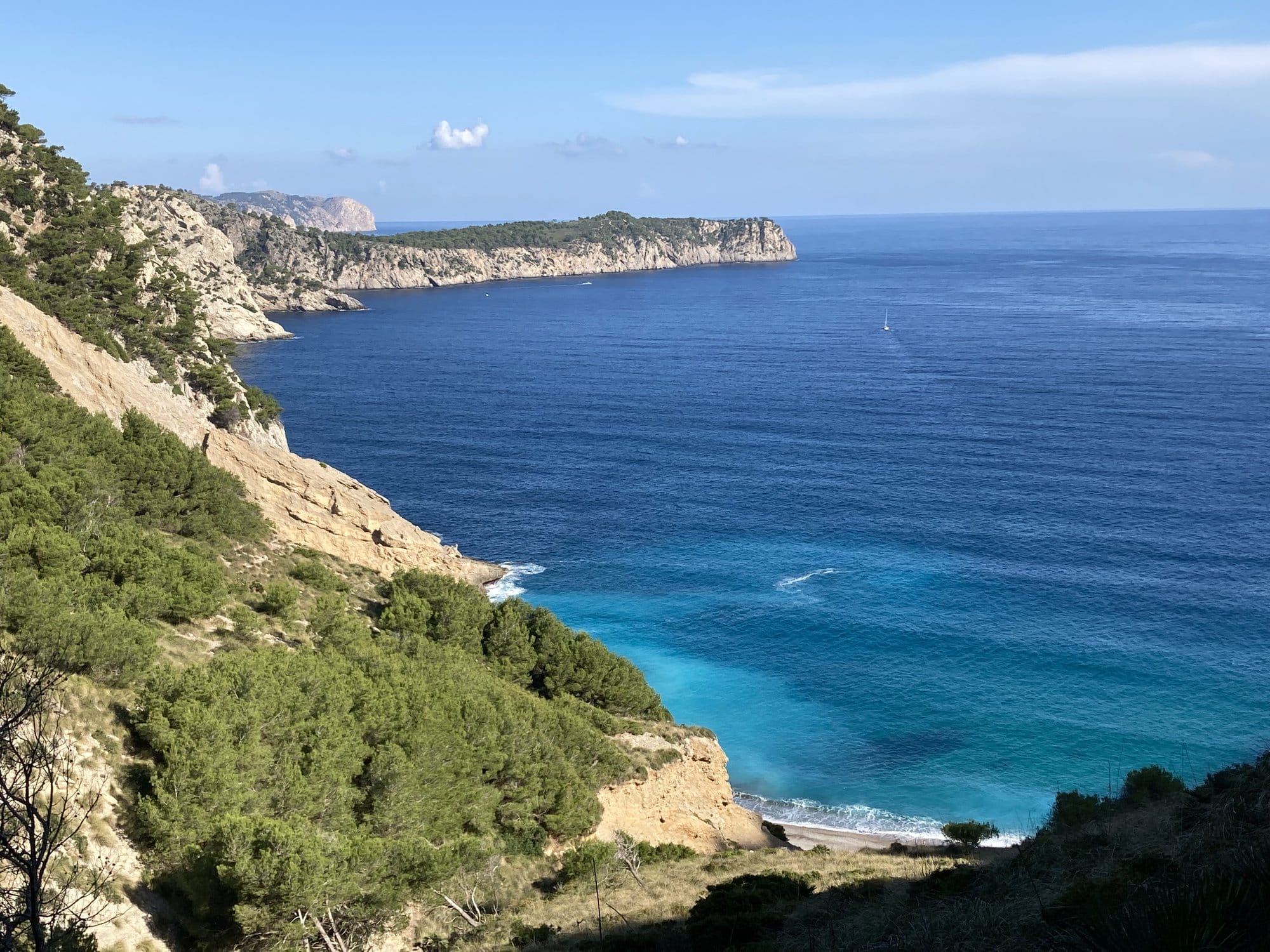
We drove 10 minutes north-east to Alcanada and arrived at noon. This is the quieter end of the bay — a small beach hemmed in by white limestone, with a single seafront restaurant (Club Nàutic Alcanadesa) and a lighthouse on an offshore islet that you can kayak to in about 20 minutes if the sea is flat. Parking is free along Avinguda Princeps d'Espanya; walk 200 metres down from there. The water gets deep faster than at Alcúdia main beach — better for teenage swimmers than toddlers.
If you're travelling with kids and want a single base for the whole trip, Alcúdia (or Port de Pollença, next door) is the pragmatic choice — more self-catering apartments, more supermarkets, more paediatric clinics if something goes wrong, and a flat beach promenade you can cycle with a 6-year-old without worrying about traffic. We chose a coves/villages rotation instead and stayed at Son Caliu (near Palmanova) for the last three nights, which meant more driving but more variety.
Practical Considerations for Beach Days
Seasonality and Weather
Mallorca enjoys a Mediterranean climate with warm, dry summers and mild winters. Beach season extends genuinely from May through October; July and August deliver peak heat and crowds. Spring (April-May) and autumn (September-October) offer ideal conditions—warm enough for comfortable swimming, yet cooler than midsummer. September particularly rewards visitors; the water remains warm from summer heating, but European holiday patterns mean reduced crowds compared to August.
Winter beach visits remain possible; water temperatures in January-February hover around 12°C (54°F), manageable with wetsuits for active swimmers but requiring more tolerance than typical beach conditions. Rainfall peaks in autumn (September-November) and winter; individual storms can be intense but brief.
Access and Parking
Popular beaches fill early in high season, particularly Cala Llombards and Cap de Formentor viewpoints. Arriving before 10 a.m. in July-August ensures parking. Some beaches, particularly Cala Agulla and Cala Mesquida, offer paid parking facilities; smaller coves rely on roadside spaces that fill quickly.
Many northern and eastern beaches remain accessible even during busy periods due to the region's geography and road infrastructure. Capdepera and Pollença have multiple large parking areas and access routes, reducing the all-or-nothing competition for limited spaces that characterizes the Santanyí region.
Amenities and Services
All major beaches (Cala Agulla, Pollença Bay, Alcúdia, Alcanada) offer seasonal lifeguard service, restaurants, and rental facilities (umbrellas, loungers, equipment). Smaller coves like Cala Llombards and Cala Santanyí have minimal infrastructure; visitors should arrive with water, snacks, and sun protection. Some coves forbid dogs during summer, though regulations change annually.
Driving Between Beaches
Real drive times we clocked from Palma airport in our Fiat 500X: Santanyí 55 minutes (motorway then MA-19), Capdepera 75 minutes via the coast road, Port de Pollença 60 minutes on the motorway. Add 15–20 minutes in July–August. Formentor is closed to cars 10:00–19:00 in summer — shuttle from Port de Pollença (€3 round trip) or arrive before 09:30.
Family-Friendly Highlights
Travelling with our kids (then 8 and 12) we ranked beaches on a three-part test: can the 8-year-old stand at 15 metres out, is there at least one bar/toilet without an hour's walk, and can we park within 200 metres. Pollença Bay and Cala Agulla pass all three; Cala Llombards passes two (no bar, short walk from parking); Alcanada passes two (small beach, restaurant at one end); Formentor fails them all and isn't really a beach outing anyway. — Mallorca family road trip itinerary
Beach clubs (chiringuitos) along major strands serve simple food and cold drinks without requiring restaurant-level formality. This allows children to eat on schedule without rigid reservations. Bring floatation devices and sun protection; the Mediterranean sun reflects intensely from water and sand, and UV exposure accumulates quickly.
Formentor works as a family excursion if you frame it as a drive with three stops (Mirador es Colomer, Platja de Formentor car park, faro) and snacks between. Our 8-year-old got carsick on the last four kilometres both directions; next time I'd do the shuttle in June–September for that reason alone. The faro café is the only food option past Port de Pollença — pack water.
Comparison with Regional Alternatives
Mallorca's beaches often invite comparison with other Mediterranean destinations. The island's turquoise water and limestone scenery resemble the southern Portuguese coast, though the Algarve's beaches tend toward golden cliffs rather than white limestone. For dramatic coastal scenery, the Dolomites region offers mountain drama, though landlocked and lacking Mediterranean warmth. The French Alps provide comparable scenic driving experiences but at altitude rather than coastline. For comprehensive European coastal exploration, Mallorca functions as an excellent stepping-stone to other Mediterranean destinations. — Menorca's quiet family beach guide — crystal-clear waters of Formentera — Ciutadella's turquoise calas in Menorca — wild beaches of eastern Menorca For another turquoise-water Mediterranean alternative with similar limestone coves and pine-shaded entries, see our Halkidiki beaches guide on Greece's Sithonia peninsula.
Getting there
Mallorca's beaches stretch around all four coasts of the island, but flights all land at Palma (PMI) — handy because the rental cars are at the terminal and the C-31 motorway gets you out of the airport zone in under 10 minutes. We try to land before 10:00 to be on a beach by lunch.
Frequently Asked Questions
Which beach is best for families with young children? Pollença Bay offers the combination of shallow water, lifeguards, and facilities most suitable for small children. Cala Agulla provides similar amenities in a smaller, less overwhelmingly crowded setting.
What's the best time to visit for avoiding crowds while maintaining good weather? May and September-early October balance warm temperatures with significantly fewer visitors than July-August. Late spring weather is generally reliable; early autumn maintains warm water from summer heating.
Are the smaller coves accessible for people with mobility limitations? Cala Llombards and Cala Mesquida involve stairs or uneven terrain. Cala Agulla, Pollença, and Alcúdia have formal access facilities and accessible parking. Cap de Formentor's lighthouse viewpoint is accessible by car, though the cliff paths require physical capability.
Can you swim year-round? Comfortable swimming extends May-October. Winter swimming requires wetsuits; water temperatures in January-February are around 12°C. Mediterranean storms occasionally close smaller beaches temporarily in autumn-winter.
Is it necessary to rent a car? Visiting multiple beaches across the island effectively requires a car. Local buses connect major towns but don't service many smaller beaches. For single-location stays, shuttle services and taxis function alternatives to car rental.
Plan Your Trip
Activities: You can book a Cap de Formentor excursion to make the most of your visit.
Activities: You can explore the coves by boat to make the most of your visit.
Accommodation: Use Trip.com to find beachfront hotels in Mallorca with competitive rates and free cancellation.
Palma, Sóller or the east coast changes what your week looks like more than any hotel does — we set out the four regions in our guide to where to stay in Mallorca.
Find the best deals on accommodation:
More to Explore
- Mallorca Tourism Official Site - Comprehensive destination resource - Palma Cathedral Architecture - Historic context for cultural visits - Balearic Islands Marine Life Guide - Understand Mediterranean fauna and flora - European Coastal Drives Comparison - Plan multi-country Mediterranean circuits - Mediterranean Climate Guide - Seasonal planning for southern European beaches
About the Author
Pierrick drove Mallorca end-to-end over ten days in late October 2021 with his wife and their two kids (then 8 and 12), staying at Santanyí, Port de Pollença and Son Caliu. All beaches in this guide are ones the family actually swam at or walked; all drive times are clocked in a Fiat 500X. More about how we write travel guides on the About page.