
Cycling Belle-Île-en-Mer with Kids: Port Coton & Beyond
Our complete cycling guide to Belle-Île-en-Mer — routes, distances, e-bikes, and honest advice for families tackling the wild coast.

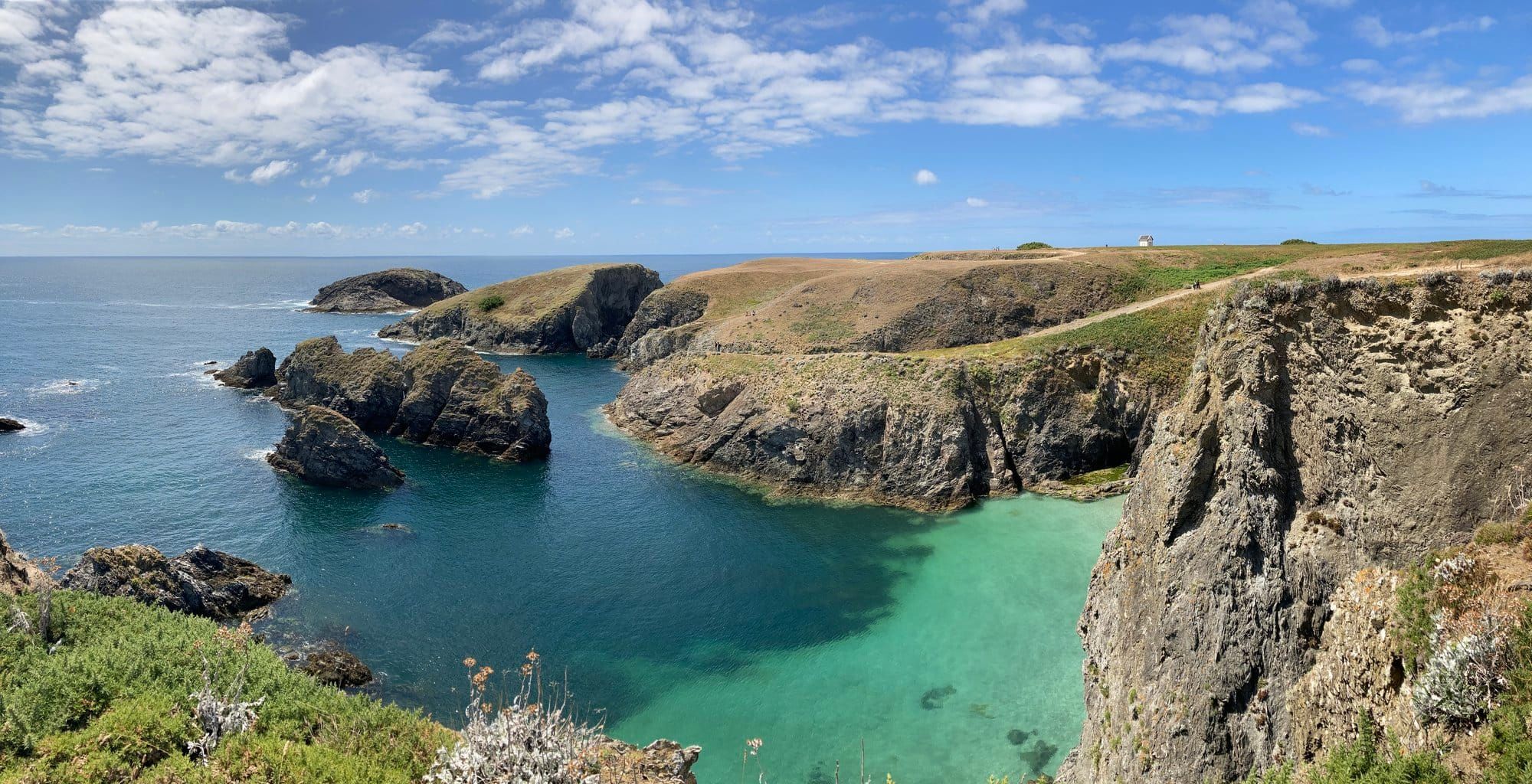
Belle-Île-en-Mer is not an easy bike ride. The Côte Sauvage—the island's wild western shore—climbs relentlessly. The wind can be brutal. The full loop stretches nearly 80 kilometres, and even on an e-bike, you'll feel it by day's end. But here's the thing: when the weather is kind, cycling this island with your children delivers something genuinely magical. Turquoise coves that belong in the Caribbean. Rock needles rising from the Atlantic like some painted dream. Hidden beaches accessible only by narrow cliff-path, where you might see nobody for hours.
We cycled the entire island as a family—both kids, full loop, all of it. Yes, it was un peu dur (a bit hard). But it works. It absolutely works, especially in good weather and with e-bikes to soften the worst climbs. This guide is for families willing to push a little harder for views that will stay with you for years.
Bookings: Some of the links in this article are affiliate links. This means that if you choose to make a booking, we will receive a small commission at no extra cost to you. Thank You!
The Route: What to Expect
Belle-Île's perimeter loop is roughly 80 kilometres. You don't have to do it all in one day—in fact, you shouldn't. Split it across two days, or do half-loops based on which shores interest you most.
The island's character shifts dramatically as you move around it. The east coast—facing the mainland—is gentler, with rolling hills and more pastoral Breton scenery. The north is dramatic and wild. But the west, the Côte Sauvage, is where the serious climbing happens. This is the Atlantic facing France head-on, and the terrain rises to meet that power: sustained climbs, sudden drops, wind that tests your legs and your nerve.
The good news: afternoon winds often settle. Morning tends to be windier. If you have the flexibility, head out for the Côte Sauvage in the late afternoon. You'll feel the difference.
Interior roads (cutting across the island rather than hugging the coast) are surprisingly hilly too—don't assume they're easier just because they're not coastal.
E-bikes are not optional for families. They transform the Côte Sauvage from punishing to challenging-but-doable. Children (or tired adults) on e-bikes can actually enjoy the scenery instead of suffering through it.
Port Coton: Monet's Needles
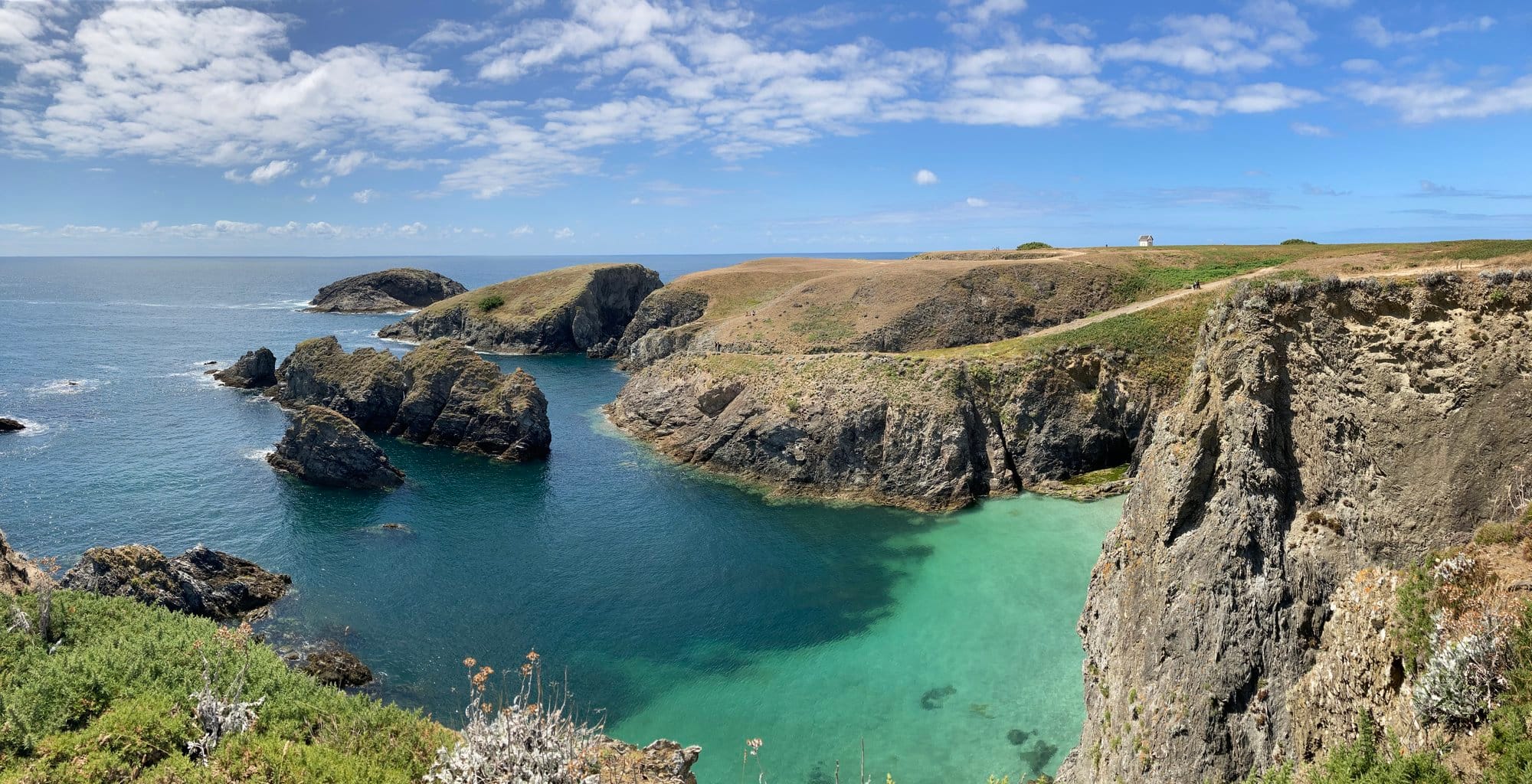
Port Coton is the soul of Belle-Île. Claude Monet came here in 1886 and painted the same rock formation—the Aiguilles de Port Coton, needle-sharp stacks of granite rising from turquoise water—more than twenty times. He painted them in different light, different weather, different seasons, trying to capture the way light moved across stone.
You'll understand why the moment you arrive.
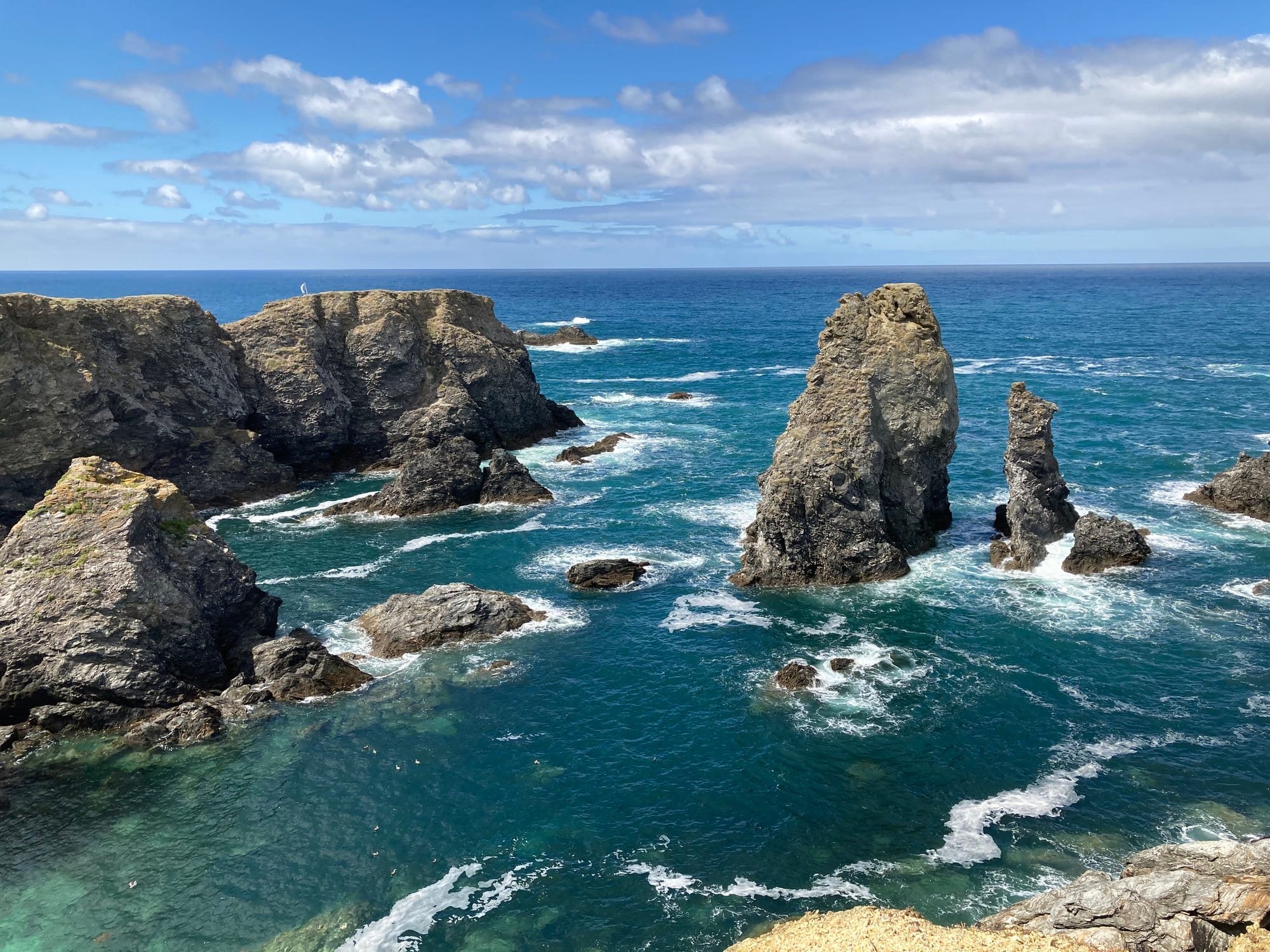
The descent into Port Coton is steep—that's true of almost everywhere on Belle-Île worth visiting—but it's not long. Lock your bikes at the small car park and walk to the viewpoint. On a clear afternoon, the water is a shade of turquoise you won't believe is real. The rocks are exactly as Monet painted them: jagged, powerful, indifferent to centuries of admiration.
This is an anchor point for any Belle-Île cycling trip. Rest here. Have a picnic. Let the kids run around. The rock formations create natural windbreaks, and there's something about watching waves break against 300-million-year-old granite that puts distance cycling into perspective.
The Secret Coves: Between Port Coton and Pointe des Poulains
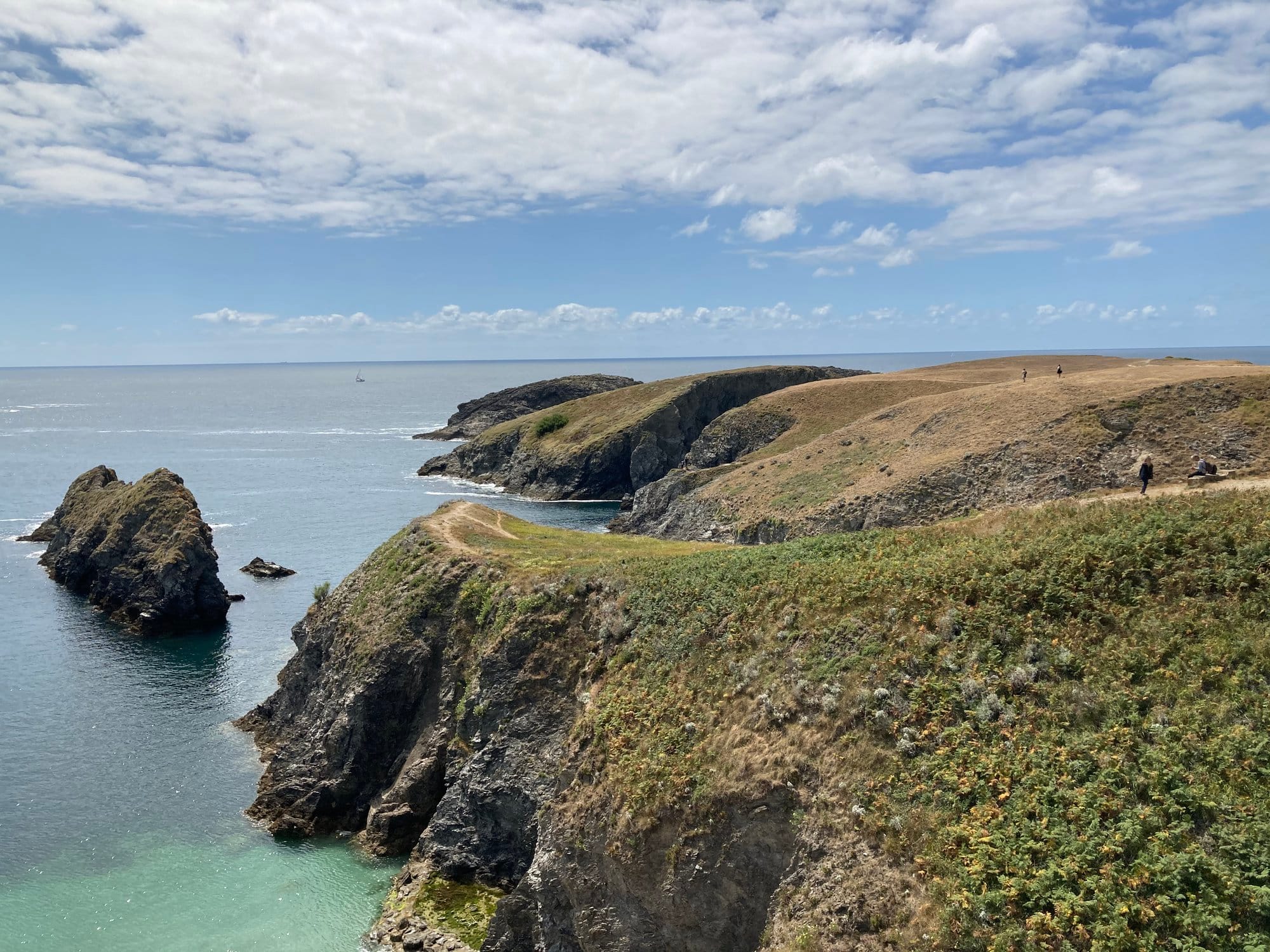
The stretch from Port Coton northeast to Pointe des Poulains is the cycling highlight of Belle-Île. The route stays high, hugging the cliff edge, and drops into a series of coves that get progressively more dramatic and more secret.
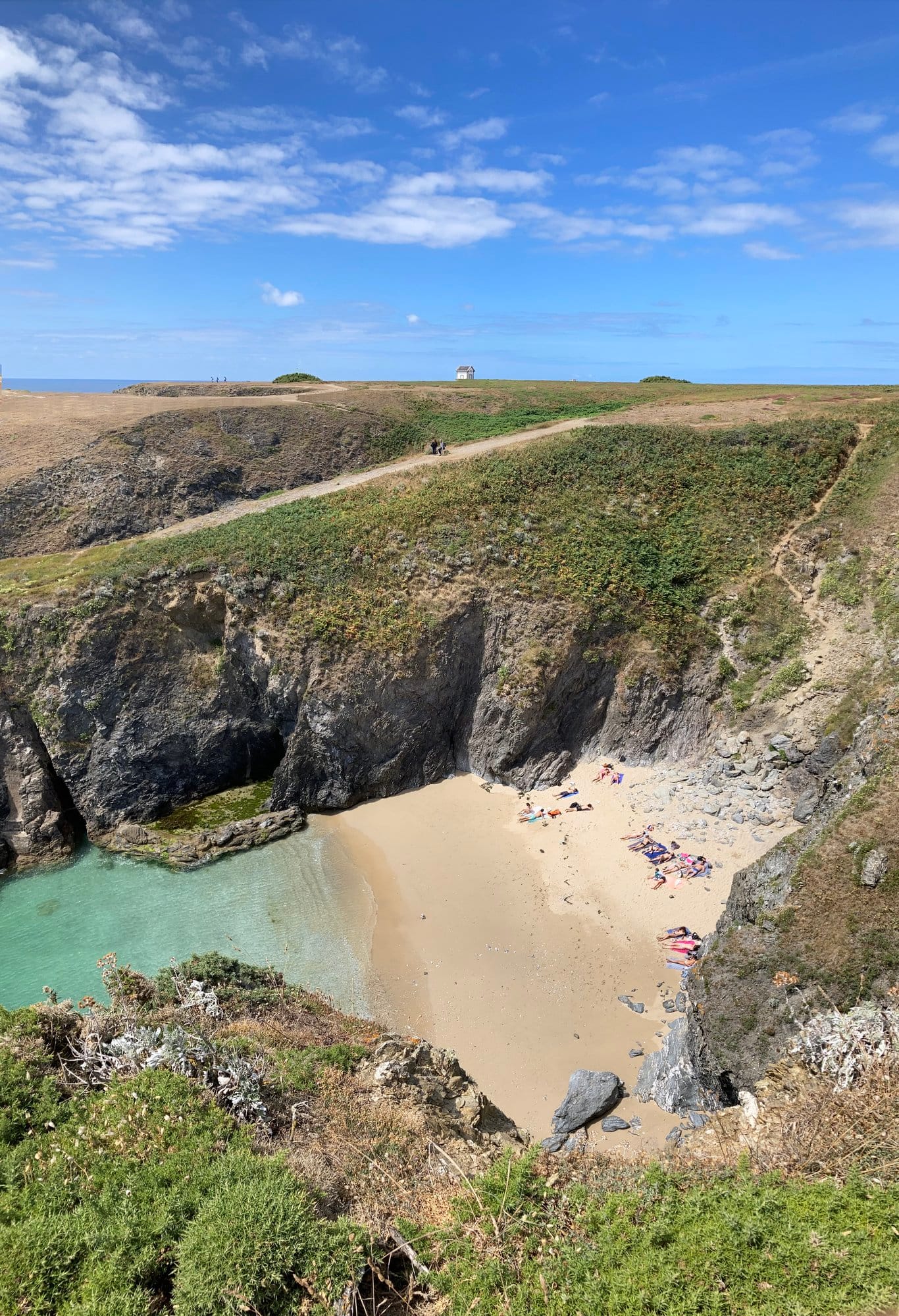
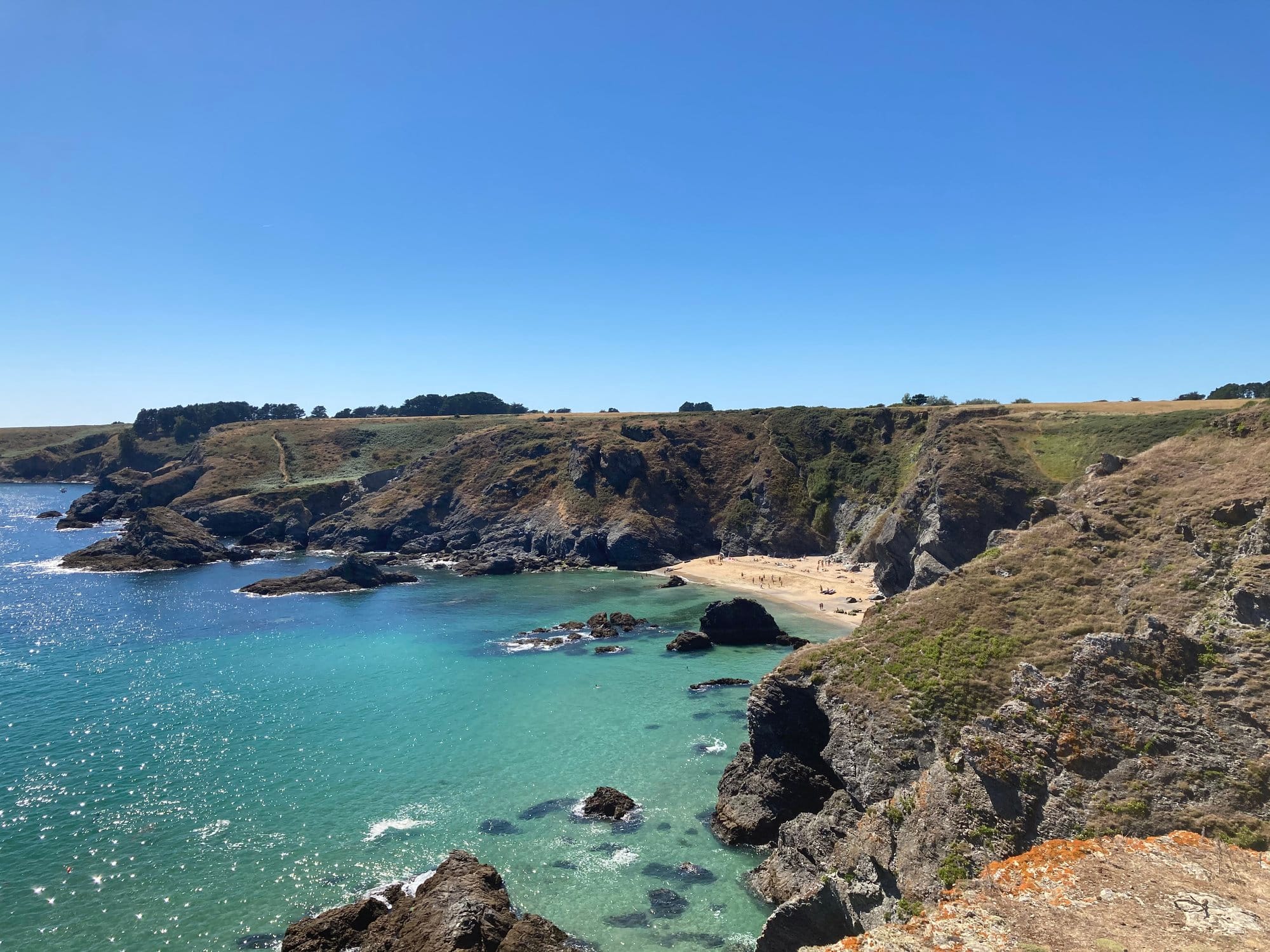
The main path keeps you safe and scenic. But the best coves require scrambling off the main route—down narrow rock scrambles, through gaps in the cliff face, to tiny pocket beaches where you might be utterly alone. Some of these are marked with small signs. Others you find because you notice a gap and follow it, or because another family waves you over.
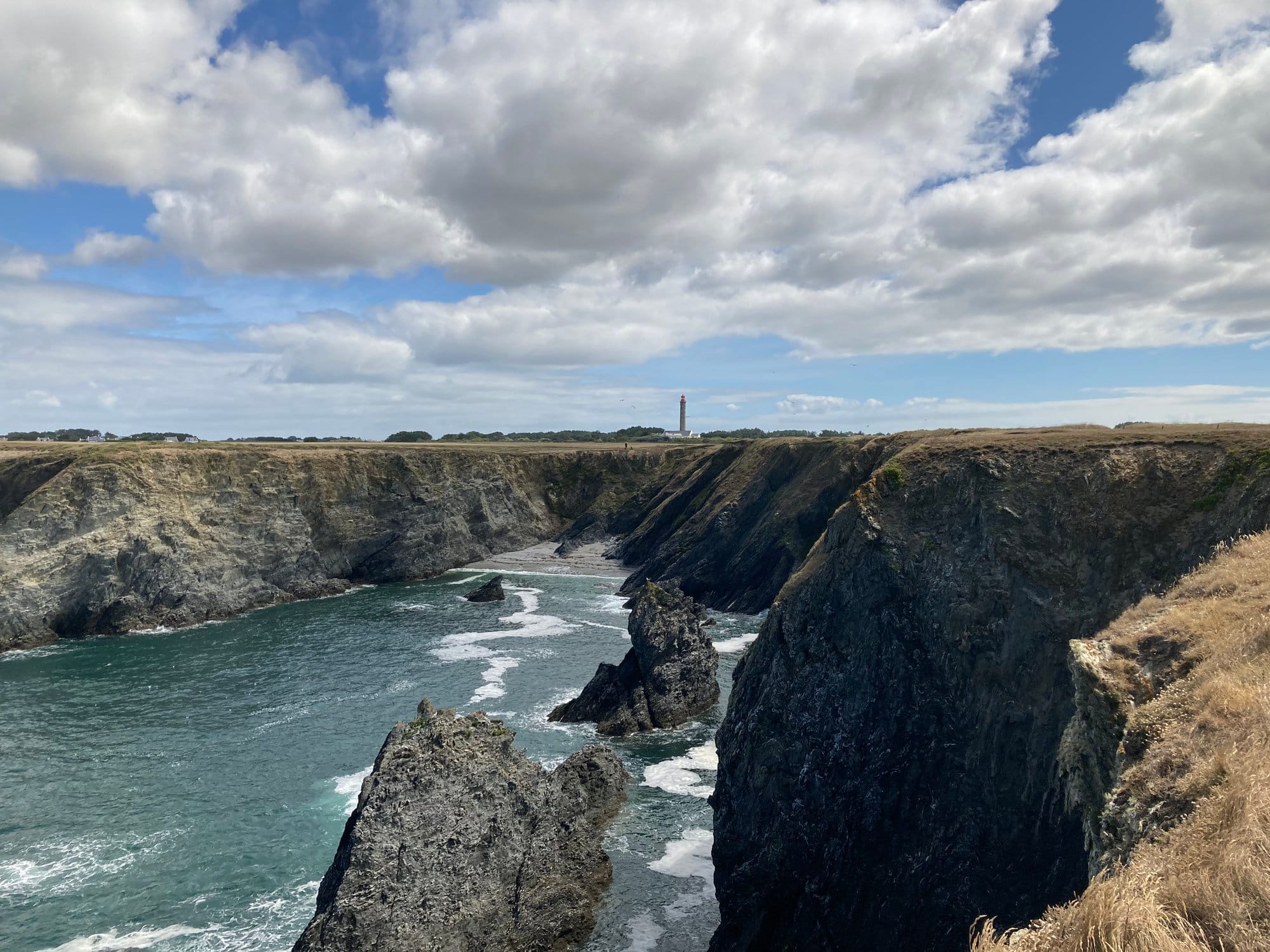
The water in these coves is shockingly clear and shockingly cold. But the kids won't care once they're in. You'll float above white sand in four metres of water and see it perfectly. Bring swimsuits and towels. Bring a change of clothes in waterproof bags (the scrambles can be slippery).
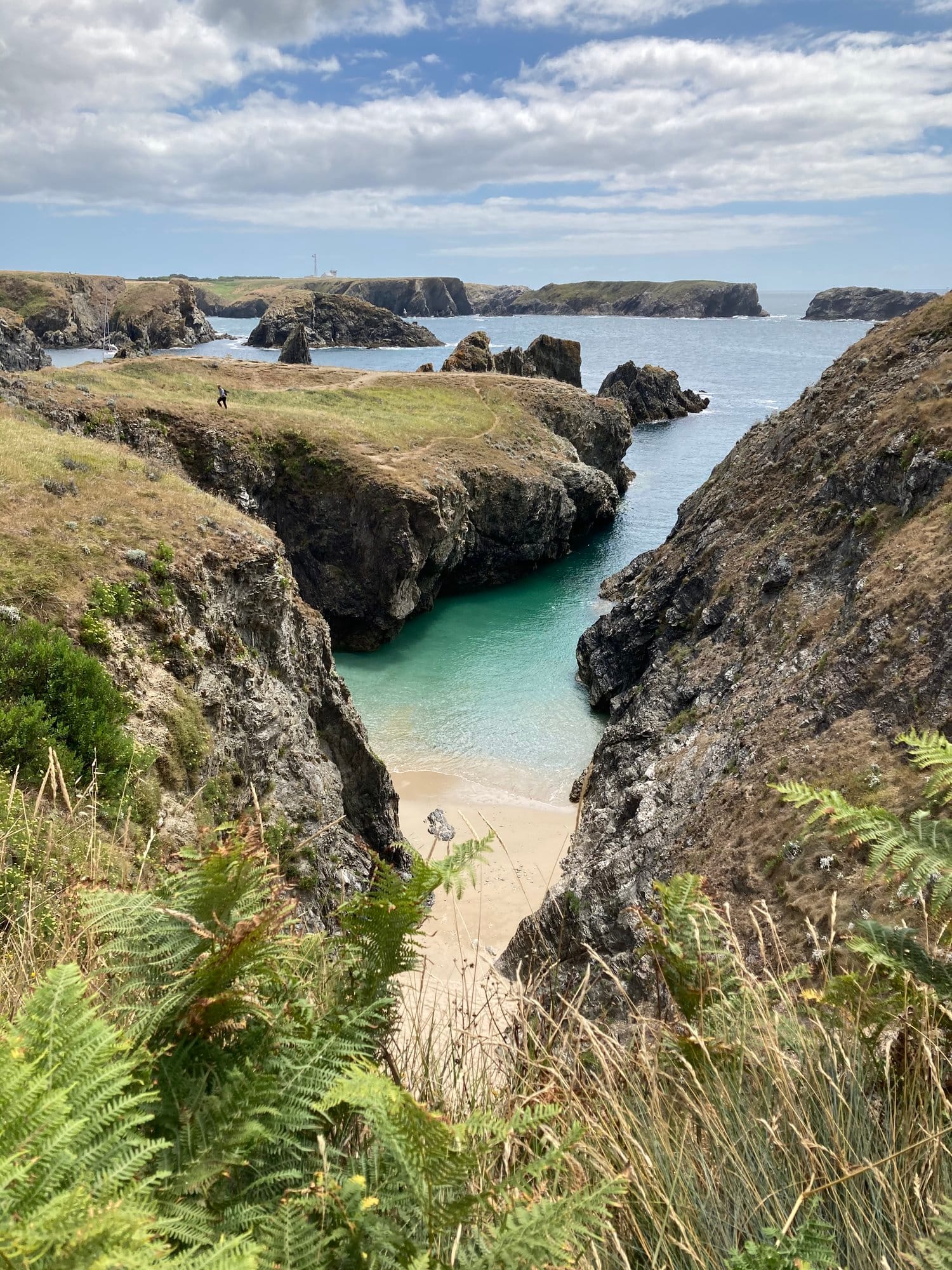
The path itself is a conversation—you're never far from the edge, always aware of the drop. But it's not dangerous if you're paying attention. Kids handle it fine, especially once they understand that the views reward the care. The scrambles are the real work. But they're why you came.
Pointe des Poulains: The Wild Tip
Pointe des Poulains is the island's northern point—a headland crowned by the Grand Phare (Great Lighthouse), surrounded by beaches and rock shelves that drop into deep Atlantic blue. It's wild in the way that northern coasts are wild: weather-scarred, uncompromising, beautiful in a way that doesn't ask for permission.
The descent to the beaches is steep (everything is steep on Belle-Île). But the reward is extraordinary: a sandy cove framed by two massive granite rock stacks, water so clear that you forget it's the Atlantic and not some Mediterranean dream. The channel between the rocks is calm enough to swim in on good days, and the rock stacks themselves are dramatic enough that your camera will struggle to do them justice.
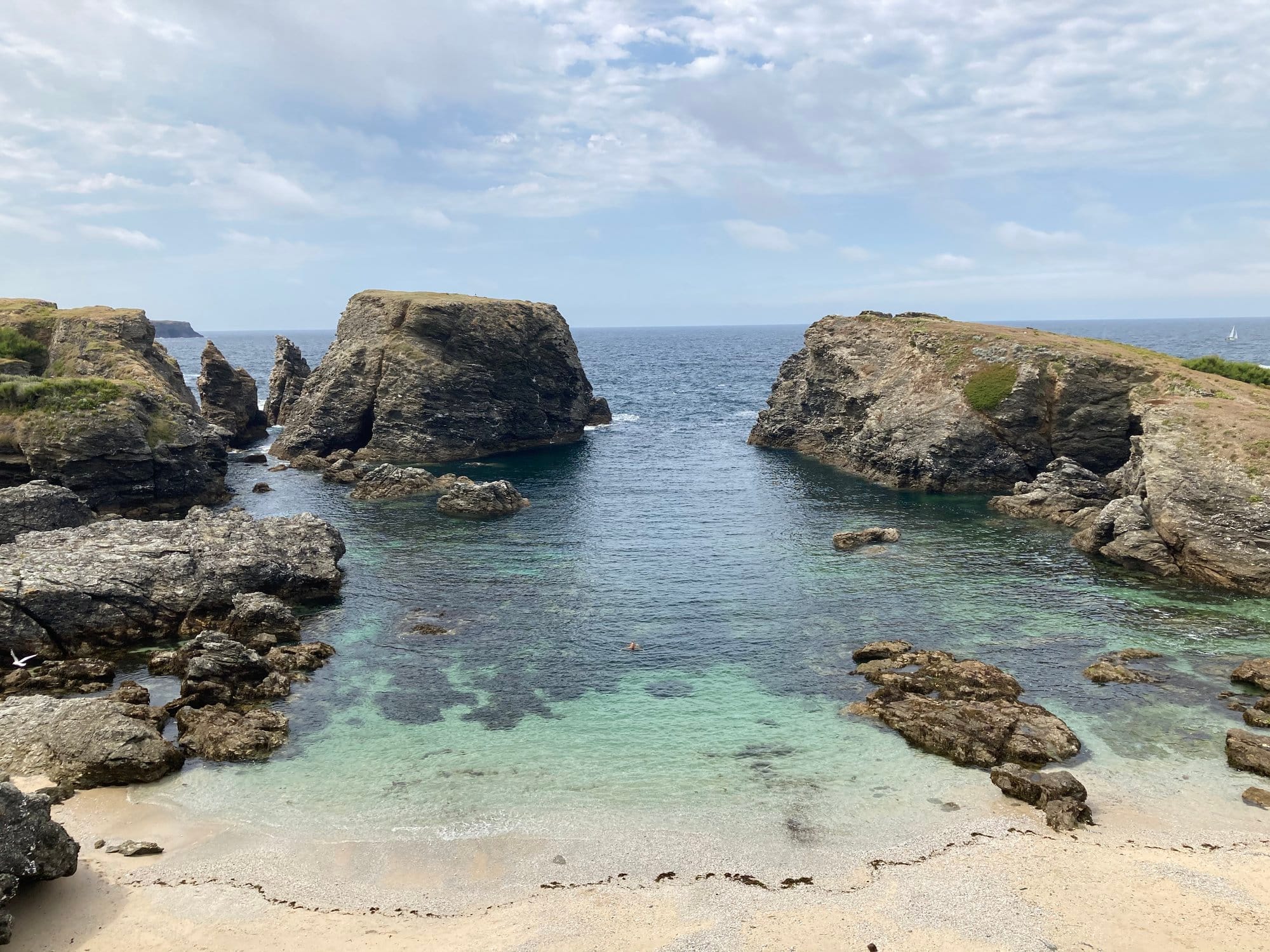
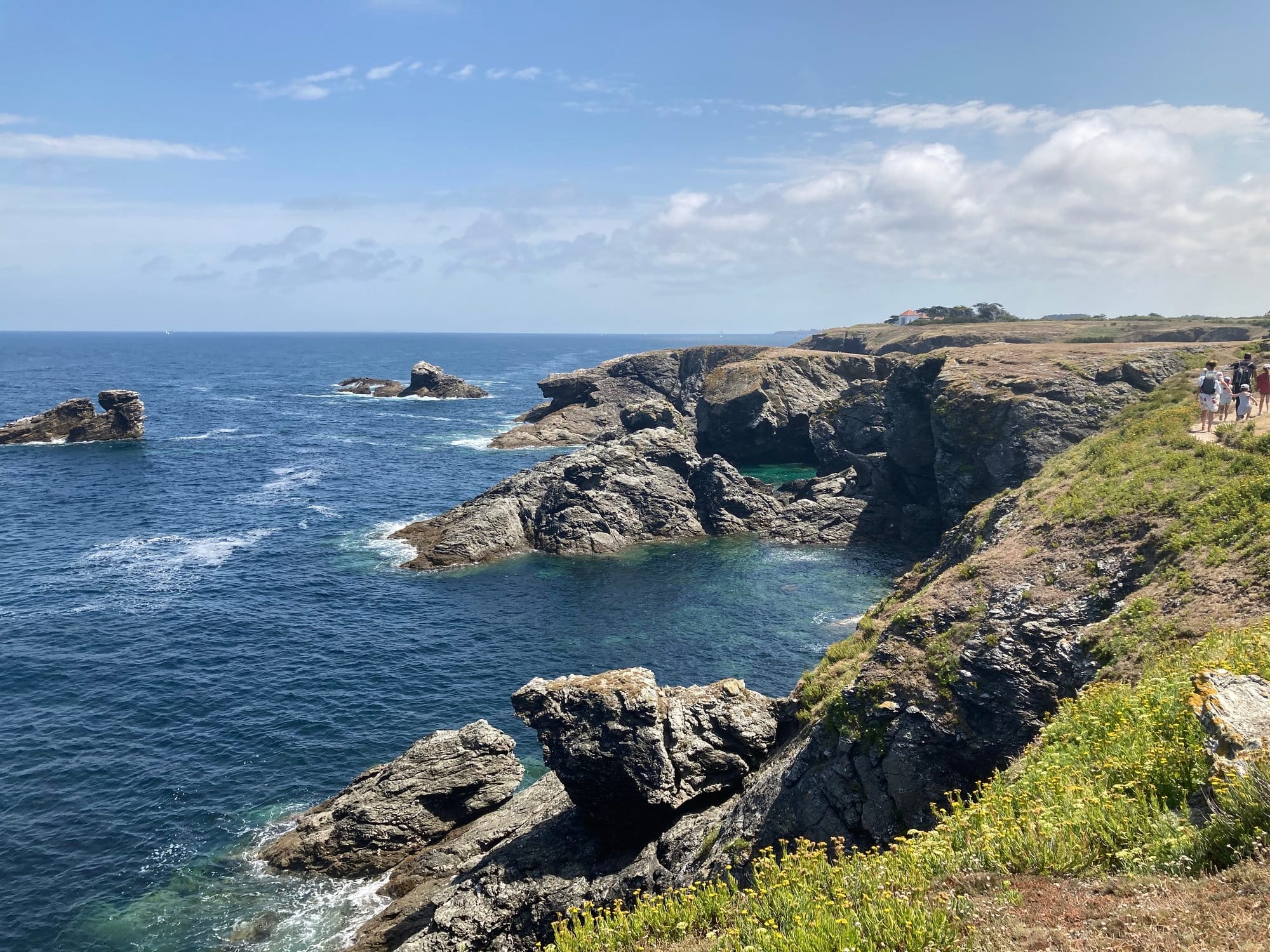
There's something about Pointe des Poulains that feels like the edge of the world. The lighthouse stands alone against the sky. The rocks seem older than the rest of the island. The wind reminds you that you're on an island, exposed, on the edge of something vast.
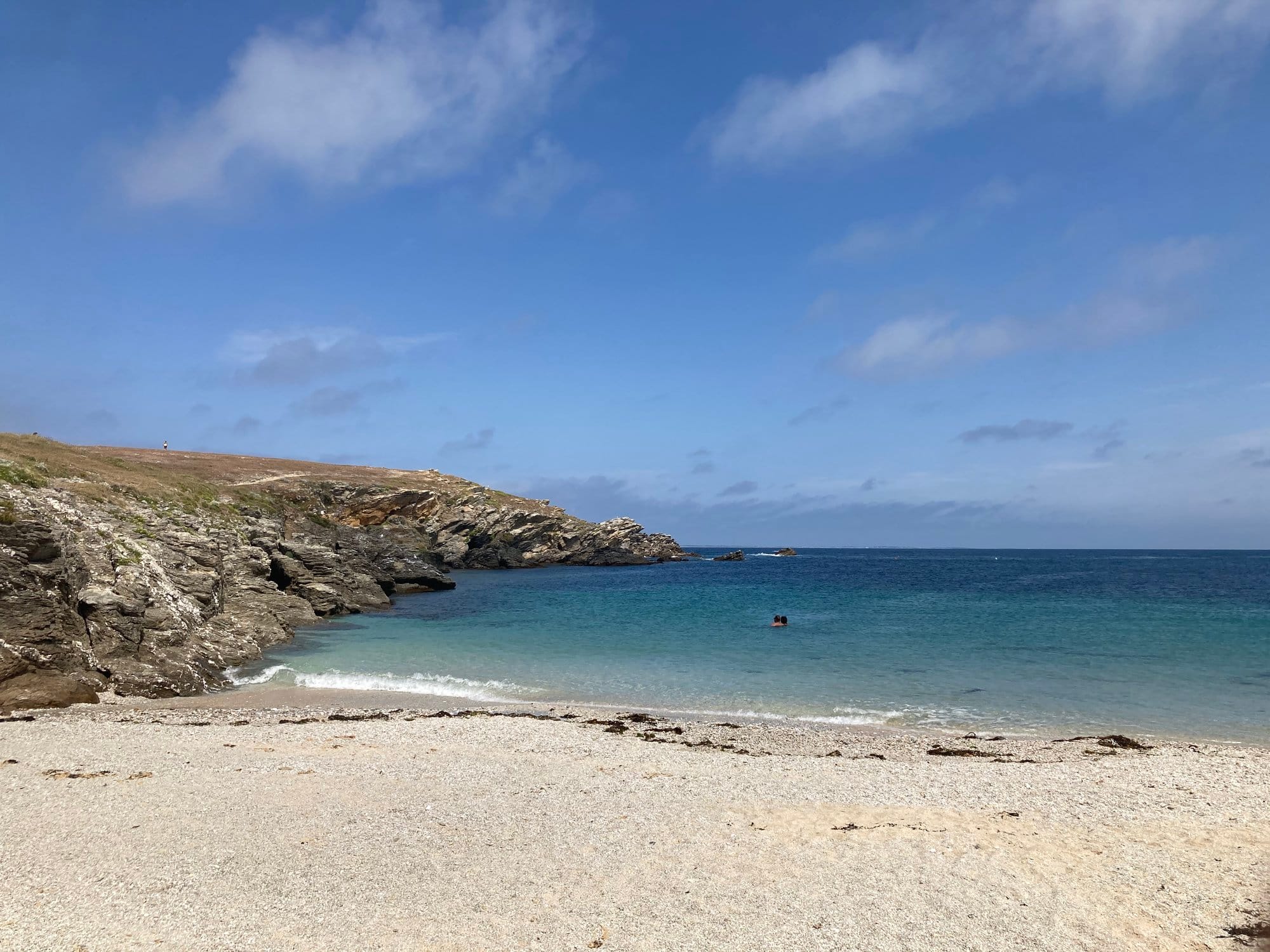
Bring water. The ride in is partly exposed, and there's not much shelter once you're there. But the kids will remember this place. You will too.
Donnant Beach: The Famous Shore
Donnant is Belle-Île's most famous beach and the island's unofficial surfing capital. On any given swell day, there are boards in the water. It's the kind of beach that makes the drive (or in your case, the bike ride) seem worth it the moment you see it.
But: the descent to Donnant is genuinely steep. We're talking a 20% gradient in places. On the bike, it's manageable if you use your brakes and take your time. Coming back up is a different story. Expect to push, or use the e-bike assist to the max. Some families might choose to walk it entirely.
The beach itself is worth the effort. It's wide, it's golden, and the surfing atmosphere is infectious even if you're not a surfer. There's a café at the top of the descent, which is both a blessing (water, coffee) and a test of willpower (better to buy here than to haul it uphill).
Don't skip Donnant, but schedule it when everyone still has some energy left. Afternoon is better than morning.
Practical Cycling Tips
🚲 Rent a bike to explore the area at your own pace. Compare prices and book directly below:
E-Bikes Are Essential for Families
A standard bike on the Côte Sauvage with children is torture. E-bikes are not luxury—they're logistics. With e-bikes, the 80km loop becomes hard but manageable. Without them, it becomes a forced march. Rent them. This is not the time to be a purist.
Timing: Afternoon Wind
Morning winds tend to be stronger and more unpredictable. Afternoon winds often die down by 4 or 5 p.m. If you have the flexibility, start your Côte Sauvage section in the late afternoon. You'll notice the difference immediately.
What to Pack
- Water (at least 1.5 litres per person) - High-SPF sunscreen (there's no shade on cliff paths) - A picnic lunch or snacks (cafés are sparse, especially away from the main villages) - Swimsuits and a change of clothes (in waterproof bags if you're doing scrambles) - Repair kit for bikes (patches, spare tube, pump, basic tools) - A light windbreaker (the wind can come up suddenly, and it's cold even on sunny days)
Bike Rental
Belle-Île has several rental shops in Sauzon and Le Palais. E-bikes do need to be booked in advance, especially in July and August. Standard bikes are usually available same-day, but e-bikes might not be. Plan ahead.
Weather Matters Enormously
On a grey, windy day, Belle-Île is less forgiving. On a clear day with wind under 20 knots, it's transcendent. Check the weather. If the forecast shows heavy wind or rain, consider shortening your loop or saving the Côte Sauvage for another day. Your family will be happier (and safer).
Daily Distance for Families
With kids, 30-40km per day is reasonable. That's 3-5 hours of actual riding, plus stops. Don't try to do the full 80km in a day unless your children are experienced cyclists and everyone is fit.
Getting There & Staying
Ferry from Quiberon
Belle-Île is reached by ferry from Quiberon, about 1.5 hours south of Rennes. The ferry takes about 45 minutes. In summer, book your return ferry early—departures fill up. If you're bringing bikes, reserve them in advance (they take up space).
You can also fly into Nantes and rent a car at Nantes airport, then drive to Quiberon.
Stay in Le Palais (the main town) or Sauzon (smaller, quieter, closer to Port Coton). Both have hotels and guesthouses. Book in advance for July-August.
compare flights
Nantes is the main airport for Belle-Île. From there, it's 1.5-2 hours to Quiberon by car.
More to Explore
Bookmarks to related destinations and guides:
FAQ
How hard is cycling Belle-Île with kids?
Genuinely hard, especially the Côte Sauvage. Not suitable for very young children (under 8) unless they're experienced cyclists or you're using a cargo bike. With e-bikes and good weather, it becomes challenging but manageable for kids 10+. The full loop in a day is ambitious; split it across two days.
How long does the full cycling loop take?
The full 80km loop takes 6-8 hours of riding time, depending on fitness level and stops. With breaks, picnics, and cove scrambles, you're looking at a full day or better split across two days. Don't rush it.
What's the best part of the route?
The stretch from Port Coton to Pointe des Poulains. This is where the dramatic cliffs, secret coves, and most rewarding scrambles are concentrated. If you only have half a day, focus here.
Do you need to book bikes in advance?
Yes, definitely for e-bikes in July and August. Standard bikes can usually be rented same-day, but e-bikes need advance reservation. Book a few days ahead to be safe.
What's the best time to visit?
May-June or September-early October. July and August are busy and windy. April and late October can be rainy. Spring and early autumn offer the best weather-to-crowds trade-off.