
Île d'Yeu Côte Sauvage: Walking the Wild Coast
Walk the Côte Sauvage on Île d'Yeu, France's secret Atlantic island. Discover the Vieux-Château ruins, the Chapelle Notre-Dame-de-Bonne-Nouvelle and dramatic cliff paths with stunning aerial drone perspectives.

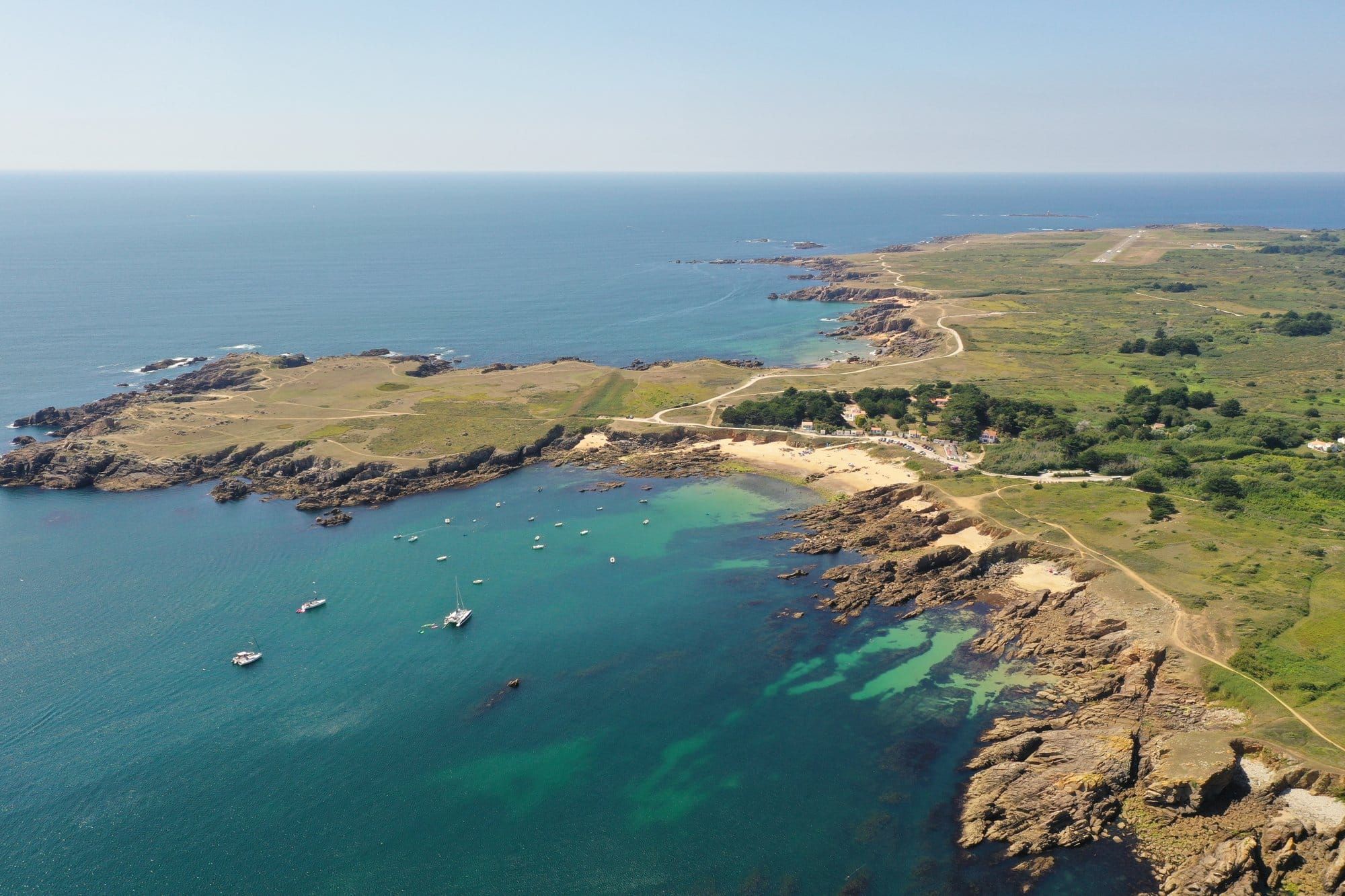
Clinging to the Atlantic edge of a small island off the Vendée coast, the Côte Sauvage of Île d'Yeu is one of those stretches of coastline that makes you wonder how it has stayed so far off the radar. Jagged granite cliffs plunge into deep blue water, a ruined medieval castle perches on a rocky promontory, and the only sounds are the wind and the waves.
This is the wild side of Île d'Yeu — the southern and western coast where the island meets the open ocean. While the northern shore is all sandy beaches and harbour life, the Côte Sauvage is raw, dramatic and endlessly photogenic. Here's what to expect when you walk it.
Bookings: Some of the links in this article are affiliate links. This means that if you choose to make a booking, we will receive a small commission at no extra cost to you. Thank You!
🚲 Rent a bike to explore the area at your own pace. Compare prices and book directly below:
Port de la Meule: Where the Walk Begins
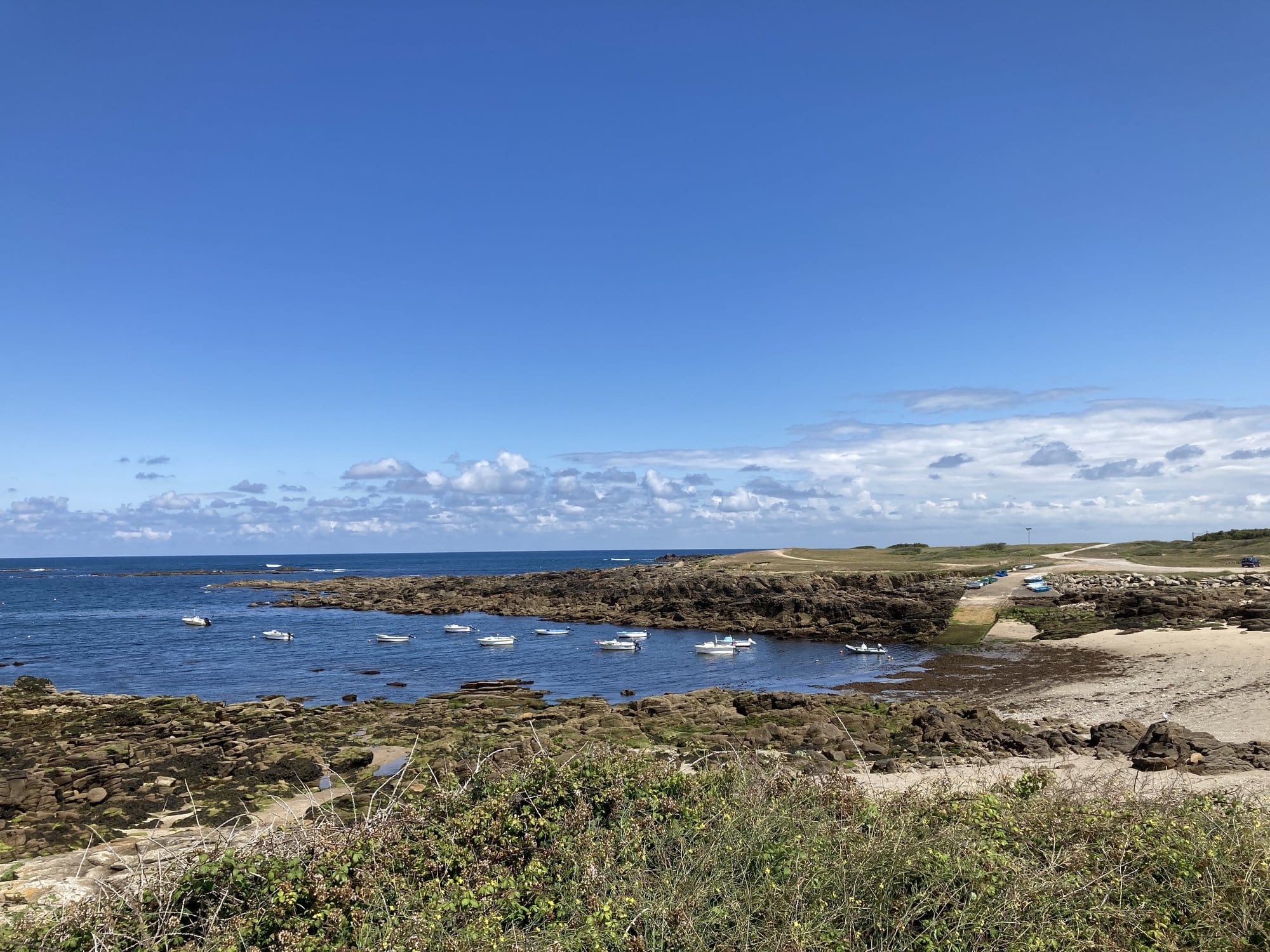
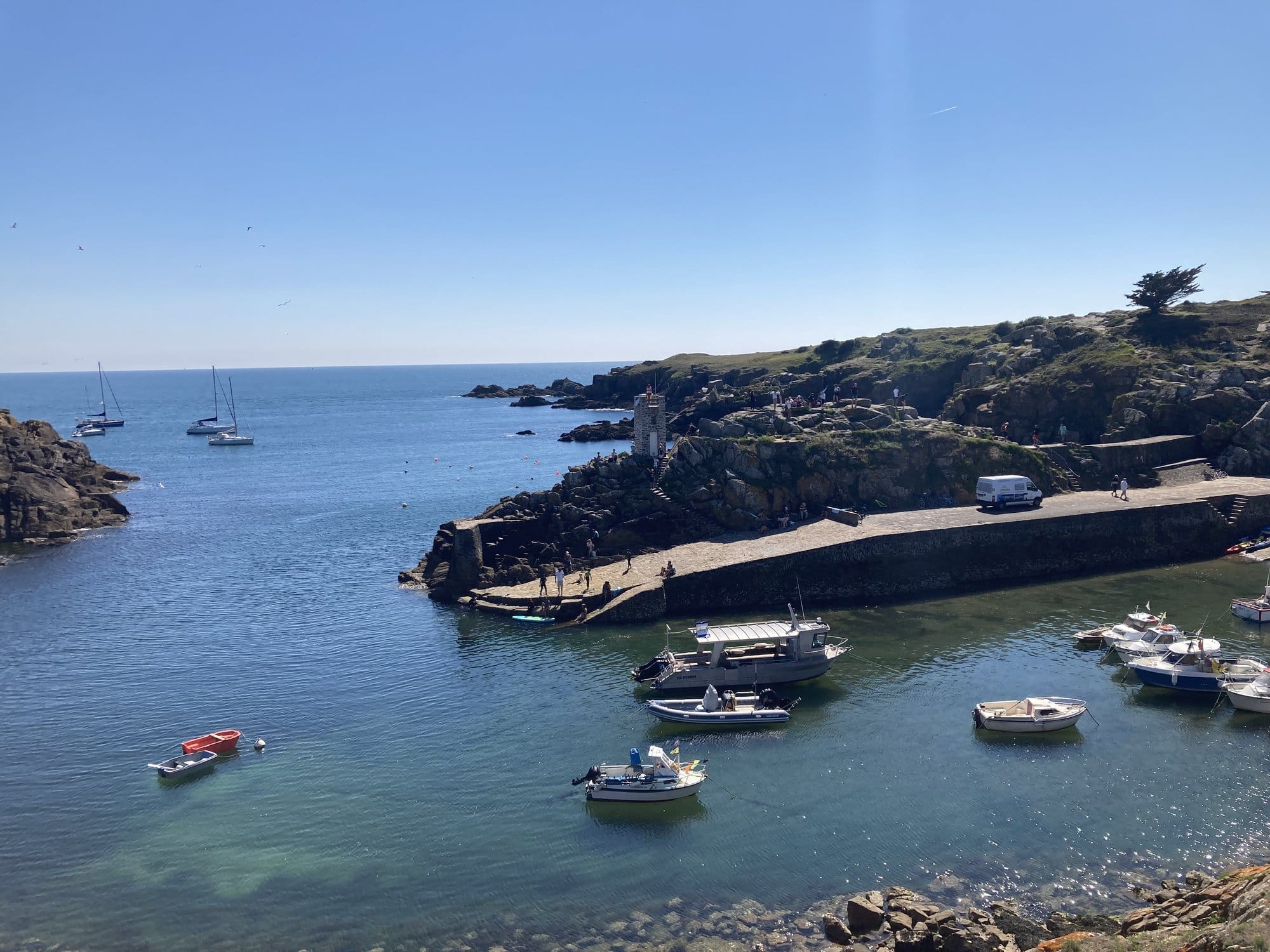
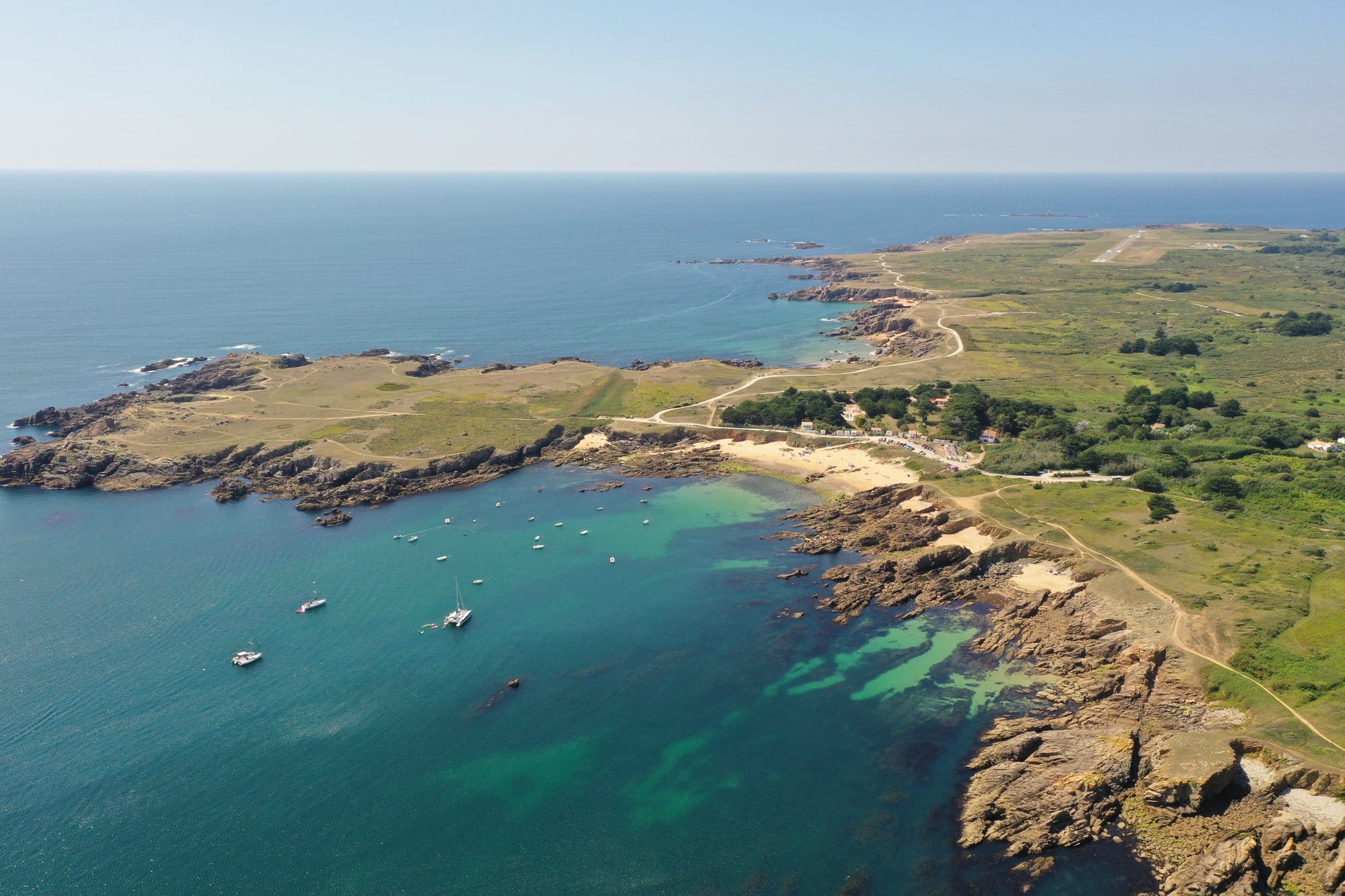
Most explorations of the Côte Sauvage start from Port de la Meule, a tiny natural harbour tucked into a rocky cove on the island's south side. It's the kind of place that instantly sets the mood — fishing boats bobbing in turquoise water, a narrow stone jetty, and granite cliffs rising on both sides.
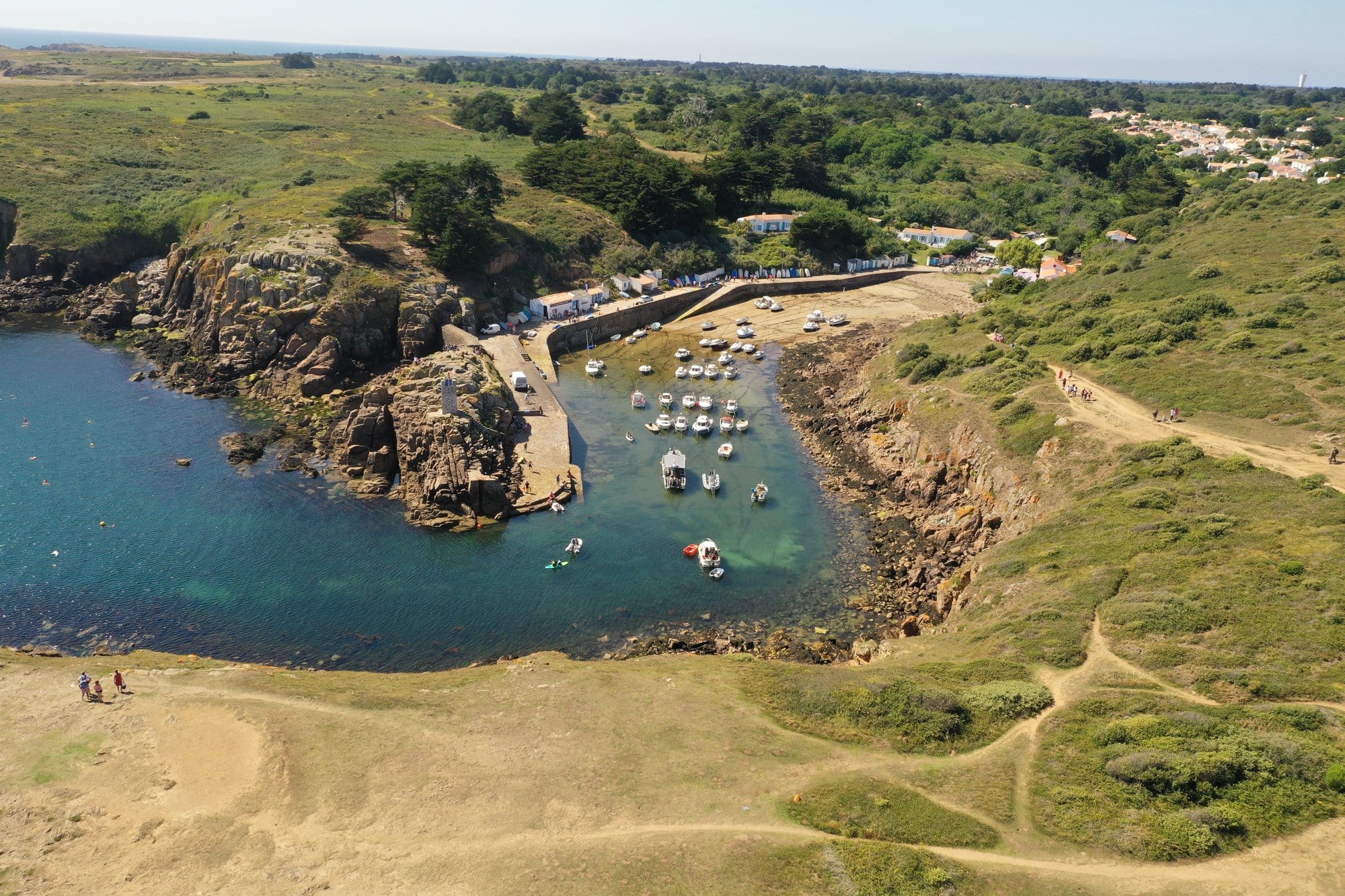
From above, Port de la Meule reveals its full charm. The cove is perfectly sheltered from the Atlantic swell, which is why fishermen have used it for centuries. A small beach of coarse sand sits at the back of the inlet, and a cluster of colourful houses overlook the water from the cliffs above.
There's a seasonal café at the harbour and a small car park, but the real draw is the coastal path that heads west from here towards the Chapelle Notre-Dame-de-Bonne-Nouvelle and the Vieux-Château beyond.
Chapelle Notre-Dame-de-Bonne-Nouvelle
A short walk west from Port de la Meule, the path opens onto a windswept headland where a small white chapel sits alone facing the sea. This is the Chapelle Notre-Dame-de-Bonne-Nouvelle — Our Lady of Good News — a sailors' chapel that has watched over this coast for centuries.
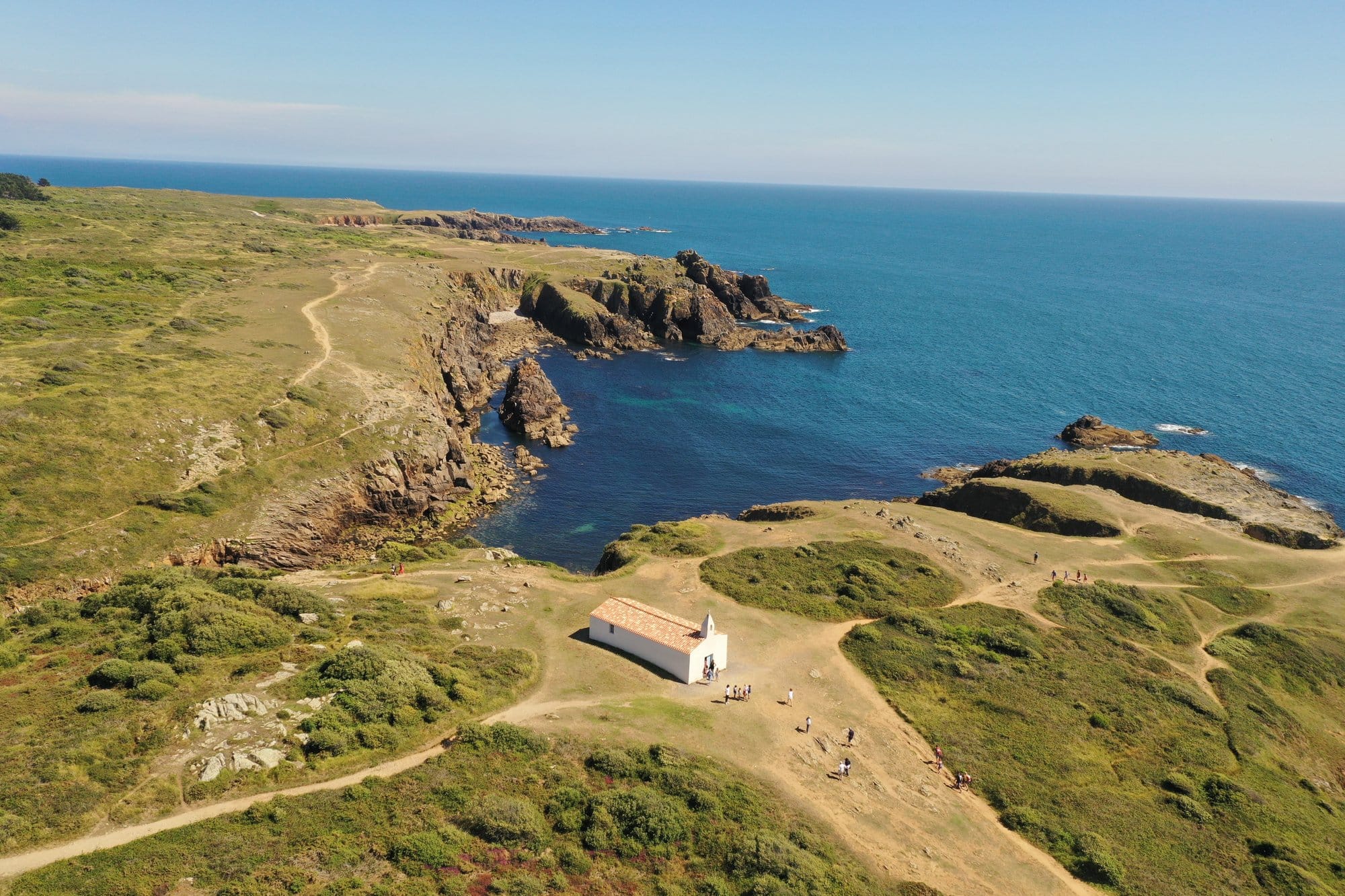
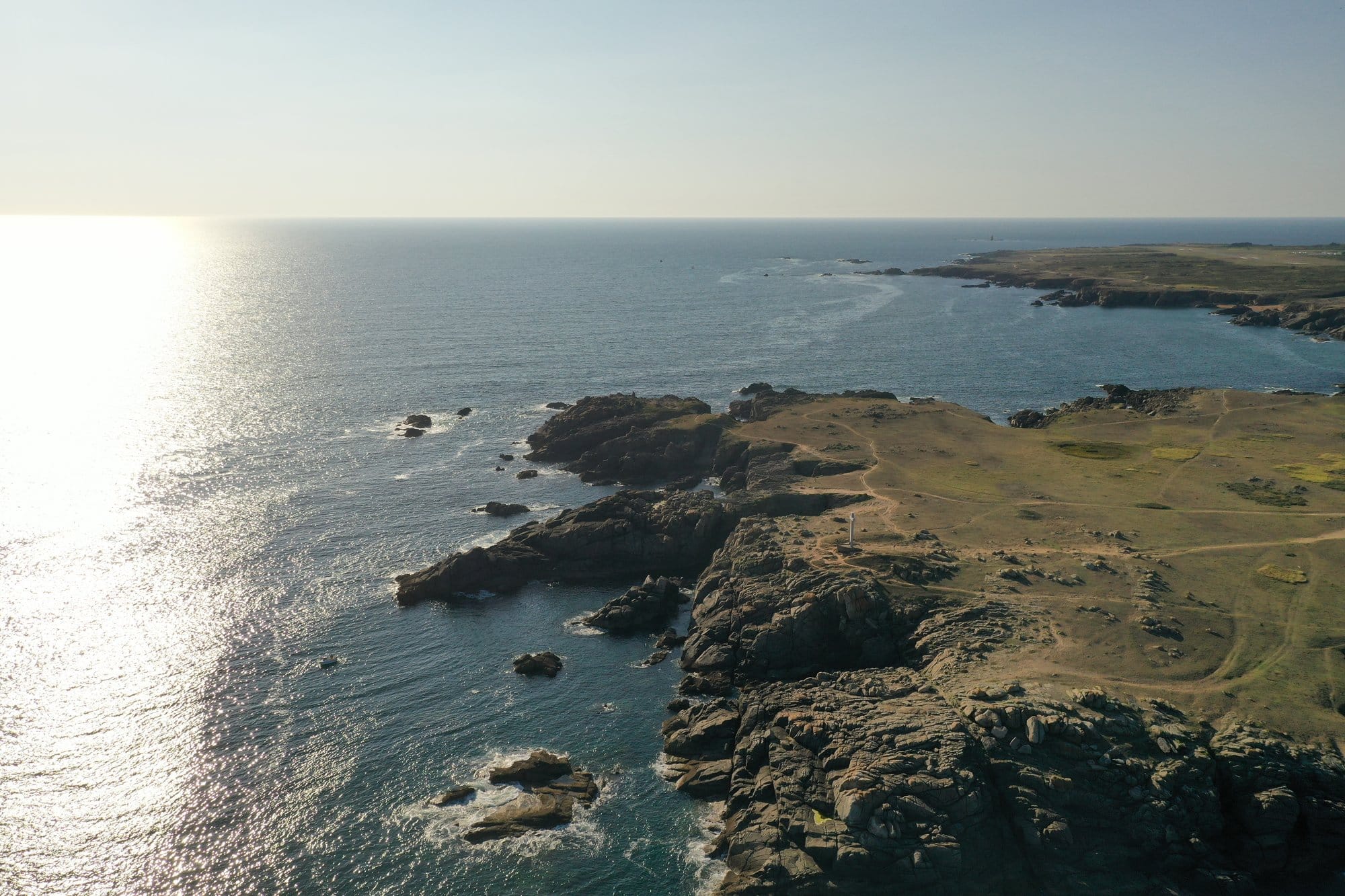
The chapel is modest — whitewashed walls, a simple bell tower, and an interior decorated with ex-votos left by fishermen's families. But its setting is extraordinary. From the air, you can see how isolated it is — perched at the tip of a peninsula with the ocean on three sides and nothing but heath and rock around it. On a clear day, the view stretches to the horizon in every direction.
The Vieux-Château: A Medieval Ruin on the Edge
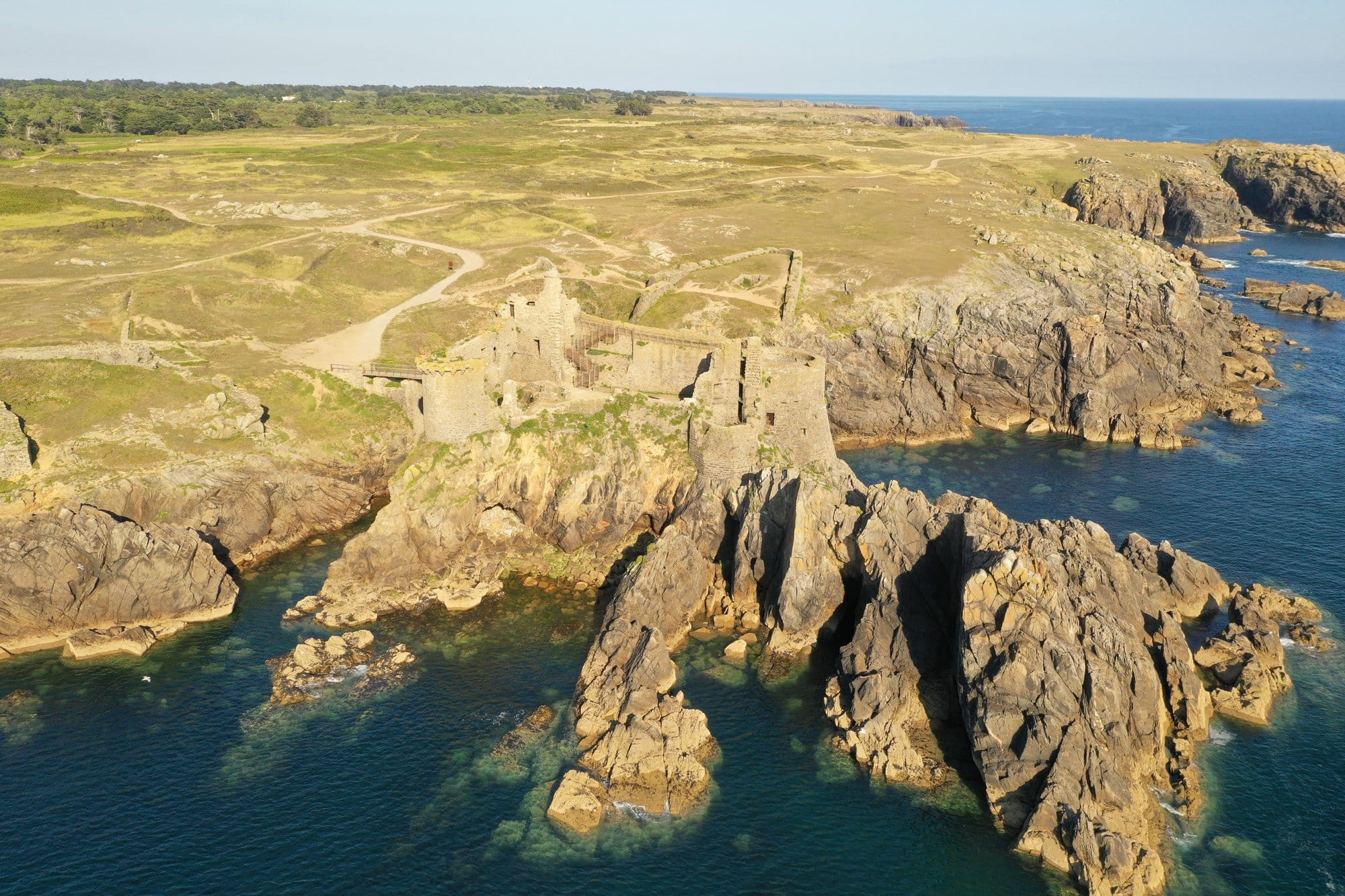
The undisputed highlight of the Côte Sauvage is the Vieux-Château, a ruined medieval fortress built directly onto a granite promontory that juts into the sea. Dating back to at least the 11th century, it was one of a chain of coastal fortifications that defended the island against Norse raiders and later English attacks.
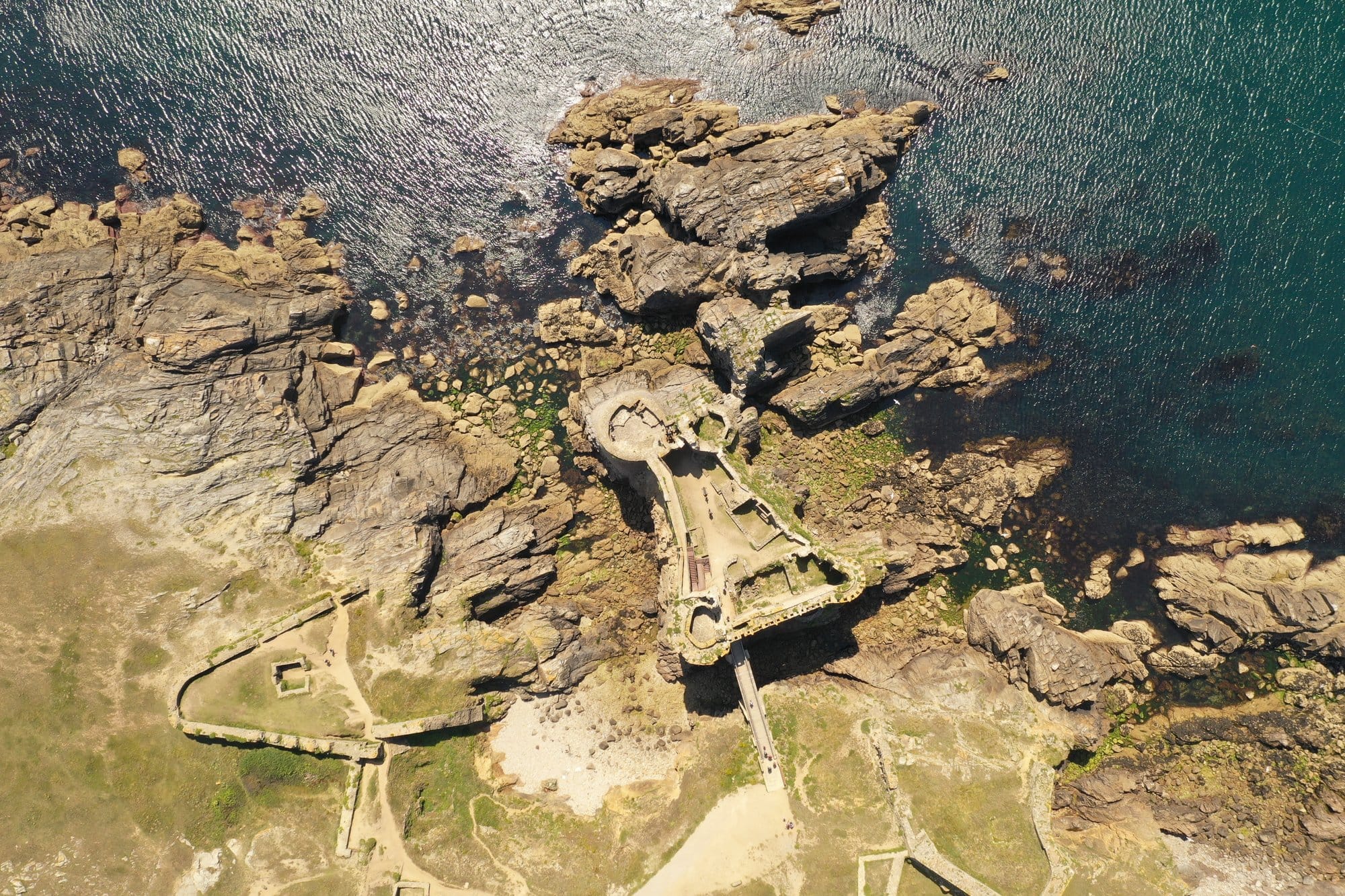
What makes this castle exceptional is not its size but its location. The walls seem to grow directly from the rock, and the sea crashes against the cliffs on three sides. From ground level, you can walk along what remains of the ramparts and peer down into deep crevices where the Atlantic surges in and out. From the air, the full geometry of the fortress becomes clear — a compact stronghold that used every inch of its natural rock platform.
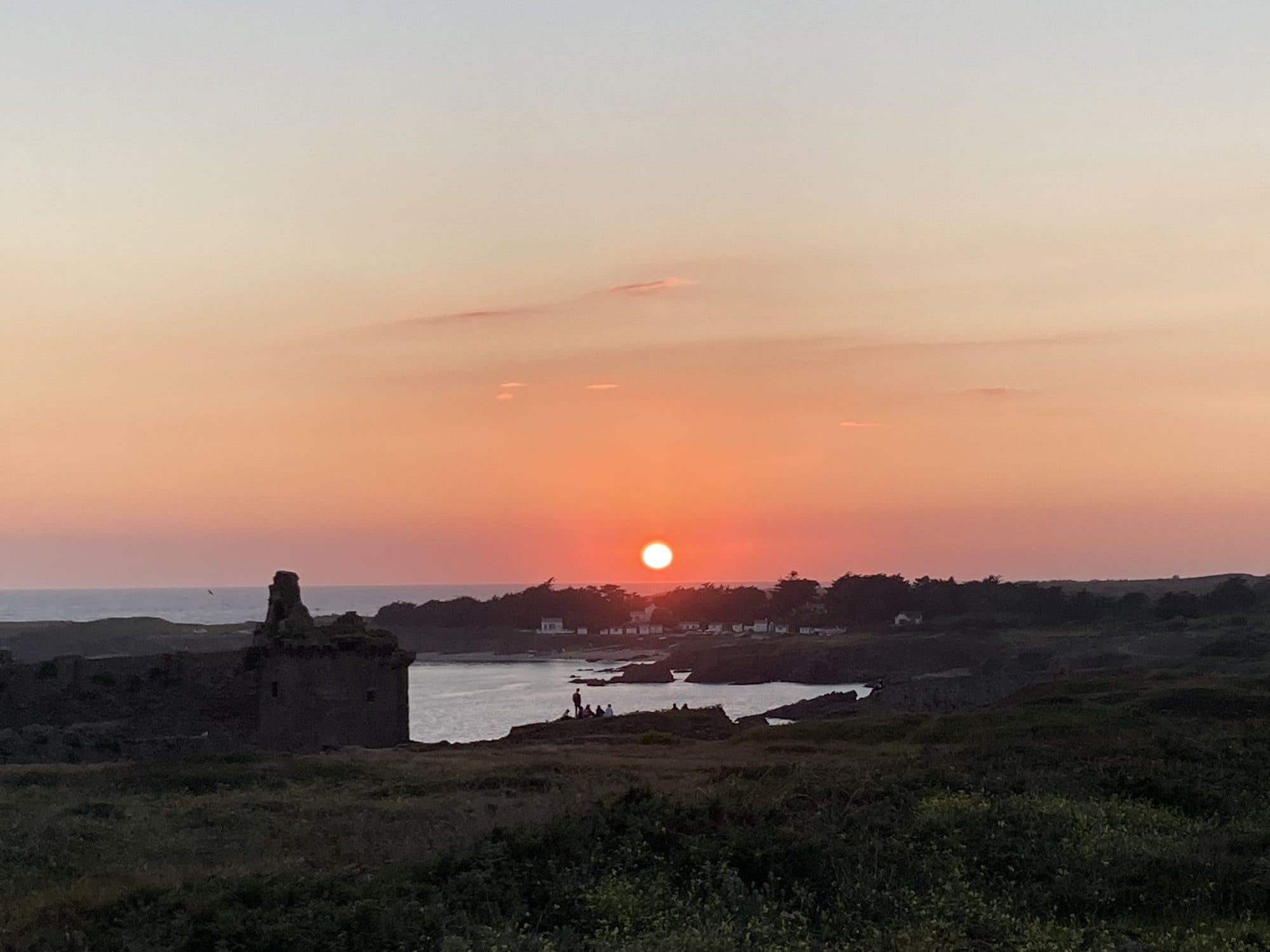
The best time to visit is late afternoon, when the sun drops low and paints the granite in warm tones. At sunset, the castle's silhouette against an orange sky is genuinely one of the most beautiful things you'll see in western France.
Walking the Côte Sauvage Path
The coastal path that connects Port de la Meule to the western tip of the island is well-marked and mostly flat, running along the cliff edge through low heath and wild grasses. The total distance from Port de la Meule to the Pointe de la Tranche (the island's westernmost point) is roughly 5 kilometres one way, making it an easy two-hour walk with plenty of stops for photographs.
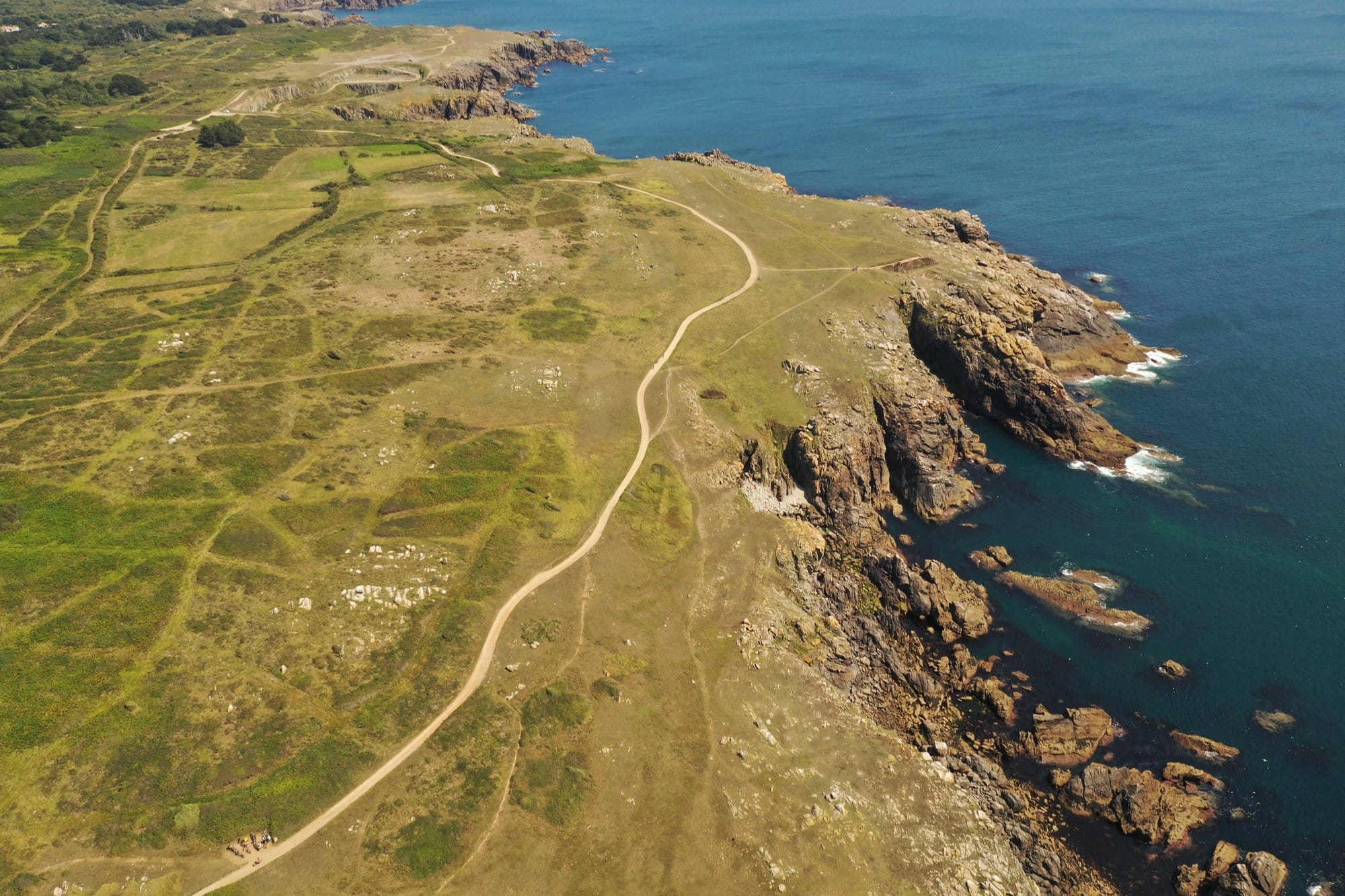
The path passes through some spectacular scenery. Rocky inlets appear around every bend, and on clear days the light on the water is extraordinary — deep blues, turquoise shallows, and white spray where the waves hit the granite. The landscape is treeless and wind-sculpted, with the heath turning gold in summer and purple when the heather blooms in autumn.
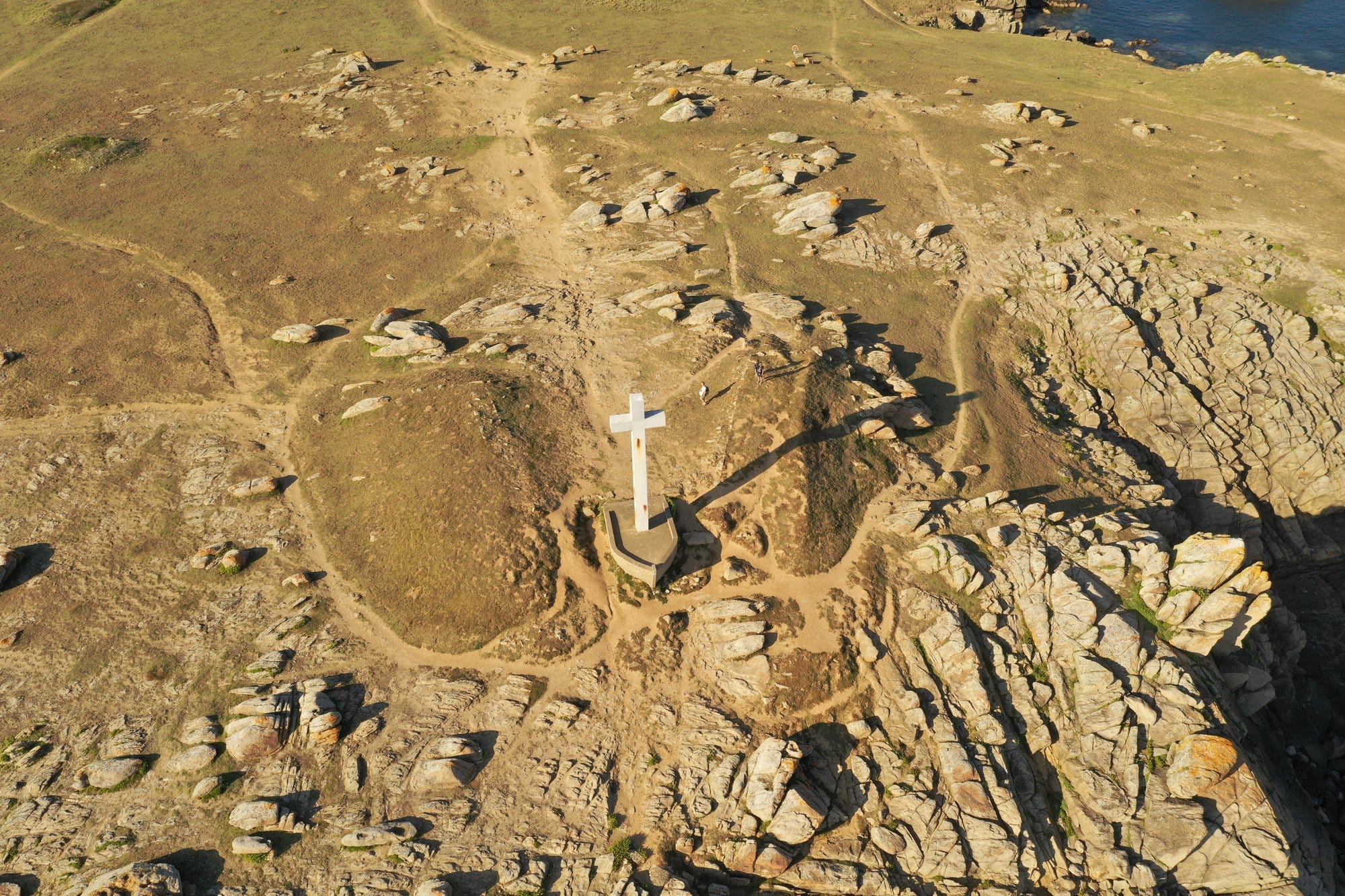
At the Pointe de la Tranche, a white memorial cross marks the island's far western tip. It's a solemn spot — a reminder of the island's maritime history and the fishermen who never came home. From the air, the cross appears almost tiny against the vast expanse of rock and ocean surrounding it.
Golden Hour on the Wild Coast
If there's one piece of advice for visiting the Côte Sauvage, it's this: be here in the evening. The west-facing coastline catches the full force of the Atlantic sunset, and on a clear summer evening the show is extraordinary.
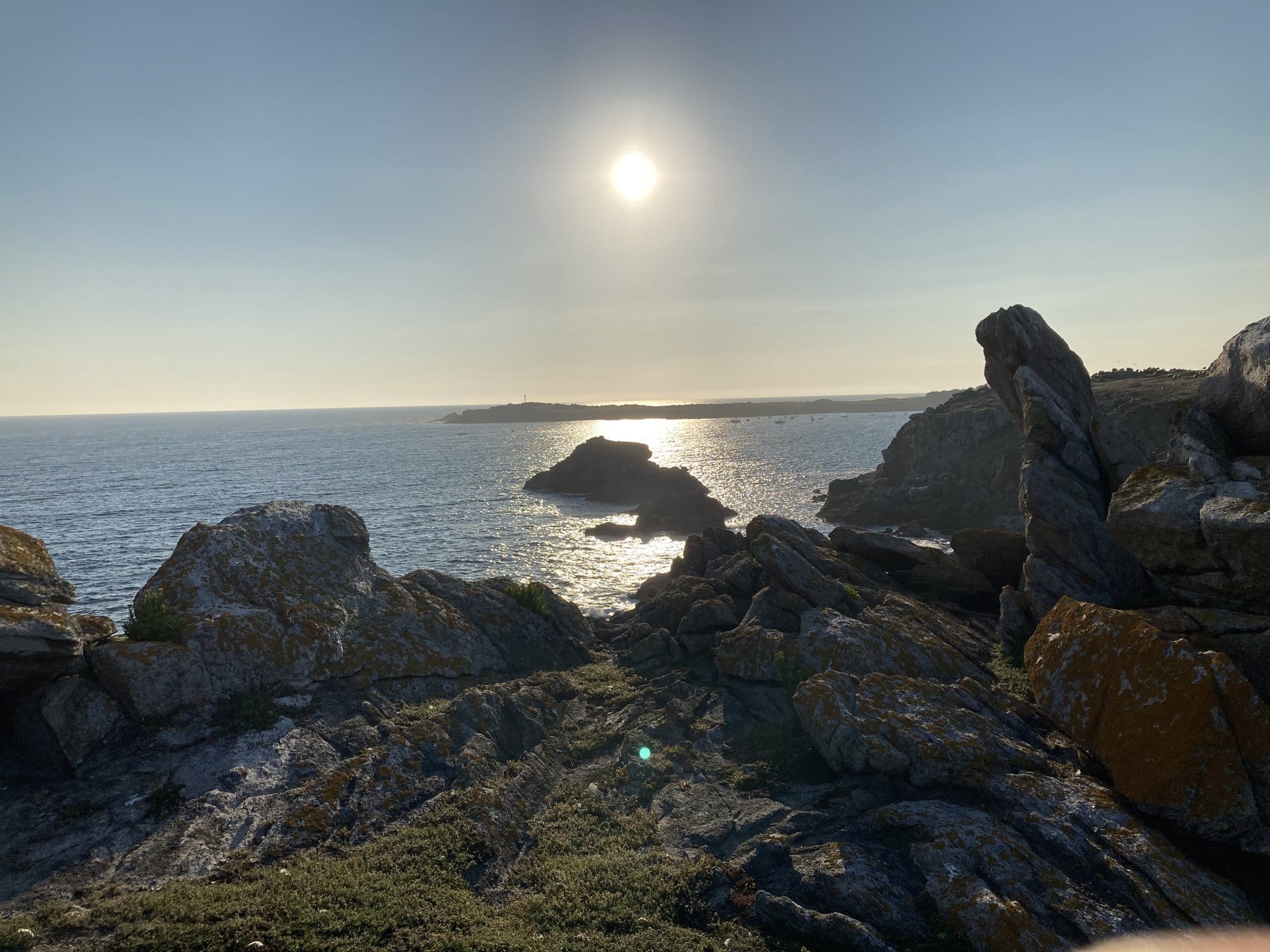
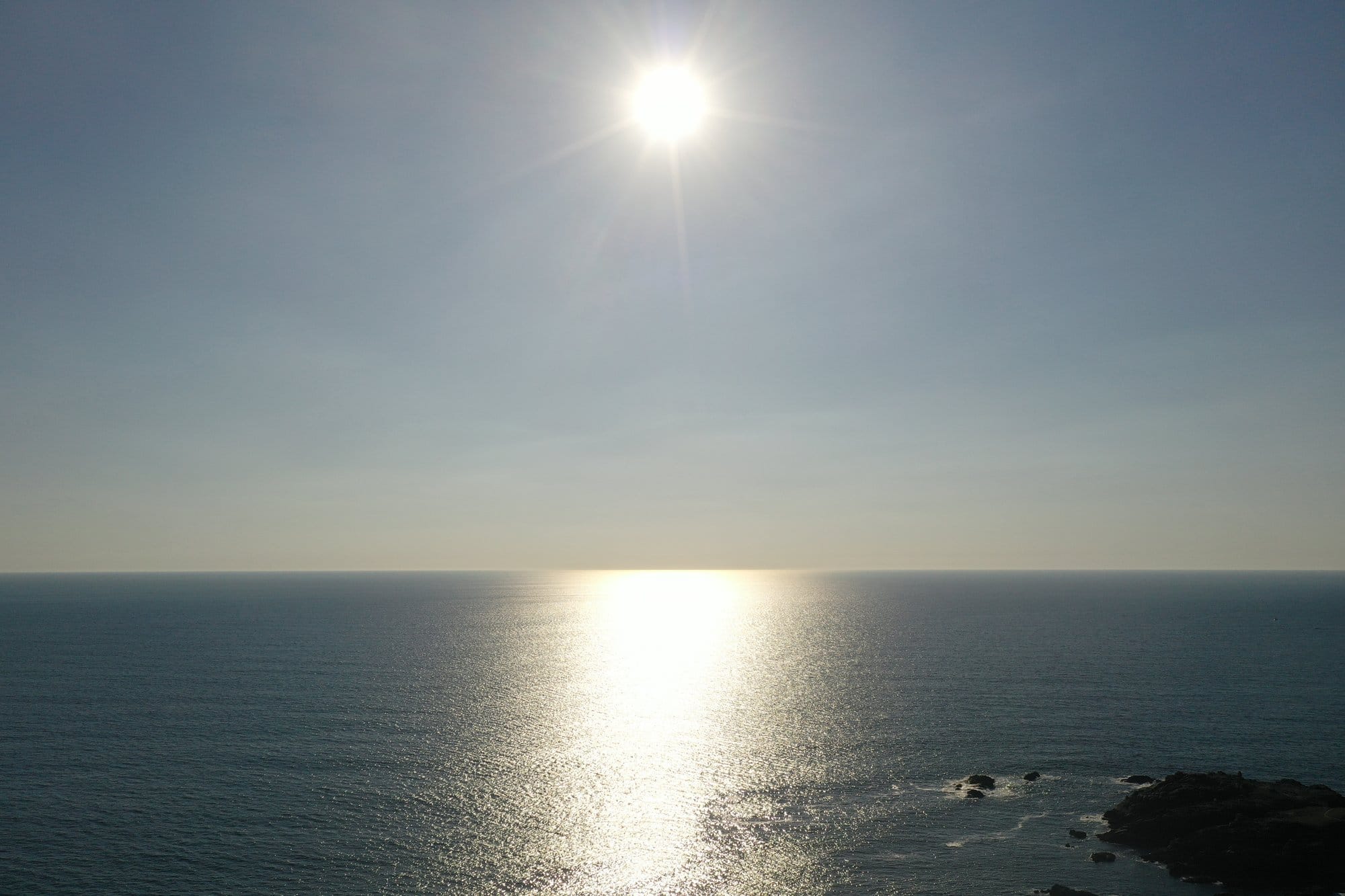
The golden hour transforms the entire landscape. The granite turns warm and amber, the sea shifts from blue to gold, and the shadows lengthen across the heath. It's the kind of light that makes photographers forget about dinner.
And as the sun drops below the horizon, the view from above is pure Atlantic immensity — nothing but sky and water and a sliver of rocky coastline at the bottom of the frame.
Sheep on the Cliffs
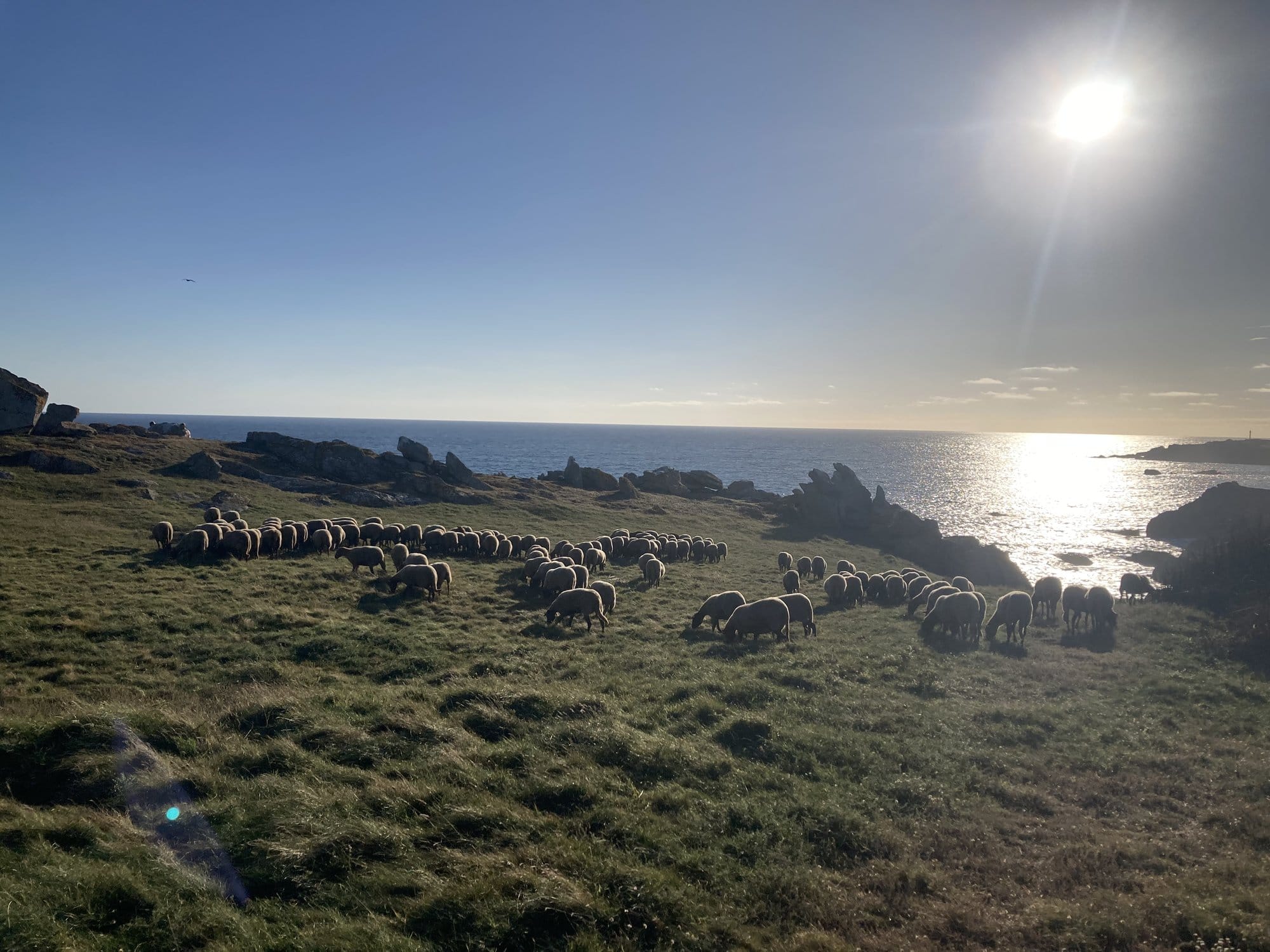
One of the unexpected charms of Île d'Yeu is the island's flock of sheep, which graze freely on the coastal heathlands. Walking the Côte Sauvage in the evening, you're likely to encounter them — a large flock moving slowly across the grass, silhouetted against the sea and the setting sun.
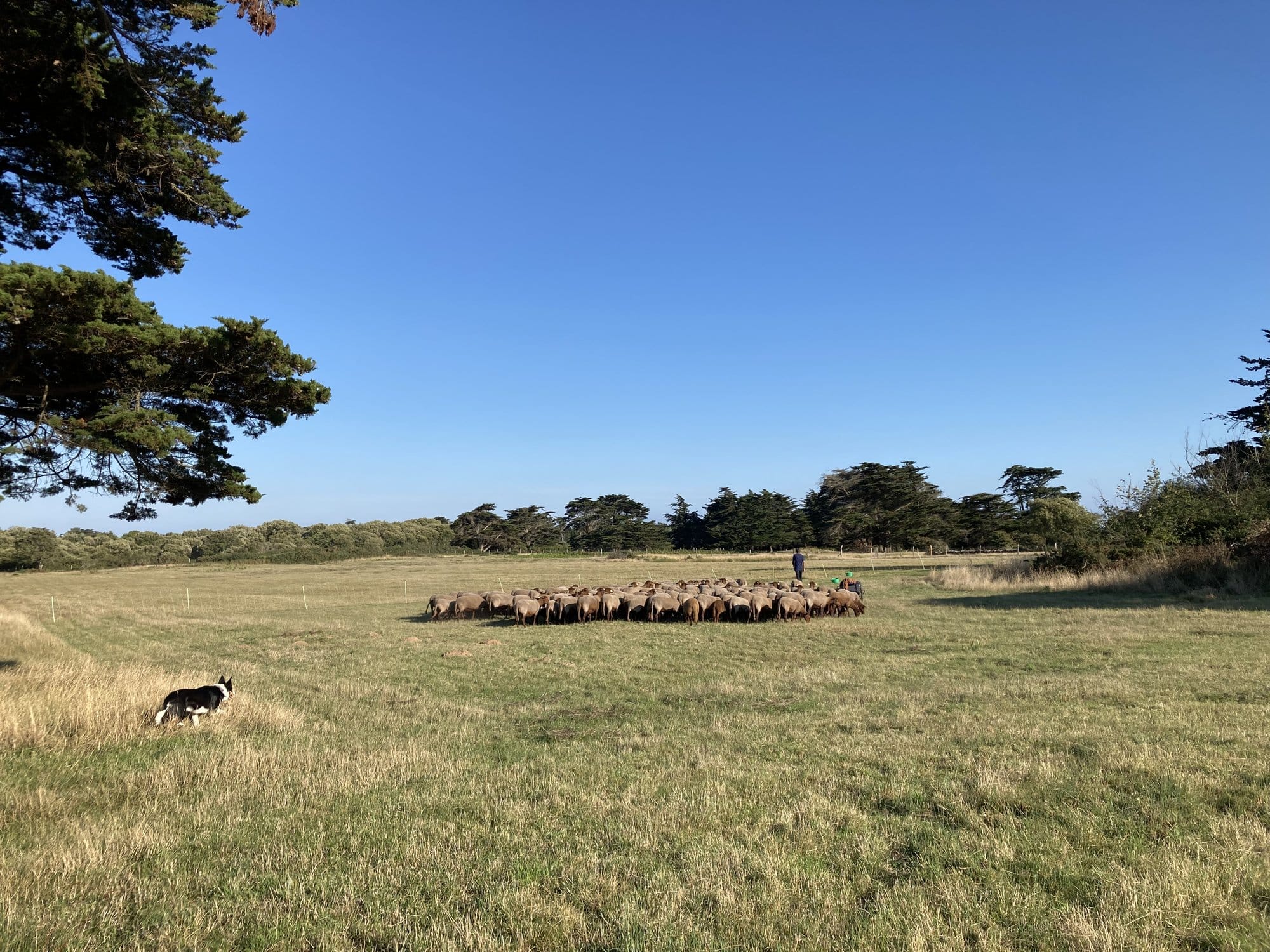
The flock is managed by a local shepherd who rounds them up with a border collie — a bucolic scene that feels more like the Scottish Highlands than the French Atlantic coast. It's a reminder that Île d'Yeu has its own distinct rural identity, shaped by centuries of island farming alongside fishing.
Practical Information
How to Get There
The Côte Sauvage is on the southern and western side of Île d'Yeu. Port de la Meule is about 4 km from Port-Joinville (the main harbour) — an easy 15-minute bike ride or a 45-minute walk. The most popular starting point is Port de la Meule, heading west towards the Vieux-Château and beyond. If you're coming from outside the region, compare flights is a good starting point — Nantes is the closest major airport. From there, renting a car from the airport is the easiest way to reach the ferry terminal at Fromentine, about 1h30 south on the motorway. — complete Île d'Yeu travel guide
Best Time to Visit
The coastal path is accessible year-round, but the best months are June to September when the days are long and the evening light is at its finest. July and August are busiest, but the Côte Sauvage never feels crowded — it's too wild and spread out for that. Late afternoon to sunset is the ideal window.
Where to Stay
If you're spending a few days exploring the Côte Sauvage and the rest of the island, finding accommodation in Port-Joinville is the most practical base — close to the ferry, restaurants and bike rentals. Holiday apartments and small hotels are the main options.
What to Bring
Comfortable walking shoes (the path is mostly flat but rocky in places), sun protection, water, and a camera. The coast is fully exposed with no shade, so a hat is essential in summer. If you're visiting with children, keep them away from the cliff edges — there are no barriers.
Duration
From Port de la Meule to the Pointe de la Tranche and back: approximately 10 km / 3-4 hours including stops. You can also continue along the north coast back to Port-Joinville for a full island loop (around 20 km total).
More to Explore
If the dramatic coastline and island life of Île d'Yeu captured your imagination, you might enjoy these other destinations we've covered: — best things to do on Île d'Yeu — Belle-Île-en-Mer wild island guide — cycling Belle-Île-en-Mer with kids — Pornic beaches and Jade Coast
FAQ
Q: Can you walk the entire Côte Sauvage? A: Yes. The path from Port de la Meule to the Pointe de la Tranche is about 5 km and well-marked. You can extend the walk to a full island loop of roughly 20 km.
Q: Is the Vieux-Château free to visit? A: Yes, the ruins are open-access and free. There's no entrance fee, no ticket office — you simply walk up. Be careful on the rocks, especially when wet.
Q: Is the path suitable for children? A: The path itself is flat and easy, but the cliff edges are unprotected. With sensible supervision, children from around age 6 upward will enjoy it. Younger children need close watching.
Q: Can you fly a drone on Île d'Yeu? A: Drone regulations in France require registration and compliance with local airspace rules. Always check the current regulations on the Géoportail drone map before flying. Some coastal areas may have seasonal restrictions for bird nesting.