
Best Things to Do on Île d'Yeu: Beaches, Seafood & Island Life
Explore the best things to do on Île d'Yeu, from the golden beaches of Plage des Sabias to the seafood stalls of Port-Joinville. A family-friendly guide to France's most underrated Atlantic island.

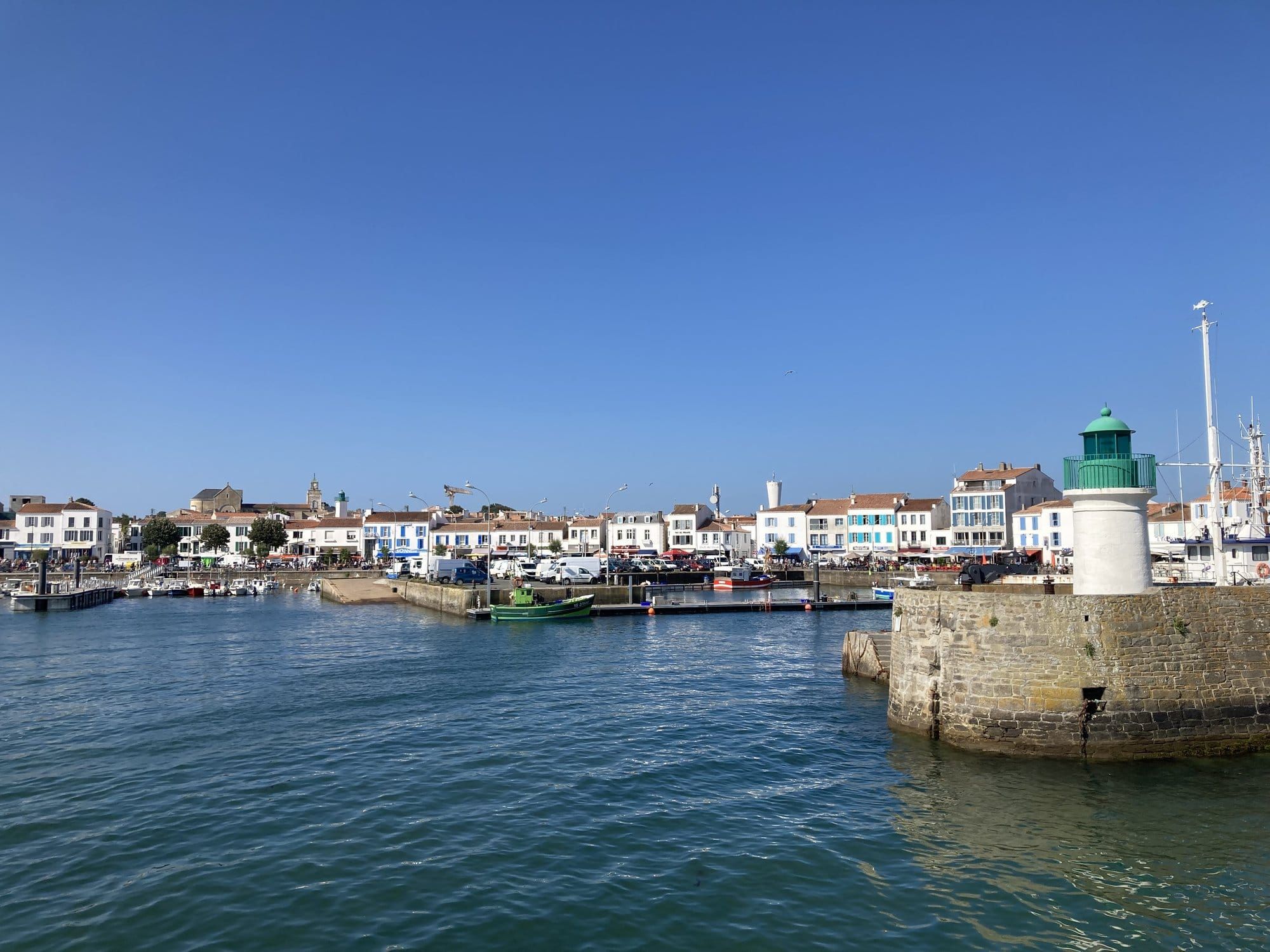
Île d'Yeu sits 17 kilometres off the Vendée coast, and yet it feels like a world of its own. No bridge connects it to the mainland — you arrive by ferry, which already sets the tone. The pace slows the moment you step off the boat. Bikes replace cars, the harbour smells of fresh crab, and the beaches are the kind of places where you can actually hear the sand between your toes.
This is not the French Atlantic coast as most people know it. Île d'Yeu has managed to stay off the mainstream tourist radar, tucked away in the Bay of Biscay while its neighbours — Île de Ré, Noirmoutier, Belle-Île — attract the crowds. Here's what makes it well worth the crossing.
Bookings: Some of the links in this article are affiliate links. This means that if you choose to make a booking, we will receive a small commission at no extra cost to you. Thank You!
Port-Joinville: The Island's Heart
Every visit to Île d'Yeu begins and ends in Port-Joinville, the island's only town and ferry port. It's a charming, compact harbour lined with colourful façades, small restaurants, and a green lighthouse that marks the harbour entrance.
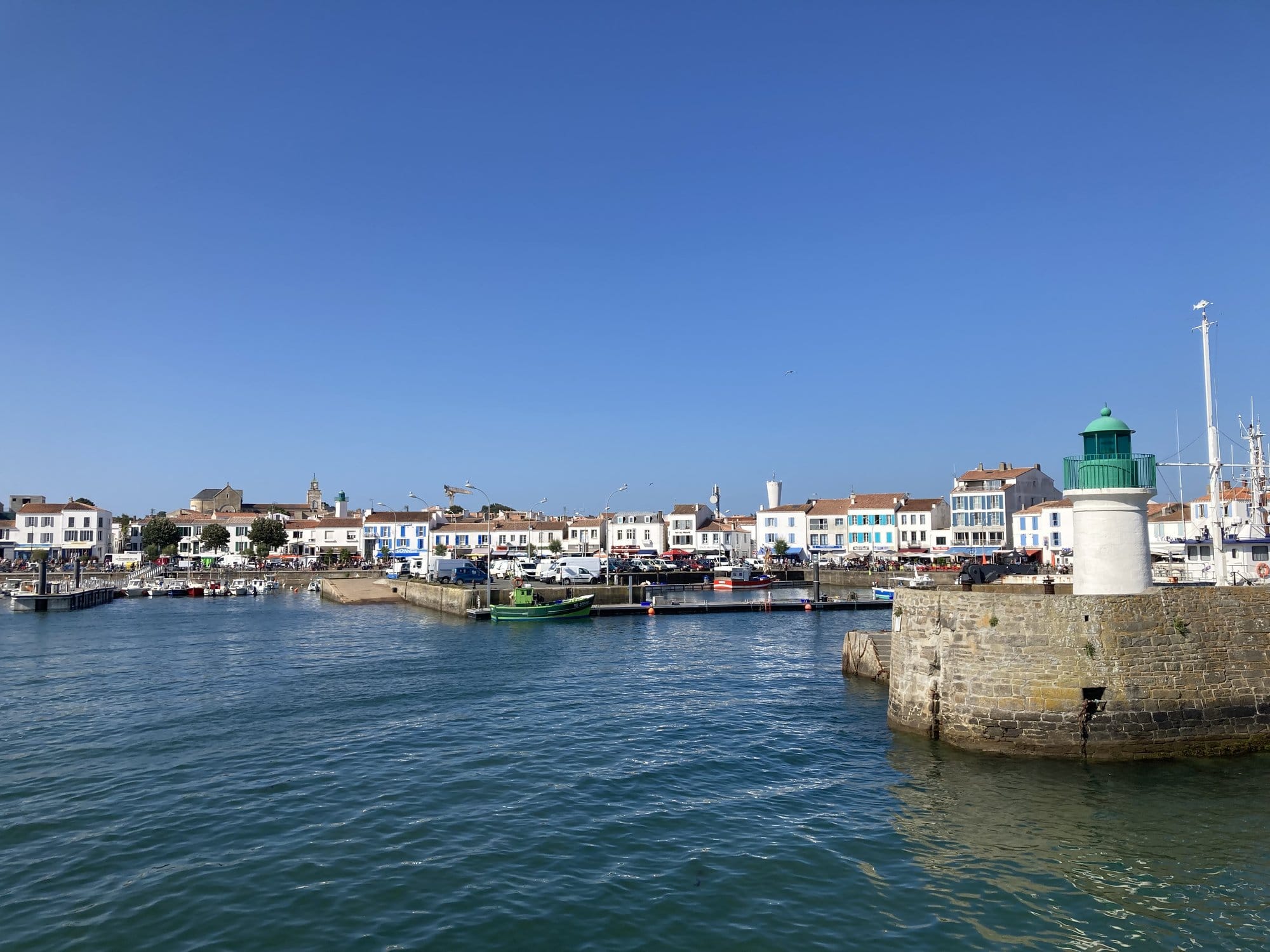
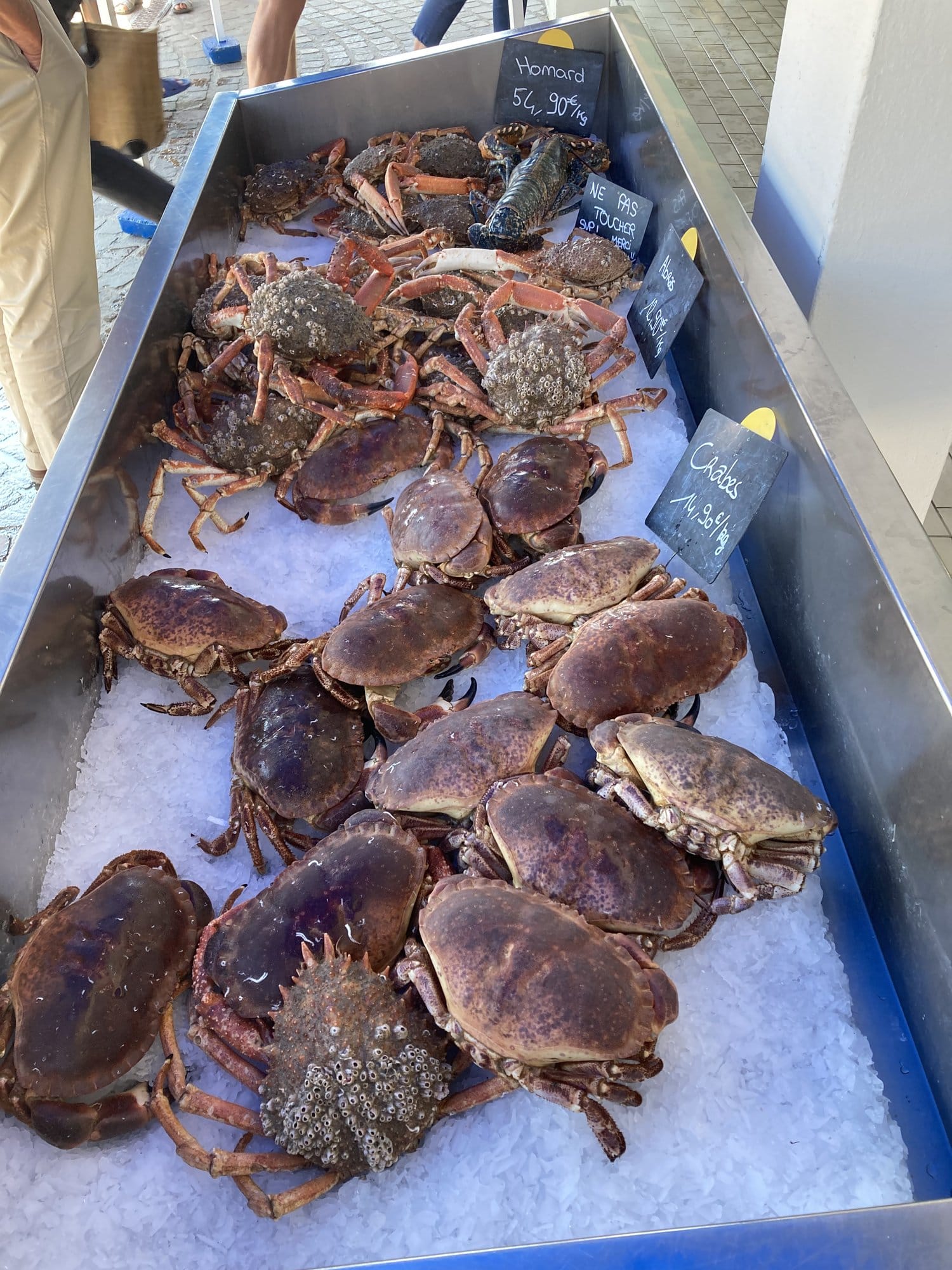
The harbour is the social centre of the island. In the morning, fishing boats unload their catch directly onto the quay, and the fish market comes alive with crates of crab, lobster, langoustines and the day's fish. The prices are handwritten on slate boards — tourteaux, araignées de mer, homard — and if you're staying in a rental with a kitchen, this is where dinner starts.
Port-Joinville also has a handful of bike rental shops, which is the first thing you should sort upon arrival. The island is only 10 km long and 4 km wide, and cycling is by far the best way to get around. There are a few cars, but the roads are narrow and the distances short — a bike gives you the freedom to stop wherever you like.
The Beaches: Golden Sand and Rocky Coves
Île d'Yeu's north coast is where you'll find the best swimming beaches. The contrast with the wild southern Côte Sauvage is striking — here the coastline is gentler, with protected sandy bays that catch the afternoon sun.
Plage des Vieilles
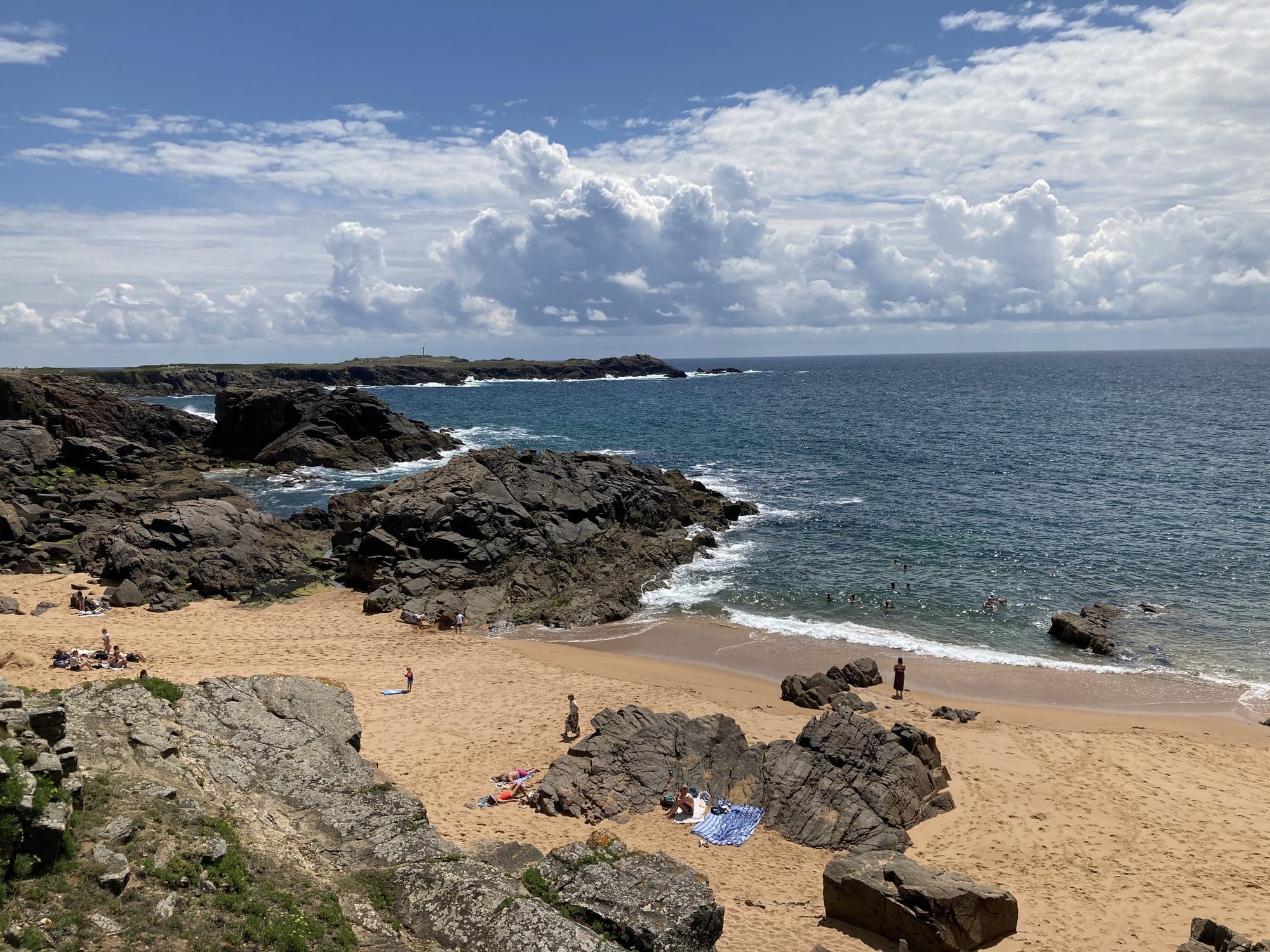
Plage des Vieilles is a beautiful cove framed by dark granite outcrops, with golden sand and clear water. It's not large — maybe 100 metres of beach — but that's part of its charm. The rocks that border the beach create natural pools at low tide, and the swimming is excellent when the sea is calm.
Plage des Sabias
Larger and more family-friendly, Plage des Sabias is the island's main beach. A wide arc of sand stretches between rocky headlands, with enough space for everyone even in peak summer. From the beach, you can spot the silhouette of the Vieux-Château in the distance — a reminder that the wild coast is just a bike ride away.
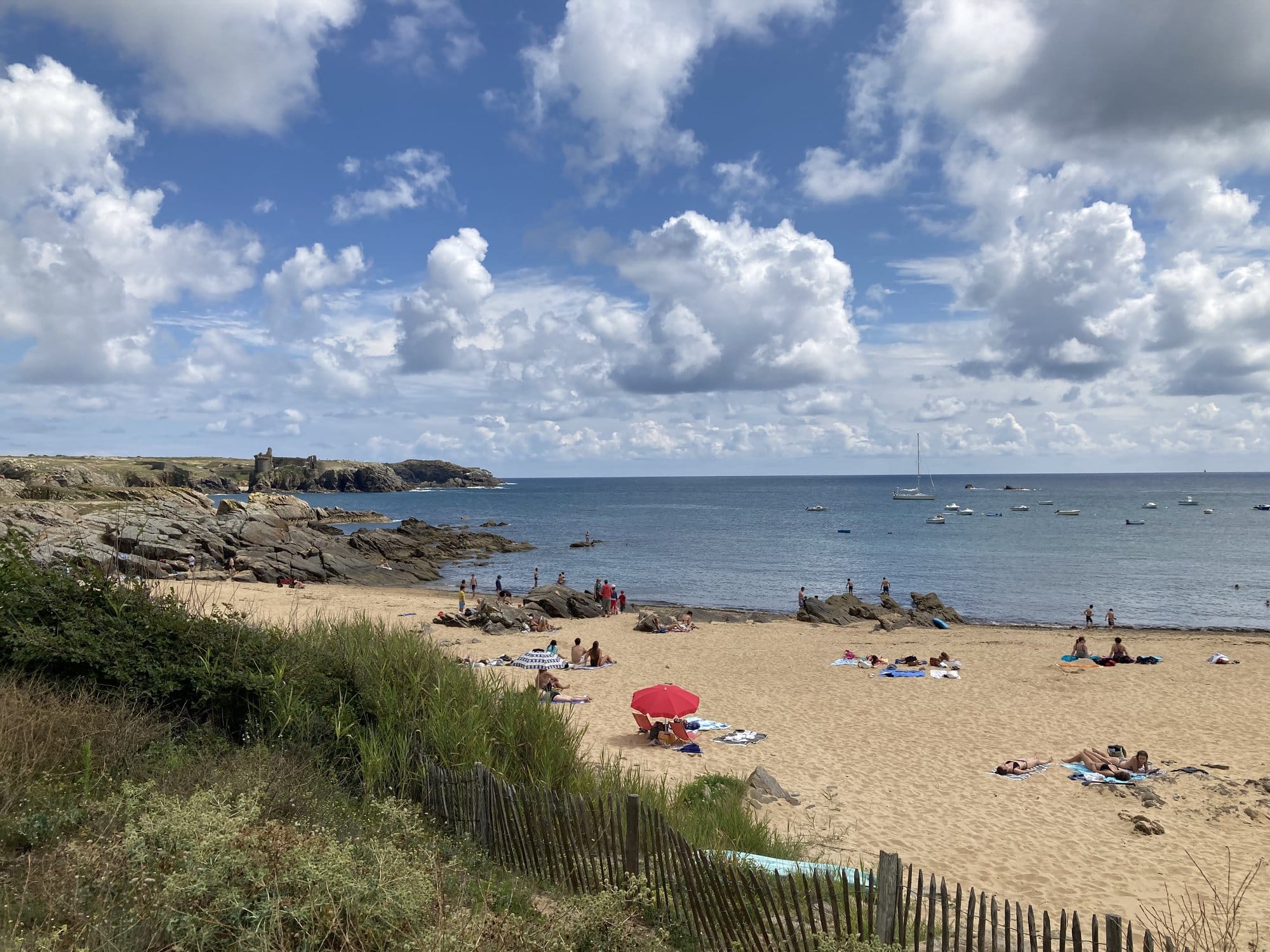
There's a simple beach café, and the ganivelles (sand fences) along the dunes give the beach a wonderfully authentic Atlantic feel. If you're visiting with children, this is the beach to head for — the water is shallow, the sand is soft, and there's plenty of room to spread out.
Seafood: The Island's Best Meal
You don't come to Île d'Yeu without eating seafood. The island has been a fishing community for centuries, and the tradition is very much alive. The fish market in Port-Joinville is the obvious starting point, but the real pleasure is cooking it yourself.
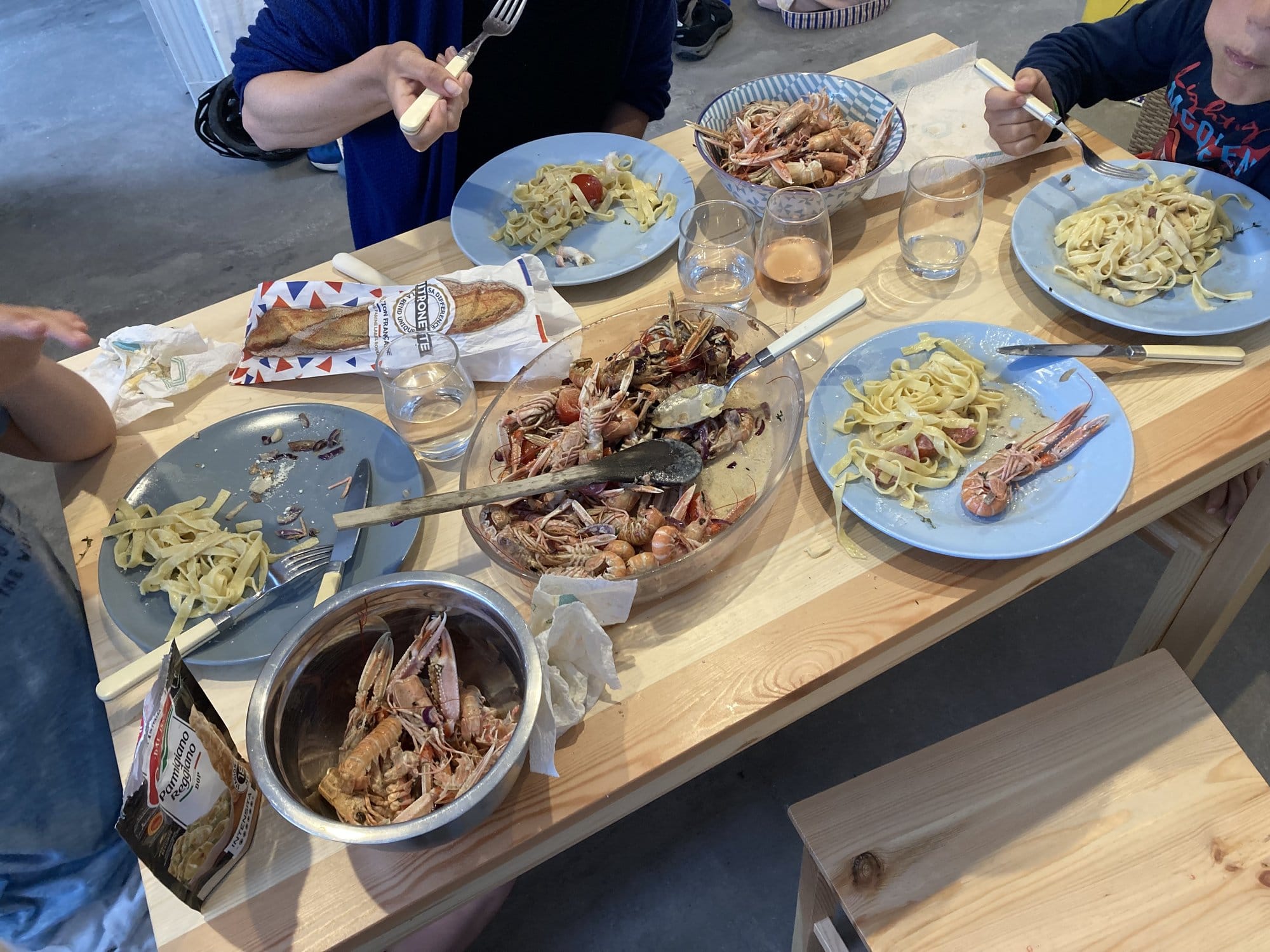
Many visitors rent a house or apartment on the island, and the evening ritual is the same: pick up whatever looks freshest at the market (langoustines were the star during our visit), add some local bread, a bottle of rosé, and sit down to eat as the sun drops. It's simple, it's affordable compared to a restaurant, and it's one of those holiday meals that stays with you.
For restaurants, Port-Joinville has a handful of good options — nothing fancy, but consistently fresh. The island's speciality is langoustines, which are caught locally and served simply grilled or boiled. Ask any local and they'll tell you: Île d'Yeu langoustines are among the best in France.
Cycling the Island
🚲 Rent a bike to explore the area at your own pace. Compare prices and book directly below:
Île d'Yeu was made for cycling. The island is flat enough that anyone can manage it, the roads are quiet, and the distances are short. From Port-Joinville, you can reach any point on the island in 20 minutes or less. — cycling Belle-Île-en-Mer with kids
The classic circuit is a loop of roughly 20 km that takes in the main beaches, the Côte Sauvage, and the interior. The terrain alternates between small coastal lanes, shaded paths through pine groves, and open stretches across the heathland. There are no steep hills — the highest point on the island is barely 30 metres above sea level.
Bike rental starts at around €10 per day for a basic city bike, or €25-30 for an electric bike. Most rental shops are within 50 metres of the ferry terminal in Port-Joinville. No reservation needed outside of peak August weeks. The roads are well-surfaced and signed with small blue cycling markers. Even with children, the full loop is manageable in a morning — and you'll pass enough beaches and viewpoints along the way that stops are inevitable.
Island Life: Shepherds, Sunsets & Slow Days
What sets Île d'Yeu apart from its more famous neighbours is the sense that real life continues here regardless of tourists. The island has a year-round population of around 5,000 — fishermen, farmers, shopkeepers — and in the evening the whole community seems to converge on the harbour for an apéro. — walking the wild Côte Sauvage
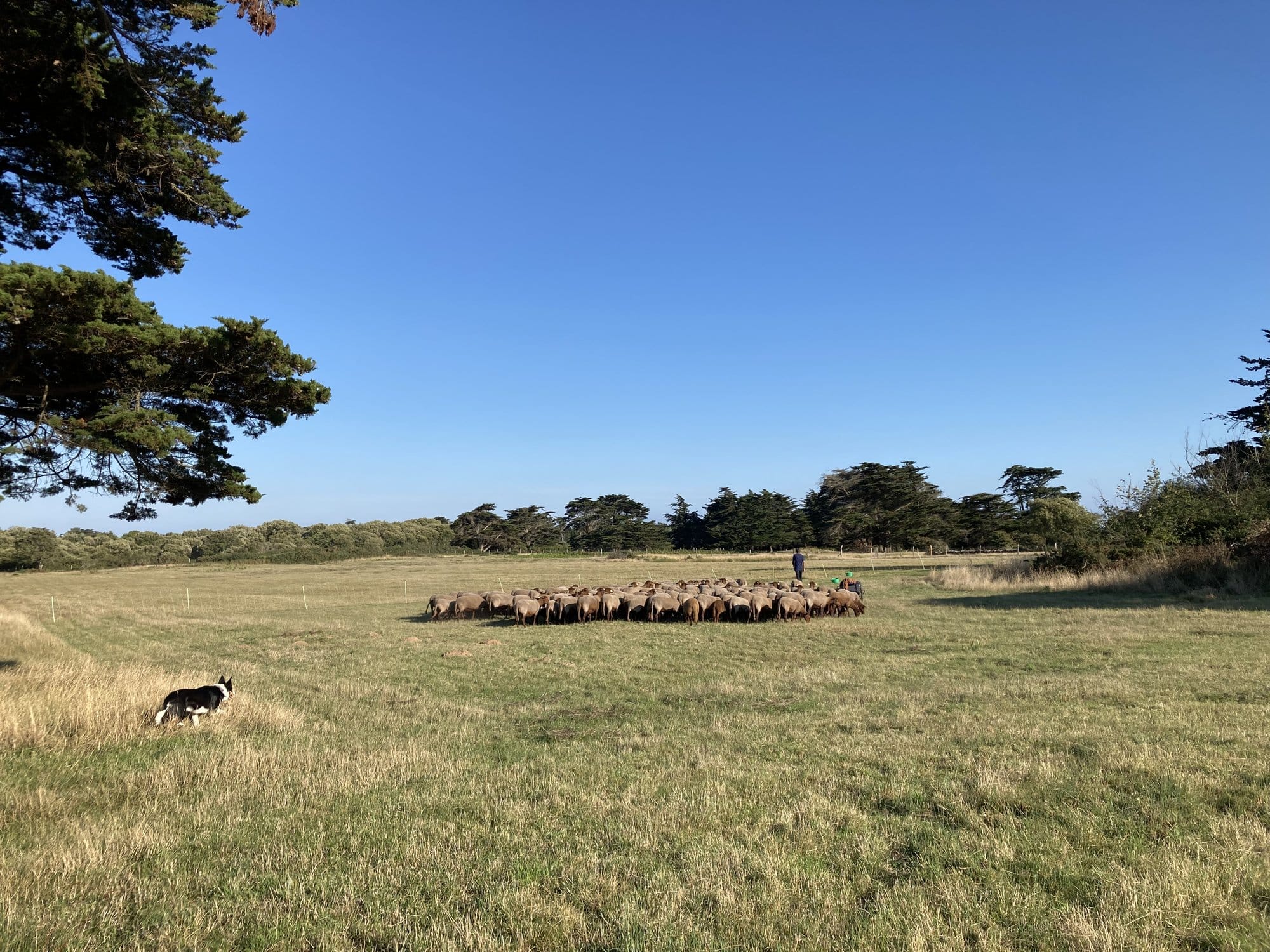
One of the most surprising sights is the island's flock of sheep, which grazes on the coastal heathlands. Walking or cycling near the west coast in the late afternoon, you'll likely encounter the flock being moved by a shepherd and his border collie — a bucolic scene with the Atlantic as backdrop.
The evenings on Île d'Yeu are long and beautiful. With no light pollution to speak of, the sunsets over the Atlantic are spectacular — and afterwards, the island goes quiet. No nightclubs, no busy boardwalks, just the sound of the sea and the clink of glasses at the harbour-side bars.
Practical Information
How to Get There
Île d'Yeu is reached by ferry from Fromentine (on the Vendée coast, about 1h30 south of Nantes). The crossing takes 30 to 70 minutes depending on the vessel (the fast boat is around 30 minutes, the conventional ferry about 70 minutes). Compagnie Yeu Continent operates year-round services. In summer, there are also seasonal departures from Saint-Gilles-Croix-de-Vie and Noirmoutier. If you're coming from outside the region, hiring a car from Nantes airport is the most convenient way to reach the ferry terminal at Fromentine. — complete Île d'Yeu travel guide
Best Time to Visit
June to September for beaches and warm weather. July and August are the busiest months but the island never feels overcrowded. May and September offer mild weather, fewer people, and beautiful light. The island has a mild oceanic climate — pleasant even in winter for walking, though many restaurants and rentals close from November to March.
Getting Around
Bikes are essential. Rent one at the ferry terminal in Port-Joinville (€10/day basic, €25-30/day electric). Cars are permitted but discouraged and largely unnecessary — the island is only 10 km long.
Budget
Ferry return ticket: approximately €35-40 per adult. Bike rental: €10-30/day. Fish market seafood dinner (self-catered): €15-25 per person. Restaurant meal: €25-40 per person. Holiday rental (2-bedroom apartment): €600-1200/week in summer. If you're flying in from further afield, compare flights is a good way to find the best deals — Nantes Atlantique is the closest major airport to the ferry port at Fromentine.
More to Explore
If the island charm and coastal beauty of Île d'Yeu appealed to you, these destinations share a similar spirit: — Belle-Île-en-Mer Brittany island guide
FAQ
Q: Is Île d'Yeu good for families with kids? A: Absolutely. The beaches are safe and sandy, the island is small enough to explore by bike, and the seafood market is a highlight for curious kids. The Côte Sauvage walk needs supervision near cliff edges, but the rest of the island is very child-friendly.
Q: How long should you stay on Île d'Yeu? A: Three to four days is ideal — enough time to cycle the island, walk the Côte Sauvage, enjoy the beaches and settle into island pace. You can do a rewarding day trip, but staying overnight is strongly recommended.
Q: Can you bring a car to Île d'Yeu? A: Technically yes, but it's strongly discouraged and requires advance booking on the car ferry. Most visitors leave their car at Fromentine and rent bikes on the island, which is the much better option.
Q: Where should you stay on Île d'Yeu? A: Port-Joinville is the practical choice — close to the ferry, the fish market, restaurants and bike rentals. You can browse accommodation options on the island to compare hotels, apartments and gîtes. There's also a campsite on the island.