
Pornic Travel Guide: Beaches, Carrelets & the Jade Coast
The complete guide to Pornic: the iconic fishing carrelets, coastal path, beaches, and the wild Préfailles peninsula on the Jade Coast.

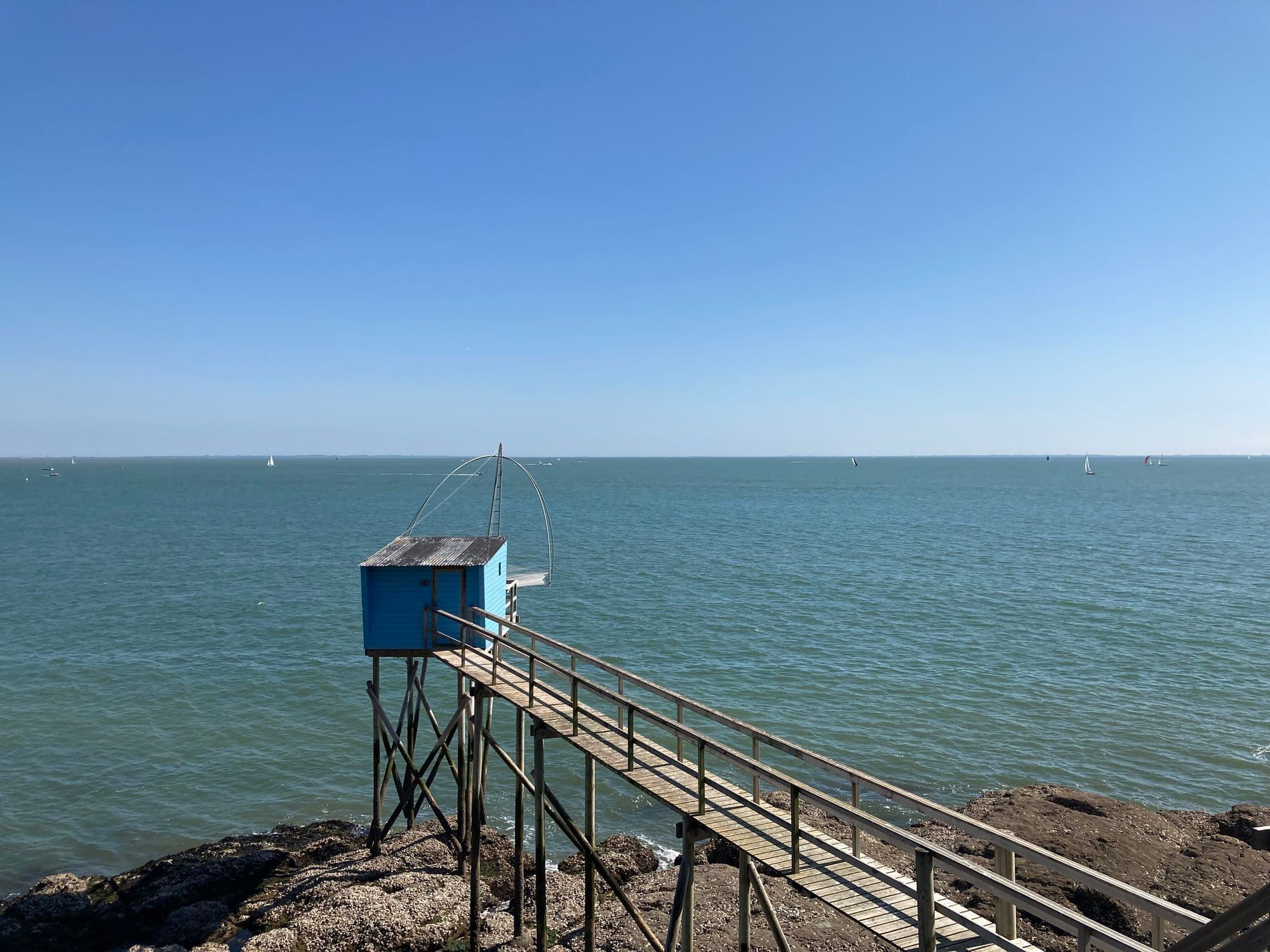
Pornic is the kind of place where you notice details. A wooden pier extends into the sea, crowned by a small hut. Another one. And another. These are carrelets—traditional fishing huts on stilts that have dotted the Jade Coast for centuries, and they're the visual signature that stays with you long after you leave. They're not just pretty; they're a window into a way of life that's still alive here, where locals still fish the same waters their ancestors worked, and tourists come to understand why this corner of the Atlantic has such magnetic appeal.
The town itself sits south of Saint-Nazaire in Loire-Atlantique, just north of the Vendée, making it accessible from Nantes and perfectly positioned for exploring the entire west coast. We found Pornic to be a rare combination: genuinely charming without feeling overcommercialized, accessible without being crowded, and packed with things to do that don't require a day trip inland.
Bookings: Some of the links in this article are affiliate links. This means that if you choose to make a booking, we will receive a small commission at no extra cost to you. Thank You!
The Carrelets: What They Are
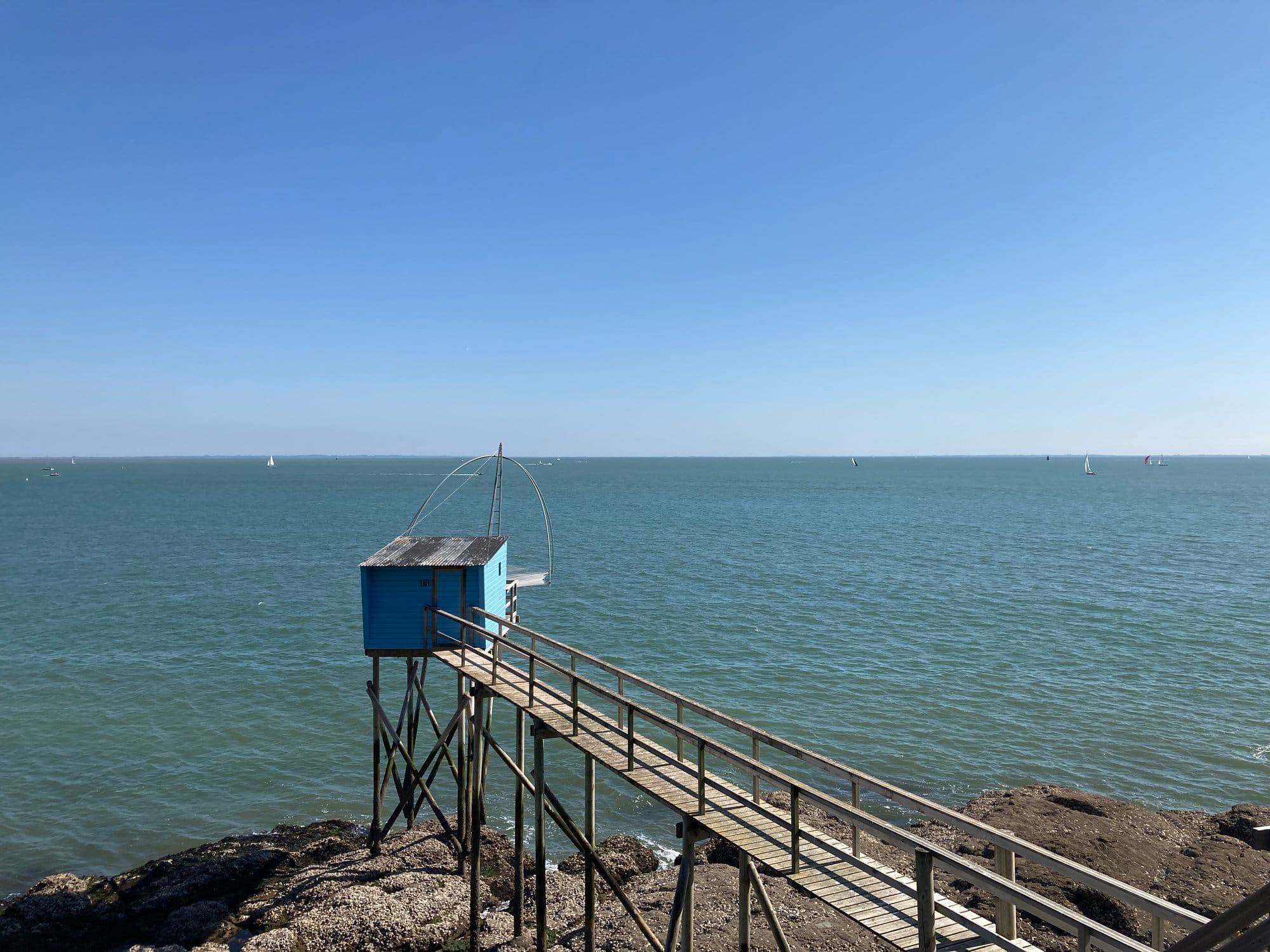
If you've never seen a carrelet before, prepare to fall in love with them. These are wooden structures built on long piers that extend into the sea—some just a few meters, others 20 or 30 meters out. A single fishing hut sits at the end, usually small enough for one or two people to work in. Fishermen lower and raise a large square net using pulleys and counterweights, trapping fish in the jade-green water below.
The tradition dates back centuries here on the Jade Coast, and despite being largely abandoned as a commercial fishing method, they remain. Some are still actively fished; others serve as family retreats or simple holiday huts. What makes them remarkable isn't just their function—it's their presence. They're democratic in their beauty. Whether painted blue, red, white, or weathered to grey, they create a rhythm along the coastline that draws the eye again and again.
You'll see them best from the water (a boat tour is worth the time) or from elevated viewpoints along the coastal path. We recommend spending at least one morning simply walking and observing them at different times of day. The light changes how you see them.
The Coastal Path: Pornic Town
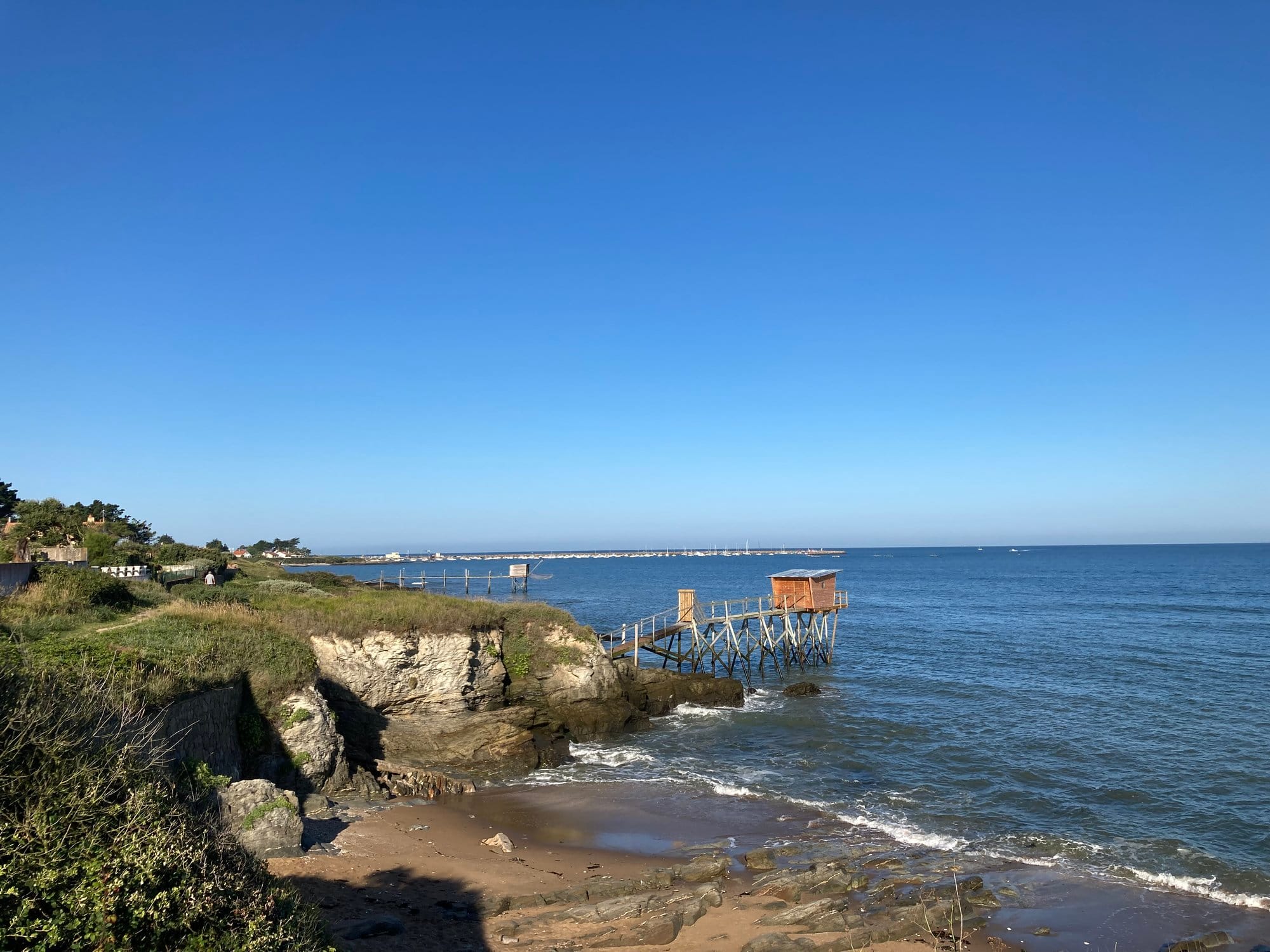
Pornic's main attraction is its coastal promenade and cliff walk, which traces the shoreline for several kilometers. It's not a strenuous hike—the terrain is manageable and well-marked—but it's a walk that rewards attention. You'll pass through different landscapes: manicured beaches, wild rocky coves, and stretches where the path runs right along hundred-meter cliffs.
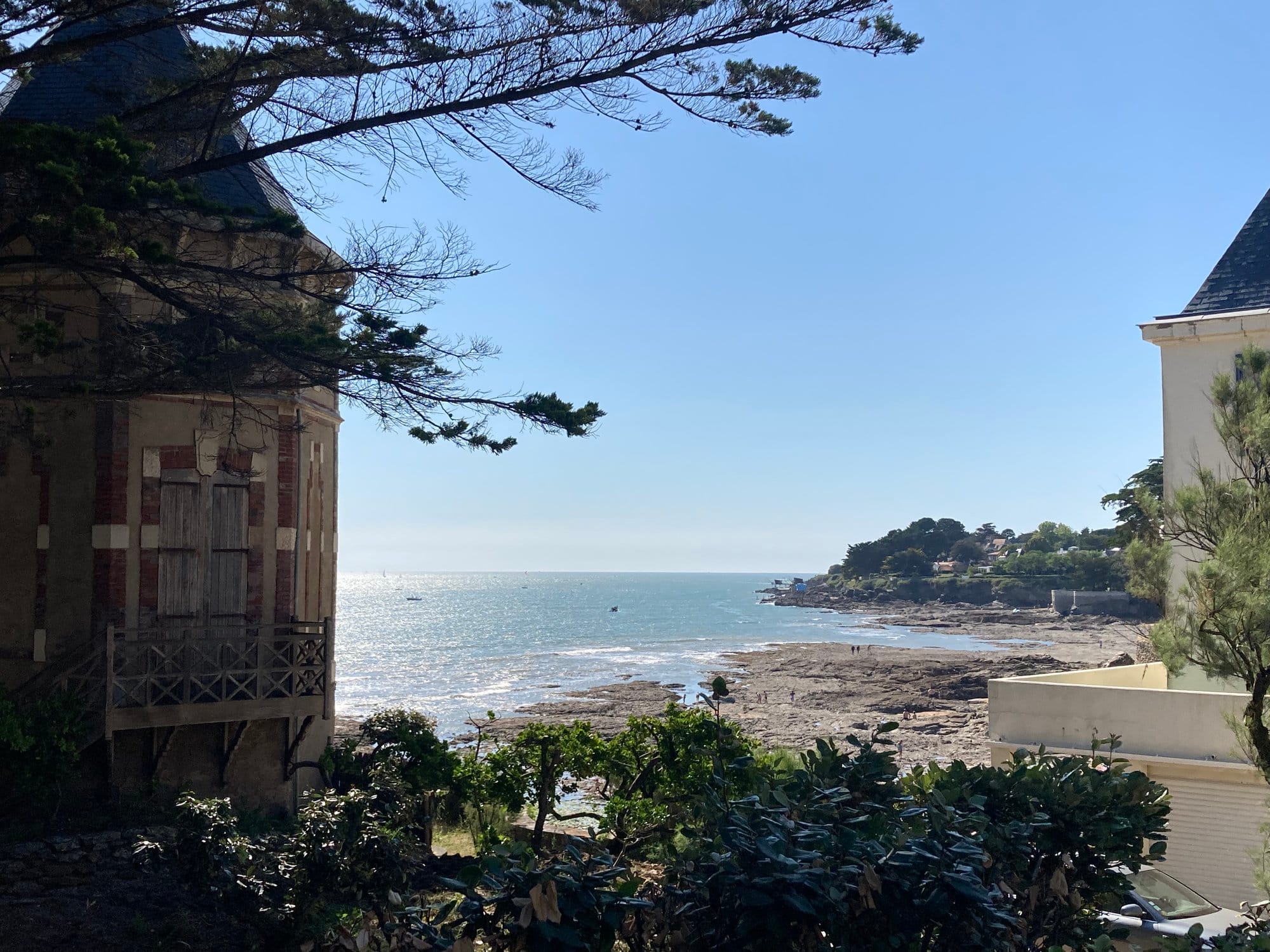
The walk begins at the heart of Pornic, where the château ruins sit above the harbor. From here, the path winds south, following the contour of the cliffs. There are benches placed strategically, access points down to small beaches, and numerous spots where you can stop and simply watch the water. In spring and early summer, wildflowers line the path. Year-round, you'll see sailboats dotting the horizon and, if you're lucky, a carrelet or two framed perfectly against the open Atlantic.
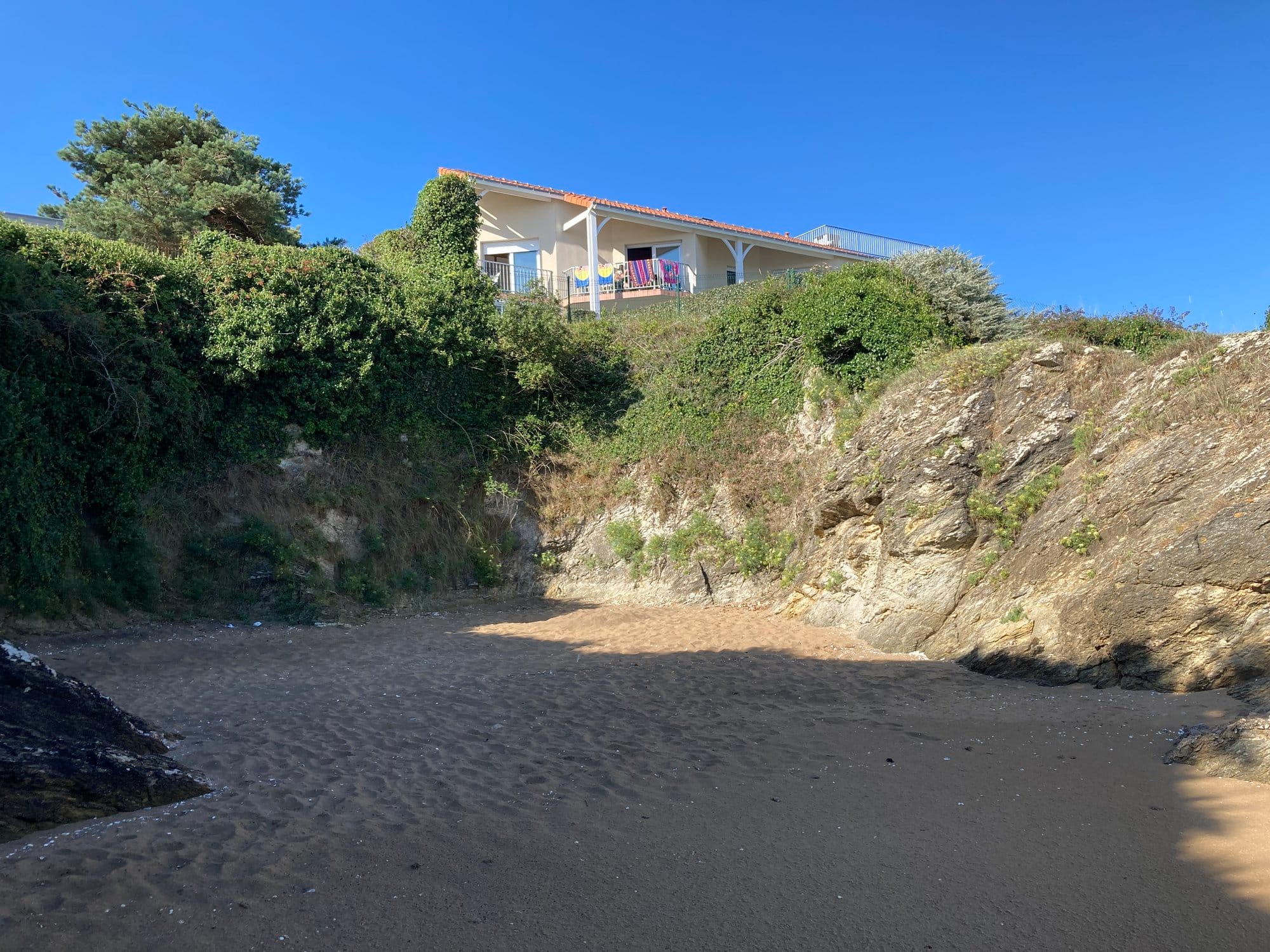
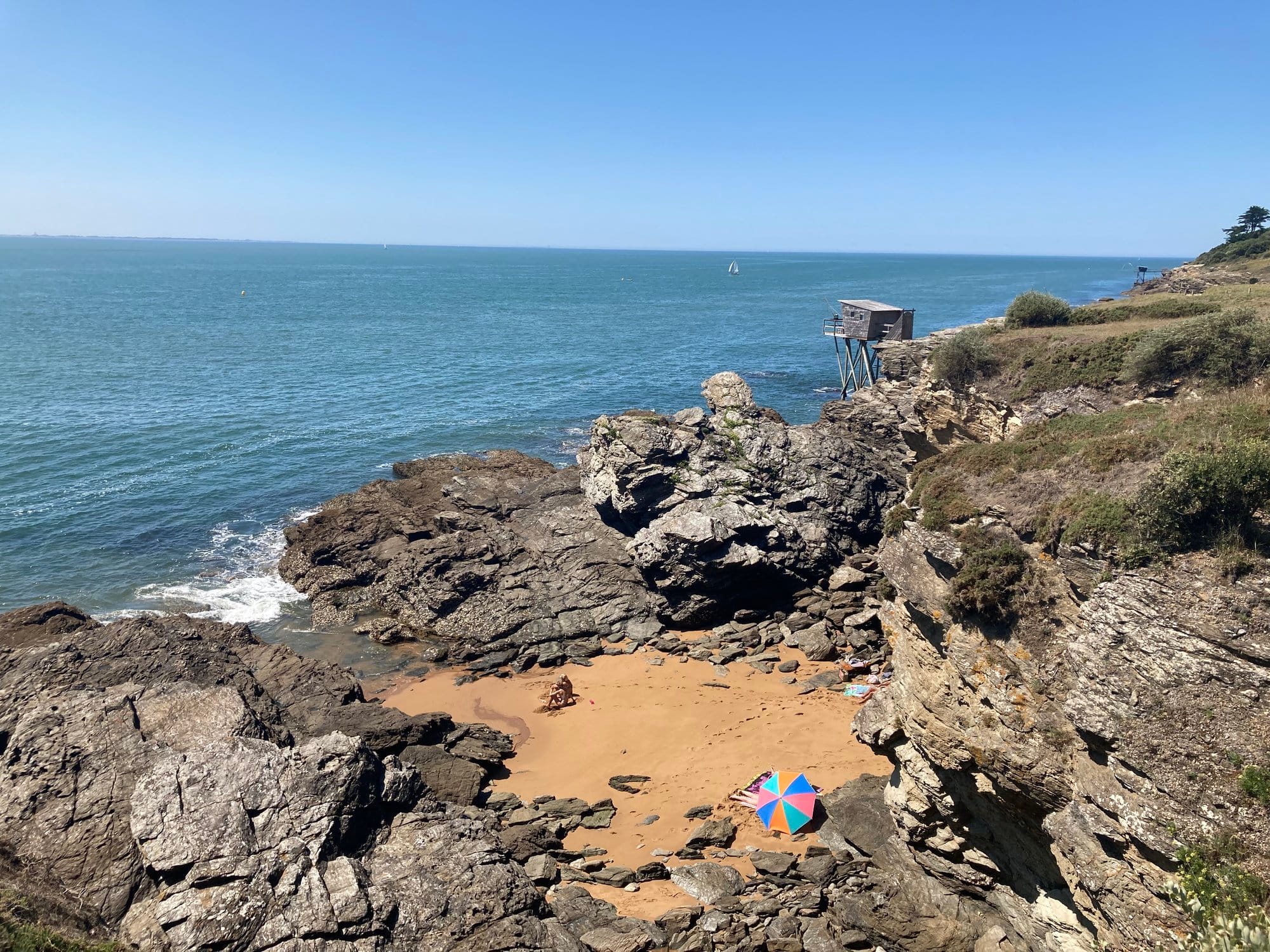
The most dramatic section runs past a series of small coves tucked between limestone cliffs. One in particular—with a house perched improbably on the headland above—stayed with us because it captures something essential about this coast: human habitation and wild nature coexist here without apparent conflict.
Préfailles and Pointe Saint-Gildas
About 5 kilometers south of central Pornic lies Préfailles, a smaller peninsula village that feels wilder and less developed than the main town. It's here that the Jade Coast reveals its teeth. The cliffs are more dramatic, the rocks more jagged, and the sense of standing at the edge of the Atlantic more visceral.
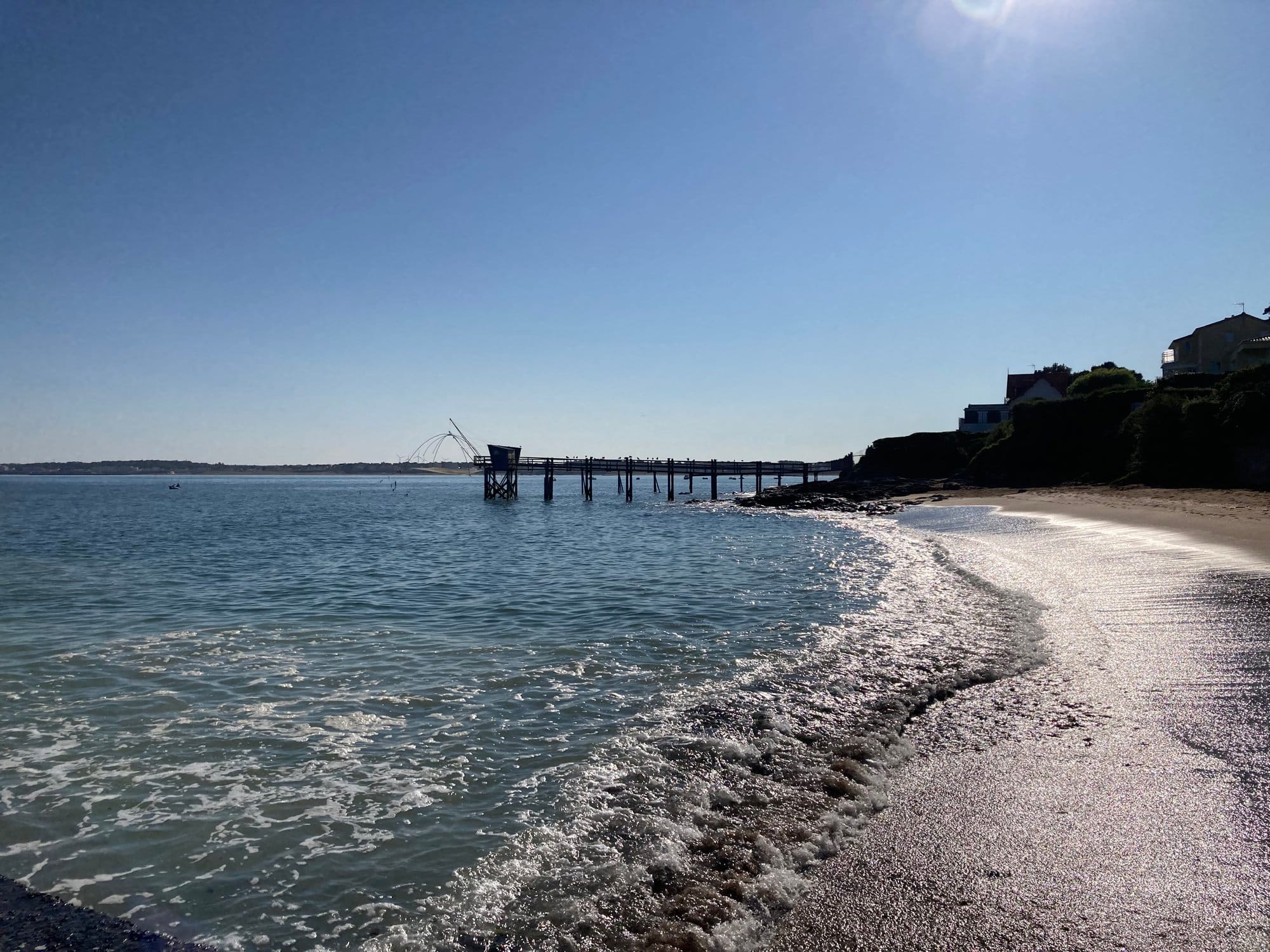
The Pointe Saint-Gildas lighthouse marks the southernmost tip—a dramatic rocky outcrop where the coast turns and the geography becomes more rugged. Getting here requires a short drive from Pornic town, but it's essential. The headland walk offers views that justify the journey: narrow paths between rocks, pocket beaches tucked into coves, and carrelets positioned among boulders as if they've grown there naturally.
One particular carrelet—painted a bright, almost electric blue—sits on a long pier extending into perfectly calm water. Behind it, sailboats sit so still they appear painted onto the sea. It's the kind of scene that makes you understand why people return to this coast year after year.
The Beaches
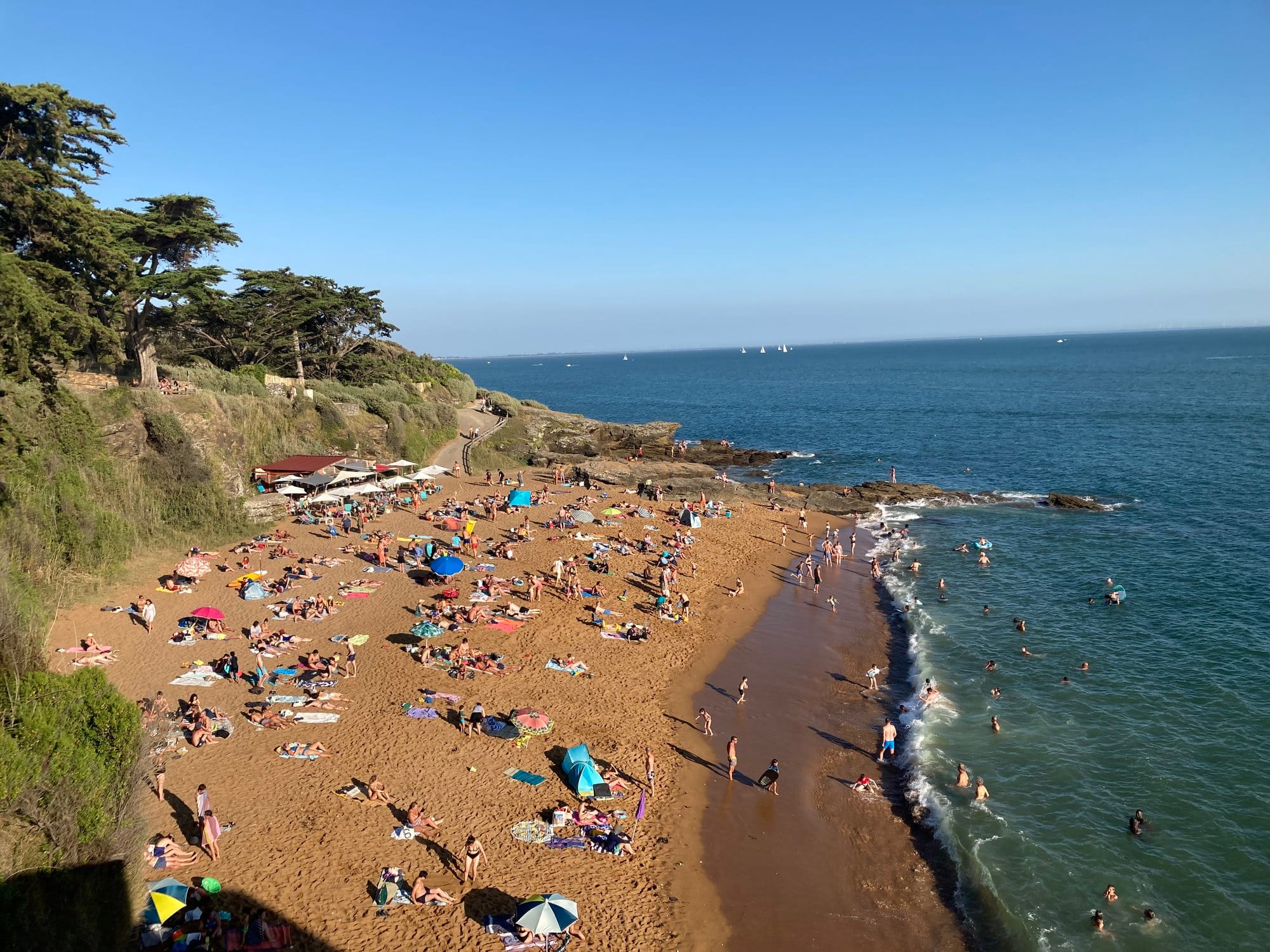
Pornic proper has three main beaches, each with its own character. The central beach—wide, sandy, and flanked by the promenade—is family-friendly and well-equipped with facilities. It's the kind of place where you can spend an entire day with children, knowing that bathrooms, cafés, and shade are never far away.
If you prefer quieter sand, venture to the smaller coves accessible from the coastal path. These are more sheltered, often emptier, and feel more like discoveries than destinations. They're ideal for reading, swimming when the tide permits, and watching the light change as the day progresses.
The beach at Préfailles, despite its more rugged surroundings, offers a surprisingly comfortable stretch of sand. Because it's less advertised than the main town beach, it tends to draw fewer crowds. We found it particularly pleasant for an afternoon walk, especially when the wind is light and the sea reflects the sky like glass.
When to Visit and Practical Information
Pornic is open year-round, but it truly comes alive from May through September. July and August bring the fullest crowds—European school holidays bring families—but spring and early autumn offer better weather for walking, fewer people, and lower prices.
The town is easily reached from Nantes (about an hour's drive) or Saint-Nazaire (30 minutes). It's close enough for a day trip but rewarding enough to justify at least two days. We recommend staying overnight to see the coast at different times of day and to avoid the feeling of rushing.
Accommodation ranges from campsites (many excellent, family-friendly options) to holiday apartments and hotels. The main promenade has numerous restaurants, crêperies, and cafés. Seafood is the obvious choice—local fish, mussels, and oysters are abundant and fresh.
For exploring, bring good walking shoes, a swimsuit, and binoculars if you're interested in spotting seabirds. The coastal path is accessible in all seasons, though winter storms occasionally close sections. Summer offers the calmest conditions; spring brings wildflowers and fewer tourists.
Where to Stay and Getting Around
Renting a car at Nantes airport gives you the flexibility to explore the Jade Coast beyond Pornic. The drive from the airport to town takes about 90 minutes and passes through some beautiful countryside.
For accommodations, browse hotels in Pornic to find everything from family-friendly apartments to seaside hotels. Book early during summer months.
If you're flying in from further afield, search for compare flights—the nearest major airport with connections to most European cities.
More from France
The Jade Coast is just one piece of France's extraordinary Atlantic and inland geography. If you're planning a longer trip, these guides will help you understand what else this country offers. — walking Île d'Yeu's wild coast — cycling Belle-Île-en-Mer with kids
Frequently Asked Questions
Is Pornic suitable for families? Absolutely. The main beach is family-friendly with full facilities, the coastal path is accessible to all ages, and the town has excellent restaurants and cafés. The calm, sheltered waters of the coves are perfect for children, and the slower pace of the place is refreshing for families wanting to avoid theme parks and major tourist attractions.
Can you still see carrelets actively fishing? Some are, though it's less common now. The carrelets are primarily active in early morning (before 8am) or on particular days. The real value in seeing them is understanding the tradition—many are now family huts or tourist attractions, which is fine. They remain unchanged in form and presence on the landscape.
What's the best time to walk the coastal path? Spring (April-May) and early autumn (September) offer the best weather, fewer crowds, and beautiful light. If you visit in summer, walk early in the morning before the beaches fill up. Winter is dramatic but potentially treacherous; some sections close during storms.
How long should I plan to spend in Pornic? Two full days gives you time to explore the coastal path, visit Préfailles, and soak in the place without feeling rushed. A long weekend allows for more relaxation and perhaps a boat trip to see the carrelets from the water. Even a day trip from Nantes or Saint-Nazaire is worthwhile if you're passing through.