
Île d'Yeu Travel Guide: France's Best-Kept Island Secret
The complete travel guide to Île d'Yeu, France. How to get there by ferry, where to stay, the best beaches, the dramatic Côte Sauvage, cycling routes and practical tips for this off-the-radar Atlantic island.

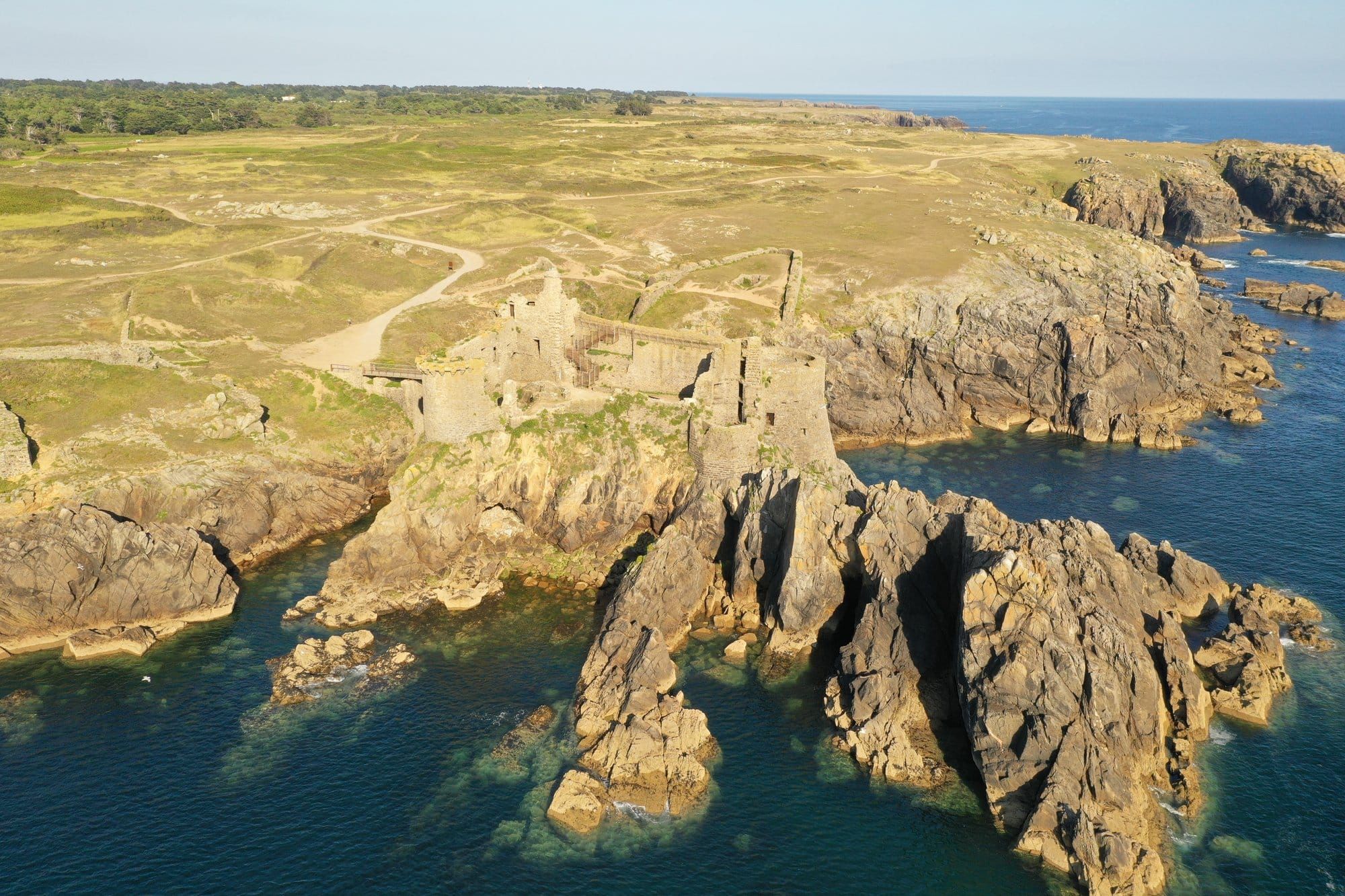
Île d'Yeu is the kind of island that people who've been there tend to keep quiet about. Sitting 17 kilometres off the Vendée coast in the Bay of Biscay, it has no bridge, no airport, and no international profile to speak of. You get there by ferry, you get around by bike, and the biggest event of the day is the fishing boats coming in. In a country famous for its islands — Corsica, Île de Ré, Belle-Île — Île d'Yeu remains stubbornly under the radar.
That's precisely what makes it worth visiting. The island packs a remarkable amount into its modest 23 square kilometres: a wild, cliff-lined southern coast with a ruined medieval castle, golden beaches on the sheltered northern shore, one of the best fish markets on the Atlantic seaboard, and a year-round community that gives it a life and character far beyond a summer resort.
Bookings: Some of the links in this article are affiliate links. This means that if you choose to make a booking, we will receive a small commission at no extra cost to you. Thank You!
The Two Sides of Île d'Yeu
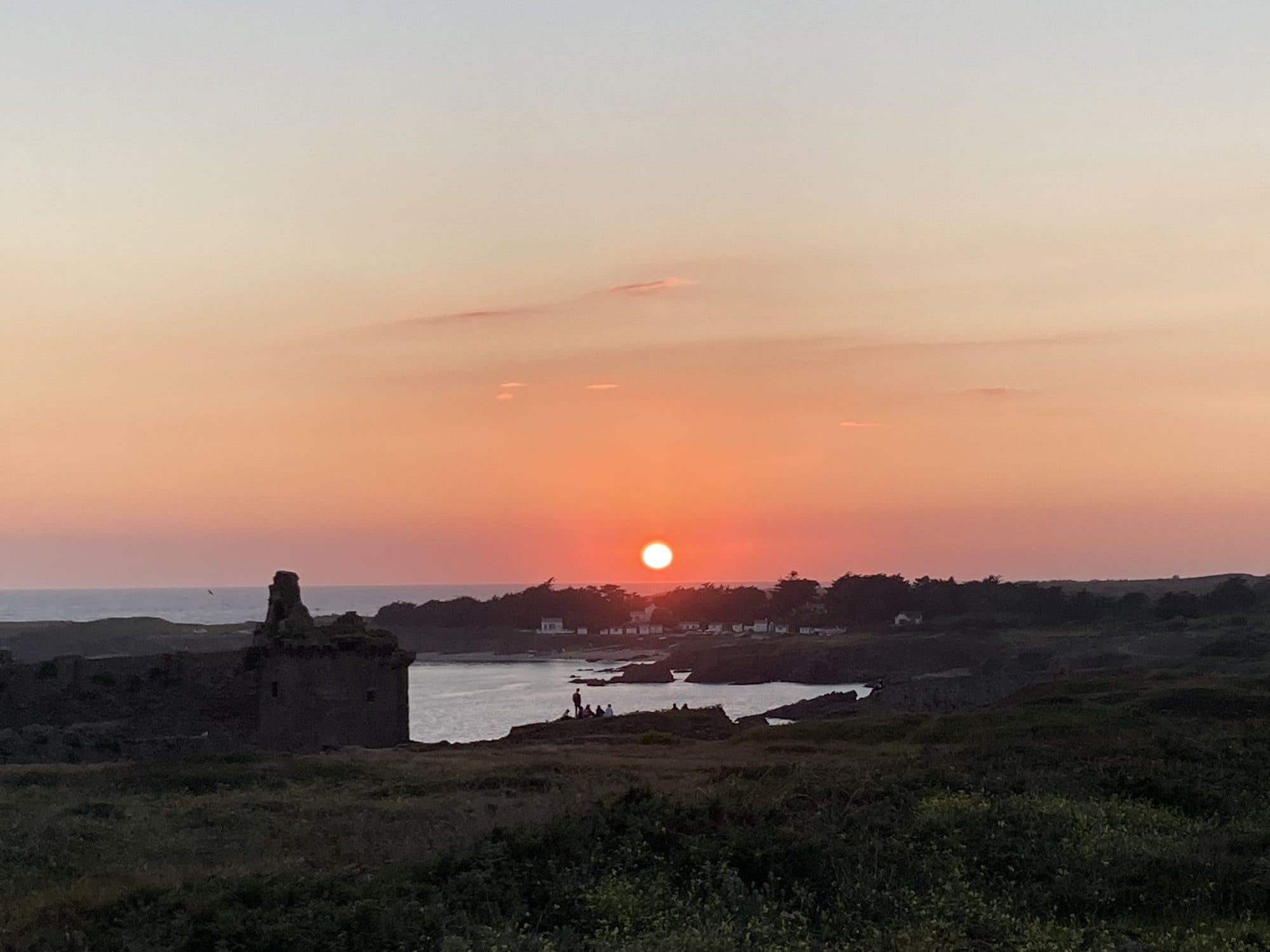
What makes Île d'Yeu unusual is its split personality. The northern coast is gentle — sandy beaches, sheltered coves, and the harbour town of Port-Joinville with its colourful quayside cafés. The southern and western coast is another story entirely: the Côte Sauvage, a dramatic stretch of granite cliffs, sea stacks and crashing Atlantic waves, crowned by the ruins of the 11th-century Vieux-Château.
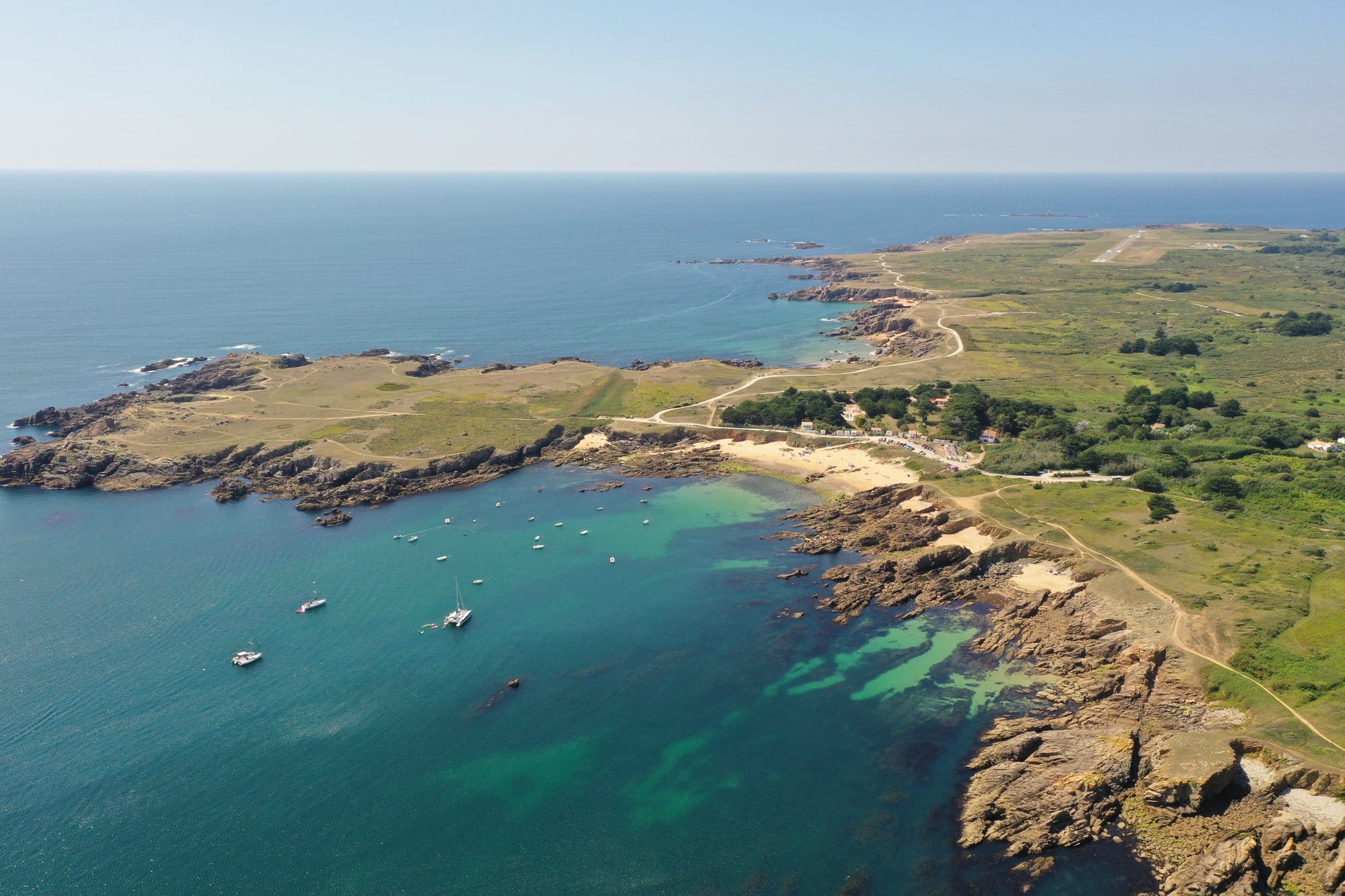
This contrast means the island appeals to very different moods. In the morning, you can be lounging on a sandy beach with a book. By afternoon, you're walking a dramatic cliff path with nothing but the wind and the sea for company. And in the evening, you're sitting on the harbour with a plate of langoustines and watching the fishing boats come in.
How to Get to Île d'Yeu
By Ferry from Fromentine
The main ferry service runs from Fromentine, a small port on the Vendée coast about 1h30 south of Nantes by car. Compagnie Yeu Continent operates daily crossings year-round. The crossing takes 30 to 70 minutes depending on the vessel (the fast boat is 30 minutes, the conventional ferry around 70 minutes).
Return tickets cost approximately €35-40 per adult. In summer, booking at least a few days in advance is recommended — the fast boats sell out quickly, especially for weekend departures.
Getting to Fromentine
By car from Paris: approximately 4h30 via the A11 and A83 motorways. There's a large car park at Fromentine port (roughly €10-15/day) where most visitors leave their car for the duration of their island stay. If you're flying into Nantes, renting a car at the airport is the easiest way to reach the ferry — it's about 1h30 south on the motorway.
By train: TGV to Nantes, then regional train or bus to Fromentine (allow 2-3 hours from Nantes).
Other Ferry Routes
In summer, seasonal services also depart from Saint-Gilles-Croix-de-Vie (about 1 hour crossing) and occasionally from Noirmoutier. These are worth checking for a different perspective on the approach to the island.
Getting Around the Island
🚲 Rent a bike to explore the area at your own pace. Compare prices and book directly below:
Bikes are the way to go. The island is 10 km long and 4 km wide, essentially flat, and the roads are quiet. Several bike rental shops line the quay in Port-Joinville — you'll spot them within 30 seconds of stepping off the ferry. — cycling a French Atlantic island with kids
Rental costs around €10/day for a standard bike, €25-30/day for an electric bike. The full island loop by bike takes about 2-3 hours including stops, making it easy to see everything in a day. For the Côte Sauvage, lock your bike at Port de la Meule and continue on foot along the cliff path.
Cars can be brought on the ferry but require advance booking, and frankly there's no reason to have one. The island is built for pedal power.
What to See and Do
The Côte Sauvage & Vieux-Château
The wild southern coast is the island's star attraction. A well-marked path runs along the cliff edge from Port de la Meule westward to the Pointe de la Tranche — about 5 km of dramatic, wind-sculpted coastline. The highlight is the Vieux-Château, an 11th-century ruin perched on a rocky promontory.
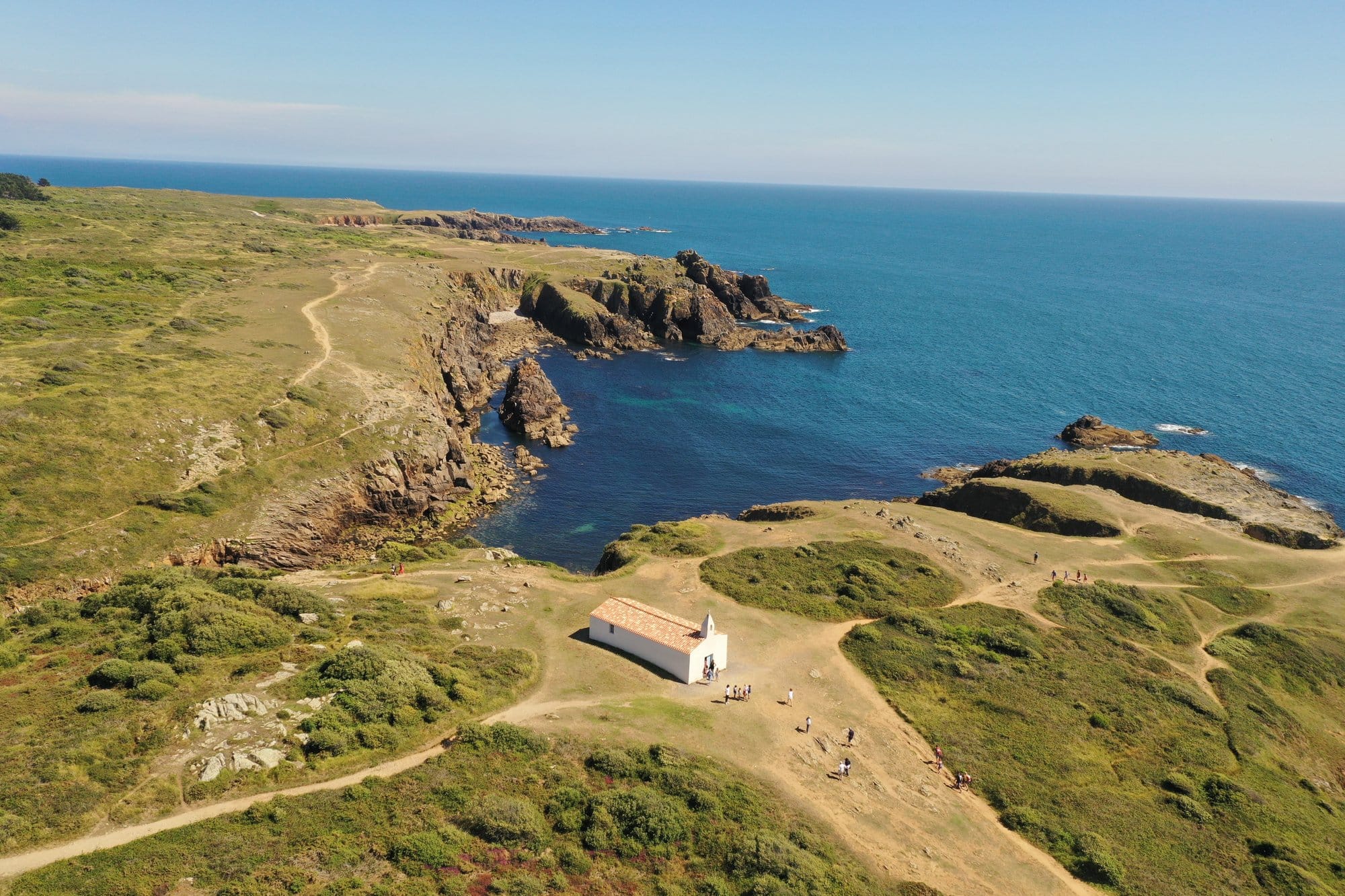
We've written a detailed guide to walking the Côte Sauvage:
Beaches
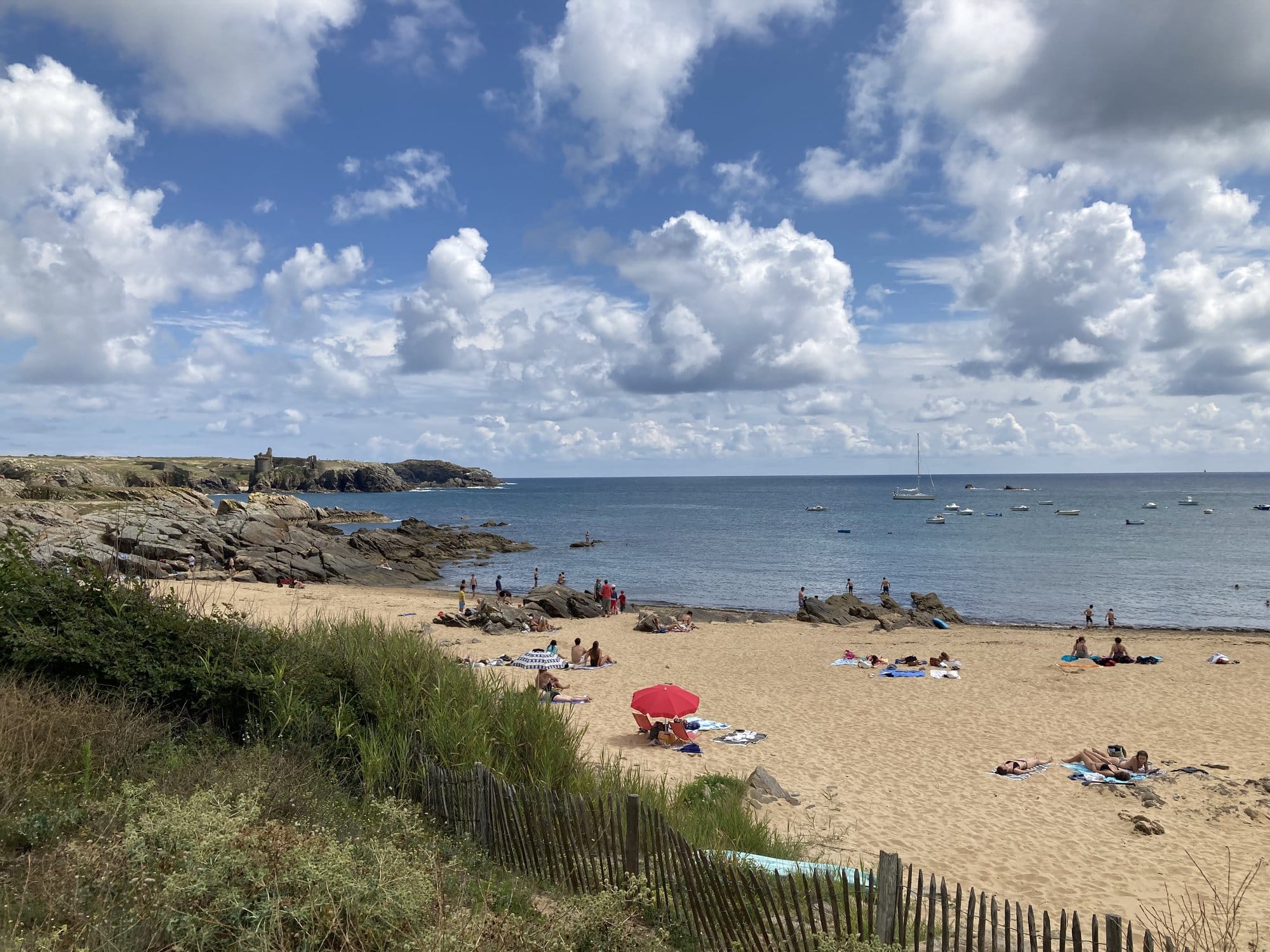
The north coast has the island's best swimming beaches. Plage des Sabias is the largest and most family-friendly, while Plage des Vieilles offers a more intimate cove setting with beautiful rock formations.
Port-Joinville & the Fish Market
The island's only town is a delight — a working fishing harbour with morning market stalls, quayside cafés, and a genuine community atmosphere. The fish market is not to be missed: freshly caught crabs, langoustines, lobsters and fish, straight off the boats.
Cycling the Island Loop
The 20 km circuit takes in both coasts, the interior heathlands, and a handful of small chapels and viewpoints. It's flat, well-signed, and one of the most pleasant bike rides on the French Atlantic coast.
We've covered beaches, seafood and island life in detail here:
Where to Stay
Île d'Yeu's accommodation is modest and authentic — no luxury resorts, no big hotel chains. The main options are holiday rentals (gîtes and apartments), a handful of small hotels, and one campsite.
Port-Joinville is the most practical base — close to the ferry, restaurants, bike rentals and the fish market. Most holiday rentals are in or near the town. You can compare hotels and apartments on Île d'Yeu to find the right fit for your trip.
Budget guide (summer 2025): Holiday rental (2-bedroom apartment): €600-1200/week. Small hotel: €80-150/night. Campsite: €15-30/night.
Book well in advance for July and August — the island's accommodation is limited, and popular weeks sell out months ahead.
When to Visit
The sweet spot is June or September — warm enough for beaches, quiet enough to have the island to yourself, and the light is beautiful. July and August bring the biggest crowds (by Île d'Yeu standards — it's still nothing compared to Île de Ré) and the highest prices.
May is lovely for walking and cycling — the wildflowers are in bloom and the heathlands are green.
Winter appeals to a different crowd: storm-watchers, walkers, and anyone who enjoys Atlantic weather at its most dramatic. Many restaurants close, but the island's permanent community keeps things alive.
Budget
Île d'Yeu is affordable by French island standards. Here's a rough daily budget for a family of four staying in a rental:
| Item | Cost |
|---|---|
| Ferry return (2 adults, 2 children) | ~€110-130 |
| Bike rental (4 bikes, per day) | ~€40-50 |
| Self-catered seafood dinner | ~€50-60 |
| Restaurant dinner | ~€100-120 |
| Holiday rental (per night) | ~€100-170 |
The island doesn't have an ATM at every corner — bring cash as well as cards. Most restaurants accept cards, but the fish market and some smaller shops may be cash-only. If you're planning a broader trip through western France, compare flights is a good starting point — it's the closest major airport to the ferry port.
More from France
France has no shortage of stunning destinations. Here are some others we've explored: — Belle-Île-en-Mer Brittany island guide — things to do in Normandy France
FAQ
Q: Is there a bridge to Île d'Yeu? A: No. The island is accessible only by ferry (or helicopter, if you're feeling extravagant). This is a large part of its charm — no bridge means fewer visitors and a more authentic island feel.
Q: How many days do you need on Île d'Yeu? A: Three to four days is the sweet spot. One day for the beaches and Port-Joinville, one day for the Côte Sauvage walk, one day for cycling the island, and an extra day for doing nothing — which, on Île d'Yeu, is a perfectly valid plan.
Q: Is Île d'Yeu expensive? A: By French island standards, no. It's noticeably cheaper than Île de Ré and more affordable than Belle-Île. Self-catering with fish market produce is excellent value. The main cost is the ferry crossing.
Q: Is Île d'Yeu suitable for a day trip? A: You can do it — take the early ferry, cycle the island, walk part of the Côte Sauvage, and catch the evening boat back. But staying at least one night makes the experience much richer. The evenings on the island are special.